Tether Expands South Korea Trademark Filings As Stablecoin Rules Take Shape

bitcoinistPubblicato 2026-05-21Pubblicato ultima volta 2026-05-21

Introduzione

Tether has significantly expanded its trademark filings in South Korea, applying for seven trademarks covering its company name, logo, and Tether Gold (XAUT) token, a strategic departure from its previous focus on just product names. This move, coinciding with South Korea's development of new stablecoin regulations, suggests Tether is preparing to establish a formal business presence in the country, potentially in response to upcoming rules that may require foreign issuers to set up local branches. South Korea's large and active crypto market makes it a crucial battleground. Rival stablecoin issuer Circle has already made inroads, filing trademarks last year and increasing USDC's market share. While Circle has advanced its local relationships through high-level meetings, Tether's strategy also targets the broader payments landscape. It sees an opportunity to serve South Korea's export economy by offering faster, cheaper cross-border transactions using stablecoins as payment tools, indicating a future competition that extends beyond trading into mainstream finance.

Tether’s latest move in South Korea goes beyond protecting a product name. The company behind the world’s largest stablecoin filed seven trademark applications with the Korea Intellectual Property Rights Information Service on May 19, covering not just its tokens but its company name, official logo, and gold-backed asset Tether Gold, known as XAUT.

A Shift In Strategy

That’s a departure from how Tether has approached South Korea before. Earlier filings were limited to stablecoin product names. Covering the broader brand signals something bigger — a possible push toward establishing an actual business presence in the country, not just protecting a label.

Timing is everything here. South Korea is in the middle of drafting new rules under the second phase of its Digital Asset Basic Act.

One proposal under discussion would require foreign stablecoin companies to set up a local branch before they can legally offer their tokens to South Korean users.
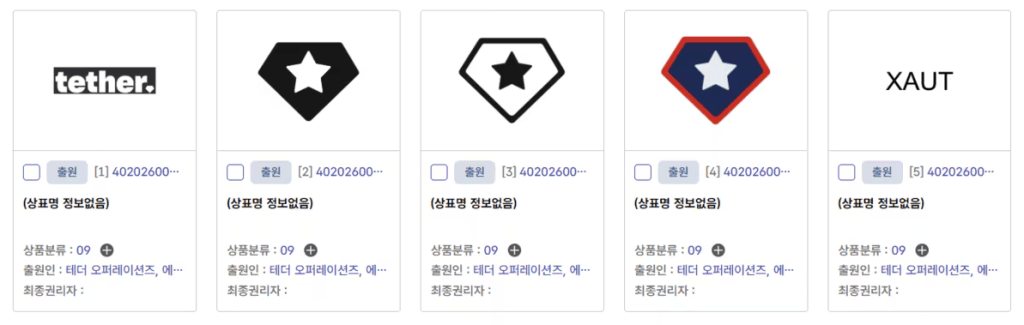
Trademarks for Tether's company name and logo filed with KIPRIS.

Tether’s trademark filings, some observers say, look like early preparation for that kind of requirement.

South Korea is not a small market. The country has one of the most active retail crypto trading populations in the world, which makes it a place no major stablecoin issuer can afford to ignore.

Circle Already Has A Head Start

Tether is not alone in moving on South Korea. Circle, the company behind USDC, filed 11 local trademarks last year and has already seen results — USDC’s market share in the country grew by 10%.

USDT market cap currently at $189 billion. Chart: TradingView

Tether now has seven active trademarks in South Korea, a number that has been growing as competition between the two stablecoin giants heats up.

Earlier this year, Circle CEO Jeremy Allaire traveled to South Korea and held meetings with major banks and crypto exchanges, exploring possible partnerships.

That kind of ground-level relationship building puts Circle ahead in terms of local ties, at least for now.

Seoul, South Korea. Image: Silversea

Payments, Not Just Trading

The trademark filings also fit into a wider ambition Tether has for South Korea. The country runs a significant export economy, and businesses there regularly move money across borders.

Tether sees that as an opening. Using blockchain-based payments instead of traditional bank transfers through systems like SWIFT could offer faster, cheaper transactions for South Korean exporters.

That vision — stablecoins as a real payment tool, not just a trading instrument — reflects where the bigger competition between Tether and Circle may eventually play out, well beyond crypto exchanges and into mainstream finance.

Featured image from Unsplash, chart from TradingView

Domande pertinenti

QWhat is the main strategic shift indicated by Tether's recent trademark filings in South Korea?

AThe main strategic shift indicated is that Tether is now filing to protect its broader brand, including its company name, logo, and Tether Gold, rather than just product names. This signals a possible push toward establishing a formal business presence in the country, potentially in response to upcoming regulations.

QWhat specific regulatory requirement might Tether be preparing for with these trademark filings?

ATether might be preparing for a proposed requirement under South Korea's new Digital Asset Basic Act rules that would mandate foreign stablecoin companies to set up a local branch before legally offering their tokens to South Korean users.

QHow is Circle's position in the South Korean market different from Tether's according to the article?

ACircle already has a head start in the South Korean market. It filed trademarks last year, saw USDC's market share grow by 10%, and its CEO has personally traveled to South Korea to build ground-level relationships with major banks and crypto exchanges, giving it stronger local ties for now.

QBeyond crypto trading, what other major use case does Tether see for stablecoins in South Korea?

ABeyond crypto trading, Tether sees stablecoins as a payment tool for international commerce. It aims to serve South Korea's significant export economy by offering faster and cheaper blockchain-based cross-border payments for businesses, as an alternative to traditional systems like SWIFT.

QWhat broader competition does the article suggest is developing between Tether and Circle?

AThe article suggests the broader competition is shifting beyond dominance on crypto exchanges and into mainstream finance, specifically in establishing stablecoins as practical tools for global payments and financial services.

Letture associate

Why Bitcoin Holds Above $64,000 After Fed's Hard Pause

**Bitcoin Stabilizes Near $64,000 Following Hawkish Fed Pause** The cryptocurrency market, led by Bitcoin, remained stable around $64,000 despite a volatile reaction to the latest U.S. Federal Reserve meeting. The Fed paused interest rates but signaled a hawkish stance, with three committee members voting for an increase—the highest dissent since 2016. This limits risk appetite but hasn't triggered panic selling. Key market highlights include Bitcoin ETFs seeing a net inflow of $32.1 million, breaking a streak of outflows, while Ethereum ETFs experienced outflows of $18.65 million. Liquidations affected about 90,000 traders. Technically, Bitcoin finds support around $63,000-$63,500, with major resistance near $66,000. While its price is about 49% below its all-time high, institutional demand via ETFs and the absence of mass capitulation support a potential recovery scenario in the second half of the year. Major altcoins showed mixed movements, with Solana attracting capital while Ethereum faced selling pressure despite strong on-chain metrics like a growing staking queue. Regulatory news took a pause as the U.S. Senate delayed the CLARITY Act vote until at least autumn. For the final trading day of July, U.S. inflation and consumer spending data will be crucial. Bitcoin's key levels to watch are $63,000 support and $66,000 resistance. Sustained ETF inflows and Bitcoin holding above $63,000 are seen as positive signs for a potential market recovery later in the year.

cryptonews.ru56 min fa

Why Bitcoin Holds Above $64,000 After Fed's Hard Pause

cryptonews.ru56 min fa

Participants in XRP Fraud Scheme That Stole $9 Million from 71 Investors Arrested

South Korean police have arrested three individuals accused of operating a fraudulent investment platform that stole approximately 3.4 million XRP (worth about $9 million) from 71 investors between October 16 and 23. The suspects promoted the site Fxrpntwork.com through blogs, online articles, and YouTube videos, promising guaranteed principal and monthly returns of 1.5% to 1.8%. Investors were instructed to transfer XRP from Korean exchanges to overseas platforms and then to wallets controlled by the group before the site was shut down. The scammers copied the branding of legitimate projects Flare Network and FXRP to appear credible. Authorities warn that such impersonation frauds, which use familiar branding and urgent promises of guaranteed profits, are a common red flag. Legitimate companies do not solicit cryptocurrency transfers through unsolicited promotions. Seoul police have issued an Interpol Red Notice for a fourth suspect abroad and are investigating others involved in creating and promoting the fraudulent website. While investigators froze 17.3 billion won in assets, approximately 10 billion won was moved during the probe, with wallet analysis revealing transfers totaling 27.3 billion won, suggesting there may be additional unidentified victims and accomplices. The case underscores the organized, cross-border nature of crypto investment fraud.

cryptonews.ru58 min fa

Participants in XRP Fraud Scheme That Stole $9 Million from 71 Investors Arrested

cryptonews.ru58 min fa

Trading

Spot
活动图片





