Tether Engages Big Four Audit In Major Transparency Push

bitcoinistPubblicato 2026-03-25Pubblicato ultima volta 2026-03-25

Introduzione

Tether, the issuer of the world's largest stablecoin USDT, has engaged a Big Four accounting firm to conduct its first independent audit. This move follows years of scrutiny, including a $41 million fine from the CFTC in 2021 for misrepresenting its reserves. The audit is described as a major step towards transparency and meeting the highest global finance standards. While the specific firm (KPMG, EY, Deloitte, or PwC) was not named, it was selected through a competitive process. USDT, with a market cap of $184 billion, dominates the stablecoin sector, which remains near its all-time high despite broader market conditions.

Tether, the issuer of the biggest stablecoin, has signed on a Big Four accounting firm to complete its first independent audit after years of scrutiny.

Tether Signs Big Four Firm To Provide Assurance That USDT Is Fully Backed

According to a website announcement, Tether has entered a formal engagement with a Big Four audit firm for what the stablecoin issuer describes as the biggest inaugural audit of all time in financial markets. “This audit represents years of work to strengthen our systems so that Tether can meet the highest standards applied in global finance,” noted Paolo Ardoino, Tether CEO.

Tether is a cryptocurrency company that’s most popularly known for being the issuer of the stablecoin USDT. The firm’s token is the largest stablecoin in the sector by market cap and ranks third overall behind Bitcoin and Ethereum.

Over the years, Tether has faced criticism over the lack of transparency and how its stablecoin is backed. Back in 2021, the United States Commodity Futures Trading Commission (CFTC) fined the firm $41 million for falsely claiming that USDT was fully backed by US dollar reserves.

Now, with the audit, it seems the company wants to upgrade on this front. “For the hundreds of millions of people and businesses who rely on USD₮ every day, this audit is not just a compliance exercise; it is about accountability, resilience, and confidence in the infrastructure they depend on,” said Ardoino.

As for who the company that’s going to audit Tether is, the exact name is currently unknown. The announcement has just noted that it’s a Big Four firm, which means that it’s one of KPMG, EY, Deloitte, or PwC. Simon McWilliams, Tether Chief Financial Officer, noted:

The Big Four Firm was selected through a competitive process because the organisation is already operating at Big Four audit standard; the audit will be delivered.

Earlier this year, Tether launched a new stablecoin called USAT, specifically aimed at the US market. The company had previously stepped away from the nation following regulatory scrutiny. The new token, backed by dollars, complies fully with the country’s newly established stablecoin framework following the passage of the GENIUS Act last year.

As mentioned earlier, USDT is the largest stablecoin in the sector. Its market cap of $184 billion alone accounts for nearly 60% of the total stablecoin market cap. Meanwhile, the closest competitor, USDC, has a market cap of $78 billion.

Overall, the stablecoin sector has done relatively well during the last few months despite a bearish shift in the wider digital assets market, with its combined market cap currently sitting around an all-time high (ATH), according to data from DefiLlama.
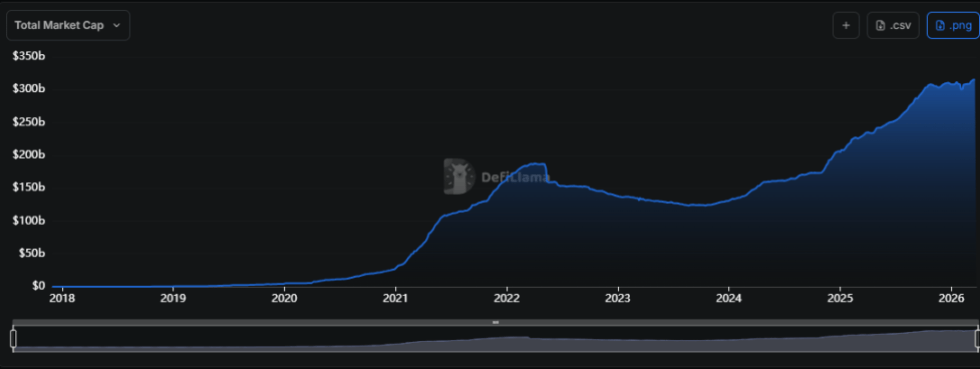
Looks like the value of the metric has been moving sideways in recent months | Source: DefiLlama

Bitcoin Price

Bitcoin recovered above $71,000 earlier in the day, but the coin has seen another setback as its price has now returned to $69,300.

The trend in the price of the coin over the last five days | Source: BTCUSDT on TradingView


Crypto di tendenza

Domande pertinenti

QWhat is the main reason Tether has engaged a Big Four accounting firm?

ATether has engaged a Big Four firm to complete its first independent audit to provide assurance that its USDT is fully backed and to meet the highest standards in global finance after years of scrutiny.

QWhich regulatory body fined Tether $41 million in 2021 and why?

AThe United States Commodity Futures Trading Commission (CFTC) fined Tether $41 million for falsely claiming that its USDT stablecoin was fully backed by US dollar reserves.

QWhat is the names of the four potential accounting firms that could be auditing Tether?

AThe potential firms are KPMG, EY, Deloitte, and PwC, as these are the companies that make up the 'Big Four'.

QWhat is the market capitalization of USDT and how does it compare to its closest competitor, USDC?

AUSDT has a market cap of $184 billion, which accounts for nearly 60% of the total stablecoin market. Its closest competitor, USDC, has a market cap of $78 billion.

QWhat new stablecoin did Tether launch for the US market and what legislation does it comply with?

ATether launched a new stablecoin called USAT that is backed by dollars and fully complies with the US's newly established stablecoin framework following the passage of the GENIUS Act.

Letture associate

Amidst Capital's Encirclement, Decentralization is the Sole Defense for Public Blockchains

In a landscape dominated by power and profit motives, the author argues that decentralization is not merely one desirable feature among many in blockchain design—it is the singular, non-negotiable defense against corporate and capital capture. The article adopts a Machiavellian, realist perspective on human institutions, positing that businesses will inevitably attempt to co-opt any valuable network to protect their profits and dominance. While external attacks like 51% forks are often discussed, the greater existential risk is internal capture—the gradual erosion of a protocol’s neutrality by vested interests, as seen historically with platforms like Visa and Google. The piece critiques permissioned chains, highly centralized “permissionless” layer-1s, and layer-2s without sufficient decentralization (e.g., single sequencers) as inherently vulnerable. These compromised systems, promoted by established financial players, are framed as delaying tactics to stifle truly open networks that threaten existing high-fee, inefficient business models. Real-world examples, such as closed enterprise consortiums that exclude competitors, illustrate how such systems cement oligopolies rather than foster innovation. The author concludes that while decentralized protocols like Ethereum are imperfect and costly to operate, they represent the only viable long-term equilibrium. In a market where value naturally flows to the most secure and neutral settlement layer, only maximally decentralized public blockchains can resist being subsumed by capital and powerful incumbents.

Foresight News10 min fa

Amidst Capital's Encirclement, Decentralization is the Sole Defense for Public Blockchains

Foresight News10 min fa

Who Decides the Rules of Bitcoin? BIP-110 Ignites Governance Debate

Bitcoin's governance is once again at the center of a heated debate, this time ignited by BIP-110, the "Reduced Data Temporary Softfork." This proposal aims to curb non-monetary data (like inscriptions and Runes) by introducing seven new consensus-layer restrictions over a year, such as limiting new output scripts to 34 bytes and restoring the OP_RETURN cap to 83 bytes. The controversy stems from BIP-110's fundamental shift: it moves the battle against "spam" from node relay and miner policies to the consensus layer, rendering currently valid transactions invalid. Supporters, arguing that default policy governance has failed (highlighted by Bitcoin Core v30's relaxation of OP_RETURN limits), see this as necessary to protect node resources and Bitcoin's monetary focus. Opponents, led by figures like Michael Saylor and Adam Back, warn it dangerously centralizes governance. Saylor listed 110 reasons against it, criticizing its low 55% miner activation threshold and potential for chain splits. Back emphasized Bitcoin's "permissionless" ethos, arguing no single group should impose value judgments via consensus rules. Further complicating matters, technical critiques suggest BIP-110 may be technically circumventable, and a "BlockSlop" vulnerability in its upgrade path poses a consensus risk. The debate has drawn in diverse stakeholders: miners (with pools like Ocean signaling support and Foundry polling clients), node operators (like Bitcoin Knots), and new players like corporate treasury holder MicroStrategy (Saylor), whose market influence adds a novel dimension. Ultimately, BIP-110 acts as a governance stress test, exposing the unresolved question: who decides Bitcoin's rules? It pits the authority of miners, node operators, developers, and capital holders against each other, with each side claiming to defend Bitcoin's core principles of neutrality and security.

marsbit27 min fa

Who Decides the Rules of Bitcoin? BIP-110 Ignites Governance Debate

marsbit27 min fa

Who Decides Bitcoin's Rules? BIP-110 Ignites Governance Debate

Title: Who Decides Bitcoin's Rules? BIP-110 Ignites Governance Debate A new technical proposal, BIP-110 (Reduced Data Temporary Softfork), has sparked a fundamental governance debate within the Bitcoin community. It aims to impose new consensus rules for one year to limit non-financial data (like inscriptions and Runes) on-chain, moving beyond simple node and miner policy filters to invalidate currently valid transactions. Supporters argue that default policies have failed due to workarounds, necessitating consensus-layer changes to protect Bitcoin's core monetary function from data spam. Critics, including Michael Saylor and Adam Back, contend this dangerously centralizes judgment, undermines permissionlessness, and sets a risky governance precedent. They advocate for market-based solutions like fees or Layer 2s instead. The debate exposes deeper tensions: miners are divided on activation; node operators assert their sovereignty; Bitcoin Core developers influence defaults without direct accountability; and large corporate holders like MicroStrategy now wield narrative influence. Technically, BIP-110 may not fully block data and carries a disclosed consensus bug risk. Ultimately, BIP-110 acts as a stress test, forcing the community to confront the unresolved question: who legitimately decides what Bitcoin is and how it evolves, amidst competing claims from miners, nodes, developers, and capital holders.

链捕手39 min fa

Who Decides Bitcoin's Rules? BIP-110 Ignites Governance Debate

链捕手39 min fa

Zcash's New Node Zakura Goes Live: Privacy Payments Can Reach 50,000 TPS, Aiming to Rival Visa and Mastercard

Zcash, a privacy-focused cryptocurrency, has launched a new full node software called Zakura version 1.0.0. Developed by Zcash co-founder Sean Bowe and Dev Ojha, with private ZEC donations, its goal is to enable Zcash to process over 50,000 transactions per second (TPS)—matching the scale of Visa and Mastercard—while maintaining full transaction privacy and verifiability. This addresses a key bottleneck, as Zcash currently handles only about 1 private transaction per second. Zakura is a fork of the Zcash Foundation's Zebra node. It features chain pruning and snapshots, reducing disk usage and allowing new nodes to sync in under two minutes. It also offers compatibility with the legacy `zcashd` client interface. The scalability challenge stems from the large data size of privacy proofs. Bowe's Tachyon project aims to use recursive proofs to reduce consensus-layer data needs from ~500 MB/s to ~100 MB/s. For wallet scalability, Valar Group is researching Private Information Retrieval (PIR) tech to allow wallets to fetch their data privately. Zakura supports fast block propagation and the upcoming "Ironwood" network upgrade (NU6.3), scheduled for activation around July 28th. Ironwood was created to contain a critical inflation bug discovered in the Orchard shielded pool in May 2024. The fix uses "turnstiles" to trap any counterfeit ZEC created during the vulnerability period within the shielded pool, preventing it from entering circulation and restoring supply integrity.

marsbit54 min fa

Zcash's New Node Zakura Goes Live: Privacy Payments Can Reach 50,000 TPS, Aiming to Rival Visa and Mastercard

marsbit54 min fa

Trading

Spot

Articoli Popolari

Come comprare PUSH

Benvenuto in HTX.com! Abbiamo reso l'acquisto di Push Protocol (PUSH) semplice e conveniente. Segui la nostra guida passo passo per intraprendere il tuo viaggio nel mondo delle criptovalute.Step 1: Crea il tuo Account HTXUsa la tua email o numero di telefono per registrarti il tuo account gratuito su HTX. Vivi un'esperienza facile e sblocca tutte le funzionalità,Crea il mio accountStep 2: Vai in Acquista crypto e seleziona il tuo metodo di pagamentoCarta di credito/debito: utilizza la tua Visa o Mastercard per acquistare immediatamente Push ProtocolPUSH.Bilancio: Usa i fondi dal bilancio del tuo account HTX per fare trading senza problemi.Terze parti: abbiamo aggiunto metodi di pagamento molto utilizzati come Google Pay e Apple Pay per maggiore comodità.P2P: Fai trading direttamente con altri utenti HTX.Over-the-Counter (OTC): Offriamo servizi su misura e tassi di cambio competitivi per i trader.Step 3: Conserva Push Protocol (PUSH)Dopo aver acquistato Push Protocol (PUSH), conserva nel tuo account HTX. In alternativa, puoi inviare tramite trasferimento blockchain o scambiare per altre criptovalute.Step 4: Scambia Push Protocol (PUSH)Scambia facilmente Push Protocol (PUSH) nel mercato spot di HTX. Accedi al tuo account, seleziona la tua coppia di trading, esegui le tue operazioni e monitora in tempo reale. Offriamo un'esperienza user-friendly sia per chi ha appena iniziato che per i trader più esperti.

561 Totale visualizzazioniPubblicato il 2024.12.13Aggiornato il 2026.06.02

Come comprare PUSH

Discussioni

Benvenuto nella Community HTX. Qui puoi rimanere informato sugli ultimi sviluppi della piattaforma e accedere ad approfondimenti esperti sul mercato. Le opinioni degli utenti sul prezzo di PUSH PUSH sono presentate come di seguito.

活动图片