Terraform Co-Founder Receives 15-Years Prison Sentence

TheNewsCryptoPubblicato 2025-12-12Pubblicato ultima volta 2025-12-12

Introduzione

Terraform Labs co-founder Do Kwon has been sentenced to 15 years in prison after pleading guilty to wire fraud and conspiracy. His criminal actions were central to the 2022 crypto market crash, which erased nearly $40 billion in market value. The judge considered victim impact statements, including one individual who became homeless after losing $81,000. The sentence was deemed necessary due to the severity and deliberate nature of the fraud. Kwon expressed remorse and may serve part of his sentence in South Korea, where he could face additional charges. His case is compared to other high-profile crypto fraud sentences.

Do​‍​‌‍​‍‌​‍​‌‍​‍‌ Kwon, co-founder of Terraform Labs, was sentenced to 15 years in federal prison after he pleaded guilty to wire fraud and conspiracy charges. The decision of Thursday, Judge Paul Engelmayer, directly relates to Kwon’s criminal activities that caused the 2022 crypto crash that resulted in a loss of almost $40 billion of market cap.

Kwon will be allowed time off from his sentence for the period he has already been in custody in the U.S. and for the 17 months during which he was detained in Montenegro before his transfer, which is expected to take place in December 2024.

Victims Share Impact of Financial Losses

To​‍​‌‍​‍‌​‍​‌‍​‍‌ decide on the sentence, Judge Engelmayer listened to the stories of six victims, who spoke out among the roughly 16,500 people whose Kwon’s actions had affected. Tatiana Dontsova said that she had sold her Moscow apartment in order to invest with Kwon, but she ended up losing $81,000 and becoming homeless after her investment went down.

The judge found both the prosecution’s proposal of 12 years and the defense’s suggestion of 5 years insufficient to the severity and extent of the crime. Engelmayer pointed out that one of the reasons why Kwon’s fraud was so terrible was the fact that he deliberately misled the same group of investors whom he had gained their trust over a period of four years.

The judge cautioned the next generation of cryptocurrency entrepreneurs that if they commit fraud, they will be given hefty prison sentences and will lose their personal freedom for long ​‍​‌‍​‍‌​‍​‌‍​‍‌periods.

Reports​‍​‌‍​‍‌​‍​‌‍​‍‌ say Kwon might be sent back to South Korea to serve the rest of his prison time after only half of his sentence, and there, additional charges could increase his jail time by 40 years. His situation is compared to various celebrities’ stories of cryptocurrency-related crimes, such as Sam Bankman-Fried getting 25 years in prison and Alex Mashinsky being sentenced to 12 years for similar crimes.

At the hearing, Kwon apologized, saying he has thought over his actions for a long time and he is devastated by the fact that investors have suffered. The Terraform co-founder recalled being away from his family for three years and said that he would like to serve his sentence in his country.

Judge Engelmayer remarked that without Kwon’s plea of guilty and his cooperation with the investigation by the federal authorities, his sentence would have been ​‍​‌‍​‍‌​‍​‌‍​‍‌longer.

Highlighted Crypto News Today:

Shiba Inu Whale Activity Hits New Peak With 406 Transactions Above $100,000

TagsDo KwonTerraform Labs

Domande pertinenti

QWhat was Do Kwon, co-founder of Terraform Labs, sentenced for and what was the length of his prison term?

ADo Kwon was sentenced to 15 years in federal prison after pleading guilty to wire fraud and conspiracy charges.

QWhat was the estimated financial impact of the 2022 crypto crash that Kwon's criminal activities caused?

AKwon's criminal activities caused a crypto crash that resulted in a loss of almost $40 billion of market cap.

QHow did Judge Engelmayer characterize the nature of Kwon's fraud during the sentencing?

AJudge Engelmayer pointed out that Kwon's fraud was particularly terrible because he deliberately misled the same group of investors whom he had gained their trust over a period of four years.

QWhat potential consequence does Kwon face after being transferred to South Korea to serve his sentence?

AReports say that after being transferred to South Korea, additional charges could increase his jail time by 40 years.

QWhat did Judge Engelmayer say would have happened to Kwon's sentence if he had not pleaded guilty and cooperated with authorities?

AJudge Engelmayer remarked that without Kwon's plea of guilty and his cooperation with the federal investigation, his sentence would have been longer.

Letture associate

Musk Posted a Recruitment Ad for SpaceX, and After Reading the Comments Section, I Understood

On May 20th, SpaceX filed for a landmark IPO with a $1.75 trillion valuation. Shortly after, Elon Musk posted a recruitment call on X, seeking "world-class engineers and physicists" for SpaceX. The application process was starkly simple: email with three bullet points proving "exceptional ability," with real, complex projects as a plus. Musk promised to review qualifying emails himself. The post garnered millions of views and thousands of replies, revealing a spectrum of responses. Most comments, including a highly-upvoted humorous one listing absurd "skills," merely listed credentials or experiences in a conventional, non-differentiating way. This highlighted a key insight: a traditional resume listing degrees and skills often fails to demonstrate true exceptionalism. Effective self-presentation requires "performance efficiency." A standout reply came from an OpenAI engineering lead, who simply stated "codex." This demonstrated that for those who have built significant, recognized products, the product itself becomes the ultimate resume. The article argues that in the AI era, any tangible, shareable output—a tool, research, or online project—serves as a living, self-evident credential more powerful than a list of attributes. However, a twist emerged when applicants found the provided email address non-functional, leading to speculation that the post might also serve as an IPO publicity stunt, projecting an image of aggressive talent acquisition to investors. Ultimately, the episode served as a microcosm: some participate through performance, others through proof of work, while some question the reality of the stage itself. It underscores the enduring challenge of defining and demonstrating value in an age of abundant, yet often superficial, content.

marsbit48 min fa

Musk Posted a Recruitment Ad for SpaceX, and After Reading the Comments Section, I Understood

marsbit48 min fa

Cutting Off OpenAI, Anthropic Acquires the Tool Provider Used by a Quarter of Global Developers

Anthropic has acquired Stainless, a developer tool company that automatically generated official SDKs (Software Development Kits) for AI giants including OpenAI, Anthropic, Meta, and Cloudflare. The deal, reportedly valued at around $300 million, marks a strategic shift for Anthropic as it builds its "AI agent" infrastructure. Stainless acted as a "translator," converting complex API specifications into ready-to-use code libraries for developers. Its tools indirectly reached about a quarter of professional software developers globally. Following the acquisition, Stainless will shut down its public products and its team will join Anthropic to focus on internal platform development, notably for the Claude Platform. Existing SDKs remain with their respective client companies but will no longer receive updates from Stainless. This move is part of Anthropic's broader 18-month strategy to assemble a complete "agent stack." The stack consists of the Claude model at its core, the newly acquired Stainless for standardized API interfaces, and the Model Context Protocol (MCP), an open standard for connecting agents to external tools and data. This contrasts with OpenAI's focus on model generations and consumer-scale compute. Anthropic believes an agent's ultimate utility depends on its ability to connect to external systems. By internalizing the SDK layer and promoting MCP as a connection standard, Anthropic aims to lock in long-term ecosystem advantages and create path dependency, moving beyond the transient lead provided by any single model generation.

marsbit50 min fa

Cutting Off OpenAI, Anthropic Acquires the Tool Provider Used by a Quarter of Global Developers

marsbit50 min fa

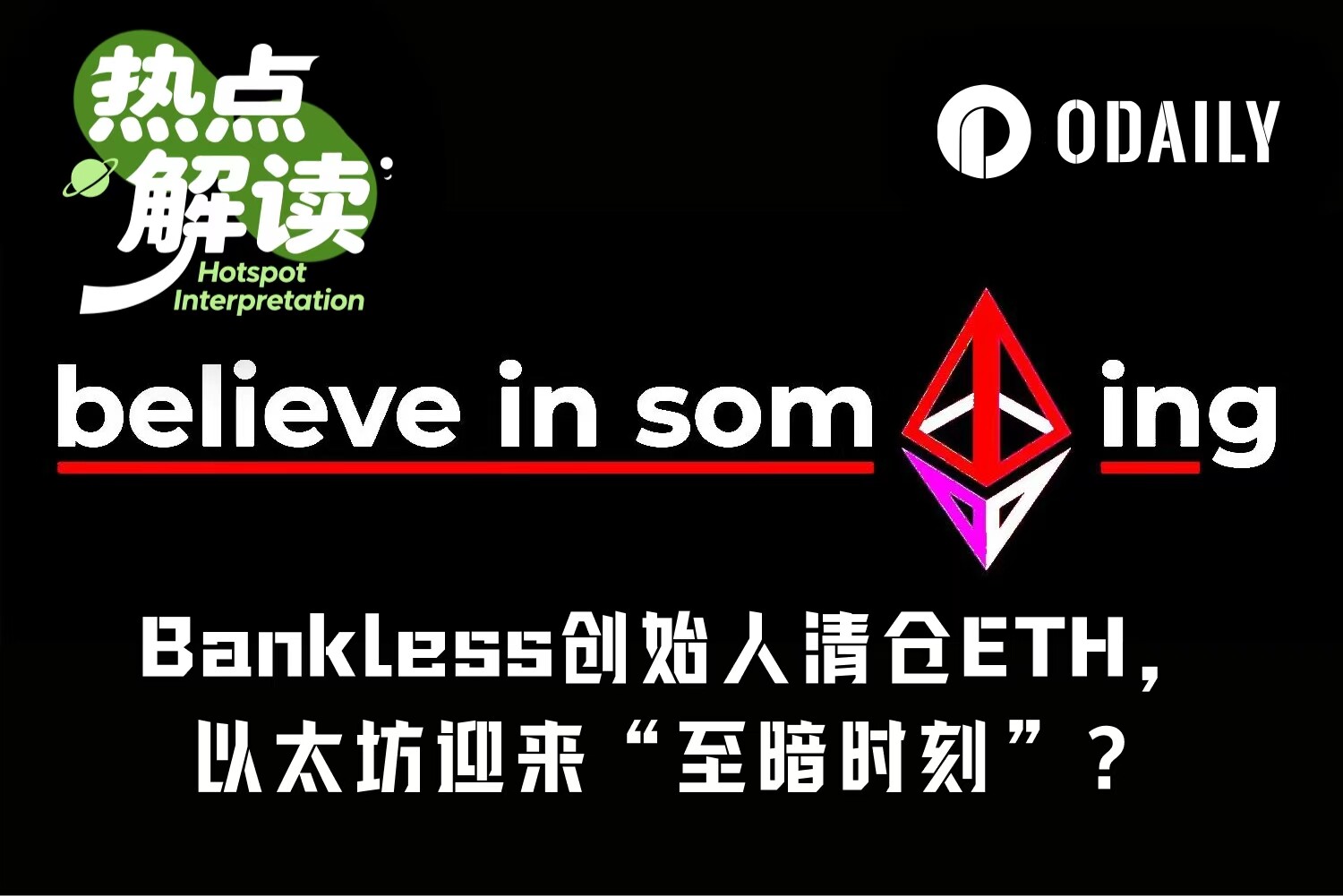
Bankless Founder Sells Off ETH, Collective Collapse of Ethereum Faith

Ethereum faces a "crisis of faith" as David Hoffman, co-founder of the prominent pro-Ethereum media outlet Bankless, announces he has sold all his ETH. This move, coupled with reports of major layoffs at Bankless, signals a potential retreat of Ethereum's staunchest supporters. Hoffman and co-founder Ryan Sean Adams confirm Bankless is entering a "second era," with Adams stepping back and Hoffman exploring new frontiers. Hoffman sharply criticizes the Ethereum Foundation, stating that ETH's poor price performance cannot be separated from its leadership. He has a history of public dissatisfaction, citing the Foundation's failure to drive market growth and its "endless manifestos." His frustration coincides with ETH/BTC hitting multi-month lows and a significant exodus of senior researchers and executives from the Ethereum Foundation, partly attributed to controversial "loyalty oaths." The article contrasts Ethereum's current predicament—with its Layer-2 narrative discredited and ecosystem stagnant—against what should have been a highlight year in 2026 amid tokenization trends. While a previous surge to near $5,000 was driven by corporate buybacks (DAT热潮), ETH has since fallen over 50%. The core question remains: with fading faith and intense competition, what is Ethereum's next solution? Hoffman's divestment symbolizes a growing disconnect between the community and the ecosystem's direction.

Odaily星球日报1 h fa

Bankless Founder Sells Off ETH, Collective Collapse of Ethereum Faith

Odaily星球日报1 h fa

Trading

Spot
Futures
活动图片