Telegram’s Lighter integration fuels HYPE – Breakout toward $42 IF…

ambcryptoPubblicato 2026-04-07Pubblicato ultima volta 2026-04-07

Introduzione

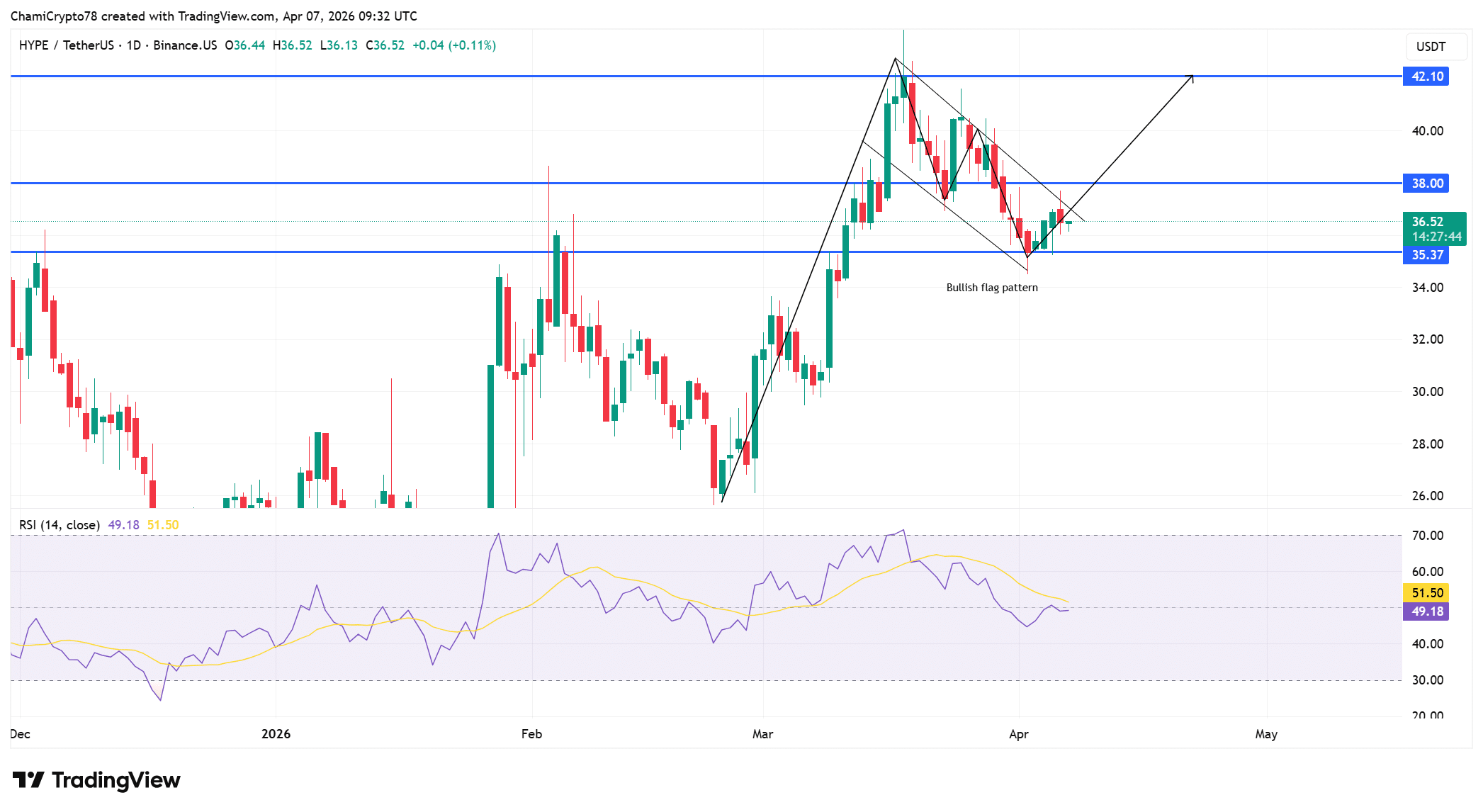
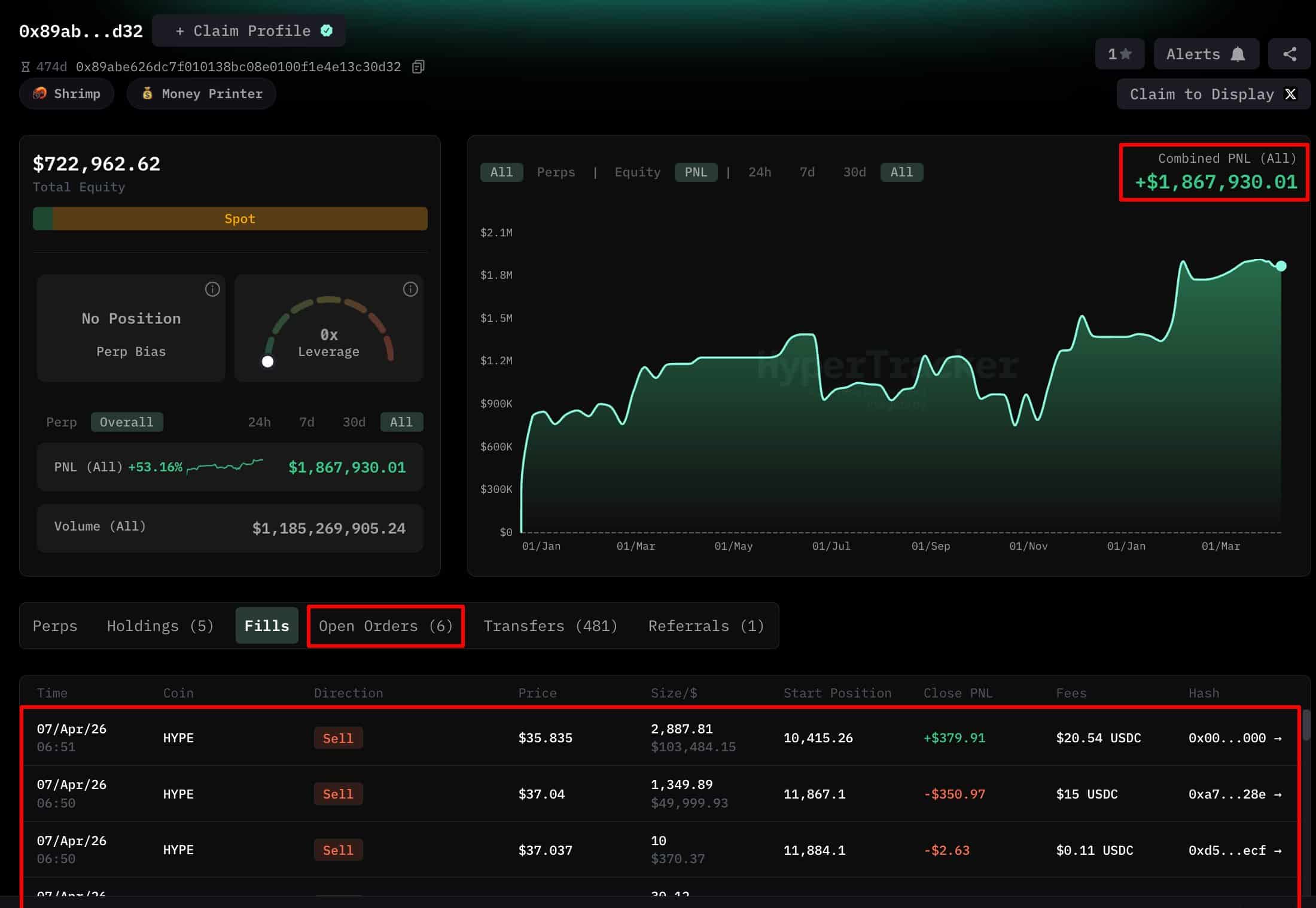
Telegram's integration with Lighter brought attention to Hyperliquid (HYPE), but a significant whale moved against the trend by selling 12.2K HYPE ($449.1K) and placing an additional 10.4K HYPE sell order ($386K), while withdrawing $1.26M in USDC. This activity, following the whale's exit from large long positions, created a divergence between the bullish narrative and capital flow. HYPE maintained a bullish flag pattern, trading between support at $35.37 and resistance at $38. While the structure remained intact with buyers stepping in at lower levels, failure to break $38 indicated hesitation. A breakout toward $42.10 was possible if resistance was overcome. The RSI showed weakening buying pressure, stabilizing near 49.18. Short liquidations dominated recent activity ($26.58K vs. $4.14K long liquidations), supporting upward pressure and short squeezes. However, the funding rate, though positive at 0.0008%, was declining, signaling reduced conviction among longs. This aligned with whale distribution, suggesting weakened confidence. The overall setup remained constructive but faced headwinds near resistance, leaving a breakout uncertain.

Telegram’s Lighter integration drew attention to Hyperliquid. However, a large whale moved in the opposite direction immediately.
Source: Onchain Lens

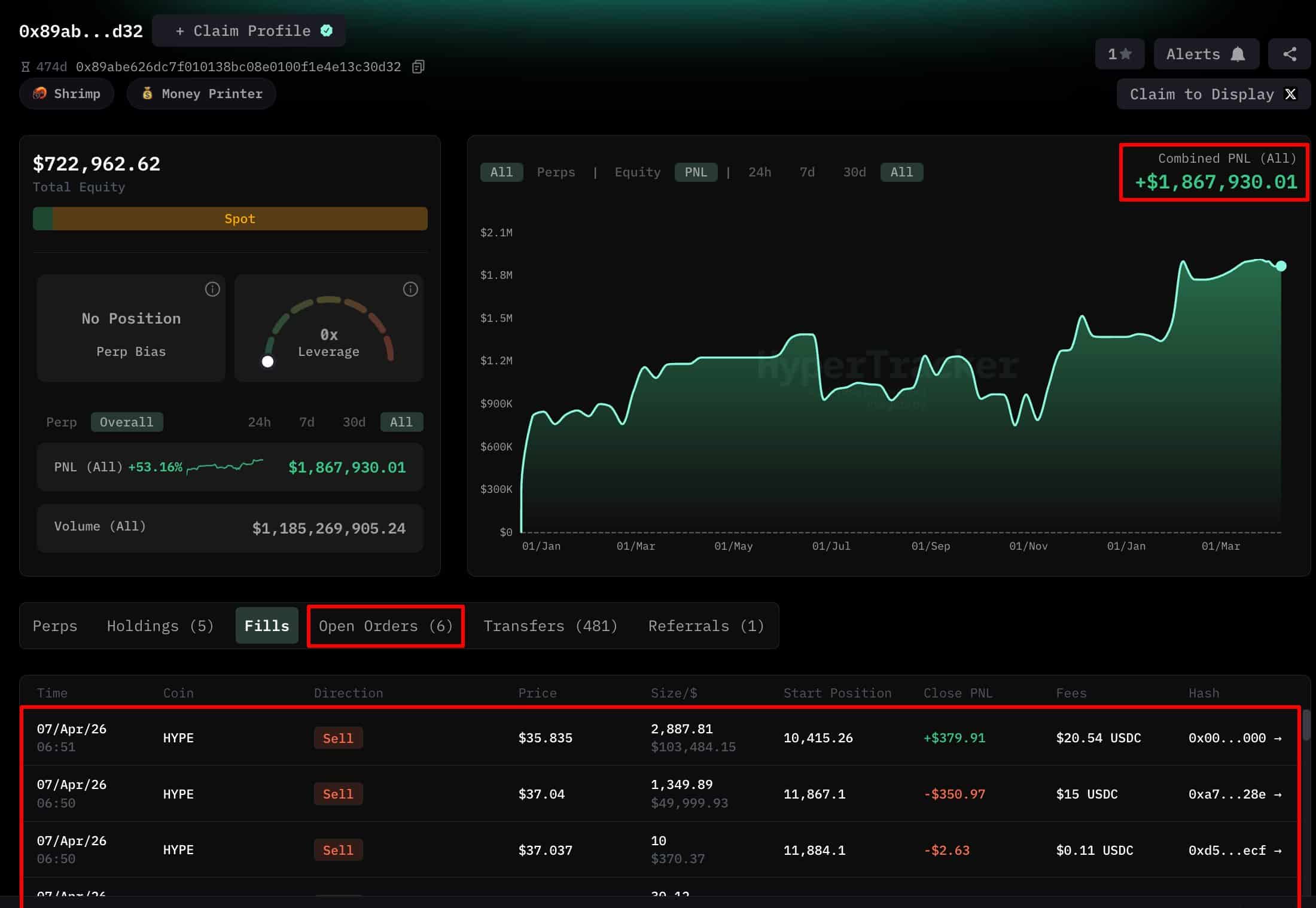
The whale dumped 12.2K HYPE worth $449.1K and placed another 10.4K HYPE sell order worth $386K. He also withdrew $1.26M in USDC, reducing exposure.

That move followed his exit from multi-million dollar HYPE longs after the 3rd of April. His $1.72M+ lifetime PnL suggested calculated positioning.

However, this created a divergence between the bullish narrative and capital flow. That shift raised concerns about distribution in strength.

Bullish flag holds as HYPE compresses

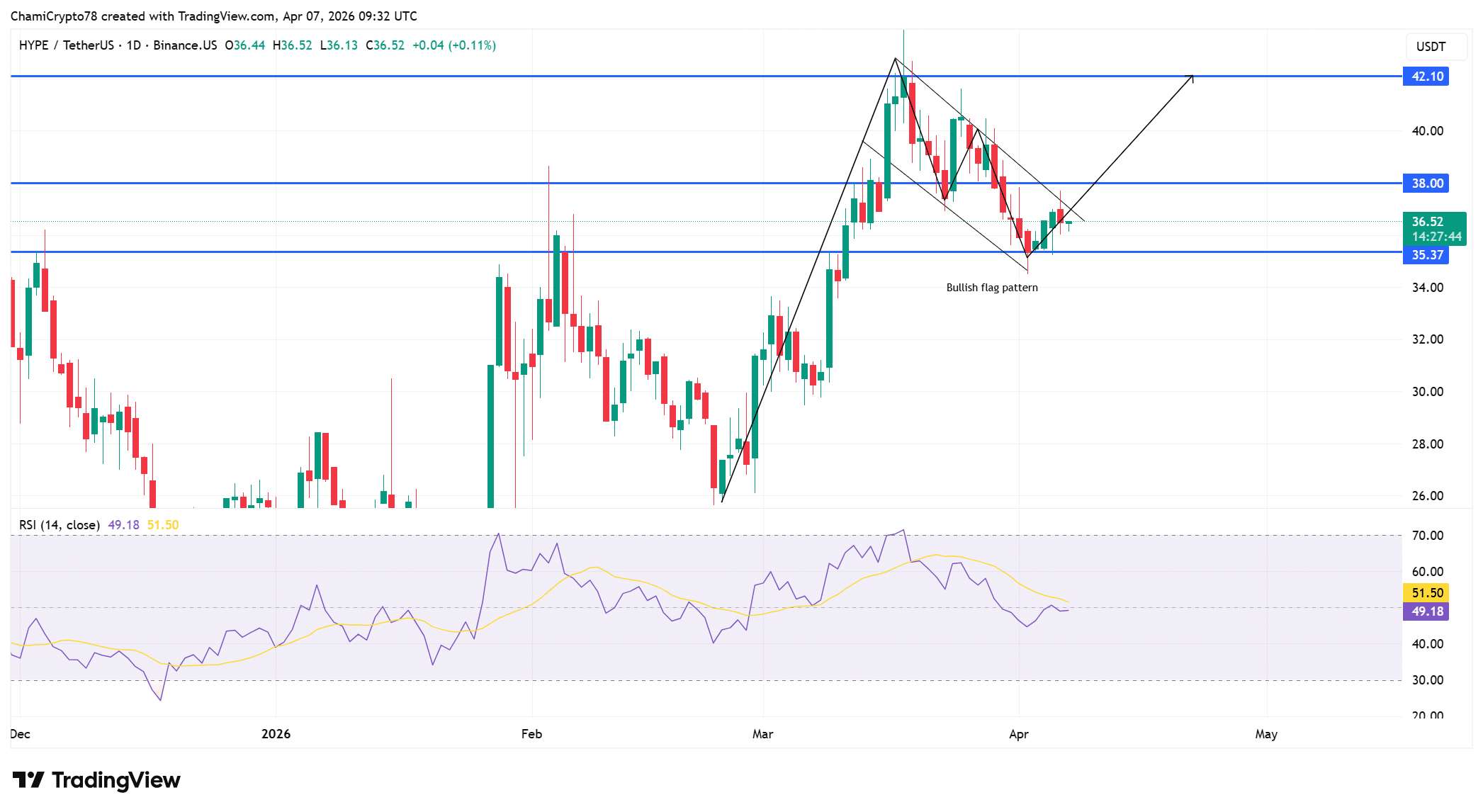
HYPE maintained a bullish flag after rallying toward $42.10. Price pulled back into a descending channel, forming the structure.

The asset traded between $35.37 support and $38 resistance, showing controlled consolidation. Each lower-bound retest attracted buyers, preserving structure.

However, Hyperliquid [HYPE] failed to reclaim $38 decisively, signaling hesitation near resistance. This left the market waiting for a breakout.

A move toward $42.10 remained likely if resistance broke.

RSI stabilized near 49.18, with its moving average near 51.50. The indicator cooled after nearing overbought levels around 70.

Lower highs on RSI suggested weakening buying pressure.
Source: TradingView

HYPE short liquidations dominate recent activity

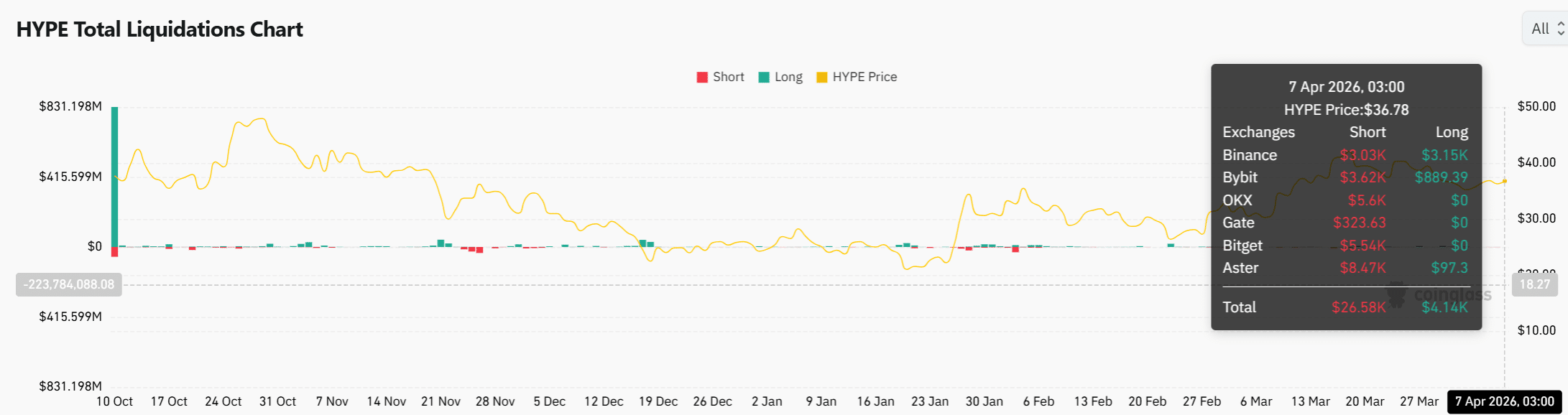
The Liquidation chart had shown that short liquidations had outweighed long liquidations, reinforcing upward pressure in the market.

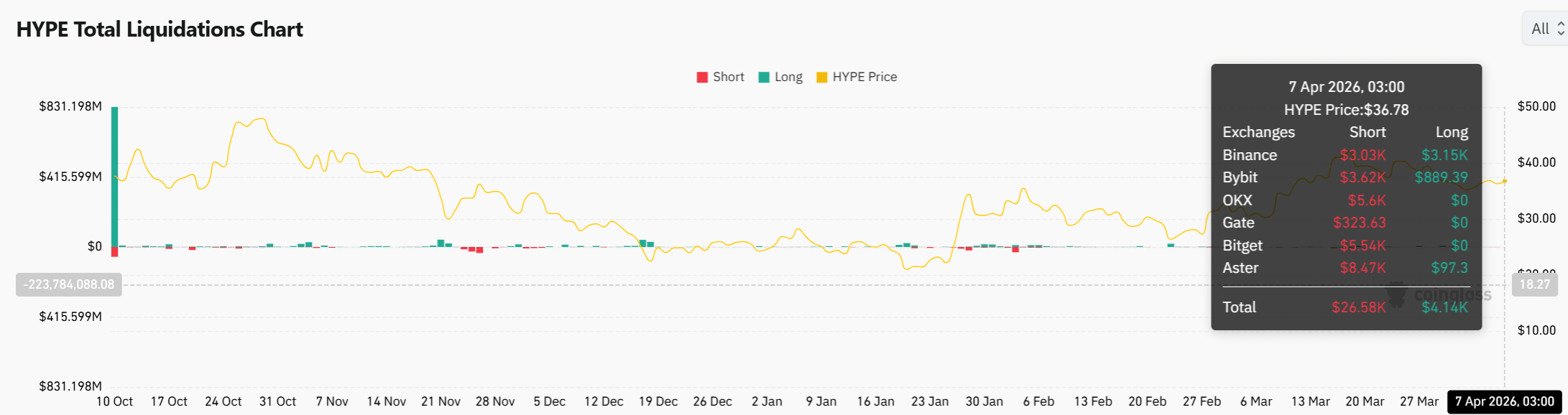
Recent figures had recorded $26.58K in short liquidations compared to $4.14K in long liquidations.

This imbalance had indicated that bearish positions had been forced out as the price held above key levels.

As a result, the market had experienced localized short squeezes, which had supported price stability within the flag.

However, the absence of large liquidation spikes had suggested controlled volatility rather than aggressive expansion.

Liquidity had continued to build around the $35.37 support and $38 resistance zones, leaving the market positioned for a decisive move.
Source: CoinGlass

Funding stays positive but weakens

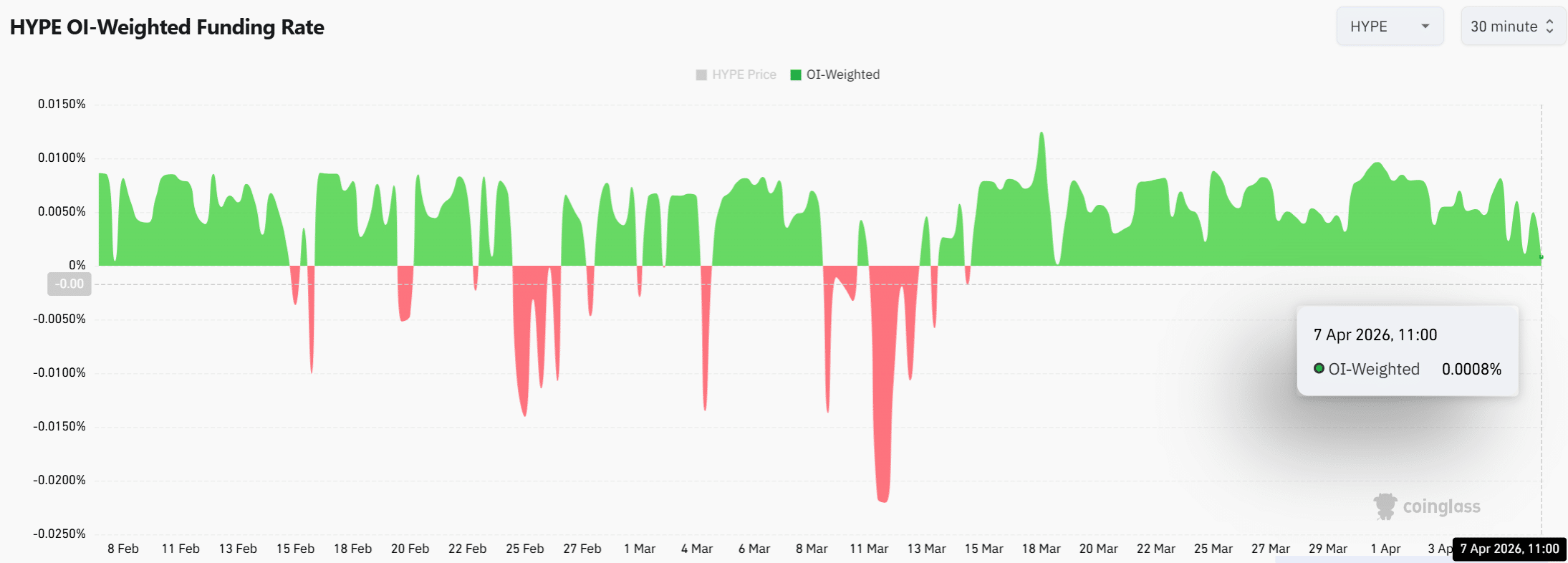
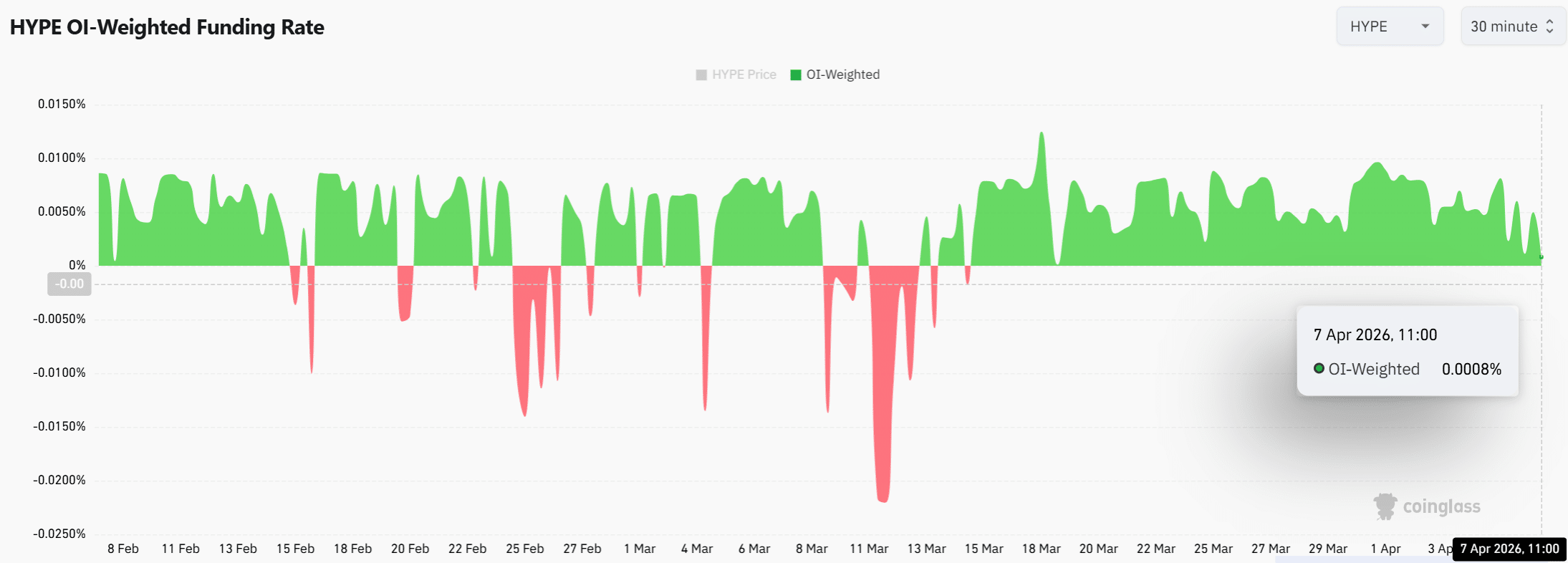
The OI-Weighted Funding Rate remained positive at 0.0008% on the 7th of April, confirming long dominance.

However, Funding Rates trended downward, signaling weakening conviction among longs.

Traders showed less willingness to pay premiums, reflecting caution near resistance.

That decline contrasted with a bullish price structure and short liquidations. It also aligned with whale-selling activity.

This suggested confidence had not fully backed further upside.
Source: CoinGlass

Can HYPE sustain a breakout?

HYPE had retained a bullish structure, supported by short liquidations and stable price action. However, declining funding rates and whale distribution had introduced clear hesitation.

The setup had remained constructive, yet conviction had weakened near resistance.

A breakout had remained possible, though underlying signals had suggested that upside strength might face immediate pressure.


Final Summary

  • HYPE held a bullish flag between $35.37 support and $38 resistance, showing controlled consolidation rather than a breakdown.
  • Repeated rejection near $38 indicated hesitation, with buyers unable to confirm a breakout yet.

Domande pertinenti

QWhat was the impact of Telegram's Lighter integration on Hyperliquid (HYPE)?

ATelegram's Lighter integration drew significant attention to Hyperliquid (HYPE), creating a bullish narrative for the asset.

QWhat significant trading activity did a large whale perform that contradicted the bullish sentiment?

AA large whale dumped 12.2K HYPE worth $449.1K, placed a 10.4K HYPE sell order worth $386K, and withdrew $1.26M in USDC, reducing their exposure and moving in the opposite direction of the bullish trend.

QWhat is the key price range HYPE was trading within, and what does it signify?

AHYPE was trading between the $35.37 support level and the $38 resistance level, which signifies a period of controlled consolidation within a bullish flag pattern.

QWhat did the liquidation data reveal about market pressure for HYPE?

AThe liquidation data showed that short liquidations ($26.58K) significantly outweighed long liquidations ($4.14K), indicating upward pressure as bearish positions were being forced out, supporting price stability.

QWhat was the trend of the Funding Rate, and what does it suggest about trader sentiment?

AThe OI-Weighted Funding Rate remained positive but was trending downward, signaling that while long positions were still dominant, conviction among longs was weakening and traders were showing caution near the resistance level.

Letture associate

Stuck Polymarket: The Real Test After Riding the Traffic Boom Has Arrived

Polymarket, a leading prediction market platform, is facing significant technical challenges as its growth outpaces its current infrastructure on Polygon. Users are experiencing laggy transactions, unresponsive orders, and delayed confirmations, severely impacting the trading experience. In response, DeFi Engineering VP Josh Stevens outlined a comprehensive engineering overhaul. The plan includes reducing on-chain data delays, fixing order cancellation issues, rebuilding the central limit order book (CLOB), improving website performance, and developing a unified SDK and API. A major revelation was the ongoing "chain migration," indicating a potential move away from Polygon. The core issue is that Polymarket has evolved from a simple prediction market into a high-frequency trading platform, making Polygon's limitations—such as block space, gas fees, and block time—a ceiling for further growth. The migration is not just a simple chain switch but a fundamental rebuild of its trading system to support more complex products like perpetual contracts (Perps). This announcement has sparked competition among chains like Solana, Sui, and Algorand, all vying to host Polymarket. For Polygon, losing this key application, which contributes significantly to its gas fee revenue, would be a major setback. The real test for Polymarket is no longer attracting users but proving it can provide a stable, reliable trading environment that retains them.

Odaily星球日报8 min fa

Stuck Polymarket: The Real Test After Riding the Traffic Boom Has Arrived

Odaily星球日报8 min fa

Lowering Expectations for BTC's Next Bull Market

The author, Alex Xu, explains his decision to significantly reduce his Bitcoin holdings (from full to ~30% of his portfolio) during the current bull cycle, citing a lowered long-term outlook for BTC's price appreciation in the next cycle. He outlines six key reasons for this reduced expectation: 1. **Diminished Growth Drivers:** The narrative of exponential user adoption has largely played out with institutional ETF adoption. The next major growth phase—adoption by sovereign national reserves or central banks—seems unlikely in the near future. 2. **Personal Opportunity Cost:** More attractive investment opportunities have emerged in other assets, such as undervalued companies. 3. **Industry-Wide Contraction:** The broader crypto industry is struggling, with most Web3 business models (SocialFi, GameFi, DePIN) failing. This overall萧条 (depression) reduces the fundamental demand and consensus for Bitcoin. 4. **Strain on Major Buyer:** MicroStrategy, a major corporate buyer of BTC, faces rising financing expenses for its debt, which could slow its purchasing rate and create significant marginal pressure on the market. 5. **Increased Competition from Gold:** The emergence of "tokenized gold" has closed the functional gap (portability, divisibility) between physical gold and Bitcoin, offering a strong competitor in the non-sovereign store-of-value space. 6. **Security Budget Concerns:** The block reward halving continues to exacerbate the long-standing issue of funding Bitcoin's network security, with new fee source explorations like Ordinals and L2s largely failing. The author's decision to hold a significant (though reduced) position reflects a cautious, not bearish, outlook. He remains open to increasing his exposure if the fundamental reasons for his skepticism change or if new positive catalysts emerge.

marsbit46 min fa

Lowering Expectations for BTC's Next Bull Market

marsbit46 min fa

Can Iran 'Control' the Strait of Hormuz?

Iran has announced a comprehensive plan to assert control over the strategic Strait of Hormuz, a critical global oil shipping chokepoint. The proposed measures include requiring all vessels to obtain Iranian permission for passage, imposing fees for security, environmental protection, and navigation management—preferably paid in Iranian rials—and absolutely banning Israeli ships. Vessels from countries deemed hostile by Iran’s top security bodies may also be barred. Analysts suggest Iran’s motives are multifaceted: increasing pressure on the U.S. and Israel by leveraging control over oil transit to influence global prices and inflation; creating a new revenue stream, potentially exceeding $7.7 billion annually, to counter Western sanctions and support postwar reconstruction; and using transit permissions as bargaining chips in future negotiations, notably with the U.S. However, the plan faces significant practical and diplomatic challenges. Enforcing comprehensive interception and fee collection in the busy waterway, patrolled by international military forces, would be difficult. The U.S. has already countering with a blockade of Iranian ports and threats to intercept any ship paying fees, potentially strangling Iran’s oil exports and fee revenue. Broad international opposition, led by European and Gulf states, and legal controversies further complicate implementation. The proposal may ultimately serve more as a negotiating tactic than a feasible policy, with its execution remaining highly uncertain.

marsbit1 h fa

Can Iran 'Control' the Strait of Hormuz?

marsbit1 h fa

Trading

Spot
Futures

Articoli Popolari

Come comprare TON

Benvenuto in HTX.com! Abbiamo reso l'acquisto di The Open Network (TON) semplice e conveniente. Segui la nostra guida passo passo per intraprendere il tuo viaggio nel mondo delle criptovalute.Step 1: Crea il tuo Account HTXUsa la tua email o numero di telefono per registrarti il tuo account gratuito su HTX. Vivi un'esperienza facile e sblocca tutte le funzionalità,Crea il mio accountStep 2: Vai in Acquista crypto e seleziona il tuo metodo di pagamentoCarta di credito/debito: utilizza la tua Visa o Mastercard per acquistare immediatamente The Open NetworkTON.Bilancio: Usa i fondi dal bilancio del tuo account HTX per fare trading senza problemi.Terze parti: abbiamo aggiunto metodi di pagamento molto utilizzati come Google Pay e Apple Pay per maggiore comodità.P2P: Fai trading direttamente con altri utenti HTX.Over-the-Counter (OTC): Offriamo servizi su misura e tassi di cambio competitivi per i trader.Step 3: Conserva The Open Network (TON)Dopo aver acquistato The Open Network (TON), conserva nel tuo account HTX. In alternativa, puoi inviare tramite trasferimento blockchain o scambiare per altre criptovalute.Step 4: Scambia The Open Network (TON)Scambia facilmente The Open Network (TON) nel mercato spot di HTX. Accedi al tuo account, seleziona la tua coppia di trading, esegui le tue operazioni e monitora in tempo reale. Offriamo un'esperienza user-friendly sia per chi ha appena iniziato che per i trader più esperti.

1.7k Totale visualizzazioniPubblicato il 2024.12.10Aggiornato il 2025.03.21

Come comprare TON

Discussioni

Benvenuto nella Community HTX. Qui puoi rimanere informato sugli ultimi sviluppi della piattaforma e accedere ad approfondimenti esperti sul mercato. Le opinioni degli utenti sul prezzo di TON TON sono presentate come di seguito.

活动图片