Taiwan To Introduce Strict Crypto Penalties To Crackdown On Unlicensed And Fraudulent Activity

bitcoinistPubblicato 2026-04-04Pubblicato ultima volta 2026-04-04

Introduzione

Taiwan's Executive Yuan has approved a draft of the Virtual Asset Service Act (VASA), introducing strict regulations and severe consequences for unlicensed or fraudulent crypto activities. The legislation imposes prison sentences of up to 10 years and fines as high as $6.25 million for offenses like market manipulation. Unlicensed stablecoin issuance could result in 7-year prison terms and fines up to $3.13 million. The new rules also prohibit stablecoin issuers from paying interest to holders and require robust internal controls. The regulatory framework, developed by the Financial Supervisory Commission, includes a phased implementation approach and aims to enhance transaction security while supporting financial innovation.

Taiwanese authorities have approved a new draft of their crucial crypto legislation, introducing severe penalties for unlicensed or fraudulent activities related to stablecoins and other digital assets.

Taiwan Approves $6M Fines To Combat Crypto Fraud

On Friday, local news outlets reported that the Executive Yuan passed the draft of the Virtual Asset Service Act (VASA) on April 2, marking a major step to regulate crypto assets in Taiwan.

The VASA, introduced by the Financial Supervisory Commission (FSC) last year, supports the efforts by Taiwanese authorities to establish a comprehensive crypto framework for Virtual Asset Service Providers (VASPs) and stablecoin issuers.

In 2024, the FSC overhauled its Anti-Money Laundering (AML) framework to include crypto businesses, adding stricter AML guidelines for VASPs and requiring all digital asset firms to complete the AML registration by September 2025.

Premier Cho Jung-tai explained that the new framework, which will be implemented in four gradual phases, includes industry self-regulation and an AML compliance registration system. The measures aim to enhance the security of virtual asset transactions, pilot custody services, and support the growth of domestic financial innovation, he added.

According to the reports, the draft requires VASPs to operate exclusively in this field and meet specific standards for their company name, organizational structure, and capital. Financial institutions can also operate VASP services in addition to their other businesses, if approved.

In addition, special regulations would be customized to suit the nature of each service provider. For instance, trading platforms would be required to establish clear guidelines for listing and delisting virtual assets.

The draft also includes heavy penalties for unlicensed and fraudulent activities, with offences involving crypto falsification, concealment, or price manipulation risking 3-10 years in prison and fines of up to NTD 200 million, worth $6.25 million.

Meanwhile, firms that issue stablecoins without a license could face up to seven years in prison and fines of up to NTD 100 million, or about $3.13 million, according to the draft.

New Stablecoin Regulations To Prohibit Interest Payments

Officials outlined the main differences between the recently passed VASA draft and the FSC’s original text regarding stablecoin guidelines, which include issuance and redemption regulations, restrictions on interest or returns, and internal control and cybersecurity management.

Under the new draft, the issuance and redemption of stablecoins must be conducted at face value, and issuers may not refuse redemption requests from holders. Issuers are also prohibited from paying interest or returns to holders on the stablecoins they issue, aligning with international trends.

Lastly, issuers must establish and maintain robust internal control and audit systems, along with information security management mechanisms, to ensure the proper issuance and redemption of stablecoins.

FSC Deputy Chairman Chen Yen-liang asserted that stablecoin issuance is not currently limited to banks, but noted that the financial institutions are “generally better positioned to meet the relevant requirements” due to their capital strength and risk management capabilities.

For other operators, different capital thresholds and operating guarantee requirements would be set based on the nature of their business, with further details to be announced after the legislation officially passes.

In December, FSC Chairman Peng Jin-long revealed that the island’s first regulated stablecoin could debut this year. As reported by Bitcoinist, stablecoin-centered regulations would be developed within six months after the VASA’s approval, setting the launch of locally issued tokens pegged to the NTD or the USD to the second half of 2026.

Deputy Chairman Chen added that the regulator would adopt a “gradual opening” model, and relevant regulations would be developed by authorities alongside the Central Bank.
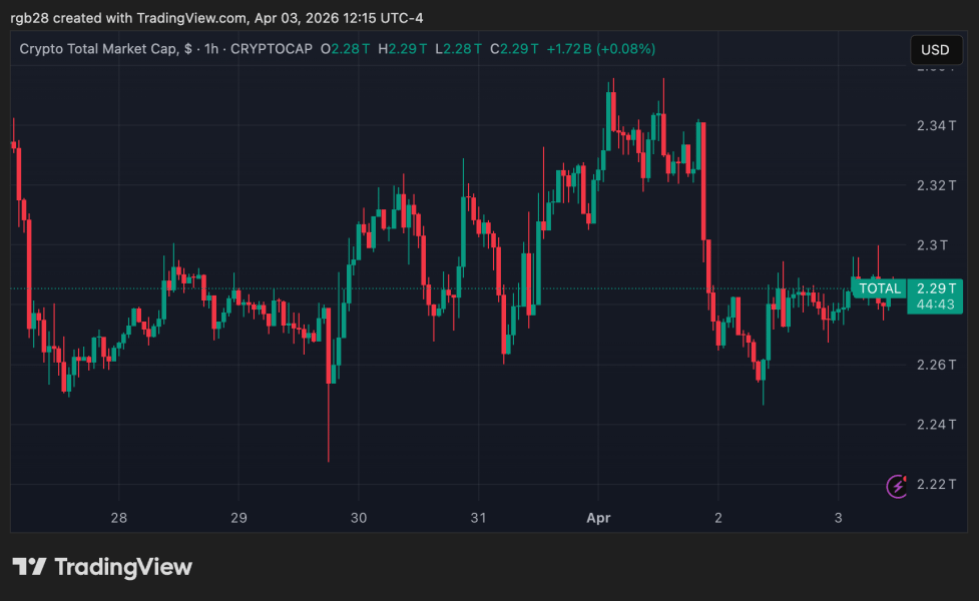
The total crypto market capitalization is at $2.29 trillion on the one-week chart. Source: TOTAL on TradingView


Domande pertinenti

QWhat is the name of the new crypto legislation draft approved by Taiwanese authorities and what is its main purpose?

AThe new crypto legislation draft is called the Virtual Asset Service Act (VASA). Its main purpose is to regulate crypto assets by introducing severe penalties for unlicensed or fraudulent activities related to stablecoins and other digital assets, and to establish a comprehensive framework for Virtual Asset Service Providers (VASPs) and stablecoin issuers.

QWhat are the potential penalties for offences involving crypto falsification, concealment, or price manipulation under the new draft?

AOffences involving crypto falsification, concealment, or price manipulation risk 3-10 years in prison and fines of up to NTD 200 million, which is worth approximately $6.25 million.

QWhat specific restrictions does the new draft place on stablecoin issuers regarding interest payments and redemptions?

AThe new draft prohibits stablecoin issuers from paying interest or returns to holders on the stablecoins they issue. It also requires that the issuance and redemption of stablecoins must be conducted at face value, and issuers may not refuse redemption requests from holders.

QBy what date are all digital asset firms required to complete their Anti-Money Laundering (AML) registration in Taiwan?

AAll digital asset firms are required to complete their Anti-Money Laundering (AML) registration by September 2025.

QAccording to the FSC Deputy Chairman, why are financial institutions better positioned to meet the requirements for stablecoin issuance?

AFSC Deputy Chairman Chen Yen-liang stated that financial institutions are 'generally better positioned to meet the relevant requirements' due to their capital strength and risk management capabilities.

Letture associate

From Shouting 150 Dollars to Liquidating HYPE in Just Three Days, How Much Credibility Does Arthur Hayes Have Left?

How much of Arthur Hayes's market credibility remains? Recently, the "godfather of crypto perpetual swaps" and BitMEX co-founder has faced public criticism, including accusations from on-chain investigator ZachXBT about creating exit liquidity for his followers. Starting last week, Hayes executed multiple sudden sell-offs. He had repeatedly publicly predicted the HYPE token would reach $150. After a $100,000 bet defending Hyperliquid on June 1st, he announced just three days later that he had completely sold his HYPE and NEAR holdings, successfully exiting near the peak. He also sold ZEC and WLD. His sale of WLD appeared to be a classic "pump and dump" maneuver. On June 3rd, he publicly set a $10 target for WLD, causing its price to surge over 35%. By June 6th, he announced he had sold his WLD, citing "anomalous" SpaceX pre-IPO price action, which triggered a sharp price drop. On June 9th, Hayes published a lengthy article explaining his actions, citing factors like rising energy costs and a potential AI bubble burst. Consequently, his family office, Maelstrom, now holds positions in US energy producers and only core crypto assets BTC and ETH, having sold AI-related stocks and non-core cryptocurrencies. This pattern is not new. In 2025, he similarly touted HYPE before selling it at what turned out to be a cycle peak, only to repurchase it at the next cycle's low. Similar scenarios played out with tokens like ETHFI and ENA. Long-term observers have developed a strategy: ignore Hayes's public statements but closely monitor his on-chain actions—be cautious following his buys, but decisively follow his sells. If he continues these tactics, especially as seen with the WLD case, his market credibility risks being permanently damaged. As Hayes himself admitted in his latest article, "I remain an unapologetic gambler."

marsbit5 min fa

From Shouting 150 Dollars to Liquidating HYPE in Just Three Days, How Much Credibility Does Arthur Hayes Have Left?

marsbit5 min fa

Fundraising is Like a Strange Dance: The 'Absurd Drama' of Silicon Valley Founders' Capital Raises

The article details a series of absurd and revealing anecdotes shared by Silicon Valley founders about their venture capital fundraising experiences, sparked by Greg Isenberg's story of pitching to a sleeping a16z partner. Founders describe surreal pitch meetings: one faced a barefoot, peanut-eating investor who offered triple the requested amount after 30 seconds; another performed a pitch in a VC's parked car; a founder discovered his audience understood no English beyond "yes." These stories highlight the often irrational and performative nature of fundraising. Beyond the absurdity, darker power imbalances are exposed. Stories include investors suggesting founders fire co-founders for their equity, blatant market misjudgments, disrespectful behavior from LPs, and discriminatory remarks. A debate also emerges around "Sequoia's" practice of splitting a round into two valuations. However, the thread isn't solely critical. Positive counter-narratives celebrate supportive VCs who offered crucial advice during crises, respected founders' timelines, and showed simple gestures of respect—like a partner personally fetching coffee before a major pitch. Ultimately, the collective sharing acts as a pressure release, illustrating that fundraising is a complex dance of power, trust, and sometimes sheer theater. It underscores that beyond capital, mutual respect and integrity remain the most enduring foundations of the founder-investor relationship.

marsbit18 min fa

Fundraising is Like a Strange Dance: The 'Absurd Drama' of Silicon Valley Founders' Capital Raises

marsbit18 min fa

Vitalik's Vision for the Next Evolution of On-Chain Finance: How to Reconstruct DeFi with an 'Options Mindset'?

Vitalik Buterin recently proposed a conceptual shift for DeFi: replacing traditional Collateralized Debt Positions (CDPs) and forced liquidations with an options-based mechanism. This aims to address key vulnerabilities in current DeFi lending. The traditional CDP model, foundational to protocols like MakerDAO and Aave, allows users to borrow against collateral but relies on real-time oracles and triggers sudden, mandatory liquidations during price volatility. This can cause cascading sell-offs, oracle manipulation risks, and significant MEV extraction, exacerbating market stress. Vitalik's alternative envisions splitting an asset like 1 ETH into two complementary components: one offering stable/index-like exposure and the other absorbing the opposite risk/reward. Instead of a hard liquidation threshold, a user's exposure to the target asset would gradually and smoothly deviate (following a near-quadratic curve) as the collateral price moves. The system would primarily depend on "slow oracles" for periodic settlement rather than instant price feeds. Key potential benefits include: the elimination of abrupt, forced liquidations; drastically reduced reliance on vulnerable real-time oracles; and inherent resistance to certain MEV exploits centered on liquidation auctions. The article posits that for Ethereum DeFi to maintain its relevance amid competition from faster, cheaper chains, it must compete on sophisticated financial engineering and robustness—not just transaction speed or yields. The core value proposition should shift towards offering users clearer, more manageable risk structures, greater autonomy, and resilience in extreme scenarios, moving DeFi from high-risk experimentation towards becoming reliable financial infrastructure.

marsbit57 min fa

Vitalik's Vision for the Next Evolution of On-Chain Finance: How to Reconstruct DeFi with an 'Options Mindset'?

marsbit57 min fa

Trading

Spot
Futures
活动图片




