# Scaling Articoli collegati

Il Centro Notizie HTX fornisce gli articoli più recenti e le analisi più approfondite su "Scaling", coprendo tendenze di mercato, aggiornamenti sui progetti, sviluppi tecnologici e politiche normative nel settore crypto.

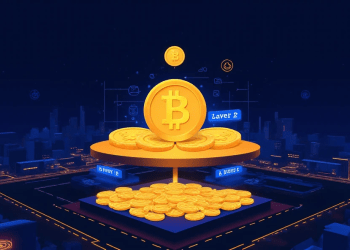
Bitcoin Hyper Raises $29.5M — Market Believes Bitcoin's Development Will Extend Beyond the Main Network

Bitcoin faces a core paradox: its growing value as a "trust base" increases the desire to use it for payments, DeFi, and on-chain products, but its base layer is slow, limited, and expensive. This has reignited the 2025 narrative around Bitcoin Layer 2 (L2) solutions, driven by user experience demands and economic concerns over low transaction fees threatening miner revenue post-halving. Against this backdrop, projects like Bitcoin Hyper are gaining significant attention and investment. It recently raised $29.5 million in a presale by betting on a specific technical approach: integrating the Solana Virtual Machine (SVM) to create a high-speed Bitcoin L2. Its promise is extremely low-latency smart contract execution, potentially "faster than Solana," targeting DeFi, gaming, and high-frequency use cases. Architecturally, it follows a modular design where Bitcoin L1 provides base-layer security while computations are off-chain in L2. A key compromise is its use of a single trusted sequencer, introducing centralization risks, but the market currently seems to prioritize speed and ecosystem growth over perfect decentralization. The substantial investment signals strong demand for the narrative of combining Bitcoin's security with fast, scalable smart contracts, with success ultimately hinging on bridge quality, real-world performance, and developer adoption.

bitcoinistIeri 18:03

Bitcoin Hyper Raises $29.5M — Market Believes Bitcoin's Development Will Extend Beyond the Main Network

bitcoinistIeri 18:03

Interop Roadmap Accelerates: After Fusaka Upgrade, Ethereum Interoperability May Take a Key Leap

Recent Ethereum Fusaka upgrade, while primarily focused on Blob capacity expansion, introduced the underappreciated EIP-7825, a critical enabler for Ethereum's zero-knowledge (ZK) and interoperability roadmap. This proposal sets a hard per-transaction gas limit (~16.78 million gas), preventing "mega-transactions" from monopolizing a block. This change transforms block proof generation from a sequential logic problem into a parallelizable computational task, making real-time ZK proofs an engineering feasibility rather than a theoretical impossibility. This foundational shift is pivotal for the L1 zkEVM vision, where Ethereum itself generates verifiable proofs for its state transitions. L1 zkEVM acts as a universal "trust anchor," allowing Layer 2s (L2s) to instantly and trustlessly verify the mainnet's state without waiting for challenge periods. This eliminates the speed-trust decentralization trade-off, enabling near-instant, decentralized cross-chain interoperability. Concurrently, ZK technology is evolving from EVM-compatible zkEVMs to more efficient, ZK-optimized zkVMs. EIP-7825's parallelizable environment allows these zkVMs to operate at peak efficiency, drastically reducing proof generation cost and time. The convergence of EIP-7825, L1 zkEVM, and advanced zkVMs paves the way for the final stage of interoperability (Interop)—abstracting away chain boundaries to deliver a single-chain user experience where cross-chain actions are seamless, secure, and instantaneous.

marsbit12/11 22:52

Interop Roadmap Accelerates: After Fusaka Upgrade, Ethereum Interoperability May Take a Key Leap

marsbit12/11 22:52

New Huo Tech Livio: Ethereum Fusaka Upgrade Value Underestimated

New Huo Tech's Livio argues that the Ethereum Fusaka upgrade, completed on December 3, is significantly undervalued by the market. Occurring during a period of extreme pessimism and a major crypto market correction, the upgrade went largely unnoticed but represents a critical strategic improvement to Ethereum’s economic model and ecosystem performance. Fusaka systematically tackles two core bottlenecks: high costs and poor user experience. It achieves a "cost revolution" by dramatically reducing Layer-2 (L2) transaction fees—potentially as low as $0.001 per transaction—without overburdening the Layer-1 (L1) mainnet. This enables economically viable high-frequency applications like on-chain gaming, social dApps, AI agent settlements, and RWA (Real World Asset) trading. The upgrade also delivers a user experience leap by natively supporting Passkey authentication, allowing users to sign transactions using biometrics like fingerprints or FaceID instead of managing complex seed phrases. This shift makes using crypto wallets as seamless as conventional apps, lowering the barrier to entry for mainstream adoption. Most importantly, Fusaka fundamentally overhauls Ethereum’s tokenomics. It establishes a structured "taxation" system where L2s must pay fees to the L1 for security and data capacity. These fees are burned, creating a stable, endogenous "buyback" mechanism for ETH. As L2 activity grows, this is projected to result in an additional 3,000–10,000 ETH burned annually, shifting Ethereum from an inflationary to a deflationary or slightly inflationary model. This ties ETH's value directly to network usage, strengthening its role as the risk hub and settlement layer for the entire L2 economy. With Fusaka, Ethereum’s scaling roadmap is affirmed, with potential L2 TPS reaching 10,000 and eventually 100,000+. The upgrade is a pivotal step towards mass Web3 commercialization, and its strategic long-term value is currently underestimated by the market.

marsbit12/10 04:45

New Huo Tech Livio: Ethereum Fusaka Upgrade Value Underestimated

marsbit12/10 04:45

活动图片