# L1 Articoli collegati

Il Centro Notizie HTX fornisce gli articoli più recenti e le analisi più approfondite su "L1", coprendo tendenze di mercato, aggiornamenti sui progetti, sviluppi tecnologici e politiche normative nel settore crypto.

LayerZero Gathers Wall Street Old Money in a Day, as the Cross-Chain Leader Begins to Tell the Story of a 'Wall Street Public Chain'

LayerZero, known for its cross-chain protocol, has announced a new Layer 1 blockchain called "Zero," positioning itself as a decentralized multi-core world computer designed for institutional financial markets. The project has garnered significant backing from major Wall Street players, including Citadel Securities, which made an unusual strategic investment in the ZRO token. Other supporters include ARK Invest, Tether, DTCC, ICE, and Google Cloud, all exploring applications in clearing, exchange operations, and cloud infrastructure. Zero features a unique architecture with multiple independent zones optimized for different use cases: a general-purpose EVM-compatible environment, a private payment system, and a dedicated trading zone. This structure aims to address Wall Street's need for high throughput, privacy, and scalability, with claims of supporting up to 2 million TPS. The move signals a strategic pivot from cross-chain bridging to capturing institutional demand for tokenized assets and high-frequency trading. While Ethereum remains a key player in tokenization, Zero is positioned as a potential alternative for production-level financial activity. For the ZRO token, the narrative shifts from cross-chain governance to potentially capturing value from institutional-scale asset flows. However, 80% of ZRO tokens remain locked, with unlocks extending to 2027, and a fee mechanism proposal failed in December, with another vote scheduled for June. The partnerships, while significant, are often framed as exploratory, indicating cautious interest rather than full commitment from traditional finance institutions.

marsbit02/11 04:16
LayerZero Gathers Wall Street Old Money in a Day, as the Cross-Chain Leader Begins to Tell the Story of a 'Wall Street Public Chain'

marsbit02/11 04:16

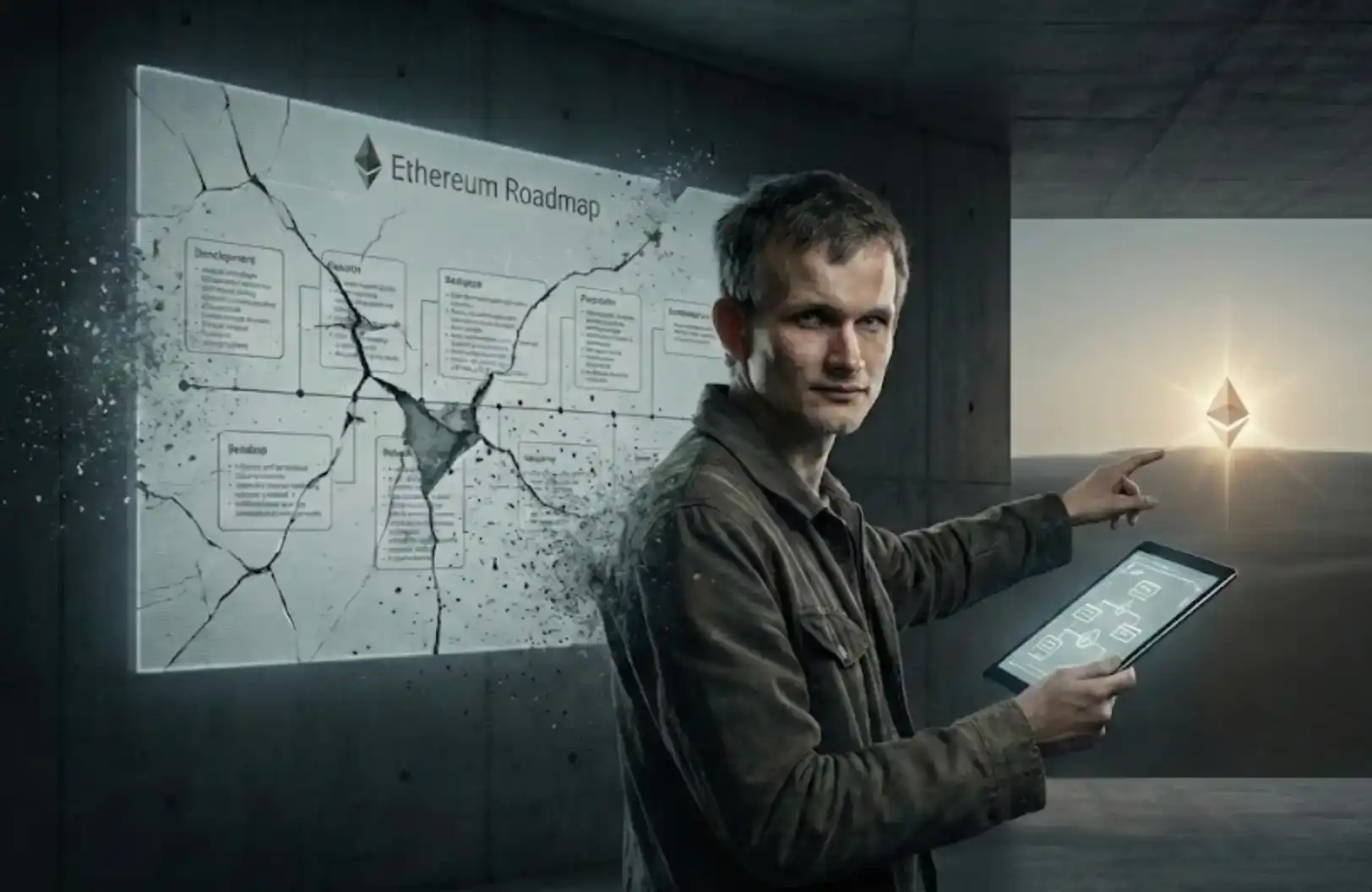
Five Years Later, Vitalik Overturns the Future He Set for Ethereum

Five years after championing Layer 2 (L2) scaling as Ethereum's future, Vitalik Buterin has dramatically reversed his position, declaring that L2s have largely failed to fulfill their original vision of "branded sharding." In a pivotal post, he argued that most L2 solutions remain highly centralized, reliant on multi-signature bridges and sequencers, and thus are not truly extending Ethereum's security or decentralization. The initial push for L2s was a survival response to Ethereum's cripplingly high fees and congestion during the 2021 DeFi and NFT boom, when competitors like Solana gained traction. However, despite massive venture funding—with projects like Arbitrum, Optimism, and Starknet raising billions—progress toward full decentralization (Stage 2) has been slow. Many operate more like centralized databases, prioritizing control and regulatory compliance over Ethereum's core values. Meanwhile, Ethereum itself has scaled significantly. Through upgrades like EIP-4844 and increased gas limits, L1 transaction fees have plummeted by over 99%, often costing just cents. This reduces L2's cost advantage and exposes their drawbacks: bridge vulnerabilities, fragmented liquidity, and complex user experiences. Vitalik now urges L2s to pivot from mere scaling to providing unique functional value—like privacy, ultra-fast finality, or application-specific optimizations—that L1 cannot easily offer. He reframes L2s as a spectrum of specialized "plugins" rather than essential scaling layers. This shift signals a market consolidation where only L2s with genuine utility and decentralization will survive, ending an era of inflated valuations and "ghost chain" projects. Ethereum is reclaiming its sovereignty by becoming scalable on its own terms.

marsbit02/04 05:52

Five Years Later, Vitalik Overturns the Future He Set for Ethereum

marsbit02/04 05:52

Hyperliquid Infringement Dispute: Technological Rights Protection or Opportunistic Marketing?

Hyperliquid, a high-performance decentralized exchange (DEX), faces patent infringement allegations from Cypherium, a competing RWA blockchain project. The dispute centers on US Patent 11,411,721 B2, held by Cypherium, which covers systems for dynamically selecting and reconfiguring validator committees using mechanisms like aggregated signatures and two-phase reconfiguration in a Proof-of-Stake (PoS) environment. Cypherium’s founder, Sky Guo, claims Hyperliquid’s core consensus engine, HyperCore—a custom variant of the HotStuff algorithm—illegally uses this patented technology to achieve its high throughput and sub-second finality. The controversy arises as Hyperliquid’s native token, HYPE, surged over 40% amid a broader market downturn and the launch of its new prediction market proposal, HIP-4. Critics question the timing of the allegations, noting coinciding promotions for Cypherium’s upcoming project, "G-Exchange," suggesting potential "clickbait marketing." Hyperliquid has not yet publicly responded to the legal claims. With Hyperliquid’s code remaining closed-source, external verification of the infringement is challenging. The situation highlights tensions between protecting proprietary tech and maintaining decentralization trust. Additionally, HYPE is set to unlock 9.92 million tokens (2.79% of supply) on February 6, worth approximately $357 million at current prices.

marsbit02/04 02:50

Hyperliquid Infringement Dispute: Technological Rights Protection or Opportunistic Marketing?

marsbit02/04 02:50

Mobile: The Next Battleground for Solana

The era of competing solely on blockchain performance and technical roadmaps is over. Layer-1 blockchains must now compete at the top of the application stack—focusing on applications and users rather than just infrastructure. Solana is well-positioned to lead this shift by targeting the Internet Capital Market (ICM), where capital formation happens at scale, especially on mobile devices. Unlike neutral backend infrastructures of the past, L1s now face competition from regulated entities, high-performance tech, and financial giants. Centralized crypto apps like Binance and Coinbase have built their own chains to capture more value, while new chains from companies like Stripe and Circle leverage existing distribution channels. To stay competitive, established blockchains must adopt opinionated approaches to their tech stack usage. Solana’s performance and foundational components make it an ideal default operating system for mobile crypto applications. However, the current on-chain experience remains fragmented and browser-based. Solana Labs, with its mobile-focused initiatives like Solana Mobile and the recent SKR token, is uniquely equipped to drive ICM adoption on mobile. By building vertically integrated application that reflects its design philosophy—integrating DEXs, perpetuals, and payments—Solana Labs can demonstrate large-scale capital formation in action. While some ecosystem developers may fear competition, Solana’s permissionless nature ensures a level playing field. Solana Labs’ efforts can benefit the entire network by highlighting and integrating ecosystem components in ways independent apps cannot, ultimately making the ecosystem more competitive. The winners in crypto over the next five years will be determined by which core teams make the right opinionated decisions to win at the top of the stack—and Solana is poised to lead in mobile ICM.

比推01/28 20:50

Mobile: The Next Battleground for Solana

比推01/28 20:50

活动图片