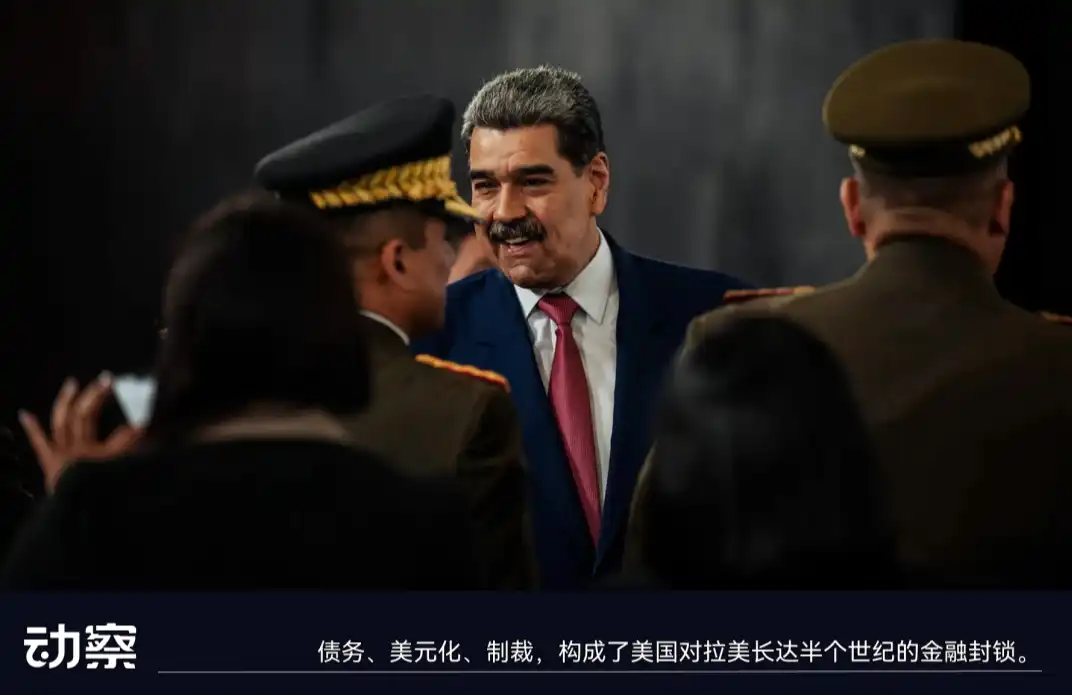
The U.S. Can No Longer Control Latin America, So They Took Maduro
US influence over Latin America is waning, as evidenced by the recent US military operation to extract Venezuelan President Maduro. For decades, the US maintained control through three key financial tools: debt, dollarization, and sanctions.
In the 1980s, Latin America’s foreign debt reached 50% of GDP, but today it stands at just 20%, partly due to China’s rise as a major lender and trading partner since the 2000s. Countries like Brazil and Argentina used commodity-driven revenue to pay off IMF debts and reduce dependency.
Dollarization, once a means of control, has evolved into “de-Americanized dollarization”—people use the dollar for stability but reject US political influence. Meanwhile, extreme sanctions, such as those imposed on Venezuela, backfired. Instead of crushing resistance, they spurred the growth of a parallel financial ecosystem.
This new system includes:
- Stablecoins like USDT, used for 80% of Venezuela’s oil revenue
- Local fintech platforms (e.g., Brazil’s Pix and Nubank) serving millions
- Non-dollar trade channels, such as currency swaps with China
- A thriving underground economy and crypto markets
US policies—like proposed taxes on remittances and Wall Street’s “de-risking”—have unintentionally accelerated this shift. As the US tightens control, dollar usage becomes more decentralized, echoing the historical decline of the British pound. The very tools meant to enforce dominance are now fueling its erosion.
marsbit01/05 04:03