# CeDeFi Articoli collegati

Il Centro Notizie HTX fornisce gli articoli più recenti e le analisi più approfondite su "CeDeFi", coprendo tendenze di mercato, aggiornamenti sui progetti, sviluppi tecnologici e politiche normative nel settore crypto.
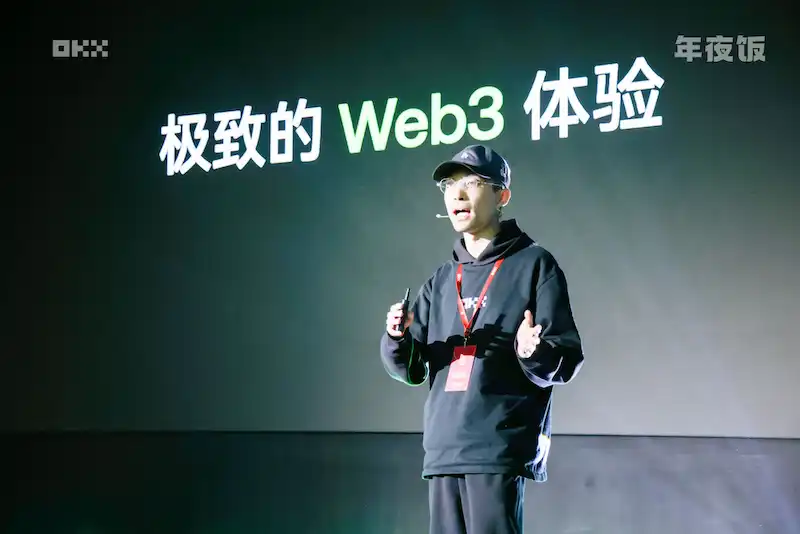

Bringing Web3 to 'Daily Life': Zakk Details the 'Next Phase' of OKX Web3

At the OKX "New Year's Eve Dinner" event on January 24, 2026, Zakk, Head of OKX Wallet, outlined the next phase of OKX Web3’s strategy: making crypto part of everyday life. The vision is built on three core principles: security and self-custody as the foundation, user experience as the bridge, and ecosystem infrastructure as the driving force. Zakk emphasized that a "superior Web3 experience" requires uncompromising security—such as protection against address poisoning scams—coupled with simplicity for users. OKX Wallet supports ~140 blockchains and aggregates ~500 DEXs, using smart routing to improve speed and pricing. Three key products were highlighted: - **Smart Account**: Integrates AA, MPC, and seedless technology with TEE-secured private keys, enabling advanced self-custody trading features like limit orders. - **CeDeFi**: A new wallet blending CEX and DEX functionalities, targeting new users with a TEE-based, non-custodial model that requires no seed phrases. - **OKX Pay**: A payment product designed to merge crypto payments with DeFi, aiming for mass adoption. X Layer, OKX’s blockchain, was positioned as the scalable backbone, targeting 5,000 TPS, 400ms block times, and near-zero fees. Zakk stressed the importance of sustainable ecosystem growth—focusing on project incubation and diverse applications beyond trading, such as RWA and AI. With stablecoins approaching trillion-dollar scale, OKX aims to make Web3 accessible, secure, and practical for billions.

marsbit01/25 05:31

Bringing Web3 to 'Daily Life': Zakk Details the 'Next Phase' of OKX Web3

marsbit01/25 05:31

Looking Back at the Web3 Wallet Undercurrents of 2025: What Are the Major Players Really Competing On?

In 2025, the Web3 wallet sector is undergoing a quiet but significant transformation, driven by major players integrating advanced technologies to enhance security, usability, and functionality. Key developments include Coinbase and Bitget adopting TEE (Trusted Execution Environment) for secure key management and transaction signing, Binance and OKX leveraging TEE with MPC (Multi-Party Computation) and smart accounts for improved security and cross-chain operations, and MetaMask and Phantom introducing social login features using encrypted key sharding for better recovery and user experience. The evolution reflects a shift from purely self-custodial models to hybrid approaches that balance security with convenience, enabling features like automated trading, gas sponsorship, and seamless multi-chain interactions. This transition is fueled by emerging trends such as Perps (perpetual contracts), RWA (real-world assets), and CeDeFi, which demand more complex transaction capabilities. While no new dominant wallets emerged, existing leaders are repositioning as comprehensive entry points for diverse on-chain activities, moving beyond basic asset storage to integrated financial services. The adoption of TEE and MPC technologies, alongside potential future integration with passkeys, indicates a maturation of wallet infrastructure, setting the stage for broader adoption and more sophisticated applications in the coming years.

marsbit12/15 04:05

Looking Back at the Web3 Wallet Undercurrents of 2025: What Are the Major Players Really Competing On?

marsbit12/15 04:05

活动图片