# Bitcoin Articoli collegati

Il Centro Notizie HTX fornisce gli articoli più recenti e le analisi più approfondite su "Bitcoin", coprendo tendenze di mercato, aggiornamenti sui progetti, sviluppi tecnologici e politiche normative nel settore crypto.

Is Bitcoin's Recent Surge a Blessing or a Trap?

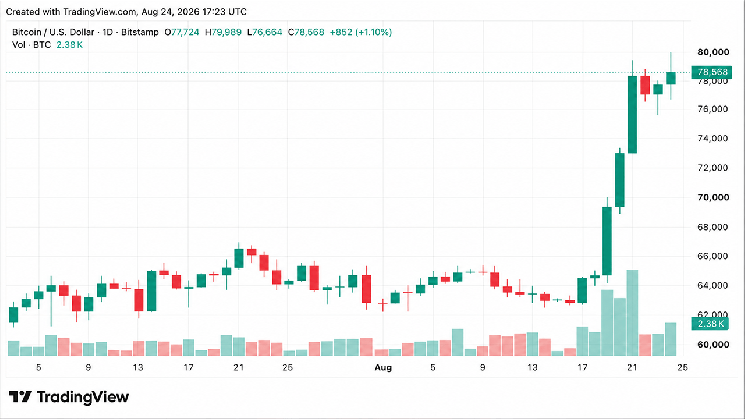
Bitcoin recently surged from around $63,000 to almost $80,000. According to Glassnode, this rally is not solely due to low liquidity but driven by real capital inflows. Key factors include aggressive spot market buying, increased trading volumes, improved market depth, and significant institutional demand, as evidenced by high volumes and inflows into spot Bitcoin ETFs. Derivatives market data shows investors adopting more aggressive risk management, with strong perpetual futures buying. However, a substantial increase in futures open interest points to heightened speculative activity and leverage use. On-chain metrics support the bullish activity, with growth in active addresses and asset-adjusted transfer volume, indicating accelerated user and economic activity within the network. Investor profitability has also improved significantly, with both unrealized and realized profits rising well above historical averages. This is shifting investor behavior toward profit-taking rather than loss-selling. However, Glassnode cautions that the current market structure is not yet fully based on long-term capital accumulation. It notes that "hot capital," representing short-term, price-sensitive funds, is elevated, while macroeconomic-scale capital inflows remain relatively limited. The rally appears to be supported more by active short-term investors, tactical positioning, and growing speculative appetite than by sustained, long-term accumulation.

cryptonews.ru1 h fa

Is Bitcoin's Recent Surge a Blessing or a Trap?

cryptonews.ru1 h fa

Bitcoin Reaches $80,000: Three Arguments Against a Bull Market

Bitcoin reached $80,000 on August 24, 2026, a 38% rise from its July low of $57,800. While this surge is notable, analyst Rekt Capital presents three arguments against it signaling a true bull market reversal, suggesting it may instead be a rally within a broader bear market. First, if July 2026 was the bear market bottom, its formation time was 27% shorter than historical averages, a conclusion only valid if no new lower low forms by year-end. Second, Bitcoin broke down from a macro triangle pattern in July, but the subsequent ~30% drop was significantly smaller than the 48-62% declines seen after similar breakdowns in past cycles. Third, and crucially, the price has failed to break the long-term descending trendline from early 2025 highs, meaning Bitcoin is still making lower highs on macro timeframes, indicating underlying weakness. Rekt Capital notes the dynamic trendline resistance is near $79,000 this month, dropping to ~$76,300 next month. A monthly close below it could open the door for a correction. On weekly charts, resistance sits at $74.5k-$83.5k, with support at $62.5k-$68.5k. Adding another perspective, Crypto Rover highlights two key liquidation levels on Bitcoin's heatmap: a cluster of short positions at $80k-$90k (which could fuel a squeeze higher) and a concentration of long positions at $48k-$60k, acting as competing price "magnets." The article contrasts Rekt Capital's current cautious stance with his past calls in 2025, noting he correctly identified market direction but underestimated the scale of both the subsequent spring rally and the following autumn/winter decline. His current analysis again emphasizes macro weakness despite the recent price rise.

cryptonews.ru1 h fa

Bitcoin Reaches $80,000: Three Arguments Against a Bull Market

cryptonews.ru1 h fa

From Bitcoin to Solana: How 8 Cryptocurrency Networks Achieve Consensus

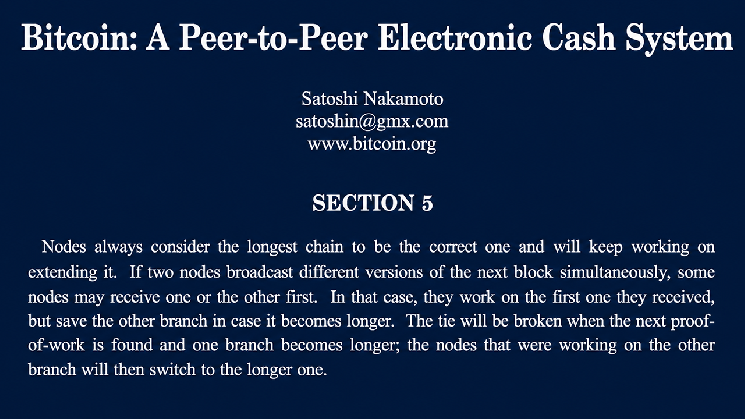
This article explains how eight major cryptocurrency networks achieve consensus, moving beyond the simple proof-of-work (PoW) vs. proof-of-stake (PoS) distinction. Bitcoin established the "Nakamoto consensus" model, where miners compete through PoW, and the valid chain is the one with the most cumulative computational work. Dogecoin and Zcash follow this core model but use different mining algorithms (Scrypt and Equihash, respectively) and have faster difficulty adjustment periods. Ethereum transitioned to a PoS system called Gasper after The Merge. Validators stake ETH to propose and vote on blocks, with finality reached in about 12.8 minutes through a combination of the LMD-GHOST fork-choice rule and Casper FFG. Other networks employ more delegated or permissioned structures. BNB Smart Chain uses a Proof-of-Staked-Authority model with 45 elected validators for high speed, achieving finality in under a second. Solana combines Proof-of-History (a cryptographic clock) with a stake-weighted Tower BFT algorithm for voting, targeting finality in about 12.8 seconds. Tron uses delegated PoS where 27 super representatives take turns producing blocks on a schedule, with finality requiring confirmation by 19 of them. The XRP Ledger takes a unique approach, relying on Unique Node Lists (UNLs). Each server maintains a list of trusted validators, and consensus is reached through repeated rounds of voting until an 80% quorum agrees, typically within 4-5 seconds, without mining or staking lotteries. The core takeaway is that consensus mechanisms fundamentally define who or what the network trusts: anonymous miners' computational work (Bitcoin), economic stake (Ethereum), elected validator committees (BNB Chain, Solana, Tron), or pre-vetted validator lists (XRPL). The trade-offs involve balancing decentralization, speed, and security assumptions.

cryptonews.ru7 h fa

From Bitcoin to Solana: How 8 Cryptocurrency Networks Achieve Consensus

cryptonews.ru7 h fa

活动图片