SUI trades below $1 as institutional access expands via staked ETFs

ambcryptoPubblicato 2026-02-18Pubblicato ultima volta 2026-02-18

Introduzione

Despite the launch of two new staked SUI exchange-traded products from Canary Capital (SUIS) and Grayscale (GSUI) on February 18th, the price of SUI continued to trade below $1, around $0.95. These products are designed to provide institutional investors with regulated exposure to the asset while capturing staking rewards. However, the market reaction was muted, with SUI's price remaining under pressure and near its lowest levels since late 2023. The lack of immediate positive price action suggests that broader market conditions and a focus on long-term accumulation, rather than short-term speculation, are currently outweighing the impact of the new investment vehicles.

Sui’s native token [SUI] continued to trade below the $1 mark on Wednesday, even as institutional access to the asset broadened following the launch of two separate staked SUI exchange-traded products in the U.S.

The muted price reaction came despite announcements from Canary Capital and Grayscale on 18 February. They unveiled investment vehicles designed to offer regulated exposure to SUI while capturing on-chain staking rewards.

At the time of writing, SUI was trading around $0.95, down more than 1.7% on the day. It was trading near its lowest levels since late 2023, according to TradingView data.

Two staked SUI products go live

On Wednesday, 18 February, Canary Capital announced the launch of the Canary Staked SUI ETF [SUIS], which began trading on Nasdaq.

The fund provides spot exposure to SUI, the native token of the Sui Network, while also participating in the network’s proof-of-stake validation process. Net staking rewards are reflected directly in the fund’s net asset value.

According to Canary, the product is aimed at investors seeking regulated exposure to emerging Layer-1 networks.

On the same day, Grayscale also rolled out its own staked SUI product [GSUI], expanding its suite of single-asset crypto vehicles beyond Bitcoin and Ethereum.

While structured differently from an ETF, the Grayscale product similarly allows investors to gain exposure to SUI alongside staking yield. It reinforces the firm’s longer-term view on proof-of-stake networks.

The near-simultaneous launches suggest rising institutional interest in Sui as an investable network, even as broader market sentiment remains cautious.

Institutional access widens as price stays under pressure

Despite the expansion in access, SUI’s price failed to respond positively to the news. The token has been locked in a steady downtrend since late 2025, falling from highs above $3 to below $1, with recent rallies repeatedly rejected.

Trading volume spiked briefly following the ETF announcements. Still, momentum quickly faded, indicating that the new products have yet to attract significant speculative inflows.

The lack of immediate upside may reflect the current macro backdrop and a broader shift toward long-term accumulation rather than short-term positioning.

Staked products, in particular, tend to appeal more to allocators focused on yield and network fundamentals than to momentum-driven traders.


Final Summary

  • Canary’s SUIS and Grayscale’s GSUI expand regulated access to SUI with staking yield, signalling growing institutional product interest in the network.
  • SUI still trading below $1 suggests the market is prioritizing broader risk conditions over ETF/ETP launches, keeping near-term price reaction muted.


Crypto di tendenza

Domande pertinenti

QWhat is the current trading price of SUI and how has it performed recently?

AAt the time of writing, SUI was trading around $0.95, down more than 1.7% on the day. It has been in a steady downtrend since late 2025, falling from highs above $3 to below $1.

QWhich two companies launched staked SUI exchange-traded products on February 18th?

ACanary Capital and Grayscale launched staked SUI products. Canary Capital introduced the Canary Staked SUI ETF (SUIS) on Nasdaq, and Grayscale rolled out its own staked SUI product (GSUI).

QWhat is the primary purpose of the new staked SUI investment vehicles?

AThe products are designed to offer regulated exposure to SUI while also capturing on-chain staking rewards, appealing to investors seeking yield and long-term accumulation based on network fundamentals.

QHow did the market initially react to the launch of the staked SUI ETFs?

ATrading volume spiked briefly following the announcements, but momentum quickly faded. The price failed to respond positively, indicating the new products have yet to attract significant speculative inflows.

QWhat does the lack of a positive price reaction to the ETF launches suggest about the current market sentiment?

AThe muted price reaction suggests the market is prioritizing broader risk conditions and a cautious macro backdrop over the ETF/ETP launches, with a shift toward long-term accumulation rather than short-term speculation.

Letture associate

Once-Popular Web3 Enters Wave of Layoffs

The once-hot Web3 industry is experiencing a severe wave of layoffs. While many companies attribute job cuts to AI-driven restructuring, the primary reason is often financial pressure. The Web3 sector, at the intersection of tech and finance, has been hit particularly hard. Employees at major cryptocurrency exchanges report sudden, impersonal layoffs—often with system access revoked overnight—and minimal or no severance. Common tactics include setting impossible performance targets or terminating employees for minor policy violations. The working atmosphere has become toxic, marked by intense monitoring, excessive meetings, and management obsessed with control and internal politics rather than product innovation. The industry's core business model is collapsing. Exchange revenue from trading fees and listing charges has plummeted due to a decline in quality projects and retail investor exodus. Events like the massive forced liquidation on October 10th further shattered confidence. Competition from on-chain derivatives platforms and prediction markets is intensifying the downturn. As layoffs continue, displaced workers struggle to find new opportunities. Many transition to the AI sector, but face significant bias from traditional finance and even some AI firms, which view crypto industry experience with suspicion. The current downturn appears more structural than cyclical, driven by unsustainable practices, internal strife, and a failure to innovate, raising questions about the industry's future trajectory.

marsbit10 min fa

Once-Popular Web3 Enters Wave of Layoffs

marsbit10 min fa

Sales Drop 26% But Prices Rise? Xiaomi's Dilemma

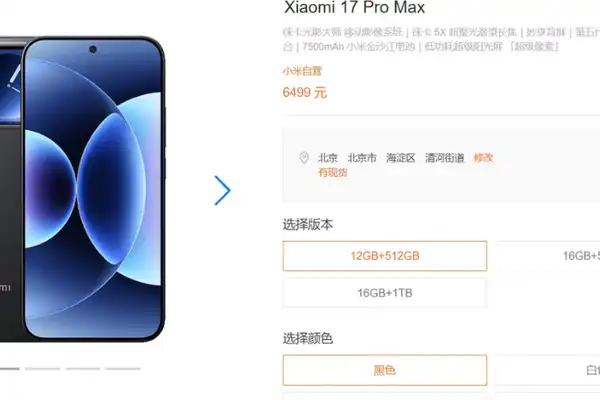
Xiaomi, facing a significant 26.3% year-on-year decline in global smartphone shipments in Q2 2026, has implemented its third price hike of the year. On August 2nd, prices were raised for nine models, including the flagship Mi 17 series (up 400-500 yuan) and Redmi K90/Turbo 5 series (up 300 yuan). This move completes a pattern where cost pressure, originating from surging memory chip prices, has climbed from entry-level to mid-range and now flagship products. The primary driver is a severe supply squeeze on consumer-grade DRAM and NAND flash memory, as major manufacturers like Samsung shift advanced capacity to more profitable HBM for AI applications. According to Xiaomi President Lu Weibing, memory prices for the same configuration have skyrocketed nearly fourfold since Q1 2025, adding roughly 1500 yuan to the cost of a mainstream 12GB+512GB phone. IDC estimates consumer memory costs have risen nearly 300% year-on-year. While the price increases hurt demand and contributed to the sales slump, Xiaomi's strategy of reducing entry-level models and upgrading its product mix also played a role. Domestically, its market share in China fell to 12% (5th place), while leaders Huawei and Apple saw shipments grow over 24%. To mitigate future risks, Xiaomi is accelerating its in-house "Surge" chip development and optimizing memory configurations across its lineup. Xiaomi is not alone; major brands like OPPO, vivo, and Apple have already raised prices in 2026, with industry insiders predicting another round of increases (200-800 yuan) in the second half. A full-scale industry-wide涨价 cycle is underway, forcing both manufacturers and consumers to recalibrate their strategies and purchasing decisions amid sustained cost pressures.

marsbit21 min fa

Sales Drop 26% But Prices Rise? Xiaomi's Dilemma

marsbit21 min fa

Three Consecutive Quarters of Decline: The Crypto Market is Experiencing Its Longest Ebb Since 2022

The cryptocurrency market experienced its third consecutive quarterly decline in Q2 2026, marking its longest downturn since 2022, according to a CoinGecko report. The total market capitalization fell 12.6% to $2.1 trillion, a retreat of roughly 52% from its October 2025 peak. Multiple indicators signal an orderly capital exit from the sector. For the first time since Q3 2023, the total stablecoin market cap shrank (-1.6% to $305.1B), indicating funds are leaving the ecosystem entirely, not just rotating to safer crypto assets. Trading volumes on centralized exchanges dropped 27.9%, while DeFi's Total Value Locked (TVL) plummeted 23.4%. Both Bitcoin (-14.2%) and Ethereum (-25.4%) underperformed traditional risk assets like equities in Q2, breaking from previous correlative narratives. Ethereum saw its first-ever three-quarter losing streak, with its market share falling to around 10%. A few areas saw growth. Prediction market volumes surged 48.7%, largely driven by sports betting. Hyperliquid's HYPE token entered the top 10 by market cap, and tokenized collectibles platforms grew, though primarily via gamified mechanics. Despite a ~9.8% Bitcoin rebound in July, historical trends suggest caution for August. The market, now ~49% below its 2025 high, is undergoing a measured retreat. Its recovery hinges on future Federal Reserve policy and the industry's ability to develop sustainable revenue streams beyond speculation.

marsbit35 min fa

Three Consecutive Quarters of Decline: The Crypto Market is Experiencing Its Longest Ebb Since 2022

marsbit35 min fa

Trading

Spot

Articoli Popolari

Come comprare SUI

Benvenuto in HTX.com! Abbiamo reso l'acquisto di SUI Network (SUI) semplice e conveniente. Segui la nostra guida passo passo per intraprendere il tuo viaggio nel mondo delle criptovalute.Step 1: Crea il tuo Account HTXUsa la tua email o numero di telefono per registrarti il tuo account gratuito su HTX. Vivi un'esperienza facile e sblocca tutte le funzionalità,Crea il mio accountStep 2: Vai in Acquista crypto e seleziona il tuo metodo di pagamentoCarta di credito/debito: utilizza la tua Visa o Mastercard per acquistare immediatamente SUI NetworkSUI.Bilancio: Usa i fondi dal bilancio del tuo account HTX per fare trading senza problemi.Terze parti: abbiamo aggiunto metodi di pagamento molto utilizzati come Google Pay e Apple Pay per maggiore comodità.P2P: Fai trading direttamente con altri utenti HTX.Over-the-Counter (OTC): Offriamo servizi su misura e tassi di cambio competitivi per i trader.Step 3: Conserva SUI Network (SUI)Dopo aver acquistato SUI Network (SUI), conserva nel tuo account HTX. In alternativa, puoi inviare tramite trasferimento blockchain o scambiare per altre criptovalute.Step 4: Scambia SUI Network (SUI)Scambia facilmente SUI Network (SUI) nel mercato spot di HTX. Accedi al tuo account, seleziona la tua coppia di trading, esegui le tue operazioni e monitora in tempo reale. Offriamo un'esperienza user-friendly sia per chi ha appena iniziato che per i trader più esperti.

610 Totale visualizzazioniPubblicato il 2024.12.12Aggiornato il 2026.06.02

Come comprare SUI

Discussioni

Benvenuto nella Community HTX. Qui puoi rimanere informato sugli ultimi sviluppi della piattaforma e accedere ad approfondimenti esperti sul mercato. Le opinioni degli utenti sul prezzo di SUI SUI sono presentate come di seguito.

活动图片