Starting from 9.9 RMB, Three Major Carriers Enter the Token Business. Will Using AI Be Like Paying a Phone Bill in the Future?

marsbitPubblicato 2026-05-19Pubblicato ultima volta 2026-05-19

Introduzione

China's three major telecom operators—China Telecom, China Mobile, and China Unicom—have officially entered the AI token business, launching low-cost token packages for individuals and businesses. China Telecom introduced six trial commercial token plans. For individuals and families, prices start at 9.9 yuan/month for 10 million tokens. For developers and SMEs, plans range from 39.9 yuan/month for 15 million tokens to 299.9 yuan/month for 150 million tokens. Shanghai Mobile launched a token service offering 400,000 tokens for 1 yuan, payable via phone bill. It also started an "AI Hui Shen Huo" upgrade plan for smart home products. China Unicom's cloud division released personal and team token plans. Personal plans start at 15 yuan/month for 6 million tokens, while team plans begin at 198 yuan/month (approximately 200 million tokens). Local branches in Sichuan and Shanghai have also rolled out their own token packages and AI strategies. This move marks a shift for operators, repackaging AI model usage (tokens) into familiar, subscription-based services like data plans. By leveraging their vast user base, billing systems, and distribution channels, they aim to make AI access as simple and widespread as paying a phone bill, potentially establishing tokens as a new fundamental utility.

ZHIDONGSHE, May 18 — In recent days, China Telecom, China Mobile, and China Unicom have successively launched Token packages and related AI services, selling large model call volume to users such as individuals, families, developers, and small and medium-sized enterprises.

This marks the first formal entry of the three major carriers into the Token business, which was previously dominated by large model manufacturers, internet giants, and cloud service providers.

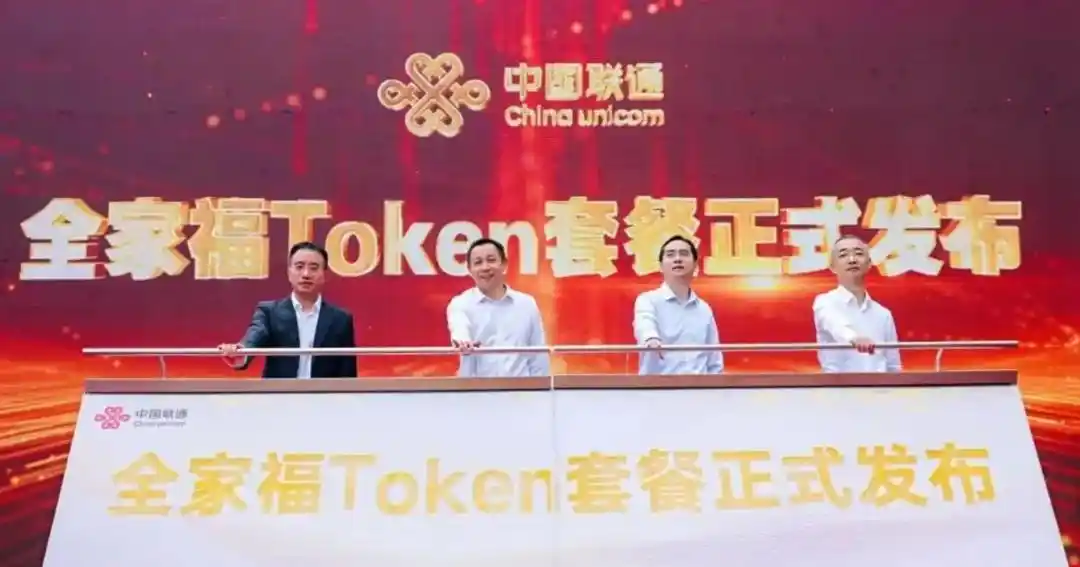
Yesterday, China Telecom launched a series of trial commercial Token packages. Personal and family customers can obtain 10 million Tokens for as low as 9.9 RMB/month; on the same day, Shanghai Mobile launched a Token general service, where 1 RMB can buy 400,000 Tokens, supporting payment via phone bill; Unicom Cloud recently collaborated with Unicom Yuanjing to launch Token Plan Personal Edition and Team Edition dual-track products. China Unicom's Sichuan and Shanghai branches also released local Token packages and AI strategy upgrades.
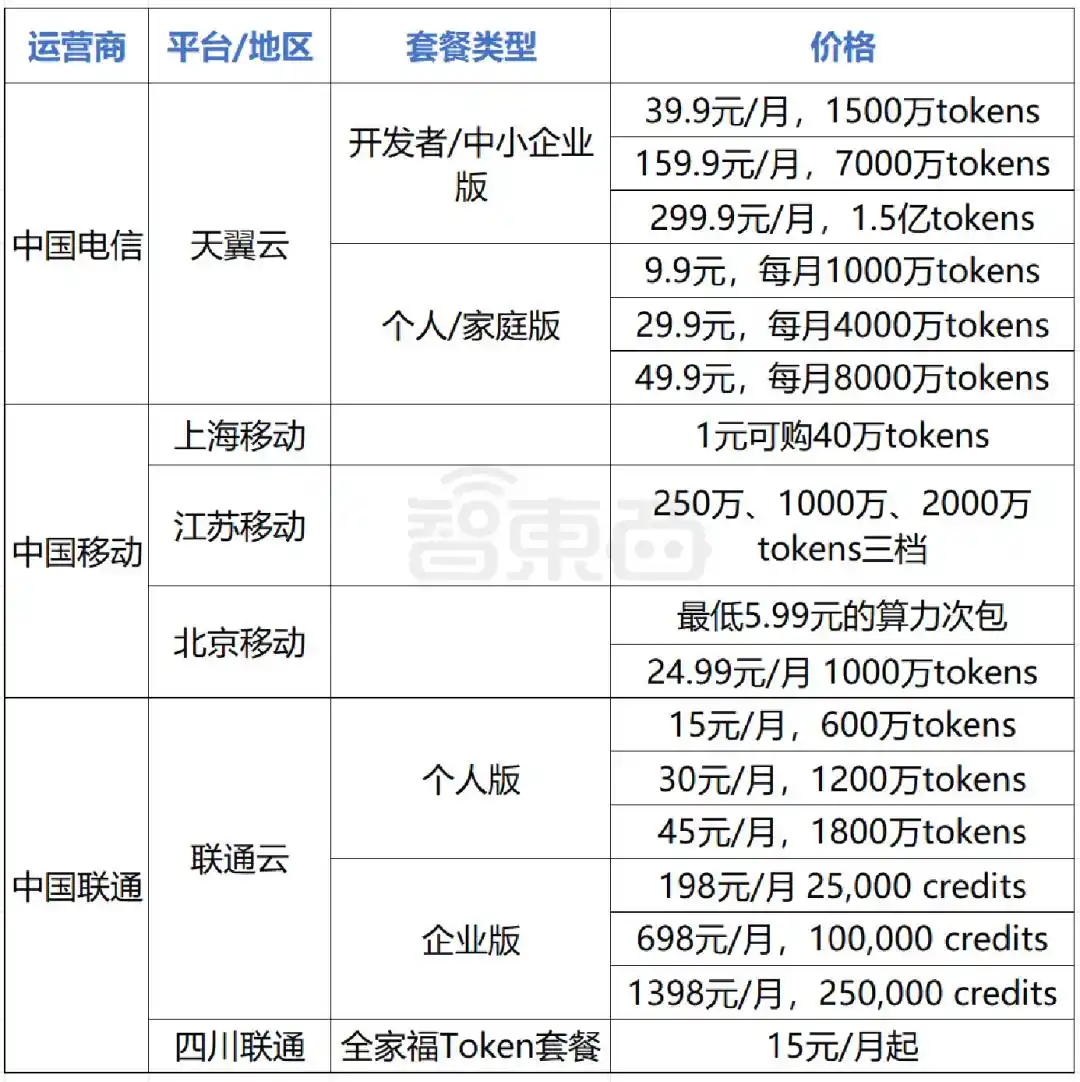
Comparison of Token Packages from the Three Major Carriers (Chart by ZHIDONGSHE)

The Token packages from the three major carriers have lowered the price threshold to tens of RMB or even single-digit RMB. China Telecom and China Mobile adopt tiered sales for individuals and enterprise teams, while China Mobile and China Unicom introduce special policies for different provinces.

It can be seen that all three major carriers are packaging large model call volume from a backend cloud platform capability into a basic service similar to data packages or broadband packages. In the past, data traffic was one of the core businesses for carriers. Now, in the AI era, the three major carriers launching Token packages are, to some extent, attempting to get a share in the Token consumption track, and may even become new primary operators leveraging their massive customer base.

01. China Telecom Launches Six-Tier Token Packages, Starting from 9.9 RMB/Month

Yesterday, China Telecom launched a series of trial commercial Token packages, offering six tiers of Token Plans for developers and SME customers, as well as personal and family customers, along with uplink speed boost packages for broadband and security protection packages.

For developers and SME customers, China Telecom provides an integrated service of "Token + Connectivity + Security", introducing three tiers of Token Plans: Basic, Professional, and Premium, with monthly fees of 39.9 RMB, 159.9 RMB, and 299.9 RMB, corresponding to 15 million Tokens, 70 million Tokens, and 150 million Tokens per month, respectively. This package integrates China Telecom's Xingchen Large Model and GLM-5 and other mainstream domestic large models, suitable for scenarios like AI programming and creation, code development and debugging, and intelligent agent setup and operation.

For personal and family customers, China Telecom launched three tiers of Token Plans: Light, Standard, and Premium, with monthly fees of 9.9 RMB, 29.9 RMB, and 49.9 RMB, corresponding to 10 million Tokens, 40 million Tokens, and 80 million Tokens per month, respectively. This package integrates China Telecom's Xingchen Large Model and DeepSeekV3.2 and other ecosystem large models, suitable for scenarios like daily office assistance, learning and creation, and copywriting.
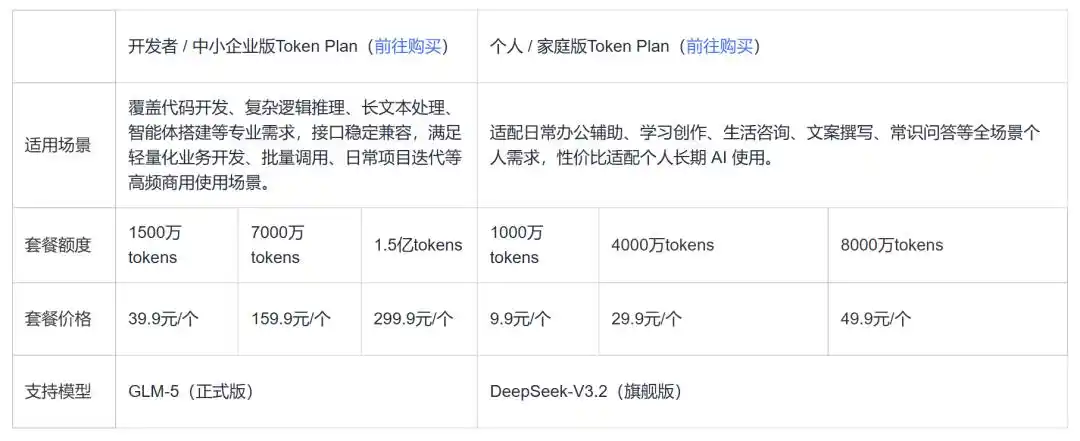
China Telecom Launches 6-Tier Token Plan (Image Source: Tianyi Cloud)

Users can subscribe through channels like the Tianyi Cloud official website and the China Telecom App. Customers who already have local hardware terminals (e.g., Mac Mini) can set their own API keys for applications like China Telecom's TeleClaw, third-party OpenClaw, and Hermes; customers without local hardware terminals can directly use them by purchasing Tianyi AI Cloud Computers with built-in intelligent agents like TeleClaw, OpenClaw, and Hermes.

Additionally, China Telecom will launch Tianyi Token Coins and Token Benefits for Token ecosystem partners. Customers can use points to exchange Token volume packages and AI applications. China Telecom will also collaborate with more AI ecosystem application partners to operate Token benefits.

02. Shanghai Mobile Launches Token General Service, 1 RMB Buys 400,000 Tokens

According to a report from the Shanghai Municipal Commission of Economy and Informatization, on May 17, China Mobile Shanghai Company launched a Token general service at the World Telecommunication Day press conference and jointly launched the co-branded WorkBuddy Intelligent Agent Workbench with Tencent. 1 RMB can buy 400,000 Tokens, supporting phone bill payment and multi-model universality.

Shanghai Mobile also simultaneously launched the "AI Hui Shen Huo" upgrade plan, introducing products like Super Portable Wi-Fi, Dual Vivid Jingcai Audio-Visual, AI Smart Viewing, and Love Home Lingxi Screen for citizens, accelerating the entry of embodied intelligence and Token inclusive services into home scenarios.
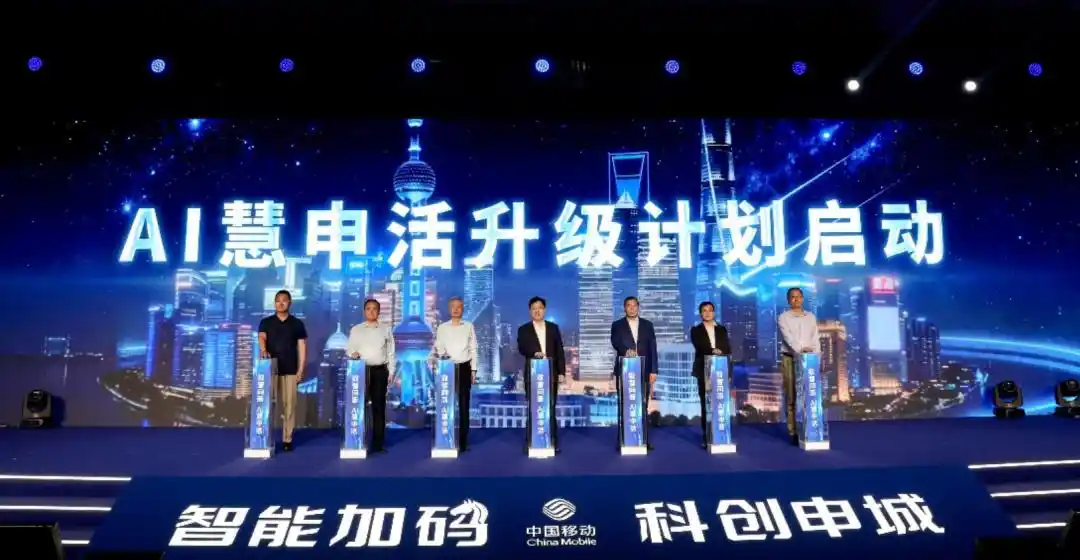
Shanghai Mobile Launches "AI Hui Shen Huo" Upgrade Plan (Image Source: Shanghai Securities News)

Previously, some local branches of China Mobile had conducted pilot AI Token packages. Jiangsu Mobile launched three packages of 2.5 million, 10 million, and 20 million Tokens, each valid for 1 month; Beijing Mobile launched a 5.99 RMB computing power sub-package and a 24.99 RMB/10 million Token monthly package for cloud computer users. Overall, China Mobile is accelerating the launch of AI computing power services through pilot projects by local branches and the group's Token operation ecosystem.

03. China Unicom Advances with Cloud Products and Local Packages, Personal Edition Starting from 15 RMB/Month

Recently, Unicom Cloud, in collaboration with Unicom Yuanjing, officially launched the Token Plan Personal Edition and Team Edition. This Token Plan relies on the Yuanjing MaaS platform, self-developed intelligent agent toolkit, and AI-selected Unicom Cloud computing power, covering scenarios from personal light office work, content creation, and student learning to enterprise R&D, government and enterprise office work, and industry digitization.

The Token Plan is divided into Personal Edition and Team Edition, with a total of 6 tiers. The Personal Edition targets users like independent creators, professionals, students, and self-media bloggers, offering three packages: Lite, Pro, and Max, priced at 15 RMB/month (including 6 million tokens), 30 RMB/month (including 12 million tokens), and 45 RMB/month (including 18 million tokens) respectively.

The Team Edition targets enterprise R&D teams, government and enterprise office teams, and industry solution teams, offering three packages: Team Lite, Team Pro, and Team Max, priced at 198 RMB/month (including 25,000 credits), 698 RMB/month (including 100,000 credits), and 1398 RMB/month (including 250,000 credits) respectively.

The Credits consumed per instance are dynamically determined by factors such as model type, token usage (input/output/cache), thinking mode, and tool calls. Taking DeepSeek-V4-Pro as an example: 25,000 credits are approximately 200 million tokens; 100,000 credits are approximately 800 million tokens; 250,000 credits are approximately 2 billion tokens.
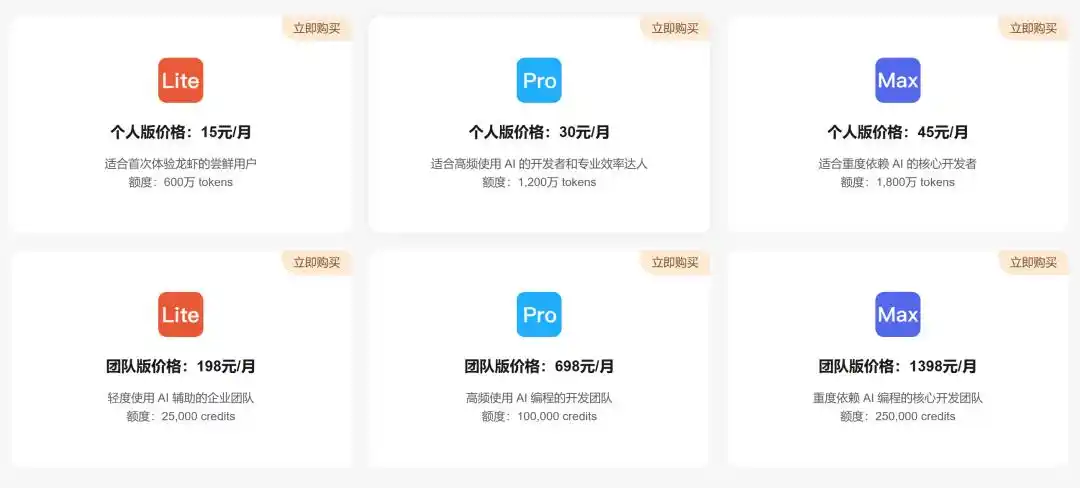
Unicom Cloud Launches Personal and Team Edition Token Plans (Image Source: Unicom Cloud)

In terms of models, the Personal Edition supports DeepSeek V4-Flash and MiniMax-M2.5, while the Team Edition unlocks DeepSeek V4 and provides models such as DeepSeek V4-Flash, DeepSeek V4-Pro, and MiniMax-M2.5.

Additionally, Unicom's self-developed office assistant UniClaw can handle tasks like file processing, document generation, data analysis, deep research, and multimodal content processing, and supports local private deployment.

Besides the unified products from Unicom Cloud, local branches of China Unicom are also simultaneously promoting the landing of Token packages. Yesterday, China Unicom Sichuan Branch released the "Family Token Package", with a fixed monthly fee starting as low as 15 RMB. Combined with Unicom Cloud Desktop and the WorkBuddy intelligent agent application, it allows users to process files and generate reports in the cloud without complex technical deployment.
Sichuan Unicom Releases Family Token Package

On May 16, China Unicom Shanghai Branch comprehensively upgraded the "UniAI·Zhi Lian Shen Cheng" artificial intelligence strategy, building a "National Chip, National Model, National Cloud" security foundation. Simultaneously, relying on ten-thousand-card domestic computing power and self-developed scheduling platforms, it launched three types of computing power services, released multiple Token products and integrated packages, and initiated the "Computing Power Inclusive Season".

04. Conclusion: Carriers Collectively Launch Token Packages, AI Computing Power Enters the Mass Market

The consecutive launch of Token packages by the three major carriers signifies, to some extent, that AI computing power is gradually transforming into a basic service for the masses. Compared to the traditional API calling model, carriers' advantages lie in user accounts, phone bill payment, broadband and mobile network access, and service channels targeting families and SMEs.

As Tokens are packaged into monthly packages, instance packages, benefit packages, and integrated packages, ordinary users no longer need to understand model platforms and API calls to use AI. For carriers, Tokens may also become a new category of basic billing unit following voice calls, data traffic, and broadband.

This article is from the WeChat public account "Zhixidongshe" (ID: zhidxcom), author: Yang Jingli, editor: Li Shuiqing


Domande pertinenti

QWhat are the price ranges and token allowances for China Telecom's token plans?

AChina Telecom offers six trial commercial token plans. For developers and SMEs, the Basic, Professional, and Premium plans cost 39.9, 159.9, and 299.9 yuan per month, providing 15 million, 70 million, and 150 million tokens respectively. For individual and family users, the Lite, Enjoy, and Premium plans cost 9.9, 29.9, and 49.9 yuan per month, offering 10 million, 40 million, and 80 million tokens respectively.

QHow is Shanghai Mobile promoting AI token services?

AShanghai Mobile has launched a token service where 1 yuan can purchase 400,000 tokens, and this supports payment via phone bill. They have also partnered with Tencent to launch a co-branded WorkBuddy smart agent workbench. Furthermore, they initiated the 'AI for a Better Shanghai Life' upgrade plan, introducing products like Super Portable Wi-Fi and AI Smart Viewing to bring embodied intelligence and token services into household scenarios.

QWhat are the main differences between China Unicom's 'Personal Edition' and 'Team Edition' token plans?

AChina Unicom's 'Personal Edition' is aimed at individual users like creators and students, with three tiers: Lite (15 yuan/month, 6 million tokens), Pro (30 yuan/month, 12 million tokens), and Max (45 yuan/month, 18 million tokens). The 'Team Edition' targets business teams, with tiers offering Credits: Team Lite (198 yuan/month, 25,000 credits), Team Pro (698 yuan/month, 100,000 credits), and Team Max (1398 yuan/month, 250,000 credits). Credits dynamically translate to tokens based on model usage; for example, 25,000 credits roughly equals 200 million tokens for the DeepSeek-V4-Pro model.

QWhat strategic advantage do telecom operators have in the AI token market?

ATelecom operators like China Telecom, China Mobile, and China Unicom possess significant strategic advantages for the AI token market. These include their massive existing customer bases, established billing and payment systems (like phone bill integration), extensive service channels for households and SMEs, and their core infrastructure in broadband and mobile networks. This allows them to package AI token usage as simple, accessible monthly plans, similar to data or voice packages, lowering the technical barrier for mainstream adoption.

QWhat does the article suggest about the future of AI compute power consumption?

AThe article suggests that the entry of major telecom operators into the token business signals a shift where AI compute power is becoming a mainstream, consumer-facing utility service. By packaging tokens into monthly bundles, pay-per-use packs, and integrated service plans, operators are making AI model usage as straightforward as paying for mobile data or a phone plan. This trend indicates that tokens could evolve into a new fundamental billing unit for operators, alongside traditional services like voice, data, and broadband.

Letture associate

What's New in Jensen Huang's 'Agent Factory'?

In a keynote at COMPUTEX 2026, NVIDIA CEO Jensen Huang shifted the company's focus from hardware "full-stack" solutions to the era of AI Agents. The centerpiece is the Vera Rubin platform, now in production, which is designed specifically for Agent workloads and offers 10x the efficiency of its predecessor. The platform features the new Vera CPU, built for AI, and incorporates Spectrum-X Ethernet Photonics with CPO technology for improved networking and energy efficiency. NVIDIA introduced DSX, an integrated toolkit for designing, simulating, and operating AI data centers, aiming to streamline "AI factory" deployment and management. For end-user deployment, the company unveiled DGX Station for Windows, a desktop AI supercomputer for running Agents locally, and the RTX Spark SoC for AI PCs. On the software front, NVIDIA launched the 550B-parameter Nemotron 3 Ultra model for enterprise Agents and the Cosmos 3 foundation model for physical AI, unifying visual reasoning and action prediction. In robotics, a partnership with Unitree yielded the H2 Plus, a reference humanoid robot built on the Isaac GR00T platform to lower development barriers. Security was emphasized with enhanced confidential computing for Vera Rubin and new data path security features for the BlueField-4 STX storage platform. The presentation highlighted a strategic pivot: NVIDIA is reorganizing its entire technology stack—from chips and data centers to models, software, and robots—around the emerging ecosystem of autonomous, practical AI Agents.

marsbit19 min fa

What's New in Jensen Huang's 'Agent Factory'?

marsbit19 min fa

The Era of Bitcoin Dominating Crypto Is Over

The era of Bitcoin's dominance over the entire crypto market is ending. The crypto economy is now bifurcating into two distinct camps: endogenous assets and exogenous assets. Endogenous assets, like Bitcoin and many traditional cryptocurrencies, derive their value primarily from the broader crypto market's price movements. Their fortunes rise and fall with the market cycle. Exogenous assets, however, are increasingly decoupled from crypto market volatility. These projects, while technically part of the crypto space, have business models and value drivers that operate independently. Examples include Venice, which monetizes private AI inference services; Figure, a fintech firm using blockchain to streamline home equity loans; and stablecoin-related companies like BVNK and Bridge, which see growth unrelated to crypto bull or bear markets. This shift is fundamental. Past narratives of a "blockchain over Bitcoin" focus failed because they lacked sustainable, quantifiable demand and revenue streams that could translate to token value. The current cycle is different: exogenous projects generate real revenue from paying users, and investors are beginning to evaluate them based on fundamentals rather than mere market narrative. While endogenous assets will remain relevant—akin to gold and gold mining stocks in a portfolio—their performance drivers are now distinct from those of exogenous assets. Consequently, analyzing exogenous assets requires a traditional, fundamentals-based approach: examining user bases, unit economics, and competitive moats, much like a fintech investor would. Bitcoin's price is no longer the primary reference point. Promising exogenous sectors include on-chain exchanges/brokerages, AI/crypto fusion, tokenization of real-world assets, new digital banks, lending platforms, payment channels, non-financial crypto-consumer products, and the agent economy. Currently, investing in company equity is often the most direct way to gain exposure, though token mechanisms are evolving. The core trend is clear: the crypto market's drivers are diversifying from a single factor to multiple factors. Industry analysis must now focus on deep business fundamentals, not just interpreting Bitcoin's price charts.

marsbit36 min fa

The Era of Bitcoin Dominating Crypto Is Over

marsbit36 min fa

Trading

Spot
Futures

Articoli Popolari

Come comprare BILL

Benvenuto in HTX.com! Abbiamo reso l'acquisto di Billions Network (BILL) semplice e conveniente. Segui la nostra guida passo passo per intraprendere il tuo viaggio nel mondo delle criptovalute.Step 1: Crea il tuo Account HTXUsa la tua email o numero di telefono per registrarti il tuo account gratuito su HTX. Vivi un'esperienza facile e sblocca tutte le funzionalità,Crea il mio accountStep 2: Vai in Acquista crypto e seleziona il tuo metodo di pagamentoCarta di credito/debito: utilizza la tua Visa o Mastercard per acquistare immediatamente Billions NetworkBILL.Bilancio: Usa i fondi dal bilancio del tuo account HTX per fare trading senza problemi.Terze parti: abbiamo aggiunto metodi di pagamento molto utilizzati come Google Pay e Apple Pay per maggiore comodità.P2P: Fai trading direttamente con altri utenti HTX.Over-the-Counter (OTC): Offriamo servizi su misura e tassi di cambio competitivi per i trader.Step 3: Conserva Billions Network (BILL)Dopo aver acquistato Billions Network (BILL), conserva nel tuo account HTX. In alternativa, puoi inviare tramite trasferimento blockchain o scambiare per altre criptovalute.Step 4: Scambia Billions Network (BILL)Scambia facilmente Billions Network (BILL) nel mercato spot di HTX. Accedi al tuo account, seleziona la tua coppia di trading, esegui le tue operazioni e monitora in tempo reale. Offriamo un'esperienza user-friendly sia per chi ha appena iniziato che per i trader più esperti.

87 Totale visualizzazioniPubblicato il 2026.05.07Aggiornato il 2026.06.01

Come comprare BILL

Discussioni

Benvenuto nella Community HTX. Qui puoi rimanere informato sugli ultimi sviluppi della piattaforma e accedere ad approfondimenti esperti sul mercato. Le opinioni degli utenti sul prezzo di BILL BILL sono presentate come di seguito.

活动图片












