Source: Bitwise
Original Title: "The Year Ahead: 10 Crypto Predictions for 2026"
Authors: Matt Hougan, Ryan Rasmussen
Compiled and Edited by: BitpushNews
Important Note: As with all predictions, the following are not guarantees but our best judgments based on available information. The future is complex and uncertain, and whether outcomes will unfold as described depends on many intricate factors. This content does not constitute any investment advice.
Table of Contents
Predictions
-
Bitcoin will break the "four-year cycle" and hit a new all-time high
-
Bitcoin's volatility will be lower than Nvidia's
-
As institutional demand accelerates, ETFs will buy more than 100% of the new supply of Bitcoin, Ethereum, and Solana
-
Crypto-related stocks will outperform tech stocks
-
Polymarket's open interest will hit a new all-time high, surpassing the 2024 U.S. election period
-
Stablecoins will be blamed as the "culprit" behind currency instability in an emerging market
-
Assets under management in on-chain Vaults ("ETF 2.0") will double
-
If the CLARITY Act passes, Ethereum and Solana will hit new all-time highs
-
Half of Ivy League endowment funds will invest in crypto assets
-
The U.S. will launch over 100 crypto-related ETFs
Bonus Prediction: Bitcoin's correlation with the stock market will decline
Introduction
2025 was a memorable year for the crypto industry—with both highs and lows.
On the positive side:
Bitcoin, Ethereum, Solana, and XRP all hit new all-time highs (reaching $126,080, $4,946, $293, and $3.65, respectively), driven by sustained institutional demand and a series of positive regulatory developments.
Stablecoins and asset tokenization became "household" concepts. Major financial institutions like Morgan Stanley and Merrill Lynch officially opened crypto ETF investment channels to clients. Several crypto companies with multi-billion dollar valuations successfully IPOed, including Circle, Figure, and Gemini.
On the negative side:
Major cryptocurrencies, including the four mentioned above, experienced significant pullbacks from their highs and remained down year-to-date at the time of writing. Some mid- and small-cap altcoins fell by more than 50%.
The price decline was compounded by multiple negative factors:
-
Market concerns about the "correction year" in Bitcoin's "four-year cycle"
-
Long-term holders began selling
-
Discussions about quantum computing risks heated up
-
Broader macroeconomic uncertainty
These factors significantly dampened market sentiment.
However, we believe the bulls will prevail in 2026.
From institutional adoption to regulatory progress, the current positive trends are strong and far-reaching and are not likely to be suppressed for long.
Against this backdrop, we present the following Top 10 Crypto Predictions for 2026.
Prediction 1
Bitcoin will break the four-year cycle and hit a new all-time high
Historically, Bitcoin has tended to follow a "four-year cycle":
Three consecutive years of gains, followed by one year of significant correction. By this logic, 2026 should be a "correction year."
But we disagree with this assessment.
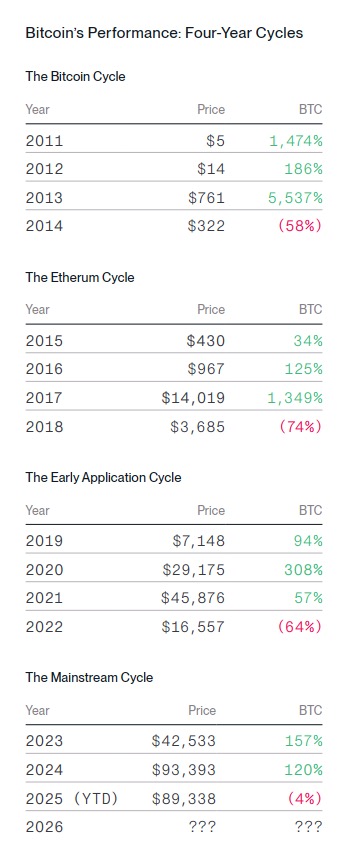
We believe the key factors that drove the four-year cycle in the past are significantly weakening:
-
Halving Effect: The marginal impact of each Bitcoin halving is smaller than the previous one
-
Interest Rate Cycle: Sharp interest rate hikes in 2018 and 2022 put downward pressure on prices; we expect rates to fall in 2026
-
Systemic Blow-ups: Following the record liquidation event in October 2025, overall market leverage has decreased, and improved regulation has reduced the risk of major blow-ups
More importantly, since the approval of spot Bitcoin ETFs in 2024, a significant amount of institutional capital has begun entering the crypto market, and this trend will accelerate further in 2026.
Platforms like Morgan Stanley, Wells Fargo, and Merrill Lynch are beginning formal allocations to crypto assets; meanwhile, the "pro-crypto" regulatory environment formed after the 2024 election will encourage deeper adoption of crypto assets by Wall Street and fintech companies.
We expect the combination of these factors to push Bitcoin to new all-time highs and relegate the "four-year cycle" to history.
Prediction 2
Bitcoin's volatility will be lower than Nvidia's
For a long time, people have said: "I would never invest in something as volatile as Bitcoin."
Is Bitcoin volatile? Certainly.
But is it more volatile than other assets widely accepted by investors? Not in recent years.
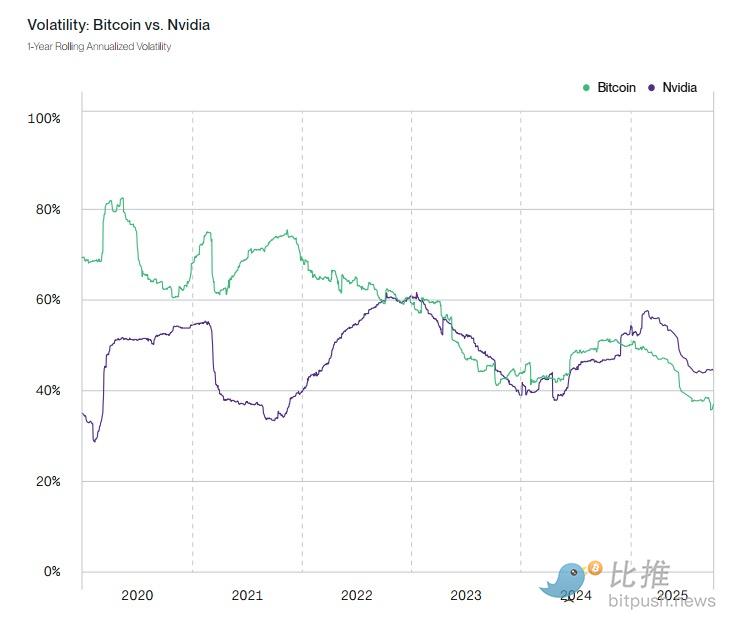
Throughout 2025, Bitcoin's volatility was even lower than that of one of the market's hottest stocks—Nvidia. Extending the timeline, you'll find that Bitcoin's volatility has actually been consistently decreasing over the past decade. This shift reflects a reduction in the fundamental risk of Bitcoin as an investment and is also thanks to traditional investment vehicles like ETFs, which have diversified its investor base.
We believe this trend will continue in 2026.
Prediction 3
ETFs will buy more than 100% of the new supply of Bitcoin, Ethereum, and Solana
Crypto asset prices are determined by supply and demand.
One of our core reasons for being long-term bullish on the crypto market is: Institutional demand will continue to outpace new supply for many years to come.
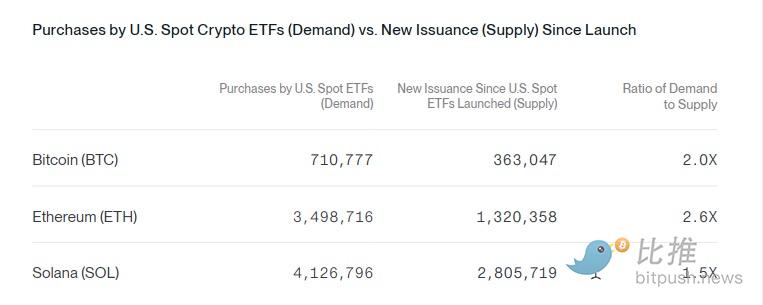
Since crypto ETFs launched in 2024, this view has been validated:
-
Bitcoin ETFs bought a total of 710,777 BTC
-
During the same period, the Bitcoin network only produced 363,047 new BTC
-
The price of Bitcoin rose 94% during the same period
Looking ahead to 2026, we estimate the new supply will be approximately:
-
166,000 BTC (approx. $15.3 billion)
-
960,000 ETH (approx. $3.0 billion)
-
23 million SOL (approx. $3.2 billion)
We believe ETF buying for these assets will exceed their new supply, especially after institutions like Morgan Stanley and Merrill approve spot ETFs.
This does not guarantee price increases, but it lays a solid foundation for price performance in 2026.
Prediction 4
Crypto-related stocks will outperform tech stocks
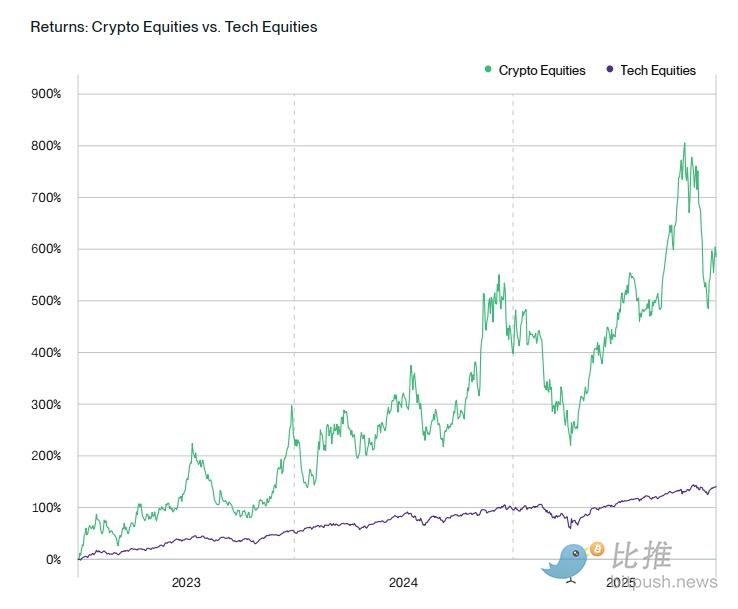
Over the past three years, tech stock investors have achieved returns of about 140%.
But crypto-related stocks have performed even more remarkably.
The Bitwise Crypto Innovators 30 Index (covering crypto infrastructure and service companies) rose 585% over the same period.
An improved regulatory environment makes it easier for compliant crypto companies to innovate:
Coinbase has relaunched ICOs, Circle has launched its own Layer 1 blockchain, and more new products, revenue streams, and M&A activities are unfolding.
We expect the performance of crypto-related stocks in 2026 to turn heads on Wall Street.
Prediction 5
Polymarket's open interest will hit a new all-time high
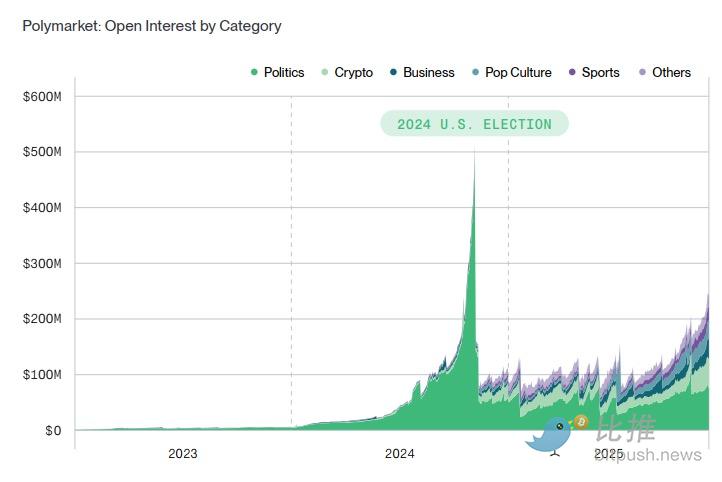
Polymarket reached $500 million in open interest during the 2024 U.S. election period before falling back to around $100 million.
We believe this record will be easily broken in 2026, due to:
-
U.S. Market Opening: Starting in 2026, U.S. users will be able to participate directly
-
Institutional Backing: ICE (parent company of the NYSE) invested $2 billion in Polymarket
-
Market Expansion: Rapid growth in sports, culture, crypto, and economic markets
Prediction 6
Stablecoins will be blamed as the "culprit" destabilizing emerging market currencies
The stablecoin market is expanding.
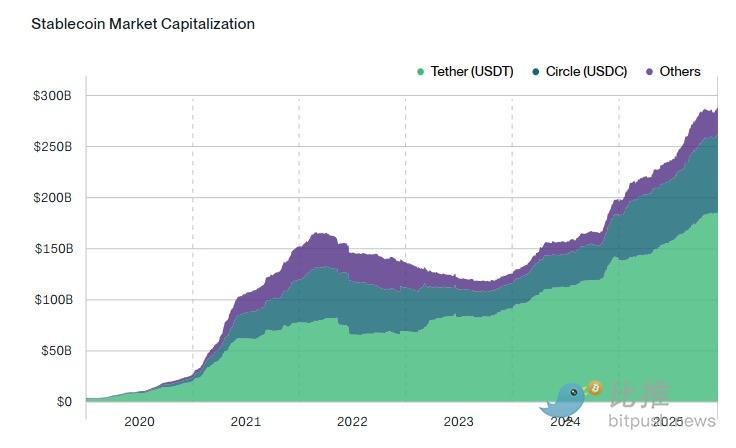
The market capitalization of tokenized versions of the U.S. dollar (and other currencies), represented by USDT and USDC, reached $205 billion at the beginning of this year. Today, this market is close to $300 billion and is expected to exceed $500 billion by the end of 2026. In other words, its size has grown to a point that cannot be ignored.
This is undoubtedly positive: stablecoins offer a more efficient, low-cost, and fast way to move money. Who wouldn't love such innovation?—But for central banks in countries facing high inflation, the issue is not so simple.
Multiple studies show that stablecoin adoption is concentrated in emerging markets, with usage rates significantly higher in regions with the highest inflation. The reason is that stablecoins allow people in high-inflation areas to easily store value in relatively stable dollar tokens rather than in continuously depreciating local currencies. For example, in Venezuela, its fiat currency, the bolivar, depreciated about 80% against the U.S. dollar in 2025.
For the average saver, switching to stablecoins is a rational choice, but for central banks, it means capital flight and a loss of control. The Bank for International Settlements (BIS), composed of central banks, warned its members earlier this year: "Widespread use of stablecoins could harm the monetary sovereignty of relevant jurisdictions."
As cryptocurrency goes mainstream, we expect one or two countries to publicly blame their currency problems on stablecoins. Of course, this blame is misplaced—if the local monetary system were sound, people wouldn't need to turn to stablecoins in the first place. But that won't stop these countries from sounding the alarm.
Prediction 7
Assets under management in on-chain Vaults (ETF 2.0) will double
On-chain Vaults are similar to on-chain investment funds.
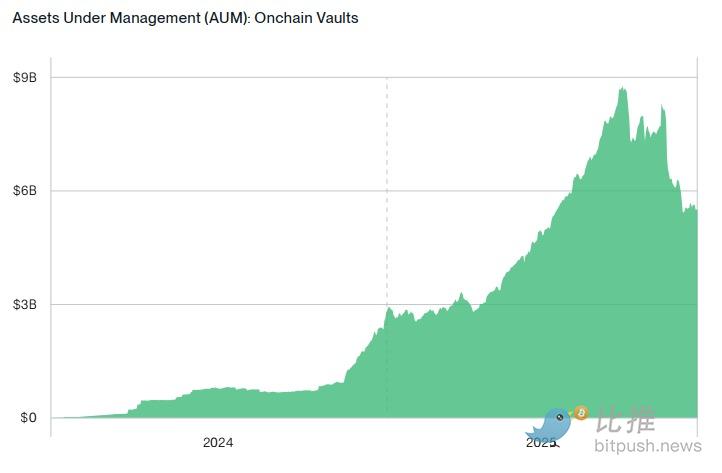
Their size grew from less than $100 million in 2024 to $2.3 billion, reaching $8.8 billion at one point in 2025.
Although the volatility in October 2025 caused some strategies to fail, we believe this is just a necessary stage of industry maturation.
In 2026, high-quality asset managers will enter the market, driving rapid growth in the size of on-chain Vaults.
Prediction 8
If the CLARITY Act passes, Ethereum and Solana will hit new all-time highs
We are strongly bullish on Ethereum and Solana. This is primarily because we believe stablecoins and asset tokenization are two major long-term trends, and Ethereum and Solana are likely to be the biggest beneficiaries of this growth.
But the short-term growth of stablecoins and tokenization largely depends on the continued progress of U.S. regulation. The passage of the GENIUS Act, centered on stablecoins, in 2025 was a major breakthrough. The next key is whether Congress can pass "market structure" legislation like the CLARITY Act.
Market structure legislation would clarify the regulatory framework for cryptocurrency in the U.S., including whether the Securities and Exchange Commission (SEC) or the Commodity Futures Trading Commission (CFTC) takes the lead. Without clear legal definitions, the current pro-crypto stance of U.S. regulators could change with new elections.
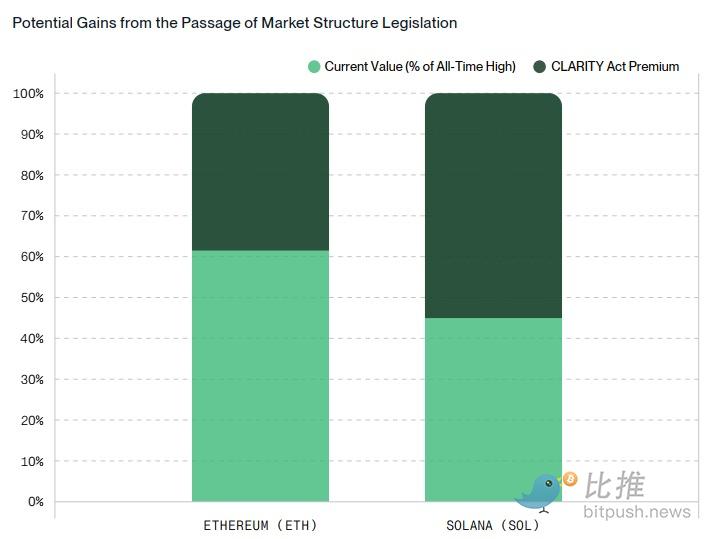
The prospects for market structure legislation in 2026 remain unclear. If the CLARITY Act passes, we expect it to trigger a crypto bull market—in crypto parlance—with momentum that will be "mind-blowing." Ethereum and Solana would be the two main beneficiaries, with prices likely breaking previous all-time highs. If the bill fails to pass, it means everything will have to start over from scratch.
Prediction 9
Half of Ivy League endowment funds will invest in crypto assets
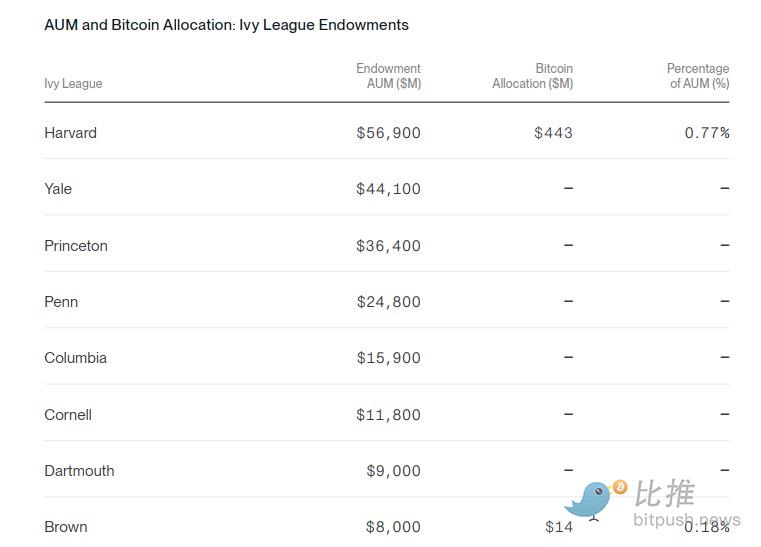
Earlier this year, Brown University became the first Ivy League endowment fund to allocate to Bitcoin, initially purchasing about $5 million worth of Bitcoin ETF. We expect more Ivy League schools to join this trend in 2026.
This move is important for two reasons:
First, the direct impact: Endowment funds control real capital—statistics show assets under management reach $871 billion. If they follow Harvard University's example and allocate about 1% of assets to Bitcoin, their market influence will be significant.
Second, the deeper signaling effect: Endowment funds—especially those of the Ivy League—are often bellwethers of investment trends. For example, Yale University's allocation to hedge funds in the early 2000s is considered a key factor driving the industry's explosive growth over the past 20 years. If Harvard and other Ivy League schools' Bitcoin investments succeed, it could attract a large number of pension funds, insurance funds, and other institutional investors to follow suit.
In short, the market mentality might be: "If Harvard is allocating to it, maybe we should consider it too."
Prediction 10
The U.S. will launch over 100 crypto-related ETFs
The U.S. Securities and Exchange Commission (SEC) maintained a long-standing rejection stance on cryptocurrency ETFs for over a decade until a court ruling prompted a policy shift—in January 2024, Bitcoin ETFs were finally approved; six months later, Ethereum ETFs followed. Now, the floodgates are open.
In October 2025, the SEC issued a universal listing standard, allowing issuers to launch cryptocurrency ETFs based on unified rules. Immediately, Solana ETFs quickly listed (even including staking features) and attracted over $600 million within months. XRP and Dogecoin-related products followed closely. By the time this article is published, more products are expected to enter the market.
Looking ahead to 2026, we predict that clear regulatory pathways and strong market demand for crypto ETFs will jointly drive an "ETF feast." More than 100 crypto-related ETFs are expected to be launched, covering various types such as spot crypto ETFs, crypto staking-enhanced ETFs, crypto equity ETFs, and crypto index ETFs.
We also make an additional prediction: Bitwise is expected to launch the ETF with the highest annual net inflows in 2026.
Bonus Prediction
Bitcoin's correlation with the stock market will decline
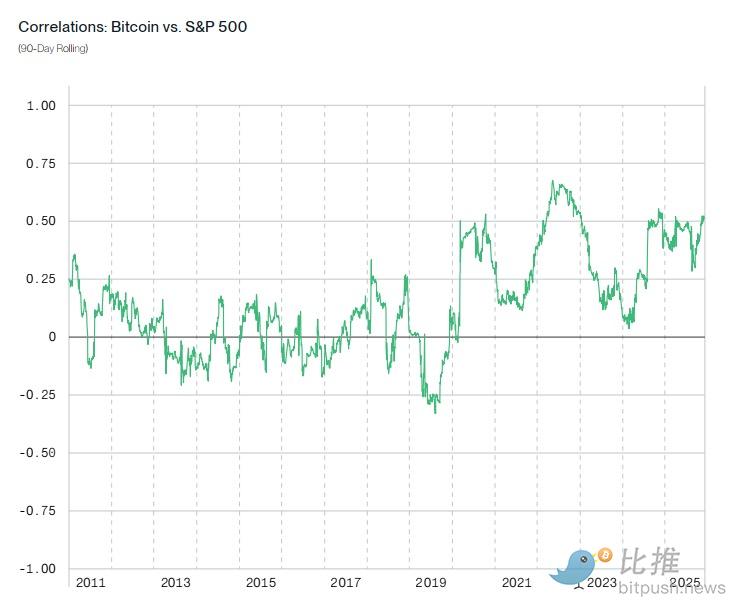
Data shows that the 90-day rolling correlation between Bitcoin and the S&P 500 rarely exceeds 0.5.
We expect that in 2026, driven by regulatory progress and institutional adoption, Bitcoin will be more driven by its own logic.
Risks and Important Disclosures
This article is for informational and educational purposes only and does not constitute investment advice.
Crypto assets are highly volatile, and investors may suffer significant losses.
Past performance is not indicative of future results.
Twitter:https://twitter.com/BitpushNewsCN
Bitpush TG Discussion:https://t.me/BitPushCommunity
Bitpush TG Subscription: https://t.me/bitpush