Stablecoin USDT Tycoon's Shopping Cart Includes a Mattress

marsbitPubblicato 2026-03-05Pubblicato ultima volta 2026-03-05

Introduzione

Tether, the issuer of the world's largest stablecoin USDT, has invested $50 million in Eight Sleep, a luxury smart mattress company. This move is part of a broader investment strategy driven by CEO Paolo Ardoino's vision of human sovereignty over data and the body. Ardoino, a cryptographer and Bitcoin advocate, believes in building technology for a potential societal collapse, emphasizing individual control over communication, health data, and physical well-being. His investments include Holepunch for decentralized P2P communication, QVAC for encrypted health data storage, and Blackrock Neurotech for brain-computer interfaces. However, this idealistic vision contrasts with USDT's real-world usage. While it provides financial access in unstable economies, it is also used for sanctions evasion, money laundering, and illicit activities. Tether, with $100 billion in annual profits, operates without full transparency or independent audits, requiring users to trust its reserves. Ultimately, Tether's investments reflect Ardoino's personal philosophy: using immense profits to build a decentralized future, albeit with unresolved contradictions between its idealistic goals and the opaque reality of its financial operations.

Author: David, Shenchao TechFlow

On March 4, stablecoin giant Tether announced an investment.

The invested company is called Eight Sleep, which makes smart mattresses. Tether invested $50 million, valuing the company at $1.5 billion.

The company's mattresses are very high-end, with individual prices ranging from $2,000 to $4,000. They feature built-in water cooling and heating systems, precise temperature control, sleep tracking, automatic adjustment...
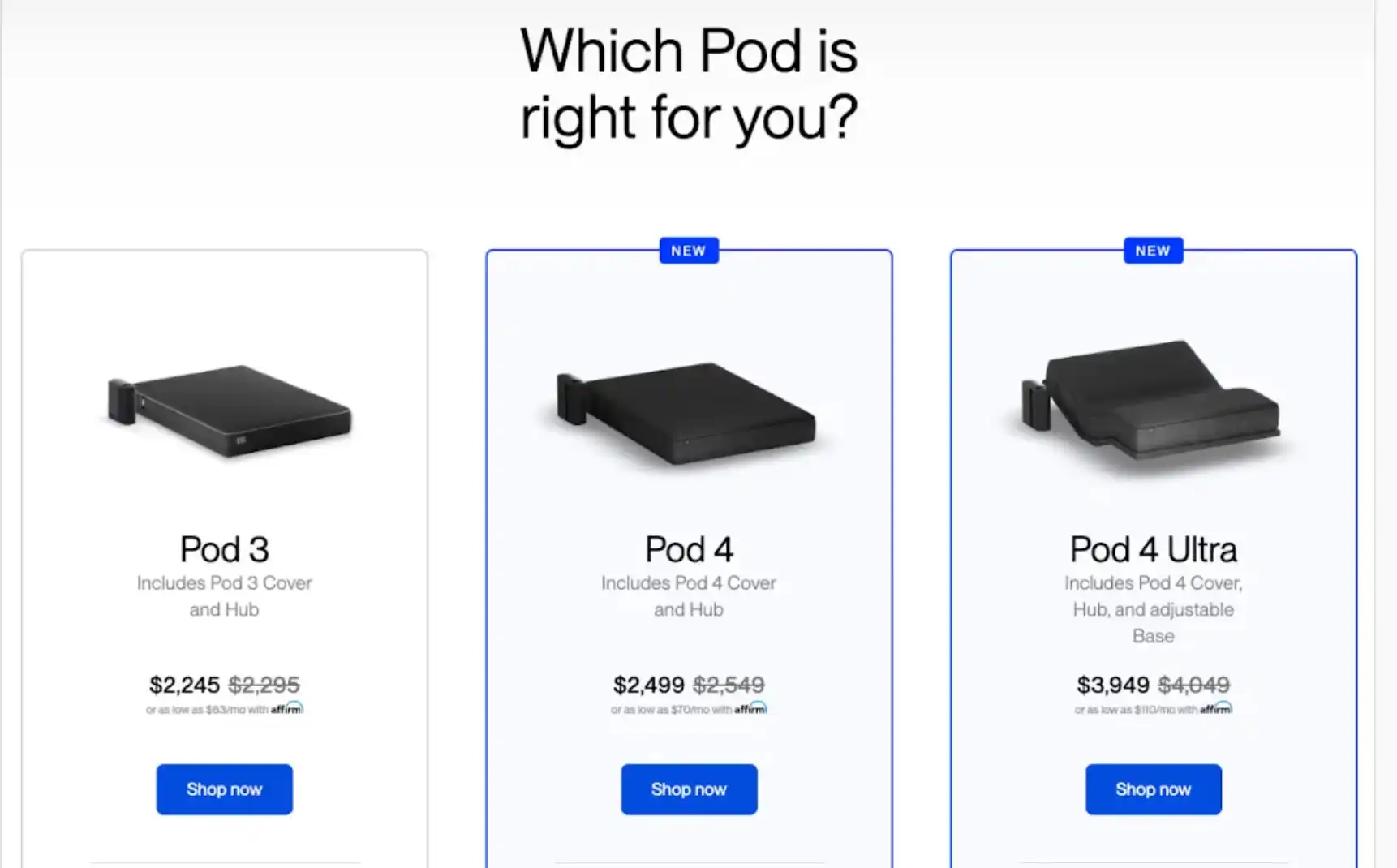
Famous NBA star LeBron James is one of its public users. Its main customer base includes Silicon Valley executives, professional athletes, and a group of biohackers who love experimenting on themselves.

The issuer of the world's largest stablecoin, USDT, reported a net profit of over $10 billion in 2025. It is almost entirely non-transparent, not publicly listed, and does not need to explain its actions to any shareholders.

And then it spends $50 million to invest in a mattress company?

Of course, this isn't the first strange investment. A review of Tether's investment records over the past few years reveals that the mattress might not even be the most puzzling one.

It all starts with the company's CEO.

The CEO's Shopping Cart Is Filled with Human Sovereignty

Paolo Ardoino, born in 1984 in Genoa, started coding at the age of 8.

He studied computer science in university, stayed on as a researcher after graduation, focusing on cryptography for military projects. He read the Bitcoin whitepaper in 2012, joined Bitfinex in 2014, became Tether's CTO in 2017, and was promoted to CEO in 2023.

A Fortune magazine journalist once noticed dumbbells and a gym bag next to his desk during an interview.

This is a person who brings his workout gear to work every day. He is the type who manages his body as a system—sleep, training, biometric data, every aspect must be tracked, optimized, and controlled by himself.

He then extended this logic to everything: money, communication, data, the body. He believes that people should have complete sovereignty over everything that belongs to them.

And he believes:

The U.S. government will eventually collapse.

This is not a joke. Paolo has stated publicly that he is doing all this not to make money, but to provide people with a way out when the system fails.

His exact words were:

"I don't think the best solution is to fix the politics of every country. The best solution is to allow people to form communities freely through technology, where a sense of belonging comes from shared values, not geographic location."

It sounds like a line from a sci-fi novel. But Paolo is serious. His keynote speech at BTC Prague 2024 was titled directly:

"Building for the Apocalypse."

Understanding this, Tether's investment in a mattress company makes sense. Because every item in the company's shopping cart corresponds to an extension of the CEO's worldview: bodily data sovereignty.
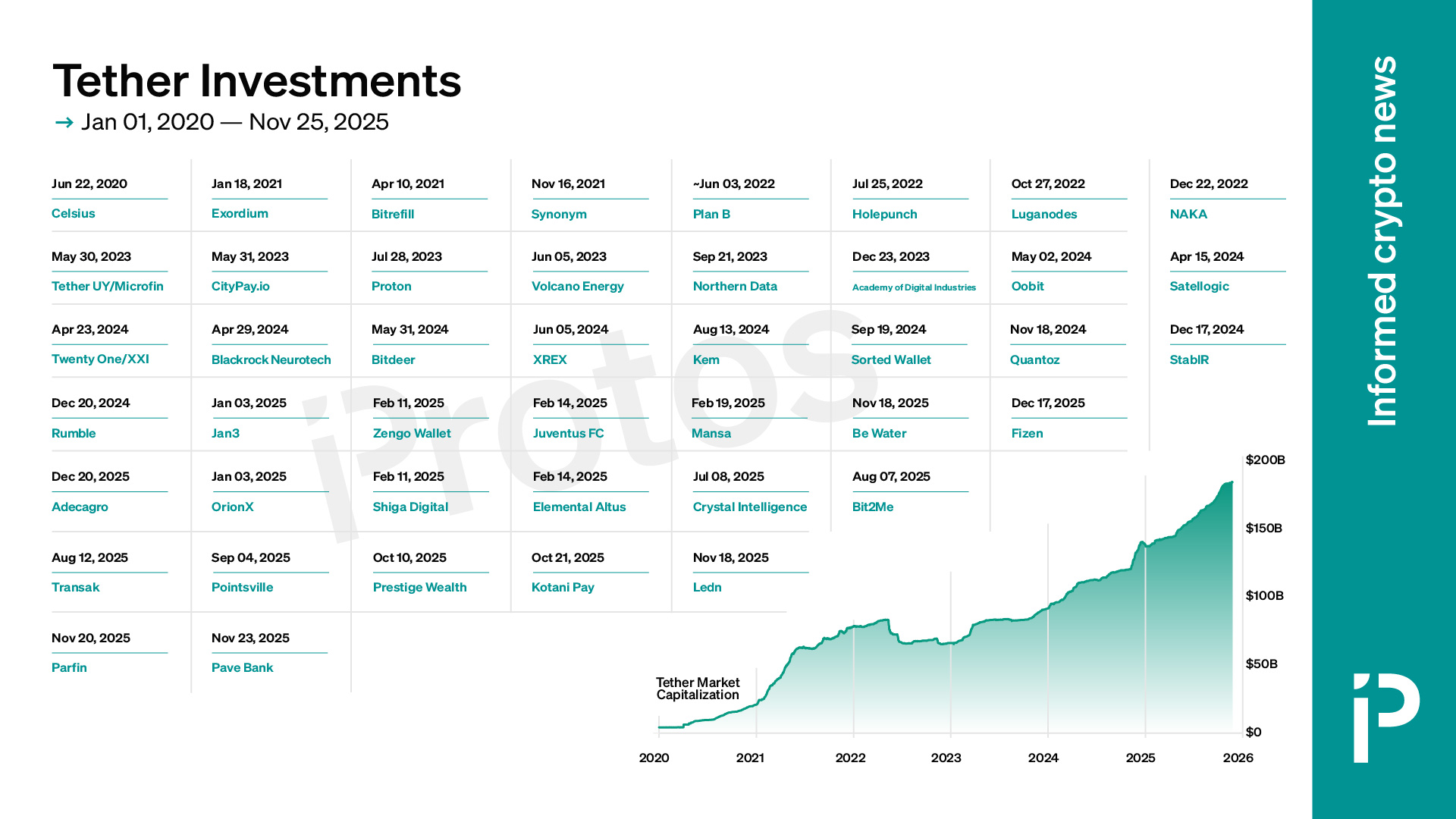
In 2022, he co-created a platform called Holepunch. This platform does something simple: it allows people to make calls, send messages, and transfer files without going through any servers. It's P2P direct connection, signals go directly from your device to the other party's device.

You can think of it as communication sovereignty.

Then there's QVAC. A health platform launched by Tether in late 2025, it encrypts all your biometric data—heart rate, sleep, exercise records—and stores it locally on your own device, without uploading anything to the cloud.

Paolo explained this product: "AI today has been politicized and centralized. We want to create AI that can run locally on your device, keeping everything about you in your own hands."

This is about data sovereignty.

Thus, after acquiring Eight Sleep, this mattress, integrated with QVAC, becomes a node in the infrastructure of bodily data sovereignty. Your sleep data doesn't belong to Apple, Google, or any cloud platform.

It belongs to you.

Additionally, Paolo's $200 million acquisition of a majority stake in brain-computer interface company Blackrock Neurotech might not be because he is optimistic about the market size of brain-computer interfaces, but because he doesn't want the field of brain-computer technology to be controlled by others.

Writing this, I recall another thing he said in an interview: "We've made money that we couldn't spend in hundreds of years. My biggest fear is wasting this once-in-a-century opportunity."

This statement is hard to evaluate. A person can simultaneously believe that civilization will collapse and also believe that he has a responsibility to use money to prevent it, or at least, leave behind a set of infrastructure that can reboot after the collapse.

Of course, the prerequisite is that you are Tether, with $10 billion in annual profit, allowing investments to become an extension of your worldview.

You Must First Trust Tether to Trust No One

There is a premise to Paolo's philosophy of sovereignty that he never mentions proactively.

USDT is the world's most circulated stablecoin. Behind its market capitalization of $183 billion is an equivalent amount of dollar reserves, at least that's what Tether says.

Where these reserves are held, who custodies them, whether each transaction is real—Tether has never undergone a full independent audit.

The company is not publicly listed, does not need to disclose to shareholders, and has operated in a regulatory vacuum for over a decade. How this money is calculated, what the balance sheet looks like—outsiders only see reports released by Tether itself.

Holders of USDT must choose to believe that all of this is real. There is no other option.

This is the subtle part. The CEO is constantly investing in various projects that build human data sovereignty, seemingly going off on a tangent to construct a set of infrastructure for "mastering human data sovereignty";

But this infrastructure itself is built with money from a company that requires your unconditional trust.

Paolo talks about "building for the apocalypse," but if the apocalypse really comes, if the dollar system really collapses, and USDT's reserves are held in U.S. Treasury bonds, what would happen to the corresponding $183 billion backing Tether.

He has not publicly answered this question.

With Enough Money, Investment Becomes an Autobiography

When you have enough money, your investment portfolio becomes an autobiography of your worldview.

Elon Musk bought Twitter because he believes free speech is being stifled by tech platforms; SpaceX exists because he believes Earth's civilization needs a backup. Peter Thiel invested in PayPal because he believes the government's monopoly on currency is wrong; he invested in Palantir because he believes the national security system needs to be rebuilt by Silicon Valley.

Bryan Johnson spends millions of dollars a year experimenting on himself, aiming to reverse his biological age to 18.

The things these people invest in seem diverse, but the internal logic is consistent:

They are using money to build the world they believe should exist. Returns are secondary, sometimes not even considered.

From this perspective, Tether's CEO Paolo is not an outlier. However, one thing sets him apart from the people mentioned above.

The real circulation scenarios of USDT are far more complex than Paolo's speech drafts.

Argentinians use it to fight the devaluation of the peso, Nigerians use it for cross-border remittances, Turks use it to preserve savings when the lira plummets. These are real, valuable uses; Paolo refers to these people when he talks about financial inclusion.

But USDT is also a tool for sanctions evasion, a transit point for cross-border money laundering, a settlement currency for dark web transactions, a收款 address for ransomware... This is also real.

Tether addresses have appeared on the U.S. Treasury Department's sanctions list, UN reports have mentioned the scale of USDT use in Southeast Asian scam compounds. Tether has cooperated in freezing some assets, but more were transferred long before freezing could occur.

The reason this system can achieve a market cap of $183 billion and an annual profit of $10 billion is partly because it is sufficiently "neutral." It doesn't ask where the money comes from or where it goes.

And then these profits flow into brain-computer interfaces, P2P communication, data sovereignty, bodily sovereignty, flowing into a set of idealistic infrastructure "built for the apocalypse."

From the infrastructure of grey circulation to the infrastructure chasing utopia. The same system, the same CEO, the same money.

With enough money, investment indeed becomes an autobiography.

It's just that this autobiography, Paolo hasn't fully finished writing it. There are a few pages he has turned over, difficult to scrutinize deeply.


Domande pertinenti

QWhat is the main reason behind Tether's investment in Eight Sleep, according to the article?

AThe investment aligns with CEO Paolo Ardoino's worldview of human data sovereignty, as the smart mattress will integrate with Tether's QVAC health platform to keep sleep data encrypted and under user control, rather than being stored on centralized cloud platforms.

QWhat is Paolo Ardoino's stated motivation for Tether's various investments, beyond profit?

AHe believes in building infrastructure for a potential societal collapse, aiming to allow people to form communities based on shared values rather than geography, and to ensure sovereignty over money, communication, data, and the human body.

QWhat contradiction does the article highlight regarding Tether's operations and its CEO's philosophy?

AWhile Paolo Ardoino promotes sovereignty and distrust of centralized systems, Tether itself requires users to place unconditional trust in its unaudited reserves and opaque operations, which contradicts the ethos of decentralization and self-sovereignty he advocates for in other investments.

QHow does the article characterize investments made by extremely wealthy individuals or entities like Tether?

AIt states that when money exceeds a certain level, investments become an 'autobiography' of one's worldview, where the primary goal is to build the world they believe should exist, often with financial returns being secondary or not a consideration.

QWhat are some of the real-world use cases of USDT mentioned in the article, both positive and negative?

APositive uses include helping people in countries like Argentina, Nigeria, and Turkey combat currency devaluation, facilitate cross-border remittances, and preserve savings. Negative uses involve sanction evasion, cross-border money laundering, dark web transactions, and as a payment method in scam operations, as noted by the U.S. Treasury and UN reports.

Letture associate

a16z Partner: Being in the Flow of Capital Is the True Moat

A16z Partner: Standing in the Cash Flow is the True Moat Historically, many of the strongest companies built their moats by positioning themselves within "cash flows"—facilitating value creation and transfer in a network and taking a cut. The more value flows, the larger they grow. Crypto is the first modern technology natively built for this. With open ledgers, programmable settlement, and stablecoins enabling internet-speed global value transfer, it allows startups to inherit network effects from day one. Well-designed tokens align users, developers, and the protocol towards network growth, distributing value to contributors. This model isn't new (e.g., railroads, Visa, Google, AWS) but Crypto democratizes it. It lets entrepreneurs target areas with high inefficiency and profit extraction—like traditional finance's payments, custody, FX, and settlement—to compress costs, increase speed, and redistribute value by standing in the new flow. The opportunity extends beyond finance to emerging markets like GPU/compute, AI training data, energy, and space, where new, programmable infrastructure can be built without legacy constraints. Key questions for founders: Are you already in the cash flow? Does your revenue scale 10x with network activity? Where is profit extraction highest relative to value created in your market? The strategy is clear: compress the old cost structure, position yourself in the new value stream, and let the network compound.

marsbit19 min fa

a16z Partner: Being in the Flow of Capital Is the True Moat

marsbit19 min fa

Capturing 15 Top-Tier Zero-Day Vulnerabilities: A Consensus Protocol Debug Agent Framework Built by 0G Lab in Collaboration with Teams from NUS, PKU, and BUPT

"Agents Capture 15 Critical Zero-Day Bugs: 0G Lab's Multi-Agent Framework Automates Debugging in Consensus Protocols" Distributed consensus protocols are notoriously difficult to debug due to complex, intertwined states. A novel framework, Agora, developed by 0G Labs with researchers from NUS, Peking University, and Beijing University of Posts and Telecommunications, tackles this by fusing deep domain expertise with a collaborative multi-agent LLM architecture. Agora moves beyond the limitations of single LLMs and traditional testing like fuzzing. It employs three specialized agents: an Orchestrator for global state, a Strategy agent for generating attack scenarios using distributed systems knowledge, and a TestGen agent that creates executable tests. A core innovation is its efficient "Succinct Memory & Communication" mechanism and a dynamic test harness. This allows the system to translate abstract hypotheses into concrete tests across languages like Go and Rust, run them, capture failures, and refine the approach in a closed loop—all with minimal token overhead. In rigorous evaluations on production-level protocols including Raft, EPaxos, and components from etcd and Sui, Agora discovered 15 previously unknown deep logic bugs (e.g., execution divergence, liveness violations). In stark contrast, powerful standalone LLMs like GPT-5.2 and Claude 4.5 found zero such bugs. Agora achieved this with a high precision of 73.9% and at an average cost of only about $40 per bug found. The framework demonstrates high generalizability. Its decoupled design allows the "Multi-Agent + Hypothesis-Driven Testing" paradigm to be applied to other complex domains like database concurrency control, OS kernels, and Web3 smart contract auditing. By enabling efficient, automated detection of deep logic flaws, Agora points the way for AI-powered security in critical infrastructure, aligning with the growing trends of agentic systems and automated quality control.

marsbit22 min fa

Capturing 15 Top-Tier Zero-Day Vulnerabilities: A Consensus Protocol Debug Agent Framework Built by 0G Lab in Collaboration with Teams from NUS, PKU, and BUPT

marsbit22 min fa

a16z crypto Partner: Cash Flow Is the True Moat

Title: a16z Crypto Partner: Capital Flow is the True Moat In business history, enduringly successful enterprises often share a core logic: capturing value by facilitating its creation and transfer within an ecosystem, taking a share of the proceeds. The scale of value flowing through the ecosystem directly correlates with the company's growth. Cryptography is the first modern technology natively suited to this commercial logic. Startups that don't leverage this framework in product design and business model construction miss significant opportunities. Stablecoins enable internet-speed, 24/7 global settlement of value with end-to-end programmability. With open underlying channels for capital flow and transparent unit economics, every circulating dollar globally represents potential flow in this arena. Blockchain is inherently a network business model. All transactions are recorded on a shared ledger, and each new participant strengthens this foundational system for future developers. More users and applications increase the network's value for all. Crypto entrepreneurs start with built-in network effects, unlike traditional businesses that spend years building them on legacy infrastructure. Network tokens amplify this advantage. A well-designed token system aligns users, developers, service providers, and validators around a common goal—network growth—while distributing rewards based on contribution. All proceeds flow back to ecosystem participants, creating a virtuous cycle of value circulation. This is not a new logic; the crypto industry simply makes it easier for startups to implement and scale. Historic giants like railroads, Standard Oil, AT&T, and modern leaders like Google and AWS succeeded by positioning themselves at critical junctures of value flow. In finance, Visa processed $15.7 trillion in payments (net revenue: $35.9B), and top market makers like Jane Street thrive by being in the path of order flow, benefiting from volume. Combining capital flow with network effects creates one of business's most robust models. As Jeff Bezos noted, "Your margin is my opportunity." This is acutely true in traditional finance, where sectors like payments, custody, and settlements extract significant fees (e.g., 2-3% for card networks, 6-9% for cross-border transfers). These profits represent opportunities for disruption by reducing costs and increasing efficiency, as proven by Stripe and Square in payments. Crypto founders can build the next-generation infrastructure: programmable, instant, global, and inherently embedded in capital flow paths. Opportunities extend beyond finance to markets like compute/GPU trading, AI training data, energy, robotics, and critical minerals—areas poised for massive global value movement that existing channels cannot handle. These are blue oceans for new, programmable infrastructure centered on capital flow, free from entrenched platforms and intermediaries. Founders should ask: Is your business at the heart of a value flow? Does your revenue scale 10x with ecosystem transaction growth? Where are the highest margins relative to value created in your target market? The answers point to the opportunity: cut existing costs, enter new value flow arenas, and grow through network effects.

Foresight News23 min fa

a16z crypto Partner: Cash Flow Is the True Moat

Foresight News23 min fa

Unveiling the 'White-haired Stock God' Serenity: A Spiritual Remedy for Anxious Retail Investors

The article details the rise of Serenity, dubbed the "White-Haired Stock God," whose social media posts have recently caused significant volatility in China's A-share market. Previously gaining fame in international retail investor communities, Serenity is known for his "Chokepoint Investment" strategy targeting small monopolies in the AI supply chain, reportedly achieving returns over 3612% this year. His influence stems from his background as a former AI research scientist, detailed analysis, and a massive following on X, where his subscriber count has surpassed Elon Musk's. In early June, Serenity's Chinese-language posts mentioning A-shares like LeaderDrive (Lide Xiebo), Easun, and Innolight triggered immediate 20% surges in their stock prices. He later clarified that some recommendations were crowdsourced from followers and claimed he did not hold positions in these stocks, stating his actions were "just for fun" to offer a foreign perspective on Chinese markets. This activity drew scrutiny from Chinese financial media, which warned of potential "pump-and-dump" schemes and legal risks. While anonymous, clues suggest Serenity is likely a Chinese-speaking individual living in Japan. He maintains his anonymity due to past harassment but enjoys substantial monthly income from his paid subscriptions. The article posits that Serenity embodies the market's current appetite for a charismatic, successful figure during the AI bull run, serving as an "outward projection" of bullish sentiment. It concludes by noting the cyclical nature of such market icons, warning that the same crowds that elevate them often seek scapegoats when trends reverse.

Odaily星球日报28 min fa

Unveiling the 'White-haired Stock God' Serenity: A Spiritual Remedy for Anxious Retail Investors

Odaily星球日报28 min fa

Unveiling the 'White-Haired Stock God' Serenity: The Mental Elixir for Anxious Retail Investors

The anonymous stock influencer known as "White-Haired Stock God" Serenity has ignited a frenzy in the A-share market. From June 5-9, Serenity's posts on platform X mentioning A-shares like LeaderDrive, Easun, and Innolight triggered sharp price surges, with some stocks hitting 20% daily limits. Serenity, who claims a 3612% personal return this year, gained fame internationally using a "chokepoint investment" strategy focused on small, monopolistic AI supply chain companies. With over 810k X followers, his influence rivals top analysts. His recent foray into Chinese stocks, which he claims is "for fun" to offer a "foreign perspective," has drawn scrutiny. While Serenity denies holding positions in these A-shares and states his posts are not recommendations, his actions have caused significant market volatility. He monetizes through a $1/month subscription, earning an estimated $54k monthly. Facing accusations of market manipulation, he maintains he promotes "information democracy." Community analysis suggests Serenity is likely an English-speaking Chinese national living in Japan, based on his posting patterns and shared personal details. He maintains anonymity due to past harassment. Ultimately, Serenity is seen by many as a manifestation of the current AI bull market's euphoria—a mysterious, seemingly successful figure who fulfills the market's desire for a "stock god," though such personas often face intense scrutiny when market sentiment shifts.

marsbit28 min fa

Unveiling the 'White-Haired Stock God' Serenity: The Mental Elixir for Anxious Retail Investors

marsbit28 min fa

Trading

Spot
Futures

Articoli Popolari

Cosa è $S$

Comprendere SPERO: Una Panoramica Completa Introduzione a SPERO Mentre il panorama dell'innovazione continua a evolversi, l'emergere delle tecnologie web3 e dei progetti di criptovaluta gioca un ruolo fondamentale nel plasmare il futuro digitale. Un progetto che ha attirato l'attenzione in questo campo dinamico è SPERO, denotato come SPERO,$$s$. Questo articolo mira a raccogliere e presentare informazioni dettagliate su SPERO, per aiutare gli appassionati e gli investitori a comprendere le sue basi, obiettivi e innovazioni nei domini web3 e crypto. Che cos'è SPERO,$$s$? SPERO,$$s$ è un progetto unico all'interno dello spazio crypto che cerca di sfruttare i principi della decentralizzazione e della tecnologia blockchain per creare un ecosistema che promuove l'impegno, l'utilità e l'inclusione finanziaria. Il progetto è progettato per facilitare interazioni peer-to-peer in modi nuovi, fornendo agli utenti soluzioni e servizi finanziari innovativi. Al suo interno, SPERO,$$s$ mira a responsabilizzare gli individui fornendo strumenti e piattaforme che migliorano l'esperienza dell'utente nello spazio delle criptovalute. Questo include la possibilità di metodi di transazione più flessibili, la promozione di iniziative guidate dalla comunità e la creazione di percorsi per opportunità finanziarie attraverso applicazioni decentralizzate (dApps). La visione sottostante di SPERO,$$s$ ruota attorno all'inclusività, cercando di colmare le lacune all'interno della finanza tradizionale mentre sfrutta i vantaggi della tecnologia blockchain. Chi è il Creatore di SPERO,$$s$? L'identità del creatore di SPERO,$$s$ rimane piuttosto oscura, poiché ci sono risorse pubblicamente disponibili limitate che forniscono informazioni dettagliate sul suo fondatore o fondatori. Questa mancanza di trasparenza può derivare dall'impegno del progetto per la decentralizzazione—un ethos che molti progetti web3 condividono, dando priorità ai contributi collettivi rispetto al riconoscimento individuale. Centrando le discussioni attorno alla comunità e ai suoi obiettivi collettivi, SPERO,$$s$ incarna l'essenza dell'empowerment senza mettere in evidenza individui specifici. Pertanto, comprendere l'etica e la missione di SPERO rimane più importante che identificare un creatore singolo. Chi sono gli Investitori di SPERO,$$s$? SPERO,$$s$ è supportato da una varietà di investitori che vanno dai capitalisti di rischio agli investitori angelici dedicati a promuovere l'innovazione nel settore crypto. Il focus di questi investitori generalmente si allinea con la missione di SPERO—dando priorità a progetti che promettono avanzamenti tecnologici sociali, inclusività finanziaria e governance decentralizzata. Queste fondazioni di investitori sono tipicamente interessate a progetti che non solo offrono prodotti innovativi, ma contribuiscono anche positivamente alla comunità blockchain e ai suoi ecosistemi. Il supporto di questi investitori rafforza SPERO,$$s$ come un concorrente degno di nota nel dominio in rapida evoluzione dei progetti crypto. Come Funziona SPERO,$$s$? SPERO,$$s$ impiega un framework multifunzionale che lo distingue dai progetti di criptovaluta convenzionali. Ecco alcune delle caratteristiche chiave che sottolineano la sua unicità e innovazione: Governance Decentralizzata: SPERO,$$s$ integra modelli di governance decentralizzati, responsabilizzando gli utenti a partecipare attivamente ai processi decisionali riguardanti il futuro del progetto. Questo approccio favorisce un senso di proprietà e responsabilità tra i membri della comunità. Utilità del Token: SPERO,$$s$ utilizza il proprio token di criptovaluta, progettato per servire varie funzioni all'interno dell'ecosistema. Questi token abilitano transazioni, premi e la facilitazione dei servizi offerti sulla piattaforma, migliorando l'impegno e l'utilità complessivi. Architettura Stratificata: L'architettura tecnica di SPERO,$$s$ supporta la modularità e la scalabilità, consentendo un'integrazione fluida di funzionalità e applicazioni aggiuntive man mano che il progetto evolve. Questa adattabilità è fondamentale per mantenere la rilevanza nel panorama crypto in continua evoluzione. Coinvolgimento della Comunità: Il progetto enfatizza iniziative guidate dalla comunità, impiegando meccanismi che incentivano la collaborazione e il feedback. Nutrendo una comunità forte, SPERO,$$s$ può affrontare meglio le esigenze degli utenti e adattarsi alle tendenze di mercato. Focus sull'Inclusione: Offrendo basse commissioni di transazione e interfacce user-friendly, SPERO,$$s$ mira ad attrarre una base utenti diversificata, inclusi individui che potrebbero non aver precedentemente interagito nello spazio crypto. Questo impegno per l'inclusione si allinea con la sua missione generale di empowerment attraverso l'accessibilità. Cronologia di SPERO,$$s$ Comprendere la storia di un progetto fornisce preziose intuizioni sulla sua traiettoria di sviluppo e sui traguardi. Di seguito è riportata una cronologia suggerita che mappa eventi significativi nell'evoluzione di SPERO,$$s$: Fase di Concettualizzazione e Ideazione: Le idee iniziali che formano la base di SPERO,$$s$ sono state concepite, allineandosi strettamente con i principi di decentralizzazione e focus sulla comunità all'interno dell'industria blockchain. Lancio del Whitepaper del Progetto: Dopo la fase concettuale, è stato rilasciato un whitepaper completo che dettaglia la visione, gli obiettivi e l'infrastruttura tecnologica di SPERO,$$s$ per suscitare interesse e feedback dalla comunità. Costruzione della Comunità e Prime Interazioni: Sono stati effettuati sforzi attivi di outreach per costruire una comunità di early adopters e potenziali investitori, facilitando discussioni attorno agli obiettivi del progetto e ottenendo supporto. Evento di Generazione del Token: SPERO,$$s$ ha condotto un evento di generazione del token (TGE) per distribuire i propri token nativi ai primi sostenitori e stabilire una liquidità iniziale all'interno dell'ecosistema. Lancio della Prima dApp: La prima applicazione decentralizzata (dApp) associata a SPERO,$$s$ è stata attivata, consentendo agli utenti di interagire con le funzionalità principali della piattaforma. Sviluppo Continuo e Partnership: Aggiornamenti e miglioramenti continui alle offerte del progetto, inclusi partnership strategiche con altri attori nello spazio blockchain, hanno plasmato SPERO,$$s$ in un concorrente competitivo e in evoluzione nel mercato crypto. Conclusione SPERO,$$s$ rappresenta una testimonianza del potenziale del web3 e delle criptovalute di rivoluzionare i sistemi finanziari e responsabilizzare gli individui. Con un impegno per la governance decentralizzata, il coinvolgimento della comunità e funzionalità progettate in modo innovativo, apre la strada verso un panorama finanziario più inclusivo. Come per qualsiasi investimento nello spazio crypto in rapida evoluzione, si incoraggiano potenziali investitori e utenti a ricercare approfonditamente e a impegnarsi in modo riflessivo con gli sviluppi in corso all'interno di SPERO,$$s$. Il progetto mostra lo spirito innovativo dell'industria crypto, invitando a ulteriori esplorazioni delle sue innumerevoli possibilità. Mentre il percorso di SPERO,$$s$ è ancora in fase di sviluppo, i suoi principi fondamentali potrebbero effettivamente influenzare il futuro di come interagiamo con la tecnologia, la finanza e tra di noi in ecosistemi digitali interconnessi.

75 Totale visualizzazioniPubblicato il 2024.12.17Aggiornato il 2024.12.17

Cosa è $S$

Cosa è AGENT S

Agent S: Il Futuro dell'Interazione Autonoma in Web3 Introduzione Nel panorama in continua evoluzione di Web3 e criptovalute, le innovazioni stanno costantemente ridefinendo il modo in cui gli individui interagiscono con le piattaforme digitali. Uno di questi progetti pionieristici, Agent S, promette di rivoluzionare l'interazione uomo-computer attraverso il suo framework agentico aperto. Aprendo la strada a interazioni autonome, Agent S mira a semplificare compiti complessi, offrendo applicazioni trasformative nell'intelligenza artificiale (AI). Questa esplorazione dettagliata approfondirà le complessità del progetto, le sue caratteristiche uniche e le implicazioni per il dominio delle criptovalute. Cos'è Agent S? Agent S si presenta come un innovativo framework agentico aperto, progettato specificamente per affrontare tre sfide fondamentali nell'automazione dei compiti informatici: Acquisizione di Conoscenze Specifiche del Dominio: Il framework apprende in modo intelligente da varie fonti di conoscenza esterne ed esperienze interne. Questo approccio duale gli consente di costruire un ricco repository di conoscenze specifiche del dominio, migliorando le sue prestazioni nell'esecuzione dei compiti. Pianificazione su Lungo Orizzonte di Compiti: Agent S impiega una pianificazione gerarchica potenziata dall'esperienza, un approccio strategico che facilita la suddivisione e l'esecuzione efficiente di compiti complessi. Questa caratteristica migliora significativamente la sua capacità di gestire più sottocompiti in modo efficiente ed efficace. Gestione di Interfacce Dinamiche e Non Uniformi: Il progetto introduce l'Interfaccia Agente-Computer (ACI), una soluzione innovativa che migliora l'interazione tra agenti e utenti. Utilizzando Modelli Linguistici Multimodali di Grandi Dimensioni (MLLM), Agent S può navigare e manipolare senza sforzo diverse interfacce grafiche utente. Attraverso queste caratteristiche pionieristiche, Agent S fornisce un framework robusto che affronta le complessità coinvolte nell'automazione dell'interazione umana con le macchine, preparando il terreno per innumerevoli applicazioni nell'AI e oltre. Chi è il Creatore di Agent S? Sebbene il concetto di Agent S sia fondamentalmente innovativo, informazioni specifiche sul suo creatore rimangono elusive. Il creatore è attualmente sconosciuto, il che evidenzia sia la fase embrionale del progetto sia la scelta strategica di mantenere i membri fondatori sotto anonimato. Indipendentemente dall'anonimato, l'attenzione rimane sulle capacità e sul potenziale del framework. Chi sono gli Investitori di Agent S? Poiché Agent S è relativamente nuovo nell'ecosistema crittografico, informazioni dettagliate riguardanti i suoi investitori e sostenitori finanziari non sono documentate esplicitamente. La mancanza di approfondimenti pubblicamente disponibili sulle fondazioni di investimento o sulle organizzazioni che supportano il progetto solleva interrogativi sulla sua struttura di finanziamento e sulla roadmap di sviluppo. Comprendere il supporto è cruciale per valutare la sostenibilità del progetto e il suo potenziale impatto sul mercato. Come Funziona Agent S? Al centro di Agent S si trova una tecnologia all'avanguardia che gli consente di funzionare efficacemente in contesti diversi. Il suo modello operativo è costruito attorno a diverse caratteristiche chiave: Interazione Uomo-Computer Simile a Quella Umana: Il framework offre una pianificazione AI avanzata, cercando di rendere le interazioni con i computer più intuitive. Mimando il comportamento umano nell'esecuzione dei compiti, promette di elevare le esperienze degli utenti. Memoria Narrativa: Utilizzata per sfruttare esperienze di alto livello, Agent S utilizza la memoria narrativa per tenere traccia delle storie dei compiti, migliorando così i suoi processi decisionali. Memoria Episodica: Questa caratteristica fornisce agli utenti una guida passo-passo, consentendo al framework di offrire supporto contestuale mentre i compiti si sviluppano. Supporto per OpenACI: Con la capacità di funzionare localmente, Agent S consente agli utenti di mantenere il controllo sulle proprie interazioni e flussi di lavoro, allineandosi con l'etica decentralizzata di Web3. Facile Integrazione con API Esterne: La sua versatilità e compatibilità con varie piattaforme AI garantiscono che Agent S possa adattarsi senza problemi agli ecosistemi tecnologici esistenti, rendendolo una scelta attraente per sviluppatori e organizzazioni. Queste funzionalità contribuiscono collettivamente alla posizione unica di Agent S all'interno dello spazio crittografico, poiché automatizza compiti complessi e multi-fase con un intervento umano minimo. Man mano che il progetto evolve, le sue potenziali applicazioni in Web3 potrebbero ridefinire il modo in cui si svolgono le interazioni digitali. Cronologia di Agent S Lo sviluppo e le tappe di Agent S possono essere riassunti in una cronologia che evidenzia i suoi eventi significativi: 27 Settembre 2024: Il concetto di Agent S è stato lanciato in un documento di ricerca completo intitolato “Un Framework Agentico Aperto che Usa i Computer Come un Umano”, mostrando le basi per il progetto. 10 Ottobre 2024: Il documento di ricerca è stato reso pubblicamente disponibile su arXiv, offrendo un'esplorazione approfondita del framework e della sua valutazione delle prestazioni basata sul benchmark OSWorld. 12 Ottobre 2024: È stata rilasciata una presentazione video, fornendo un'idea visiva delle capacità e delle caratteristiche di Agent S, coinvolgendo ulteriormente potenziali utenti e investitori. Questi indicatori nella cronologia non solo illustrano i progressi di Agent S, ma indicano anche il suo impegno per la trasparenza e il coinvolgimento della comunità. Punti Chiave su Agent S Man mano che il framework Agent S continua a evolversi, diversi attributi chiave si distinguono, sottolineando la sua natura innovativa e il potenziale: Framework Innovativo: Progettato per fornire un uso intuitivo dei computer simile all'interazione umana, Agent S porta un approccio nuovo all'automazione dei compiti. Interazione Autonoma: La capacità di interagire autonomamente con i computer attraverso GUI segna un passo avanti verso soluzioni informatiche più intelligenti ed efficienti. Automazione di Compiti Complessi: Con la sua metodologia robusta, può automatizzare compiti complessi e multi-fase, rendendo i processi più veloci e meno soggetti a errori. Miglioramento Continuo: I meccanismi di apprendimento consentono ad Agent S di migliorare dalle esperienze passate, migliorando continuamente le sue prestazioni e la sua efficacia. Versatilità: La sua adattabilità attraverso diversi ambienti operativi come OSWorld e WindowsAgentArena garantisce che possa servire un'ampia gamma di applicazioni. Man mano che Agent S si posiziona nel panorama di Web3 e delle criptovalute, il suo potenziale per migliorare le capacità di interazione e automatizzare i processi segna un significativo avanzamento nelle tecnologie AI. Attraverso il suo framework innovativo, Agent S esemplifica il futuro delle interazioni digitali, promettendo un'esperienza più fluida ed efficiente per gli utenti in vari settori. Conclusione Agent S rappresenta un audace passo avanti nell'unione tra AI e Web3, con la capacità di ridefinire il modo in cui interagiamo con la tecnologia. Sebbene sia ancora nelle sue fasi iniziali, le possibilità per la sua applicazione sono vaste e coinvolgenti. Attraverso il suo framework completo che affronta sfide critiche, Agent S mira a portare le interazioni autonome al centro dell'esperienza digitale. Man mano che ci addentriamo nei regni delle criptovalute e della decentralizzazione, progetti come Agent S giocheranno senza dubbio un ruolo cruciale nel plasmare il futuro della tecnologia e della collaborazione uomo-computer.

538 Totale visualizzazioniPubblicato il 2025.01.14Aggiornato il 2025.01.14

Cosa è AGENT S

Come comprare S

Benvenuto in HTX.com! Abbiamo reso l'acquisto di Sonic (S) semplice e conveniente. Segui la nostra guida passo passo per intraprendere il tuo viaggio nel mondo delle criptovalute.Step 1: Crea il tuo Account HTXUsa la tua email o numero di telefono per registrarti il tuo account gratuito su HTX. Vivi un'esperienza facile e sblocca tutte le funzionalità,Crea il mio accountStep 2: Vai in Acquista crypto e seleziona il tuo metodo di pagamentoCarta di credito/debito: utilizza la tua Visa o Mastercard per acquistare immediatamente SonicS.Bilancio: Usa i fondi dal bilancio del tuo account HTX per fare trading senza problemi.Terze parti: abbiamo aggiunto metodi di pagamento molto utilizzati come Google Pay e Apple Pay per maggiore comodità.P2P: Fai trading direttamente con altri utenti HTX.Over-the-Counter (OTC): Offriamo servizi su misura e tassi di cambio competitivi per i trader.Step 3: Conserva Sonic (S)Dopo aver acquistato Sonic (S), conserva nel tuo account HTX. In alternativa, puoi inviare tramite trasferimento blockchain o scambiare per altre criptovalute.Step 4: Scambia Sonic (S)Scambia facilmente Sonic (S) nel mercato spot di HTX. Accedi al tuo account, seleziona la tua coppia di trading, esegui le tue operazioni e monitora in tempo reale. Offriamo un'esperienza user-friendly sia per chi ha appena iniziato che per i trader più esperti.

1.1k Totale visualizzazioniPubblicato il 2025.01.15Aggiornato il 2026.06.02

Come comprare S

Discussioni

Benvenuto nella Community HTX. Qui puoi rimanere informato sugli ultimi sviluppi della piattaforma e accedere ad approfondimenti esperti sul mercato. Le opinioni degli utenti sul prezzo di S S sono presentate come di seguito.

活动图片













