South Korean card giant completes stablecoin payments pilot for foreigners

cointelegraphPubblicato 2025-12-23Pubblicato ultima volta 2025-12-23

Introduzione

BC Card, one of South Korea's largest payment processors, has completed a pilot project enabling foreign users to pay local merchants using stablecoins. The initiative, conducted with partners including Wavebridge and Aaron Group, allowed users to convert overseas stablecoins into digital prepaid cards. The pilot is part of BC Card's broader strategy to implement a stablecoin payment system, responding to evolving regulations in South Korea. The country is actively discussing won-based stablecoins, though regulatory progress has been delayed due to disagreements between the Financial Services Commission and the Bank of Korea. Globally, stablecoins are gaining traction as payment alternatives, with companies like YouTube and Visa adopting them for payouts and settlements.

South Korean payments processor BC Card has completed a pilot project that enabled foreign users to pay local merchants using stablecoins.

BC Card’s pilot project was announced Tuesday and was conducted with blockchain company Wavebridge, wallet provider Aaron group and cross-border remittance provider Global Money Express. The companies had foreign users convert their stablecoins held in overseas wallets, which were partnered with BC Card, into digital prepaid cards.

The company said this pilot was not a short-term project, but part of preparations to implement a stablecoin payment structure. The change is a response to the evolution of South Korean stablecoin regulations, it said.

BC Card is one of South Korea’s largest payment companies, which reportedly processes over 20% of South Korea’s card transactions and covers 3.4 million domestic merchants. Its majority owner is KT Corp, one of the country’s three major telecom companies.

Shehram Khattak, general counsel at Trust Wallet, told Cointelegraph:

Ultimately, banks will have to deal with legacy operations but not only from an operations perspective but also processes; the entire department will have to change how they function.”

Related: US lawmakers propose tax break for small stablecoin payments, staking rewards

South Korea takes stablecoins seriously

In late July, local media reported that credit card companies were scrambling to respond to perceived threats from stablecoins. The nation’s credit card industry reportedly formed a joint task force as local regulators opened discussions regarding the introduction of won-based stablecoins.

BC card reportedly launched an internal team dedicated to tracking trends in both the domestic and international stablecoin markets. Still, local stablecoin regulations are taking longer to take shape than anticipated.

Earlier this month, South Korea’s Financial Services Commission (FSC) failed to submit a draft proposal on stablecoin regulations by the deadline requested by the country’s ruling Democratic Party. Lawmakers said that the delay was caused by disagreements between the FSC and the Bank of Korea (BOK), the nation’s central bank.

The crux of the debate appears to be the BOK’s desire to require banks to own at least 51% of any stablecoin issuer seeking regulatory approval. Other regulators appear to be pushing towards a more diverse ecosystem.

Related: Crypto Biz: Bank stablecoins get a rulebook; Bitcoin gets a land grab

Stablecoins take on the world

Stablecoins are increasingly discussed as an alternative or complementary payment method to traditional solutions such as payment cards or bank wire transfers.

Adoption is moving quickly, with YouTube allowing US content creators to receive payouts in the dollar-pegged PayPal USD (PYUSD), earlier in December.

Meanwhile, Visa launched USD Coin (USDC) settlement services for some US-based financial institutions.
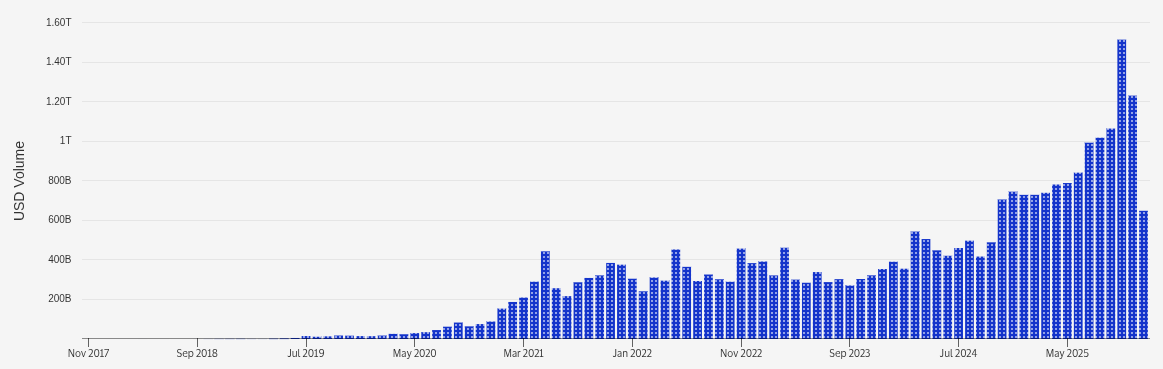
Stablecoin transaction volume. Source: VISA

Related: Galaxy predicts stablecoins will overtake ACH transaction volume in 2026

Domande pertinenti

QWhat is the main achievement of BC Card as reported in the article?

ABC Card has completed a pilot project that enabled foreign users to pay local South Korean merchants using stablecoins.

QWhich companies partnered with BC Card for the stablecoin payments pilot?

ABC Card conducted the pilot with blockchain company Wavebridge, wallet provider Aaron Group, and cross-border remittance provider Global Money Express.

QWhy did BC Card initiate this stablecoin pilot project according to the article?

AThe pilot was part of preparations to implement a stablecoin payment structure in response to the evolution of South Korean stablecoin regulations.

QWhat regulatory disagreement is mentioned regarding South Korea's stablecoin framework?

AThe Bank of Korea wants banks to own at least 51% of any stablecoin issuer, while other regulators prefer a more diverse ecosystem, causing delays in regulatory proposals.

QHow are stablecoin adoption trends illustrated in the article beyond South Korea?

AThe article mentions YouTube allowing US creators to receive payouts in PayPal USD (PYUSD) and Visa launching USD Coin (USDC) settlement services for some US financial institutions.

Letture associate

Bitcoin Withdrawals Continue: 8 Years of Storage in a Coldcard Cold Wallet Ended in Zero

Coldcard Hardware Wallet Hacked: Losses Mount Due to Vulnerable Seed Generation A critical vulnerability in Coldcard hardware wallets has led to a continued wave of fund thefts. According to Galaxy Research, the total stolen has reached 1,367.05 BTC (approx. $88.6 million) from 4,585 addresses, a significant increase from the initial 594.5 BTC reported on July 30, 2026. Most of the stolen funds remain on the attackers' addresses. The issue is not with the current firmware, which Coinkite has updated, but with seed phrases generated on vulnerable devices between March 2021 and the release of fixed firmware versions. Due to a programmer error, devices switched from using a hardware random number generator to the software-based Yasmarang generator, which was initialized with publicly accessible data like the chip's serial number. This made the seed phrases predictable through offline brute-force attacks, meaning wallets remain at risk until funds are moved to a new wallet generated with the patched firmware. Affected devices include Mk2/Mk3 with firmware 4.0.1–4.1.9 (and up to 5.0.3), Mk4/Mk5 up to version 5.6.0, and Q models up to 1.5.0Q. The only exceptions are seeds created with a high-entropy method like at least 50 independent dice rolls or a strong unique BIP-39 passphrase. All other owners must generate a new seed on the fixed firmware and transfer their assets. A case highlighting the human impact involves a 39-year-old long-term investor who lost 2 BTC (approx. $130,000) in minutes. He had accumulated the Bitcoin over eight years through physical labor, viewing it as a financial lifeline and a retirement plan in a country suffering from hyperinflation. His story underscores that even conservative "buy and hold in cold storage" strategies can be compromised by such underlying technical flaws. From a technical perspective, this incident echoes historical failures where weak random number generators undermined cryptographic security, challenging the assumption that offline storage is automatically foolproof.

cryptonews.ru4 h fa

Bitcoin Withdrawals Continue: 8 Years of Storage in a Coldcard Cold Wallet Ended in Zero

cryptonews.ru4 h fa

Trading

Spot
活动图片





