South Korean card giant completes stablecoin payments pilot for foreigners

cointelegraphPubblicato 2025-12-23Pubblicato ultima volta 2025-12-23

Introduzione

BC Card, one of South Korea's largest payment processors, has completed a pilot project enabling foreign users to pay local merchants using stablecoins. The initiative, conducted with partners including Wavebridge and Aaron Group, allowed users to convert overseas stablecoins into digital prepaid cards. The pilot is part of BC Card's broader strategy to implement a stablecoin payment system, responding to evolving regulations in South Korea. The country is actively discussing won-based stablecoins, though regulatory progress has been delayed due to disagreements between the Financial Services Commission and the Bank of Korea. Globally, stablecoins are gaining traction as payment alternatives, with companies like YouTube and Visa adopting them for payouts and settlements.

South Korean payments processor BC Card has completed a pilot project that enabled foreign users to pay local merchants using stablecoins.

BC Card’s pilot project was announced Tuesday and was conducted with blockchain company Wavebridge, wallet provider Aaron group and cross-border remittance provider Global Money Express. The companies had foreign users convert their stablecoins held in overseas wallets, which were partnered with BC Card, into digital prepaid cards.

The company said this pilot was not a short-term project, but part of preparations to implement a stablecoin payment structure. The change is a response to the evolution of South Korean stablecoin regulations, it said.

BC Card is one of South Korea’s largest payment companies, which reportedly processes over 20% of South Korea’s card transactions and covers 3.4 million domestic merchants. Its majority owner is KT Corp, one of the country’s three major telecom companies.

Shehram Khattak, general counsel at Trust Wallet, told Cointelegraph:

Ultimately, banks will have to deal with legacy operations but not only from an operations perspective but also processes; the entire department will have to change how they function.”

Related: US lawmakers propose tax break for small stablecoin payments, staking rewards

South Korea takes stablecoins seriously

In late July, local media reported that credit card companies were scrambling to respond to perceived threats from stablecoins. The nation’s credit card industry reportedly formed a joint task force as local regulators opened discussions regarding the introduction of won-based stablecoins.

BC card reportedly launched an internal team dedicated to tracking trends in both the domestic and international stablecoin markets. Still, local stablecoin regulations are taking longer to take shape than anticipated.

Earlier this month, South Korea’s Financial Services Commission (FSC) failed to submit a draft proposal on stablecoin regulations by the deadline requested by the country’s ruling Democratic Party. Lawmakers said that the delay was caused by disagreements between the FSC and the Bank of Korea (BOK), the nation’s central bank.

The crux of the debate appears to be the BOK’s desire to require banks to own at least 51% of any stablecoin issuer seeking regulatory approval. Other regulators appear to be pushing towards a more diverse ecosystem.

Related: Crypto Biz: Bank stablecoins get a rulebook; Bitcoin gets a land grab

Stablecoins take on the world

Stablecoins are increasingly discussed as an alternative or complementary payment method to traditional solutions such as payment cards or bank wire transfers.

Adoption is moving quickly, with YouTube allowing US content creators to receive payouts in the dollar-pegged PayPal USD (PYUSD), earlier in December.

Meanwhile, Visa launched USD Coin (USDC) settlement services for some US-based financial institutions.
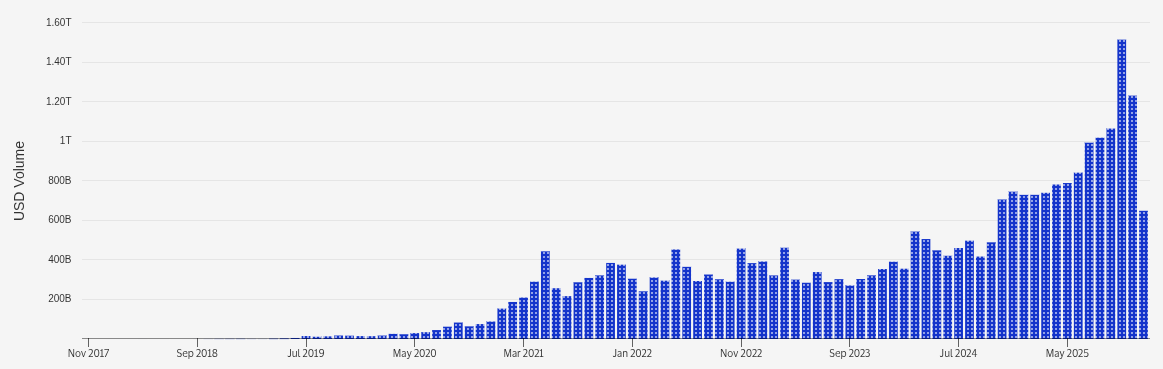
Stablecoin transaction volume. Source: VISA

Related: Galaxy predicts stablecoins will overtake ACH transaction volume in 2026

Domande pertinenti

QWhat is the main achievement of BC Card as reported in the article?

ABC Card has completed a pilot project that enabled foreign users to pay local South Korean merchants using stablecoins.

QWhich companies partnered with BC Card for the stablecoin payments pilot?

ABC Card conducted the pilot with blockchain company Wavebridge, wallet provider Aaron Group, and cross-border remittance provider Global Money Express.

QWhy did BC Card initiate this stablecoin pilot project according to the article?

AThe pilot was part of preparations to implement a stablecoin payment structure in response to the evolution of South Korean stablecoin regulations.

QWhat regulatory disagreement is mentioned regarding South Korea's stablecoin framework?

AThe Bank of Korea wants banks to own at least 51% of any stablecoin issuer, while other regulators prefer a more diverse ecosystem, causing delays in regulatory proposals.

QHow are stablecoin adoption trends illustrated in the article beyond South Korea?

AThe article mentions YouTube allowing US creators to receive payouts in PayPal USD (PYUSD) and Visa launching USD Coin (USDC) settlement services for some US financial institutions.

Letture associate

Qualcomm: AI Hype Subsides, When Will Smartphones Emerge from the Gloom?

Qualcomm reported its Q3 FY2026 results (ending June 2026), with revenue of $9.95B, down 4% YoY but above expectations. Gross margin declined to 53.1%, pressured by rising costs across manufacturing and memory. Key business segments showed mixed performance: Handset revenue fell 19.6% YoY to $5.09B, dragged by an 11% decline in non-Apple Android shipments and weaker high-end mix. Conversely, Automotive revenue surged 61% to $1.59B, and IoT grew 9% to $1.83B. Core operating profit dropped 41% YoY due to margin compression and higher expenses. Management's Q4 FY2026 guidance projects revenue of $9.7B-$10.5B, in line with consensus, but Non-GAAP EPS guidance of $2.05-$2.25 fell short of expectations. Amidst persistent weakness in its core handset market, Qualcomm is pursuing growth in AI, focusing on Edge AI (smartphones, PCs, automotive) and Data Center AI. Its data center strategy includes four pillars: AI accelerators (e.g., AI200), commercial CPUs (Dragonfly C1000), custom silicon, and connectivity solutions. While these initiatives initially boosted its stock, concerns over AI capital expenditure sustainability have since erased those gains. The company targets $5B in data center revenue for FY2027 and $15B for FY2029. The report concludes that with the traditional handset business still under pressure, the data center opportunity is currently viewed as a longer-term option, and a more conservative valuation based on core operations may be warranted until AI contributions materialize.

marsbit4 min fa

Qualcomm: AI Hype Subsides, When Will Smartphones Emerge from the Gloom?

marsbit4 min fa

From TPU to Self-Evolving Agents: How Jeff Dean Predicts the Next Step in AI

At the 2026 YC Startup School, Jeff Dean outlined his vision for AI's next phase, shifting focus from simply scaling models to building intelligent, autonomous systems. He believes AI's progress is no longer just about creating smarter models, but about integrating them into systems capable of long-term, iterative work, automated experimentation, and continuous learning. This evolution moves the competition from "who has the bigger model" to "who can best organize intelligence." Dean suggests AI capabilities are now comparable to a junior engineer, enabling the automation of complex workflows. However, the true challenge and opportunity lie in managing these AI "workers" at scale. He emphasizes the importance of **context engineering**—structuring tools, memory, and feedback loops—over raw model power. For startups, this means building deep expertise in niche domains where general models currently fail (near 0-1% success rates), leveraging proprietary data, specialized tools, and domain-specific evaluators. A recurring theme is re-examining fundamental constraints. Dean's past work, like moving Google's search index to memory or creating the TPU, stemmed from questioning outdated assumptions about hardware and cost. He sees similar inflection points today, particularly in **specialized inference hardware** to drastically reduce latency and energy consumption for real-time Agent operation. Notably, he points out that in modern AI systems, the dominant cost is often not computation but **data movement**. Reliable, long-running Agents require robust system design, borrowing concepts from distributed computing like checkpointing, state management, and parallel exploration to handle failures and maintain progress over days or weeks. As AI automates execution, the scarcest human skills will shift to **defining clear specifications**, **judging what problems are worth solving** (taste), and designing effective feedback loops. Ultimately, Dean's framework prioritizes understanding the problem deeply, identifying the true bottlenecks, and systematically building closed-loop systems where AI can not only perform tasks but also improve AI itself.

marsbit4 min fa

From TPU to Self-Evolving Agents: How Jeff Dean Predicts the Next Step in AI

marsbit4 min fa

Trading

Spot
活动图片





