South Korea Plans to End Corporate Crypto Ban With 5% Equity Cap

TheNewsCryptoPubblicato 2026-01-12Pubblicato ultima volta 2026-01-12

Introduzione

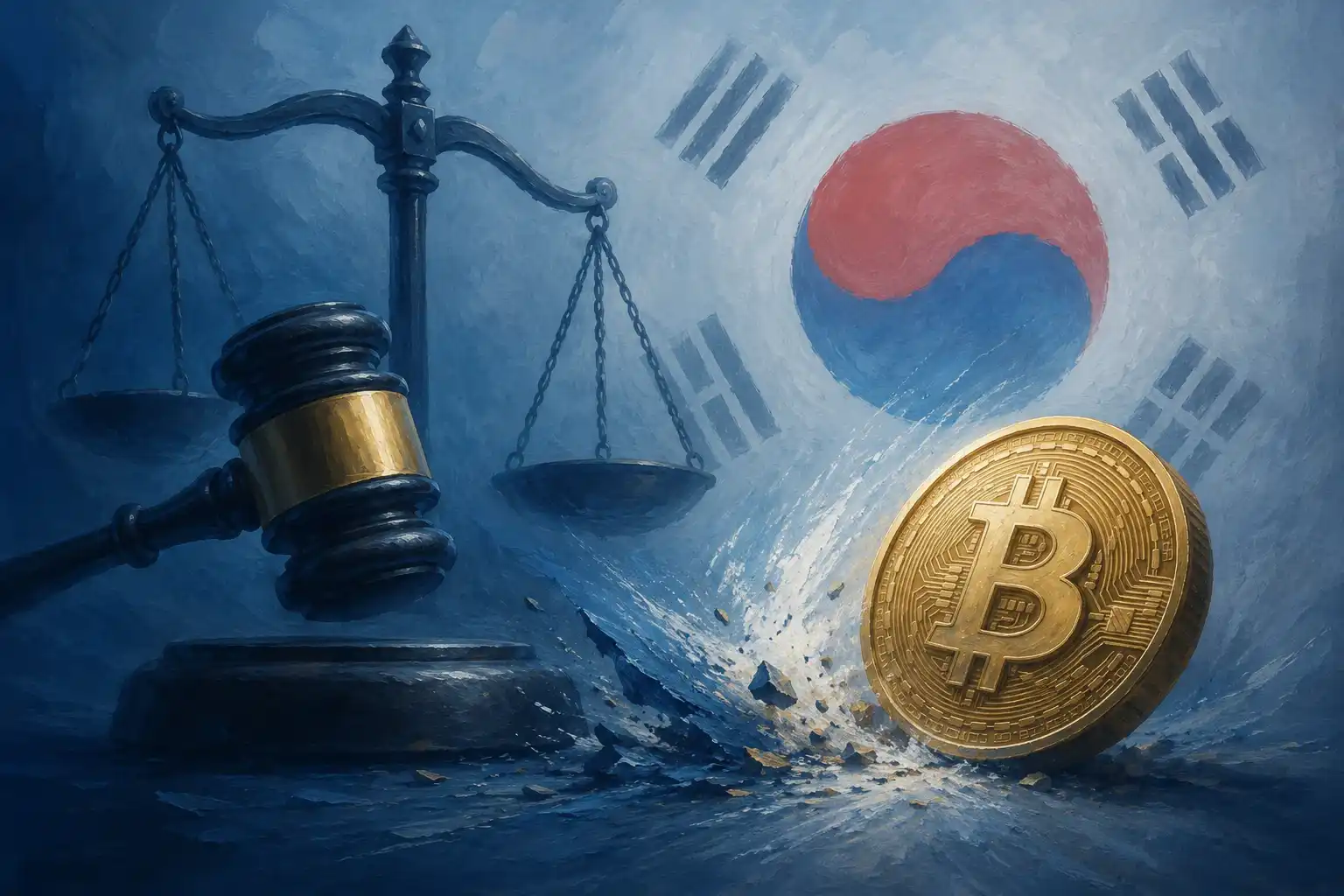
South Korea is set to lift its ban on corporate cryptocurrency investments, a policy in place since 2017. The Financial Services Commission (FSC) will allow listed companies and professional investors to allocate up to 5% of their equity to crypto assets, with final guidelines expected by January or February. Investments will be restricted to the top 20 cryptocurrencies by market cap and must be conducted through the country's top five exchanges. This move could inject significant capital into the market and accelerate developments like a national stablecoin initiative and spot Bitcoin ETFs. The policy aligns with South Korea's broader digital finance strategy, which includes exploring CBDCs and a licensing framework for stablecoin issuers.

South Korea is set to relax its ban on investing in crypto by corporations and will therefore bring about a significant change in policy that will help open up the market for digital assets to new institutions. The Financial Services Commission has been seen to have updated the guidelines to allow corporations to invest in crypto assets again after the ban that has been effective since 2017.

As reported by the Seoul Economic Daily, soon, the companies that are listed and professional investors will be allowed to invest a certain percentage of equity in these digital assets, and that percentage is going to be 5%. As told to the publication by a high official from the FSC, “the final guidelines will be released in January or February, and then it will be possible for a legal entity to make a virtual currency transaction for investment and financial purposes.”

The lifted ban nullifies a nine-year blockade that was established in the 2017 crypto boom. At that time, the government restricted institutional involvement due to heightened worries about the potential for money laundering and speculation. Rather, it seems that the government is more interested in regulating the involvement of companies in the industry.

Investment access will come with strict limits

The FSC intends to ensure that the use of corporates in cryptocurrency investments is well managed. Based on the proposed framework, corporates can invest in no more than the top 20 cryptocurrencies in terms of market capitalization. In addition, companies must trade through the top five exchanges in South Korea, reducing the risk associated with the other party in a trade and ensuring higher supervision.

Although regulators are yet to make up their mind on whether to include dollar-pegged stablecoins like Tether’s USDT, stablecoins are still quite sensitive in policy circles because of their increasing importance in managing capital flows and cross-border payments.

The FSC allegedly distributed the latest draft rules to their working group for cryptos on Jan. 6, in response to earlier hints in February 2025 that they would loosen up rules in phases.

Bullish implications for Korean crypto markets

If implemented, it could inject a massive amount of capital into the market. This is because the largest listed firms in South Korea have very deep balance sheets, and any allocation will result in massive purchases.

For example, the report cited internet giant Naver, which holds about 27 trillion won ($18.4 billion) in equity capital. Under a 5% cap, such a company could theoretically deploy large sums into digital assets potentially buying thousands of Bitcoin-equivalent exposure depending on strategy and timing.

Beyond direct inflows, the new guidance could accelerate broader market developments. Industry observers expect the easing of corporate limits to support faster progress toward:

  • a national stablecoin initiative, and
  • The eventual approval of spot Bitcoin ETFs, which already have growing political and industry backing, but still face regulatory hurdles.

Corporate participation could also strengthen local crypto companies, blockchain startups, and digital asset treasury (DAT) strategies. In recent years, several Korean firms have invested overseas to avoid domestic limits, which reduced Korea’s ability to keep crypto innovation onshore.

Stablecoins and CBDCs remain central to Korea’s strategy

The reported policy update also fits into South Korea’s wider digital finance agenda. Separately, Seoul Economic Daily reported that the South Korean government has outlined an ambitious plan under its 2026 Economic Growth Strategy, including a goal to execute 25% of national treasury fund activity via a CBDC by 2030.

In addition, policymakers are considering a licensing system for stablecoin issuers. The plan would require:

  • 100% reserve backing, and
  • legally protected redemption rights for users.

If South Korea finalizes both corporate investment permissions and stablecoin licensing, the country could emerge as one of Asia’s most structured and institution-friendly crypto markets.

Highlighted Crypto News:

Stocks and US Dollar Dipped Following Trump-Powell Feud, Where’s Crypto Market Headed?

TagsBitcoincrypto regulationFSCSouth KoreaStablecoin

Domande pertinenti

QWhat is the key change in South Korea's policy regarding corporate investment in crypto assets?

ASouth Korea is set to relax its ban on corporate crypto investment, allowing listed companies and professional investors to hold up to 5% of their equity in digital assets.

QWhat are the two major restrictions the FSC plans to impose on corporate crypto investments?

ACorporates can only invest in the top 20 cryptocurrencies by market cap and must trade through South Korea's top five exchanges to ensure higher supervision and reduce counterparty risk.

QHow could this policy change potentially impact the Korean crypto market in terms of capital inflow?

AIt could inject massive capital into the market, as large listed firms with deep balance sheets (like Naver with $18.4 billion equity) could theoretically deploy significant sums into digital assets under the 5% cap.

QWhat two broader market developments might this corporate crypto investment accelerate according to industry observers?

AIt could accelerate progress toward a national stablecoin initiative and the eventual approval of spot Bitcoin ETFs, which already have growing political and industry backing.

QHow does this policy update fit into South Korea's wider digital finance strategy beyond corporate investment?

AIt aligns with ambitious plans like executing 25% of national treasury fund activity via a CBDC by 2030 and establishing a licensing system for stablecoin issuers requiring 100% reserve backing and legally protected redemption rights.

Letture associate

KOL's Perspective: Why Is SOL Set to Rise from This Point?

**Summary: Why SOL is Positioned for Growth at This Level** The article argues that SOL is poised for an upward move from its current price point, citing several key factors. Primarily, SOL has just broken out of a 4-month consolidation phase. This breakout signals a return of risk appetite to the broader crypto market, as SOL is seen as a key indicator of overall crypto health. The token's ownership has reportedly shifted from short-term traders and tourists to long-term accumulators, leading to low volume. Any meaningful increase in trading activity could thus trigger significant upward momentum. Fundamental strengths include strong institutional adoption, integration with DeFi and RWAs (Real-World Assets), and the potential benefits from the Clarity Act. Despite its high volatility—having dropped 70% from its all-time high but still up 12x from its bear market low—SOL is highlighted as one of the few tokens from the last cycle to reach new highs. It boasts a robust ecosystem of applications, users, and protocols. Future catalysts include the expected influx of AI developers following the Miami Accelerate conference, which focused on AI on Solana. Furthermore, Solana is positioned as the premier chain for memecoin activity, a trend expected to continue and drive network usage and fees. The article concludes that recent price action reflects a healthy transfer to long-term holders, setting the stage for growth.

marsbit28 min fa

KOL's Perspective: Why Is SOL Set to Rise from This Point?

marsbit28 min fa

Those Pre-Bitcoin PoW Protocols Have Recently Been Reimplemented

This article details a recent surge in replicating pre-Bitcoin Proof-of-Work (PoW) protocols, specifically focusing on Hal Finney's 2004 RPOW (Reusable Proofs of Work). Within five days in May 2026, multiple independent builders in the Bitcoin/cypherpunk community launched projects inspired by this early electronic cash proposal. The initiative began with Fred Krueger's `rpow2.com`, a centralized but auditable system that replaced RPOW's original IBM 4758 hardware with Ed25519 signatures. Initially a faithful replica, it later adopted Bitcoin-like features (21M supply cap, difficulty adjustment) and a controversial 5.24% founder allocation. This sparked rapid forks, including `rpow4.com` which incorporated full Bitcoin parameters, a prediction market (`rpowmarket.com`), and a DEX (`rpow2swap.com`). Concurrently, Mike In Space created a prototype of Wei Dai's 1998 b-money proposal (`b-money.replit.app`), pushing the historical exploration even further back. The article contrasts these centralized, server-dependent experiments with Bitcoin's core innovation of decentralized, trustless consensus. It also highlights a parallel development: the `HASH` project on Ethereum, which uses smart contract hooks to enable a purely fair-launch, browser-mineable PoW token with 0% allocations to team or VCs. The collective activity is framed as a meme-driven, educational exploration of cypherpunk history rather than a serious financial movement, with all projects heavily disclaiming any investment value.

marsbit33 min fa

Those Pre-Bitcoin PoW Protocols Have Recently Been Reimplemented

marsbit33 min fa

South Korean Exchanges 'Battle' Regulators, Challenging the Boundaries of Enforcement and Legislation

South Korea's cryptocurrency industry is engaged in a rare, direct confrontation with regulators. The Financial Intelligence Unit (FIU), the primary anti-money laundering (AML) watchdog, has recently imposed heavy penalties on major exchanges like Upbit and Bithumb for alleged violations involving unregistered overseas VASPs and AML procedures. However, exchanges are now actively challenging these actions in court and through industry associations. In a significant shift, the Seoul Administrative Court ruled in favor of Upbit's operator, Dunamu, overturning part of an FIU-ordered business suspension. The court found the FIU's penalty criteria and justification insufficiently clear. Similarly, the court suspended the enforcement of a six-month business suspension against Bithumb pending a final ruling, citing potential irreversible harm to the exchange. Beyond legal battles, the industry is contesting proposed legislative amendments. The Digital Asset eXchange Alliance (DAXA) strongly opposes a draft rule that would mandate Suspicious Transaction Reports (STRs) for all crypto transfers over 10 million KRW (~$6,800). DAXA argues this "poison pill" clause violates legal principles and would overwhelm the STR system, increasing reports from 63,000 to an estimated 5.45 million annually for major exchanges, thereby crippling effective AML monitoring. This conflict highlights a structural tension in South Korea's crypto governance: comprehensive digital asset laws are still developing, while regulators rely heavily on AML enforcement. The industry's move from passive compliance to active legal and legislative challenges signifies a new phase, pressing for clearer rules and more proportionate enforcement. While short-term disputes may intensify, this clash could ultimately lead to a more mature and sustainable regulatory framework for South Korea's vibrant crypto market.

marsbit1 h fa

South Korean Exchanges 'Battle' Regulators, Challenging the Boundaries of Enforcement and Legislation

marsbit1 h fa

After 50x Storage Surge, Justin Sun Always Looks to the Next Decade

Sun Yuchen, known for his controversial stunts like a $30 million lunch with Warren Buffett (canceled due to a kidney stone) and eating a $6.2 million duct-taped banana, is often overshadowed by a significant fact: his decade-long track record of spotting major investment trends. In 2016, he famously advised young people to invest in Bitcoin, Nvidia, Tesla, and Tencent instead of buying property. A hypothetical $20,000 investment in Nvidia and Tesla from that list would now be worth over 50 million RMB. His latest major call was on November 6, 2025, predicting a "50x storage opportunity" tied to the AI boom, which materialized with Sandisk's stock surging nearly 50-fold by 2026. Looking ahead, Sun now focuses on the next frontier: Physical AI. He identifies four key areas: 1. **Embodied AI/Robotics**: He sees this reaching its "iPhone moment," with companies like UBTech and Galaxy General leading in commercialization. 2. **Drones**: Viewed as the first commercially viable form of Physical AI, revolutionizing sectors from warfare (e.g., AeroVironment's Switchblade) to logistics. 3. **Spatial Computing**: Beyond VR, it's about AI understanding physical space, a foundational technology for robotics and autonomous systems, exemplified by Apple's Vision Pro. 4. **Space Exploration**: After a 2025 suborbital flight with Blue Origin, Sun advocates for space as the ultimate frontier, discussing blockchain's potential role in space asset management and data transactions. His investment philosophy involves betting on entire, inevitable trends rather than single companies. For robotics, he sees Tesla (the body/manufacturer) and Nvidia (the brain/AI platform) as complementary plays. In defense drones, he highlights companies making tanks obsolete (AeroVironment) and those augmenting fighter jets (Kratos). For space, he participated in Blue Origin's flight and anticipates SpaceX's potential IPO to redefine the sector's valuation. Sun Yuchen's vision frames the next two decades not as a revolution in information flow (like the internet), but in the fundamental operation of the physical world through AI-powered robots, autonomous systems, and spatial intelligence, ultimately extending human and AI activity into space. While many still focus on conventional assets, he continues to look toward the next technological horizon.

marsbit2 h fa

After 50x Storage Surge, Justin Sun Always Looks to the Next Decade

marsbit2 h fa

Trading

Spot
Futures

Articoli Popolari

Come comprare BAN

Benvenuto in HTX.com! Abbiamo reso l'acquisto di Comedian (BAN) semplice e conveniente. Segui la nostra guida passo passo per intraprendere il tuo viaggio nel mondo delle criptovalute.Step 1: Crea il tuo Account HTXUsa la tua email o numero di telefono per registrarti il tuo account gratuito su HTX. Vivi un'esperienza facile e sblocca tutte le funzionalità,Crea il mio accountStep 2: Vai in Acquista crypto e seleziona il tuo metodo di pagamentoCarta di credito/debito: utilizza la tua Visa o Mastercard per acquistare immediatamente ComedianBAN.Bilancio: Usa i fondi dal bilancio del tuo account HTX per fare trading senza problemi.Terze parti: abbiamo aggiunto metodi di pagamento molto utilizzati come Google Pay e Apple Pay per maggiore comodità.P2P: Fai trading direttamente con altri utenti HTX.Over-the-Counter (OTC): Offriamo servizi su misura e tassi di cambio competitivi per i trader.Step 3: Conserva Comedian (BAN)Dopo aver acquistato Comedian (BAN), conserva nel tuo account HTX. In alternativa, puoi inviare tramite trasferimento blockchain o scambiare per altre criptovalute.Step 4: Scambia Comedian (BAN)Scambia facilmente Comedian (BAN) nel mercato spot di HTX. Accedi al tuo account, seleziona la tua coppia di trading, esegui le tue operazioni e monitora in tempo reale. Offriamo un'esperienza user-friendly sia per chi ha appena iniziato che per i trader più esperti.

465 Totale visualizzazioniPubblicato il 2024.12.11Aggiornato il 2025.03.21

Come comprare BAN

Discussioni

Benvenuto nella Community HTX. Qui puoi rimanere informato sugli ultimi sviluppi della piattaforma e accedere ad approfondimenti esperti sul mercato. Le opinioni degli utenti sul prezzo di BAN BAN sono presentate come di seguito.

活动图片