South Korea Advances Tokenized Securities Framework Amid Crypto Regulation Push

bitcoinistPubblicato 2026-01-17Pubblicato ultima volta 2026-01-17

Introduzione

South Korea's National Assembly has passed key amendments to the Capital Markets Act and Electronic Securities Act, establishing a legal framework for issuing and trading tokenized securities using distributed ledger technology. The new rules define tokenized securities as legitimate financial instruments, including debt and equity products, and permit their distribution through licensed intermediaries. The legislation, expected to take effect in January 2027, aims to enhance investment accessibility and information. This move is part of broader crypto regulatory efforts, including plans to allow Bitcoin ETFs this year, develop stablecoin rules, and lift the ban on institutional crypto trading with proposed investment limits.

As South Korea intensifies its push for crypto regulation, lawmakers have advanced a bill to establish a legal framework for issuing and trading security token offerings (STOs) using distributed ledger technology (DLT).

Lawmakers Amend Framework For Tokenized Securities

On Thursday, South Korea’s National Assembly passed key amendments to the Capital Markets Act and the Electronic Securities Act, creating a legal framework for the issuance and distribution of tokenized securities.

According to an official government release, the revised rules define tokenized securities as a broad category that extends to both debt and equity products, and recognize them as legitimate financial instruments.

The amendments to the Electronic Securities Act will allow qualified issuers to launch tokenized securities using distributed ledger technology. Meanwhile, the Capital Markets Act changes will enable the products to be traded as investment contract securities on brokerages and other licensed intermediaries.

Notably, the existing Capital Markets Act prohibited the distribution through securities firms, deeming investment contract securities “unsuitable for distribution due to their non-standard characteristics.”

The changes are “expected to enhance accessibility to investments and improve the provision of investment information for these securities,” the official government release stated.

After legislative approval, the bill will be submitted to the State Council, followed by official presidential promulgation. Therefore, the legislation is expected to be enacted one year after being signed into law, tentatively in January 2027.

Moreover, the Financial Services Commission (FSC) is set to lead the implementation, forming a joint “Token Securities Council” with relevant agencies to ensure seamless preparatory work, including the development of supporting infrastructure and enhanced safeguards.

The consultation body will comprise the FSC, the Financial Supervisory Service, the Korea Securities Depository, the Financial Investment Association, industry participants, and experts.

South Korea’s Crypto Regulatory Push Continues

This major step follows South Korea’s efforts to develop and establish clear, comprehensive rules to regulate the local crypto industry. Last week, the government shared its 2026 Economic Growth Strategy, which included a plan to open its market to Bitcoin (BTC) Exchange-Traded Funds (ETFs) this year.

Crypto-based ETFs have been banned in South Korea since 2017. In 2024, the country’s regulator reaffirmed its stance after the US Securities and Exchange Commission (SEC) approved the investment products. However, it has now cited the success of the US and Hong Kong’s crypto funds as a key factor for their shift.

The FSC will also accelerate the next phase of its digital asset legislation this quarter to establish a clear regulatory framework for stablecoins. As reported by Bitcoinist, South Korea’s Second Phase of the Virtual Asset User Protection Act was delayed until the start of 2026 due to an ongoing disagreement between the FSC and the Bank of Korea (BOK).

The financial authorities have been clashing for months over rules related to the issuance and distribution of stablecoins, disagreeing on the extent of banks’ role in the issuance of won-pegged tokens.

Nonetheless, the main policies of the crypto framework have been decided, set to include investor protection measures, such as no-fault liability for crypto asset operators and isolation of bankruptcy risks for stablecoin issuers.

Moreover, the country is lifting its long-standing ban on institutional crypto trading, which is anticipated to begin later this year. According to local reports, the FSC is considering a rule to limit corporate cryptocurrency investments at 5% of a company’s equity capital.

Under the latest proposal, eligible firms would be able to allocate up to 5% of equity capital per year to digital assets, limited to the top 20 cryptocurrencies by market capitalization. The final draft version could be released as early as January or February.
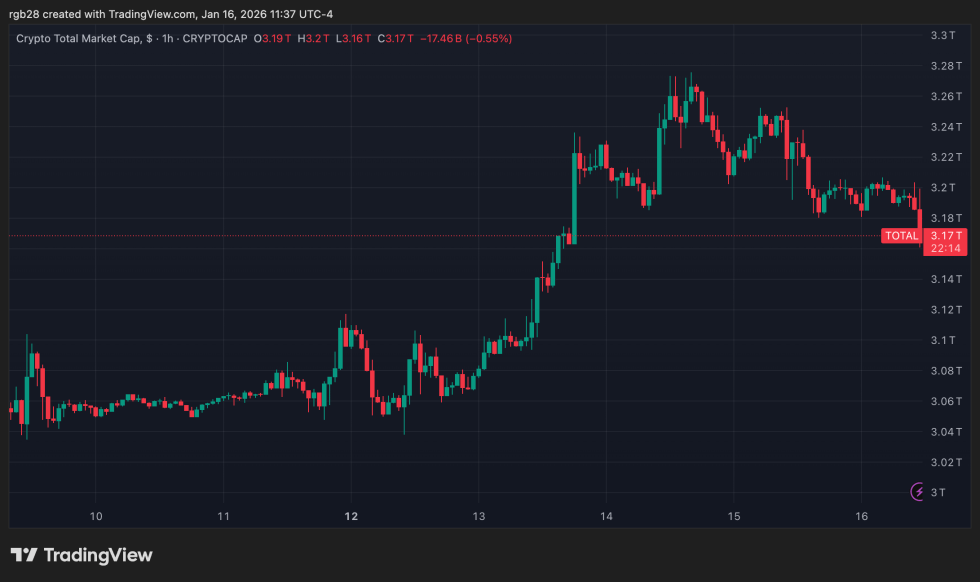
The total crypto market capitalization is at $3.17 trillion on the one-week chart. Source: TOTAL on TradingView


Crypto di tendenza

Domande pertinenti

QWhat is the purpose of the bill advanced by South Korean lawmakers regarding tokenized securities?

AThe bill aims to establish a legal framework for the issuance and trading of security token offerings (STOs) using distributed ledger technology (DLT), defining them as legitimate financial instruments and allowing their trade on licensed intermediaries.

QWhich two acts were amended by South Korea's National Assembly to create the legal framework for tokenized securities?

AThe National Assembly passed key amendments to the Capital Markets Act and the Electronic Securities Act.

QWhen is the tokenized securities legislation expected to be enacted after being signed into law?

AThe legislation is expected to be enacted one year after being signed into law, tentatively in January 2027.

QWhat is the Financial Services Commission (FSC) planning to form to ensure seamless preparatory work for tokenized securities?

AThe FSC is forming a joint 'Token Securities Council' with relevant agencies, including the Financial Supervisory Service, the Korea Securities Depository, the Financial Investment Association, industry participants, and experts.

QWhat recent change did South Korea announce regarding Bitcoin ETFs and institutional crypto trading?

ASouth Korea plans to open its market to Bitcoin ETFs this year and is lifting its long-standing ban on institutional crypto trading, with a proposed rule to cap corporate cryptocurrency investments at 5% of a company's equity capital.

Letture associate

Within Strategy's Framework, STRC's Dividend Yield Remains at 12% as Share Price Stays Below Par Value

Michael Saylor, Executive Chairman of Strategy (MSTR), confirmed that the dividend rate for its STRC perpetual preferred shares will remain at 12.00% through August 2026. The rate has increased from 9% at its July 2025 launch to the current high via a "ratchet" mechanism, which permanently raises the rate by 0.5% whenever the share price falls below $95. This mechanism is intended to push the price back toward its $100 par value and support Strategy's "at-the-market" (ATM) program for issuing new shares to fund Bitcoin purchases. However, the mechanism has not worked as intended. STRC shares closed at $89.46 on July 31, remaining about 10-11% below par value despite the record-high dividend. Competition from rival Strive's higher-yielding SATA securities has pressured demand. The persistent discount has forced Strategy to suspend new STRC issuances via its ATM program, limiting this funding channel for Bitcoin acquisitions. STRC's struggles reflect Bitcoin's own volatility, as the preferred shares historically move in tandem. Analysts have warned the ratchet structure carries long-term, one-way risk. A law firm is investigating Strategy's ability to maintain dividend payments if Bitcoin's price stays low. Retail investors own roughly 83% of outstanding STRC shares, a group seen as prone to panic selling during downturns. In response, Strategy has established financial reserves, including a liquidity cushion covering about 26 months of dividend/interest obligations, and a $2 billion share buyback program alongside a Bitcoin monetization framework, though the company emphasized it is not obligated to sell any Bitcoin.

cryptonews.ru23 min fa

Within Strategy's Framework, STRC's Dividend Yield Remains at 12% as Share Price Stays Below Par Value

cryptonews.ru23 min fa

Analyst: Bitcoin's Price Will Drop to $60k in August, Then Rebound to $70k

Financial analyst Andrey Poroshin has provided a new forecast for Bitcoin's price dynamics in August. Poroshin, an analyst at the Bitbanker exchange, expects the cryptocurrency market to experience a downturn this month, with prices retesting the $60,000 level due to a lack of supportive macroeconomic catalysts. He noted that the recent US Federal Reserve decision to hold interest rates did not significantly impact the market, while inflation remains above the 2% target. Poroshin stated that Bitcoin is ending July under pressure from moderate volatility and a lack of new macroeconomic stimuli, leading to continued market caution. According to his base scenario, Bitcoin will drop to a range of $60,000 to $62,000 before recovering to $70,000. He pointed out that even $70,000 remains below the cost of mining in the US, which has prompted some miners to shift towards AI data center operations. Poroshin cited the winding down of BitMEX's operations as a potential catalyst for a price rebound, suggesting the exit of weaker players often coincides with market reversals and reduced short-term selling pressure. He believes Bitcoin is currently less susceptible to geopolitical shocks, such as the Iran-US conflict, and does not expect significant market changes in August related to the pending CLARITY Act. Looking ahead, Poroshin forecasts that September will bring more active price fluctuations driven by potential Fed rate decisions and possible discussions or approval of the CLARITY Act.

cryptonews.ru23 min fa

Analyst: Bitcoin's Price Will Drop to $60k in August, Then Rebound to $70k

cryptonews.ru23 min fa

Trading

Spot

Articoli Popolari

Come comprare PUSH

Benvenuto in HTX.com! Abbiamo reso l'acquisto di Push Protocol (PUSH) semplice e conveniente. Segui la nostra guida passo passo per intraprendere il tuo viaggio nel mondo delle criptovalute.Step 1: Crea il tuo Account HTXUsa la tua email o numero di telefono per registrarti il tuo account gratuito su HTX. Vivi un'esperienza facile e sblocca tutte le funzionalità,Crea il mio accountStep 2: Vai in Acquista crypto e seleziona il tuo metodo di pagamentoCarta di credito/debito: utilizza la tua Visa o Mastercard per acquistare immediatamente Push ProtocolPUSH.Bilancio: Usa i fondi dal bilancio del tuo account HTX per fare trading senza problemi.Terze parti: abbiamo aggiunto metodi di pagamento molto utilizzati come Google Pay e Apple Pay per maggiore comodità.P2P: Fai trading direttamente con altri utenti HTX.Over-the-Counter (OTC): Offriamo servizi su misura e tassi di cambio competitivi per i trader.Step 3: Conserva Push Protocol (PUSH)Dopo aver acquistato Push Protocol (PUSH), conserva nel tuo account HTX. In alternativa, puoi inviare tramite trasferimento blockchain o scambiare per altre criptovalute.Step 4: Scambia Push Protocol (PUSH)Scambia facilmente Push Protocol (PUSH) nel mercato spot di HTX. Accedi al tuo account, seleziona la tua coppia di trading, esegui le tue operazioni e monitora in tempo reale. Offriamo un'esperienza user-friendly sia per chi ha appena iniziato che per i trader più esperti.

577 Totale visualizzazioniPubblicato il 2024.12.13Aggiornato il 2026.06.02

Come comprare PUSH

Discussioni

Benvenuto nella Community HTX. Qui puoi rimanere informato sugli ultimi sviluppi della piattaforma e accedere ad approfondimenti esperti sul mercato. Le opinioni degli utenti sul prezzo di PUSH PUSH sono presentate come di seguito.

活动图片












