Social Capital CEO: From U.S. Stocks to SpaceX, How Equity Tokenization is Reshaping Capital Markets?

marsbitPubblicato 2026-03-07Pubblicato ultima volta 2026-03-07

Introduzione

Chamath Palihapitiya discusses how equity tokenization is transforming capital markets by addressing structural limitations of traditional systems. The current stock market, valued at over $150 trillion, operates with restricted hours, relies on multiple intermediaries, and limits access to high-growth private companies. Tokenization introduces three key improvements: 24/7 trading to incorporate global information and demand, streamlined ownership reducing intermediaries and costs, and expanded access to private markets like SpaceX and OpenAI through SPV-based tokens. While these tokens offer economic exposure rather than direct ownership and lack standardization, they meet growing demand for private investments. The shift aligns with the rise of stablecoins and could save billions annually by modernizing infrastructure.

Original link:https://x.com/chamath/status/2029650649819009211

Original author:Chamath Palihapitiya

Compiled by: Ken, Chaincathcer

The modern stock market is built on infrastructure that predates the digital network by a long time.

The global stock market has a market capitalization of over $150 trillion, but trading hours are still limited, settlement still relies on multiple layers of intermediaries, and investment opportunities in many high-growth companies are still restricted to a small number of investors.

These structural limitations constrain how capital flows, who can participate, and the speed of ownership changes.

Market infrastructure providers are already exploring how to use tokenization to modernize the system. Institutions including the New York Stock Exchange, Nasdaq, and DTCC have begun developing tokenized equity and settlement infrastructure.

With the adoption of equity tokenization, these barriers are beginning to erode.

Since early 2025, the market capitalization of equity tokens has grown nearly 3.5 times, reflecting a broader shift towards the tokenization of real-world assets.
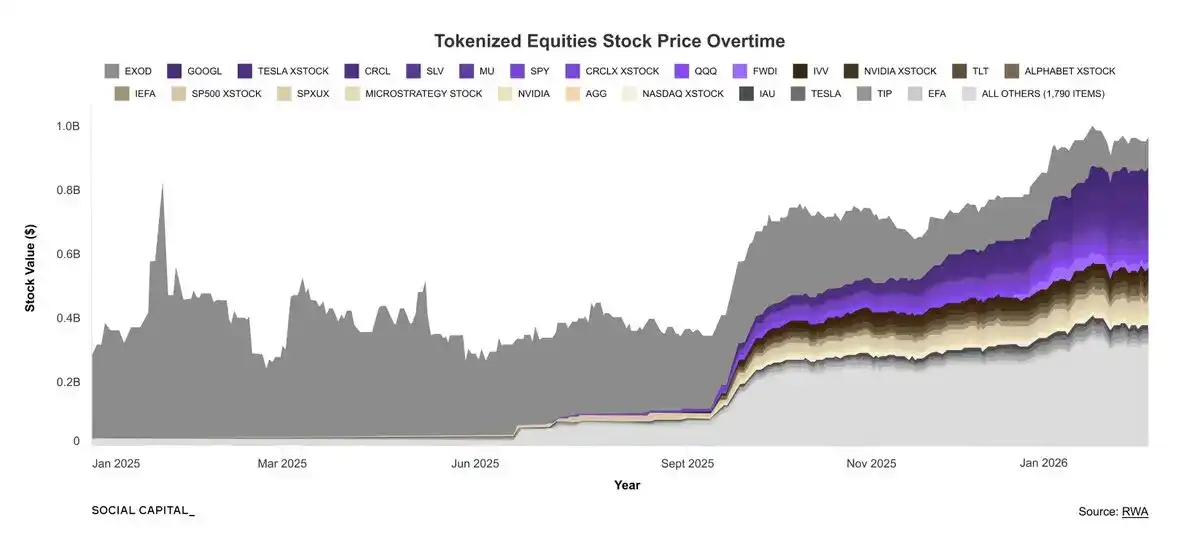
This expansion has occurred in parallel with the rise of stablecoins. These fiat-pegged tokens have grown more than tenfold in less than five years and have now become the primary settlement layer for on-chain financial activity:
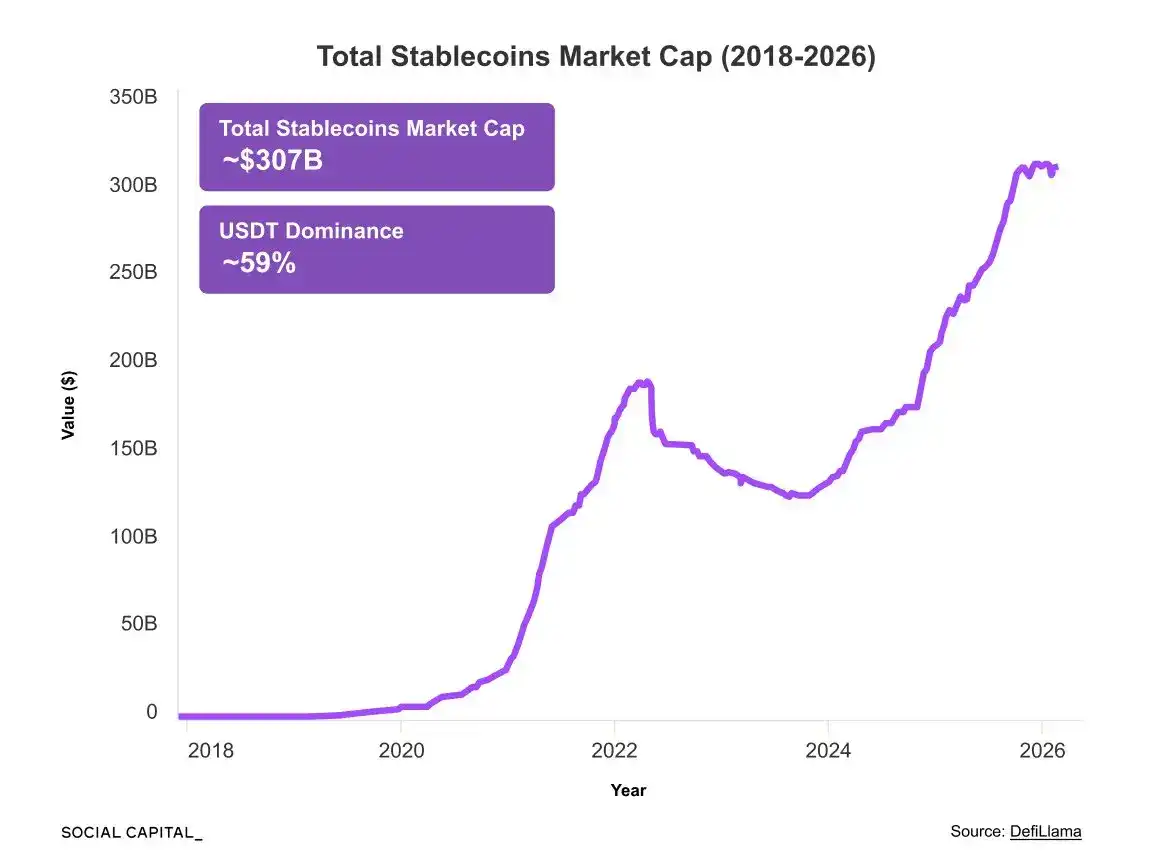
While stablecoins function differently from equity tokens, their rapid adoption shows that when tokenized financial instruments offer clear infrastructure advantages, they can achieve significant scale.

Equity tokens represent the next test: can tokenization expand from payments to the ownership of financial assets.

What are Equity Tokens?

Equity tokens are not just traditional stocks placed on a blockchain.

Traditional stocks represent ownership in a company.

An equity token is a blockchain-based asset that represents shares in a company or structured rights related to those shares, with ownership tracked and transferred via Distributed Ledger Technology (DLT).

Tokenized Equity Can Address Three Major Market Gaps 24/7

  1. 24/7 Trading: Markets are shifting from a 5-day (or shorter) weekly trading model to uninterrupted 24-hour trading.

Even today, approximately 11% of U.S. stock trading occurs outside regular trading hours.

A 24/7 market structure allows new information to be priced in more quickly during after-hours sessions and better accommodates a global shareholder base, as foreign investors currently hold about 15% of U.S. stocks.

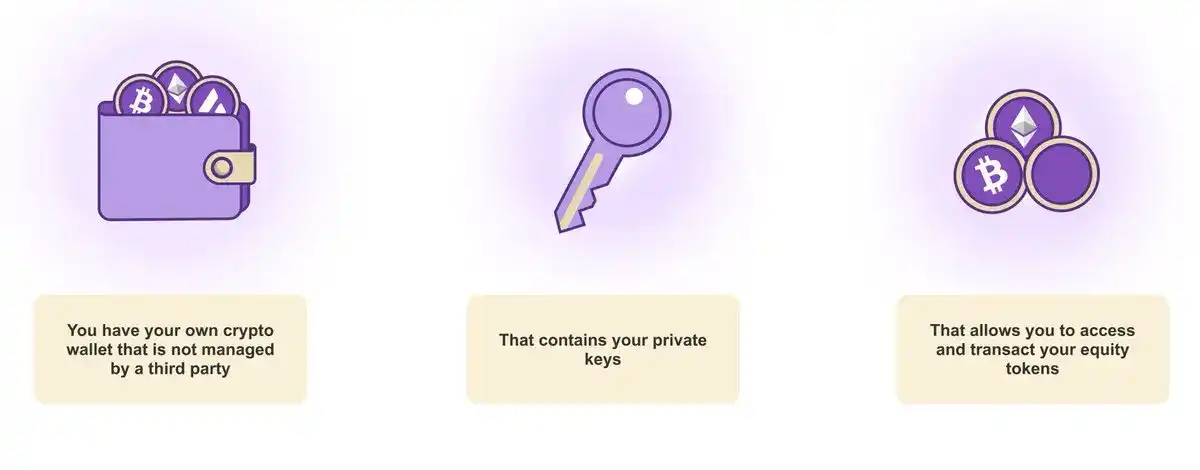
  1. Ownership: In traditional finance, equity ownership records are spread across multiple intermediaries, including brokers, clearing firms, and central securities depositories.

Tokenization reduces reliance on these layers and allows for ownership to be tracked directly on a shared ledger.

This transforms equity from a static record into a programmable financial asset.

Owners can use the asset as collateral for on-chain loans. They can use it to secure credit. They can also place it into automated liquidity pools to generate yield.

In traditional markets, similar operations typically require multiple intermediaries and additional settlement steps. Each intermediary interaction incurs brokerage fees and commissions, costs that are ultimately passed on to the equity asset holder.

Even a modest reduction in post-trade friction is estimated to save the stock industry $5 billion to $10 billion annually.
  1. Access Restrictions: While the first two advantages primarily apply to public market stocks, tokenization also addresses access restrictions in private markets.

Under current securities regulations, many private offerings are restricted to accredited investors. This typically requires an investor to have a net worth of $1 million (excluding primary residence), or an annual income of $200,000, or $300,000 jointly with a spouse.

Private companies must also control the number of shareholders to remain unlisted. U.S. regulations require companies to report to the SEC once they have more than 2,000 record shareholders or more than 500 non-accredited investors.

Furthermore, institutional venture capital funds often require limited partners to commit millions of dollars.

As a result, most investors have little access to these high-growth private companies before they enter the public markets.
极

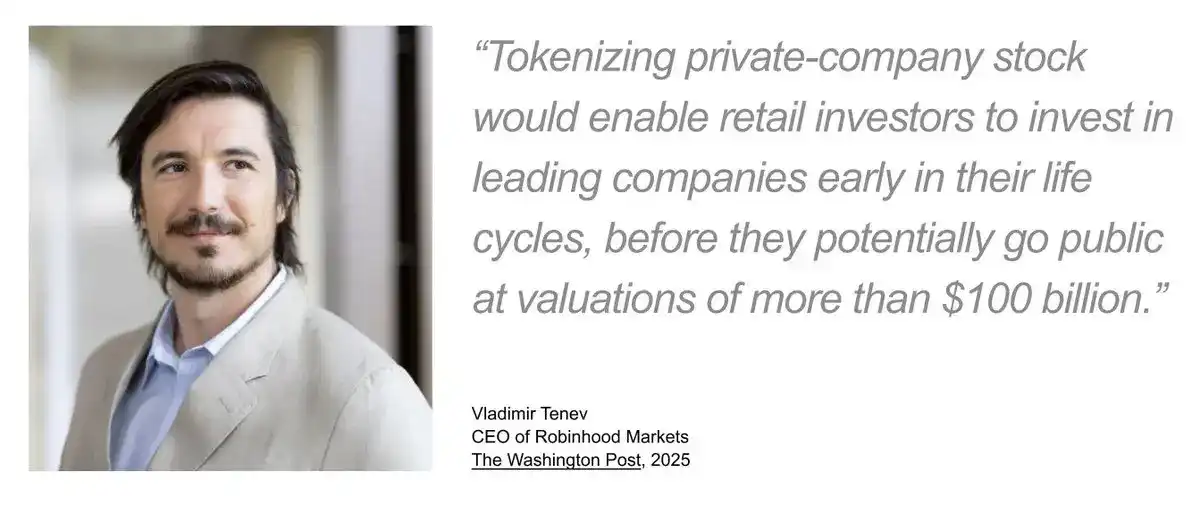
Equity tokenization promises to bridge this access gap.

Equity tokens can be issued through various structural models, but the most common method currently relies on a Special Purpose Vehicle (SPV).

In this structure, the SPV holds the underlying shares, and the tokens represent economic claims on that entity. This allows issuers to give investors exposure to investments in private companies, opportunities that were previously limited to venture capital firms and institutional investors.

For example, Robinhood recently announced the rollout of tokens for OpenAI and SpaceX to eligible users in the EU.
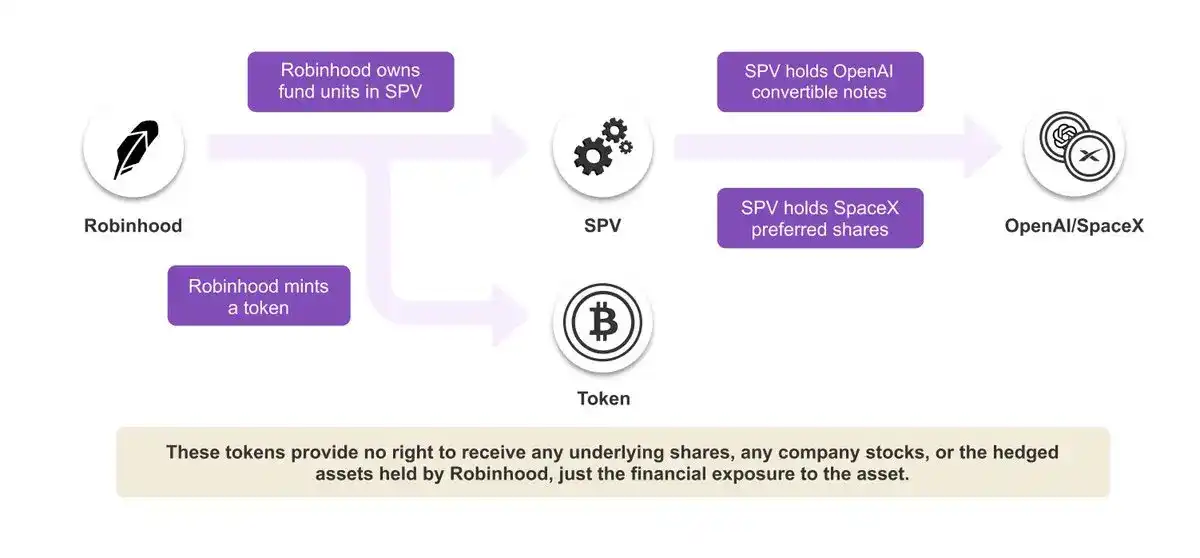
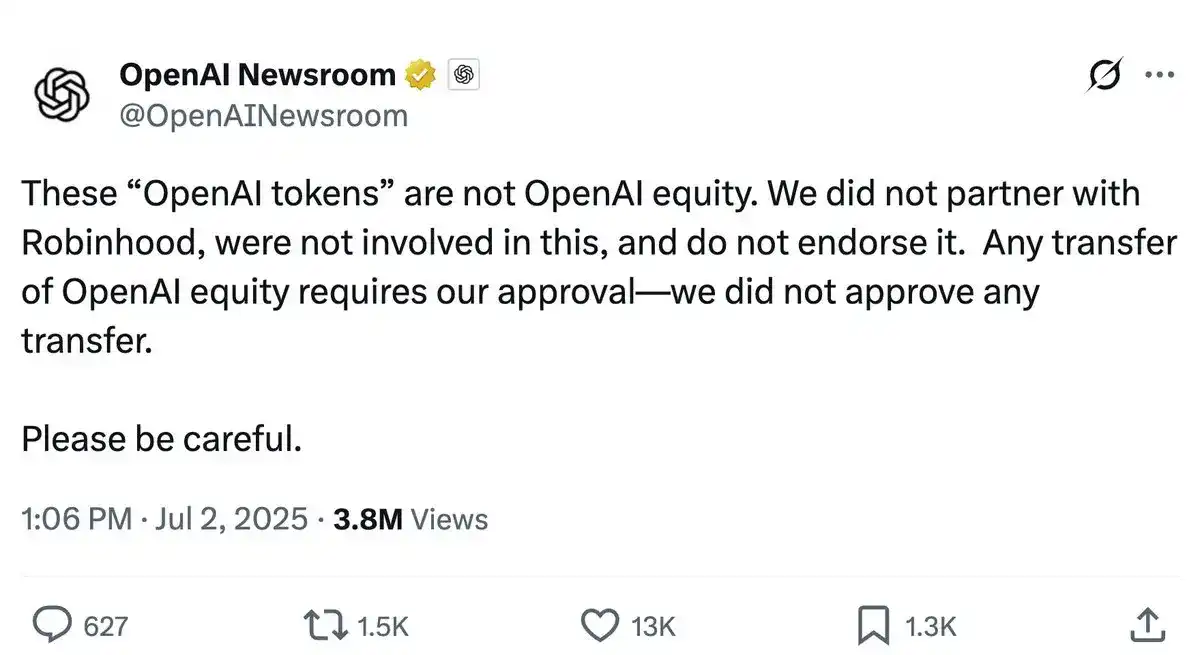
These tokens give investors exposure to two of the world's hottest private companies. However, they do not represent direct ownership of OpenAI or SpaceX shares. Instead, the tokens represent financial interests linked to an intermediary entity.

This highlights a core challenge of equity tokenization: the rights represented by the token are not always standardized.

Different issuers can design tokens with substantially different economic rights. In Robinhood's case, it is currently unclear whether the SpaceX token provides preferred stock rights, or if the token can convert to common stock should SpaceX eventually go public.

Preferred and common stock differ in liquidation priority, voting rights, and return characteristics. Without clear articulation of these terms, it is difficult for investors to price or compare tokens pegged to the same company.

Consequently, many tokenized private equity offerings provide economic exposure rather than direct ownership. Because the token sits at a different legal level than the underlying share, investors must understand the structure before assuming what they own.
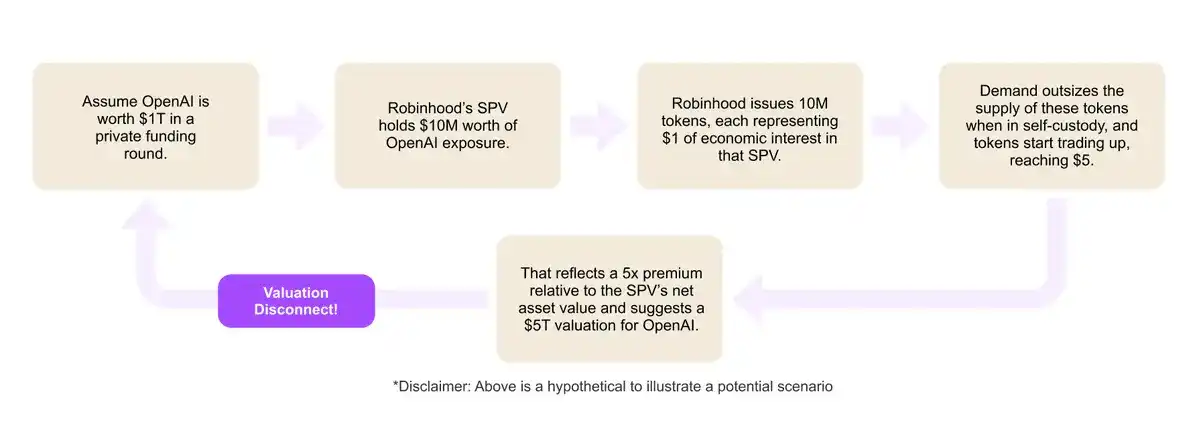
Despite these structural ambiguities, investor demand for access to private markets continues to grow. This is set against a backdrop where companies are also staying private for longer.

Surveys show that about 90% of Americans would be willing to allocate some of their retirement savings to private assets, with interest particularly strong among Gen Z and millennial investors.

Equity tokenization promises greater access to private markets, continuous liquidity, and new ways to structure financial ownership.


Crypto di tendenza

Domande pertinenti

QWhat are the three main market gaps that tokenized equity can address according to the article?

AThe three main market gaps are: 1) 24/7 trading, moving from limited weekly trading hours to continuous, around-the-clock markets. 2) Ownership, by reducing reliance on intermediaries and allowing for direct ownership tracking on a shared ledger, turning equity into a programmable financial asset. 3) Access restrictions, by solving the limitations in private markets that often exclude non-accredited investors from high-growth private companies.

QHow does the article define a stock token, and how is it different from a traditional stock?

AA stock token is defined as a blockchain-based asset that represents shares in a company or structured economic rights related to those shares, with ownership tracked and transferred via distributed ledger technology (DLT). It is different from a traditional stock because it is not merely a traditional stock placed on a blockchain; it represents a programmable financial asset on a shared ledger, reducing intermediary layers and enabling new financial uses like collateral for loans or placement in liquidity pools.

QWhat structural model is currently the most common for issuing equity tokens, as mentioned in the article?

AThe most common structural model for issuing equity tokens currently is through a Special Purpose Vehicle (SPV). In this structure, the SPV holds the underlying shares, and the tokens represent economic claims on that entity, providing investors exposure to private companies that were previously limited to venture capital firms and institutional investors.

QWhat core challenge does the article highlight regarding the rights represented by equity tokens?

AThe core challenge highlighted is that the rights represented by equity tokens are not always standardized. Different issuers can design tokens with substantially different economic rights, such as variations in liquidation priority, voting rights, and return characteristics. This lack of clarity makes it difficult for investors to price or compare tokens linked to the same company, as many offer economic exposure rather than direct ownership.

QWhat significant growth is cited in the article to demonstrate the shift towards real-world asset tokenization?

AThe article cites that since early 2025, the market capitalization of equity tokens has grown nearly 3.5 times. This expansion reflects a broader shift towards the tokenization of real-world assets and has occurred alongside the rise of stablecoins, which have grown more than tenfold in less than five years and become a primary settlement layer for on-chain financial activity.

Letture associate

Annual Salary of Millions Competing for Electricians, Meta Rushes to Open Its Own Technical School

The AI boom is facing an unexpected bottleneck: a severe shortage of skilled construction workers and electricians. As tech giants like Meta, OpenAI, and Alphabet race to build massive data centers—such as OpenAI's $16 billion "Stargate" project—they are hitting a critical labor wall. The U.S. needs an estimated 130,000 more electricians, 240,000 construction workers, and 150,000 supervisors by 2030 for AI infrastructure alone, but tens of thousands of electrician jobs go unfilled each year. While AI companies offer high premiums, with electricians earning up to $280,000 annually, worker scarcity still causes massive losses—delays on a single project can cost $14.2 million per month. The complexity of building AI data centers, which require immense power (equivalent to powering hundreds of thousands of homes), sophisticated electrical systems, and advanced liquid cooling solutions, demands highly skilled technicians who are in short supply. To combat this, companies are investing heavily in training. Meta has committed $115 million to a free training school offering tuition, housing, and stipends, targeting 5,000 new workers. OpenAI is partnering with unions to secure skilled labor. These efforts are paying off, with a significant rise in Gen Z interest in trade schools over college. However, the power demands are staggering. AI data centers are driving a rapid surge in electricity consumption, projected to account for up to 12% of U.S. power use by 2028 and raising costs for consumers. Furthermore, the construction boom is project-based, leading to a potential future glut of trained workers once building peaks, which could depress wages industry-wide. The race for AI supremacy now depends as much on skilled hands as on advanced chips.

marsbit8 min fa

Annual Salary of Millions Competing for Electricians, Meta Rushes to Open Its Own Technical School

marsbit8 min fa

OpenAI No Longer Sells Its Most Expensive Model for Profit

OpenAI is shifting its business strategy away from promoting its most expensive, flagship models for every task. Recent price cuts—80% for GPT-5.6 Luna and 20% for Terra—signal a deeper change: the company now actively advises users that many tasks don't require the most powerful model. Instead, OpenAI recommends a tiered approach: use the high-end GPT-5.6 Sol for complex planning and analysis, then delegate execution to cheaper models like Luna. This mirrors moves by Anthropic, which recently launched Claude Opus 5 at half the price of its top model, Fable 5. Both companies are de-emphasizing flagship models as primary revenue drivers, using them instead for brand prestige and technological showcases. The industry is entering a "mass-market" phase, similar to automotive, where high-volume, cost-effective models handle daily operations and drive scale. OpenAI's price reductions are partly enabled by AI models themselves optimizing underlying code and infrastructure, creating a self-reinforcing cycle of efficiency gains and cost reduction. Competition is shifting from "who is smartest" to "who offers the best value." The goal is no longer selling individual models but fostering widespread API adoption and ecosystem lock-in. By making AI calls cheap and ubiquitous, companies like OpenAI aim to become the indispensable, utility-like infrastructure powering automated workflows—the "water and electricity" of software, quietly embedded everywhere.

marsbit8 min fa

OpenAI No Longer Sells Its Most Expensive Model for Profit

marsbit8 min fa

Will the Fed Definitely Raise Interest Rates in September? How Will Crypto and U.S. Stocks Withstand the Pressure?

The market's expectation for a September Fed rate hike surged dramatically in early August, jumping from under 50% to over 80% within a week. This shift followed a contentious July FOMC meeting, where a 9-3 vote to hold rates revealed growing dissent from hawkish members advocating for an immediate hike to combat persistent inflation. The primary catalyst for this repricing is rising oil prices, driven by renewed geopolitical tensions around the Strait of Hormuz, which threaten global supply. Energy costs directly influence inflation metrics, making the upcoming July CPI report (due August 12th) a critical data point. If it shows inflation reaccelerating, the probability of a September hike will solidify. For Bitcoin and crypto assets, this is typically bearish news. Bitcoin continues to behave as a high-beta, liquidity-sensitive risk asset. A rate hike raises the opportunity cost of holding non-yielding assets and could drive capital toward money markets, pressuring crypto prices in the short term. However, historical patterns suggest that if a hike is perceived as the end of a tightening cycle rather than the start, any negative price impact may be brief. U.S. stocks, particularly crypto-linked equities like Coinbase and growth-oriented tech stocks, are also vulnerable. Higher rates increase discount rates in valuation models, putting pressure on high-multiple companies. This coincides with a pivotal tech earnings season where investor focus has shifted from massive AI capital expenditure to tangible revenue and cash flow generation. Companies with negative cash flow and weak growth narratives could face heightened volatility if borrowing costs rise in September. In summary, a September Fed hike has evolved into a mainstream market scenario. Key factors to watch are oil prices, the July CPI report, and Fed communications, which will determine the final decision and its impact on volatile crypto and equity markets.

marsbit19 min fa

Will the Fed Definitely Raise Interest Rates in September? How Will Crypto and U.S. Stocks Withstand the Pressure?

marsbit19 min fa

Trading

Spot

Articoli Popolari

Come comprare LINK

Benvenuto in HTX.com! Abbiamo reso l'acquisto di ChainLink (LINK) semplice e conveniente. Segui la nostra guida passo passo per intraprendere il tuo viaggio nel mondo delle criptovalute.Step 1: Crea il tuo Account HTXUsa la tua email o numero di telefono per registrarti il tuo account gratuito su HTX. Vivi un'esperienza facile e sblocca tutte le funzionalità,Crea il mio accountStep 2: Vai in Acquista crypto e seleziona il tuo metodo di pagamentoCarta di credito/debito: utilizza la tua Visa o Mastercard per acquistare immediatamente ChainLinkLINK.Bilancio: Usa i fondi dal bilancio del tuo account HTX per fare trading senza problemi.Terze parti: abbiamo aggiunto metodi di pagamento molto utilizzati come Google Pay e Apple Pay per maggiore comodità.P2P: Fai trading direttamente con altri utenti HTX.Over-the-Counter (OTC): Offriamo servizi su misura e tassi di cambio competitivi per i trader.Step 3: Conserva ChainLink (LINK)Dopo aver acquistato ChainLink (LINK), conserva nel tuo account HTX. In alternativa, puoi inviare tramite trasferimento blockchain o scambiare per altre criptovalute.Step 4: Scambia ChainLink (LINK)Scambia facilmente ChainLink (LINK) nel mercato spot di HTX. Accedi al tuo account, seleziona la tua coppia di trading, esegui le tue operazioni e monitora in tempo reale. Offriamo un'esperienza user-friendly sia per chi ha appena iniziato che per i trader più esperti.

907 Totale visualizzazioniPubblicato il 2024.12.13Aggiornato il 2026.06.02

Come comprare LINK

Discussioni

Benvenuto nella Community HTX. Qui puoi rimanere informato sugli ultimi sviluppi della piattaforma e accedere ad approfondimenti esperti sul mercato. Le opinioni degli utenti sul prezzo di LINK LINK sono presentate come di seguito.

活动图片












