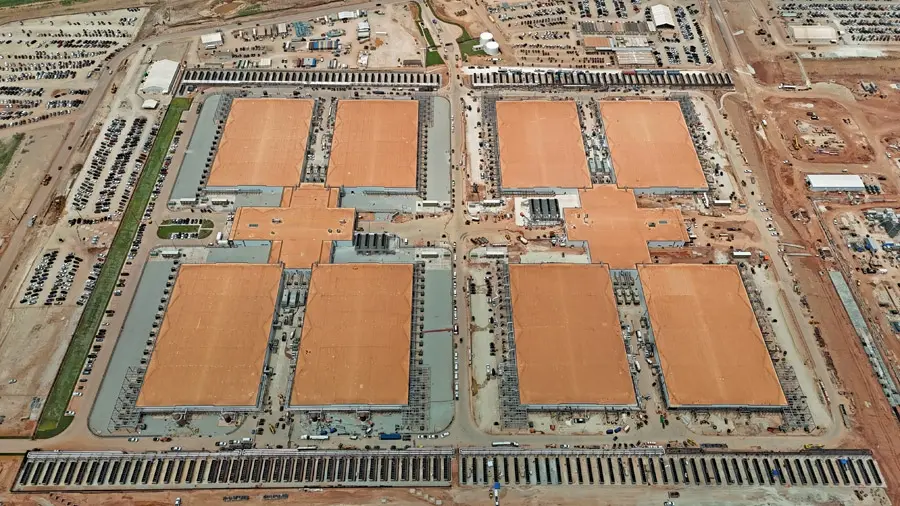
Snowflake's stock price surges 33%, AI infrastructure expands from chips to the data layer

marsbitPubblicato 2026-05-29Pubblicato ultima volta 2026-05-29

Introduzione

Snowflake's stock surged over 33% after the company raised its full-year revenue forecast and announced a $6 billion, five-year partnership with AWS. This agreement, which secures AWS Graviton chip supply, underscores Snowflake's evolving role in the AI infrastructure landscape. The market's reaction reflects a reassessment of data platforms as critical enablers for enterprise AI adoption. As companies move beyond conceptual AI to building operational, data-integrated AI workflows, demand for robust data storage, processing, and analysis capabilities is increasing. The deal strengthens AWS's custom chip ecosystem while positioning Snowflake not just as a data warehouse, but as a key data layer for deploying and managing AI applications. Analysts have rapidly revised their valuations upwards, signaling a shift in sentiment where proven AI-driven revenue growth is now commanding premium multiples.

Editor's note: The narrative of AI investments is further expanding from chips and models to the data infrastructure layer.

After facing stock price pressure since the beginning of the year, Snowflake saw its stock surge over 33% in a single day after raising its full-year revenue forecast and securing a $6 billion five-year cooperation agreement with AWS. The core of this market reaction isn't just about better-than-expected earnings; it's that investors have started to reassess Snowflake's position in the enterprise AI implementation chain.

Over the past year, enterprise software companies have generally faced a question: Will AI become a growth engine, or will it undermine their existing business models? Snowflake's latest performance and the AWS partnership provide a relatively clear answer—when enterprises start deploying AI applications at scale, the capabilities for data storage, processing, analysis, and model deployment become even more critical.

In this partnership, the supply of AWS Graviton chips addresses the computing power constraint issue, while the deeper integration of the Snowflake platform with AWS AI workloads points to a more profound enterprise need: companies don't simply "use AI"; they need to connect their own data into AI workflows to build operational, manageable, and scalable application systems.

This is also why Snowflake is being re-integrated into the "AI winner" narrative. AI software stocks previously experienced a sell-off, with the market being skeptical about whether "AI can truly contribute to revenue." However, Snowflake's case shows that once AI translates from conceptual demonstrations into real revenue growth, market sentiment can reverse rapidly. The fact that at least 30 analysts raised their price targets illustrates that the capital markets are re-pricing the value of data platforms within the AI infrastructure cycle.

What's even more noteworthy is that this deal also reinforces the presence of AWS's in-house chip ecosystem. From Anthropic, OpenAI, and Meta to Uber, and now Snowflake, Amazon is embedding itself deeper into the AI infrastructure through cloud, chip, and enterprise software partnerships. For Snowflake, this means it is not just an enterprise data warehouse company but is becoming a critical data layer in the process of enterprise AI application implementation.

The original text follows:

May 28—Snowflake's stock surged more than 33% on Thursday. The company previously raised its full-year revenue forecast and announced a $6 billion cooperation agreement with Amazon, bolstering investor confidence in its position as a key beneficiary of the AI boom.

This five-year agreement with Amazon Web Services (AWS) will secure a crucial supply of AWS Graviton chips for Snowflake. Currently, computing resources are becoming increasingly scarce as AI usage grows substantially.

The agreement will also further deepen the integration between Snowflake's data storage, processing, and analytics products and AI workloads on the AWS cloud. As enterprises rapidly scale their AI applications, Snowflake is poised to capture more demand. Currently, most of Snowflake's customers run on AWS.
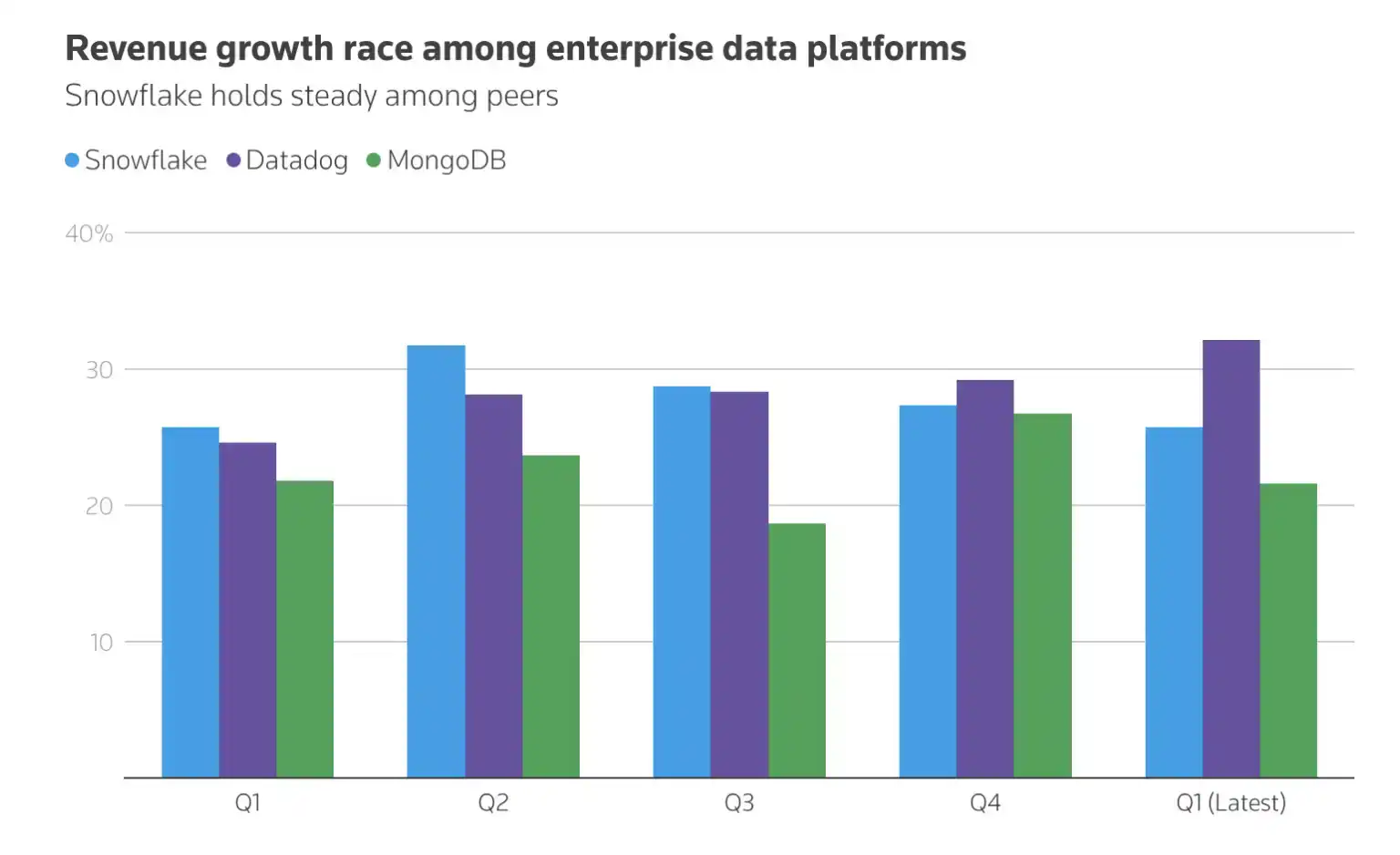
Following the announcement, at least 30 analysts raised their price targets for Snowflake, pushing the median target price from $230 before Wednesday's earnings report to $280. The stock was last trading at $233.50 in early trading.

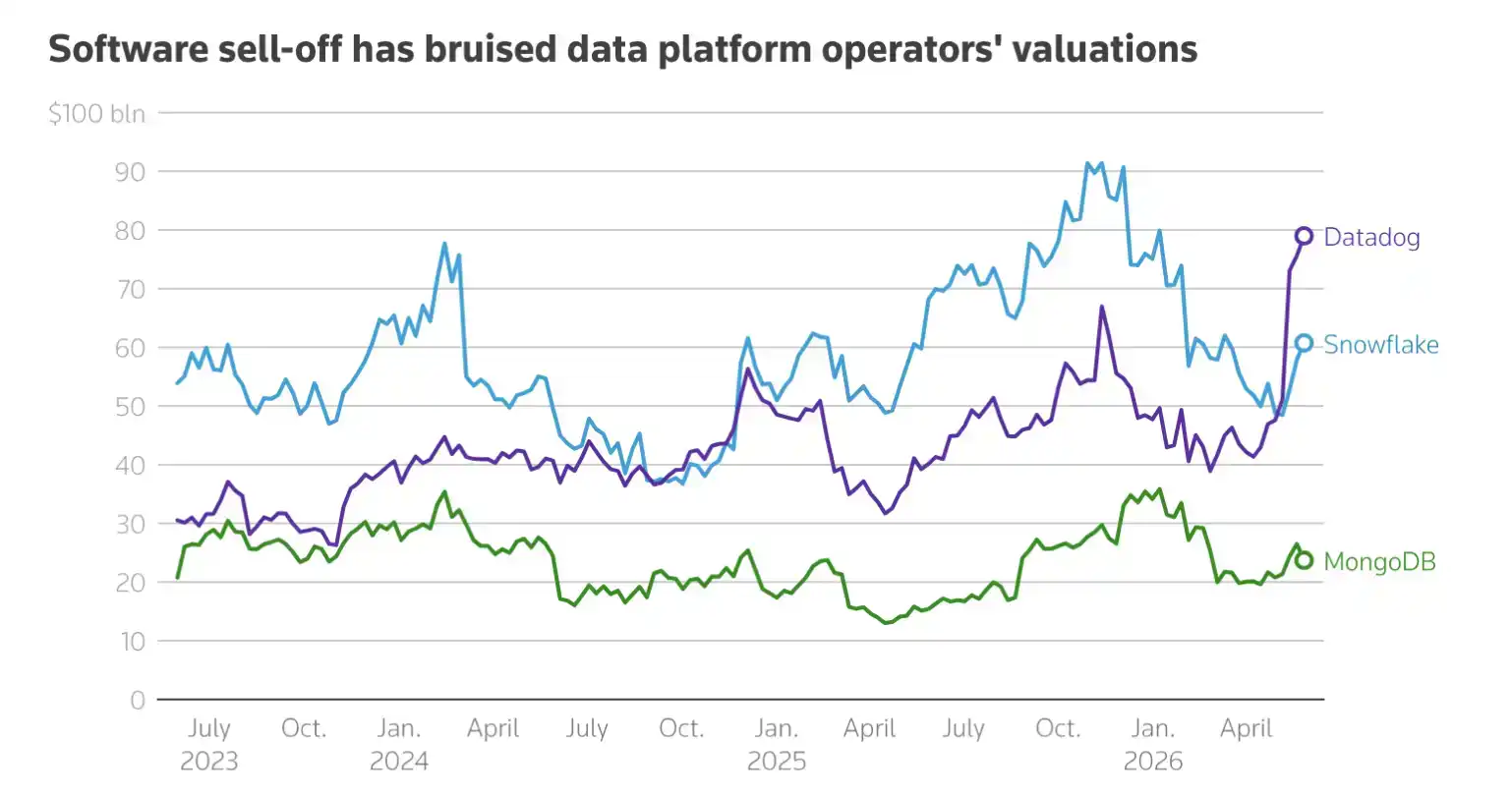
If the current gains hold, Snowflake's market value would increase by approximately $20 billion from its previous $607.5 billion.

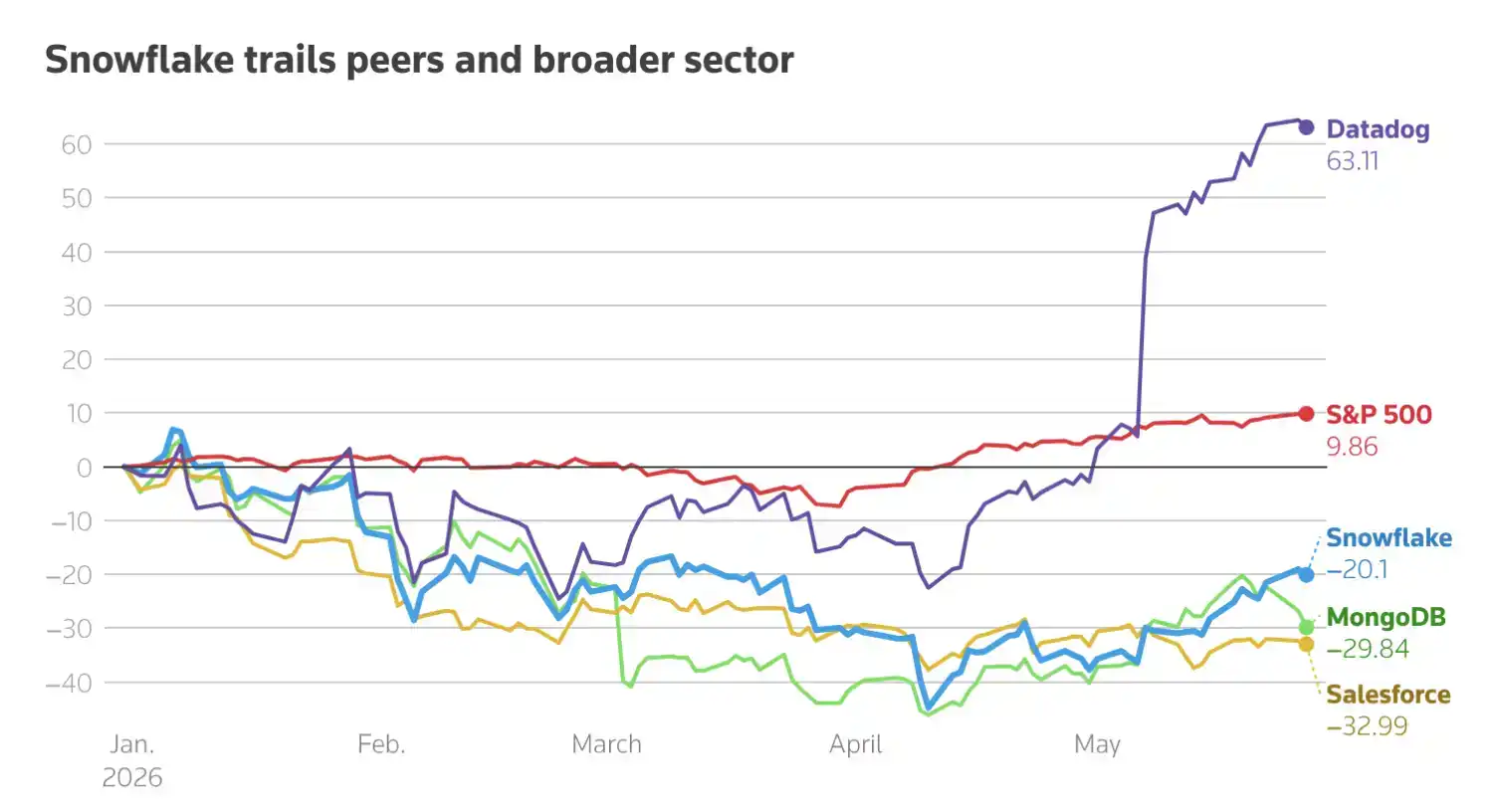
Matt Britzman, a senior equity analyst at Hargreaves Lansdown, stated that Snowflake's sharp stock rise—the stock was down 20% year-to-date before the previous trading day's close—"shows how much skepticism had built up during the wider AI software sell-off that hit data names."

"But it also shows how quickly sentiment can turn once a company proves AI is already driving revenue rather than just being PowerPoint filler."

Currently, Snowflake's forward 12-month price-to-earnings ratio is 85.21 times, compared to 85.19 times for Datadog and 47.17 times for MongoDB. A higher P/E ratio typically indicates investors are betting on stronger future growth.
Previously, market concerns that AI would disrupt enterprise software put pressure on Snowflake. Now, the company is embedding AI into its platform, helping businesses integrate data from multiple sources, perform analysis, and build AI tools.

"We believe this set of results puts Snowflake squarely in the 'AI winner' camp and deserves a higher valuation multiple," said Patrick Colville, an equity research analyst at Scotiabank. He added that this clearly indicates Snowflake is benefiting from the growth in enterprise AI adoption.

Snowflake helps businesses store, manage, and analyze all their data on one platform. Its AI tools like Cortex Code and Snowpark are seeing strong adoption. These tools enable enterprises to build generative AI applications based on their own data and deploy machine learning models.

This agreement also serves as another vote of confidence in Amazon's in-house chip business. In recent months, Amazon has secured several significant customers, including Anthropic, OpenAI, Facebook parent Meta, and Uber.
Crypto di tendenza

Domande pertinenti

QWhat were the two main factors that led to Snowflake's stock price surging over 33%?

ASnowflake's stock price surged over 33% primarily due to two factors: 1) The company raised its full-year revenue guidance. 2) It announced a five-year, $6 billion partnership agreement with Amazon Web Services (AWS).

QWhat does the $6 billion AWS deal specifically provide to Snowflake, and why is it important?

AThe $6 billion deal provides Snowflake with a critical supply of AWS Graviton chips. This is important because as AI usage grows, computing power resources are becoming increasingly scarce and constrained.

QHow does the article describe the shift in the AI investment narrative, and what role does Snowflake now play in it?

AThe article states that the AI investment narrative is shifting from chips and models to the data infrastructure layer. Snowflake is now being re-evaluated as a key data layer, essential for enterprises to integrate their own data into AI workflows and build manageable, scalable AI application systems.

QAccording to the analyst from Hargreaves Lansdown, what does Snowflake's stock surge indicate about market sentiment?

AMatt Britzman from Hargreaves Lansdown stated that the surge indicates how much skepticism had built up during the broader AI software sell-off that dragged down data-related companies. It also shows how quickly market sentiment can reverse once a company proves that AI is driving actual revenue growth, not just being a presentation talking point.

QWhat are some of the specific AI tools offered by Snowflake mentioned in the article, and what is their purpose?

AThe article mentions Snowflake's Cortex Code and Snowpark AI tools. Their purpose is to enable enterprises to build generative AI applications and deploy machine learning models based on their own data.

Letture associate

Bitcoin Mining Farms Are Becoming AI Factories

Bitcoin mines are transforming into AI factories. This shift is driven by the convergence of three key assets from the previous crypto cycle: infrastructure, talent, and capital. Crypto mining companies like Crusoe, CoreWeave, and Bitdeer are repurposing their core competency—securing power, land, and grid connections in remote locations—to build data centers for AI clients. These firms are signing multi-billion dollar, long-term contracts with companies like Anthropic, AWS, and Microsoft, as AI's demand for reliable, high-capacity compute surpasses the profitability of Bitcoin mining. Simultaneously, crypto entrepreneurs and engineers are applying their skills to new AI ventures. Examples include OpenSea's co-founder launching OpenRouter (an AI model aggregator), and former Coinbase engineers building Fal.ai (a generative media infrastructure platform). Their experience in building scalable, global software networks translates effectively to the AI space. Furthermore, capital accumulated during the crypto boom is now fueling AI. Figures like Jed McCaleb (co-founder of Ripple) funded Voltage Park, a large-scale GPU cloud provider. Notably, some crypto investments, like FTX's early bets on Anthropic and Cursor, have generated astronomical paper returns, demonstrating how high-risk crypto capital flowed into AI before it became mainstream. The transition is not just about repurposing hardware, but about redirecting critical resources—power infrastructure, distributed systems expertise, and venture funding—to the next technological frontier: artificial intelligence.

链捕手53 min fa

Bitcoin Mining Farms Are Becoming AI Factories

链捕手53 min fa

Morpho Launches Fixed-Rate Product Midnight: Lenders and Borrowers Set Their Own Rates, Ending the Era of Interest Rate Models

Morpho Launches Fixed-Rate Product Midnight: Lenders and Borrowers Set Their Own Rates, Ending the Era of Algorithmic Interest Models On-chain lending has grown to $60 billion but remains minuscule compared to traditional finance's $200 trillion annual credit volume. Morpho identifies the lack of fixed rates and maturity dates as key bottlenecks. Institutions need predictability, not the passive floating rates set by algorithmic models. Midnight allows lenders and borrowers to directly quote rates, set terms, and become price makers, not takers. Fixed-rate lending is now viable due to cheaper, faster blockchains and the entry of institutions demanding control and certainty over returns, costs, and duration. Morpho Blue previously gave users control over risk; Midnight adds control over interest rates. Past attempts at on-chain fixed-rate lending failed primarily because they were built on top of floating-rate pools (creating unpredictability) or lacked sufficient active participants. Midnight avoids these pitfalls as a standalone primitive with fixed rates at its core, built upon Morpho Blue's existing large and active user base. Midnight offers distinct value: institutions gain predictable term structures and full control; fintech companies can offer tailored fixed-rate products; lenders/borrowers achieve predictability and efficiency; and curators can now differentiate by configuring both risk and interest rates. Morpho Midnight is not a replacement for Morpho Blue. The Morpho network will now feature two complementary market structures: floating-rate/open-term (Blue) for flexibility and fixed-rate/fixed-term (Midnight) for predictability. Liquidity can flow between them. The launch will be gradual, prioritizing security. Initially, it will support direct lending on Base network with one trading pair (cbBTC/USDC) and limited maturity dates. Advanced features like auto-rollovers will be introduced later.

marsbit53 min fa

Morpho Launches Fixed-Rate Product Midnight: Lenders and Borrowers Set Their Own Rates, Ending the Era of Interest Rate Models

marsbit53 min fa

Trading

Spot

Articoli Popolari

Come comprare LAYER

Benvenuto in HTX.com! Abbiamo reso l'acquisto di Solayer (LAYER) semplice e conveniente. Segui la nostra guida passo passo per intraprendere il tuo viaggio nel mondo delle criptovalute.Step 1: Crea il tuo Account HTXUsa la tua email o numero di telefono per registrarti il tuo account gratuito su HTX. Vivi un'esperienza facile e sblocca tutte le funzionalità,Crea il mio accountStep 2: Vai in Acquista crypto e seleziona il tuo metodo di pagamentoCarta di credito/debito: utilizza la tua Visa o Mastercard per acquistare immediatamente SolayerLAYER.Bilancio: Usa i fondi dal bilancio del tuo account HTX per fare trading senza problemi.Terze parti: abbiamo aggiunto metodi di pagamento molto utilizzati come Google Pay e Apple Pay per maggiore comodità.P2P: Fai trading direttamente con altri utenti HTX.Over-the-Counter (OTC): Offriamo servizi su misura e tassi di cambio competitivi per i trader.Step 3: Conserva Solayer (LAYER)Dopo aver acquistato Solayer (LAYER), conserva nel tuo account HTX. In alternativa, puoi inviare tramite trasferimento blockchain o scambiare per altre criptovalute.Step 4: Scambia Solayer (LAYER)Scambia facilmente Solayer (LAYER) nel mercato spot di HTX. Accedi al tuo account, seleziona la tua coppia di trading, esegui le tue operazioni e monitora in tempo reale. Offriamo un'esperienza user-friendly sia per chi ha appena iniziato che per i trader più esperti.

325 Totale visualizzazioniPubblicato il 2025.02.11Aggiornato il 2026.06.02

Come comprare LAYER

Discussioni

Benvenuto nella Community HTX. Qui puoi rimanere informato sugli ultimi sviluppi della piattaforma e accedere ad approfondimenti esperti sul mercato. Le opinioni degli utenti sul prezzo di LAYER LAYER sono presentate come di seguito.

活动图片