Silk Road-linked Bitcoin wallets move $3M to new address

cointelegraphPubblicato 2025-12-10Pubblicato ultima volta 2025-12-10

Introduzione

Cryptocurrency wallets associated with the defunct darknet marketplace Silk Road have transferred approximately $3.14 million in Bitcoin to a new address, marking their most significant activity in five years. The funds were moved from wallets still holding an estimated $38.4 million in BTC. This activity follows the January pardon of Silk Road founder Ross Ulbricht by former U.S. President Donald Trump. While the U.S. government previously seized billions in Bitcoin from Silk Road, industry observers believe Ulbricht may still control additional wallets containing tens of millions in unrecovered cryptocurrency.

Darknet marketplace Silk Road-linked cryptocurrency wallets are moving again, less than a year after US President Donald Trump granted its founder, Ross Ulbricht, a full pardon.

Silk Road-tagged cryptocurrency wallets awoke Tuesday to transfer approximately $3.14 million worth of Bitcoin (BTC), according to blockchain data platform Arkham.

The 176 transfers mark the wallet’s most significant activity in five years. Silk Road-related wallets executed only three small test transactions earlier this year.

The transfers were all made to an unknown cryptocurrency wallet “bc1qn.” The primary Silk Road–tagged wallets still hold about $38.4 million in Bitcoin, while the newly created address is holding only the $3.14 million received in the recent transactions.

Cointelegraph was unable to independently verify the owner of the new wallet and has reached out to Ulbricht for comment.
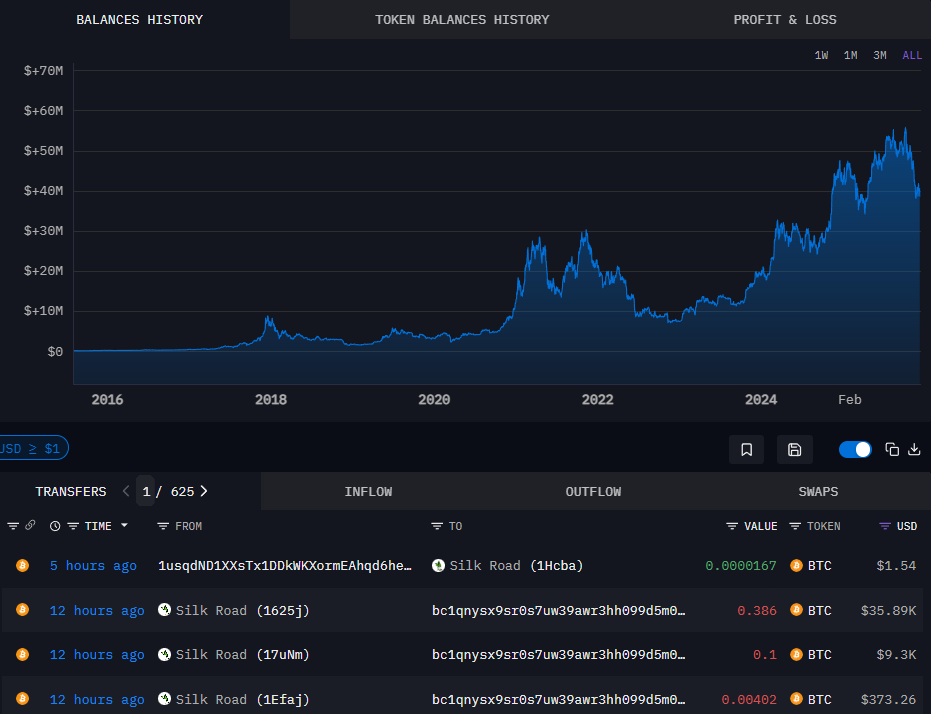
Silk Road wallets, token holdings. Source: Arkham

Related: Crypto nears its ‘Netscape moment’ as industry approaches inflection point

In January, Trump gave a full pardon to Silk Road founder Ross Ulbricht, who had been serving a double life sentence without parole.

Ulbricht was convicted in 2015 for his role in creating and operating Silk Road, a darknet marketplace that facilitated the anonymous trade of illicit goods using Bitcoin.

Source: Free_Ross

Following the pardon, supporters have contributed approximately $270,000 in Bitcoin donations to the Free Ross campaign, according to onchain data.

Related: ‘Elite’ traders hunt dopamine-seeking retail on prediction markets: 10x Research

Silk Road founder may still hold millions in unseized crypto wallets

While the US government seized at least $3.36 billion in Bitcoin from Silk Road, some industry watchers claim that Ross had multiple other Bitcoin wallets that weren’t discovered during the asset seizure.

Coinbase exchange director Conor Grogan revealed that 430 BTC, worth about $47 million, remains untouched in wallets likely linked to Ulbricht, which have been dormant for over 13 years.
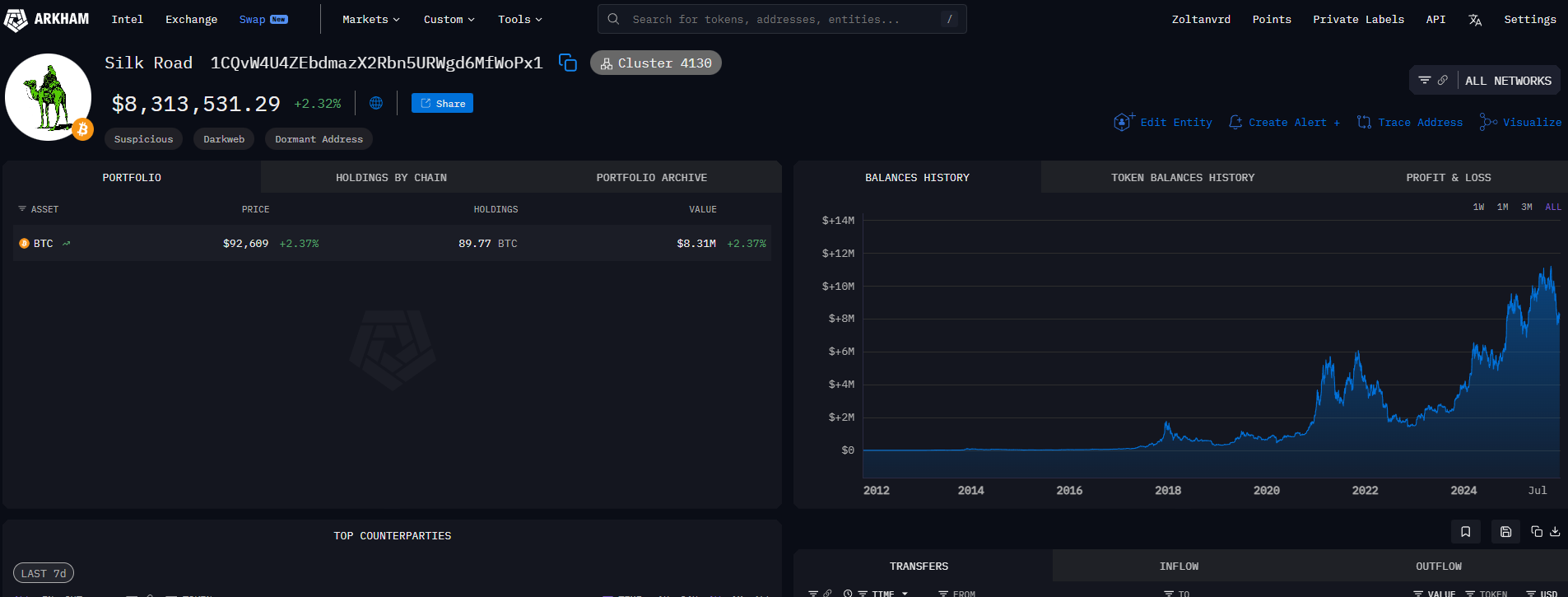
Silk Road wallet “1cqvW,” holdings. Source: Arkham

Another Silk Road-tagged wallet likely belonging to Ulbricht holds $8.3 million in Bitcoin. Barring three small test transactions in the past 10 months, the wallet has been inactive for 14 years, according to Arkham.

Magazine: $3.4B of Bitcoin in a popcorn tin — The Silk Road hacker’s story

Letture associate

You Should Still Believe in Crypto

The article "You Should Still Believe in Crypto" addresses the growing sense of burnout and disillusionment within the cryptocurrency industry, sparked by a post from Aevo co-founder Ken Chan titled "I Wasted 8 Years of My Life in Crypto." It acknowledges the collective fatigue many feel due to the industry's fast-paced, often speculative nature, where narratives shift rapidly, and projects frequently fail or disappear. However, the piece argues that the core value of crypto remains vital. It references Nic Carter’s response, highlighting crypto’s potential to create a more robust monetary system, encode business logic via smart contracts, establish true digital property rights, improve capital market efficiency, and enhance global financial inclusion. The article revisits Bitcoin’s origin as a peer-to-peer electronic cash system born from the 2008 financial crisis, emphasizing its purpose as a trustless, decentralized alternative to traditional finance. It points to real-world adoption in high-inflation countries like Argentina and Turkey, where Bitcoin and stablecoins serve as essential financial tools, and notes increasing institutional embrace from firms like BlackRock and Fidelity. Finally, it draws a parallel to the early internet era, arguing that despite chaos, failed projects, and speculative excess, the crypto industry—like the internet—is laying foundational groundwork for future technological and financial evolution. The conclusion is a call to persevere, recognizing that the collective efforts of developers, researchers, and builders worldwide are contributing to a transformative global shift.

marsbit52 min fa

You Should Still Believe in Crypto

marsbit52 min fa

Trading

Spot
Futures
活动图片














