Senator Lummis pushes for CLARITY Act, calls it ‘best thing to happen to DeFi community’

ambcryptoPubblicato 2026-04-02Pubblicato ultima volta 2026-04-02

Introduzione

Senator Cynthia Lummis advocates for the Digital Asset Market Clarity Act of 2025, calling it the "best thing to happen to the DeFi community." She argues the legislation would provide legal certainty and a "safe harbor" for developers, validators, and node operators, ensuring American innovation remains in the U.S. However, this optimism contrasts with Polymarket's prediction market, where the act's odds of passage are only 49%, reflecting broader market uncertainty. This skepticism may stem from ongoing disagreements between the White House and crypto entities like Coinbase. Concurrently, stablecoin infrastructure is evolving. The Better Money Company, backed by A16z crypto, is developing a "stablecoin clearinghouse" to simplify the use of multiple stablecoins across different blockchains. This development follows the passage of the GENIUS Act in 2025, which streamlined stablecoin regulations. Visa's on-chain analytics report a massive $72.3 trillion in stablecoin transaction volume over the past year, with USDC recently outpacing USDT in monthly transaction volume.

The hype around the Digital Asset Market Clarity Act of 2025 is increasing day by day. Senator Cynthia Lummis is the latest to lend some fresh optimism to the ongoing discussion around yield generations, with the Senator claiming that the CLARITY Act is the “best thing that could happen to the DeFi community.”

This is evidence of how even big officials can see the ongoing uncertainty surrounding regulations that are coming up in the way of actual growth of the crypto ecosystem. Hence, by pushing demand for the passage of the CLARITY Act, Lummis believes that this would finally give the crypto community “the legal certainty they deserve”.

Lummis also stressed on the seriousness of the situation as she explained how this proposed law is a one-pot solution to “developers, validators, and node operators.”

Once approved, this Act would provide “a safe harbor” and also “ensure American innovation stays right here on U.S soil.”

Polymarket odds are painting a negative picture

However, this optimism is in contrast to Polymarket odds. At the time of writing, they sat at 49%, even below the neutral level – A sign that the broader market is still unsure about the passage of the Act.
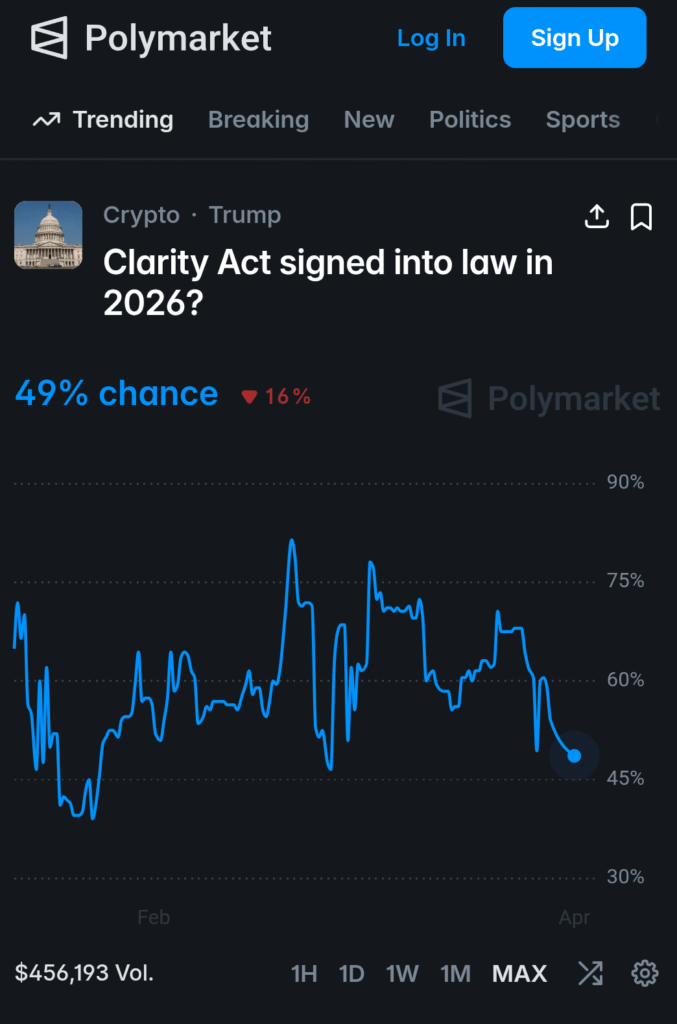
Source: Polymarket

This might be due to the series of disagreements between the White House and Coinbase.

On the contrary, others like the Better Money Company, a stablecoin infrastructure firm, are aiming to build “the next era of money”.

The current situation of the stablecoin market is such that different stablecoins exist across multiple blockchains, issuers, and platforms. And, they often require manual, costly conversions and sometimes even trading at slight value differences.

Finding the missing piece

Hence, to remove this roadblock, The Better Money Company is aiming to build “a stablecoin clearinghouse.” Under this plan, the firm will simplify how developers and businesses integrate stablecoins, enabling them to send, receive, and use multiple stablecoins as if they were one consistent form of money.

With A16z crypto investing in the startup, the plan is simply to develop the “critical missing connectivity layer” required to make the stablecoin ecosystem function effectively.

Other developments in and around stablecoins

All this is happening along the heels of the GENIUS Act that was passed in 2025, making stablecoin regulations seamless.

In the meantime, the total transaction volume of stablecoins hit a count of $72.3 trillion in the last 12 months, as per Visa’s on-chain analytics.
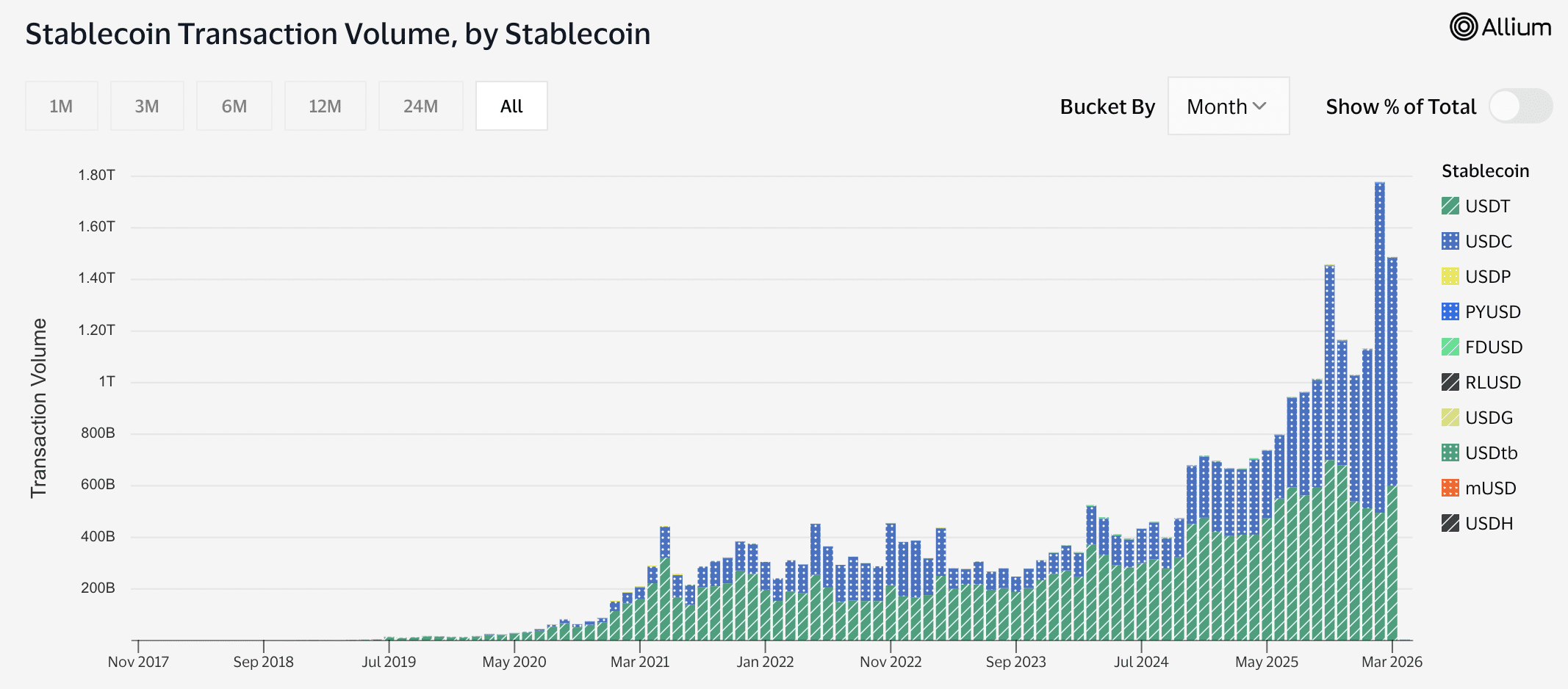
Source: Visa on-chain analytics

That’s not all either as data also revealed that USDC has been outpacing USDT lately. In fact, until last year, most months saw USDT ruling the transaction volume. However, things seem to have changed since 2026.


Final Summary

  • Despite growing optimism from the likes of Senator Cynthia Lummis, Polymarket odds remain below par.
  • Firms like Better Money Company now stepping in with new stablecoin plans.

Crypto di tendenza

Domande pertinenti

QWhat is the CLARITY Act and why does Senator Lummis support it?

AThe CLARITY Act refers to the Digital Asset Market Clarity Act of 2025. Senator Lummis supports it because she believes it will provide the DeFi community with 'the legal certainty they deserve,' act as a one-pot solution for developers, validators, and node operators, provide a 'safe harbor,' and ensure American innovation stays in the U.S.

QAccording to the article, what do the current Polymarket odds suggest about the Act's passage?

AThe current Polymarket odds, sitting at 49% (below the neutral level), suggest that the broader market is still unsure about the passage of the CLARITY Act.

QWhat problem is The Better Money Company aiming to solve with its 'stablecoin clearinghouse'?

AThe Better Money Company aims to solve the problem of different stablecoins existing across multiple blockchains, issuers, and platforms, which often require manual, costly conversions and can trade at slight value differences. Their clearinghouse would simplify integration, allowing users to send, receive, and use multiple stablecoins as one consistent form of money.

QWhat significant development in stablecoin regulation preceded the events in this article?

AThe GENIUS Act, which was passed in 2025 and made stablecoin regulations seamless, preceded the events discussed in the article.

QWhat does the data from Visa's on-chain analytics reveal about stablecoin transaction volume and the performance of USDC vs. USDT?

AVisa's on-chain analytics revealed that the total transaction volume of stablecoins was $72.3 trillion in the last 12 months. The data also showed that USDC has been outpacing USDT lately, a change from previous years where USDT typically ruled the transaction volume.

Letture associate

Bitcoin Withdrawals Continue: 8 Years of Storage in a Coldcard Cold Wallet Ended in Zero

Coldcard Hardware Wallet Hacked: Losses Mount Due to Vulnerable Seed Generation A critical vulnerability in Coldcard hardware wallets has led to a continued wave of fund thefts. According to Galaxy Research, the total stolen has reached 1,367.05 BTC (approx. $88.6 million) from 4,585 addresses, a significant increase from the initial 594.5 BTC reported on July 30, 2026. Most of the stolen funds remain on the attackers' addresses. The issue is not with the current firmware, which Coinkite has updated, but with seed phrases generated on vulnerable devices between March 2021 and the release of fixed firmware versions. Due to a programmer error, devices switched from using a hardware random number generator to the software-based Yasmarang generator, which was initialized with publicly accessible data like the chip's serial number. This made the seed phrases predictable through offline brute-force attacks, meaning wallets remain at risk until funds are moved to a new wallet generated with the patched firmware. Affected devices include Mk2/Mk3 with firmware 4.0.1–4.1.9 (and up to 5.0.3), Mk4/Mk5 up to version 5.6.0, and Q models up to 1.5.0Q. The only exceptions are seeds created with a high-entropy method like at least 50 independent dice rolls or a strong unique BIP-39 passphrase. All other owners must generate a new seed on the fixed firmware and transfer their assets. A case highlighting the human impact involves a 39-year-old long-term investor who lost 2 BTC (approx. $130,000) in minutes. He had accumulated the Bitcoin over eight years through physical labor, viewing it as a financial lifeline and a retirement plan in a country suffering from hyperinflation. His story underscores that even conservative "buy and hold in cold storage" strategies can be compromised by such underlying technical flaws. From a technical perspective, this incident echoes historical failures where weak random number generators undermined cryptographic security, challenging the assumption that offline storage is automatically foolproof.

cryptonews.ru3 h fa

Bitcoin Withdrawals Continue: 8 Years of Storage in a Coldcard Cold Wallet Ended in Zero

cryptonews.ru3 h fa

Trading

Spot

Articoli Popolari

Come comprare HYPE

Benvenuto in HTX.com! Abbiamo reso l'acquisto di Hyperliquid (HYPE) semplice e conveniente. Segui la nostra guida passo passo per intraprendere il tuo viaggio nel mondo delle criptovalute.Step 1: Crea il tuo Account HTXUsa la tua email o numero di telefono per registrarti il tuo account gratuito su HTX. Vivi un'esperienza facile e sblocca tutte le funzionalità,Crea il mio accountStep 2: Vai in Acquista crypto e seleziona il tuo metodo di pagamentoCarta di credito/debito: utilizza la tua Visa o Mastercard per acquistare immediatamente HyperliquidHYPE.Bilancio: Usa i fondi dal bilancio del tuo account HTX per fare trading senza problemi.Terze parti: abbiamo aggiunto metodi di pagamento molto utilizzati come Google Pay e Apple Pay per maggiore comodità.P2P: Fai trading direttamente con altri utenti HTX.Over-the-Counter (OTC): Offriamo servizi su misura e tassi di cambio competitivi per i trader.Step 3: Conserva Hyperliquid (HYPE)Dopo aver acquistato Hyperliquid (HYPE), conserva nel tuo account HTX. In alternativa, puoi inviare tramite trasferimento blockchain o scambiare per altre criptovalute.Step 4: Scambia Hyperliquid (HYPE)Scambia facilmente Hyperliquid (HYPE) nel mercato spot di HTX. Accedi al tuo account, seleziona la tua coppia di trading, esegui le tue operazioni e monitora in tempo reale. Offriamo un'esperienza user-friendly sia per chi ha appena iniziato che per i trader più esperti.

393 Totale visualizzazioniPubblicato il 2024.12.11Aggiornato il 2026.06.02

Come comprare HYPE

Discussioni

Benvenuto nella Community HTX. Qui puoi rimanere informato sugli ultimi sviluppi della piattaforma e accedere ad approfondimenti esperti sul mercato. Le opinioni degli utenti sul prezzo di HYPE HYPE sono presentate come di seguito.

活动图片













