Selling 32 BTC to Pay Dividends: Strategy Breaks the 'Never Sell' Vow

marsbitPubblicato 2026-06-02Pubblicato ultima volta 2026-06-02

Introduzione

On June 1st, Strategy (formerly MicroStrategy) disclosed in an SEC filing that it sold 32 BTC between May 26-31 for approximately $2.5 million at an average price of $77,135. The proceeds were explicitly used to pay dividends on its preferred stock series. While negligible compared to its 843,706 BTC holdings and recent $2 billion monthly purchases, this move broke its long-standing "never sell" policy, signaling a shift in capital management. This sale is linked to Strategy's substantial dividend obligations from preferred stock issued since early 2025, which have consumed a significant portion of its dedicated $2.25 billion cash reserve. During a recent earnings call, the CEO mentioned "disciplined sale of bitcoin" as a potential tool, foreshadowing this event. Analysts note the financial impact is minimal, but the symbolic precedent is significant, indicating future sales are possible if cash reserves dwindle. The disclosure coincided with Bitcoin's price falling below $72,000 amid broader market weakness, including record monthly outflows from spot Bitcoin ETFs in May. Strategy is not alone; Q1 2026 saw other corporate Bitcoin holders like MARA, Riot Platforms, and Nakamoto Holdings collectively selling tens of thousands of BTC for debt repayment, liquidity, or strategic shifts, reversing the previous "buy and hold" corporate treasury trend.

Original author: ChandlerZ, Foresight News

On June 1, Strategy filed an 8-K form with the SEC, disclosing the sale of 32 bitcoins between May 26 and 31 at an average price of $77,135, totaling approximately $2.5 million. After the sale, the company still holds 843,706 BTC, with a total cost of $63.87 billion and an average cost basis of $75,699.

The 32 BTC represents 0.004% of its total holdings, and the $2.5 million is equivalent to Strategy's average daily purchase volume over the past 12 months. From a financial perspective, this transaction is almost meaningless. However, what it broke is far more significant than the amount realized. Since its first bitcoin purchase in August 2020, Strategy has only sold once before: in December 2022, it sold 704 BTC for $11.8 million at an average price of $16,776 for the purpose of tax-loss harvesting, repurchasing 810 BTC at a lower price two days later. That sale was essentially a tax operation, not a genuine reduction in holdings.

But this time is different. The $2.5 million is explicitly marked for paying preferred stock dividends, and Strategy does not intend to buy them back.

The Dividend Bills Are Coming Due

Strategy began issuing preferred stock intensively from early 2025: STRK with an 8% annual coupon, STRF at 10%, STRD at 10%, and STRC at 11.5%. With these four series stacked together, the company has cumulatively paid over $693 million in dividends so far.

The logic behind these preferred shares is that investors give money to Strategy, Strategy uses it to buy Bitcoin, and then pays fixed-rate dividends from its cash reserves and operating income. If Bitcoin rises, the mNAV premium expands, and Strategy can continue to issue new shares to raise funds and keep the cycle going. If Bitcoin falls or moves sideways, the dividend obligations do not disappear, but the financing window narrows.
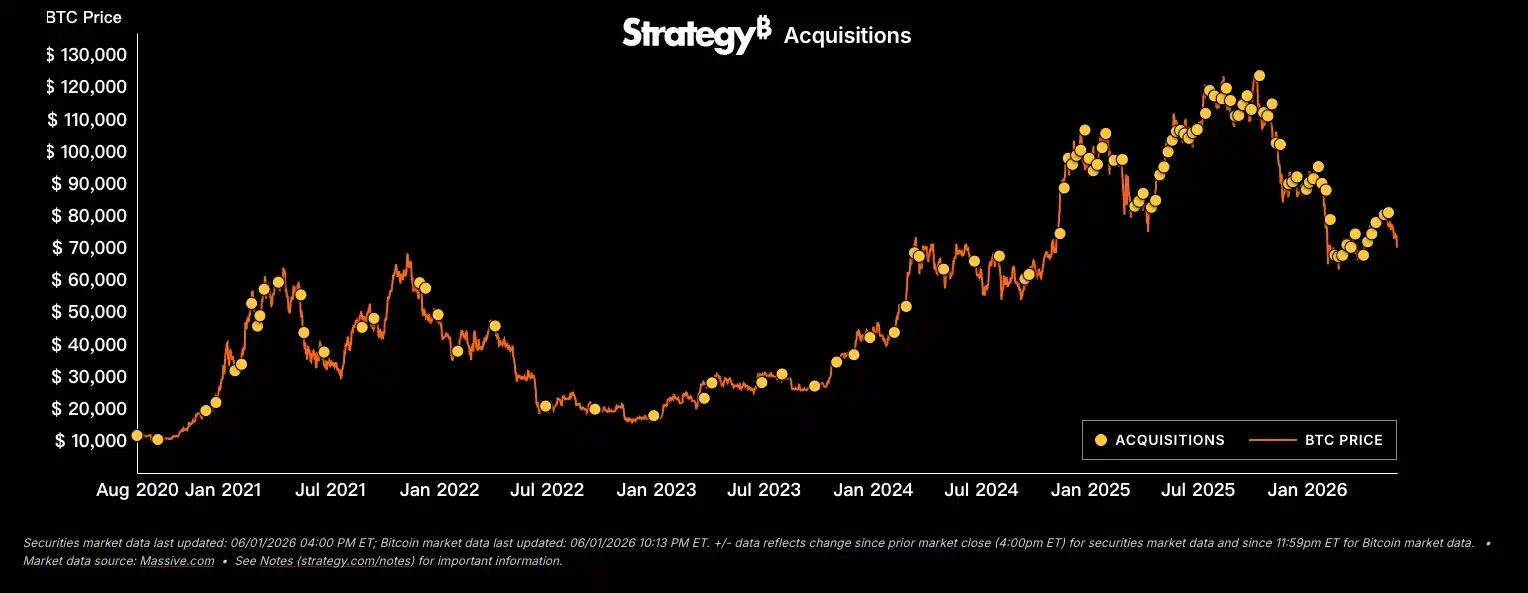
MicroStrategy's Bitcoin Accumulation Pace

In December 2025, Strategy established a $2.25 billion cash reserve specifically to cover dividends and debt payments, which at the time could last about 30 months. But by May 31, 2026, this reserve had fallen to $900 million, a $1.35 billion drawdown in six months.

During the Q1 earnings call, Strategy CEO Phong Le, for the first time in a public setting, listed a 'disciplined sale of bitcoin' as one of the capital management tools. Not many people noticed that statement at the time; in retrospect, it was a preview of this 32 BTC sale.

Saylor posted a tweet on February 2, 2025, saying 'Never sell your bitcoin.' This tweet was widely shared after the 8-K disclosure. He himself only discussed STRC's product positioning in a post afterward, stating Strategy's goal is to make STRC the world's best credit instrument, completely sidestepping the topic of selling Bitcoin.

MSTR's stock price fell about 6% that day. Mizuho maintained its Buy rating but lowered its price target from $320 to $265. Most analysts believe the $2.5 million sale is not materially impactful financially, but the core significance of this event lies in the signal it sends: a crack has been opened. If cash reserves continue to deplete while dividend obligations remain unchanged, the scale of future sales might not stop at 32 bitcoins.

A $110 Million Word Game on Polymarket

Strategy's selling timing also ignited a prediction market on Polymarket.

The market's question was: Will Strategy sell Bitcoin before May 31? The cumulative trading volume currently exceeds $111 million. The 8-K filing shows the transactions occurred between May 26 and 31, with the filing itself timestamped 'May 31, 2026, 4:00 PM ET'. However, the 8-K was only submitted to the SEC on June 1, and the public learned about it after the deadline had passed.
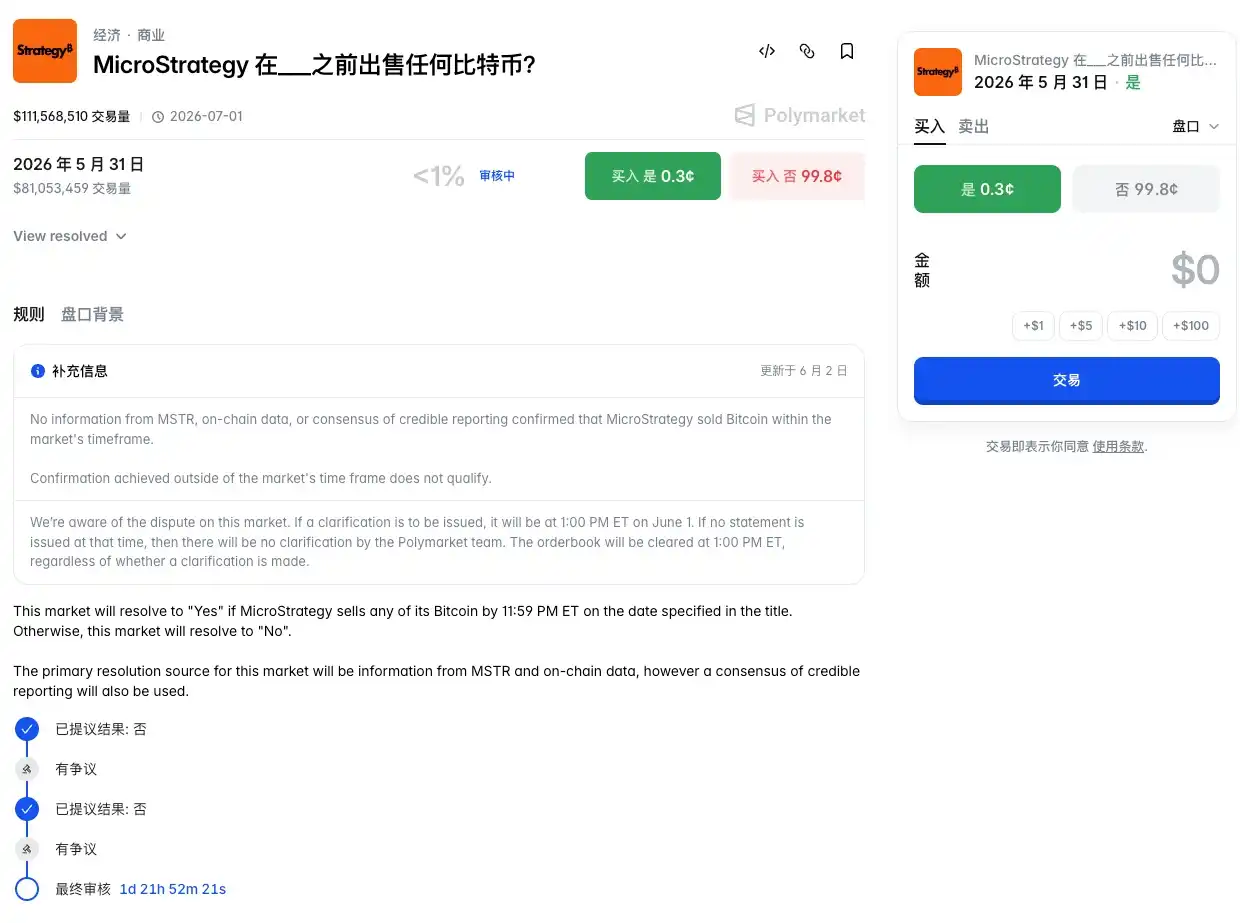
Those who bought 'Yes' argued that the transaction happened before the deadline, as the 8-K clearly states May 31. Those who bought 'No' argued that there was no public information before the deadline proving the sale occurred, so according to the rules, it should be judged as 'No'. After two 'No' proposals were challenged, the dispute escalated to UMA's token-voting arbitration.

Polymarket subsequently added a note to the page, stating that 'consensus from MSTR, on-chain data, or reliable reporting did not confirm that Strategy sold bitcoin within the market's defined time frame. Confirmations obtained outside the market-defined time frame do not satisfy the requirement.'

Behind this controversy lies a deeper issue with Polymarket's arbitration mechanism. A May investigation by *The Wall Street Journal* found that in most of Polymarket's disputed markets, over half of UMA voting power is concentrated in the top 10 largest wallets, approximately 60% of active voters can be linked to Polymarket accounts, and roughly one in five disputes involves voters simultaneously holding positions in the contracts being adjudicated. So far in 2026, Polymarket has generated over 1,150 disputed markets, exceeding the total for all of 2025.

It's Not Just Strategy Selling; Bitcoin Drops Below $72K

Strategy's 8-K disclosure overlapped with an already weak market environment. Bitcoin fell below $72,000 on June 1, hitting its lowest level since April 13. CoinShares data shows digital asset investment products saw net outflows of $1.67 billion last week, the second-largest weekly outflow in 2026. For the entire month of May, Bitcoin spot ETFs saw net outflows of $2.3 billion, the largest monthly net outflow this year. Total digital asset assets under management have dropped to approximately $141 billion, a low since the beginning of the year.

Strategy sold 32 bitcoins, but it is not the first Bitcoin treasury company to make a move. Q1 data shows selling has become a collective behavior. MARA Holdings sold 15,133 BTC between March 4 and 25, raising about $1.1 billion, mostly used to repurchase convertible bonds maturing in 2030 and 2031. Riot Platforms sold 3,778 BTC during the same period, raising $289.5 million, reducing its holdings from 19,223 BTC to 15,680 BTC, a 18% shrinkage. David Bailey's Nakamoto Holdings sold 284 BTC in March, about 5% of its holdings. Empery Digital sold 370 BTC in April to repay loans. Genius Group liquidated its final 84 BTC to repay $8.5 million in debt.

Just MARA, Riot, and Nakamoto collectively offloaded over 19,000 BTC in Q1. On-chain data from CryptoQuant shows that Bitcoin's apparent demand fell to negative 63,000 BTC by late March. This apparent demand (a measure of total demand relative to changes in new supply) turning negative indicates a deep market contraction, with overall selling pressure significantly outweighing buying pressure.

Some companies aren't just selling but are directly abandoning the treasury model. Forum Markets (formerly ETHZilla) liquidated approximately $114 million worth of ETH at the beginning of the year, pivoting to tokenization business. VivoPower, which originally planned to build an XRP treasury, directly pivoted to data centers and AI infrastructure in February, disposing of its entire XRP holdings along the way.

On May 28, French semiconductor company Sequans Communications confirmed it had fully repaid its convertible bonds by selling its Bitcoin holdings, and also planned to gradually liquidate its remaining 658 bitcoins. The company's Bitcoin holdings once peaked at 3,234 BTC.

Sequans had previously publicly stated its intention to accumulate over 3,000 bitcoins as long-term reserve assets. But this so-called 'long-term' ultimately lasted less than a year. The company's stock (ticker SQNS) has fallen 77% year-to-date, with a cumulative decline of 97% over the past five years.
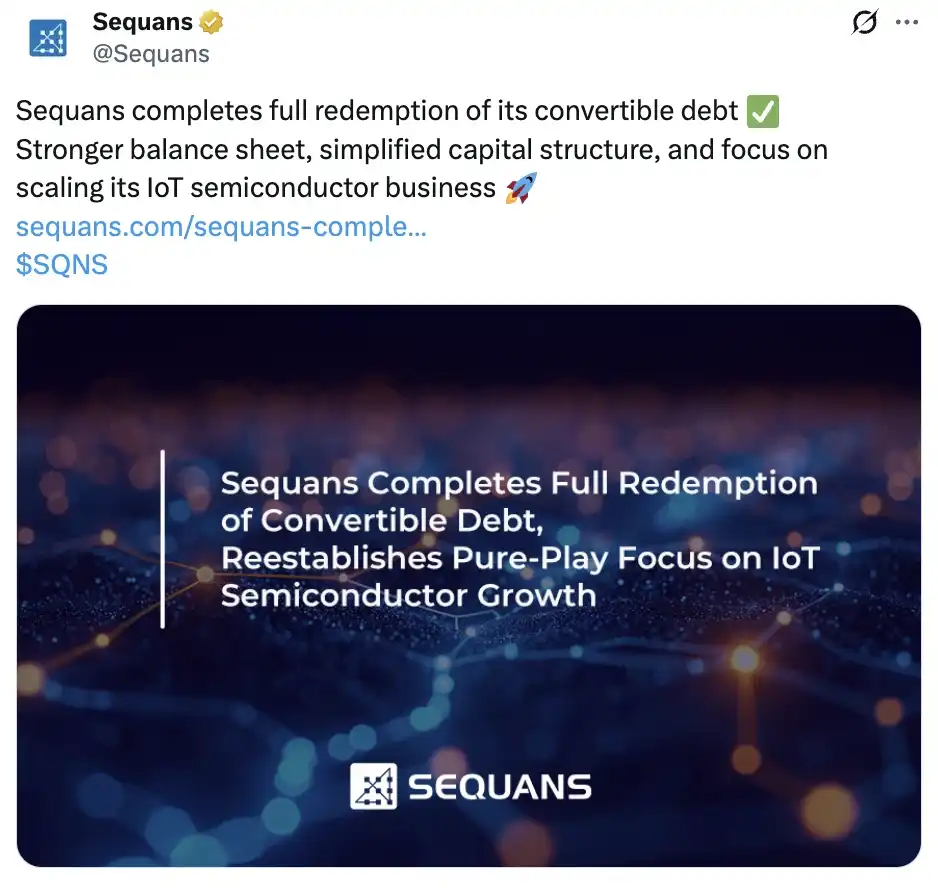
The business model of Bitcoin treasury companies was validated during the upward cycle in the second half of 2025. Rising Bitcoin prices pushed up the mNAV premium, allowing companies to issue new shares or convertible bonds at a premium to raise funds to buy more Bitcoin, further pushing up the price and premium, creating a positive feedback loop. After the market peaked last October, this flywheel reversed. Falling Bitcoin prices compress the premium, narrowing the financing window, while dividend and debt payment obligations do not decrease with the price drop. Selling Bitcoin became the most direct source of liquidity. According to Bitwise statistics, as of the end of Q1, publicly traded companies collectively held about 1.15 million BTC, representing 5.47% of the total supply. This scale itself constitutes a risk. If multiple treasury companies are forced to reduce holdings within the same time window, they, being the largest buyers of Bitcoin, could also become the most concentrated source of selling pressure.

Currently, there are very few companies still buying. Strive accumulated purchases of approximately 1,944 BTC in May, spending about $150 million. Metaplanet bought 5,075 BTC in early April. Strategy itself was also buying in May, accumulating purchases of over 25,000 BTC for the month, worth over $2 billion.

Spending $2 billion to buy while taking out $2.5 million to pay dividends illustrates that Strategy is far from a liquidity crisis at this point. But the signaling significance of the 32 BTC is that even the largest HODLer has begun to acknowledge that selling is an option in the toolbox.


Domande pertinenti

QWhat was the primary reason for Strategy's sale of 32 BTC in late May, and why is it significant?

AStrategy sold 32 BTC to generate approximately $2.5 million in cash specifically for paying preferred stock dividends. This is significant because it breaks the company's long-standing 'never sell' principle regarding its Bitcoin holdings. Unlike its previous sale in 2022 for tax-loss harvesting, this sale represents a real, non-strategic reduction of its Bitcoin treasury to meet a recurring financial obligation.

QAccording to the article, what broader trend is observed among Bitcoin treasury companies in Q1 2026?

AIn Q1 2026, a broader trend of Bitcoin selling was observed among several major treasury companies. Notably, MARA Holdings sold 15,133 BTC, Riot Platforms sold 3,778 BTC, and Nakamoto Holdings sold 284 BTC. Other companies like Empery Digital and Genius Group also sold significant portions or all of their holdings to repay debt or restructure. This collective action indicates a shift from accumulation to distribution due to market pressures.

QWhat controversy erupted on Polymarket related to Strategy's BTC sale, and what core issue does it highlight about the platform?

AA controversy erupted on a Polymarket prediction market asking if Strategy would sell Bitcoin by May 31st, with over $111 million in volume. The dispute centered on whether sales occurring on May 31st but reported on June 1st should count as a 'Yes.' This highlights deeper issues with Polymarket's arbitration mechanism, including centralization of UMA token voting power among a few wallets and potential conflicts of interest where voters also hold positions in the contracts they are arbitrating.

QHow did Strategy's sale and the broader market context impact the Bitcoin price in early June?

AThe disclosure of Strategy's sale, combined with an already weak market environment, contributed to Bitcoin's price dropping below $72,000 on June 1st, reaching its lowest level since April 13th. This was part of a larger trend of outflows, with digital asset investment products seeing a net outflow of $1.67 billion the prior week and Bitcoin spot ETFs experiencing a record monthly net outflow of $2.3 billion in May.

QWhat is the fundamental risk posed by the large Bitcoin holdings of public companies, as described in the article?

AThe fundamental risk is that public companies collectively hold about 1.15 million BTC, or 5.47% of the total supply. If multiple treasury companies are forced to sell in the same time window due to liquidity needs (e.g., to cover dividends or debt), they could transform from being the largest buyers into a concentrated source of significant selling pressure, potentially exacerbating market downturns.

Letture associate

Jensen Huang's 2026 GTC Taipei Speech: The Era of AI Agents is Here, Computing is Revenue

NVIDIA CEO Jensen Huang's 2026 GTC Taipei speech announces the arrival of the "Agent AI" era, where AI transitions from content generation to performing useful work. Huang positions tokens as units of profit and GDP, driving massive demand for computing power and "AI factories." NVIDIA's strategy revolves around a new computing paradigm centered on AI agents, which combine large language models (LLMs) with agent frameworks for planning, memory, and tool use. Key announcements include: * **Vera Rubin:** A complete, end-to-end system (not just a GPU) designed from the ground up to run AI agents at scale, representing NVIDIA's evolution into an infrastructure company. * **Vera CPU:** A revolutionary CPU architecture built specifically for impatient AI agents, prioritizing low latency, single-thread performance, and massive bandwidth over traditional multi-core throughput. * **Enterprise AI Agent Toolkit:** A suite including open models (like Nemotron 3 Ultra), frameworks, tools, and a secure runtime (Open Shell) to enable every company to build and deploy its own AI agents. * **Next-Gen PCs with Microsoft:** A new line of Windows desktops, laptops, and workstations co-developed with Microsoft, featuring the N1X chip and designed to run local AI agents, redefining the personal computer. * **Physical AI Foundation Models:** Introduction of Cosmos 3 for robotics and physical AI, Alpamayo 2 for autonomous driving, and the Isaac GR00T platform—a fully integrated humanoid robot reference system. Huang emphasizes that the same core agent computing pattern (model + framework + tools + runtime) will extend from the cloud and PCs to robots, factories, and edge devices. He concludes that the industry is fundamentally changed as useful, agentic AI creates a vast new market where "compute is revenue."

marsbit52 min fa

Jensen Huang's 2026 GTC Taipei Speech: The Era of AI Agents is Here, Computing is Revenue

marsbit52 min fa

Trading

Spot
Futures

Articoli Popolari

Cosa è BITCOIN

Comprendere HarryPotterObamaSonic10Inu (ERC-20) e la sua posizione nel mondo delle criptovalute Negli ultimi anni, il mercato delle criptovalute ha assistito a un aumento della popolarità delle meme coin, catturando l'interesse non solo dei trader, ma anche di coloro che cercano coinvolgimento comunitario e valore di intrattenimento. Tra questi token unici c'è HarryPotterObamaSonic10Inu (ERC-20), un progetto intrigante che mescola riferimenti culturali nel tessuto delle criptovalute. Questo articolo esplora gli aspetti chiave di HarryPotterObamaSonic10Inu, analizzando i suoi meccanismi, l'etica guidata dalla comunità e il suo coinvolgimento con il panorama crittografico più ampio. Che cos'è HarryPotterObamaSonic10Inu (ERC-20)? Come suggerisce il suo nome, HarryPotterObamaSonic10Inu è una meme coin costruita sulla blockchain di Ethereum, classificata secondo lo standard ERC-20. A differenza delle criptovalute tradizionali che possono enfatizzare l'utilità pratica o il potenziale investimento, questo token prospera grazie al valore di intrattenimento e alla forza della sua comunità. Il progetto mira a creare un ambiente in cui gli utenti coinvolti possono riunirsi, condividere idee e partecipare ad attività ispirate a diversi fenomeni culturali. Una caratteristica notevole di HarryPotterObamaSonic10Inu è la zero tassa sulle transazioni. Questo elemento allettante tende a incoraggiare il trading e il coinvolgimento della comunità, privo di costi aggiuntivi che possono scoraggiare i trader di piccole dimensioni. L'offerta totale della moneta è fissata a un miliardo di token, un numero che segna la sua intenzione di mantenere una circolazione sostanziale all'interno della comunità. Creatore di HarryPotterObamaSonic10Inu (ERC-20) Le origini di HarryPotterObamaSonic10Inu sono avvolte in un certo mistero; i dettagli sul creatore rimangono sconosciuti. Lo sviluppo di questo token non presenta un team identificabile o un piano esplicito, cosa non rara nel settore delle meme coin. Invece, il progetto è emerso organicamente, con il suo progresso fortemente dipendente dall'entusiasmo e dalla partecipazione della sua comunità. Investitori di HarryPotterObamaSonic10Inu (ERC-20) Per quanto riguarda investimenti esterni e finanziamenti, HarryPotterObamaSonic10Inu rimane ambiguo. Il token non elenca alcuna fondazione di investimento conosciuta o un sostegno organizzativo significativo. Invece, la linfa vitale del progetto è la sua comunità di base, che informa la sua crescita e sostenibilità attraverso azioni collettive e coinvolgimento nello spazio crittografico. Come funziona HarryPotterObamaSonic10Inu (ERC-20)? In quanto meme coin, HarryPotterObamaSonic10Inu opera principalmente al di fuori delle strutture tradizionali che governano spesso il valore degli asset. Ci sono diversi aspetti distintivi che definiscono il funzionamento del progetto: Transazioni senza tasse: Senza costi fiscali sulle transazioni, gli utenti possono comprare e vendere liberamente il token senza preoccuparsi di costi nascosti. Coinvolgimento della comunità: Il progetto prospera sull'interazione della comunità, sfruttando le piattaforme social per creare entusiasmo e facilitare il coinvolgimento. Discussioni, condivisione di contenuti e coinvolgimento sono elementi cruciali che aiutano ad espandere la sua portata e a favorire la lealtà tra i sostenitori. Nessuna utilità pratica: Va notato che HarryPotterObamaSonic10Inu non offre un'utilità concreta all'interno dell'ecosistema finanziario. Piuttosto, è classificato come un token principalmente per attività di intrattenimento e comunitarie. Riferimento culturale: Il token incorpora astutamente elementi della cultura pop per attirare interesse, collegandosi a appassionati di meme e seguaci delle criptovalute. HarryPotterObamaSonic10Inu esemplifica come le meme coin operino in modo diverso rispetto ai progetti di criptovalute più tradizionali, entrando nel mercato come costrutti sociali innovativi piuttosto che come asset utilitari. Cronologia di HarryPotterObamaSonic10Inu (ERC-20) La storia di HarryPotterObamaSonic10Inu è segnata da diversi traguardi notevoli: Creazione: Il token è emerso da un meme virale, catturando l'immaginazione di molti appassionati di criptovalute. Le date di creazione specifiche non sono disponibili, sottolineando la sua crescita organica. Inserimento negli scambi: HarryPotterObamaSonic10Inu ha fatto il suo ingresso in vari scambi, consentendo un accesso e un trading più facili da parte della comunità. Iniziative di coinvolgimento della comunità: Attività in corso volte a migliorare l'interazione della comunità, comprese gare, campagne sui social media e generazione di contenuti da parte di fan e sostenitori. Piani di espansione futura: La tabella di marcia del progetto include il lancio di una collezione NFT, merchandising e un sito di eCommerce relativo ai suoi temi culturali, coinvolgendo ulteriormente la comunità e cercando di aggiungere più dimensioni al suo ecosistema. Punti chiave su HarryPotterObamaSonic10Inu (ERC-20) Natura guidata dalla comunità: Il progetto dà priorità al contributo collettivo e alla creatività, garantendo che il coinvolgimento degli utenti sia al centro del suo sviluppo. Classificazione come meme coin: Rappresenta l'epitome delle criptovalute basate sull'intrattenimento, distinguendosi dai veicoli d'investimento tradizionali. Nessuna affiliazione diretta con Bitcoin: Nonostante la somiglianza nel nome del ticker, HarryPotterObamaSonic10Inu è distintivo e non ha alcuna relazione con Bitcoin o altre criptovalute consolidate. Focus sulla collaborazione: HarryPotterObamaSonic10Inu è progettato per creare uno spazio per la collaborazione e la condivisione di storie tra i suoi detentori, fornendo un canale per la creatività e il legame comunitario. Prospettive future: L'ambizione di espandersi oltre il suo presupposto iniziale verso NFT e merchandising delinea un percorso per il progetto per potenzialmente entrare in strade più mainstream all'interno della cultura digitale. Poiché le meme coin continuano a catturare l'immaginazione della comunità crittografica, HarryPotterObamaSonic10Inu (ERC-20) si distingue per i suoi legami culturali e il suo approccio centrato sulla comunità. Anche se potrebbe non adattarsi al modello tipico di un token orientato all'utilità, la sua essenza risiede nella gioia e nella camaraderia coltivate tra i suoi sostenitori, evidenziando la natura in evoluzione delle criptovalute in un'epoca sempre più digitale. Con la continuazione dello sviluppo del progetto, sarà importante osservare come le dinamiche della comunità influenzano la sua traiettoria nel panorama in continuo cambiamento della tecnologia blockchain.

1.5k Totale visualizzazioniPubblicato il 2024.04.01Aggiornato il 2024.12.03

Cosa è BITCOIN

Come comprare BTC

Benvenuto in HTX.com! Abbiamo reso l'acquisto di Bitcoin (BTC) semplice e conveniente. Segui la nostra guida passo passo per intraprendere il tuo viaggio nel mondo delle criptovalute.Step 1: Crea il tuo Account HTXUsa la tua email o numero di telefono per registrarti il tuo account gratuito su HTX. Vivi un'esperienza facile e sblocca tutte le funzionalità,Crea il mio accountStep 2: Vai in Acquista crypto e seleziona il tuo metodo di pagamentoCarta di credito/debito: utilizza la tua Visa o Mastercard per acquistare immediatamente BitcoinBTC.Bilancio: Usa i fondi dal bilancio del tuo account HTX per fare trading senza problemi.Terze parti: abbiamo aggiunto metodi di pagamento molto utilizzati come Google Pay e Apple Pay per maggiore comodità.P2P: Fai trading direttamente con altri utenti HTX.Over-the-Counter (OTC): Offriamo servizi su misura e tassi di cambio competitivi per i trader.Step 3: Conserva Bitcoin (BTC)Dopo aver acquistato Bitcoin (BTC), conserva nel tuo account HTX. In alternativa, puoi inviare tramite trasferimento blockchain o scambiare per altre criptovalute.Step 4: Scambia Bitcoin (BTC)Scambia facilmente Bitcoin (BTC) nel mercato spot di HTX. Accedi al tuo account, seleziona la tua coppia di trading, esegui le tue operazioni e monitora in tempo reale. Offriamo un'esperienza user-friendly sia per chi ha appena iniziato che per i trader più esperti.

3.9k Totale visualizzazioniPubblicato il 2024.12.12Aggiornato il 2026.06.02

Come comprare BTC

Cosa è $BITCOIN

ORO DIGITALE ($BITCOIN): Un'Analisi Completa Introduzione all'ORO DIGITALE ($BITCOIN) L'ORO DIGITALE ($BITCOIN) è un progetto basato su blockchain che opera sulla rete Solana, con l'obiettivo di combinare le caratteristiche dei metalli preziosi tradizionali con l'innovazione delle tecnologie decentralizzate. Sebbene condivida un nome con Bitcoin, spesso definito “oro digitale” a causa della sua percezione come riserva di valore, l'ORO DIGITALE è un token separato progettato per creare un ecosistema unico all'interno del panorama Web3. Il suo obiettivo è posizionarsi come un asset digitale alternativo valido, anche se i dettagli riguardanti le sue applicazioni e funzionalità sono ancora in fase di sviluppo. Cos'è l'ORO DIGITALE ($BITCOIN)? L'ORO DIGITALE ($BITCOIN) è un token di criptovaluta esplicitamente progettato per l'uso sulla blockchain di Solana. A differenza di Bitcoin, che fornisce un ruolo di stoccaggio di valore ampiamente riconosciuto, questo token sembra concentrarsi su applicazioni e caratteristiche più ampie. Aspetti notevoli includono: Infrastruttura Blockchain: Il token è costruito sulla blockchain di Solana, nota per la sua capacità di gestire transazioni ad alta velocità e a basso costo. Dinamiche di Offerta: L'ORO DIGITALE ha un'offerta massima fissata a 100 quadrilioni di token (100P $BITCOIN), sebbene i dettagli riguardanti la sua offerta circolante siano attualmente non divulgati. Utilità: Sebbene le funzionalità precise non siano esplicitamente delineate, ci sono indicazioni che il token potrebbe essere utilizzato per varie applicazioni, potenzialmente coinvolgendo applicazioni decentralizzate (dApp) o strategie di tokenizzazione degli asset. Chi è il Creatore dell'ORO DIGITALE ($BITCOIN)? Attualmente, l'identità dei creatori e del team di sviluppo dietro l'ORO DIGITALE ($BITCOIN) rimane sconosciuta. Questa situazione è tipica tra molti progetti innovativi nel settore blockchain, in particolare quelli allineati con la finanza decentralizzata e i fenomeni delle meme coin. Sebbene tale anonimato possa favorire una cultura guidata dalla comunità, intensifica le preoccupazioni riguardo alla governance e alla responsabilità. Chi sono gli Investitori dell'ORO DIGITALE ($BITCOIN)? Le informazioni disponibili indicano che l'ORO DIGITALE ($BITCOIN) non ha alcun sostenitore istituzionale noto o investimenti di venture capital prominenti. Il progetto sembra operare su un modello peer-to-peer incentrato sul supporto e sull'adozione della comunità piuttosto che su percorsi di finanziamento tradizionali. La sua attività e liquidità si trovano principalmente su exchange decentralizzati (DEX), come PumpSwap, piuttosto che su piattaforme di trading centralizzate consolidate, evidenziando ulteriormente il suo approccio di base. Come Funziona l'ORO DIGITALE ($BITCOIN) Le meccaniche operative dell'ORO DIGITALE ($BITCOIN) possono essere elaborate in base al suo design blockchain e alle caratteristiche della rete: Meccanismo di Consenso: Sfruttando il proof-of-history (PoH) unico di Solana combinato con un modello di proof-of-stake (PoS), il progetto garantisce una validazione efficiente delle transazioni contribuendo all'alta performance della rete. Tokenomics: Sebbene meccanismi deflazionistici specifici non siano stati dettagliati ampiamente, l'ampia offerta massima di token implica che potrebbe soddisfare microtransazioni o casi d'uso di nicchia che devono ancora essere definiti. Interoperabilità: Esiste il potenziale per l'integrazione con l'ecosistema più ampio di Solana, inclusi vari piattaforme di finanza decentralizzata (DeFi). Tuttavia, i dettagli riguardanti integrazioni specifiche rimangono non specificati. Cronologia degli Eventi Chiave Ecco una cronologia che evidenzia traguardi significativi riguardanti l'ORO DIGITALE ($BITCOIN): 2023: Il dispiegamento iniziale del token avviene sulla blockchain di Solana, contrassegnato dal suo indirizzo di contratto. 2024: L'ORO DIGITALE guadagna visibilità poiché diventa disponibile per il trading su exchange decentralizzati come PumpSwap, consentendo agli utenti di scambiarlo contro SOL. 2025: Il progetto assiste a un'attività di trading sporadica e a un potenziale interesse per impegni guidati dalla comunità, sebbene non siano state documentate partnership significative o avanzamenti tecnici fino ad ora. Analisi Critica Punti di Forza Scalabilità: L'infrastruttura sottostante di Solana supporta alti volumi di transazioni, il che potrebbe migliorare l'utilità di $BITCOIN in vari scenari di transazione. Accessibilità: Il potenziale basso prezzo di trading per token potrebbe attrarre investitori al dettaglio, facilitando una partecipazione più ampia grazie a opportunità di proprietà frazionata. Rischi Mancanza di Trasparenza: L'assenza di sostenitori, sviluppatori o di un processo di audit pubblicamente noti potrebbe generare scetticismo riguardo alla sostenibilità e all'affidabilità del progetto. Volatilità del Mercato: L'attività di trading è fortemente dipendente dal comportamento speculativo, il che può comportare una significativa volatilità dei prezzi e incertezze per gli investitori. Conclusione L'ORO DIGITALE ($BITCOIN) emerge come un progetto intrigante ma ambiguo all'interno dell'evolvente ecosistema di Solana. Sebbene tenti di sfruttare la narrativa dell'“oro digitale”, la sua partenza dal ruolo consolidato di Bitcoin come riserva di valore sottolinea la necessità di una chiara differenziazione della sua utilità e struttura di governance. L'accettazione e l'adozione future dipenderanno probabilmente dall'affrontare l'attuale opacità e dalla definizione più esplicita delle sue strategie operative ed economiche. Nota: Questo rapporto comprende informazioni sintetizzate disponibili a ottobre 2023, e potrebbero essersi verificati sviluppi oltre il periodo di ricerca.

99 Totale visualizzazioniPubblicato il 2025.05.13Aggiornato il 2025.05.13

Cosa è $BITCOIN

Discussioni

Benvenuto nella Community HTX. Qui puoi rimanere informato sugli ultimi sviluppi della piattaforma e accedere ad approfondimenti esperti sul mercato. Le opinioni degli utenti sul prezzo di BTC BTC sono presentate come di seguito.

活动图片