Securities or Commodities? A Decade-Long Tug-of-War Ends as the 'Crypto Market Structure Act' Races to the Senate

Odaily星球日报Pubblicato 2025-12-10Pubblicato ultima volta 2025-12-10

Introduzione

The "Cryptocurrency Market Structure Act" (CLARITY Act) is advancing to the U.S. Senate for final review after passing the House with strong support. The bill aims to resolve the long-standing regulatory debate over whether cryptocurrencies are classified as securities or commodities. It introduces a clear framework: tokens on decentralized blockchains are defined as "digital commodities" under CFTC oversight, while those meeting the Howey test remain securities regulated by the SEC. Key provisions include a "mature blockchain" exemption for highly decentralized networks like Bitcoin and Ethereum, a 360-day temporary registration pathway for trading platforms, and a fundraising exemption of up to $75 million for certain token offerings with enhanced disclosure. The bill also establishes a joint advisory committee to improve coordination between the CFTC and SEC and explicitly exempts non-custodial DeFi actors from broker-dealer regulations. This legislative effort aligns with the Trump administration's pro-crypto stance, including the appointment of industry-friendly leaders at key agencies like the SEC and CFTC, and recent moves to allow regulated spot crypto trading on CFTC-approved exchanges. If enacted, the law would provide regulatory clarity, encourage institutional adoption, and position the U.S. as a leader in the digital asset space.

Original / Odaily Planet Daily (@OdailyChina)

Author / DingDang (@XiaMiPP)
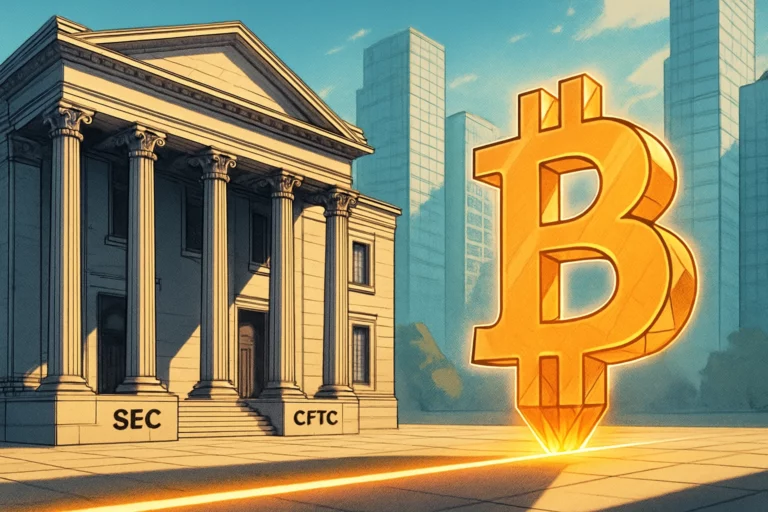
On December 10, U.S. Senators Gillibrand and Lummis stated at the Blockchain Association Policy Summit that the draft of the Crypto-Asset Market Structure Act (CLARITY Act) is expected to be released this weekend and enter the revision and hearing vote stage next week. This means this long-brewing legislative project has officially entered a decisive window.

The bill was first introduced in the U.S. House of Representatives on May 29, 2025, co-sponsored by House Financial Services Committee Chairman Patrick McHenry and Digital Assets and Innovation Subcommittee Chairman French Hill. It passed the House vote by an overwhelming majority (294 votes in favor) on July 17 and is now awaiting final review by the Senate.

Core Design of the Bill: Classification Over a One-Size-Fits-All Approach

The core of the Crypto-Asset Market Structure Act lies in its attempt to end the decade-long tug-of-war between U.S. regulators and the industry over "whether it's a security or a commodity." It is the first legislation to draw a clear boundary for digital assets, avoiding a "one-size-fits-all" regulatory model in favor of a classified regulatory framework. Specifically:

Legal Distinction Between "Digital Commodities" and "Digital Securities"

The bill explicitly defines the vast majority of tokens natively issued on decentralized blockchains as "digital commodities," placing them under the regulatory purview of the Commodity Futures Trading Commission (CFTC). Only those tokens that meet the Howey Test and possess typical "investment contract" characteristics will continue to be regulated by the SEC under securities laws.

"Mature Blockchain" Exemption Path

To prevent all tokens from being forcibly classified as securities, the bill establishes a "mature blockchain system" standard: a blockchain must simultaneously satisfy conditions of "high decentralization" (no single entity controls more than 20% of the token supply or validation power) and derive its value primarily from the actual use of the network to be exempt from SEC securities registration requirements. This provides a clear path for mainstream assets like Bitcoin and Ethereum, ensuring regulation does not stifle technological progress.

Comprehensive Shift of Secondary Market Regulation to the CFTC

The bill requires all platforms engaged in spot or derivative trading of digital commodities to register with the CFTC as a "Digital Commodity Exchange" (DCE), digital commodity broker, or dealer. Acknowledging industry realities, the bill also includes a 360-day "provisional registration" channel to ensure existing compliant platforms are not forced to shut down due to technical violations during the transition period, enabling a smooth handover.

Limited Fundraising Exemption

Even for initial token offerings on mature blockchains that are still deemed "investment contracts," issuers can apply for an exemption from the registration requirements of the 1933 Securities Act. However, the total annual fundraising amount must not exceed $75 million, and stricter information disclosure obligations must be fulfilled. This design seeks to balance encouraging innovation with protecting investors.

Division of Labor Between CFTC and SEC: From Confrontation to Collaboration

The prolonged jurisdictional tug-of-war between the SEC and CFTC over digital assets has long been described as the "Achilles' heel" of the crypto industry. Regulatory uncertainty has even been considered a significant hidden cost suppressing innovation vitality in the U.S. If the Crypto-Asset Market Structure Act officially takes effect, it will彻底 (completely) end this situation through legislation, establishing a clear division of responsibilities: the CFTC becomes the core regulator of the digital commodity secondary market, while the SEC focuses on token issuance and private placement activities in the primary market that still possess security attributes.

To ensure coordination between the two agencies in overlapping areas, the bill requires the establishment of a permanent "Joint Advisory Committee". Either agency must formally respond to non-binding recommendations put forward by the committee when formulating rules that might affect the other's jurisdictional scope. This mechanism aims to prevent future regulatory gaps or overlapping regulations.

Simultaneously, the bill provides clear protection for the decentralized finance (DeFi) ecosystem: protocol front-end developers, node validators, miners, and other non-custodial, non-profit roles will be explicitly excluded from the definitions of "broker" or "dealer," significantly reducing the compliance burden at the protocol level and preserving reasonable space for technological innovation.

Supporting Actions Progressing Simultaneously: CFTC is "Implementing First"

As the Senate review of the Crypto-Asset Market Structure Act enters a critical stage, on December 5, Acting Chairman of the U.S. Commodity Futures Trading Commission (CFTC), Caroline D. Pham, announced that spot cryptocurrency products will, for the first time, be permitted to trade on CFTC-registered regulated futures exchanges.

Pham stated that this move is part of the Trump administration's commitment to making the U.S. the "crypto capital of the world," aiming to address the lack of safeguards on offshore exchanges by providing a regulated domestic market.

Furthermore, as part of the "Crypto Sprint" plan, the CFTC will also promote the use of tokenized collateral (including stablecoins) in derivatives markets and revise rules to support the application of blockchain technology in infrastructure such as clearing and settlement. This will strengthen the CFTC's leadership role in the digital asset space, highly aligning with the spirit of the bill.

Trump's Nominations Accelerate: Crypto-Friendly Leadership in Place

Since Trump's second term, the personnel layout of major U.S. financial regulatory agencies has continued to tilt towards supporting digital assets. This shift has become a key catalyst for the accelerated development of the crypto industry.

U.S. Securities and Exchange Commission (SEC) Chairman Paul Atkins stated in an interview with CNBC that the U.S. "resistance" to cryptocurrency has lasted "too long." Paul Atkins was appointed by Trump and took office in 2025. He views the Crypto-Asset Market Structure Act as part of "Project Crypto," an initiative aimed at bringing order and fairness to digital asset classification through legislation and rules.

Simultaneously, on October 25, 2025, Trump nominated Brian Quintenz to serve as CFTC Chairman and Commissioner. A former crypto lawyer, Quintenz represented numerous crypto companies (such as venture capital funds and blockchain projects) at the law firm Willkie Farr & Gallagher and has served as Chief Legal Counsel for the SEC's Crypto Task Force since March 2025, reporting directly to Atkins.

Trump also nominated Travis Hill to serve as Chairman of the Federal Deposit Insurance Corporation (FDIC); he has been serving as Acting Chairman since 2025. Hill is also crypto-friendly, having publicly supported banks' involvement in crypto custody and stablecoin issuance, believing it can enhance financial inclusion. The FDIC regulates the interface between banks and crypto (e.g., stablecoin issuers), and his appointment may facilitate banks' entry into the crypto space.

After the government resumed operations, the SEC has successively introduced optimized systems to accelerate the ETF approval pace. The overall signal is very clear: regulatory logic is transitioning from defensive management to structural acceptance.

Conclusion: The U.S. is Completing the "Crypto Rule of Law Puzzle"

More importantly, the progress of the Crypto-Asset Market Structure Act may consolidate the effectiveness of the U.S. Stablecoin Innovation Act signed by Trump earlier this year, which already provides a safety framework for stablecoin issuance. This bill further completes the legislative puzzle for the crypto industry, filling the market structure gap and propelling the U.S. from a "follower" to a "leader" in global crypto regulation.

Overall, these policy and personnel changes预示 (foreshadow) structural opportunities for the U.S. crypto ecosystem. Regulatory clarity could attract more institutional capital inflows. However, challenges have not disappeared, such as coordinating DeFi regulatory details and aligning with international standards. But for global crypto practitioners, this is not just an American story; it is a crucial window period for the entire industry.

Crypto di tendenza

Domande pertinenti

QWhat is the core design principle of the 'Cryptocurrency Market Structure Act' (CLARITY Act)?

AThe core design principle of the CLARITY Act is to end the decade-long debate over whether cryptocurrencies are securities or commodities by establishing a clear, categorical regulatory framework instead of a one-size-fits-all approach. It legally distinguishes between 'digital commodities' and 'digital securities'.

QWhich U.S. regulatory agency is given primary oversight of the secondary market for digital commodities under the proposed bill?

AThe Commodity Futures Trading Commission (CFTC) is given primary regulatory authority over the secondary market for digital commodities, including platforms trading digital commodity spots or derivatives.

QWhat is the 'mature blockchain system' exemption path outlined in the bill?

AThe 'mature blockchain system' exemption path allows a blockchain to be exempt from SEC securities registration if it is 'highly decentralized' (no single entity controls more than 20% of the token supply or validation power) and its value is primarily derived from the network's actual use.

QWho are the key political figures mentioned as driving the pro-crypto regulatory changes in the U.S.?

AKey political figures driving the pro-crypto regulatory changes include Senators Gillibrand and Lummis, who introduced the bill, and former President Trump, who appointed crypto-friendly leaders like SEC Chairman Paul Atkins and CFTC Chairman nominee Brian Quintenz.

QWhat is the significance of the CFTC's recent announcement regarding spot cryptocurrency products?

AThe significance of the CFTC's announcement is that it will, for the first time, allow spot cryptocurrency products to be traded on CFTC-regulated futures exchanges. This is part of a broader effort to provide a regulated onshore market and address the lack of safeguards on offshore exchanges.

Letture associate

Micron Shuts Up the Bears, Makes India's 'Buffett' Regret: Sold Too Early, Missed Out on $2 Billion

Indian value investor Mohnish Pabrai, a disciple of Warren Buffett, revealed his costly mistake of selling shares in Micron Technology too early. He initially invested in 2017, holding it for six years and building a position as large as 77% of his portfolio, based on a thesis that the memory chip industry would consolidate into a stable oligopoly of Samsung, SK Hynix, and Micron. However, he sold his entire stake in September 2023, fearing oversupply after Samsung announced production expansion. Shortly after his exit, demand for high-bandwidth memory (HBM) surged with the rise of AI, and Micron's stock price skyrocketed over 15 times in two years. Pabrai estimates this premature sale cost him roughly $20 billion in potential gains. He expressed similar regret over selling his investment in SK Hynix too soon, stating he violated his own principle of holding companies forever. Reflecting on these errors, Pabrai emphasized his core investment checklist principles: avoiding leverage, focusing on the durability of a company's competitive moat, and assessing management's character. Despite these personal trading missteps, his long-term view on the remaining memory chip leaders remains bullish, advising current holders not to sell as "the party is just getting started." He concluded by sharing his philosophical outlook, prioritizing character over wealth, and his goal to donate his entire fortune before his passing.

marsbit20 min fa

Micron Shuts Up the Bears, Makes India's 'Buffett' Regret: Sold Too Early, Missed Out on $2 Billion

marsbit20 min fa

Mihoyo's Next Protagonist Is Her, Who Plays the Piano

Mihoyo, widely recognized for its hit game Genshin Impact, has long harbored a grander ambition: creating a virtual world where one billion people would want to live. While its character design is unparalleled, the company recognizes a fundamental limitation—these beloved virtual characters are not truly "alive." Their dialogue and actions are pre-scripted. This drive for authentic "living" characters has guided Mihoyo's strategic investments in cutting-edge fields like brain-computer interfaces, AI (including an early investment in MiniMax), and nuclear fusion. Following the release of ChatGPT in late 2022, co-founder Cai Haoyu stepped down from management to lead a new overseas AI venture, Anuttacon, focused on creating AI-driven virtual beings. Mihoyo's path has involved experimentation and iteration. Anuttacon's early project, *Whisper of the Stars*, showcased real-time AI conversation but revealed limitations in underlying language models. The team subsequently focused its resources on developing a sophisticated "emotional" large language model, distinct from purely utilitarian AI. Co-founder Liu Wei (Dawei) announced plans to invest up to 100 billion RMB in this AI pursuit. The first tangible product of this vision is *BSide: Olivia Lin*, a free Steam application featuring a piano-playing virtual companion. Unlike typical AI chatbots demanding constant interaction, Olivia Lin operates on a slower, more deliberate rhythm—responding to letters, playing user-submitted melodies, and serving as a desktop presence. This design emphasizes "lifelikeness" over exhaustive conversation, strategically working around current technological constraints while building a sense of authentic connection. The company's journey traces back to its name, "miHoYo," where "mi" pays homage to the virtual singer Hatsune Miku. For nearly two decades, fans have loved Miku, a character unaware of their devotion. Mihoyo's ultimate goal, now backed by massive investment and AI research, is to bridge that gap—to create virtual beings that can truly know they are loved.

marsbit38 min fa

Mihoyo's Next Protagonist Is Her, Who Plays the Piano

marsbit38 min fa

Citrini Research: Taking Stock of 5 Major Investment Themes Overshadowed by the AI Trade

Citrini Research identifies five under-the-radar investment themes potentially overshadowed by the dominant AI trade. With capital and analyst attention overwhelmingly focused on AI infrastructure, these overlooked areas present alpha opportunities as market dynamics shift. **Theme 1: Airlines** – Despite strong fundamentals, stocks like Delta and United have been penalized for 18 months due to macro concerns (tariff-inflation, oil prices), not profitability. A rebound is expected as these headwinds fade, aided by trends like premiumization and the 2026 World Cup. **Theme 2: Senior Housing** – A pure demographic play. The U.S. population over 80 is projected to grow 56% in the next decade, drastically outpacing supply. This creates a compelling need for facilities, benefiting REITs like Welltower and operators like Brookdale. **Theme 3: Live Events & Entertainment** – "Being there" is becoming a luxury. This sector has outperformed even tech over the past decade. Companies like TKO Group (WWE/UFC), Cinemark, and IMAX are capitalizing on demand for premium, in-person experiences. **Theme 4: Exchange Competition** – CME Group's ~98% monopoly in U.S. interest rate derivatives faces its first real challenge from FMX Futures Exchange. Backed by major Wall Street banks, FMX offers lower fees and margin savings. While CME's deep liquidity remains an advantage, FMX provides a competitive alternative. **Theme 5: Fintech Recovery** – Heavily sold off in 2026, fintech stocks like SoFi, Robinhood, and Upstart are showing signs of a rebound based on improving fundamentals—SoFi's stablecoin launch, Robinhood's transformation into a "financial super app," and Upstart's renewed AI lending narrative—rather than a change in sector outlook. The report advises maintaining some AI exposure but diversifying into these neglected "small themes" where mispricing exists due to a simple shortage of investor attention.

marsbit1 h fa

Citrini Research: Taking Stock of 5 Major Investment Themes Overshadowed by the AI Trade

marsbit1 h fa

21Shares Mid-Year Key Report: Bitcoin's Four-Year Cycle Remains Intact, Stablecoins and Tokenization Emerge as New Growth Engines

21Shares Mid-Year Report 2026: Bitcoin Cycle Intact, Stablecoins & Tokenization Emerge as New Engines This mid-year review assesses progress against 21Shares' ten predictions for 2026. While the overarching shift from narrative to fundamentals holds, performance varies. Key findings show Bitcoin's four-year cycle remains evident despite market maturation. Global crypto ETP AUM has declined to ~$140B, lagging the $400B target, though product innovation continues. Stablecoin supply surpassed $320B, demonstrating non-cyclical demand but falling short of the $1T forecast due to slower regulatory clarity. DeFi TVL, stalled at ~$140B, was hindered by major security incidents. Corporate crypto treasuries hold ~1.28M BTC ($100B), with consolidation pressuring weaker players. Prediction markets are on track, with $57.5B volume already surpassing half the $100B annual target. AI agent infrastructure is ready, but adoption is early. Ethereum L2 consolidation is underway, with the top 5 capturing nearly 90% of activity. Compliant token launches have a platform but lack mainstream volume. Tokenized RWAs total ~$31B on public chains, but institutional pipeline growth is strong. In summary, fundamentals like stablecoins, tokenization, and prediction markets are advancing, but targets require faster adoption or price appreciation. The market is maturing, yet cyclical patterns persist.

marsbit1 h fa

21Shares Mid-Year Key Report: Bitcoin's Four-Year Cycle Remains Intact, Stablecoins and Tokenization Emerge as New Growth Engines

marsbit1 h fa

Trading

Spot
Futures

Articoli Popolari

Cosa è NASDAQ100

L'indice Nasdaq-100 include 100 delle più grandi aziende non finanziarie quotate sul mercato azionario Nasdaq ed è ampiamente utilizzato come benchmark per le azioni di crescita e tecnologia a grande capitalizzazione negli Stati Uniti.

12 Totale visualizzazioniPubblicato il 2026.06.18Aggiornato il 2026.06.18

Cosa è NASDAQ100

Come comprare NASDAQ100

Benvenuto in HTX.com! Abbiamo reso l'acquisto di Nasdaq-100 Index (NASDAQ100) semplice e conveniente. Segui la nostra guida passo passo per intraprendere il tuo viaggio nel mondo delle criptovalute.Step 1: Crea il tuo Account HTXUsa la tua email o numero di telefono per registrarti il tuo account gratuito su HTX. Vivi un'esperienza facile e sblocca tutte le funzionalità,Crea il mio accountStep 2: Vai in Acquista crypto e seleziona il tuo metodo di pagamentoCarta di credito/debito: utilizza la tua Visa o Mastercard per acquistare immediatamente Nasdaq-100 IndexNASDAQ100.Bilancio: Usa i fondi dal bilancio del tuo account HTX per fare trading senza problemi.Terze parti: abbiamo aggiunto metodi di pagamento molto utilizzati come Google Pay e Apple Pay per maggiore comodità.P2P: Fai trading direttamente con altri utenti HTX.Over-the-Counter (OTC): Offriamo servizi su misura e tassi di cambio competitivi per i trader.Step 3: Conserva Nasdaq-100 Index (NASDAQ100)Dopo aver acquistato Nasdaq-100 Index (NASDAQ100), conserva nel tuo account HTX. In alternativa, puoi inviare tramite trasferimento blockchain o scambiare per altre criptovalute.Step 4: Scambia Nasdaq-100 Index (NASDAQ100)Scambia facilmente Nasdaq-100 Index (NASDAQ100) nel mercato spot di HTX. Accedi al tuo account, seleziona la tua coppia di trading, esegui le tue operazioni e monitora in tempo reale. Offriamo un'esperienza user-friendly sia per chi ha appena iniziato che per i trader più esperti.

8 Totale visualizzazioniPubblicato il 2026.06.18Aggiornato il 2026.06.18

Come comprare NASDAQ100

Cosa è RE

I. Introduzione al Progetto Re Protocol è un mercato di capitale onchain che collega il capitale in stablecoin a riassicurazioni completamente collateralizzate e regolate. La riassicurazione consente alle compagnie di assicurazione di trasferire porzioni del loro rischio ad altri assicuratori specializzati, aiutandole ad assorbire grandi perdite e a continuare a fornire copertura. II. Informazioni sul Token Nome del token: RE(Re) III. Link Correlati Sito web:https://re.xyz/ Esploratori:https://bscscan.com/token/0xd41fdb03ba84762dd66a0af1a6c8540ff1ba5dfb https://etherscan.io/token/0x526526528f35ac738177003b8773b402b8df8143 Twitter:https://twitter.com/re Nota: L'introduzione al progetto proviene dai materiali pubblicati o forniti dal team ufficiale del progetto, che è solo a scopo di riferimento e non costituisce consulenza per gli investimenti. HTX non si assume responsabilità per eventuali perdite dirette o indirette risultanti.

93 Totale visualizzazioniPubblicato il 2026.06.18Aggiornato il 2026.06.18

Cosa è RE

Discussioni

Benvenuto nella Community HTX. Qui puoi rimanere informato sugli ultimi sviluppi della piattaforma e accedere ad approfondimenti esperti sul mercato. Le opinioni degli utenti sul prezzo di A A sono presentate come di seguito.

活动图片