SCOR Collaborates with Edison Chen to Launch "The 888 Continuum"

深潮Pubblicato 2025-12-16Pubblicato ultima volta 2025-12-16

Introduzione

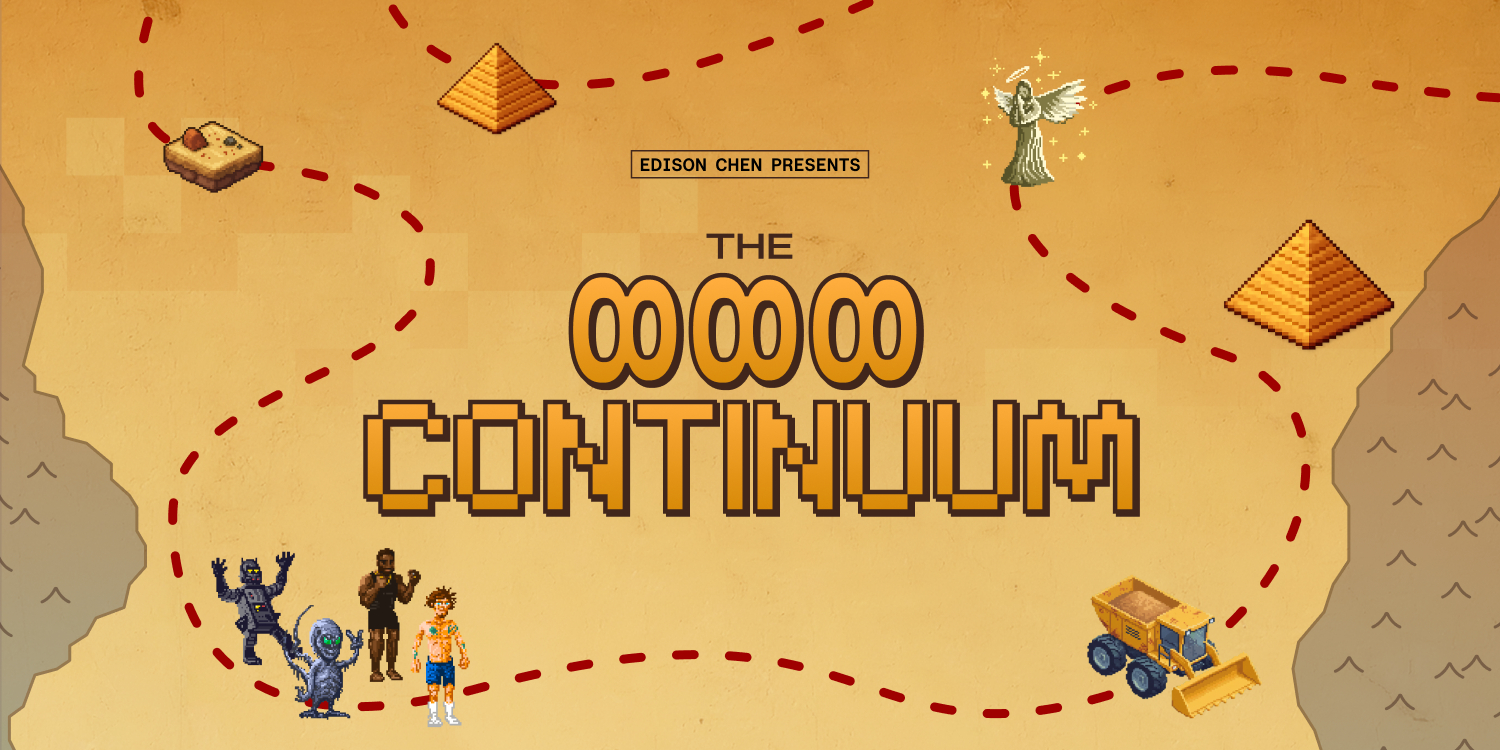
SCOR has announced a major strategic partnership with cultural icon and CLOT founder Edison Chen. This collaboration introduces "The 888 Continuum," a four-month immersive experience blending digital gaming, streetwear culture, and on-chain rewards. The gamified journey invites players to complete multi-stage quests through SCOR’s mini-games, unlocking progressively valuable rewards, including exclusive CLOT sneaker releases, limited gear, and rare digital collectibles. The narrative-driven experience is designed as a dynamic treasure hunt, revealing new layers of the storyline and exclusive items from Edison Chen’s personal archive at each stage. Chen expressed enthusiasm for SCOR’s fusion of sports, culture, and digital ownership, emphasizing community engagement and authentic rewards. The partnership bridges street culture, sports, and Web3, offering fans new ways to collect, compete, and participate in a culturally rich ecosystem. Top participants who complete key milestones gain early access to sneaker drops, enhanced $SCOR airdrops, and unique digital items. The event is now live at fun.scor.io/edc/.

SCOR today announced a major strategic collaboration with creative director, cultural icon, and CLOT founder Edison Chen. This partnership marks the first time a figure of such influence has integrated their personal brand and unique perspective on sports, collecting, and culture into a skill-based, gamified journey built on-chain.

This collaboration kicks off with "The 888 Continuum," a four-month immersive event that blends digital gaming, streetwear culture, and an on-chain rewards system. The entire experience will unfold through a progressive on-chain narrative, culminating in the reveal of exclusive CLOT sneaker releases, limited-edition gear, and rare SCOR digital collectibles.

Starting today, players can visit fun.scor.io/edc/ to embark on a multi-stage quest. Designed as a dynamic "treasure hunt," the journey allows players to progressively unlock eligibility for rewards of increasing value by participating in SCOR's various mini-games.

"The 888 Continuum" will unfold through a series of progressive missions, each stage unveiling new layers of the storyline and unlocking new rewards from Edison Chen's personal archive. The early stages lay the foundation at fun.scor.io/EDC/, with subsequent phases introducing clues, challenges, and limited-edition items related to Edison Chen's creative universe. As players progress, the content deepens, ultimately guiding the most dedicated participants towards the rarest rewards from the worlds of CLOT and SCOR.

"I've always been drawn to the energy of sports—the culture, the collectibility, and the process of leveling up. Seeing what SCOR is building for real fans, real games, and real rewards really resonated with me. This event brings that whole vibe on-chain, which feels fresh, fun, and true to my roots. I want to grow with the community and keep leveling up in a fun and highly engaging way," said Edison Chen.

By merging Edison Chen's aesthetic vision and creative direction with SCOR's on-chain infrastructure, this collaboration bridges streetwear, sports, and digital ownership. Fans will not only gain new ways to collect and compete but will also experience cultural layers deeply integrated into the SCOR ecosystem.

Tom Mizzone, Founder and CEO of Sweet and developer of the SCOR ecosystem, stated: "Edison Chen is a creator who understands both the artistry and the energy of sports culture. What we've built together showcases how SCOR expands from gameplay into the full universe around sports—fashion, community, collecting, and cultural expression. 'The 888 Continuum' is a blueprint for that vision."

Top players who maintain consistent participation, hold designated event collectibles, and complete key milestones will gain early access to sneaker releases and additional opportunities in the final rewards pool. Prizes include exclusive Edison Chen sneakers, higher-tier $SCOR airdrop allocations, and unique digital items released throughout the event.

"The 888 Continuum" is now officially live.

Join the mystery, start collecting, and unlock your path to progression at fun.scor.io/edc/.

About SCOR

SCOR is a next-generation interactive sports ecosystem designed to connect global fans with real athletes, real competition, and real value. Through the fun.scor platform, SCOR-ID, and a series of high-profile partnerships, SCOR is redefining how sports IP evolves in the digital age.

About Edison Chen

Edison Chen is a globally renowned cultural pioneer—founder of CLOT (in partnership with adidas), creative director, actor, musician, and entrepreneur. He is celebrated for bridging Eastern and Western cultures, propelling the rise of modern streetwear, and continually shaping global trends through his creative agency and high-impact collaborations.


Crypto di tendenza

Domande pertinenti

QWhat is the name of the immersive campaign launched by SCOR in collaboration with Edison Chen?

AThe 888 Continuum

QHow long will 'The 888 Continuum' campaign last?

AFour months

QWhat can participants unlock by playing SCOR's mini-games in this campaign?

AEligibility for rewards of increasing value, including exclusive CLOT sneaker releases, limited gear, and rare SCOR digital collectibles

QAccording to the article, what does Tom Mizzone, CEO of Sweet, describe Edison Chen as?

AA creator who understands both the artistry and energy of sports culture

QWhere can players begin their journey to participate in 'The 888 Continuum'?

AAt fun.scor.io/edc/

Letture associate

He Just Raised 2.7 Billion, and Li Fei-Fei Also Invested

Pete Florence, a former senior research scientist at Google DeepMind and a key contributor to the Vision-Language-Action (VLA) model architecture, is deliberately distancing his startup, Generalist AI, from the trendy "world model" label. He argues that the industry should prioritize concrete goals over buzzwords. His goal is to create robots that can perform a vast range of unseen tasks with high speed and success rates, without needing task-specific training data. Recently, his company raised $400 million (¥2.7 billion) at a $2 billion valuation. Notable investors include NVIDIA's NVentures, Bezos Expeditions, NFDG, as well as Xiaomi co-founder Lin Bin, Zoom founder Eric Yuan, and renowned AI scientist Fei-Fei Li. Florence's approach stems from his academic background at MIT under Professor Russ Tedrake, focusing on understanding the physical world. After joining DeepMind, he developed models like Transporter Network and co-created the VLA framework. He left in 2025 to found Generalist AI. The company has launched two models: GEN-0, which demonstrated that scaling laws apply to physical motion, and GEN-1. GEN-1 was trained on over 500,000 hours of physical interaction data collected via a specialized wearable device. It achieves a 99% success rate on precise mechanical tasks like folding boxes and maintains performance three times faster than its predecessor. Florence believes GEN-1 is reaching a commercial utility threshold similar to the GPT-3 inflection point. The substantial funding round, following GEN-1's release, signifies strong investor confidence in Generalist AI's practical, goal-driven path to creating versatile, useful robots, regardless of the "world model" terminology.

marsbit3 min fa

He Just Raised 2.7 Billion, and Li Fei-Fei Also Invested

marsbit3 min fa

Two Legends Lost in Three Days: Is Google's AI Talent Dam Cracking?

In three days, Google lost two AI legends. On June 18, Noam Shazeer, co-author of the seminal "Attention is All You Need" paper and Gemini co-lead, left for OpenAI. Just 48 hours later, John Jumper, 2024 Nobel laureate and AlphaFold lead, departed DeepMind for Anthropic. This follows Andrej Karpathy joining Anthropic in May. These moves highlight a structural trend: top AI talent is concentrating at mission-driven, pre-IPO firms like OpenAI and Anthropic, while Google becomes a primary source. The exodus stems from a core mission mismatch. Google's ad-centric model often subordinates AI research to product and revenue goals, creating friction for pioneers like Shazeer, who returned in 2024 only to leave again. In contrast, OpenAI and Anthropic offer singular focus on pushing AI boundaries, whether towards AGI or safety-aligned models, which deeply appeals to top researchers like Jumper. Financial incentives amplify the pull. With both OpenAI and Anthropic nearing IPO, employees stand to gain immensely from equity, an upside Google's mature stock cannot match. Furthermore, the 2023 merger of Google Brain and DeepMind, intended to consolidate strength, has instead created cultural tension and slowed the path from research to product, as evidenced by Gemini's pace. This talent redistribution is reshaping the AI landscape. While Google retains vast data and compute resources, its true crisis is the quiet, continuous loss of the people who define the field's future. The real moat in AI is not infrastructure, but the concentration of brilliant minds—a battle Google is currently losing.

marsbit2 h fa

Two Legends Lost in Three Days: Is Google's AI Talent Dam Cracking?

marsbit2 h fa

Behind the AI Report Card, Lies a Chinese 'Exam Setter'

Beyond the familiar performance charts like MMLU-Pro and MMMU, which major AI models strive to ace, stands a key "examiner": Chinese-Canadian researcher Wenhu Chen. An assistant professor at the University of Waterloo and founder of TIGERLab, Chen addresses the crucial need for more rigorous AI evaluation. As models like GPT-4 began scoring near-perfect results on older benchmarks like MMLU, it became difficult to distinguish their true capabilities. In response, Chen introduced MMLU-Pro in 2024, featuring harder, more reasoning-focused questions with more answer choices, successfully reintroducing meaningful performance gaps. His work extends to multi-modal evaluation with MMMU and its enhanced version, MMMU-Pro. These benchmarks test a model's ability to understand and reason with complex information from images, charts, and text across diverse academic subjects, exposing the significant challenges even top models face in genuine comprehension. Chen's background in complex QA, table reasoning, and his experience at Google DeepMind on projects like Gemini inform his approach. He understands that effective benchmarks must anticipate how models might "cheat" by memorizing data or avoiding visual analysis. His lab also actively researches video understanding and generation models (e.g., UniVideo, Vamba), ensuring his evaluation work is grounded in practical model-building challenges. Now at Meta's Super Intelligence Lab, Chen continues his focus on multi-modal data and evaluation, representing the deep yet often unseen contributions of Chinese talent in shaping the fundamental tools of the AI industry.

marsbit2 h fa

Behind the AI Report Card, Lies a Chinese 'Exam Setter'

marsbit2 h fa

Alliance Co-founder's Letter to Entrepreneurs: Written at the Moment Cursor Sold for $600 Billion

Alliance Co-founder's Letter to Entrepreneurs: On Cursor's $60 Billion Sale Many aspiring founders see massive exits like Cursor's $60B sale and wonder why they can't achieve the same, often concluding opportunities are exhausted. But great companies aren't built in obvious, crowded spaces. Cursor, like Stripe, Figma, and Shopify before it, started with a non-consensus belief about the future. Before ChatGPT, they believed AI would transform knowledge work. They focused on a genuinely exciting domain, became their own customer, and obsessed over power users. Their journey involved years of "glass-chewing" effort before the market was ready. The pattern is consistent: identify a long-term technological shift, find a missed entry point, and execute for years before the trend becomes obvious. First-generation products (PayPal, Adobe, Amazon) prove a market exists. Second-generation winners (Stripe, Figma, Shopify) rebuild that market around new insights, technology, or changing customer behaviors. Founders must identify their phase in the cycle. Early entrants like Coinbase or Cursor focus on making new technology usable for power users. Later entrants find the "yin" to the established "yang"—the blind spots incumbents miss as they grow distant from individual users. The key is deep market immersion. Use every product in your space. Talk to users. Build an audience. Stop looking for ideas and start *seeing* them everywhere. Then, choose one. The idea must offer a 10x improvement or solve a "hair-on-fire" pain point—something severe enough that users are already crafting workarounds. When building, avoid feature bloat. Ask: why would someone switch? Great startups rarely force new behaviors; they improve familiar workflows with drastically lower friction (e.g., Cursor forked VS Code instead of creating a new editor). Distribution is the underestimated moat. Before product-market fit, achieve distribution-market fit. How do customers discover new tools? Founders like those at Airbnb, Stripe, and Cursor did unscalable, manual work to recruit early users. The final, unteachable ingredient is resilience. Cursor built for years pre-market, faced rejection, and persisted. So did Airbnb, Nvidia, and Rain (which launched post-FTX collapse). The lesson isn't that these founders were smarter, but that they stayed in the game long enough for their insights to compound. Framework: Spot technological cycles. Cultivate unique insight. Obsess over your market. Talk to customers. Find a hair-on-fire problem. Build the simplest wedge. Win your distribution channel. Above all, don't quit when it gets hard. Most people won't do these things consistently. The few who do build the next generation of great companies. Go build.

marsbit2 h fa

Alliance Co-founder's Letter to Entrepreneurs: Written at the Moment Cursor Sold for $600 Billion

marsbit2 h fa

Trading

Spot
Futures

Articoli Popolari

Cosa è XAG

Il contratto perpetuo XAGUSDT è il simbolo di trading per l'argento quotato in dollari statunitensi, che rappresenta 1 oncia troy di argento.

4 Totale visualizzazioniPubblicato il 2026.06.18Aggiornato il 2026.06.18

Cosa è XAG

Come comprare XAG

Benvenuto in HTX.com! Abbiamo reso l'acquisto di Silver (XAG) semplice e conveniente. Segui la nostra guida passo passo per intraprendere il tuo viaggio nel mondo delle criptovalute.Step 1: Crea il tuo Account HTXUsa la tua email o numero di telefono per registrarti il tuo account gratuito su HTX. Vivi un'esperienza facile e sblocca tutte le funzionalità,Crea il mio accountStep 2: Vai in Acquista crypto e seleziona il tuo metodo di pagamentoCarta di credito/debito: utilizza la tua Visa o Mastercard per acquistare immediatamente SilverXAG.Bilancio: Usa i fondi dal bilancio del tuo account HTX per fare trading senza problemi.Terze parti: abbiamo aggiunto metodi di pagamento molto utilizzati come Google Pay e Apple Pay per maggiore comodità.P2P: Fai trading direttamente con altri utenti HTX.Over-the-Counter (OTC): Offriamo servizi su misura e tassi di cambio competitivi per i trader.Step 3: Conserva Silver (XAG)Dopo aver acquistato Silver (XAG), conserva nel tuo account HTX. In alternativa, puoi inviare tramite trasferimento blockchain o scambiare per altre criptovalute.Step 4: Scambia Silver (XAG)Scambia facilmente Silver (XAG) nel mercato spot di HTX. Accedi al tuo account, seleziona la tua coppia di trading, esegui le tue operazioni e monitora in tempo reale. Offriamo un'esperienza user-friendly sia per chi ha appena iniziato che per i trader più esperti.

3 Totale visualizzazioniPubblicato il 2026.06.18Aggiornato il 2026.06.18

Come comprare XAG

Come comprare XAU

Benvenuto in HTX.com! Abbiamo reso l'acquisto di Gold (XAU) semplice e conveniente. Segui la nostra guida passo passo per intraprendere il tuo viaggio nel mondo delle criptovalute.Step 1: Crea il tuo Account HTXUsa la tua email o numero di telefono per registrarti il tuo account gratuito su HTX. Vivi un'esperienza facile e sblocca tutte le funzionalità,Crea il mio accountStep 2: Vai in Acquista crypto e seleziona il tuo metodo di pagamentoCarta di credito/debito: utilizza la tua Visa o Mastercard per acquistare immediatamente GoldXAU.Bilancio: Usa i fondi dal bilancio del tuo account HTX per fare trading senza problemi.Terze parti: abbiamo aggiunto metodi di pagamento molto utilizzati come Google Pay e Apple Pay per maggiore comodità.P2P: Fai trading direttamente con altri utenti HTX.Over-the-Counter (OTC): Offriamo servizi su misura e tassi di cambio competitivi per i trader.Step 3: Conserva Gold (XAU)Dopo aver acquistato Gold (XAU), conserva nel tuo account HTX. In alternativa, puoi inviare tramite trasferimento blockchain o scambiare per altre criptovalute.Step 4: Scambia Gold (XAU)Scambia facilmente Gold (XAU) nel mercato spot di HTX. Accedi al tuo account, seleziona la tua coppia di trading, esegui le tue operazioni e monitora in tempo reale. Offriamo un'esperienza user-friendly sia per chi ha appena iniziato che per i trader più esperti.

7 Totale visualizzazioniPubblicato il 2026.06.18Aggiornato il 2026.06.18

Come comprare XAU

Discussioni

Benvenuto nella Community HTX. Qui puoi rimanere informato sugli ultimi sviluppi della piattaforma e accedere ad approfondimenti esperti sul mercato. Le opinioni degli utenti sul prezzo di A A sono presentate come di seguito.

活动图片