SBF Appeals from Prison, 35-Page Document Accuses Judicial Misconduct

marsbitPubblicato 2026-02-11Pubblicato ultima volta 2026-02-11

Introduzione

Sam Bankman-Fried (SBF), the founder of FTX currently imprisoned, is appealing his fraud conviction and 25-year sentence through a 35-page pro se motion filed by his mother. The motion cites newly discovered evidence and alleges multiple judicial and prosecutorial misconducts. Key claims include the absence of favorable witnesses like Ryan Salame, who was allegedly threatened by prosecutors, and coerced testimony from Nishad Singh. SBF also challenges the prosecution’s financial narrative, presenting a sworn statement from former FTX data head Daniel Chapsky arguing that Alameda’s account was misrepresented to show artificial losses. Additionally, SBF accuses Sullivan & Cromwell, FTX’s bankruptcy counsel, of undervaluing assets to support the narrative of insolvency, despite high customer recovery rates. The motion further suggests political targeting by the Biden administration and requests Judge Kaplan’s recusal due to alleged bias. Legal experts view the appeal as an uphill battle given the high bar for new evidence and judicial discretion in such motions.

Original Author: Sanqing, Foresight News

On February 10, according to Inner City Press, FTX founder Sam Bankman-Fried (SBF), currently serving his sentence at Terminal Island prison in California, is actively seeking to overturn his conviction. A pro se (self-represented) motion for a new trial, submitted on his behalf by his mother, Stanford Law Professor Barbara H. Fried, has been formally filed with the court. This 35-page document, citing Federal Rule of Criminal Procedure Rule 33 and newly discovered evidence, strongly requests the overturning of his 2023 fraud conviction and the 25-year prison sentence imposed in 2024.

The motion primarily argues that the trial was severely flawed due to the absence of key witnesses (such as former Alameda Research co-CEO Ryan Salame and former FTX.US executive Daniel Chapsky) from testifying; that prosecutors allegedly concealed evidence; and that the entire process was influenced by political factors, with SBF subtly suggesting he is a victim of a "targeted attack" by the Biden administration.

The evidence and arguments submitted by SBF this time are not aimed at directly proving his "innocence" but rather adopt a legal strategy questioning the procedural flaws of the judicial trial.

Core Accusation One: "Customized" Witnesses and Judicial Coercion

The motion accuses the prosecution of coercing and inducing key insiders to turn against SBF and silencing witnesses favorable to him.

For example, the absence of former Alameda Research co-CEO Ryan Salame. The motion cites Salame's public statements after August 2024 (including an interview with Tucker Carlson) as newly discovered evidence, alleging that prosecutors threatened to indict Salame's partner, Michelle Bond, to prevent Salame from testifying to SBF's innocence.

Regarding former engineering head Nishad Singh, who testified against SBF, the motion discloses that during pre-trial interviews, when Singh's initial statements did not meet the prosecution's expectations, a prosecutor angrily "slammed the table" and斥责 (chì zé - reprimanded/scolded) Singh's memory as "unreliable."

SBF believes that such high-pressure intimidation forced Singh to subsequently alter his testimony. The motion formally requests the court to order the prosecution to hand over the relevant interview notes to prove this coercion was concealed.

Core Accusation Two: The Disappearing "Liabilities" and the Mystery of [email protected]

SBF submitted a sworn declaration from former FTX Head of Data Science Daniel Chapsky, countering the misappropriation allegations from a data perspective.

The motion points out that the prosecution had presented the huge negative balance in the [email protected] account as ironclad evidence of SBF's misappropriation of customer funds. However, Chapsky's declaration refutes this, calling the prosecution's interpretation a "fundamental misrepresentation."

He stated that the negative balance in this account corresponded to cash and assets held offline by Alameda. The prosecution only showed the "debit" negative numbers to the jury but deliberately omitted the corresponding "credit" assets, thus fabricating a false impression of a multi-billion dollar shortfall out of thin air.

Chapsky's data analysis further shows that if correctly accounted for during most of 2022, Alameda's account on FTX actually maintained a positive balance of approximately $2 billion. The prosecution and expert witness Peter Easton deliberately displayed only certain specific sub-accounts with negative balances, misleading the jury.

Core Accusation Three: Bankruptcy Law Firm S&C's "Asset Erasure Technique"

SBF also targeted the law firm Sullivan & Cromwell (S&C), responsible for FTX's bankruptcy restructuring. He accuses S&C of artificially creating "insolvency" to align with the prosecution's conviction narrative and to earn exorbitant legal fees.

The motion points out that FTX held a venture portfolio valued at up to $8.4 billion at the time of bankruptcy (including investments in Claude AI developer Anthropic). However, early in the bankruptcy process, S&C and the prosecution, to solidify the capital shortfall, recorded these less liquid but highly valuable assets at zero or extremely low values.

SBF emphasizes that the bankruptcy team's eventual confirmation that customers will receive 119% to 143% cash recovery itself proves that his assertion during the trial—"FTX was solvent, the money wasn't lost"—was true.

Core Accusation Four: Political Targeting and Judicial Bias

Finally, SBF played the political and procedural cards. He implied he is a victim of a "political war" by the Biden administration. As a former major Democratic donor, he was quickly distanced from and harshly sentenced after the incident to quell public anger.

Furthermore, given that presiding Judge Lewis A. Kaplan repeatedly rejected defense evidence regarding "FTX's solvency" during the previous trial, SBF's motion not only requests a new trial but also explicitly requests Judge Kaplan to recuse himself, citing the judge's demonstrated extreme bias and inability to adjudicate the case fairly.

Is This Breakout Attempt Doomed to Be a Struggle of a Cornered Beast?

A Rule 33 motion requires the evidence to be "newly discovered" after the trial, which the defense could not have obtained through "due diligence" during the trial. The judge will likely rule that Salame and Chapsky were known potential witnesses during the trial, and the defense's failure to call them was a strategic choice or an objective difficulty, not "new evidence."

Moreover, FTX's high recovery rate (even exceeding 100%) does not conversely prove that SBF did not misappropriate customer funds at the time. The crime is established as soon as customer funds are used without authorization (regardless of purpose). Subsequent asset appreciation is generally considered irrelevant to legal guilt, potentially affecting only sentencing.

Regarding the coercion allegations, unless there is conclusive audio recording or written evidence proving direct prosecutorial coercion (such as a specific recording of "table slamming"), judges typically tend to credit the prosecution's explanations of procedural compliance.

Furthermore, successfully requesting a senior federal judge to recuse themselves due to "bias" is extremely rare in judicial practice, unless there is very clear evidence of a conflict of interest. Otherwise, such accusations might even further anger the judicial system and be seen as contempt for the court.

* The original motion document can be viewed here.

Domande pertinenti

QWhat is the core legal strategy employed in SBF's 35-page motion for a new trial?

ASBF's motion does not his innocence directly, but instead challenges the legal process by alleging procedural flaws, including the absence of key witnesses, prosecutorial misconduct in withholding evidence, and political bias, seeking to overturn his conviction under Federal Rule of Criminal Procedure 33.

QAccording to the motion, how did the prosecution allegedly prevent Ryan Salame from testifying for the defense?

AThe motion alleges the prosecution threatened to prosecute Ryan Salame's partner, Michelle Bond, to prevent him from taking the stand to testify in a way that would have supported SBF's claims of innocence.

QWhat key point does Daniel Chapsky's sworn declaration make regarding the [email protected] account evidence?

ADaniel Chapsky's declaration argues the prosecution's portrayal of the [email protected] account's negative balance as proof of missing customer funds was a 'fundamental misrepresentation.' He states the negative balances were offset by Alameda's cash and assets held off-chain, and that the account actually maintained a positive net balance of around $2 billion for much of 2022.

QHow does the motion link the law firm Sullivan & Cromwell (S&C) to the narrative of FTX's insolvency?

AThe motion accuses S&C of artificially creating the appearance of insolvency by initially writing down FTX's valuable venture portfolio (e.g., its investment in Anthropic) to zero or a very low value to support the prosecution's case and to justify their own high legal fees, despite the subsequent high recovery rate for customers.

QWhat two significant requests does SBF make regarding the presiding judge, Lewis A. Kaplan?

ASBF requests a new trial and also formally requests that Judge Lewis A. Kaplan recuse himself from the case, arguing the judge has exhibited extreme bias' and can no longer rule on the matter fairly.

Letture associate

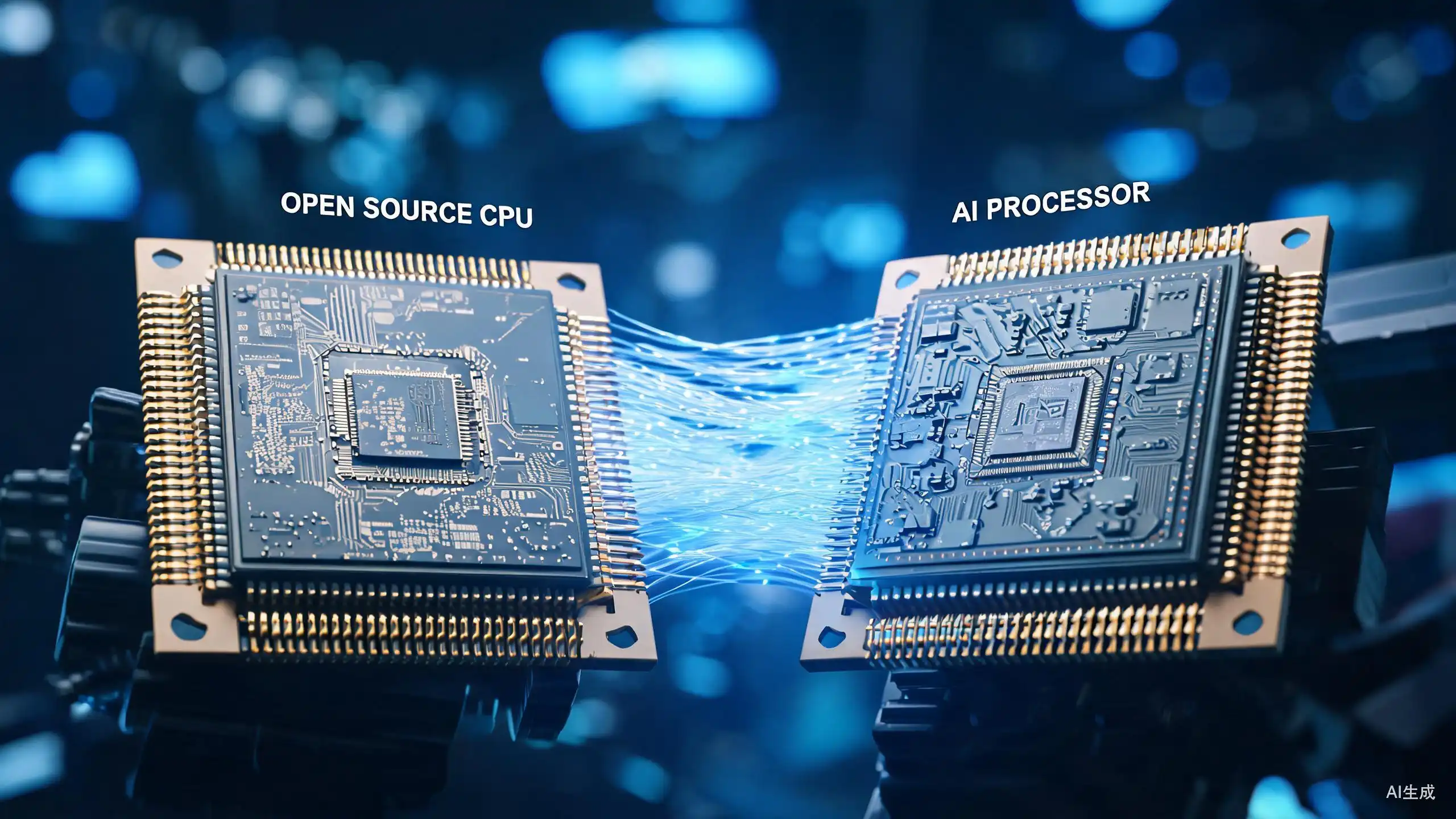
NVIDIA CPU Advances, China's RISC-V Responds: Semiconductor Deep Dive - Part Four

NVIDIA is set to launch its new Vera AI data center CPU in China as early as August, with high pricing. While this move offers a new option, it highlights China's continued dependence on foreign-controlled Arm architecture. In response, the Chinese semiconductor industry is increasingly turning to RISC-V as a strategic alternative for achieving high-performance computing autonomy. The article explores the concept of the "impossible triangle" in CPU development—balancing prosperity, control, and autonomy—and posits that RISC-V's open-source, modular nature offers a unique path to achieving all three. While RISC-V is already dominant in embedded systems, the focus is now shifting to data centers and AI workloads. China has become a global hotspot for RISC-V development, driven by AI-driven compute demand, supply chain concerns from export controls, cost benefits of open-source, and strong policy support. Multiple Chinese companies have reportedly crossed the key performance threshold of 15 SPECint per GHz, a benchmark for entering the high-performance CPU club. Progress extends beyond single-core benchmarks. Companies are developing complete computing subsystems, including commercial-grade coherent network-on-chip (NoC) technology and server processors with up to 40 cores that strictly adhere to the RVA23 standard to ensure software compatibility. Real-world applications are emerging in areas like video transcoding and edge AI. However, significant challenges remain. The RISC-V ecosystem faces fragmentation, immature toolchains and verification processes, and gaps in single-core performance and energy efficiency compared to mature x86 and Arm architectures. The formidable software moat, epitomized by NVIDIA's CUDA, is a long-term hurdle. In conclusion, while RISC-V cannot immediately replace offerings like NVIDIA's Vera, it represents a viable long-term path for China to develop a self-sufficient, high-performance CPU ecosystem. The journey is acknowledged to be long and arduous, requiring sustained effort to overcome technical and ecosystem challenges.

marsbit5 h fa

NVIDIA CPU Advances, China's RISC-V Responds: Semiconductor Deep Dive - Part Four

marsbit5 h fa

My Coding Betting Dashboard is Profiting, but Polymarket is Truly Not a Good Place for 'Arbitrage'

The author built a custom monitoring dashboard for Polymarket, a prediction market platform, and tested it with $1,600, achieving over 30% returns. However, the core argument is that Polymarket is not a good venue for traditional arbitrage. The dashboard has two main sections: a "Portfolio Dashboard" for tracking active positions with key metrics like total capital, P&L, and a risk-control module using a tier system (T1, T2, T3), and an "Opportunity Watchlist" for monitoring markets. The article details a critical structural trap in binary markets: a bet with a high perceived probability of success still carries a 100% loss risk if wrong. The author's T1/T2/T3 system is designed to manage this by limiting position sizes based on conviction and time horizon, emphasizing that high confidence should not equal high concentration. A key insight is the danger of "pseudo-diversification"—betting on different markets driven by the same underlying variable. The author concludes that Polymarket offers few true low-risk, arbitrage opportunities. It is instead a high-risk environment where wins can create a false sense of mastery, leading to large losses. The platform is better viewed as a training ground for honing judgment through disciplined, framework-driven betting rather than a reliable income source. The tools help transform intuition into structured, rule-based decisions to mitigate the risk of catastrophic errors.

marsbit8 h fa

My Coding Betting Dashboard is Profiting, but Polymarket is Truly Not a Good Place for 'Arbitrage'

marsbit8 h fa

WeChat AI Card Hands-On Guide: Has the AI Shopping Era Arrived?

**"WeChat AI Card" Practical Test Guide: Has the Era of AI Shopping Arrived?** WeChat has officially launched the "AI Exclusive Card," a feature integrated into its Workbuddy AI assistant. This card is designed to handle payments for AI-initiated purchases. Our hands-on test reveals it's not yet a tool for fully autonomous AI shopping, but rather a controlled payment layer for AI agents. The AI Card functions as an isolated sub-wallet within WeChat Pay. Users must bind the card and transfer funds into it from their main wallet. Crucially, every transaction requires explicit user confirmation via smartphone scan; AI cannot spend autonomously. Currently accessible through the Workbuddy agent, the card targets specific digital consumption scenarios: purchasing paid content (reports, data), calling paid APIs/tools, and subscribing to services. Its design prioritizes security and control by separating funds and mandating approval for each payment. We tested a real-world scenario: ordering bubble tea via Workbuddy using a "Meituan Life Assistant" skill. The process encountered multiple hurdles: high "skill" usage costs (exceeding daily free credits), and most importantly, while a payment was successfully initiated, the AI purchased an incorrect product (a mismatched group-buy coupon instead of the desired drink). This highlights the current limitation: the **AI Card only solves the payment step**. The broader challenge lies in the **AI agent's execution chain**—accurately understanding intent, navigating third-party platforms, selecting the right product, and ensuring proper fulfillment. The payment succeeded, but the purchase failed to meet the user's need. In conclusion, the WeChat AI Exclusive Card is a cautious, early-step experiment in AI commerce. It provides a secure, user-controlled payment method for agent interactions but is not yet capable of reliable, end-to-end complex purchases. For now, it's best used for low-value, low-risk digital services with careful user verification at each step. The vision of AI handling complete shopping tasks remains a work in progress.

marsbit10 h fa

WeChat AI Card Hands-On Guide: Has the AI Shopping Era Arrived?

marsbit10 h fa

Trading

Spot
Futures
活动图片