Sam Altman in Conversation with Stripe CEO: The Era Where Ideas Are More Valuable Than Code Has Arrived!

marsbitPubblicato 2026-05-15Pubblicato ultima volta 2026-05-15

Introduzione

At Stripe's 2026 annual conference, OpenAI CEO Sam Altman joined Stripe CEO Patrick Collison for a fireside chat. Altman shared key insights on the AI revolution, emphasizing that we are in a period of rapid takeoff, with AI capabilities advancing weekly. He outlined OpenAI's evolution from a research lab to a product company and now a large-scale "token factory" – a low-margin, utility-like provider of intelligence. Altman stressed that the most successful AI adopters have CEOs who personally automate workflows, driving organizational change. A significant shift is the rise of the "idea person." Altman now actively invests in founders with deep product insight but no coding skills, as AI tools enable them to build. He advocates for "suspension of disbelief" in investing, planning long-term (e.g., 20-year infrastructure deals) while focusing on a clear 2-year product roadmap. Beyond products, Altman is most excited about AI accelerating scientific discovery, shortening decade-long research cycles in complex diseases and driving breakthroughs in materials science and energy. He predicts the first profitable fusion reactor could emerge within five years, spurred by AI's compute demands. Finally, Altman defended OpenAI's philosophy of iterative public deployment over elite control, believing democratizing AI access is crucial to avoid centralized power and unlock global innovation.

Source: Stripe

On April 30, 2026, OpenAI CEO Sam Altman took the stage at Stripe's annual conference for an in-depth fireside chat with Stripe CEO Patrick Collison.

The two have known each other for nearly two decades, and their conversation covered the inflection point in AI development, OpenAI's management philosophy, changes in the startup ecosystem, and the profound impact of AI on science and humanity's future.
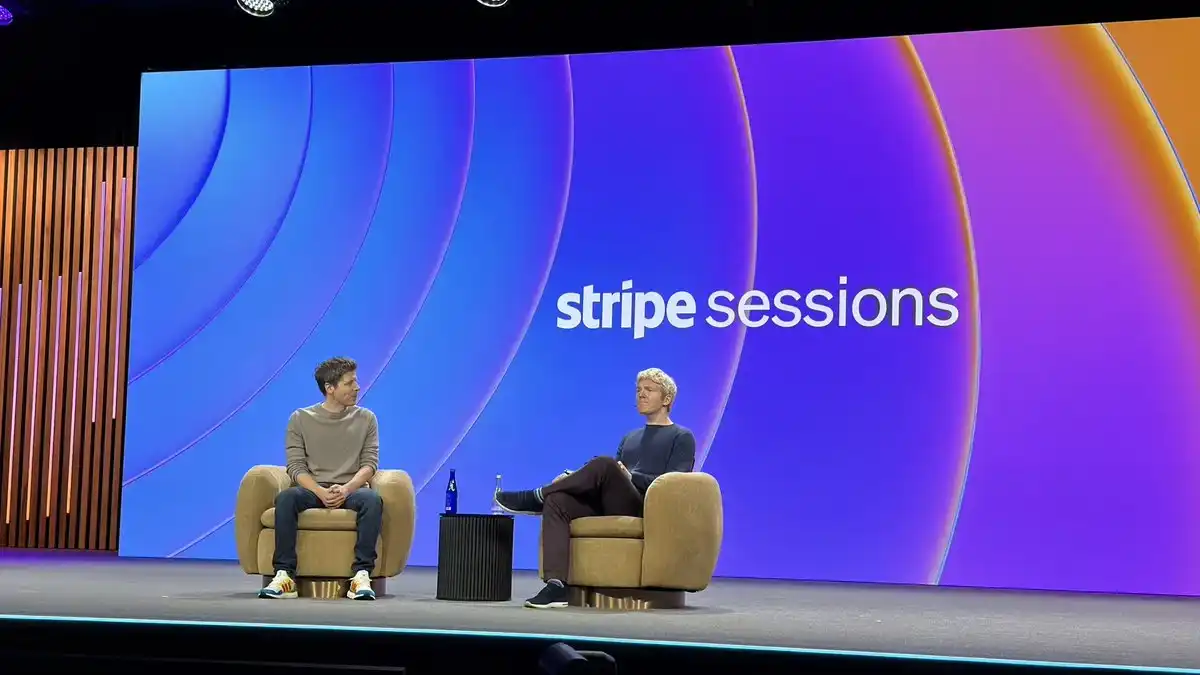
During the conversation, Altman dropped a series of heavyweight viewpoints:

  • We are indeed in the midst of some kind of takeoff. AI is developing very fast; it's a little different every week.

  • OpenAI has undergone three evolutions: from a research lab, to a product company, and now to a large-scale token factory.

  • The revenge of the "Ideas People" is here: I am now willing to invest in people who deeply understand user needs and have product insight but can't write code at all.

  • What excites me most about AI is not products, nor business models, but the potential to accelerate scientific discovery.

We Are in the Midst of Takeoff

When does the Singularity begin?

Patrick Collison offered an interesting perspective in his opening: treat this year as the first year of the Singularity.

In response, Sam Altman said, "We are indeed in the midst of some kind of takeoff." From the second half of last year to the beginning of this year, AI model capabilities broke through a certain tipping point—especially in the field of code generation.

"It's a little different every week, things are moving very fast."

A Shift in Perception

Currently, Codex (OpenAI's programming model branch) is having its "moment."

While the most dedicated users are still programmers, a large number of users without programming backgrounds are also flocking to it, trying to use it to handle all their daily computer-based work.
Altman believes people will undergo a more widespread cognitive shift: realizing how much of their time is wasted on computer drudgery.

Switching messaging apps, copying and pasting content, handling repetitive emails that could obviously be automated—these fragmented tasks are quietly eroding people's focus and work experience. When most people truly realize AI can do this "grunt work" for them, the feeling will be revolutionary.

Who's Really Using AI Well?

It Only Counts if the CEO Gets Hands-On

After observing many enterprise clients, Altman concluded: The companies most successfully applying AI often share a common characteristic—the CEO personally gets hands-on.

Not symbolically announcing "we will embrace AI," but actually building automated workflows themselves, then demanding the team follow. He gave the example of Shopify's CEO: he was one of the earliest hands-on CEOs Altman had seen, directly driving the entire company to integrate AI into all processes.

OpenAI is now trying a new experiment: sending an engineer to directly accompany a company's CEO, helping them automate as many workflows as possible.

If you can make a company's leadership truly feel the power of AI, that feeling will permeate the entire organization like a fractal.

OpenAI's Three Evolutions

Sam Altman candidly shared the management evolution inside OpenAI, which is essentially a microcosm of AI's industrialization path.

Three Stages of Transformation

The first stage, a pure research lab, aiming to figure out how to build AGI when everyone thought it was crazy.

The second stage, while continuing research, needed to learn how to be a product company.

The third stage, which is now being entered: on top of the previous two, building a large-scale token factory. Altman compared it to a new type of utility, like electricity; the world needs massive, cheap, accessible intelligence.

Vision of Low-Margin Infrastructure

Addressing doubts about "will AI giants monopolize everything," Altman used Stripe as a reference point: Stripe and its customers are highly aligned; the more Stripe earns, the better its customers do, a positive infrastructure relationship.

Altman hopes OpenAI can ultimately play a similar role: an intelligence infrastructure provider, even if perpetually low-margin, as long as it's big enough, fast enough, and deeply tied to the success of the world's distributed economy.

He also acknowledged that AI's switching costs are inherently low, making high margins difficult to sustain. The recent large-scale migration of users from competitors to Codex shows that friction for switching will become smaller in the AI era.

Compute Investment: The Most Expensive Infrastructure in History

Regarding massive compute investment, Altman stated: "This will be the most expensive infrastructure project in human history."

Efficiency gains per GPU have exceeded his expectations, but demand growth is even faster. As for how much compute needs to be built? "I don't have a good answer... in some sense, demand is almost unlimited."

OpenAI's Management Philosophy

OpenAI gathers some of the smartest and most unique individuals in the world. Altman revealed his secret is extreme conviction gambling:

  • Concentrate Resources: When training GPT-3, OpenAI threw almost all its compute resources into one project. At the time, people at DeepMind warned this would create a toxic competitive culture; OpenAI's response was: We have conviction, this is the right direction.

  • Shared Vision: Altman believes that even if team members have personal conflicts or clash, their shared belief in "Scale" allows them to sit together and solve problems.

"Directly Managing Hundreds" Communication Style

Asked about any unusual management habits, Altman mentioned: He communicates directly with hundreds of people in the company daily via Slack—not through assistants, but directly himself, with one or two short messages at a time.

This decentralized approach sometimes brings him very valuable information.

The New Paradigm for Startups

"Ideas People" Revenge

Altman developed a deep-seated bias during his YC days: disdain for entrepreneurs who "only have an idea and need a programmer to implement it," thinking it was as absurd as saying "I have a great song idea, just need someone who plays guitar to make it."

But now, "the revenge of the Ideas People has arrived."

Those who deeply understand user needs and have product insight but can't code at all can now quickly build products using AI tools. Altman said he is now very willing to invest in such people.

How to Invest Before the Singularity?

AGI might arrive in three to five years. Is the traditional ten-year investment horizon for venture capital still reasonable?

Altman's answer: Do everything on this timescale with a 'suspension of disbelief.' You can't do nothing just because "the Singularity is coming in three years, we can't see through it." You still have to act as if life will continue.

OpenAI has signed twenty-year power and land agreements but only has a clear grasp of its product roadmap for the next two years.—Make long-term infrastructure investments while staying clear about the near term; that's his answer.

AI is Reshaping Scientific Discovery

What excites Altman most about AI is not products, nor business models, but the potential to accelerate scientific discovery.

He believes this will be this technology's most profound contribution to improving human quality of life.

Tackling Complex Diseases

Through collaboration with the Arc Institute, OpenAI is supporting the use of large biological foundation models like Evo 2 to research complex diseases involving multiple genes, such as cancer and Alzheimer's.
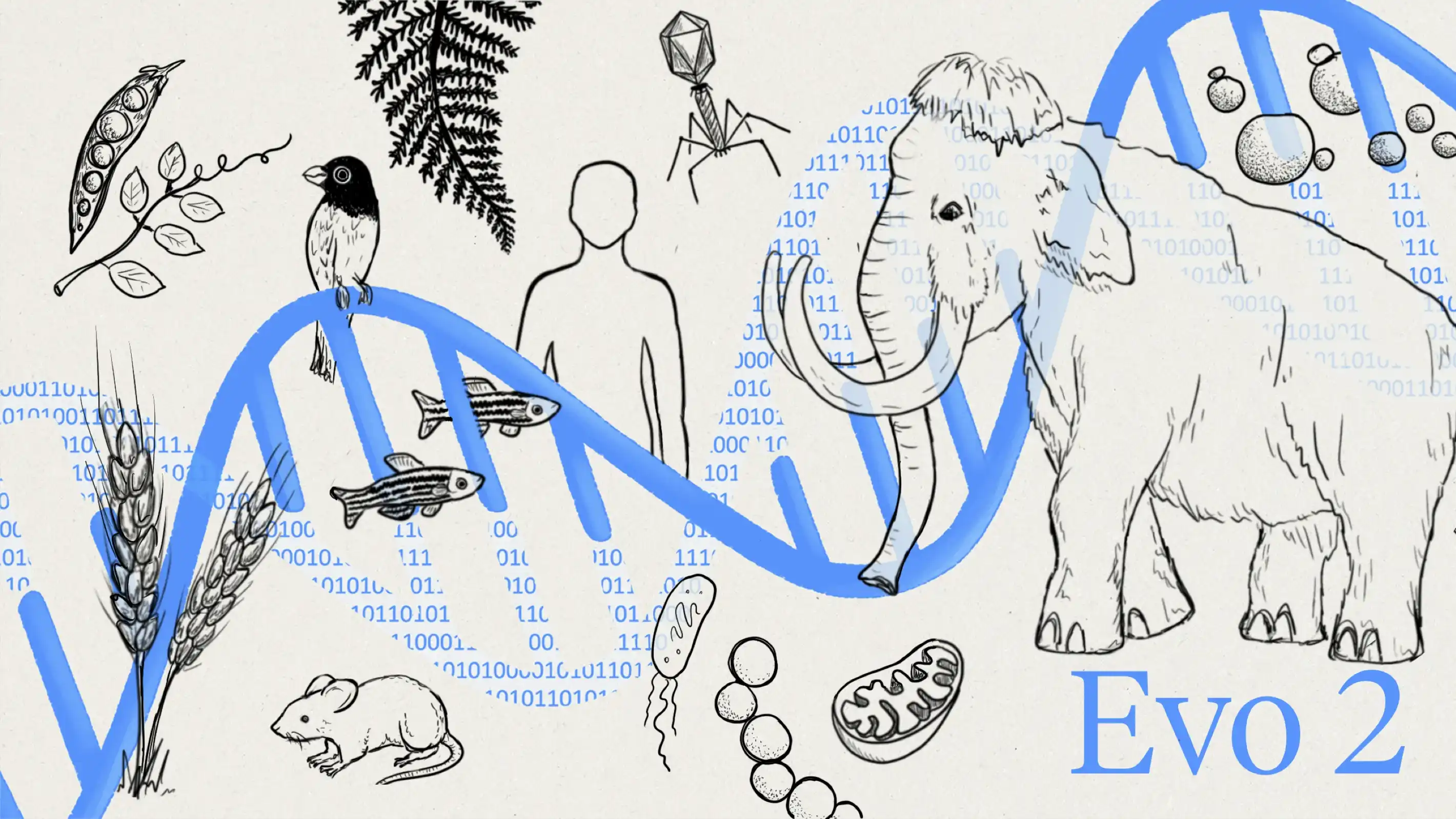
AI is shortening research cycles that originally took ten years down to one year.

Leaps in Energy and Materials

He specifically pointed out a severely underestimated field: materials science.

AI is exceptionally good at finding optimal solutions in vast combinatorial spaces, which will bring breakthroughs in catalyst development, energy efficiency improvements, etc. He expects very rapid progress here, changing all our lives in profound ways.

👉 On energy, Altman boldly predicted: Driven by the demands of AI compute, the first profitable fusion reactor could appear within five years.

Democratization: Sam Altman's Final Stand

At the end of the conversation, Altman discussed the most controversial decision in OpenAI's history: Iterative Deployment.

He recalled that many safety experts advocated locking AI in an "ivory tower," controlled by a select few, before distributing the results to the world.

"That idea made me very uncomfortable." Altman stated: Avoiding concentration of power, making this technology truly belong to the world, is extremely important.

"People will use AI in all sorts of ways, but I believe most people are good, and most will use tools to do amazing things. I think my most important contribution is pushing for this technology to be a democratized technology, accessible and buildable by everyone."


Domande pertinenti

QAccording to the article, what is Sam Altman's current stance on investing in founders who lack coding skills?

ASam Altman now expresses a strong willingness to invest in founders who have a deep understanding of user needs and product insight but completely lack coding skills, marking a shift from his earlier bias at Y Combinator. He calls this the 'revenge of the idea people.'

QHow does Sam Altman characterize the current state of AI development in the conversation?

ASam Altman states that 'we are definitely in some kind of takeoff,' with AI developing very rapidly and feeling different week to week, especially after a critical breakthrough in model capabilities from late last year to early this year.

QWhat are the three evolutionary phases that OpenAI has gone through, as described by Sam Altman?

AThe three phases are: 1) A pure research institution focused on figuring out how to build AGI. 2) A phase of learning to be a product company while continuing research. 3) The current phase of building a 'large-scale token factory' or a new type of utility providing abundant, cheap, and accessible intelligence.

QWhat does Sam Altman identify as the most exciting potential of AI, beyond products and business models?

AHe is most excited about AI's potential to accelerate scientific discovery, which he believes will be the technology's most profound contribution to human quality of life, citing progress in complex diseases and material science.

QWhat is the controversial principle that Sam Altman cites as his most important contribution regarding AI's development?

AHe cites 'Iterative Deployment'—the principle of democratizing AI technology by making it widely available for people to use and build upon, rather than keeping it locked in an 'ivory tower' controlled by a small elite, as his most important contribution.

Letture associate

Comics Illustration: Helping You Understand China's New Regulations on Outbound Investment

Summary: Understanding China's New Regulations on Overseas Investment The State Council has announced new regulations on overseas investment, effective July 1, 2026. The core message is not a prohibition on international investment, but a call for both companies and individuals to operate with strong regulatory awareness. Here are the key points: 1. **Scope is Broad:** The rules apply not only to companies but also to other organizations and individual residents. 2. **Definition of Investment is Wide:** It encompasses not just capital transfers but also asset contributions, obtaining equity or rights, financing, providing guarantees, and direct or indirect acquisition of rights related to overseas entities or assets. 3. **Companies Must Plan Comprehensively:** Beyond simple ownership charts, firms need clear plans covering the investing entity, required approvals or filings, fund transfer paths, and compliance with technology, data, and security reviews. 4. **Individuals Should Prioritize Compliance:** Before focusing on returns, individuals must first assess their eligibility, understand legal channels for capital outflow, know what they are acquiring, and identify responsible parties in case of issues. 5. **Penalties are Significant:** Violations can result in fines and potentially restrictions on future overseas investment activities. In essence, overseas investment remains possible, but it must be approached with regulatory compliance as a fundamental priority, not solely based on commercial opportunity. *Note: This is a general informational summary and does not constitute legal advice or investment recommendations.*

marsbit2 min fa

Comics Illustration: Helping You Understand China's New Regulations on Outbound Investment

marsbit2 min fa

Nvidia Rack Disassembly Reveals New Growth Opportunity, MLCC Value Surges 182%

Supply bottlenecks in AI infrastructure have expanded to fundamental hardware components like multilayer ceramic capacitors (MLCCs), crucial for stabilizing power and filtering noise in AI servers. Both Goldman Sachs and Morgan Stanley highlight MLCCs as entering a historic "volume-price dual increase" supercycle driven by AI. Goldman forecasts the AI server MLCC market to surge over fourfold from ~$1.4B in FY2025 to ~$5.8B in FY2030, a 34% CAGR. The core driver is a structural supply-demand imbalance. While AI server demand is projected to grow ~4.3x by 2030, industry capacity expands at only ~10% annually, constrained by internal production of equipment and materials. This is compounded by strong demand from electric vehicles. The shortage is evident, with lead times for high-end MLCCs exceeding 20 weeks. The price cycle has officially begun. Japanese leaders Murata and Taiyo Yuden have raised prices by 15-35% for AI server and automotive MLCCs since April, citing material costs. Japan's April export data confirms the trend, with MLCC export value up 28% year-over-year. Profit leverage is significant: Goldman estimates a mere 5% price increase could boost Murata's FY2027 operating profit by ~13% and Taiyo Yuden's by up to 37%. Morgan Stanley's teardown of Nvidia's upcoming Vera Rubin AI rack reveals another catalyst: the MLCC value per rack has skyrocketed 182% from the previous generation to ~$4,320, highlighting the component's growing importance. With demand set to massively outstrip constrained supply, and price increases just starting, analysts position MLCCs at the beginning of a major, prolonged upcycle.

marsbit3 min fa

Nvidia Rack Disassembly Reveals New Growth Opportunity, MLCC Value Surges 182%

marsbit3 min fa

A 134% Surge, 75 P/E Ratio: Why Is the Market Paying Up for Murata's 'Zero Growth'?

Murata Manufacturing, the world's largest passive components maker, saw its stock price surge 134% over the past year and hit a record high on May 28th, despite reporting nearly zero growth in operating profit for its latest fiscal year. This has pushed its valuation to a P/E ratio of approximately 75x. The disconnect is driven by a fundamental market re-rating. The catalyst was a late-May meeting where management upgraded the AI investment cycle outlook to "lasting until around 2030" and noted that demand for its components is roughly double its supply capacity, with customers prioritizing securing volume over price. While Murata's revenue grew only 5.0% and operating profit stagnated at ¥281.8 billion for the fiscal year ending March 2026, its guidance for the current fiscal year projects a 34.8% jump in operating profit to ¥380 billion. This sharp growth is underpinned by expectations that its AI/data center-related revenue will nearly double from ¥170 billion to ¥325 billion, becoming a key pillar of its business. Analysts highlight that this growth stems not from broad price hikes but from a shift towards higher-value, cutting-edge MLCCs for AI servers, where Murata holds over 70% market share. The market is now pricing Murata not as a cyclical component maker but as a critical "AI pick-and-shovel" supplier with structural pricing power. However, the high valuation also carries risk if future AI demand or quarterly guidance falls short of the elevated expectations.

marsbit26 min fa

A 134% Surge, 75 P/E Ratio: Why Is the Market Paying Up for Murata's 'Zero Growth'?

marsbit26 min fa

a16z: Why Do Prediction Markets Matter?

Prediction markets, which allow users to trade on the outcome of future events, have gained significant traction, especially in the U.S. At their core, these markets function like any other market by aggregating information from all participants and translating it into a price signal—in this case, the perceived probability of a specific event occurring. Unlike polls or surveys that offer static snapshots, prediction markets provide dynamic, quantifiable probability estimates that update in real-time as new information and participants enter. A key advantage is the incentive structure: participants risk their own capital, which encourages serious research and trading based on genuine knowledge. This can surface information that traditional methods might miss. Furthermore, prediction markets can be created for a vast array of specialized questions—from geopolitical events to AI model performance—that aren't covered by traditional financial markets. However, several challenges remain. Infrastructure issues include reliably determining event outcomes and resolving disputes. Market design must ensure participation from well-informed individuals while preventing manipulation, such as insider trading or attempts to sway public perception by artificially moving prices. Addressing these concerns around rules, participation, and contract design is crucial. If these hurdles are overcome, prediction markets could evolve into a powerful, widely-used tool for forecasting and navigating uncertainty.

marsbit36 min fa

a16z: Why Do Prediction Markets Matter?

marsbit36 min fa

Trading

Spot
Futures

Articoli Popolari

Come comprare ERA

Benvenuto in HTX.com! Abbiamo reso l'acquisto di Caldera (ERA) semplice e conveniente. Segui la nostra guida passo passo per intraprendere il tuo viaggio nel mondo delle criptovalute.Step 1: Crea il tuo Account HTXUsa la tua email o numero di telefono per registrarti il tuo account gratuito su HTX. Vivi un'esperienza facile e sblocca tutte le funzionalità,Crea il mio accountStep 2: Vai in Acquista crypto e seleziona il tuo metodo di pagamentoCarta di credito/debito: utilizza la tua Visa o Mastercard per acquistare immediatamente CalderaERA.Bilancio: Usa i fondi dal bilancio del tuo account HTX per fare trading senza problemi.Terze parti: abbiamo aggiunto metodi di pagamento molto utilizzati come Google Pay e Apple Pay per maggiore comodità.P2P: Fai trading direttamente con altri utenti HTX.Over-the-Counter (OTC): Offriamo servizi su misura e tassi di cambio competitivi per i trader.Step 3: Conserva Caldera (ERA)Dopo aver acquistato Caldera (ERA), conserva nel tuo account HTX. In alternativa, puoi inviare tramite trasferimento blockchain o scambiare per altre criptovalute.Step 4: Scambia Caldera (ERA)Scambia facilmente Caldera (ERA) nel mercato spot di HTX. Accedi al tuo account, seleziona la tua coppia di trading, esegui le tue operazioni e monitora in tempo reale. Offriamo un'esperienza user-friendly sia per chi ha appena iniziato che per i trader più esperti.

345 Totale visualizzazioniPubblicato il 2025.07.17Aggiornato il 2025.07.17

Come comprare ERA

Discussioni

Benvenuto nella Community HTX. Qui puoi rimanere informato sugli ultimi sviluppi della piattaforma e accedere ad approfondimenti esperti sul mercato. Le opinioni degli utenti sul prezzo di ERA ERA sono presentate come di seguito.

活动图片












