Sam Altman in Conversation with Stripe CEO: The Era Where Ideas Are More Valuable Than Code Has Arrived!

marsbitPubblicato 2026-05-15Pubblicato ultima volta 2026-05-15

Introduzione

At Stripe's 2026 annual conference, OpenAI CEO Sam Altman joined Stripe CEO Patrick Collison for a fireside chat. Altman shared key insights on the AI revolution, emphasizing that we are in a period of rapid takeoff, with AI capabilities advancing weekly. He outlined OpenAI's evolution from a research lab to a product company and now a large-scale "token factory" – a low-margin, utility-like provider of intelligence. Altman stressed that the most successful AI adopters have CEOs who personally automate workflows, driving organizational change. A significant shift is the rise of the "idea person." Altman now actively invests in founders with deep product insight but no coding skills, as AI tools enable them to build. He advocates for "suspension of disbelief" in investing, planning long-term (e.g., 20-year infrastructure deals) while focusing on a clear 2-year product roadmap. Beyond products, Altman is most excited about AI accelerating scientific discovery, shortening decade-long research cycles in complex diseases and driving breakthroughs in materials science and energy. He predicts the first profitable fusion reactor could emerge within five years, spurred by AI's compute demands. Finally, Altman defended OpenAI's philosophy of iterative public deployment over elite control, believing democratizing AI access is crucial to avoid centralized power and unlock global innovation.

Source: Stripe

On April 30, 2026, OpenAI CEO Sam Altman took the stage at Stripe's annual conference for an in-depth fireside chat with Stripe CEO Patrick Collison.

The two have known each other for nearly two decades, and their conversation covered the inflection point in AI development, OpenAI's management philosophy, changes in the startup ecosystem, and the profound impact of AI on science and humanity's future.
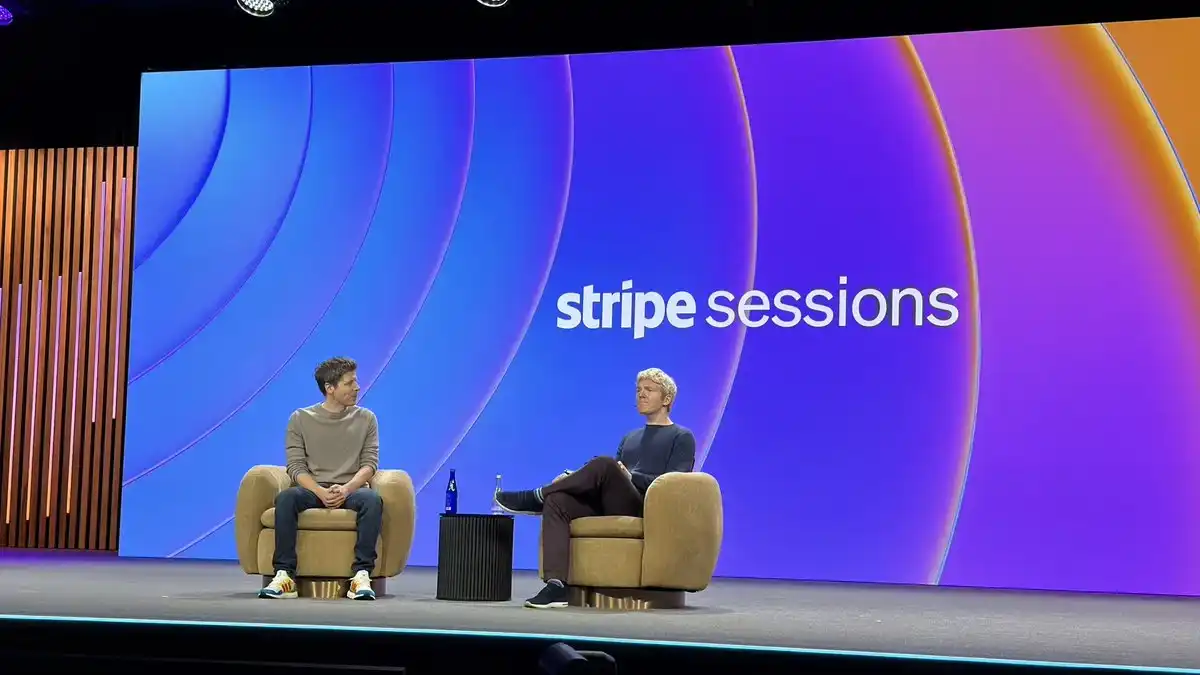
During the conversation, Altman dropped a series of heavyweight viewpoints:

  • We are indeed in the midst of some kind of takeoff. AI is developing very fast; it's a little different every week.

  • OpenAI has undergone three evolutions: from a research lab, to a product company, and now to a large-scale token factory.

  • The revenge of the "Ideas People" is here: I am now willing to invest in people who deeply understand user needs and have product insight but can't write code at all.

  • What excites me most about AI is not products, nor business models, but the potential to accelerate scientific discovery.

We Are in the Midst of Takeoff

When does the Singularity begin?

Patrick Collison offered an interesting perspective in his opening: treat this year as the first year of the Singularity.

In response, Sam Altman said, "We are indeed in the midst of some kind of takeoff." From the second half of last year to the beginning of this year, AI model capabilities broke through a certain tipping point—especially in the field of code generation.

"It's a little different every week, things are moving very fast."

A Shift in Perception

Currently, Codex (OpenAI's programming model branch) is having its "moment."

While the most dedicated users are still programmers, a large number of users without programming backgrounds are also flocking to it, trying to use it to handle all their daily computer-based work.

Altman believes people will undergo a more widespread cognitive shift: realizing how much of their time is wasted on computer drudgery.

Switching messaging apps, copying and pasting content, handling repetitive emails that could obviously be automated—these fragmented tasks are quietly eroding people's focus and work experience. When most people truly realize AI can do this "grunt work" for them, the feeling will be revolutionary.

Who's Really Using AI Well?

It Only Counts if the CEO Gets Hands-On

After observing many enterprise clients, Altman concluded: The companies most successfully applying AI often share a common characteristic—the CEO personally gets hands-on.

Not symbolically announcing "we will embrace AI," but actually building automated workflows themselves, then demanding the team follow. He gave the example of Shopify's CEO: he was one of the earliest hands-on CEOs Altman had seen, directly driving the entire company to integrate AI into all processes.

OpenAI is now trying a new experiment: sending an engineer to directly accompany a company's CEO, helping them automate as many workflows as possible.

If you can make a company's leadership truly feel the power of AI, that feeling will permeate the entire organization like a fractal.

OpenAI's Three Evolutions

Sam Altman candidly shared the management evolution inside OpenAI, which is essentially a microcosm of AI's industrialization path.

Three Stages of Transformation

The first stage, a pure research lab, aiming to figure out how to build AGI when everyone thought it was crazy.

The second stage, while continuing research, needed to learn how to be a product company.

The third stage, which is now being entered: on top of the previous two, building a large-scale token factory. Altman compared it to a new type of utility, like electricity; the world needs massive, cheap, accessible intelligence.

Vision of Low-Margin Infrastructure

Addressing doubts about "will AI giants monopolize everything," Altman used Stripe as a reference point: Stripe and its customers are highly aligned; the more Stripe earns, the better its customers do, a positive infrastructure relationship.

Altman hopes OpenAI can ultimately play a similar role: an intelligence infrastructure provider, even if perpetually low-margin, as long as it's big enough, fast enough, and deeply tied to the success of the world's distributed economy.

He also acknowledged that AI's switching costs are inherently low, making high margins difficult to sustain. The recent large-scale migration of users from competitors to Codex shows that friction for switching will become smaller in the AI era.

Compute Investment: The Most Expensive Infrastructure in History

Regarding massive compute investment, Altman stated: "This will be the most expensive infrastructure project in human history."

Efficiency gains per GPU have exceeded his expectations, but demand growth is even faster. As for how much compute needs to be built? "I don't have a good answer... in some sense, demand is almost unlimited."

OpenAI's Management Philosophy

OpenAI gathers some of the smartest and most unique individuals in the world. Altman revealed his secret is extreme conviction gambling:

  • Concentrate Resources: When training GPT-3, OpenAI threw almost all its compute resources into one project. At the time, people at DeepMind warned this would create a toxic competitive culture; OpenAI's response was: We have conviction, this is the right direction.

  • Shared Vision: Altman believes that even if team members have personal conflicts or clash, their shared belief in "Scale" allows them to sit together and solve problems.

"Directly Managing Hundreds" Communication Style

Asked about any unusual management habits, Altman mentioned: He communicates directly with hundreds of people in the company daily via Slack—not through assistants, but directly himself, with one or two short messages at a time.

This decentralized approach sometimes brings him very valuable information.

The New Paradigm for Startups

"Ideas People" Revenge

Altman developed a deep-seated bias during his YC days: disdain for entrepreneurs who "only have an idea and need a programmer to implement it," thinking it was as absurd as saying "I have a great song idea, just need someone who plays guitar to make it."

But now, "the revenge of the Ideas People has arrived."

Those who deeply understand user needs and have product insight but can't code at all can now quickly build products using AI tools. Altman said he is now very willing to invest in such people.

How to Invest Before the Singularity?

AGI might arrive in three to five years. Is the traditional ten-year investment horizon for venture capital still reasonable?

Altman's answer: Do everything on this timescale with a 'suspension of disbelief.' You can't do nothing just because "the Singularity is coming in three years, we can't see through it." You still have to act as if life will continue.

OpenAI has signed twenty-year power and land agreements but only has a clear grasp of its product roadmap for the next two years.—Make long-term infrastructure investments while staying clear about the near term; that's his answer.

AI is Reshaping Scientific Discovery

What excites Altman most about AI is not products, nor business models, but the potential to accelerate scientific discovery.

He believes this will be this technology's most profound contribution to improving human quality of life.

Tackling Complex Diseases

Through collaboration with the Arc Institute, OpenAI is supporting the use of large biological foundation models like Evo 2 to research complex diseases involving multiple genes, such as cancer and Alzheimer's.
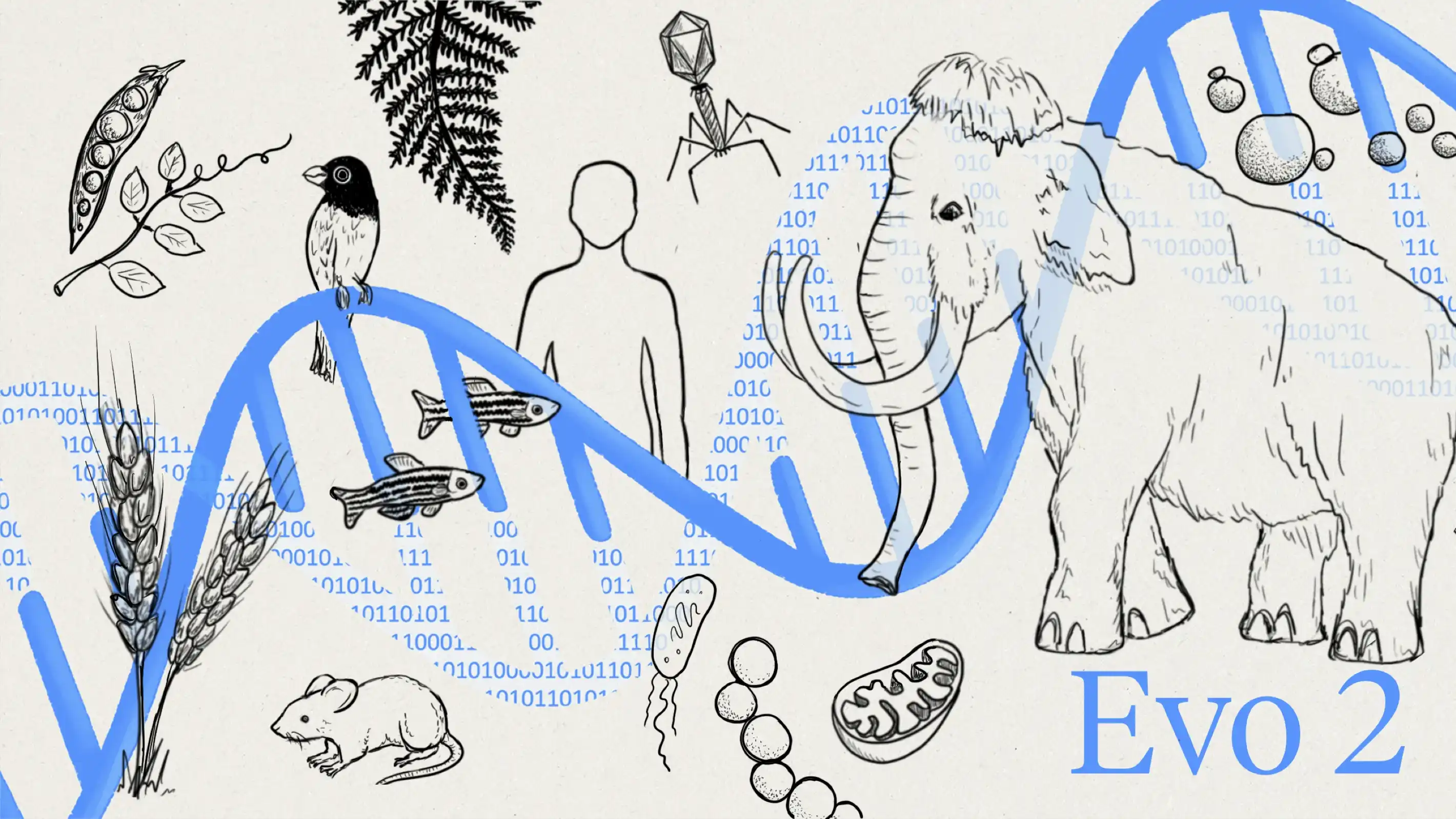
AI is shortening research cycles that originally took ten years down to one year.

Leaps in Energy and Materials

He specifically pointed out a severely underestimated field: materials science.

AI is exceptionally good at finding optimal solutions in vast combinatorial spaces, which will bring breakthroughs in catalyst development, energy efficiency improvements, etc. He expects very rapid progress here, changing all our lives in profound ways.

👉 On energy, Altman boldly predicted: Driven by the demands of AI compute, the first profitable fusion reactor could appear within five years.

Democratization: Sam Altman's Final Stand

At the end of the conversation, Altman discussed the most controversial decision in OpenAI's history: Iterative Deployment.

He recalled that many safety experts advocated locking AI in an "ivory tower," controlled by a select few, before distributing the results to the world.

"That idea made me very uncomfortable." Altman stated: Avoiding concentration of power, making this technology truly belong to the world, is extremely important.

"People will use AI in all sorts of ways, but I believe most people are good, and most will use tools to do amazing things. I think my most important contribution is pushing for this technology to be a democratized technology, accessible and buildable by everyone."


Domande pertinenti

QAccording to the article, what is Sam Altman's current stance on investing in founders who lack coding skills?

ASam Altman now expresses a strong willingness to invest in founders who have a deep understanding of user needs and product insight but completely lack coding skills, marking a shift from his earlier bias at Y Combinator. He calls this the 'revenge of the idea people.'

QHow does Sam Altman characterize the current state of AI development in the conversation?

ASam Altman states that 'we are definitely in some kind of takeoff,' with AI developing very rapidly and feeling different week to week, especially after a critical breakthrough in model capabilities from late last year to early this year.

QWhat are the three evolutionary phases that OpenAI has gone through, as described by Sam Altman?

AThe three phases are: 1) A pure research institution focused on figuring out how to build AGI. 2) A phase of learning to be a product company while continuing research. 3) The current phase of building a 'large-scale token factory' or a new type of utility providing abundant, cheap, and accessible intelligence.

QWhat does Sam Altman identify as the most exciting potential of AI, beyond products and business models?

AHe is most excited about AI's potential to accelerate scientific discovery, which he believes will be the technology's most profound contribution to human quality of life, citing progress in complex diseases and material science.

QWhat is the controversial principle that Sam Altman cites as his most important contribution regarding AI's development?

AHe cites 'Iterative Deployment'—the principle of democratizing AI technology by making it widely available for people to use and build upon, rather than keeping it locked in an 'ivory tower' controlled by a small elite, as his most important contribution.

Letture associate

TechFlow Intelligence Bureau: Chip Stocks Lose Trillions in a Single Day, Bitcoin Falls Below $60,000, US-Iran Conflict Escalates

**Daily Tech & Markets Roundup: AI Advances, Market Turmoil, and Geopolitical Tensions** **AI / LLMs**: Anthropic's internal report on AI self-improvement sparked serious discussions about Recursive Self-Improvement (RSI). Meanwhile, debate continues on AI coding tools after Claude was accused of introducing bugs into the rsync codebase. In positive news, DeepSeek V4 Flash impressed in local deployment tests, and GitHub Copilot now supports custom endpoints for local models. A surprising research turn suggests removing chain-of-thought prompting can sometimes improve LLM performance. **Crypto / Web3**: Bitcoin plunged below $60,000, with its RSI hitting levels last seen during the COVID-19 crash, driven by strong U.S. jobs data reviving interest rate hike fears. Discussions highlight Ethereum DeFi's continued lack of a smooth consumer payment layer. **Chips / Hardware**: Chip stocks suffered a massive sell-off, with the Philadelphia Semiconductor Index posting its worst single-day drop in six years, erasing over a trillion dollars in value. Marvell, Micron, AMD, and Intel were among the biggest losers. **Tech Companies**: A leaked Microsoft document revealing goals to make Copilot "addictive" drew criticism. LinkedIn founder Reid Hoffman left Microsoft's board to focus full-time on his AI agent startup, Manus. Google was revealed to be paying SpaceX $920 million monthly for AI training compute. **Markets & Macro**: A blowout U.S. jobs report (172k vs. 80k expected) crushed hopes for near-term rate cuts, sending Treasury yields soaring and triggering a broad market sell-off. CEOs from Kraft, McDonald's, and Whirlpool simultaneously warned U.S. consumers are exhausting their savings. **Geopolitics**: U.S.-Iran tensions escalated with missile/drone interceptions and U.S. strikes on Iranian radar sites, keeping the critical Strait of Hormuz largely closed since late February and posing ongoing oil supply risks. **The Bottom Line**: The strong jobs data acted as a single trigger for correlated sell-offs across equities, crypto, and chips. Underlying the volatility is a stark contradiction between robust employment data and warnings of consumer weakness, alongside geopolitical risks that could reignite inflation, leaving markets to price in a fraught macro outlook with no clear "soft landing" path.

marsbit3 h fa

TechFlow Intelligence Bureau: Chip Stocks Lose Trillions in a Single Day, Bitcoin Falls Below $60,000, US-Iran Conflict Escalates

marsbit3 h fa

It Took Me a Year to See the Bitter Truth About Agent Payments

After a year building infrastructure for the Agent economy, engaging with major players like Stripe, Visa, and Coinbase, the author shares a sobering analysis of the current state of Agent payments. The core finding is a stark lack of genuine, immediate demand across most envisioned use cases. The article breaks down four key market segments: 1. **Agent-to-Merchant (Consumer Shopping):** For most product categories (e.g., clothing, electronics), conversational AI shopping is a step backwards from visual e-commerce interfaces. While agents excel at understanding needs, they can't replace side-by-side product comparison. Real merchant interest is defensive "Agent Engine Optimization," not driven by current customer demand. Potential exists for high-frequency, low-decision purchases (like food delivery) or navigating complex store UIs, but these require massive B2C distribution channels dominated by giants like Amazon. 2. **Agent-to-API (Developer Services):** Developers already have subscriptions and billing relationships for APIs (compute, data). Prepaid balances solve micro-payment issues for low transaction volumes. A deeper structural problem is that major SaaS vendors' business models rely on enterprise contracts, resisting granular pay-per-call pricing. While protocols like MPP and x402 serve the long tail of niche services, this market is small and developers are historically low-willingness-to-pay. 3. **Agent-to-Agent:** This remains largely theoretical with minimal transaction volume. While it represents a long-term bet on a fundamentally new transaction infrastructure (sub-second, micro-penny to million-dollar, multi-party settlements), it does not constitute a present market. 4. **Agent-to-Finance:** This is the only category with existing, paying demand. Integrating AI into financial workflows (trading, portfolio management) is a natural evolution and enables new capabilities like autonomous rebalancing. However, competition favors established, regulated institutions. The "real problem" is not moving money between agents, but the broader challenge of **coordination**—orchestrating work between agents and humans, verifying outcomes, and settling results. Payment is just one component of settlement, which is itself part of coordination. Companies that solve the coordination layer will subsume payment, not the other way around. While well-funded incumbents build defensively for a long-term future, startups must find where the market is today—which, for the author's team, lies outside these four categories in an area of real, growing, and underserved activity.

marsbit4 h fa

It Took Me a Year to See the Bitter Truth About Agent Payments

marsbit4 h fa

It Took Me a Year to See the Hard Truth About Agent Payments

**Title: It Took Me a Year to See the Hard Truth About Agent Payments** Over the past year, I've worked on infrastructure for the Agent economy, engaging with major players like Stripe, Visa, Coinbase, and numerous startups. The findings reveal a stark reality: genuine, widespread demand for Agent-based payments does not yet exist. **Key Observations:** * **Agent-to-Merchant (Shopping):** The user experience for AI shopping often falls short, especially for visual product discovery. While AI excels at understanding needs, conversational interfaces can't yet replace browsing and comparing multiple products visually. Current merchant interest is largely defensive ("Agent Engine Optimization") for a future that hasn't arrived. High-frequency, low-friction purchases (like food delivery) are potential fits, but lack open APIs and face high AI inference costs. Simpler, more affordable, or cross-language interactions for complex UIs are a niche opportunity but require massive consumer distribution to scale. * **Agent-to-API (Developer Tools):** Developer payment needs for APIs (computing, data, models) are already met through subscriptions and prepaid credits. The core challenge is not payment friction but supplier economics: most large SaaS providers prefer enterprise contracts over micropayments for API calls. Protocols like MPP and x402 suit the long-tail of smaller services but cater to a developer market historically reluctant to pay for these tools. Major infrastructure needs at the top of the stack are already being addressed. * **Agent-to-Agent (Machine Commerce):** This is a long-term vision with almost no current transaction volume. While a future with high-speed, high-frequency, multi-party machine-to-machine transactions would require novel infrastructure, it remains theoretical. The market is not here yet. * **Agent-to-Finance:** This is the only category with clear, present demand. Financial professionals and DeFi users already pay for tools, and AI augmentation is a natural evolution. Autonomous AI agents can enable entirely new financial strategies. However, competition is fierce from established, regulated incumbents who can more easily layer AI onto their existing products. **The Core Insight:** Companies, especially giants with long time horizons, are building defensively for a potential future of mass machine commerce. For them, early investment is a low-cost hedge. For startups, the current market reality is different. The primary challenge isn't just moving money between agents (payments). The larger, unsolved problem is **orchestration** – coordinating work between agents and humans, verifying outcomes, and then settling. Payment is just a part of settlement, which is just a part of orchestration. Companies that solve the orchestration problem will subsume payments, not the other way around. After a year of building, we see the real, growing, and underserved market opportunity lies in this broader domain of orchestration.

链捕手4 h fa

It Took Me a Year to See the Hard Truth About Agent Payments

链捕手4 h fa

Trading

Spot
Futures

Articoli Popolari

Come comprare ERA

Benvenuto in HTX.com! Abbiamo reso l'acquisto di Caldera (ERA) semplice e conveniente. Segui la nostra guida passo passo per intraprendere il tuo viaggio nel mondo delle criptovalute.Step 1: Crea il tuo Account HTXUsa la tua email o numero di telefono per registrarti il tuo account gratuito su HTX. Vivi un'esperienza facile e sblocca tutte le funzionalità,Crea il mio accountStep 2: Vai in Acquista crypto e seleziona il tuo metodo di pagamentoCarta di credito/debito: utilizza la tua Visa o Mastercard per acquistare immediatamente CalderaERA.Bilancio: Usa i fondi dal bilancio del tuo account HTX per fare trading senza problemi.Terze parti: abbiamo aggiunto metodi di pagamento molto utilizzati come Google Pay e Apple Pay per maggiore comodità.P2P: Fai trading direttamente con altri utenti HTX.Over-the-Counter (OTC): Offriamo servizi su misura e tassi di cambio competitivi per i trader.Step 3: Conserva Caldera (ERA)Dopo aver acquistato Caldera (ERA), conserva nel tuo account HTX. In alternativa, puoi inviare tramite trasferimento blockchain o scambiare per altre criptovalute.Step 4: Scambia Caldera (ERA)Scambia facilmente Caldera (ERA) nel mercato spot di HTX. Accedi al tuo account, seleziona la tua coppia di trading, esegui le tue operazioni e monitora in tempo reale. Offriamo un'esperienza user-friendly sia per chi ha appena iniziato che per i trader più esperti.

347 Totale visualizzazioniPubblicato il 2025.07.17Aggiornato il 2026.06.02

Come comprare ERA

Discussioni

Benvenuto nella Community HTX. Qui puoi rimanere informato sugli ultimi sviluppi della piattaforma e accedere ad approfondimenti esperti sul mercato. Le opinioni degli utenti sul prezzo di ERA ERA sono presentate come di seguito.

活动图片












