Author: Nancy, PANews
Running for three years, only to end up with a "witch verdict."
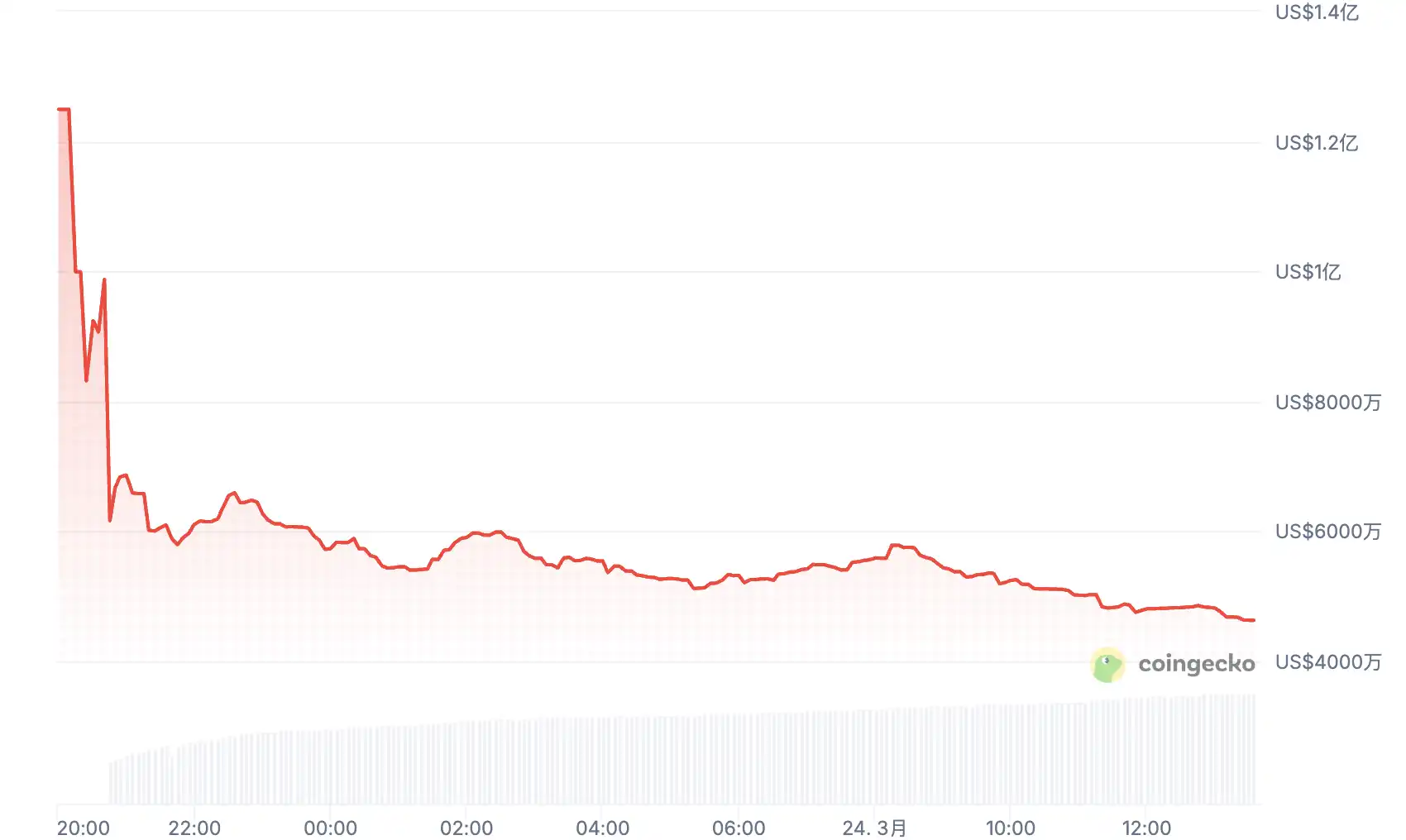
On March 23, the long-awaited trading platform Backpack finally launched its TGE. In the current deep bear market, Backpack did not bring any pleasant surprises. The token price plummeted upon listing, and as of now, the fully diluted market cap is less than $200 million. What shocked the community was the large-scale anti-sybil (anti-farming) actions. Key community members complained in group chats that both small-scale long-term interactive散户 and large players who dominated trading volumes were included in the sybil list. The rules were never disclosed, yet the judgment was unilaterally enforced. Backpack faced a severe trust crisis and had to urgently open an appeal channel on March 24.
"In a bull market, you're farming others' airdrops; in a bear market, you're farming the project's airdrops." Someone hit the nail on the head regarding the core issue. With consecutive airdrops from Opinion and Backpack leaving many farming communities empty-handed, it indirectly signaled the end of the airdrop farming track. Some veteran farmers even announced their retirement.
KOLs Also Fell Victim to Anti-Sybil Measures, Chinese Community Hit Hardest
The promise of a "pure community distribution" ultimately turned into a large-scale anti-sybil event.
Yesterday, Backpack finally opened the BP token claim channel. According to the previously announced rules, 25% of the total token supply (approximately 250 million BP) in this TGE would be allocated entirely to the community, with 24% going to points holders and 1% to Mad Lads NFT holders. The official emphasized that aside from this portion, which fully belonged to the community, no team or investor shares were involved in the initial circulation.
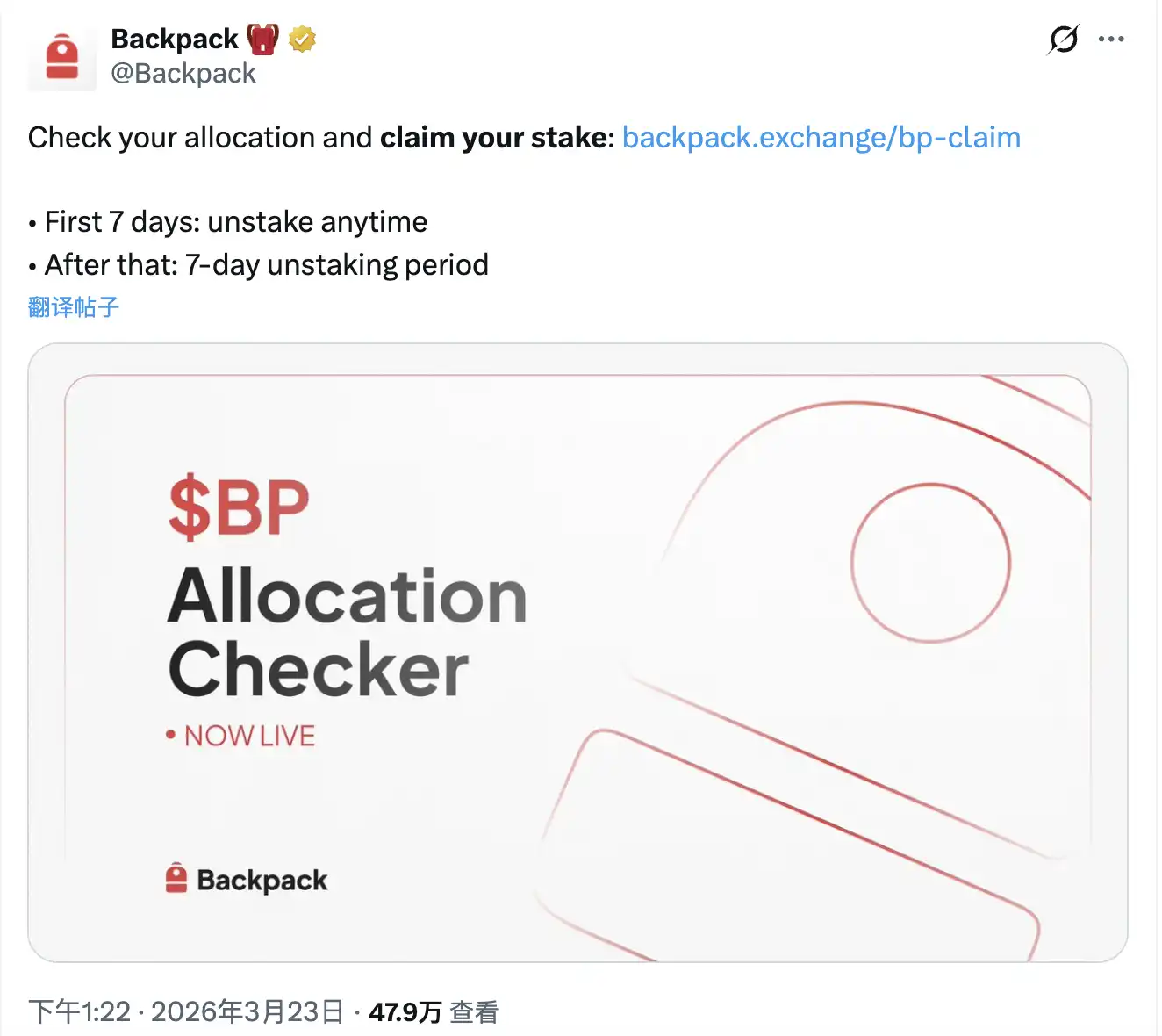
However, when the claim channel opened, it dealt a heavy blow to community users. A large number of users found their points drastically reduced or even reset to zero, ultimately receiving only a symbolic participation reward or nothing at all. What made users even more dissatisfied was that those affected were not marginal accounts but core participants, including long-term active single-wallet users, high-point farmers, and Mad Lads NFT holders.
Anger quickly spread throughout the community, especially among Chinese users, who became the hardest hit in this sybil cleanup. Complaints from major players and KOLs flooded the community: "$4 billion trading volume, 100% sybil rate," "Over $1.5 billion trading volume, 800+ hours spent, over $300,000 in fees, but airdrop halved," "330,000 points exchanged for 2,000 tokens," "Number one in global trading volume, 170,000 points only got 20,000 tokens"... Behind these numbers were real financial investments and time costs, but in the final distribution, they were uniformly classified as sybils and directly disqualified.
What amplified the dissatisfaction was not just the disparity in rewards but the negation of their contributions. Among these users, some had long maintained communication with the project team, some consistently produced content to endorse the project, and others actively participated in community growth and ecosystem expansion. However, these efforts were not factored into any weighting considerations and were instead erased.
Even more controversial was the collective punishment approach. Some community leaders responsible for growth, who recruited new users and expanded the ecosystem, were not only cleaned up but also saw their invited genuine users affected. This punishment mechanism turned the growth logic originally reliant on social裂变 into a source of risk.
Moreover, the rapid decline of the BP token after listing further magnified the overall losses and exacerbated the negative market sentiment.
All controversies pointed to the lack of transparency in Backpack's rules.
Backpack's sybil判定 criteria were never publicly disclosed. Instead, the risk control mechanisms were continuously upgraded during the process. Just before the TGE, Backpack not only required all accounts participating in the points activity to complete KYC but also conducted a large-scale review under the pretext of "purifying the environment and rewarding real users." Ultimately, over 50 million points were identified as coming from non-genuine behavior and were uniformly reclaimed for redistribution. However, for users, what constituted non-genuine behavior, the basis for judgment, and the boundaries were never clearly explained.
Returning Points and Launching Token Buybacks: Can Trust Be Restored?
Under public pressure, Backpack rushed to "put out the fire."
Backpack team member Claire tweeted in response that the Backpack Chinese team had激烈 discussed with the European and American teams overnight. The Chinese team did not want to see the interests of previously supportive users affected and had in-depth communication with the负责人 in charge of anti-sybil execution.
As an experienced compliance professional, Claire stated that in the logic of the anti-sybil team, "one person, one account" was an absolute bottom line. Under this standard, compared to other regions, more Chinese-speaking users were indeed affected, which was naturally due to different user habits. European and American users' strict adherence to rules and sensitivity to KYC information made multi-account behavior itself beyond their认知范围. In subsequent handling, Backpack founder Armani and the core team planned to immediately open an appeal channel, establish clear rules, and protect user interests to the greatest extent.
Subsequently, Backpack's Chinese account announced the opening of a manual appeal channel, allowing users to submit materials for review. It also announced adherence to the "3-account rule": if the number of accounts operated on the same device was three or fewer and were judged as sybils, upon verification through manual appeal, 50% or more of the points would be returned. Additionally, the Backpack team planned to launch a special program in the coming days to conduct token buybacks on the secondary market for定向 compensation to these eligible users.
However, for those users who had invested wholeheartedly, these remedies might compensate for some losses, but once trust is broken, it is difficult to rebuild easily.
Locking Tokens for a Year in Exchange for Equity? Backpack Bets on the IPO Narrative
From past scripts, most crypto projects often experience high openings followed by declines after token issuance, inevitably fading into obscurity. Against the backdrop of the crypto bear market, Backpack chose to bet on the IPO narrative before officially issuing tokens to boost market confidence.
In February this year, Backpack CEO Armani Ferrante stated that the company followed a core principle in its token economic model: preventing insiders from dumping on retail investors. Before the product achieves "escape velocity," no founder, executive, employee, or venture capitalist should obtain wealth through tokens. For Backpack, the answer to "escape velocity" was clear: the company planned to conduct an IPO in the United States.
This means token value capture will be re-anchored and closely tied to the company's overall valuation. On this note, according to a recent Axios report, informed sources said Backpack is negotiating a new round of financing, discussing raising $50 million in a new round at a pre-money valuation of $1 billion.
Regarding token unlocking, Backpack also showed "sincerity." Aside from 37.5% of the tokens being unlocked gradually according to key milestones before the IPO, Backpack will lock the remaining 37.5% in the company treasury until at least one year after the IPO, with team members holding only company equity.
Additionally, Backpack announced it would allocate 20% of equity, offering users who stake BP tokens for at least one year the opportunity to exchange tokens for company equity at a fixed ratio. Not long ago, Backpack also launched an on-chain IPO new share allocation function, allowing users to directly obtain IPO shares through the platform, and opened a waitlist registration.
However, specific details of the token-to-equity exchange remain undisclosed, including the form of exchange, scope of rights, and timeline. This has also raised community concerns, viewing it as a potential new round of PUA—locking users in before slowly fulfilling promises, using equity exchange to buy more survival time for the project.
Armani Ferrante also revealed that the上市 could happen soon, or not so soon, or might not happen at all. But no matter what, he and the team would go all out.