Reviewing Past Bitcoin Bull Markets: Why the Four-Year Cycle Occurs and Is It Over?

marsbitPubblicato 2025-12-16Pubblicato ultima volta 2025-12-16

Introduzione

The article examines Bitcoin's four-year market cycles, traditionally aligned with its halving events, and questions whether this pattern still holds. It outlines the typical cycle phases: accumulation (low volatility, long-term buying), pre-halving bullish anticipation, a parabolic bull run with retail FOMO and leverage, and a sharp correction leading to a bear market. Bitcoin halvings, which reduce mining rewards by half every four years, are highlighted as a core mechanism for creating scarcity, similar to precious metals. Past cycles (2013, 2017, 2021) are reviewed, each driven by distinct catalysts (e.g., Mt. Gox collapse, ICO boom, COVID-19 stimulus) and ending with crashes exceeding 80%. Reasons for the cycle include the stock-to-flow model (measuring scarcity), market psychology/self-fulfilling prophecies, and global liquidity conditions. The current 2025 cycle is noted for unprecedented institutional involvement via ETFs and corporate treasuries, causing Bitcoin to hit new highs before the 2024 halving with less retail participation. Arguments for the cycle's end cite increased adoption by disciplined institutions (reducing volatility), Bitcoin's growing correlation with macro factors like Fed policy, and the diminishing impact of each halving. Key indicators to watch for cycle validation include post-halving price surges, large leverage unwinds, and retail altcoin speculation. The conclusion states that while historical patterns are evident, Bitcoin's evolution ...

Author: Arkham

Compiled by: Felix, PANews

Many market observers have described multi-year "cycles" in Bitcoin's price that coincide with Bitcoin's halving events. These patterns, collectively known as the "four-year cycle," have become significant psychological events influencing the mindset of crypto observers and traders. This article will explore the various stages of the four-year cycle and the circumstances of past Bitcoin cycles. Furthermore, it will discuss whether the Bitcoin cycle still exists.

The Typical Four-Year Cycle

Market observers believe the standard Bitcoin cycle begins with what is often called the "accumulation" phase. They speculate that this phase starts with the crash following the peak of the previous cycle. During this period, price volatility and on-chain activity are relatively low, and market sentiment tends to be neutral or negative. It's called the accumulation phase because long-term Bitcoin holders begin buying in significant quantities. Consequently, the price characteristic of this period is a gradual recovery.
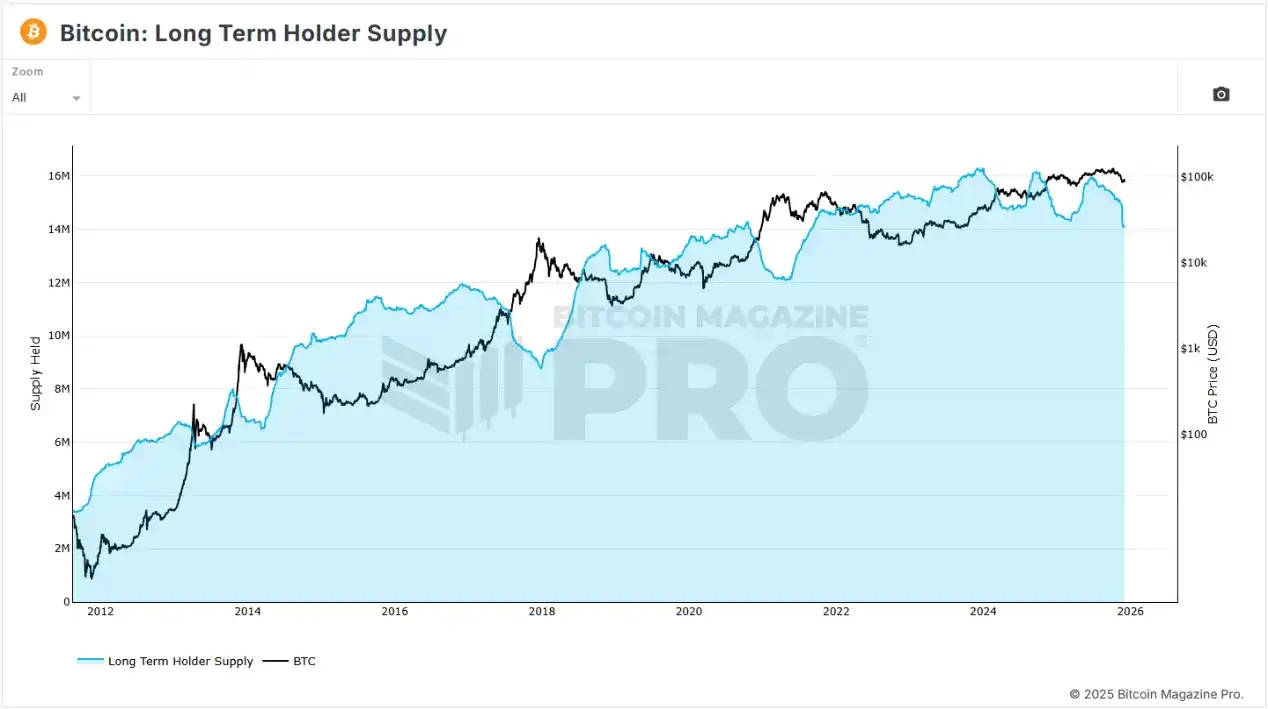
Bitcoin Price vs. Long-Term Holder Supply

On-chain analysis shows that some investors are steadily accumulating, but the majority of retail investors, still wary from the previous crash, remain uninterested in buying Bitcoin.

The accumulation phase typically lasts 12 to 15 months, after which the market cycle usually enters a new bull market. This often occurs before the halving, as the prices of Bitcoin and other crypto assets begin to rise in anticipation of the event. The market starts pricing in the positive impact of reduced future supply, and market sentiment also shifts from neutral to optimistic. Liquidity begins to recover, and media attention increases accordingly.
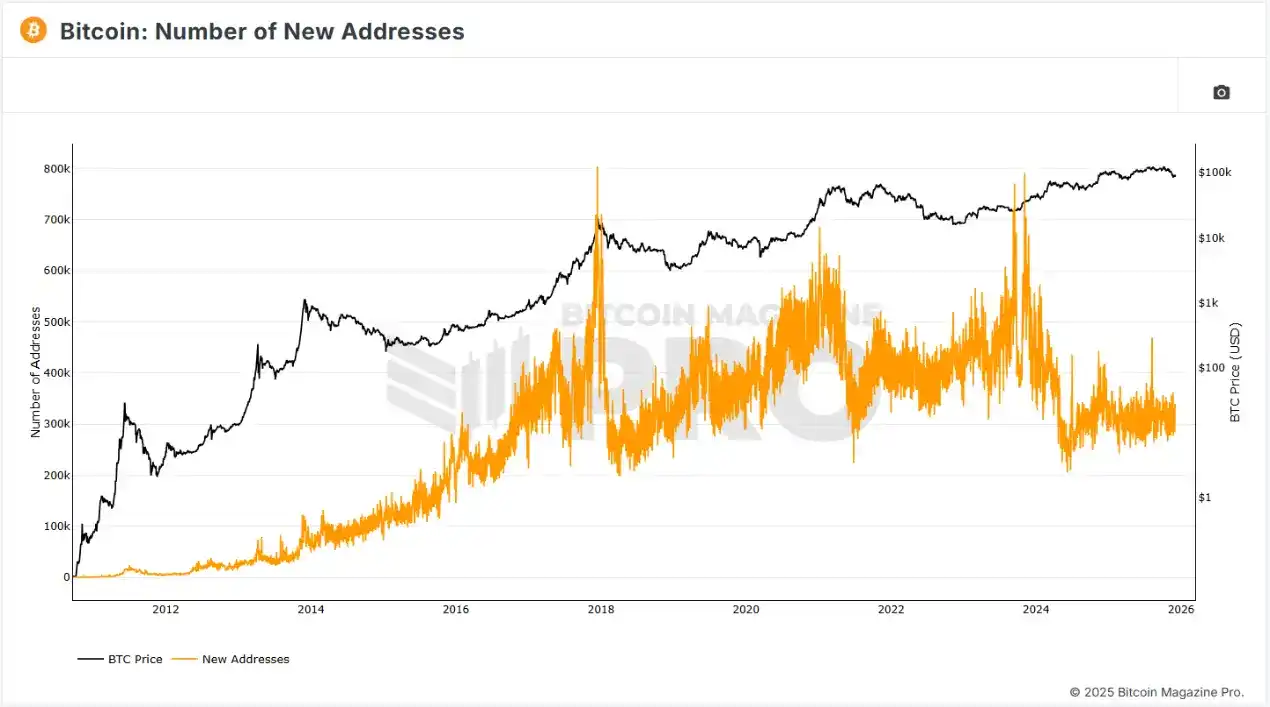
Bitcoin Price vs. New Addresses

Once the halving occurs, the bull market often experiences parabolic growth, with prices beginning to climb, sometimes slowly, sometimes explosively. Retail investors flood into the market, and traders start deploying large amounts of capital. Historically, this is when new all-time highs are often set, as a new wave of investors enters the market. Some investors increase leverage to chase the highs, leading to even more violent price fluctuations.

Past bull markets have lasted approximately 12-18 months, usually ending with a sharp price decline. Leveraged traders get liquidated, altcoins fall even more sharply, sentiment turns negative, and a bear market begins. In this phase of the cycle, many participants sell at a loss and cash out with their remaining funds. Eventually, the dust settles, and a market bottom slowly forms. Overall market activity and excitement have significantly decreased since the peak, but determined builders continue forward, quietly developing new products and innovations.

The Halving

To fully understand the theory of the four-year Bitcoin cycle, one must first thoroughly understand the concept of the halving and its impact on Bitcoin's price.

The Bitcoin halving is a significant event that halves the mining reward (paid in BTC) for adding new blocks to the Bitcoin blockchain. This occurs every 210,000 blocks, approximately every four years. In 2009, the reward for adding a new block was 50 Bitcoin per block. It has since been halved four times. The 2024 halving set the current new block mining reward at 3.125 Bitcoin. Assuming the four-year rhythm continues, halvings will persist until the total supply reaches its cap of 21 million coins, around the year 2140.

The halving is Satoshi Nakamoto's way of ensuring Bitcoin's scarcity. Bitcoin was born during the 2008 financial crisis, partly in response to central bank bailouts and the inflation caused by fiat money printing. Most governments and their associated fiat currencies constantly adjust monetary policy, making it difficult for holders to build long-term confidence in the value of their currency.

Bitcoin's halving mechanism mimics gold, making it scarcer. As gold deposits are depleted, mining gold becomes progressively harder, and Bitcoin achieves this mathematically. As the new supply of Bitcoin decreases, its scarcity increases. Historically, Bitcoin's price has typically risen following each halving, thanks to supply and demand dynamics. Therefore, some proponents argue that the transparency and consistency of the halving make Bitcoin an asset with strong store-of-value capabilities.

Review of Past Cycles

2013

Bitcoin was born in 2008, and 2013 marked its first cycle. It was primarily driven by the tech community of the time, such as internet forums and cryptography meetups. This cycle also garnered some early media attention, with reports on topics like the first real-world transaction using Bitcoin (buying two pizzas for 10,000 BTC) and "Is Bitcoin digital gold?".

In this cycle, Mt. Gox was the largest Bitcoin exchange. In 2014, Mt. Gox handled over 70% of global Bitcoin transactions. However, in 2014, Mt. Gox suspended trading and shut down its website, later revealing that 850,000 Bitcoin were missing. Since Mt. Gox was the primary source of Bitcoin liquidity, this event led to a significant drop in market trust in Bitcoin, causing an 85% price decline and initiating a bear market.

2017
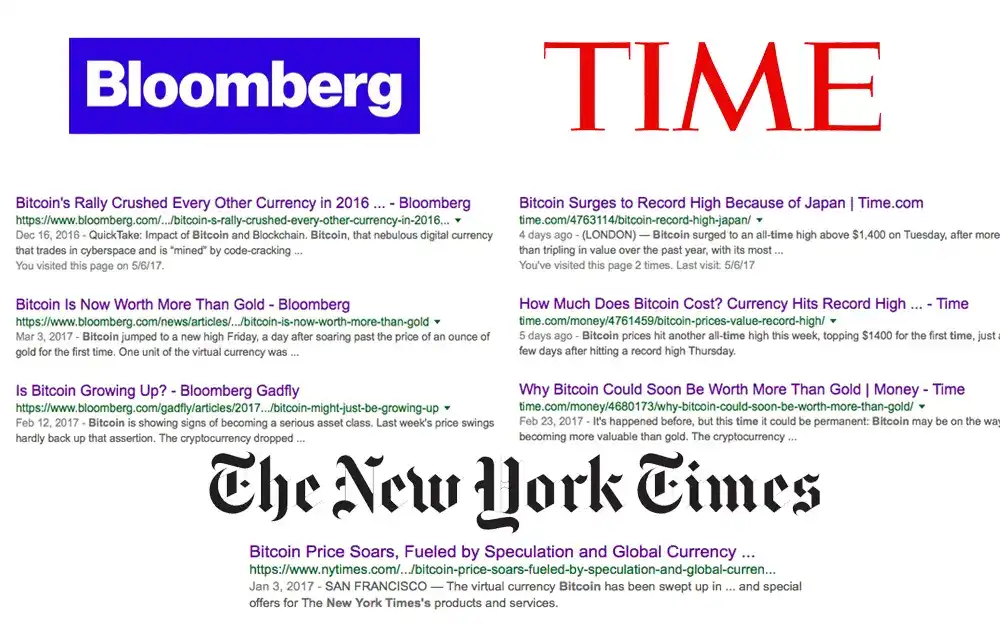
2017 was the cycle where Bitcoin gained popularity among retail investors. With the launch of Ethereum in 2015, smart contracts and their revolutionary potential entered the public consciousness. Ethereum's price skyrocketed from $10 to $1400 during this cycle. This period was also notorious for the ICO frenzy, with thousands of ERC-20 tokens launched, and investors pouring money into projects based solely on whitepapers. Bitcoin's price also exploded due to the influx of new investors, surging from $200 to $20,000 in two and a half years. The industry was frequently covered by mainstream media (see image above).

Ultimately, the ICO boom that drove Bitcoin's price up dramatically also became the catalyst for the crash. In ICOs, investors exchanged their Ethereum or Bitcoin for a new project's cryptocurrency. After accumulating large amounts of Ethereum, many projects began selling these tokens for cash, creating selling pressure. The U.S. SEC also began cracking down heavily on ICOs, labeling them "unregistered securities offerings" and filing lawsuits against numerous projects, many of which were Ponzi schemes and scams. In this environment, over-leveraged investors either panic-sold or were forced to sell as prices began to plummet, causing Bitcoin's price to crash by 84% to $3,200.

2021

The 2021 Bitcoin cycle coincided with the money printing during the COVID-19 pandemic. Governments worldwide sought to restart economies stalled by the pandemic, and fiscal stimulus was their solution. The surge in global liquidity pushed Bitcoin to new all-time highs in 2021. Another characteristic of this cycle was Bitcoin's transformation from an "internet currency" to a more significant "macro asset." Companies like Strategy and Tesla purchased billions of dollars worth of Bitcoin, while payment apps like PayPal and CashApp began supporting Bitcoin transactions. The 2020 DeFi summer and the 2021 NFT craze attracted massive retail participation in this cycle. Both retail and institutional investors jointly drove up cryptocurrency prices, with Bitcoin reaching a high of $69,000.

The end of this Bitcoin cycle stemmed from the collapse of several prominent protocols and companies within the industry. First, the depegging of the Luna stablecoin UST wiped out $60 billion in a short period. Companies and institutions like Voyager, Celsius, BlockFi, and Three Arrows Capital, with direct or indirect exposure to Luna, bets on market direction, and interconnections, ultimately declared bankruptcy. BlockFi subsequently restructured and received a line of credit from FTX. Finally, with the collapse of FTX, BlockFi also declared bankruptcy.

FTX and its affiliated trading firm Alameda were found to have engaged in massive fraud, forcing asset liquidation to repay users. The U.S. federal government also ended its stimulative monetary policy and began raising interest rates significantly, draining market liquidity. All these events contributed to a sharp drop in Bitcoin's price, which fell to $15,500 at the bear market bottom.

2025

The current 2025 cycle has witnessed increased institutional adoption, with major traditional financial institutions entering the space. The approval of spot Bitcoin ETFs in January 2024 allowed companies like BlackRock, Fidelity, and VanEck to offer Bitcoin as a standard investment product. Many companies have also adopted Strategy's Digital Asset Treasury (DAT) model, incorporating cryptocurrencies into their balance sheets. This cycle is unique in that Bitcoin reached a new high of $73,000 before the halving in April 2024. Additionally, institutions have become the primary drivers of price, with retail participation not yet reaching the levels of previous cycles.

Why Do Cycles Occur?

Stock-to-Flow Ratio

There are several potential reasons for the occurrence of the four-year Bitcoin cycle. A common explanation relates to the Stock-to-Flow ratio (S2F), a model often used to measure the scarcity of commodities like gold and silver.
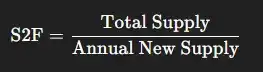
This model compares stock (existing supply) and flow (new annual supply). The higher the ratio, the scarcer the commodity. The S2F is applied to Bitcoin because of its fixed total supply and the fixed schedule of mining rewards. With each halving, Bitcoin's stock-to-flow ratio doubles, as the new supply is halved. Currently, Bitcoin's stock-to-flow ratio is approximately 110, while gold's is about 60, making Bitcoin the scarcer asset under the stock-to-flow model.

Psychological Factors

Another simple explanation involves psychology and self-fulfilling prophecies. Bitcoin's price is heavily influenced by narratives, herd behavior, and expectations about the future. Because Bitcoin lacks intrinsic value like traditional financial assets, its value depends primarily on people's expectations of its future worth. Consequently, Bitcoin's price is highly reflexive and more sensitive to halving expectations, rumors, and narratives. Because the four-year Bitcoin cycle has played out consecutively several times, investors are more inclined to trade Bitcoin based on the movements of past cycles, creating a self-fulfilling prophecy.

Liquidity

Others argue that Bitcoin's cycles are primarily determined by global liquidity. BitMEX founder Arthur Hayes, in his article "Long Live The King," pointed out that Bitcoin's four-year cycle is directly related to global liquidity and highlighted the influence of the US dollar and the Chinese yuan. Hayes explained that the 2013 peak was caused by money printing following the 2008 financial crisis, the 2017 peak was caused by the depreciation of the Japanese yen against the US dollar, and the 2021 peak was caused by post-COVID money printing.

Recently, surrounding topics like the end of Quantitative Tightening (QT, where the Fed reduces the number of assets on its balance sheet, thus reducing liquidity), the restart of Quantitative Easing policies, and falling interest rates, some claim that the 2025 Bitcoin cycle will not follow the previous pattern.

Retail vs. Institutions

The holdings of retail and institutional investors also play a significant role in driving Bitcoin cycles. Institutional investors are typically more disciplined, have longer investment horizons, and therefore buy during periods of fear, forming market bottoms. Retail investors, on the other hand, are more emotional and prone to buying due to FOMO (Fear Of Missing Out). Therefore, retail investors are more likely to chase price momentum and use leverage. Retail investors often create greater volatility within the cycle, especially in the later stages.

Why Some Say the Cycle is Over

There are several reasons why people claim the Bitcoin cycle is obsolete. A major reason is increased institutional participation through ETFs, corporate treasuries, hedge funds, etc. These financial entities behave differently from retail investors, buying on fixed schedules, using reasonable leverage, and managing risk prudently. This behavior dampens volatility, thereby smoothing out cyclical fluctuations.

Another potential reason is that the cryptocurrency market has grown significantly compared to earlier cycles. Bitcoin is increasingly correlated with macroeconomic factors like interest rates and Fed policy, weakening the impact of the halving on Bitcoin's price. The halving occurs every four years, whereas Fed policy has no similar fixed schedule. Furthermore, the importance of the halving itself is diminishing as its effect on the block reward decreases. The first halving reduced the reward from 50 BTC to 25 BTC, while the most recent halving only reduced it from 6.25 BTC to 3.125 BTC.

How to Tell if the Cycle is Over

Paying close attention to the development of the current cycle can help better determine whether the four-year cycle has become a thing of the past. Some key signs that might indicate this:

  • Past cycles typically experienced a price surge after the halving, generally within 12-18 months post-halving.
  • Past cycles ultimately ended with massive leverage wipeouts and cascading liquidations, leading to drops exceeding 70%.
  • If Bitcoin's price begins to perfectly align with changes in global liquidity, then Bitcoin has become a macro asset, not one based on a halving cycle.
  • Past cycles saw a surge in retail participation in the later stages, with altcoins experiencing parabolic rises. A lack of retail participation suggests the cycle is primarily driven by institutional buying, which could lead to reduced volatility and a flattened cycle.

Conclusion

Bitcoin has long followed the pattern of a four-year cycle. It slowly recovers from a bear market, enters the halving phase, followed by a sustained price surge, which then rapidly declines as leveraged traders suffer losses. Historically, various factors have contributed to this phenomenon, ultimately forming the familiar four-year cycle we know today. Nonetheless, Bitcoin has steadily evolved, finally becoming the behemoth it is today with a market capitalization of $1.8 trillion. The emergence of institutional investors, ETFs, and sovereign wealth funds means market participants have changed significantly since the first cycle. Bitcoin appears to be increasingly sensitive to macroeconomic factors, but its price movements are still influenced by some traditional factors, such as psychology and mining economics.

It is still unclear whether Bitcoin's cycle has completely ended, but each cycle is unique, and future cycles could very well be drastically different from the past. Understanding the historical evolution of this asset and its participants is key to understanding future cycles, but ultimately, only time will tell whether this pattern continues to exist or becomes a relic of history.

Related reading: Has the Bitcoin Four-Year Cycle Failed?

Domande pertinenti

QWhat are the typical stages of the Bitcoin four-year cycle as described in the article?

AThe typical Bitcoin four-year cycle consists of an accumulation phase (lasting 12-15 months with low volatility and gradual recovery), a pre-halving bull run (driven by anticipation of reduced supply), a parabolic bull market post-halving (with high leverage and volatility), and a sharp decline ending in a bear market.

QHow does the Bitcoin halving event contribute to its scarcity and potential price impact?

AThe Bitcoin halving reduces the mining reward for new blocks by half approximately every four years, decreasing the rate of new Bitcoin issuance. This mimics scarcity similar to precious metals like gold, and historically, reduced supply coupled with demand has led to price increases.

QWhat were the key catalysts for the end of the 2017 and 2021 Bitcoin cycles?

AThe 2017 cycle ended due to ICO projects selling accumulated Ethereum and Bitcoin for cash, causing sell pressure, combined with regulatory crackdowns by the SEC. The 2021 cycle ended due to the collapse of Luna (UST), bankruptcies of major firms like Celsius and FTX, and tightening monetary policy by the U.S. Federal Reserve.

QWhy do some analysts believe the Bitcoin four-year cycle might be ending?

AIncreased institutional participation (e.g., ETFs, corporate treasuries) may reduce volatility and dampen cyclical patterns. Bitcoin's growing correlation with macroeconomic factors like global liquidity and Fed policy, rather than halving events, could also diminish the cycle's significance.

QWhat indicators could suggest that the four-year cycle is no longer relevant?

AKey indicators include the absence of a post-halving price surge within 12-18 months, lack of massive leverage-driven drawdowns (over 70% declines), perfect alignment with global liquidity changes instead of halving events, and insufficient retail participation (e.g., no parabolic altcoin rallies) in later cycle stages.

Letture associate

Trading

Spot
Futures

Articoli Popolari

Cosa è BITCOIN

Comprendere HarryPotterObamaSonic10Inu (ERC-20) e la sua posizione nel mondo delle criptovalute Negli ultimi anni, il mercato delle criptovalute ha assistito a un aumento della popolarità delle meme coin, catturando l'interesse non solo dei trader, ma anche di coloro che cercano coinvolgimento comunitario e valore di intrattenimento. Tra questi token unici c'è HarryPotterObamaSonic10Inu (ERC-20), un progetto intrigante che mescola riferimenti culturali nel tessuto delle criptovalute. Questo articolo esplora gli aspetti chiave di HarryPotterObamaSonic10Inu, analizzando i suoi meccanismi, l'etica guidata dalla comunità e il suo coinvolgimento con il panorama crittografico più ampio. Che cos'è HarryPotterObamaSonic10Inu (ERC-20)? Come suggerisce il suo nome, HarryPotterObamaSonic10Inu è una meme coin costruita sulla blockchain di Ethereum, classificata secondo lo standard ERC-20. A differenza delle criptovalute tradizionali che possono enfatizzare l'utilità pratica o il potenziale investimento, questo token prospera grazie al valore di intrattenimento e alla forza della sua comunità. Il progetto mira a creare un ambiente in cui gli utenti coinvolti possono riunirsi, condividere idee e partecipare ad attività ispirate a diversi fenomeni culturali. Una caratteristica notevole di HarryPotterObamaSonic10Inu è la zero tassa sulle transazioni. Questo elemento allettante tende a incoraggiare il trading e il coinvolgimento della comunità, privo di costi aggiuntivi che possono scoraggiare i trader di piccole dimensioni. L'offerta totale della moneta è fissata a un miliardo di token, un numero che segna la sua intenzione di mantenere una circolazione sostanziale all'interno della comunità. Creatore di HarryPotterObamaSonic10Inu (ERC-20) Le origini di HarryPotterObamaSonic10Inu sono avvolte in un certo mistero; i dettagli sul creatore rimangono sconosciuti. Lo sviluppo di questo token non presenta un team identificabile o un piano esplicito, cosa non rara nel settore delle meme coin. Invece, il progetto è emerso organicamente, con il suo progresso fortemente dipendente dall'entusiasmo e dalla partecipazione della sua comunità. Investitori di HarryPotterObamaSonic10Inu (ERC-20) Per quanto riguarda investimenti esterni e finanziamenti, HarryPotterObamaSonic10Inu rimane ambiguo. Il token non elenca alcuna fondazione di investimento conosciuta o un sostegno organizzativo significativo. Invece, la linfa vitale del progetto è la sua comunità di base, che informa la sua crescita e sostenibilità attraverso azioni collettive e coinvolgimento nello spazio crittografico. Come funziona HarryPotterObamaSonic10Inu (ERC-20)? In quanto meme coin, HarryPotterObamaSonic10Inu opera principalmente al di fuori delle strutture tradizionali che governano spesso il valore degli asset. Ci sono diversi aspetti distintivi che definiscono il funzionamento del progetto: Transazioni senza tasse: Senza costi fiscali sulle transazioni, gli utenti possono comprare e vendere liberamente il token senza preoccuparsi di costi nascosti. Coinvolgimento della comunità: Il progetto prospera sull'interazione della comunità, sfruttando le piattaforme social per creare entusiasmo e facilitare il coinvolgimento. Discussioni, condivisione di contenuti e coinvolgimento sono elementi cruciali che aiutano ad espandere la sua portata e a favorire la lealtà tra i sostenitori. Nessuna utilità pratica: Va notato che HarryPotterObamaSonic10Inu non offre un'utilità concreta all'interno dell'ecosistema finanziario. Piuttosto, è classificato come un token principalmente per attività di intrattenimento e comunitarie. Riferimento culturale: Il token incorpora astutamente elementi della cultura pop per attirare interesse, collegandosi a appassionati di meme e seguaci delle criptovalute. HarryPotterObamaSonic10Inu esemplifica come le meme coin operino in modo diverso rispetto ai progetti di criptovalute più tradizionali, entrando nel mercato come costrutti sociali innovativi piuttosto che come asset utilitari. Cronologia di HarryPotterObamaSonic10Inu (ERC-20) La storia di HarryPotterObamaSonic10Inu è segnata da diversi traguardi notevoli: Creazione: Il token è emerso da un meme virale, catturando l'immaginazione di molti appassionati di criptovalute. Le date di creazione specifiche non sono disponibili, sottolineando la sua crescita organica. Inserimento negli scambi: HarryPotterObamaSonic10Inu ha fatto il suo ingresso in vari scambi, consentendo un accesso e un trading più facili da parte della comunità. Iniziative di coinvolgimento della comunità: Attività in corso volte a migliorare l'interazione della comunità, comprese gare, campagne sui social media e generazione di contenuti da parte di fan e sostenitori. Piani di espansione futura: La tabella di marcia del progetto include il lancio di una collezione NFT, merchandising e un sito di eCommerce relativo ai suoi temi culturali, coinvolgendo ulteriormente la comunità e cercando di aggiungere più dimensioni al suo ecosistema. Punti chiave su HarryPotterObamaSonic10Inu (ERC-20) Natura guidata dalla comunità: Il progetto dà priorità al contributo collettivo e alla creatività, garantendo che il coinvolgimento degli utenti sia al centro del suo sviluppo. Classificazione come meme coin: Rappresenta l'epitome delle criptovalute basate sull'intrattenimento, distinguendosi dai veicoli d'investimento tradizionali. Nessuna affiliazione diretta con Bitcoin: Nonostante la somiglianza nel nome del ticker, HarryPotterObamaSonic10Inu è distintivo e non ha alcuna relazione con Bitcoin o altre criptovalute consolidate. Focus sulla collaborazione: HarryPotterObamaSonic10Inu è progettato per creare uno spazio per la collaborazione e la condivisione di storie tra i suoi detentori, fornendo un canale per la creatività e il legame comunitario. Prospettive future: L'ambizione di espandersi oltre il suo presupposto iniziale verso NFT e merchandising delinea un percorso per il progetto per potenzialmente entrare in strade più mainstream all'interno della cultura digitale. Poiché le meme coin continuano a catturare l'immaginazione della comunità crittografica, HarryPotterObamaSonic10Inu (ERC-20) si distingue per i suoi legami culturali e il suo approccio centrato sulla comunità. Anche se potrebbe non adattarsi al modello tipico di un token orientato all'utilità, la sua essenza risiede nella gioia e nella camaraderia coltivate tra i suoi sostenitori, evidenziando la natura in evoluzione delle criptovalute in un'epoca sempre più digitale. Con la continuazione dello sviluppo del progetto, sarà importante osservare come le dinamiche della comunità influenzano la sua traiettoria nel panorama in continuo cambiamento della tecnologia blockchain.

1.2k Totale visualizzazioniPubblicato il 2024.04.01Aggiornato il 2024.12.03

Cosa è BITCOIN

Come comprare BTC

Benvenuto in HTX.com! Abbiamo reso l'acquisto di Bitcoin (BTC) semplice e conveniente. Segui la nostra guida passo passo per intraprendere il tuo viaggio nel mondo delle criptovalute.Step 1: Crea il tuo Account HTXUsa la tua email o numero di telefono per registrarti il tuo account gratuito su HTX. Vivi un'esperienza facile e sblocca tutte le funzionalità,Crea il mio accountStep 2: Vai in Acquista crypto e seleziona il tuo metodo di pagamentoCarta di credito/debito: utilizza la tua Visa o Mastercard per acquistare immediatamente BitcoinBTC.Bilancio: Usa i fondi dal bilancio del tuo account HTX per fare trading senza problemi.Terze parti: abbiamo aggiunto metodi di pagamento molto utilizzati come Google Pay e Apple Pay per maggiore comodità.P2P: Fai trading direttamente con altri utenti HTX.Over-the-Counter (OTC): Offriamo servizi su misura e tassi di cambio competitivi per i trader.Step 3: Conserva Bitcoin (BTC)Dopo aver acquistato Bitcoin (BTC), conserva nel tuo account HTX. In alternativa, puoi inviare tramite trasferimento blockchain o scambiare per altre criptovalute.Step 4: Scambia Bitcoin (BTC)Scambia facilmente Bitcoin (BTC) nel mercato spot di HTX. Accedi al tuo account, seleziona la tua coppia di trading, esegui le tue operazioni e monitora in tempo reale. Offriamo un'esperienza user-friendly sia per chi ha appena iniziato che per i trader più esperti.

3.6k Totale visualizzazioniPubblicato il 2024.12.12Aggiornato il 2025.03.21

Come comprare BTC

Cosa è $BITCOIN

ORO DIGITALE ($BITCOIN): Un'Analisi Completa Introduzione all'ORO DIGITALE ($BITCOIN) L'ORO DIGITALE ($BITCOIN) è un progetto basato su blockchain che opera sulla rete Solana, con l'obiettivo di combinare le caratteristiche dei metalli preziosi tradizionali con l'innovazione delle tecnologie decentralizzate. Sebbene condivida un nome con Bitcoin, spesso definito “oro digitale” a causa della sua percezione come riserva di valore, l'ORO DIGITALE è un token separato progettato per creare un ecosistema unico all'interno del panorama Web3. Il suo obiettivo è posizionarsi come un asset digitale alternativo valido, anche se i dettagli riguardanti le sue applicazioni e funzionalità sono ancora in fase di sviluppo. Cos'è l'ORO DIGITALE ($BITCOIN)? L'ORO DIGITALE ($BITCOIN) è un token di criptovaluta esplicitamente progettato per l'uso sulla blockchain di Solana. A differenza di Bitcoin, che fornisce un ruolo di stoccaggio di valore ampiamente riconosciuto, questo token sembra concentrarsi su applicazioni e caratteristiche più ampie. Aspetti notevoli includono: Infrastruttura Blockchain: Il token è costruito sulla blockchain di Solana, nota per la sua capacità di gestire transazioni ad alta velocità e a basso costo. Dinamiche di Offerta: L'ORO DIGITALE ha un'offerta massima fissata a 100 quadrilioni di token (100P $BITCOIN), sebbene i dettagli riguardanti la sua offerta circolante siano attualmente non divulgati. Utilità: Sebbene le funzionalità precise non siano esplicitamente delineate, ci sono indicazioni che il token potrebbe essere utilizzato per varie applicazioni, potenzialmente coinvolgendo applicazioni decentralizzate (dApp) o strategie di tokenizzazione degli asset. Chi è il Creatore dell'ORO DIGITALE ($BITCOIN)? Attualmente, l'identità dei creatori e del team di sviluppo dietro l'ORO DIGITALE ($BITCOIN) rimane sconosciuta. Questa situazione è tipica tra molti progetti innovativi nel settore blockchain, in particolare quelli allineati con la finanza decentralizzata e i fenomeni delle meme coin. Sebbene tale anonimato possa favorire una cultura guidata dalla comunità, intensifica le preoccupazioni riguardo alla governance e alla responsabilità. Chi sono gli Investitori dell'ORO DIGITALE ($BITCOIN)? Le informazioni disponibili indicano che l'ORO DIGITALE ($BITCOIN) non ha alcun sostenitore istituzionale noto o investimenti di venture capital prominenti. Il progetto sembra operare su un modello peer-to-peer incentrato sul supporto e sull'adozione della comunità piuttosto che su percorsi di finanziamento tradizionali. La sua attività e liquidità si trovano principalmente su exchange decentralizzati (DEX), come PumpSwap, piuttosto che su piattaforme di trading centralizzate consolidate, evidenziando ulteriormente il suo approccio di base. Come Funziona l'ORO DIGITALE ($BITCOIN) Le meccaniche operative dell'ORO DIGITALE ($BITCOIN) possono essere elaborate in base al suo design blockchain e alle caratteristiche della rete: Meccanismo di Consenso: Sfruttando il proof-of-history (PoH) unico di Solana combinato con un modello di proof-of-stake (PoS), il progetto garantisce una validazione efficiente delle transazioni contribuendo all'alta performance della rete. Tokenomics: Sebbene meccanismi deflazionistici specifici non siano stati dettagliati ampiamente, l'ampia offerta massima di token implica che potrebbe soddisfare microtransazioni o casi d'uso di nicchia che devono ancora essere definiti. Interoperabilità: Esiste il potenziale per l'integrazione con l'ecosistema più ampio di Solana, inclusi vari piattaforme di finanza decentralizzata (DeFi). Tuttavia, i dettagli riguardanti integrazioni specifiche rimangono non specificati. Cronologia degli Eventi Chiave Ecco una cronologia che evidenzia traguardi significativi riguardanti l'ORO DIGITALE ($BITCOIN): 2023: Il dispiegamento iniziale del token avviene sulla blockchain di Solana, contrassegnato dal suo indirizzo di contratto. 2024: L'ORO DIGITALE guadagna visibilità poiché diventa disponibile per il trading su exchange decentralizzati come PumpSwap, consentendo agli utenti di scambiarlo contro SOL. 2025: Il progetto assiste a un'attività di trading sporadica e a un potenziale interesse per impegni guidati dalla comunità, sebbene non siano state documentate partnership significative o avanzamenti tecnici fino ad ora. Analisi Critica Punti di Forza Scalabilità: L'infrastruttura sottostante di Solana supporta alti volumi di transazioni, il che potrebbe migliorare l'utilità di $BITCOIN in vari scenari di transazione. Accessibilità: Il potenziale basso prezzo di trading per token potrebbe attrarre investitori al dettaglio, facilitando una partecipazione più ampia grazie a opportunità di proprietà frazionata. Rischi Mancanza di Trasparenza: L'assenza di sostenitori, sviluppatori o di un processo di audit pubblicamente noti potrebbe generare scetticismo riguardo alla sostenibilità e all'affidabilità del progetto. Volatilità del Mercato: L'attività di trading è fortemente dipendente dal comportamento speculativo, il che può comportare una significativa volatilità dei prezzi e incertezze per gli investitori. Conclusione L'ORO DIGITALE ($BITCOIN) emerge come un progetto intrigante ma ambiguo all'interno dell'evolvente ecosistema di Solana. Sebbene tenti di sfruttare la narrativa dell'“oro digitale”, la sua partenza dal ruolo consolidato di Bitcoin come riserva di valore sottolinea la necessità di una chiara differenziazione della sua utilità e struttura di governance. L'accettazione e l'adozione future dipenderanno probabilmente dall'affrontare l'attuale opacità e dalla definizione più esplicita delle sue strategie operative ed economiche. Nota: Questo rapporto comprende informazioni sintetizzate disponibili a ottobre 2023, e potrebbero essersi verificati sviluppi oltre il periodo di ricerca.

99 Totale visualizzazioniPubblicato il 2025.05.13Aggiornato il 2025.05.13

Cosa è $BITCOIN

Discussioni

Benvenuto nella Community HTX. Qui puoi rimanere informato sugli ultimi sviluppi della piattaforma e accedere ad approfondimenti esperti sul mercato. Le opinioni degli utenti sul prezzo di BTC BTC sono presentate come di seguito.

活动图片