‘Resilient after crashing 40%’ – Why Bitcoin held steady during U.S.-Iran tensions

ambcryptoPubblicato 2026-04-08Pubblicato ultima volta 2026-04-08

Introduzione

The article examines Bitcoin's resilience during heightened U.S.-Iran tensions in early 2026. Despite a significant 40% drop from its mid-January high of $96,000 to $65,000 by late February, Bitcoin held relatively steady compared to traditional assets after U.S. President Donald Trump made nuclear threats against Iran. While the threats initially caused market shock and pushed the Crypto Fear and Greed Index into "Extreme Fear," analysts noted Bitcoin's stickiness and a lack of forced sellers. The situation de-escalated following an announcement of an immediate ceasefire, which prompted a market rebound. At press time, the global crypto market cap rose 4.42% and Bitcoin traded at $71,884. The article also notes that Polymarket odds of Trump's impeachment reached 65% due to the event.

‘Operation Epic Fury,’ which began on the 27th of February under U.S. President Donald Trump, has since then shaken the crypto market.

After witnessing the New Year optimism in January 2026, the crypto market derailed with BTC dropping from a high of $96,000 in mid-January to $65,000 by the 28th of February.

This downward trend continued, and even after multiple attempts, Bitcoin was unable to reclaim the $75,000 mark.

President Donald Trump’s threat jitters nations worldwide

Needless to say, this high level of volatility persisted until U.S. President Donald Trump made nuclear threats directed towards Iran.

Taking to his social media platform – ​Truth ​Social, Trump warned,

A whole civilization will die tonight, never to ​be brought back ​again. I don’t want that ‌to ⁠happen, but it probably will.

This sent shockwaves through the nation and even the crypto world, which had turned bearish after modest bullish signs just a day before.

Digital assets class vs the traditional asset class

However, if we compare Bitcoin [BTC] and the broader crypto market to the S&P 500, gold, and other traditional asset classes, then it stood strong. In fact, as per a recent report by Polymarket, Iran was also accepting crypto payments as tolls from ships passing through the Strait of Hormuz.

Remarking on the same, Anthony Scaramucci, Financier and former White House Communications Director, in a recent podcast with Galaxy Digital’s CEO Michael Novogratz, said,

One thing that is sticky and seems resilient after crashing 40% is Bitcoin.

Echoing similar sentiments, but with a pinch of uncertainty, Novogratz added,

We’re stuck between some sellers and some buyers. And volumes are way down. It’s a lot less exciting. But there’s no force sellers anymore.

Yet, despite this optimism, the Crypto Fear and Greed Index was in the “Extreme Fear” zone at press time. Mostly swinging between “Fear” and “Extreme Fear” zones amidst geopolitical turmoil, the crypto market has only reflected cautious investor sentiment.
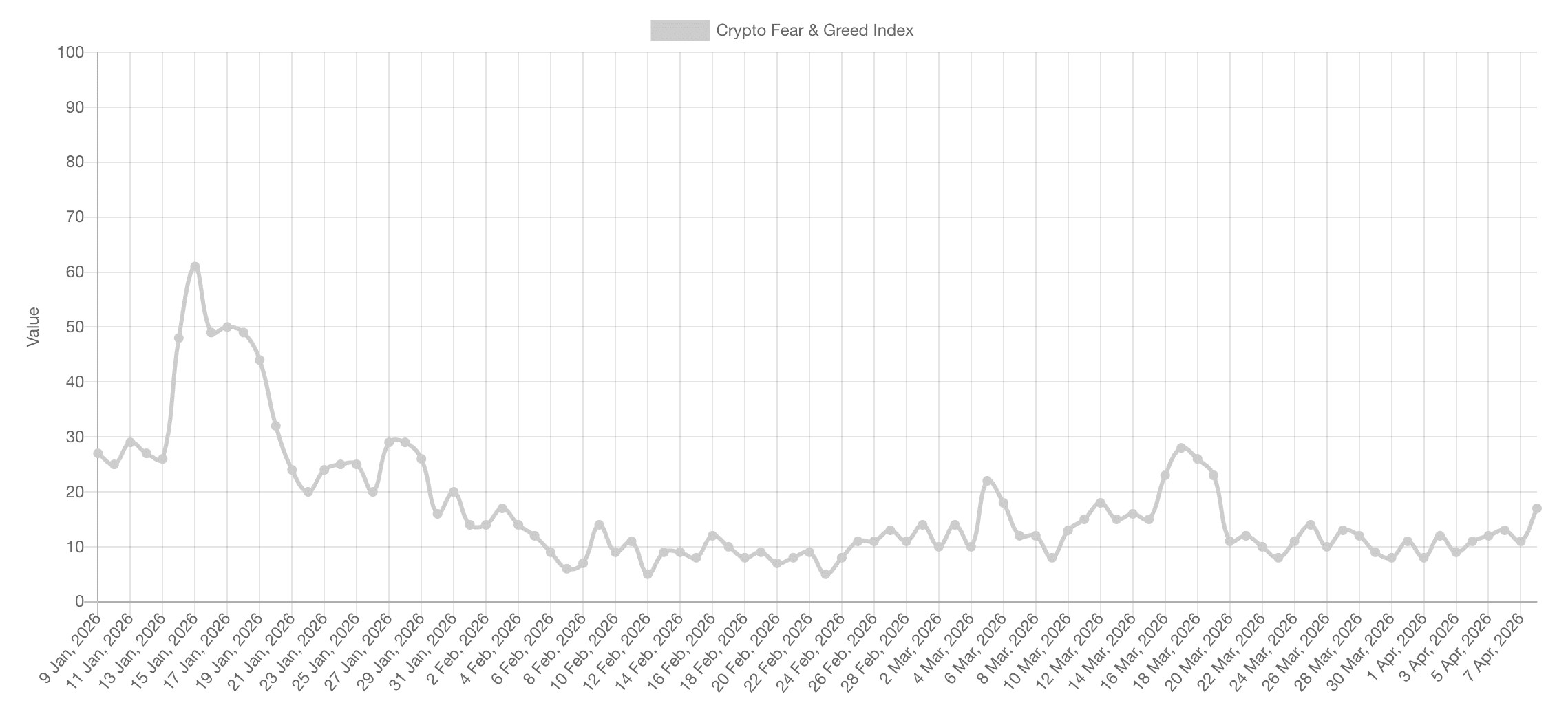
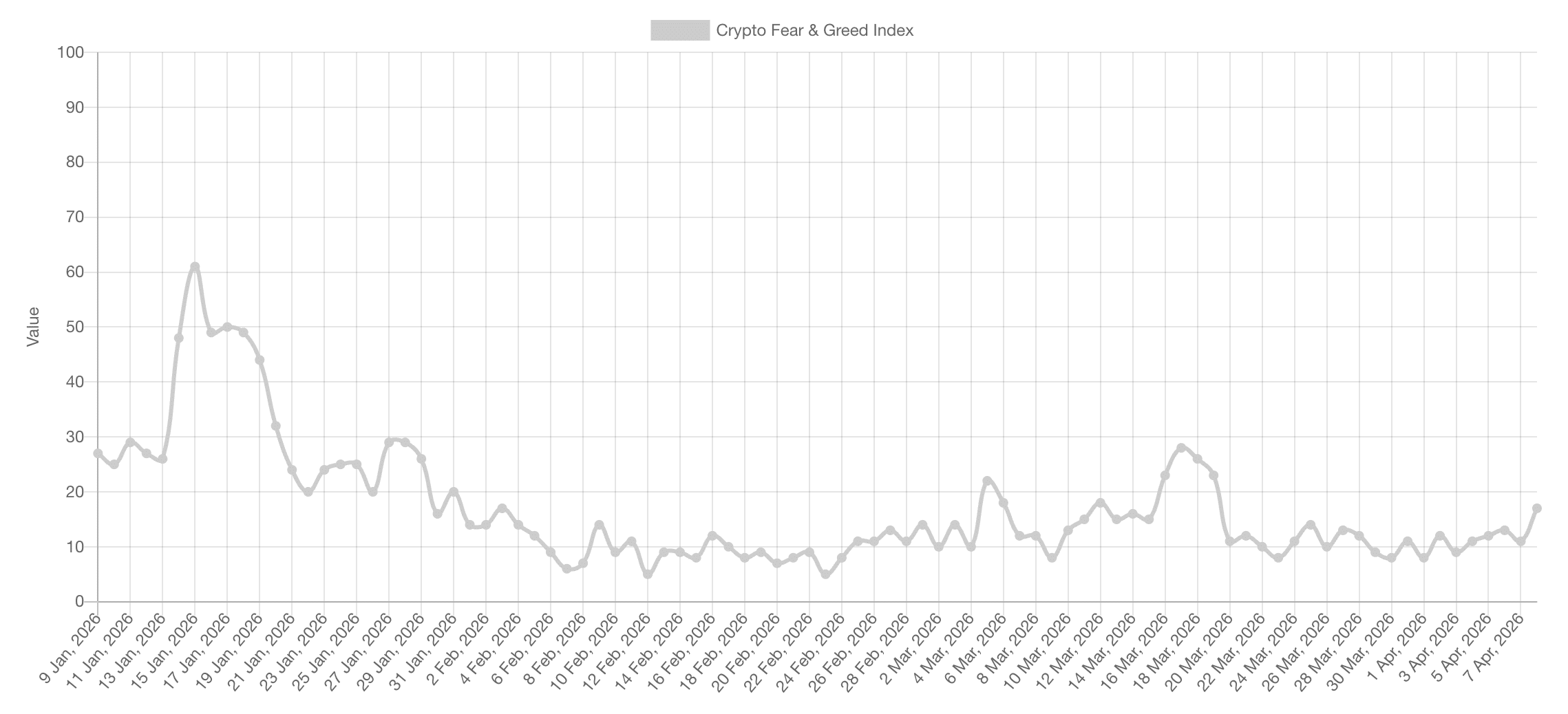
Source: Alternative

Is Trump’s impeachment around the corner?

Needless to say, the recent threat by Trump had pushed many to call for U.S. President Trump’s impeachment under the 25th Amendment.
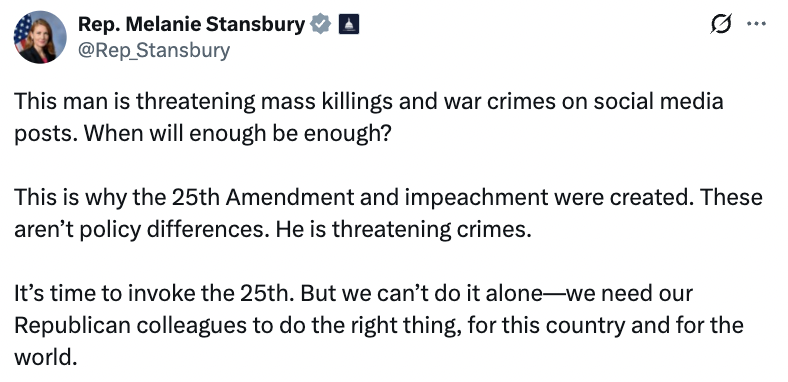
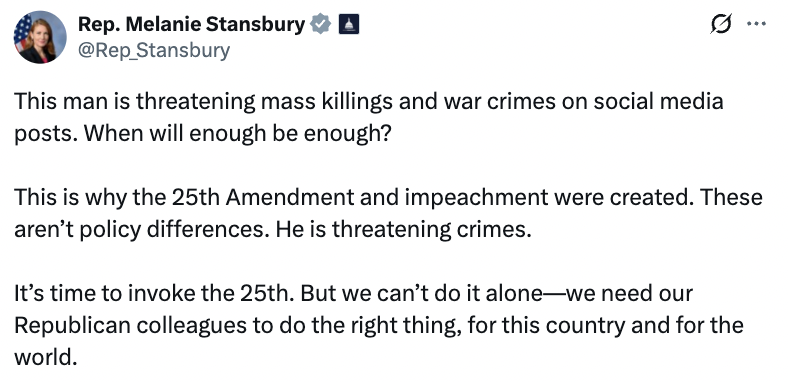
Source: Rep. Melanie Stansbury/X

That said, the Polymarket odds of Trump’s impeachment before his term ends also stood at 65% at the time of reporting.
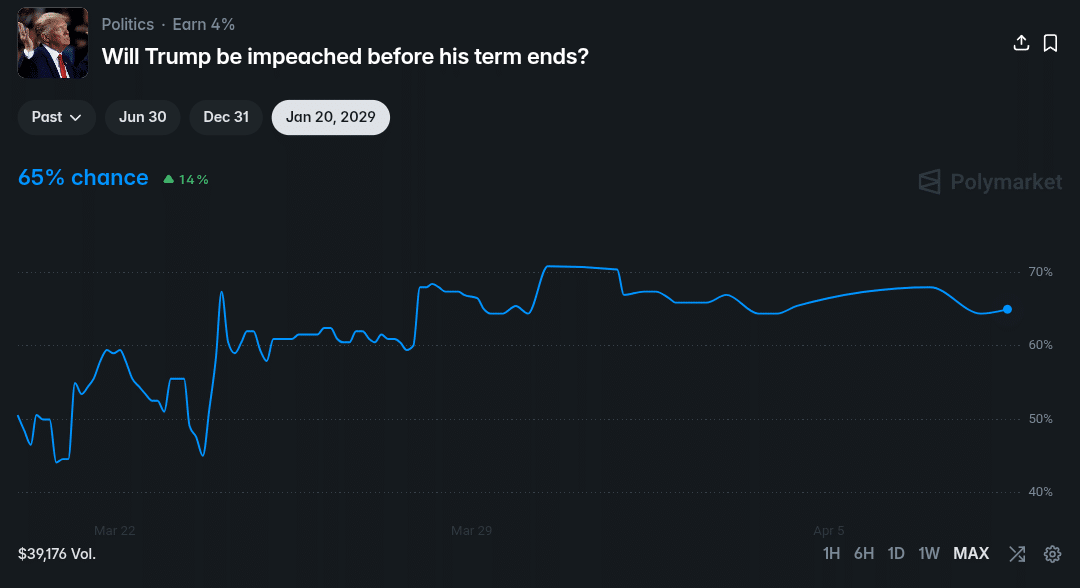
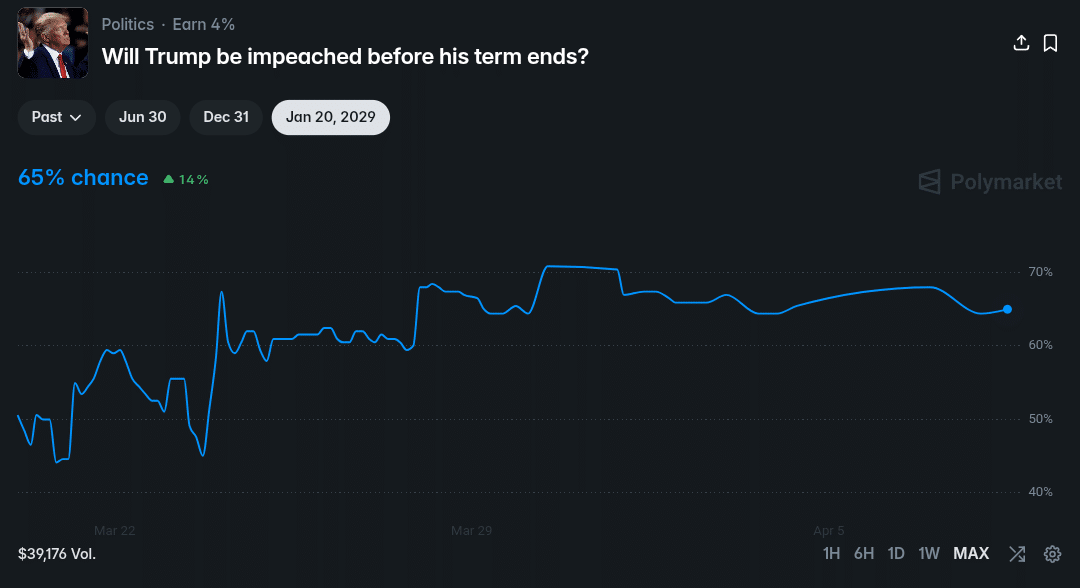
Source: Polymarket

Taken together, this shows how Trump’s pro-crypto policies and plans post-becoming the 47th President of the U.S. now seem debatable.

Peter Schiff takes a different route

However, while the entire world was crippling with this news, Peter Schiff, Chief Economist & Global Strategist at Europac, called this threat a bluff as he said,

If they believed there was a reasonable probability that Trump would actually kill Iranian civilization tonight, stocks would be a lot lower and oil a lot higher.

Schiff argued,

If investors don’t believe Trump, why would the Iranian leadership?

Ceasefire and its impact on the crypto market

However, as of the 8th of April, 5:20 AM IST, Prime Minister of the Islamic Republic of Pakistan, Shehbaz Sharif, injected a breath of fresh air globally when he noted,


Source: Shehbaz Sharif/X

Now, with an agreement on an immediate ceasefire from both ends, the crypto market turned green.

At press time, the global crypto market cap stood at $2.45 trillion, up 4.42% over the last 24 hours. At the same time, Bitcoin was changing hands at $71,884.44 after surging by 5.04% during the same period.


Final Summary

  • The escalating U.S.-Iran tensions had sent the crypto market into the hands of sellers.
  • The immediate ceasefire announcement shifted the market from bearish to bullish, but fear remains.


Domande pertinenti

QWhat was the name of the U.S. military operation that began on February 27th and shook the crypto market?

AOperation Epic Fury.

QAccording to the article, what was the primary reason cited for Bitcoin's resilience during the geopolitical turmoil?

AThe article quotes Anthony Scaramucci stating that Bitcoin is 'sticky and seems resilient after crashing 40%' and also notes that Iran was accepting crypto payments for tolls, which may have contributed to its strength.

QWhat was the status of the Crypto Fear and Greed Index at the time the article was written?

AIt was in the 'Extreme Fear' zone.

QWhat event on April 8th caused the crypto market to turn green and Bitcoin's price to surge?

AAn agreement on an immediate ceasefire between the U.S. and Iran, as announced by Pakistan's Prime Minister Shehbaz Sharif.

QWhat were the Polymarket odds of President Trump's impeachment before his term ended, according to the report?

A65%.

Letture associate

You Bet on the News, the Pros Read the Rules: The True Cognitive Gap in Losing Money on Polymarket

The article explains that the key to profiting on Polymarket, a prediction market platform, lies not just predicting real-world events correctly, but in meticulously understanding the specific rules that govern how each market will be resolved. It illustrates this with examples, such as a market on Venezuela's 2026 leader, where the official rules defining "officially holds" the office overruled the intuitive answer of who was in practical control. Other examples include debates over the definition of a "token" or what constitutes an "agreement." The core argument is that a "reality vs. rules" gap creates pricing discrepancies that savvy traders ("车头" or "whales") exploit. The platform has a formal dispute resolution process managed by UMA token holders to settle ambiguous outcomes. This process involves proposal submission, a challenge window, a discussion period, and a final vote. However, the article highlights a critical flaw in this system compared to a traditional court: the lack of separation between the arbiters (UMA voters) and the interested parties (traders with financial stakes in the outcome). This conflict of interest undermines the discussion phase, leads to herd mentality, and results in opaque final decisions without explanatory rulings. Consequently, the system lacks a body of precedent, making it difficult for users to learn from past disputes. The ultimate takeaway is that success on Polymarket requires a lawyer-like scrutiny of the rules to identify and capitalize on the cognitive gap between how events appear and how they are contractually defined for settlement.

marsbit1 h fa

You Bet on the News, the Pros Read the Rules: The True Cognitive Gap in Losing Money on Polymarket

marsbit1 h fa

Trading

Spot
Futures
活动图片




