RAVE rallies 29%, but is the post-launch correction already over?

ambcryptoPubblicato 2025-12-19Pubblicato ultima volta 2025-12-19

Introduzione

RAVE, the native token of RaveDAO, surged 29% in 24 hours, reversing its initial post-launch correction. Launched on December 14th at $0.50, it initially corrected to $0.27 before reclaiming its launch price. The rally was fueled by new exchange listings on OKX and Kraken, a market shift toward small-cap tokens, and increasing holder count, now at 7.19K. Open Interest rose above $17 million, suggesting the correction may be over. However, the price is currently ranging between $0.35 and $0.42. Liquidation data shows a higher concentration of long liquidations, indicating trader sentiment is bullish, but a short squeeze could amplify gains or trigger a decline if key liquidity clusters are hit.

A few days after launch, and RAVE crypto is still rising on the charts. RaveDAO [RAVE], a web3 entertainment ecosystem, spiked by more than 29% in the past 24 hours as volume jumped 23%.

The price action reversed from the post-launch correction, but will this uptrend be sustainable amid the short-term shift to small-cap coins?

Is the post-launch price correction over?

RAVE launched on the 14th of December at around $0.50, but immediately entered a correction phase to $0.27. Interestingly, on the same day, RAVE reversed from this point and reclaimed $0.50.

Launch hype and smart traders’ accumulation drove the initial move. RAVE’s price was trading above the SuperTrend indicator, but had broken below the rising trendline at press time.

The trajectory showed bulls were in control of price. The Open Interest (OI) was also following a similar trajectory at more than $17 million when writing.

This shift in OI direction could be an indication of a potential end to the post-launch correction. RAVE was, however, ranging between $0.35 and $0.42 on the 15-minute chart.

Why is RAVE up today?

More exchange listings for derivatives and Spot trading fueled this day’s rally. OKX and Kraken were among the popular exchanges that listed RAVE.

Additionally, traders were shifting to small-cap tokens, especially after Bitcoin [BTC] dropped below $90,000. That way, traders rotated to RAVE in emulation of smart money.

In fact, on-chain data showed a smart trader profited 83% after longing RAVE on the day of launch. At the same time, the number of individuals acquiring the token continued to increase even after this whale took profit.

The data from CoinMarketCap showed that the number of holders has been rising since the 12th of December. Despite this trend stabilizing, total holders stood at 7.19K at press time, with a market cap of $85 million.

As the market comes from a double bottom, having recovered the lost trendline support, liquidity could be a deciding factor.

How will liquidity affect RAVE?

The liquidation heatmap showed, despite the price being confined in between massive orders, that the one above was more concentrated. This was an indication that more traders were anticipating RAVE to hit higher prices.

The cumulative long liquidation leverage was at $5.66 million, compared to $3.15 million for shorts.

A move higher could result in a short squeeze, which would amplify the rise. However, the heatmap indicated that every time these clusters were triggered, a price decline occurred afterward.

It is worth noting that while liquidity could influence price movement in either direction, trader sentiment indicated that more bets were placed on an upward movement.


Final Thoughts

  • RAVE price rallied 29% after the launch correction due to an increase in holders, the exchange listing, and capital rotation.
  • The liquidity clusters confining the price of RAVE could spark a move toward either of the directions.

Crypto di tendenza

Domande pertinenti

QWhat is the main reason for RAVE's 29% price rally in the article?

AThe main reasons for RAVE's 29% price rally are new exchange listings on platforms like OKX and Kraken, an increase in token holders, and a market rotation of capital into small-cap tokens.

QOn which date did RAVE launch and what was its initial price?

ARAVE launched on the 14th of December with an initial price of around $0.50.

QWhat on-chain data suggested a potential end to the post-launch correction for RAVE?

AThe shift in Open Interest (OI) direction to over $17 million was an indication of a potential end to the post-launch correction.

QAccording to the liquidation heatmap, what could a move to higher prices potentially trigger for RAVE?

AA move to higher prices could result in a short squeeze, which would amplify the price rise.

QHow many RAVE holders were there at the time the article was written, and what was the market cap?

AAt press time, there were 7.19K holders and the market cap was $85 million.

Letture associate

Stable Vaults Are the Final Piece in Aave's Mass Commercialization Puzzle

Aave's introduction of "Stable Vaults" aims to bridge the gap between complex DeFi protocols and mainstream users by offering a simplified, predictable savings product. The core innovation is a fixed-yield layer built atop Aave's volatile underlying lending pools. Partnering platforms (like digital banks or wallets) can offer users a guaranteed interest rate (e.g., 4%), shielding them from market fluctuations. The partner absorbs the risk and profit/loss from the difference between this fixed rate and Aave's variable rate. From the user's perspective, Stable Vaults provide ease of use, predictable returns, and familiar services like customer support and account recovery, addressing key barriers like wallet management and volatility. However, users pay a price: they cap their potential earnings (forgoing higher market yields), add counterparty risk from the partner platform, and may lack transparency into the true spread being captured. For partners, Stable Vaults turn idle user funds into a revenue stream via the yield spread. For Aave, this strategy attracts sticky, "sticky" capital from mass-market applications, providing a stable fee revenue stream crucial for its tokenomics (e.g., buyback mechanisms), especially in bear markets. The article contrasts this approach with direct DeFi interaction, where users keep all yield but face complexity and volatility. It argues that Stable Vaults align with proven consumer behavior: most users prioritize convenience, safety, and predictability over maximizing returns, willingly paying a "peace of mind" premium. Examples like Coinbase and Robinhood offering similar "savings" products validate this demand. Thus, Stable Vaults represent Aave's strategic move to commercialize by catering to fundamental human preferences for simplicity and stability in finance.

marsbit46 min fa

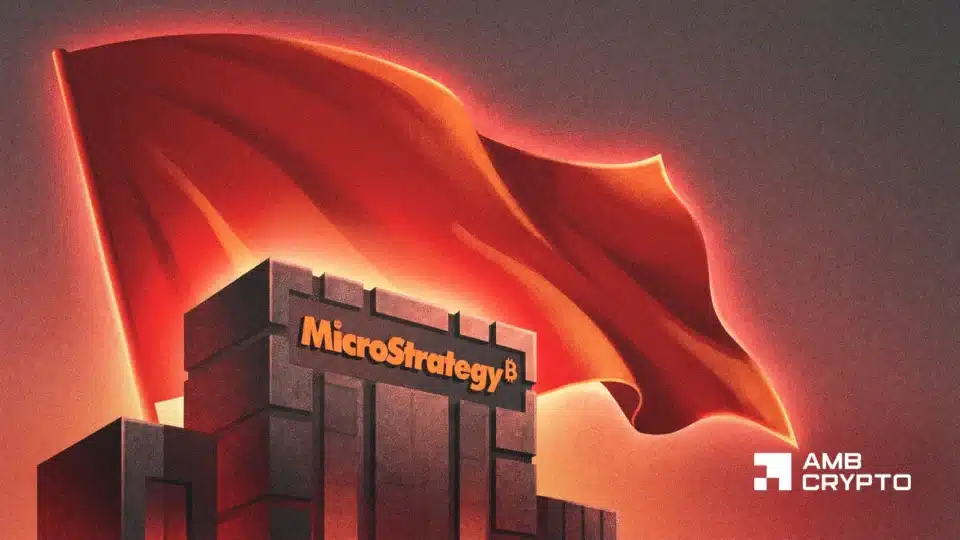
Stable Vaults Are the Final Piece in Aave's Mass Commercialization Puzzle

marsbit46 min fa

Support Rate Less Than 1%, BIP-110 Still Pushes Bitcoin Towards a Soft Fork?

Title: BIP-110 Pushes Bitcoin Towards a Soft Fork Despite Less Than 1% Approval With its August mandatory activation window approaching, the controversial BIP-110 proposal is back in the spotlight. Proposed in December 2025 by Dathon Ohm and supported by Bitcoin Core developer Luke Dashjr, BIP-110 aims to impose a one-year limit on arbitrary/non-monetary data in Bitcoin transactions, primarily targeting large data storage like Ordinals and Bitcoin NFTs, to reduce network "spam" and refocus Bitcoin on its monetary function. However, the proposal faces overwhelming opposition. To activate, BIP-110 requires a 55% threshold, yet current miner support is below 1%. Of the 102,674 network nodes, only 14.64% (15,035) signal readiness to enforce it. Despite this lack of consensus, BIP-110 has a contentious "mandatory window" mechanism: if the threshold isn't met by block height 961,632, supporting nodes will begin rejecting non-compliant blocks from height 961,632 to 963,647, attempting to force activation by block 965,664. This could lead to a chain split in early August between a minority chain enforcing BIP-110 and the main chain. Proponents, led by Luke Dashjr (founder of Ocean mining pool), argue that inscriptions constitute an "attack" on Bitcoin, congesting block space and raising transaction fees, thereby undermining Bitcoin's primary use as money. They view BIP-110 not as a change but as a reversal of a harmful change. Opponents, including figures like Adam Back, Jameson Lopp, and Michael Saylor, contend that BIP-110 fails to solve the spam problem while creating new risks. They warn it could stifle future innovation (e.g., impacting BitVM), introduce transaction censorship—eroding Bitcoin's neutrality—and potentially cause a damaging chain split that fragments developer resources, hash power, and monetary consensus. They argue market-based fee pressure and block size limits already manage congestion effectively. Potential outcomes post-activation include: 1) The BIP-110 chain stalling due to insufficient hash power; 2) The BIP-110 chain becoming the longest chain if it gains majority miner support (though currently, Ocean holds only 2.6% of hash power vs. opponents like F2Pool at 13.6%); or 3) A persistent minority chain that remains economically unviable, potentially leading to a permanent fork. Most analysts and prediction markets deem BIP-110's success unlikely, with one market giving only a 10% probability that it will become the accepted longest chain by September 2026.

marsbit51 min fa

Support Rate Less Than 1%, BIP-110 Still Pushes Bitcoin Towards a Soft Fork?

marsbit51 min fa

Mining Stocks Are Moving Further Away from Crypto

Title: Mining Stocks Are Drifting Away from Crypto Summary: Despite Bitcoin (BTC) falling approximately 46% over the past year, leading Bitcoin mining stocks (e.g., HUT, WULF, IREN) have surged significantly. This divergence stems from a fundamental shift in how the market values these companies. Their stock prices are no longer tied primarily to crypto prices, mining output, or hash rates. Instead, investors are now pricing them as AI infrastructure plays. Mining companies possess critical assets for AI data centers: pre-permitted land, grid-connected power capacity, and operational expertise for high-load facilities—resources facing severe shortages and long lead times for new entrants. For example, CleanSpark signed a 20-year, ~$6.6 billion infrastructure lease for an AI data center, while Marathon Digital acquired a project with up to 2 GW of planned power capacity. Analysts note a strong correlation between a mining company's market valuation and its contracted or potential AI power capacity in North America. CoinShares predicts that by year-end, up to 70% of revenue for listed miners could come from AI/HPC, compared to about 30% at the start of 2026. However, this re-rating introduces new risks: 1) Valuation volatility linked to the broader AI/semiconductor sector, 2) Potentially low baseline return rates (estimated at 4-5% for some firms), and 3) Execution risks including massive financing needs, regulatory permits, and tenant quality. This strategic pivot is also changing miner behavior. They are selling BTC holdings more aggressively to fund AI capex, meaning selling pressure may persist regardless of Bitcoin's price. Furthermore, once power and sites are locked into long-term AI contracts, they are unlikely to return to Bitcoin mining, potentially altering the network's hash rate dynamics long-term. In essence, mining firms are being valued for what they are becoming—AI infrastructure providers—rather than pure-play crypto miners.

链捕手57 min fa

Mining Stocks Are Moving Further Away from Crypto

链捕手57 min fa

Trading

Spot

Articoli Popolari

Come comprare O

Benvenuto in HTX.com! Abbiamo reso l'acquisto di O1 exchange (O) semplice e conveniente. Segui la nostra guida passo passo per intraprendere il tuo viaggio nel mondo delle criptovalute.Step 1: Crea il tuo Account HTXUsa la tua email o numero di telefono per registrarti il tuo account gratuito su HTX. Vivi un'esperienza facile e sblocca tutte le funzionalità,Crea il mio accountStep 2: Vai in Acquista crypto e seleziona il tuo metodo di pagamentoCarta di credito/debito: utilizza la tua Visa o Mastercard per acquistare immediatamente O1 exchangeO.Bilancio: Usa i fondi dal bilancio del tuo account HTX per fare trading senza problemi.Terze parti: abbiamo aggiunto metodi di pagamento molto utilizzati come Google Pay e Apple Pay per maggiore comodità.P2P: Fai trading direttamente con altri utenti HTX.Over-the-Counter (OTC): Offriamo servizi su misura e tassi di cambio competitivi per i trader.Step 3: Conserva O1 exchange (O)Dopo aver acquistato O1 exchange (O), conserva nel tuo account HTX. In alternativa, puoi inviare tramite trasferimento blockchain o scambiare per altre criptovalute.Step 4: Scambia O1 exchange (O)Scambia facilmente O1 exchange (O) nel mercato spot di HTX. Accedi al tuo account, seleziona la tua coppia di trading, esegui le tue operazioni e monitora in tempo reale. Offriamo un'esperienza user-friendly sia per chi ha appena iniziato che per i trader più esperti.

106 Totale visualizzazioniPubblicato il 2026.06.19Aggiornato il 2026.06.29

Come comprare O

Come comprare PROS

Benvenuto in HTX.com! Abbiamo reso l'acquisto di Pharos (PROS) semplice e conveniente. Segui la nostra guida passo passo per intraprendere il tuo viaggio nel mondo delle criptovalute.Step 1: Crea il tuo Account HTXUsa la tua email o numero di telefono per registrarti il tuo account gratuito su HTX. Vivi un'esperienza facile e sblocca tutte le funzionalità,Crea il mio accountStep 2: Vai in Acquista crypto e seleziona il tuo metodo di pagamentoCarta di credito/debito: utilizza la tua Visa o Mastercard per acquistare immediatamente PharosPROS.Bilancio: Usa i fondi dal bilancio del tuo account HTX per fare trading senza problemi.Terze parti: abbiamo aggiunto metodi di pagamento molto utilizzati come Google Pay e Apple Pay per maggiore comodità.P2P: Fai trading direttamente con altri utenti HTX.Over-the-Counter (OTC): Offriamo servizi su misura e tassi di cambio competitivi per i trader.Step 3: Conserva Pharos (PROS)Dopo aver acquistato Pharos (PROS), conserva nel tuo account HTX. In alternativa, puoi inviare tramite trasferimento blockchain o scambiare per altre criptovalute.Step 4: Scambia Pharos (PROS)Scambia facilmente Pharos (PROS) nel mercato spot di HTX. Accedi al tuo account, seleziona la tua coppia di trading, esegui le tue operazioni e monitora in tempo reale. Offriamo un'esperienza user-friendly sia per chi ha appena iniziato che per i trader più esperti.

90 Totale visualizzazioniPubblicato il 2026.06.22Aggiornato il 2026.06.29

Come comprare PROS

Cosa è VERONA

I. Introduzione al Progetto VERONA è una blockchain costruita per tutti, ovunque attraverso l'astrazione della catena. Utilizzando il suo livello di astrazione generalizzato, VERONA si distingue integrando funzionalità blockchain complesse, come conti, firme e interoperabilità, direttamente a livello di protocollo. Questo approccio consente di interagire con le applicazioni blockchain senza la necessità di comprendere le tecnologie sottostanti.1) Informazioni di Base Nome:VERONA(VERONA)III. Link Correlati Link al sito ufficiale:https://xion.burnt.com/ Whitepaper:https://xion.burnt.com/whitepaper.pdf Esploratori:https://explorer.burnt.com/ Social Media: https://x.com/burnt_xion Nota: L'introduzione al progetto proviene dai materiali pubblicati o forniti dal team ufficiale del progetto, che è solo a scopo di riferimento e non costituisce consulenza per investimenti. HTX non si assume responsabilità per eventuali perdite dirette o indirette risultanti.

151 Totale visualizzazioniPubblicato il 2026.06.22Aggiornato il 2026.06.22

Cosa è VERONA

Discussioni

Benvenuto nella Community HTX. Qui puoi rimanere informato sugli ultimi sviluppi della piattaforma e accedere ad approfondimenti esperti sul mercato. Le opinioni degli utenti sul prezzo di A A sono presentate come di seguito.

活动图片