Raising $82.5 Million: What is Superstate, Built by Compound Founder?

marsbitPubblicato 2026-01-23Pubblicato ultima volta 2026-01-23

Introduzione

Superstate, founded by Compound's Robert Leshner, has raised $82.5 million in a Series B round led by Bain Capital Crypto and Distributed Global. The real-world asset (RWA) tokenization platform plans to expand from tokenized treasury products to a full on-chain equity issuance layer on Ethereum and Solana. Launched in 2023, Superstate initially focused on tokenized short-term U.S. government bond funds. It has since introduced additional products, including a crypto carry fund, and registered a digital transfer agent with the SEC. Its “Opening Bell” platform enables compliant, native issuance of tokenized stocks on blockchain networks, with companies like Galaxy and Exodus already participating. Superstate’s AUM now exceeds $1.2 billion. The company aims to bridge traditional finance with on-chain infrastructure, improving settlement speed, liquidity, and capital efficiency. While early adoption is largely institutional, tokenized assets are increasingly integrated into DeFi for collateral and lending, signaling broader functional use in digital finance ecosystems.

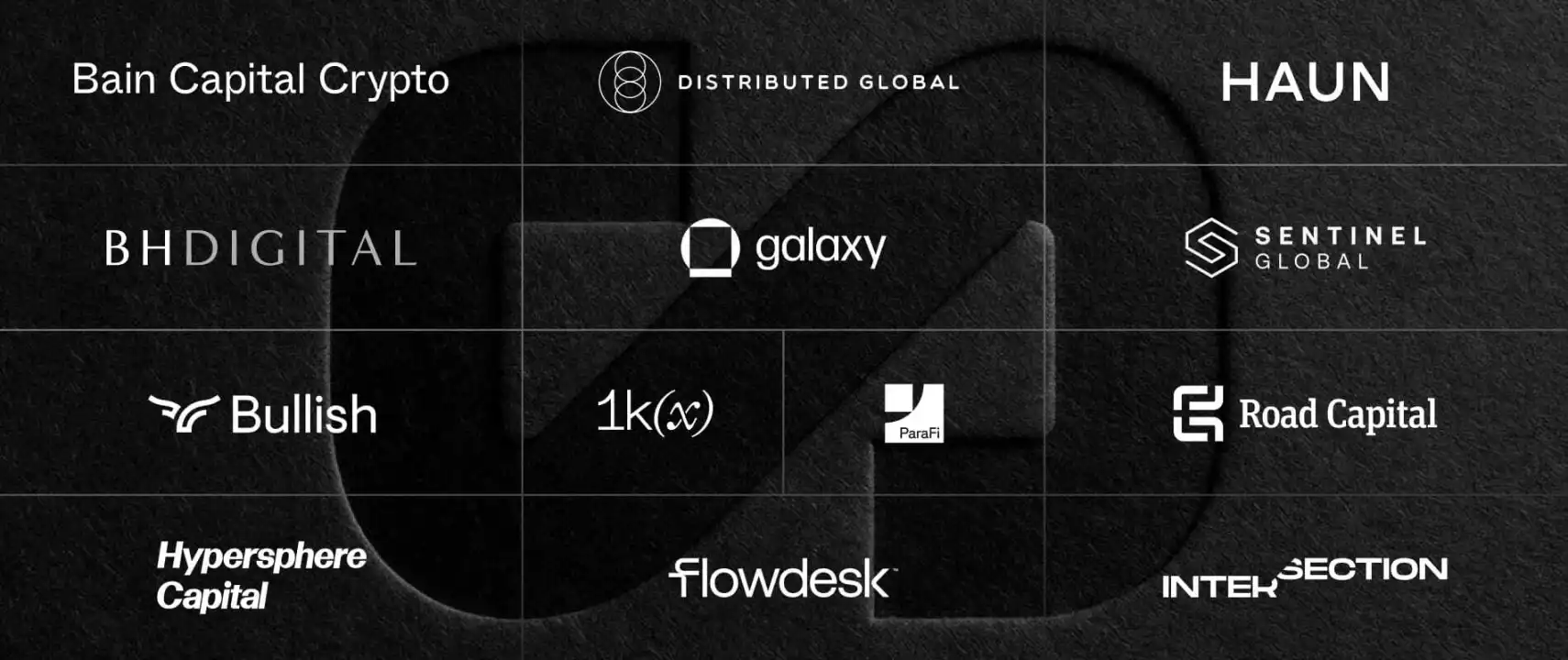
On January 22, Superstate, an RWA tokenized asset management platform founded by Compound creator Robert Leshner, announced the completion of an $82.5 million Series B funding round. The round was led by Bain Capital Crypto and Distributed Global, with participation from Haun Ventures, Brevan Howard Digital, Galaxy Digital, Sentinel Global, Bullish, Hypersphere Capital, Flowdesk, Intersection, and existing investors 1kx, ParaFi, and Road Capital.

Officials stated that this round of funding will be used to expand its business from tokenized treasury products to a fully on-chain stock issuance layer on Ethereum and Solana. Additionally, the company will continue to invest in regulated market infrastructure, including compliant issuance, settlement, and shareholder record-keeping systems, and expand its Opening Bell platform and transfer agent infrastructure to support more issuers and distribution channels.
What is Superstate?

In 2023, Compound founder Robert Leshner filed documents with the U.S. Securities and Exchange Commission (SEC) for his new company "Superstate," which would use Ethereum as an auxiliary record-keeping tool to create a short-term government bond fund. Superstate's fund would invest in "ultra-short-term government securities," including U.S. Treasuries, government agency securities, and other government-backed instruments, and would rely on traditional Wall Street "transfer agents" to maintain ownership records of fund holders.

In June, Superstate announced the completion of a $4 million seed funding round led by ParaFi, Cumberland, and 1kx.

In November of the same year, Superstate completed the first close of its Series A funding round, raising $14 million. The round was co-led by Distributed Global and CoinFund, with participation from Breyer Capital, Galaxy, Arrington Capital, Road Capital, CMT Digital, Folius Ventures, Nascent, Hack VC, Modular Capital, and Department of XYZ.

In February 2024, it launched a tokenized fund holding short-term U.S. Treasuries. In July, Superstate launched a new tokenized fund, the Superstate Crypto Carry Fund (USCC). This fund will use a "cash and carry" investment strategy to generate yield by purchasing spot Bitcoin and Ethereum and holding equivalent short positions or selling BTC and ETH futures to generate returns for holders. The spot assets are held by custody partner Anchorage Digital.

Superstate's Tokenization Development

In March 2025, Superstate announced that its digital transfer agent company, Superstate Services LLC, had registered with the SEC, a move aimed at connecting tokenized assets with the existing financial regulatory framework.

After this, benefiting from the U.S. push for RWA tokenization, Superstate's progress accelerated rapidly. The company first launched the Opening Bell platform, allowing SEC-registered public stocks to be issued and traded directly on blockchain networks, initially supporting Solana. Opening Bell supports the native issuance of compliant, regulated stocks that can interact directly with crypto wallets, DeFi protocols, and on-chain markets.

Subsequently, several companies chose to issue tokenized stocks on Superstate, including Galaxy's tokenized stock GLXY; U.S.-listed self-custody wallet company Exodus also plans to partner with Superstate to create common stock tokens, digitally representing Exodus' Class A shares; Solana treasury company Forward Industries (FORD) intends to tokenize its holdings of Forward Industries common shares. It also plans to partner with Drift, Kamino, and Jupiter Lend (three of the largest lending protocols on Solana) to use the tokenized FORD shares as eligible collateral; Ethereum treasury company SharpLink Gaming partnered with Superstate to issue tokenized stock SBET directly on the Ethereum blockchain.

In late 2025, Superstate launched a new blockchain-based service for conducting issuance programs directly on Ethereum and Solana. This service will enable companies to raise capital by issuing on-chain securities, including tokenized versions of their existing SEC-registered shares or new share classes. The first issuers are expected to go live in 2026. Investors will pay in stablecoins and receive tokenized assets.

The Series B funding round at the beginning of 2026 brings Superstate's total funding to over $100 million. According to its website, its Assets Under Management (AUM) now exceed $1.2 billion.

The Tokenization Process in 2026

The main theme of capital market infrastructure in 2026 is clear: faster settlement, higher liquidity, greater transparency, and lower capital requirements. Tokenization is moving from concept to practice at this time because the on-chain track is pulling issuance, distribution, custody, settlement, and asset reuse into the same set of programmable data and processes, with participants beginning to make decisions based on efficiency and verifiable results.

Incremental on-chain channels will emerge first on the financing side. In the short term, a dual-track model with traditional markets and on-chain markets operating in parallel will be more common. Traditional trading platforms handle deep liquidity, while on-chain markets provide more direct reach, faster distribution and settlement, and more flexible issuance structures. As compliant modules mature, this type of on-chain financing will expand from a few pilot projects to more scenarios like IPOs, additional issuances, and secondary offerings.

The key change on the asset side is the realization of functionality. Truly tokenized stocks and funds will not remain merely holding certificates but will gradually enter the DeFi ecosystem of collateral, lending, and composable strategies, moving traditional assets from isolated account structures to a composable on-chain capital market, thereby improving capital efficiency. However, this will also raise the requirements for compliance, risk control, clearing responsibilities, and technical security.

Stablecoins will become the engine driving demand for tokenized funds. As the scale of stablecoins expands, issuers and holders will have a stronger need for highly liquid, auditable, risk-controlled, and yield-generating on-chain assets. Therefore, tokenized short-duration treasury funds and money market-like products are more likely to become standard components for on-chain cash management and collateral. On the institutional side, custodial DeFi treasuries will become the main entry point, packaging multi-chain, multi-protocol, and 24/7 risk control into usable strategy interfaces, reducing operational and management costs for institutions.

The distribution end will continue to concentrate around super-apps. Wallets and trading platforms integrate payments, trading, yield, investment, and custody into a single product interface, with tokenized assets acting as connectors, helping users manage cash and long-term investments within the same system. For issuers and asset managers, the change in the distribution landscape is more critical. Those who can adapt early to the tokenized form, compliant transfer logic, and on-chain usability will more easily enter the supply pools of these super-apps and capture new growth.

Companies like Superstate may be among the first to reap significant rewards from the U.S. push for RWA tokenization. However, it seems the connection with ordinary investors will remain relatively weak in the short term, as early products are mostly targeted at institutions and accredited investors. Ordinary users primarily access them indirectly through wallets, trading platforms, and other entry points, and what they actually perceive is often not tokenization itself.


Domande pertinenti

QWhat is the founder of Superstate and what is his previous notable project?

AThe founder of Superstate is Robert Leshner, who is also the founder of the well-known DeFi lending protocol, Compound.

QWhat was the total amount raised in Superstate's Series B funding round and who were the lead investors?

ASuperstate raised $82.5 million in its Series B funding round, which was co-led by Bain Capital Crypto and Distributed Global.

QWhat is the primary business focus of Superstate as an RWA tokenization platform?

ASuperstate is a real-world asset (RWA) tokenization platform that focuses on creating tokenized funds, initially for short-term government securities like U.S. Treasuries, and has expanded to an on-chain equity issuance layer for stocks on Ethereum and Solana.

QWhat significant regulatory milestone did Superstate achieve in March 2025?

AIn March 2025, Superstate's digital transfer agent company, Superstate Services LLC, successfully registered with the U.S. Securities and Exchange Commission (SEC).

QWhat is the name of the platform Superstate launched for issuing and trading SEC-registered public stocks directly on a blockchain?

ASuperstate launched the 'Opening Bell' platform, which allows for the direct issuance and trading of SEC-registered public stocks on blockchain networks, with initial support for Solana.

Letture associate

SpaceX, OpenAI, Anthropic: The Three AI Giants Racing for IPO, Which One Is Worth Betting On?

SpaceX, OpenAI, and Anthropic are poised for historic IPOs within weeks, potentially raising a combined $180 billion—a sum exceeding the entire internet bubble's fundraising. The hosts of the Limitless Podcast argue this isn't just individual company financing but an unprecedented capital concentration for AI infrastructure, driven by an insatiable need for compute, data centers, power, and chips. SpaceX's IPO is notable for reportedly changing market index rules to allow faster inclusion, potentially funneling trillions in passive retirement funds into its stock, despite its unproven space-based data center business model. In contrast, Anthropic demonstrates explosive growth, with ARR reportedly hitting $45 billion and approaching profitability, fueled by strong enterprise adoption of products like Claude Code. Google's separate $80 billion raise highlights the immense capital pressure, even for giants. The discussion acknowledges bubble risks but leans optimistic. The hosts contend the massive spending is building essential physical infrastructure for the next technological era. A key bottleneck isn't capital but the real-world limits of chip manufacturing and construction speed. As long as demand for AI compute outstrips supply, this investment cycle represents a foundational build-out rather than a purely financial bubble. All three companies are seen as foundational bets on the future, with Anthropic often cited as the most immediately compelling due to its proven revenue trajectory.

marsbit1 h fa

SpaceX, OpenAI, Anthropic: The Three AI Giants Racing for IPO, Which One Is Worth Betting On?

marsbit1 h fa

From 'Old Guys' to 'New Favorites': How AI Is Revaluing Old Infrastructure from Dell to Nokia?

From "Vintage Tech" to "New AI Darlings": How AI Revalues Old Infrastructure One year ago, tech giants like Dell, Nokia, Cisco, and Western Data were seen as slow-growth, low-valuation stories, far from the AI spotlight dominated by players like Nvidia. Now, these legacy tech stocks are gaining market attention, sparking debate on whether this is genuine industry revaluation or a temporary narrative. As AI moves from model parameters to real-world data centers, the market is recognizing companies with proven delivery and infrastructure capabilities. This shift marks a change in the AI investment thesis: from pure model and GPU focus to the complex systems engineering required for deployment. Companies like Dell, HPE, and Corning are being revalued not for being "sexy" AI innovators, but for their decades of accumulated expertise in supply chains, enterprise delivery, and infrastructure—assets that have become critical in the AI buildout phase. The revaluation is unfolding across three key infrastructure lines: 1. **Servers & System Integration:** Dell and HPE are emerging as crucial system integrators or "general contractors" for AI data centers, translating GPU orders into complete, deployable server racks integrated with power, cooling, and networking. 2. **Networking & Connectivity:** AI's scale demands robust high-speed connections. Corning (fiber optics), Nokia (AI-RAN, 6G), and Cisco (data center switches) are gaining importance for enabling efficient data transfer within and between AI clusters. 3. **Storage:** Beyond high-speed memory (HBM/DRAM), the AI data explosion is driving demand for high-capacity hard drives (HDDs) from companies like Western Digital and Seagate to handle training data, logs, and cold storage cost-effectively. For this revaluation to be substantive and not just a narrative, three criteria are key: 1) Concrete AI-related order and revenue growth (e.g., Dell's AI server sales), 2) Upward revisions to company financial guidance, and 3) Sustainable improvements in profit quality, not just top-line revenue spikes. In essence, AI's transition to a real construction phase is re-pricing "old assets" against "new demand." The opportunity, however, is selective. Only those legacy firms that are demonstrably integrated into the capital expenditure chains of data center and enterprise AI deployment are likely to experience a true "logic re-rating" rather than just a temporary valuation bounce.

marsbit1 h fa

From 'Old Guys' to 'New Favorites': How AI Is Revaluing Old Infrastructure from Dell to Nokia?

marsbit1 h fa

The Merger of Codex and ChatGPT Marks the Beginning of a Major Reshuffle in Programming Tools

OpenAI is shifting its strategic focus from ChatGPT to Codex, merging them along with the browser tool Atlas into a unified desktop super-app. This move signals an internal belief that Codex, originally a programming tool, represents the next evolution of AI more than conversational models like ChatGPT. Over the past year, Codex's weekly active users have surged past 5 million. The key distinction is that while ChatGPT answers questions, Codex executes tasks. Enterprises increasingly value this ability to get work done over simply receiving advice. Consequently, Codex is attracting professionals beyond developers, including analysts, bankers, marketers, and product managers. OpenAI's reorganization and increased investment in Codex stem from recognizing that the future of AI competition lies in execution capabilities, not just conversation. The company is launching role-specific plugins (e.g., for data analysis, sales, design) to transform Codex into a broad knowledge work platform that automates and redefines white-collar workflows. Beyond being a tool, Codex reflects OpenAI's ambition to redefine software. New features like "Sites"—which generates interactive websites from documents—and collaborative "Annotations" aim to create a paradigm where the AI understands the goal and handles the tools and steps, functioning more like a digital colleague than traditional software. The ultimate goal is a unified experience where the user cares only about the completed task.

marsbit1 h fa

The Merger of Codex and ChatGPT Marks the Beginning of a Major Reshuffle in Programming Tools

marsbit1 h fa

Interpreting Investment Opportunities in the Age of Great Navigation, Invesco Great Wall Fund Releases '2026 Report on Chinese Enterprises Going Global'

Invesco Great Wall Fund has released its "2026 China Corporate Globalization Report," titled "The 'Great Navigation Era' of Chinese Enterprises." The report analyzes the new trends and investment opportunities as Chinese companies expand globally, moving from simple product exports to comprehensive overseas operations involving services, branding, and local production. Driven by factors like trade friction, the pursuit of higher profit margins abroad, and policy support, globalization is becoming essential for Chinese companies. The report outlines an evolution: from early product export ("Globalization 1.0") to the current "Globalization 2.0," characterized by overseas capacity, capital goods investment, consumer brand expansion, and service exports. Chinese firms' competitive advantages are highlighted, including a vast engineer talent pool, low-cost and robust infrastructure, and complete industrial clusters. Specific sectors with significant出海 potential are identified: * **Capital Goods** (e.g., engineering machinery, power equipment): Benefiting from global demand, especially in Belt & Road markets and the AI-driven power grid upgrade cycle. * **Consumer Brands**: Transitioning from cost to brand advantage, leveraging供应链 efficiency. * **Technology & Innovation**: Including AI applications, optical modules within global tech supply chains, and new energy vehicles focusing on local production. * **Pharmaceuticals**: Chinese biotech firms are becoming preferred partners for global pharma, with potential for breakthrough drugs in areas like oncology and weight loss. The report concludes that corporate globalization represents a sustained, core theme for China's capital markets, though companies must navigate challenges like geopolitics and localization.

marsbit2 h fa

Interpreting Investment Opportunities in the Age of Great Navigation, Invesco Great Wall Fund Releases '2026 Report on Chinese Enterprises Going Global'

marsbit2 h fa

Trading

Spot
Futures
活动图片