Quantum Computing Approaches "Q-Day": How Encryption Policy, Investment Logic, and Risk Management Are Reshaping the Landscape

Foresight NewsPubblicato 2026-06-29Pubblicato ultima volta 2026-06-29

Introduzione

Quantum Computing Nears 'Q-Day': Shaping Encryption Policy, Investment Logic, and Risk Management Quantum technology is increasingly intersecting with cryptocurrency policy and cybersecurity discussions as the potential 'Q-Day'—when quantum computers could break current encryption—approaches. While summer brings fast-paced crypto market dynamics, new U.S. legislation, and AI debates, the emerging dimension is how quantum advancements will reshape the digital asset landscape. The next phase of crypto investment is being shaped by two converging forces: clearer regulatory frameworks and cryptographic evolution driven by quantum computing. Investors stand to benefit from reduced uncertainty, but must also recognize that quantum readiness is becoming a core risk factor. Public blockchains rely on cryptography for security, and sufficiently advanced quantum machines could undermine these foundations. This does not mean imminent network collapse, but investors can no longer dismiss the timeline as irrelevant. Key questions now include whether projects have identified their cryptographic dependencies, formulated migration plans to post-quantum cryptography, and established governance for upgrades. For policymakers, the link is clear. Effective crypto policy must look beyond token classification and disclosure to address the underlying infrastructure. As stablecoins, tokenized assets, and blockchain payments integrate deeper into finance, cryptographic resilience becomes a systemi...


Author:Sean Stein Smith

Compiled by:AididiaoJP,Foresight News


Quantum technology continues to influence cryptocurrency policy discussions, with the topic gaining increasing prominence as "Q-Day"—the critical point when quantum computers could break existing encryption algorithms—draws closer.


The crypto market is gearing up for another fast-paced summer: Bitcoin is still seeking a solid bottom while anticipating a potential rebound; meanwhile, the CLARITY Act is steadily advancing through various stages of legislative debate. These dynamics unfold as debates, controversies, and broader policy discussions surrounding artificial intelligence continue to dominate headlines and investment trends. Additionally, the crypto super PAC "Fairshake" maintains a strong influence in primary politics, with its affiliate organization Protect Progress investing $5.5 million to support Adrian Boafo, a candidate for Maryland's Fifth Congressional District. This victory, especially in a district considered a safe bet post-primary, demonstrates the sustained political ambition of the crypto lobbying infrastructure. Currently, crypto PACs have raised nearly $190 million for the 2026 cycle, and the pace of lobbying, legislative pushes, and progress on various crypto bills is only set to accelerate.


However, beneath all these headlines and developments, another layer is emerging in the crypto conversation: the intersection of quantum technology with cryptocurrency and cybersecurity dialogues. While the prevailing view is that quantum technology remains years away from mainstream deployment, the potential impact of these technological shifts is beginning to manifest. Let's examine how these trends are evolving and the role crypto assets play within them.


Institutional Resilience and New Crypto Investment Logic


The next phase of crypto investment will be shaped by two powerful forces—regulation and the evolution of cryptography—which are often discussed separately but are increasingly interconnected. A clearer framework for U.S. market structure reduces uncertainty around token classification, exchange regulation, stablecoin issuance, custody, and disclosure requirements. This is beneficial for investors: regulation can both eliminate certain risks and make others more visible and quantifiable.


Simultaneously, quantum computing has transformed from a distant theoretical concern into a practical planning issue. As major tech firms and federal agencies accelerate their post-quantum migration timelines, the crypto market can no longer assume that existing cryptographic infrastructure will remain secure indefinitely. The core question is no longer whether quantum computing will eventually impact blockchain systems, but whether protocols, custodians, and investors are preparing early enough to avoid excessive market turbulence.


For policymakers, the connection is evident. Effective crypto policy cannot focus solely on token classification or investor disclosure; it must also consider the infrastructure underpinning digital assets. For investors, the strongest projects will increasingly be those that demonstrate both regulatory readiness and long-term plans for cryptographic adaptation.


Quantum Readiness Is Becoming a Core Crypto Risk


Crypto investors have historically focused on token utility, network adoption, liquidity, market cycles, and regulatory progress. However, given rapid advancements in the quantum field, quantum readiness is now an issue crypto advocates must consider. Public blockchains rely heavily on cryptographic systems to secure wallets, authorize transactions, ensure validator operations, and maintain digital ownership. A sufficiently advanced quantum computer could undermine some of the cryptographic assumptions supporting these functions.


Despite some sensational claims, this does not mean that Bitcoin, Ethereum, or other major networks would instantly collapse. However, investors should no longer dismiss quantum risk as irrelevant simply because the exact timing remains uncertain. Recent assessments from Google and the federal government's accelerated push for post-quantum cryptography indicate that large institutions are no longer waiting for absolute certainty before taking action.


Investors should begin asking: Has a project identified its cryptographic dependencies, developed a migration plan, tested quantum-resistant methods, and established governance processes for implementing upgrades? Custodians and exchanges should assess key rotation, wallet exposure, recovery procedures, and operational continuity. In the next phase of institutional adoption, the successful projects may not be the fastest or most decentralized, but those capable of evolving without compromising trust, security, or investors' access to assets.


Policymakers Must View Crypto Integrity as Financial Infrastructure


The White House's focus on advanced cryptographic attacks provides a useful framework for crypto policymakers. The emphasis should not be solely on responding to vulnerabilities after they occur, but on building inventories, clarifying responsibilities, setting migration timelines, raising supplier standards, and developing the capacity to update systems before vulnerabilities escalate into crises.


As stablecoins, tokenized securities, blockchain payments, and digital custody become increasingly integrated into financial markets, cryptographic resilience and quantum mitigation plans have become systemic issues. Failure to prepare for post-quantum threats could lead to investor losses, operational issues for custodians, legal disputes over asset recovery, and reputational damage for institutions that hastily adopted blockchain without adequate safeguards.


A sound policy response should not impose a single technical solution or attempt to freeze innovation, even though "Q-Day" warrants legitimate concerns and apprehensions. Instead, regulators should encourage the disclosure of significant cryptographic risks, require major intermediaries to maintain upgrade and incident response plans, and support coordination among public agencies, developers, custodians, and infrastructure providers. The broader policy implication is clear: crypto regulation cannot be confined to issues like securities law, taxation, or consumer protection.


The sustainability of cryptocurrency will increasingly depend on whether its security infrastructure can adapt to technological pressures that have already emerged and are accelerating.


Domande pertinenti

QWhat is 'Q Day' and why is it increasingly relevant to the cryptocurrency policy discussion?

A'Q Day' refers to the hypothetical point in time when a quantum computer becomes capable of breaking current cryptographic algorithms. It is increasingly relevant to cryptocurrency policy discussions as quantum technology advances, prompting considerations about the resilience of the cryptographic infrastructure underlying digital assets and blockchain systems.

QAccording to the article, what two major forces will shape the next stage of crypto investment, and how are they connected?

AAccording to the article, the next stage of crypto investment will be shaped by regulation and the evolution of cryptography. These two forces are increasingly connected because clearer regulation reduces uncertainty for investors, while the advance of quantum computing necessitates the development and adoption of post-quantum cryptographic solutions to ensure long-term security.

QWhy should quantum preparedness now be considered a core crypto risk for investors and advocates?

AQuantum preparedness is now a core crypto risk because public blockchains rely heavily on cryptographic systems for security. A sufficiently advanced quantum computer could undermine these cryptographic foundations. Given rapid progress in quantum technology, investors and advocates can no longer dismiss this risk as irrelevant, even if the exact timeline is uncertain. Projects and infrastructure must be evaluated on their migration plans and resilience.

QWhat specific actions should policymakers take regarding cryptography and cryptocurrency infrastructure in light of quantum threats?

APolicymakers should encourage disclosure of significant cryptographic risks, require major intermediaries to maintain upgrade and incident response plans, and support coordination among public agencies, developers, custodians, and infrastructure providers. The goal is not to impose a single technical solution, but to build systemic resilience by establishing inventories, clarifying responsibilities, setting migration timelines, and raising supplier standards before a crisis occurs.

QHow does the article suggest that the sustainability of cryptocurrencies will be determined moving forward?

AThe article suggests that the long-term sustainability of cryptocurrencies will increasingly depend on whether their security infrastructure can adapt to the technological pressures posed by advances in quantum computing and other cryptographic challenges. It's not just about regulatory compliance or market adoption, but about the ability of the underlying systems to evolve without compromising trust, security, or investor access.

Letture associate

Anthropic's Latest Report Reveals Global Workers' Patterns: Seeking Sleep at 5 AM, Asking for Recipes at 6 PM

A new report from Anthropic analyzes millions of hourly user interactions with Claude AI, revealing detailed patterns in daily life and work. The data shows distinct rhythms: people most frequently ask about sleep help around 5 AM, seek news at 7 AM, and search for dinner recipes at 6 PM—the day's single largest query spike. Usage sharply diverges between weekdays and weekends. Workdays are dominated by professional tasks like business emails and coding (backend, APIs). Weekends see a surge in personal use—nearly 50% of conversations—focused on emotional support, creative writing (especially fan fiction), medical advice, and side projects like AI agent design or game development. Weekend "entrepreneurial" queries peak globally, while job-hunting activity drops. The report introduces "artifact" analysis, finding 93% of conversations produce a tangible output (explanation, document, code, etc.). Blog posts are 81% work-related, while creative writing is over 80% personal. High-wage professionals (e.g., marketing managers, programmers) use Claude more intensively outside work hours, with longer conversations, more tokens consumed, and greater use of deep thinking features compared to lower-wage roles. Interestingly, Claude's responses typically register at a higher reading level than user prompts (by about one educational year on average), except for audience-focused writing like emails or blogs where the gap nearly disappears. The data also captures specific cultural moments, like an 8x spike in tax-related queries on the U.S. filing deadline. Precise hourly data transforms fragmented queries into a collective diary of modern life—mapping not just economic activity, but also cycles of anxiety, creativity, and daily rhythm, with AI acting as both a productivity tool and an intimate, always-available confidant.

marsbit9 min fa

Anthropic's Latest Report Reveals Global Workers' Patterns: Seeking Sleep at 5 AM, Asking for Recipes at 6 PM

marsbit9 min fa

Margin Exhausted, "Brother Huang Li Cheng" Begins Selling Monkeys at a Loss

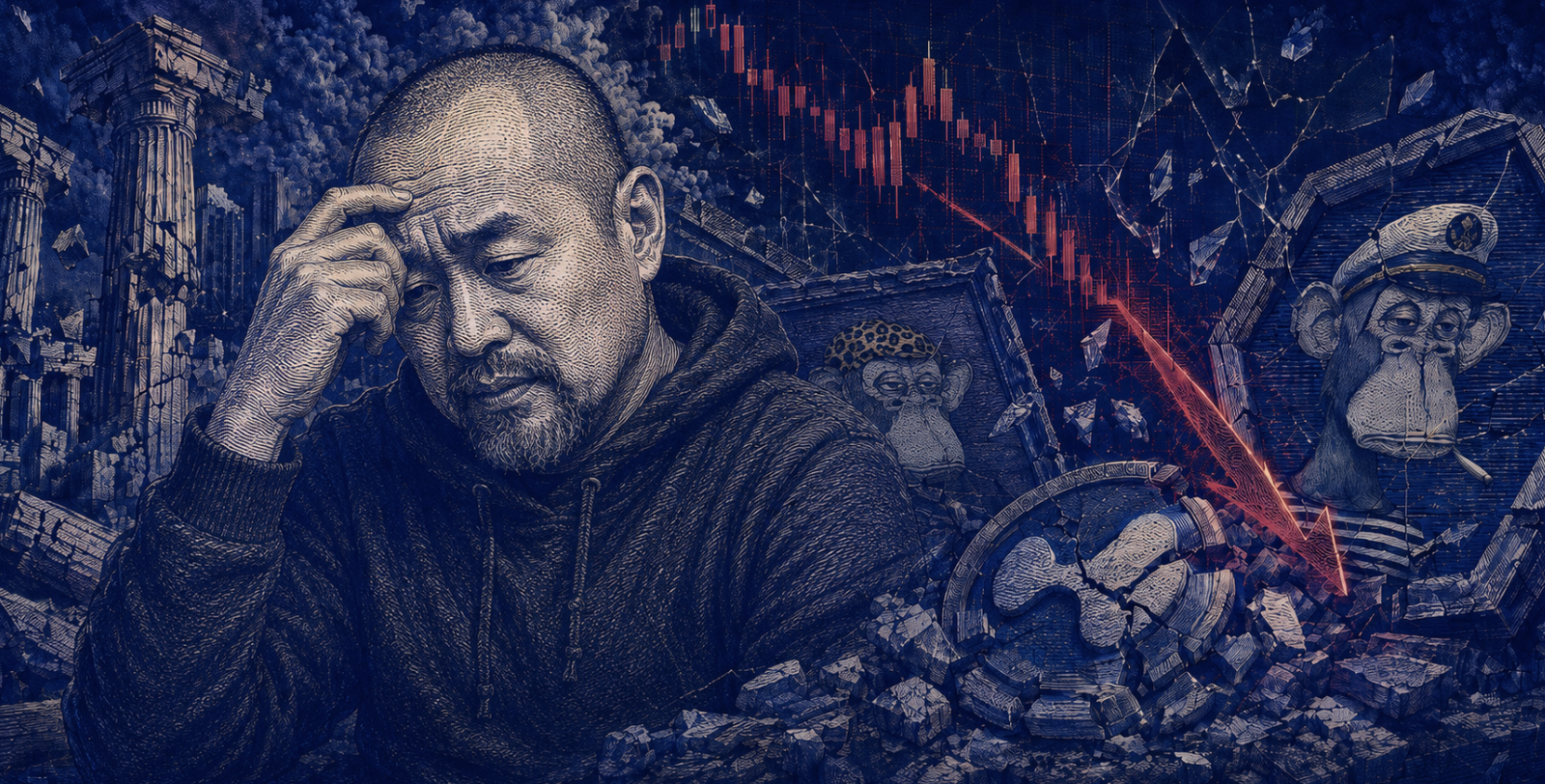
Taiwanese crypto whale "Machi Big Brother" Jeffrey Huang has been forced to sell his prized Bored Ape Yacht Club (BAYC) NFTs at significant losses to cover mounting losses from a highly leveraged ETH long position on Hyperliquid. Over the past month, Huang sold 34 BAYC NFTs for 326 ETH (approx. $514,000), realizing a loss of 399 ETH (approx. $631,000). The proceeds were transferred to Hyperliquid to replenish margin for his perpetual contract trades. One ape, BAYC #6057, bought for 76.84 ETH four years ago, was sold for just 7.65 ETH, a 90% loss in ETH terms. Huang began his high-leverage (25-40x) ETH long strategy in September 2025 when ETH was around $4,700. While his account once showed over $45 million in unrealized profit, the subsequent crash of ETH to the $1,600 range erased all gains. As of June 26, his cumulative losses on Hyperliquid reached $33.85 million, with over 335 liquidations earning him the community nickname "King of Liquidations." With conventional funds depleted, Huang's once-valuable NFT collection, which at its peak included around 200 BAYCs and was worth tens of millions, has become a lifeline. His remaining ~150 BAYCs, valued at roughly $1.6 million at current floor prices, provide only limited runway for his persistent high-stakes trading. Huang rose to prominence in crypto as a key figure in popularizing BAYC NFTs in Asia during the 2021 bull market. His pivot to perpetual contracts has now led to a cycle where his iconic "monkeys" are being sold to fund a failing trading strategy.

Foresight News52 min fa

Margin Exhausted, "Brother Huang Li Cheng" Begins Selling Monkeys at a Loss

Foresight News52 min fa

Bitcoin's Five-Wave Adjustment Nears End, Opportunities Emerge in HYPE Support Zone | Invited Analysis

**Bitcoin's Five-Wave Adjustment Nears End, HYPE Support Zone Presents Opportunity | Guest Analysis** This week, Bitcoin (BTC) is in the final stage of a five-wave corrective structure. The formation of 'Endpoint 44' is key: a level above $58,110 suggests a high probability of a technical rebound, leading likely to wide-range consolidation. A break below $58,110 without bullish divergence warrants caution for further downside. Mid-term bearish positions are maintained at 20%, with 30% of capital reserved for short-term scalping opportunities based on predefined support/resistance levels and three scenario-based plans (A/B/C). Simultaneously, HYPE has entered the 55-56 segment of its own five-wave correction from its $76.94 high. If 'Endpoint 56' forms above the prior low (Endpoint 54), creating a double-bottom pattern, a rebound is significantly likely. A light long position (under 30% allocation) can be considered upon stabilization in the support zone. Last week's BTC short-term strategy, guided by proprietary quantitative models, successfully executed two short trades (1x leverage), yielding a total return of approximately 6.21%. The market move validated the prior weekly forecast of a retest towards the $59,100 support. **Core Trading Views Summary:** * **BTC:** Focus on the formation of 'Endpoint 44'. A scenario above $58,110 allows for tentative longs. Key resistances: $60,900-$62,300, ~$65,500, $67,300-$69,500. Key supports: ~$58,100, ~$55,000. * **HYPE:** Monitor the final position of 'Endpoint 56'. Key resistances: ~$65.5, ~$71.5. Key supports: ~$58.5, $52-$54 zone. Strategy favors buying on dips upon stabilization in support areas with confirmed model signals, with strict position control. **Risk Disclaimer:** Financial markets are volatile. All analysis, models, and strategies herein are based on personal technical analysis for journaling purposes only, not investment advice. Trade at your own risk.

Odaily星球日报1 h fa

Bitcoin's Five-Wave Adjustment Nears End, Opportunities Emerge in HYPE Support Zone | Invited Analysis

Odaily星球日报1 h fa

Trading

Spot
活动图片