Profits Fall by a Quarter: Why Tether Abandoned Its $20 Billion Financing Plan

marsbitPubblicato 2026-02-05Pubblicato ultima volta 2026-02-05

Introduzione

In the face of a cooling crypto market and investor skepticism, Tether, the world's largest stablecoin issuer, has significantly scaled back its ambitious fundraising plans. Initially targeting $15-20 billion, which would have valued the company at $500 billion, the firm is now considering raising only about $5 billion. CEO Paolo Ardoino downplayed the original target, calling it a "misunderstanding" and a maximum cap, not a goal, while emphasizing that Tether is highly profitable and doesn't urgently need the capital. Despite the success of its USDT stablecoin, which has a market cap of approximately $185 billion, Tether faces persistent investor caution. Concerns revolve around its $500 billion valuation—comparable to major AI firms and SpaceX—ongoing regulatory scrutiny, and the lack of a full independent audit, relying instead on quarterly attestations. Ardoino defended the valuation, contrasting Tether's substantial profits with the losses of highly-valued AI companies. While new U.S. stablecoin legislation and competitor Circle's IPO have boosted momentum, regulatory risks and Tether's controversial history remain hurdles. The company's profits fell by about a quarter in 2025, attributed to declining Bitcoin prices, though it gained $8-10 billion from its gold holdings. Tether's massive scale has made it a major player in U.S. Treasuries and gold markets, positioning it as a critical bridge between traditional finance and the volatile crypto world.

Editor's Note: Against the backdrop of a cooling crypto market and pressured valuation narratives, Tether finds itself in a delicate position. On one hand, the continued expansion of USDT has made it an undeniable 'new financial player' in the U.S. Treasury and gold markets. On the other hand, a lofty $500 billion valuation expectations, an incomplete comprehensive audit, and long-standing regulatory and compliance controversies continue to make potential investors cautious.

Tether's next move may reflect not only its own choices but also the practical boundaries the entire stablecoin industry is facing.

The following is the original text:
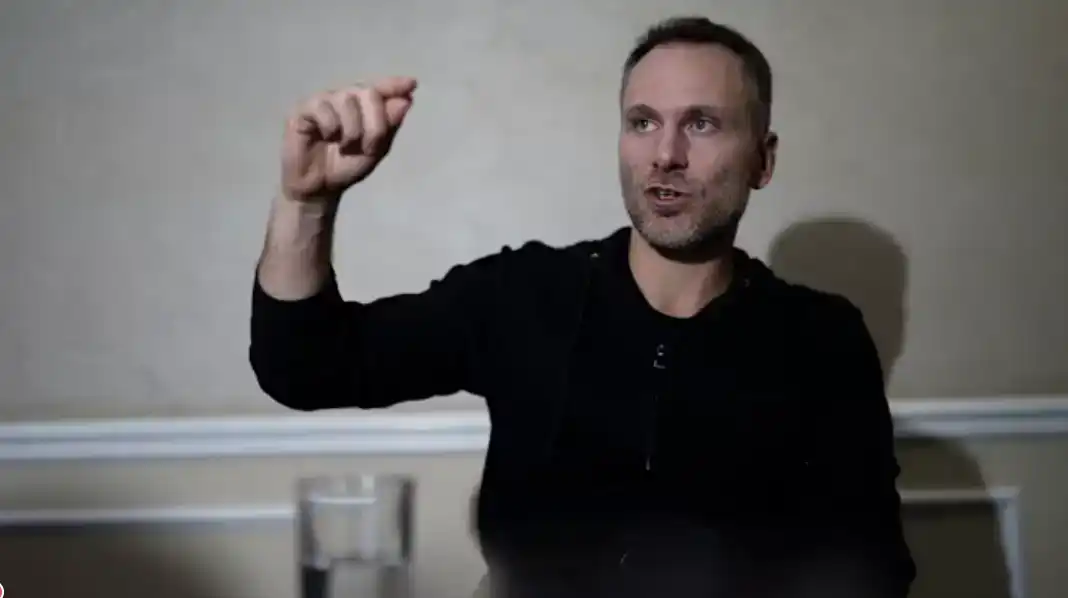
As investors expressed skepticism about its $500 billion valuation target, the CEO of Tether, the world's largest stablecoin issuer, proactively downplayed expectations and attention regarding its financing scale.

This crypto group, registered in El Salvador, initiated financing negotiations last year, planning to raise $15 to $20 billion. Had the deal been completed, it would have placed Tether among the world's most valuable private companies.

But according to informed sources, after encountering investor hesitation, Tether's advisors have begun exploring the possibility of raising only about $5 billion.

Tether CEO Paolo Ardoino downplayed the potential financing scale, calling the previously stated $15 to $20 billion target "a misunderstanding."

"That number was not our target; it was just the maximum we were willing to sell," he said in an interview. "We would be equally happy not selling a single cent."

Ardoino stated that Tether is highly profitable and has received "significant interest" at the $500 billion valuation level. He added that the company has not yet decided how much equity to sell, partly because insiders are reluctant to reduce their holdings.

The company's dollar-pegged stablecoin, USDT, currently has a scale of approximately $1.85 trillion and is regarded as the "reserve currency" of the digital asset market. Control of Tether is concentrated in the hands of a small group of long-serving executives.

The market has been closely watching Tether's progress in attracting well-known investors, seeing it as a key indicator of investor interest in the crypto industry. It is widely believed that this move is more about consolidating Tether's credibility and network, as the company, generating billions of dollars in profit annually, does not urgently need new capital.

Following Trump's election as president, the market was once boosted by expectations of a more friendly U.S. regulatory environment for digital assets. However, over the past six months, as traders retreated from high-risk speculative assets, the crypto market has seen a significant pullback.

Some investors have privately expressed concerns about the $500 billion valuation, which would place Tether among the top private companies globally, alongside AI firms like OpenAI and Anthropic, as well as Musk's SpaceX and TikTok's parent company ByteDance.

Ardoino argued that Tether—which disclosed profits of approximately $10 billion last year, primarily from returns on the asset reserves backing USDT's value—deserves a valuation comparable to these still-unprofitable AI model companies.

"These AI companies make about the same amount of money as we do, just with a huge minus sign in front," he said. "If you're willing to believe an AI company with a massive minus sign in front is worth $800 billion, that's your choice."

Both Tether and its financing advisor, Cantor Fitzgerald, declined to comment on the size of this financing. The investment bank, run by the children of U.S. Commerce Secretary Howard Lutnick, also holds a stake in Tether.

Informed sources cautioned that the negotiations are ongoing and the financing terms could still change; if the overall crypto market strengthens again, investor sentiment could also reverse.
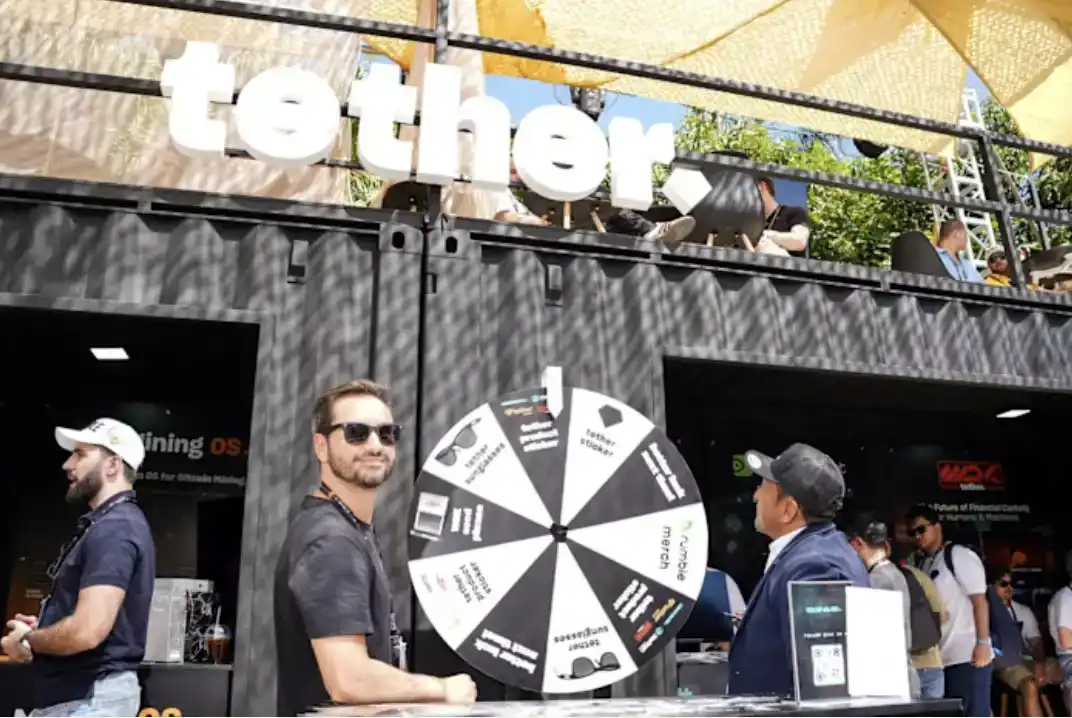
Ardoino stated that the new U.S. stablecoin legislation signed into law by Trump, coupled with the listing of U.S. rival Circle last year, has further increased market attention and momentum for Tether. Tether recently also launched a new token in the U.S. that complies with this regulatory framework.

But informed sources said some potential investors remain cautious about the regulatory risks surrounding Tether. Since its founding in 2014, this crypto group has long faced scrutiny, with controversies primarily focusing on whether its tokens are used for illegal activities and the transparency and quality of its asset reserves.

In recent years, Tether has begun publishing quarterly reserve attestations by the accounting firm BDO Italia, but it has never undergone a full independent audit.

Ardoino stated that the company has demonstrated the depth of its technical tools for collaboration with various law enforcement agencies to potential investors, to prove its capabilities in compliance and law enforcement cooperation.

S&P Global Ratings downgraded Tether's reserve rating to the lowest tier in its system late last year, citing its increasing exposure to high-risk assets like Bitcoin and gold. In response, Ardoino said at the time: "We wear your disdain as a badge of honor."

Since 2020, the growth of USDT has significantly accelerated, making Tether one of the world's largest buyers of U.S. Treasuries and, in recent months, a major player in the gold market.

Asset allocation on such a massive scale makes Tether one of the most critical connecting nodes between the global financial system and the highly volatile world of cryptocurrency.

Compared to the previous year, Tether's profits for 2025 fell by about a quarter. Ardoino attributed this change to the decline in Bitcoin's price. He added that the company gained approximately $8 to $10 billion in profits from its gold holdings, benefiting from rising precious metal prices.

Domande pertinenti

QWhy did Tether significantly scale back its fundraising target from up to $20 billion to potentially only $5 billion?

ATether's CEO, Paolo Ardoino, stated that the initial $15-20 billion figure was a 'misunderstanding' and represented the maximum they were *willing* to sell, not a target. Investor hesitation over the company's $500 billion valuation and internal shareholders' reluctance to sell their stakes contributed to the reduced scale.

QWhat was the primary reason for Tether's 25% profit decline in 2025, according to its CEO?

APaolo Ardoino attributed the approximately 25% profit decline in 2025 primarily to a decrease in the price of Bitcoin.

QWhat are the main regulatory and transparency concerns that make some potential investors cautious about Tether?

APotential investors are cautious due to Tether's long history of scrutiny over whether its tokens are used for illicit activity, the transparency and quality of its asset reserves, and the fact that it has not undergone a full independent audit, relying instead on quarterly attestations from BDO Italia.

QHow does Tether's CEO justify the company's proposed $500 billion valuation compared to major AI companies?

APaolo Ardoino argues that Tether, which is highly profitable, deserves a valuation comparable to major AI companies that are still reporting losses, stating, 'These AI companies make about the same money as us, just with a big minus sign in front.'

QWhat two major roles does Tether now play in the broader financial system, according to the article?

ATether has become one of the world's largest buyers of U.S. Treasury bonds and a significant participant in the gold market. This makes it a critical connecting node between the global financial system and the highly volatile world of cryptocurrencies.

Letture associate

Bitcoin Mining Farms Are Becoming AI Factories

Bitcoin mines are transforming into AI factories. This shift is driven by the convergence of three key assets from the previous crypto cycle: infrastructure, talent, and capital. Crypto mining companies like Crusoe, CoreWeave, and Bitdeer are repurposing their core competency—securing power, land, and grid connections in remote locations—to build data centers for AI clients. These firms are signing multi-billion dollar, long-term contracts with companies like Anthropic, AWS, and Microsoft, as AI's demand for reliable, high-capacity compute surpasses the profitability of Bitcoin mining. Simultaneously, crypto entrepreneurs and engineers are applying their skills to new AI ventures. Examples include OpenSea's co-founder launching OpenRouter (an AI model aggregator), and former Coinbase engineers building Fal.ai (a generative media infrastructure platform). Their experience in building scalable, global software networks translates effectively to the AI space. Furthermore, capital accumulated during the crypto boom is now fueling AI. Figures like Jed McCaleb (co-founder of Ripple) funded Voltage Park, a large-scale GPU cloud provider. Notably, some crypto investments, like FTX's early bets on Anthropic and Cursor, have generated astronomical paper returns, demonstrating how high-risk crypto capital flowed into AI before it became mainstream. The transition is not just about repurposing hardware, but about redirecting critical resources—power infrastructure, distributed systems expertise, and venture funding—to the next technological frontier: artificial intelligence.

链捕手15 min fa

Bitcoin Mining Farms Are Becoming AI Factories

链捕手15 min fa

Morpho Launches Fixed-Rate Product Midnight: Lenders and Borrowers Set Their Own Rates, Ending the Era of Interest Rate Models

Morpho Launches Fixed-Rate Product Midnight: Lenders and Borrowers Set Their Own Rates, Ending the Era of Algorithmic Interest Models On-chain lending has grown to $60 billion but remains minuscule compared to traditional finance's $200 trillion annual credit volume. Morpho identifies the lack of fixed rates and maturity dates as key bottlenecks. Institutions need predictability, not the passive floating rates set by algorithmic models. Midnight allows lenders and borrowers to directly quote rates, set terms, and become price makers, not takers. Fixed-rate lending is now viable due to cheaper, faster blockchains and the entry of institutions demanding control and certainty over returns, costs, and duration. Morpho Blue previously gave users control over risk; Midnight adds control over interest rates. Past attempts at on-chain fixed-rate lending failed primarily because they were built on top of floating-rate pools (creating unpredictability) or lacked sufficient active participants. Midnight avoids these pitfalls as a standalone primitive with fixed rates at its core, built upon Morpho Blue's existing large and active user base. Midnight offers distinct value: institutions gain predictable term structures and full control; fintech companies can offer tailored fixed-rate products; lenders/borrowers achieve predictability and efficiency; and curators can now differentiate by configuring both risk and interest rates. Morpho Midnight is not a replacement for Morpho Blue. The Morpho network will now feature two complementary market structures: floating-rate/open-term (Blue) for flexibility and fixed-rate/fixed-term (Midnight) for predictability. Liquidity can flow between them. The launch will be gradual, prioritizing security. Initially, it will support direct lending on Base network with one trading pair (cbBTC/USDC) and limited maturity dates. Advanced features like auto-rollovers will be introduced later.

marsbit15 min fa

Morpho Launches Fixed-Rate Product Midnight: Lenders and Borrowers Set Their Own Rates, Ending the Era of Interest Rate Models

marsbit15 min fa

human.tech Launches Clean SDK for Privacy-First Web3 Apps

human.tech has launched the Clean SDK, a toolkit enabling developers to build privacy-first Web3 applications with transparent accountability. Released alongside Aztec's version 5, the SDK provides components for integrating zero-knowledge identity verification, sanctions screening, and private transactions, without developers handling sensitive user data or building compliance infrastructure from scratch. It uses zero-knowledge proofs and programmable verification to allow apps to confirm user legitimacy and sanctions compliance while keeping identities confidential. The first application built on the SDK, Shield, a privacy bridge to Aztec, also launched. It allows users to transfer assets privately while proving a unique human is behind each transfer and that funds have passed sanctions checks, as verified by a May 2026 audit. The SDK offers three core verification techniques: Proof of Innocence (sanctions screening against 23 sources), Proof of Personhood (simpler verification via Human Passport), and Proof of Clean Hands (higher-assurance zero-knowledge government ID checks). This allows apps to authenticate users and transactions without exposing personal data. Designed for Aztec builders, the SDK lets developers add programmable privacy to decentralized apps, eliminating the need to create their own verification and ZK infrastructure. Shield demonstrates its practical use for private bridges, but the SDK aims to enable a wider ecosystem of private, accountable financial apps and services. The launch addresses growing demand for infrastructure that balances privacy and accountability. The SDK avoids traditional identity databases, storing encrypted data off-chain, screening at both entry and exit points, and including a gated disclosure mechanism for legal requests. human.tech's products, including the Clean SDK, focus on using zero-knowledge technology to enable verifiable personhood and privacy in digital systems.

TheNewsCrypto52 min fa

human.tech Launches Clean SDK for Privacy-First Web3 Apps

TheNewsCrypto52 min fa

Trading

Spot
活动图片