Polymarket Faces Ban In Indonesia Amid Growing Global Crackdown

bitcoinistPubblicato 2026-05-26Pubblicato ultima volta 2026-05-26

Introduzione

Indonesia has blocked access to the prediction market platform Polymarket, joining a growing global regulatory crackdown. The ban was enacted after a widely shared bet on the premature end of President Prabowo Subianto's term drew attention. Authorities declared that platforms facilitating real-money wagers on events, even using crypto or blockchain, constitute illegal gambling. The government is also targeting social media accounts promoting such services and warning the public against participation. This move aligns with actions taken by other jurisdictions. Several countries, including Taiwan, Thailand, China, India, Singapore, Colombia, and Argentina, have previously restricted or blocked Polymarket, often citing its unlicensed gambling operations. In March, Brazil's central bank banned prediction markets like Polymarket over regulatory non-compliance. In the United States, the sector faces scrutiny from lawmakers. A formal investigation was recently launched into Polymarket and Kalshi regarding suspicious trades and compliance measures, coinciding with legal setbacks for the companies in Nevada and Washington.

Amid the global crackdown on online gambling and prediction markets, Indonesia has joined the list of jurisdictions imposing restrictions on Polymarket and similar platforms after a bet on the President’s term drew online attention.

Indonesia Blocks Access To Polymarket

Indonesia recently blocked access to the prediction market platform Polymarket after a widely shared bet on the premature end of Prabowo Subianto’s presidency gained traction on social media last week.

In an official statement, the Ministry of Communication and Digital Affairs announced the ban, affirming that the measure aims to protect the public, particularly the younger generation and users of the digital space.

Director General of Digital Space Supervision Alexander Sabar affirmed that platforms facilitating real-money wagers on event outcomes are considered gambling, even when framed as “prediction markets” and using blockchain technology or crypto assets.

“The government will not tolerate any form of online gambling in Indonesia. Activities like Polymarket involve monetary betting and speculation on events with uncertain outcomes, which violates applicable Indonesian laws,” Alex emphasized.

Therefore, authorities will block access to other prediction market services suspected of “facilitating online gambling practices.” In addition, the government is tracking down social media accounts affiliated with or promoting Polymarket to ensure the ban is enforced across other platforms.

The Ministry also urged the public not to access or engage in digital betting-based speculation activities, including those using crypto, as these activities could violate Indonesian laws and cause financial losses for users.

Global Regulatory Pressure Mounts

Indonesian authorities noted that their decision to restrict access to Polymarket aligns with other global legal frameworks. As the announcement stated, several other jurisdictions have also implemented measures against Polymarket and other prediction market platforms, arguing that they resemble online gambling practices.

Over the past two years, Taiwan, Thailand, China, and India have imposed restrictions on Polymarket under their respective local laws, while Singapore, Colombia, and India have officially blocked the platform.

In March, Argentinian authorities ordered a nationwide blockade of Polymarket after it predicted inflation data. As reported by Bitcoinist, a Buenos Aires court directed internet service providers, Google, and Apple to block access to the platform, arguing that it operated as an unlicensed online gambling platform.

Meanwhile, Brazil’s central bank announced a ban on prediction markets and betting platforms in March, including Polymarket and Kalshi. The authorities affirmed that the platforms failed to comply with local regulations on derivatives trading and raised concerns about investor protections and market integrity.

Prediction markets have also faced scrutiny in the US, with policymakers and State-level authorities putting pressure on the sector. Last week, House of Representatives member James Comer launched a formal investigation into Polymarket and Kalshi following a series of suspicious trades linked to classified US military operations and key geopolitical events.

The lawmaker announced that he had sent a letter to the CEOs of both companies seeking information on how their platforms detect and prevent insider trading. He also asked for details on how they verify user identities and enforce bans on users from restricted jurisdictions. On the same day, the two prediction market giants lost their bids to halt the gambling-related enforcement actions against them in Nevada and Washington.
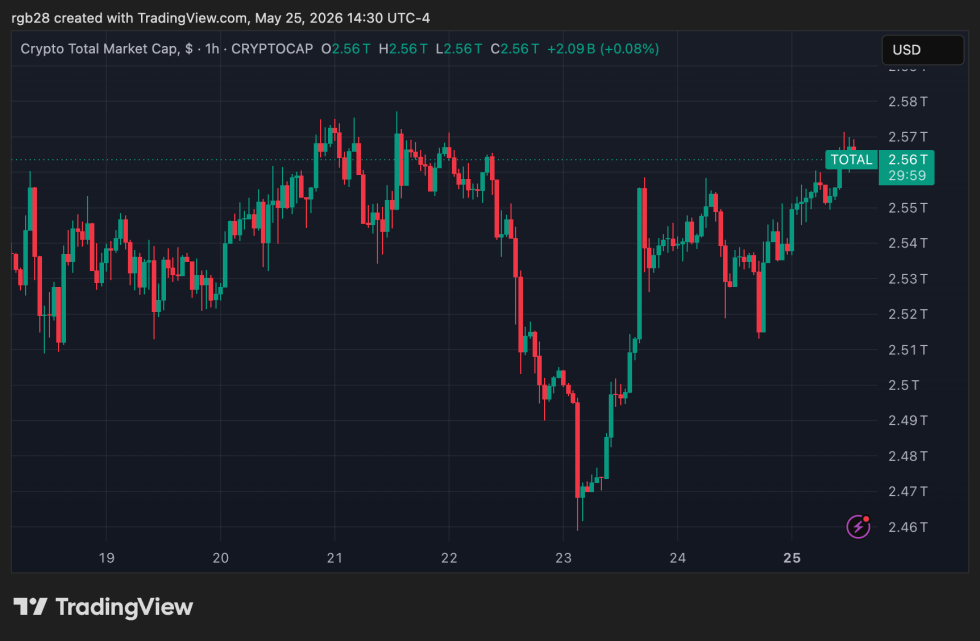
The total crypto market capitalization is at $2.56 trillion in the one-week chart. Source: TOTAL on TradingView


Domande pertinenti

QWhat was the specific event or bet on Polymarket that directly triggered Indonesia's decision to ban the platform?

AThe direct trigger was a widely shared bet on the platform predicting the premature end of Prabowo Subianto's presidency, which gained significant traction on social media.

QAccording to Indonesia's Director General of Digital Space Supervision, Alexander Sabar, why are prediction markets like Polymarket considered gambling under Indonesian law?

AHe stated that any platforms facilitating real-money wagers on event outcomes are considered gambling, regardless of whether they are framed as 'prediction markets' or use blockchain technology or crypto assets, as they involve monetary betting on uncertain outcomes.

QBesides Indonesia, which other countries are mentioned in the article as having officially blocked access to Polymarket?

AThe article mentions Singapore, Colombia, India, and Argentina as countries that have officially blocked access to Polymarket.

QWhat was the reason given by Brazilian authorities for their ban on prediction market platforms like Polymarket and Kalshi in March?

ABrazilian authorities stated that the platforms failed to comply with local regulations on derivatives trading and raised concerns about investor protections and market integrity.

QWhat action did U.S. House Representative James Comer take regarding Polymarket and Kalshi, and what specific information did he request?

AHe launched a formal investigation and sent letters to the CEOs of both companies. He requested information on how their platforms detect and prevent insider trading, verify user identities, and enforce bans on users from restricted jurisdictions.

Letture associate

Fei-Fei Li's Team Clarifies the Concept of 'World Models', Sora Merely a Renderer

"World Models" has become a widely used yet confusing term in AI. To address this, a team led by Fei-Fei Li and World Labs proposed a functional taxonomy based on the Partially Observable Markov Decision Process framework. This taxonomy categorizes systems called "world models" into three distinct projections: Renderers, Simulators, and Planners. Renderers, like OpenAI's Sora and other video generation models, focus on producing photorealistic visual outputs for human perception. They prioritize visual fidelity over physical accuracy. Simulators, such as NVIDIA Omniverse, aim to compute precise future environmental states for computational tasks like engineering analysis or digital twins. Planners, like Vision-Language-Action models, take in observations and goals to output executable actions for robots or agents. The article clarifies that most current "world models," including Sora, are primarily Renderers. They generate convincing visuals but lack the core ability to simulate state transitions based on actions, a key requirement for a true world model in classic reinforcement learning definitions. This conceptual confusion has practical implications, leading to potential misalignment in technology selection, investment, and public understanding of AI capabilities. Clear categorization is crucial. It helps enterprises avoid costly mistakes (e.g., using a renderer for robot training), allows investors to accurately assess markets, and enables researchers to build comparable benchmarks. While future systems may integrate these functions, recognizing current boundaries is essential for honest assessment and progress.

marsbit1 h fa

Fei-Fei Li's Team Clarifies the Concept of 'World Models', Sora Merely a Renderer

marsbit1 h fa

Bloomberg Uncovered: How Do China's Wealthy Circumvent the Annual $50,000 Limit to Transfer Assets?

**Summary: How Wealthy Chinese Circumvent $50,000 Annual Foreign Exchange Limits** Despite China's strict capital controls, including an annual $50,000 per person foreign exchange quota, an estimated $150 billion in funds still leaves the country annually via various gray and underground channels. This report outlines the evolution of China's "capital wall" and the methods used to bypass it. **The Evolving Capital Controls:** * **Foundation (1994):** The system of "current account convertibility with strict capital account controls" was established. * **Quota Set (2007):** The $50,000 individual annual forex purchase limit was formalized. * **Crackdown Begins (2015-2017):** Following market volatility, enforcement tightened. Banks were required to scrutinize transactions, and channels like using UnionPay cards for Hong Kong insurance premiums or buying overseas property were blocked. * **Digital & Legal Upgrades (2024-2026):** Enhanced algorithms now flag suspicious patterns (e.g., "smurfing"). The Common Reporting Standard (CRS) provides Chinese tax authorities with data on citizens' offshore accounts. Unlicensed cross-border brokers have been targeted. **Five Primary Methods for Moving Capital:** 1. **Underground Banking / "Hawala" (Duiqiao):** The largest-scale method. No money crosses borders. Clients pay RMB to a domestic account; an overseas associate deposits equivalent foreign currency into the client's offshore account. Risks include high fees, account freezes, and legal penalties. 2. **"Smurfing" or "Ant Moving":** Using multiple individuals' $50,000 quotas to pool funds for one offshore recipient. Increasingly detected by anti-money laundering algorithms. 3. **Trade Invoice Manipulation:** Businesses over-invoice imports or under-invoice exports via offshore shell companies, creating a pretext to transfer excess funds abroad under the guise of trade. 4. **Channel Migration:** After a crackdown on internet brokers, funds flow toward more compliant but costly channels like major banks' cross-border wealth management services or Qualified Domestic Institutional Investor (QDII) quotas. 5. **Structural Arrangements:** High-net-worth individuals use complex, high-cost legal structures involving offshore trusts, insurance, and investment migration programs to transfer asset ownership. **Regulatory Response: Focusing on People, Not Just Money** The current strategy extends oversight from enterprises to **individual residents**. Tools like CRS allow retroactive visibility into offshore assets. Cryptocurrencies, once seen as a potential loophole, are now actively monitored and prosecuted as an illegal channel. The underlying driver remains: with significant wealth concentrated among millions of affluent households seeking diversification amid domestic economic shifts, the incentive to move assets offshore persists despite regulatory barriers.

marsbit1 h fa

Bloomberg Uncovered: How Do China's Wealthy Circumvent the Annual $50,000 Limit to Transfer Assets?

marsbit1 h fa

Trading

Spot
Futures

Articoli Popolari

Come comprare BAN

Benvenuto in HTX.com! Abbiamo reso l'acquisto di Comedian (BAN) semplice e conveniente. Segui la nostra guida passo passo per intraprendere il tuo viaggio nel mondo delle criptovalute.Step 1: Crea il tuo Account HTXUsa la tua email o numero di telefono per registrarti il tuo account gratuito su HTX. Vivi un'esperienza facile e sblocca tutte le funzionalità,Crea il mio accountStep 2: Vai in Acquista crypto e seleziona il tuo metodo di pagamentoCarta di credito/debito: utilizza la tua Visa o Mastercard per acquistare immediatamente ComedianBAN.Bilancio: Usa i fondi dal bilancio del tuo account HTX per fare trading senza problemi.Terze parti: abbiamo aggiunto metodi di pagamento molto utilizzati come Google Pay e Apple Pay per maggiore comodità.P2P: Fai trading direttamente con altri utenti HTX.Over-the-Counter (OTC): Offriamo servizi su misura e tassi di cambio competitivi per i trader.Step 3: Conserva Comedian (BAN)Dopo aver acquistato Comedian (BAN), conserva nel tuo account HTX. In alternativa, puoi inviare tramite trasferimento blockchain o scambiare per altre criptovalute.Step 4: Scambia Comedian (BAN)Scambia facilmente Comedian (BAN) nel mercato spot di HTX. Accedi al tuo account, seleziona la tua coppia di trading, esegui le tue operazioni e monitora in tempo reale. Offriamo un'esperienza user-friendly sia per chi ha appena iniziato che per i trader più esperti.

500 Totale visualizzazioniPubblicato il 2024.12.11Aggiornato il 2026.06.02

Come comprare BAN

Discussioni

Benvenuto nella Community HTX. Qui puoi rimanere informato sugli ultimi sviluppi della piattaforma e accedere ad approfondimenti esperti sul mercato. Le opinioni degli utenti sul prezzo di BAN BAN sono presentate come di seguito.

活动图片












