Playnance’s $GCOIN Lists on KoinBX Amid Rapid Growth in India

TheNewsCryptoPubblicato 2026-06-19Pubblicato ultima volta 2026-06-19

Introduzione

Playnance's native token, $GCOIN, has been listed on the cryptocurrency exchange KoinBX as of June 18. This move aims to enhance accessibility for its rapidly growing community, particularly in India, where the blockchain-powered Web3 iGaming ecosystem has gained significant traction. Over 130 partners in Playnance's "Be the Boss" program have built communities engaging thousands of active players in the region. The "Be the Boss" model allows participants to create and manage their own gaming communities, earning rewards tied to community activity. CEO Pini Peter noted India's high engagement, with community leaders successfully building player networks. One partner, Dr. Nicolas, reported earning over $57,000 through the program in recent months, highlighting both the financial rewards and the opportunity to grow an engaged community. $GCOIN serves as the ecosystem's core utility token, incentivizing participation and aligning the interests of players and community leaders ("Bosses"). The listing on KoinBX is part of Playnance's strategy to expand globally, increasing the token's utility and accessibility by combining community ownership, gamified engagement, and blockchain-based incentives. Founded in 2020, Playnance is a Web3 iGaming infrastructure company focused on creating live, non-custodial, on-chain products to onboard mainstream users. It currently processes approximately one million transactions daily, aiming to simplify the user experience while maintaining full...

Playnance, the blockchain-powered web3 igaming ecosystem that is responsible for the “Be the Boss” program, made the announcement on June 18 that its native token, $GCOIN, was listed on KoinBX. This allowed for increased access to one of the communities that is expanding at the quickest rate.

Playnance is continuing to gain momentum in India, where more than 130 partners in Playnance’s Be the Boss program have joined the platform and developed communities that together engage thousands of active players. The listing comes at a time when Playnance is seeing tremendous growth in India. Participants have the ability to establish and govern their own gaming communities via the “Be the Boss” concept of the ecosystem, while also receiving incentives that are related to the activities they engage in as part of their community.

“India has become one of the most engaged markets in the Playnance ecosystem,” said Pini Peter, CEO of Playnance. “We’ve seen community leaders embrace the ‘Be the Boss’ model and build thriving player networks around it. The KoinBX listing is a natural next step that will make $GCOIN more accessible to the growing community helping drive our ecosystem forward.”

A Be The Boss partner named Dr. Nicolas is one of the individuals who have participated in the program. Over the course of the last several months, he has earned more than $57,000 via the program.

“What attracted me to the platform was the opportunity to build something of my own,” he said. “The rewards have been significant, but more importantly, I’ve been able to grow an engaged community and participate in an ecosystem that continues to expand. The KoinBX listing is another milestone that reflects that growth.”

This ecosystem is centered on the cryptocurrency known as $GCOIN, which functions as the basic utility token for the ecosystem. In order to reward involvement, align incentives between players and Bosses, and encourage activity throughout the Playnance network as a whole, the token is used. $GCOIN works to integrate community growth with ecosystem involvement, therefore developing a paradigm in which users are rewarded to contribute to the long-term success of the platform. This model is created as acceptance of the cryptocurrency increases.

Playnance is continuing to grow its footprint in important foreign regions, and the KoinBX listing is the next stage in the development plan that the company has been implementing. The firm’s goal is to increase the usefulness and accessibility of $GCOIN all over the globe by integrating community ownership, gamified participation, and blockchain-based incentives. This will allow the company to generate new possibilities for players and community leaders.

Playnance is a Web3 iGaming infrastructure firm that was established in the year 2020. The company is in the process of producing live, non-custodial, on-chain products with the intention of onboarding mainstream Web2 customers into blockchain settings. At the moment, the firm processes around one million transactions every single day. It does this by building consumer-facing platforms that are supported by shared wallet systems and high-volume on-chain execution. The primary objective of Playnance is to eliminate friction between the user experience and the blockchain infrastructure. This is accomplished by abstracting complexity while preserving complete on-chain transparency and non-custodial design.

TagsAltcoinBlockchain

Domande pertinenti

QWhat is the name of the Playnance program that allows participants to establish and govern their own gaming communities?

AThe program is called the 'Be the Boss' program.

QOn which date was the announcement made regarding the listing of $GCOIN on the KoinBX exchange?

AThe announcement was made on June 18.

QWhich country's market does Pini Peter, CEO of Playnance, describe as 'one of the most engaged markets in the Playnance ecosystem'?

AHe describes India as one of the most engaged markets.

QHow much has a participant named Dr. Nicolas reportedly earned through the 'Be the Boss' program over the last several months?

ADr. Nicolas has earned more than $57,000 through the program.

QWhat is the primary function of the $GCOIN token within the Playnance ecosystem?

A$GCOIN functions as the basic utility token for the ecosystem, used to reward involvement, align incentives between players and Bosses, and encourage activity throughout the Playnance network.

Letture associate

The Reality of Payments in Latin America Is Not What You Think

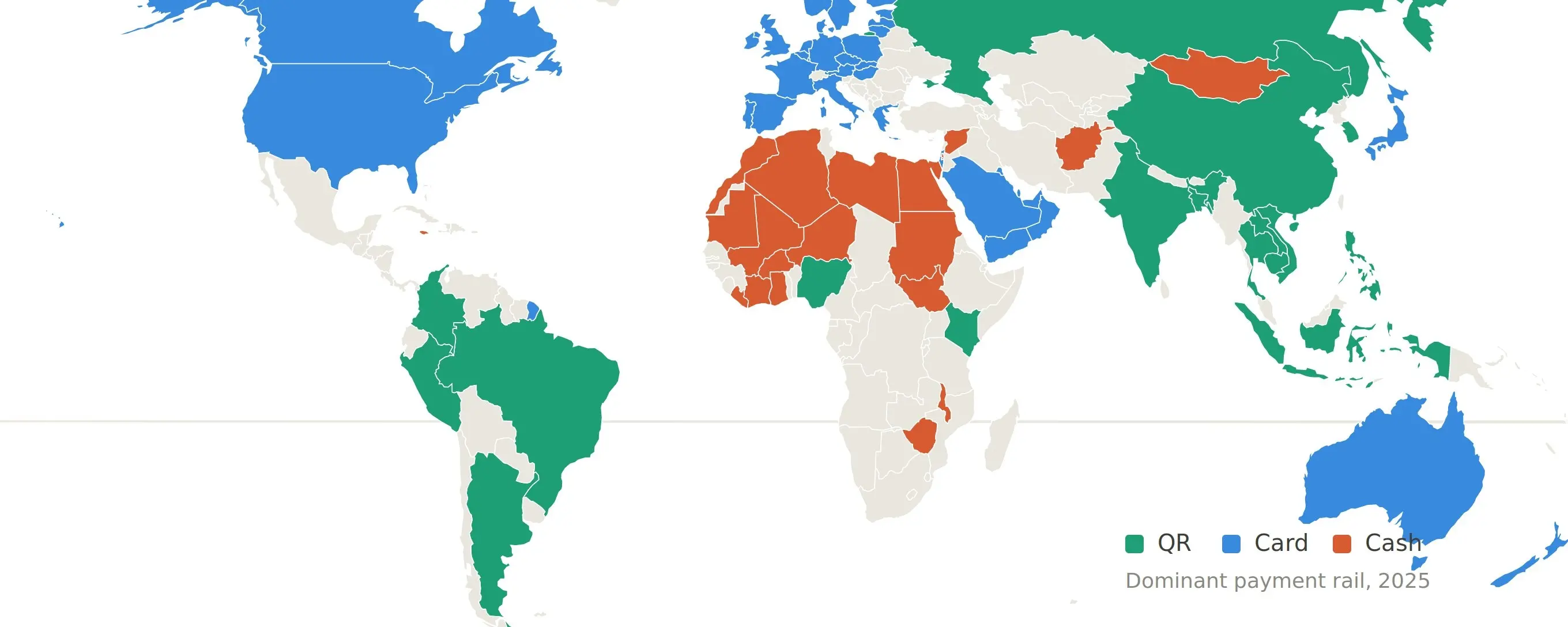
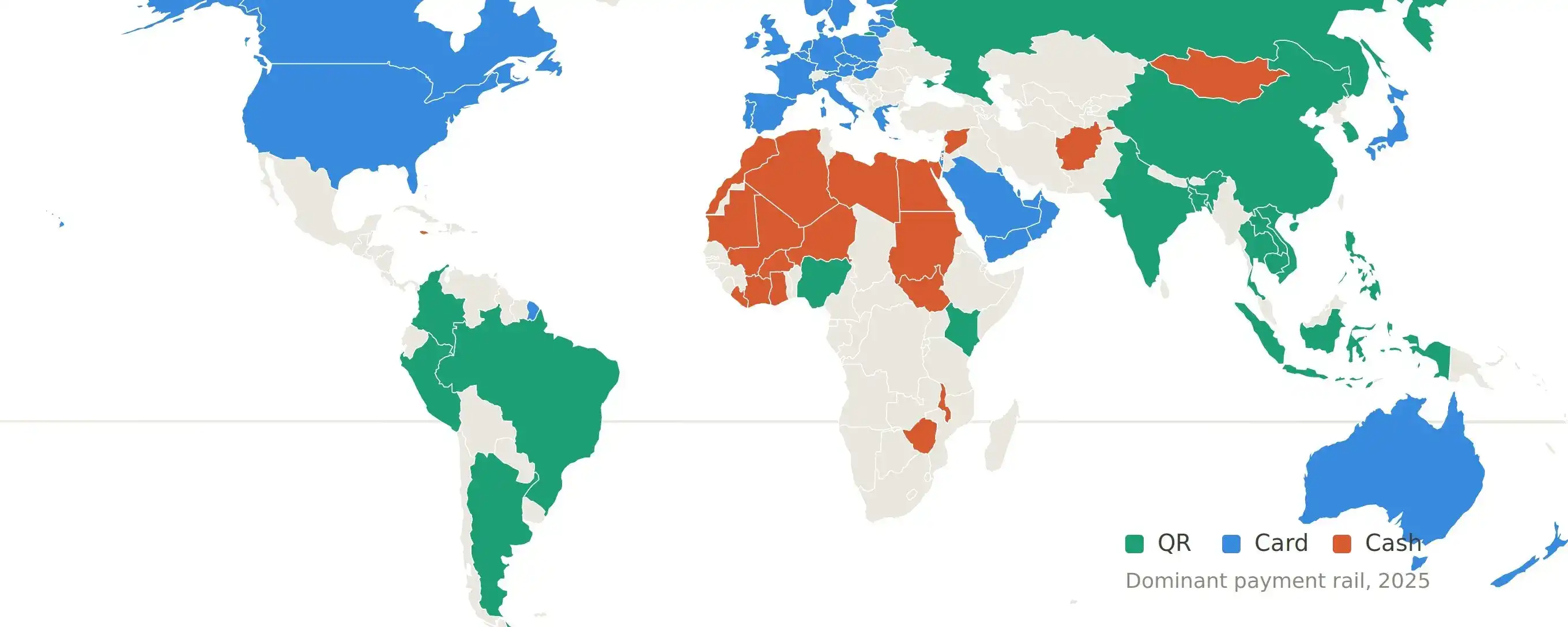
The payment landscape in Latin America is undergoing a fundamental shift, driven by on-the-ground realities that challenge common perceptions. Based on over 500 hours of field research across the region, key insights emerge. Firstly, QR code payments, like Brazil's Pix, are becoming the dominant payment method in most emerging markets, overtaking cards. However, these domestic instant payment systems lack international interoperability, creating a significant gap for cross-border users. Secondly, the narrative around crypto cards is often misunderstood; their primary volume comes from high-net-worth professionals using them for salary conversions (e.g., USDT to local currency via Pix), not retail micro-payments. Competition in payments is shifting from customer acquisition to controlling the settlement layer, leading fintechs to acquire banking licenses for efficiency. Thirdly, treating "Latin America" as a single market is a mistake. Countries like Argentina, Brazil, and Mexico have distinct economic realities, user segments, and regulatory approaches. Brazil alone has at least five distinct user segments with different financial flows. Overlooked markets like Guatemala, Honduras, and El Salvador (the "forgotten five") offer high remittance volumes with lower competitive density. Finally, regulation in Latin America is often ahead of the US, with clearer frameworks for digital assets and a pragmatic approach from regulators focused on safety rather than obstruction. The margin on stablecoin forex is rapidly compressing toward zero, meaning future winners will be those building value-added services on top of the infrastructure, not just the cheapest exchange.

marsbit7 min fa

The Reality of Payments in Latin America Is Not What You Think

marsbit7 min fa

Making Music in a Bear Market: The Survival Experiment of a Bitcoin Band

"Orange Pill Jam: A Bitcoin Band's Survival in the Bear Market" Orange Pill Jam is a musical group exploring themes of financial sovereignty and privacy, born from the Bitcoin community. Formed after singer Mermaid performed her song "Dollar Apocalypse" at a 2022 conference, the band creates music intended for both Bitcoin enthusiasts and general audiences. Their creative process involves Mermaid writing lyrics and melodies, which producer/multi-instrumentalist Michi then shapes with a precise, rhythm-focused approach, often demanding numerous retakes to achieve his unique standard of timing. Their songs, like "Cypherpunks' Manifesto" and "Fire of Freedom," tackle concepts of digital privacy, the pitfalls of "free" services, and personal sovereignty, influenced by experiences in places like El Salvador. Despite operating in a crypto bear market with a Copyleft model (offering music for free sharing/remixing and accepting optional Bitcoin donations), they face practical challenges. Their growth is slow on platforms like YouTube and Spotify, which aren't optimized for their niche content. The band also navigates the rise of AI-generated music. While acknowledging AI's efficiency for certain tasks, they believe human creativity occupies a unique space that algorithms cannot replicate—the ability to create new genres and capture intangible rhythmic feeling. For Orange Pill Jam, the core argument for both Bitcoin in a downturn and human artistry in the AI age lies in this irreplaceable, intentional, and imperfectly human creative process. Their project persists as an anti-algorithm experiment, valuing the unquantifiable impact of music over scalable metrics.

marsbit13 min fa

Making Music in a Bear Market: The Survival Experiment of a Bitcoin Band

marsbit13 min fa

Latin America's Payments Landscape Is Not What You Think It Is

This report challenges common misconceptions about Latin America's payment landscape, based on over 500 hours of firsthand research. Key findings include: 1) Crypto card transaction volume primarily comes from high-net-worth individuals receiving USDT salaries, not retail spending. 2) QR code payments (e.g., Brazil's Pix, Argentina's Mercado Pago) are the dominant payment method across most emerging markets, not cards. 3) A major untapped opportunity lies in enabling cross-border interoperability between domestic instant payment systems. 4) Payment competition is shifting from customer acquisition to owning the settlement layer (e.g., acquiring banks). 5) Latin America is not a single market; Brazil, Mexico, Argentina, and smaller "forgotten five" countries (e.g., Guatemala, Honduras) have vastly different dynamics. 6) Stablecoin-to-fiat conversion margins are collapsing toward zero, pushing companies to build value-added services on top. 7) Future payment winners will be multi-country brands, not single-corridor specialists. 8) Marketing must target specific user segments (e.g., digital nomads, unbanked immigrants) with tailored messaging, not a generic "Brazilian" audience. 9) Contrary to perception, Latin American regulators are often ahead of the US in creating frameworks for digital assets and instant payments, with clear licensing deadlines. The core takeaway is that the region's payment rules are being rewritten, moving beyond cards and stablecoin arbitrage towards integrated, cross-border QR-based solutions.

链捕手24 min fa

Latin America's Payments Landscape Is Not What You Think It Is

链捕手24 min fa

Trading

Spot
Futures
活动图片