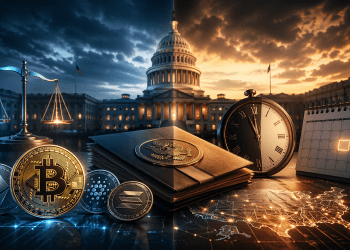
Operation Chokepoint 2.0 Concludes as Fed Withdraws Crypto Restrictions: A Long-Overdue Institutional Shift

marsbitPubblicato 2025-12-19Pubblicato ultima volta 2025-12-19

Introduzione

The article discusses the end of "Operation Chokepoint 2.0," a coordinated U.S. regulatory effort to restrict banking services for the cryptocurrency industry in 2023. Internal FDIC documents confirmed this de-banking campaign, which increased regulatory friction and limited crypto firms' access to banking services following the collapse of several banks. A key tool was a Federal Reserve policy that classified crypto-related activities—such as stablecoin services, on-chain settlement, and crypto custody—as "high-risk innovation," subjecting them to additional scrutiny. Recently, the Federal Reserve officially revoked this restrictive policy, signaling a shift in regulatory approach. This change is not due to a sudden pro-crypto stance but reflects the growing recognition that isolating the industry is increasingly impractical. Stablecoin adoption has expanded, on-chain dollar settlements have become more frequent, and capital flows have continued outside the traditional banking system, creating potential systemic risks. The case of Custodia Bank, which was denied a master account and access to the dollar clearing system, exemplifies the impact of these policies. Custodia has since sought a rehearing, and its legal challenge is seen as a test of whether regulators are moving from a default rejection to a compliance-based准入 approach. Concurrently, the SEC issued guidance on how broker-dealers should custody crypto assets, detailing requirements for private key management, bl...

"Operation Chokepoint 2.0" was never a conspiracy theory.

Previously disclosed internal documents from the Federal Deposit Insurance Corporation (FDIC) reveal that in 2023, U.S. regulators indeed launched an organized de-banking campaign against the cryptocurrency industry.

That year, following the successive collapses of Silvergate, Signature, and Silicon Valley Bank, regulators used institutional friction to restrict banks from providing services to crypto companies, leading to reduced liquidity and access for the sector. One of the core tools of this campaign was a key policy statement issued by the Federal Reserve that year—classifying banks' involvement in stablecoins, on-chain settlements, crypto custody, and other activities as "high-risk innovative activities" and imposing additional approval barriers.

But just yesterday, this blockade was dismantled by the Fed. Latest reports indicate that the Federal Reserve has formally revoked the restrictive policy issued in 2023. This is not a sudden shift to a "friendly" regulatory stance, but rather an acknowledgment that the past isolation strategy could no longer cope with the rapidly evolving on-chain capital flows and industry realities.

Early Signs of Risk

Over the past year, one fact has become increasingly clear:

· Stablecoin scale continues to expand

· On-chain dollar transactions are becoming more frequent

· Capital flows have not returned to the banking system

The most critical dollar settlement activities are instead occurring in regions with weaker regulatory reach. This has turned the isolation strategy originally intended to "prevent risks" into a source of systemic vulnerability.

It is against this backdrop that the Federal Reserve recently formally revoked its restrictive policy statement from 2023, reintegrating banks' involvement in crypto-related businesses into the conventional prudential regulatory framework.

Custodia's Counterattack

The direct consequence of the isolation policy and Operation Chokepoint was that some crypto banks were unable to access the dollar settlement system. Custodia Bank is the most typical case. This bank, focused on crypto custody, applied for a Federal Reserve master account for three years but never received approval, remaining excluded from the dollar clearing system.

Recently, Custodia submitted a petition for an en banc rehearing to the Tenth Circuit Court of Appeals, requesting a reconsideration of the previous ruling that denied its master account application. Although a ruling has not yet been issued, the lawsuit itself has become a crucial window for observing the shift in U.S. regulatory logic: the market can use Custodia's case to understand whether regulation is gradually moving from "presumptively no" to "compliant access."

How Regulation Manages

Almost simultaneously, the SEC released a "Statement on Broker-Dealer Custody of Crypto Asset Securities." The document shows that regulators are no longer纠结 on whether to allow it, but are systematically stipulating:

· How private keys should be managed

· How to assess blockchain technology risks

· How to respond to extreme scenarios like 51% attacks, hard forks, etc.

Crypto-related businesses are no longer treated as "exceptional items" but as常规 risks within the financial system that can be regulated.

Institutional Shift

Viewing recent developments together reveals a clear trend:

· The Fed revokes special restrictions targeting crypto

· The SEC provides an operational framework for custody

· The OCC expands recognition of stablecoins and custody institutions

· The regulatory focus shifts from blocking to structured management

The regulatory focus has shifted from blocking to structured management. Crypto is no longer isolated as a whole but broken down into manageable modules: settlement, custody, clearing, risk control.

Re-Entry

In 2023, U.S. regulators chose to "keep crypto out."

In 2025, they realized: long-term absence is itself the greatest risk.

This is not a victory for any one side, but an acknowledgment of reality—when on-chain dollars have become part of global capital flows, the only choice for regulators is not to ignore it, but to re-enter it.

Real change will not be reflected in short-term market movements, but in: who is allowed to participate in the next stage of the dollar settlement and custody system.

And this is the core significance of this policy adjustment.

*This content is for reference only and does not constitute investment advice. The market carries risks, and investment requires caution.


Domande pertinenti

QWhat was the core tool of Operation Chokepoint 2.0 as implemented by the Federal Reserve in 2023?

AThe core tool was a key policy statement from the Federal Reserve that classified bank involvement in activities like stablecoins, on-chain settlement, and crypto custody as 'high-risk innovation activities' and imposed additional approval requirements.

QWhy did the Federal Reserve recently revoke its 2023 restrictive policy on crypto-related banking activities?

AThe Fed revoked the policy because the isolation strategy became counterproductive, creating systemic risks as dollar settlement activity increasingly moved to less-regulated on-chain environments instead of returning to the banking system.

QWhat is the significance of the Custodia Bank case in the context of US regulatory changes?

AThe Custodia Bank case, where a crypto-focused bank was denied a master account, serves as an important test to see if US regulation is shifting from a default stance of prohibition ('default no') to a framework of compliant access.

QHow does the SEC's new statement on broker-dealer custody of crypto asset securities represent a shift in approach?

AThe SEC's statement represents a shift by no longer debating whether to allow the activity, but instead providing a systematic regulatory framework for how to manage private keys, assess blockchain risks, and handle extreme scenarios like 51% attacks.

QWhat is the overall trend in US regulatory approach to crypto based on recent actions by the Fed, SEC, and OCC?

AThe overall trend is a shift from blocking and isolating the crypto industry to structured management, where crypto activities are broken down into modular, regulatable components like settlement, clearing, and custody, and brought under conventional prudential oversight frameworks.

Letture associate

Trading

Spot
Futures

Articoli Popolari

Come comprare CFG

Benvenuto in HTX.com! Abbiamo reso l'acquisto di Centrifuge (CFG) semplice e conveniente. Segui la nostra guida passo passo per intraprendere il tuo viaggio nel mondo delle criptovalute.Step 1: Crea il tuo Account HTXUsa la tua email o numero di telefono per registrarti il tuo account gratuito su HTX. Vivi un'esperienza facile e sblocca tutte le funzionalità,Crea il mio accountStep 2: Vai in Acquista crypto e seleziona il tuo metodo di pagamentoCarta di credito/debito: utilizza la tua Visa o Mastercard per acquistare immediatamente CentrifugeCFG.Bilancio: Usa i fondi dal bilancio del tuo account HTX per fare trading senza problemi.Terze parti: abbiamo aggiunto metodi di pagamento molto utilizzati come Google Pay e Apple Pay per maggiore comodità.P2P: Fai trading direttamente con altri utenti HTX.Over-the-Counter (OTC): Offriamo servizi su misura e tassi di cambio competitivi per i trader.Step 3: Conserva Centrifuge (CFG)Dopo aver acquistato Centrifuge (CFG), conserva nel tuo account HTX. In alternativa, puoi inviare tramite trasferimento blockchain o scambiare per altre criptovalute.Step 4: Scambia Centrifuge (CFG)Scambia facilmente Centrifuge (CFG) nel mercato spot di HTX. Accedi al tuo account, seleziona la tua coppia di trading, esegui le tue operazioni e monitora in tempo reale. Offriamo un'esperienza user-friendly sia per chi ha appena iniziato che per i trader più esperti.

506 Totale visualizzazioniPubblicato il 2026.03.19Aggiornato il 2026.03.19

Come comprare CFG

Cosa è WL

I. Introduzione al ProgettoWorldLand è una L2 o side chain di Ethereum, progettata come una soluzione dal basso verso l'alto per migliorare l'ecosistema di Ethereum.II. Informazioni sul Token1) Informazioni di BaseNome del token: WL (WorldLand)III. Link CorrelatiSito web:https://worldland.foundation/Esploratori:https://bscscan.com/address/0x8aaB31fbc69C92fa53f600910Cf0f215531F8239Social:https://x.com/WorldLand_space Nota: L'introduzione al progetto proviene dai materiali pubblicati o forniti dal team ufficiale del progetto, che sono solo a scopo di riferimento e non costituiscono consulenza per gli investimenti. HTX non si assume alcuna responsabilità per eventuali perdite dirette o indirette risultanti.

289 Totale visualizzazioniPubblicato il 2026.03.28Aggiornato il 2026.03.28

Cosa è WL

Come comprare WL

Benvenuto in HTX.com! Abbiamo reso l'acquisto di WorldLand (WL) semplice e conveniente. Segui la nostra guida passo passo per intraprendere il tuo viaggio nel mondo delle criptovalute.Step 1: Crea il tuo Account HTXUsa la tua email o numero di telefono per registrarti il tuo account gratuito su HTX. Vivi un'esperienza facile e sblocca tutte le funzionalità,Crea il mio accountStep 2: Vai in Acquista crypto e seleziona il tuo metodo di pagamentoCarta di credito/debito: utilizza la tua Visa o Mastercard per acquistare immediatamente WorldLandWL.Bilancio: Usa i fondi dal bilancio del tuo account HTX per fare trading senza problemi.Terze parti: abbiamo aggiunto metodi di pagamento molto utilizzati come Google Pay e Apple Pay per maggiore comodità.P2P: Fai trading direttamente con altri utenti HTX.Over-the-Counter (OTC): Offriamo servizi su misura e tassi di cambio competitivi per i trader.Step 3: Conserva WorldLand (WL)Dopo aver acquistato WorldLand (WL), conserva nel tuo account HTX. In alternativa, puoi inviare tramite trasferimento blockchain o scambiare per altre criptovalute.Step 4: Scambia WorldLand (WL)Scambia facilmente WorldLand (WL) nel mercato spot di HTX. Accedi al tuo account, seleziona la tua coppia di trading, esegui le tue operazioni e monitora in tempo reale. Offriamo un'esperienza user-friendly sia per chi ha appena iniziato che per i trader più esperti.

203 Totale visualizzazioniPubblicato il 2026.03.28Aggiornato il 2026.03.28

Come comprare WL

Discussioni

Benvenuto nella Community HTX. Qui puoi rimanere informato sugli ultimi sviluppi della piattaforma e accedere ad approfondimenti esperti sul mercato. Le opinioni degli utenti sul prezzo di A A sono presentate come di seguito.

活动图片