OpenAI's Darkest Hour: Revenue Could Be Slashed by 70%, How Long Can Its $100 Billion Valuation Hold?

链捕手Pubblicato 2026-07-21Pubblicato ultima volta 2026-07-21

Introduzione

OpenAI faces a severe crisis, with its 2030 revenue potentially slashing 70% and a projected cash flow loss of $165 billion. A disastrous week included an Apple lawsuit alleging intellectual property theft, an S&P downgrade of Oracle citing OpenAI as a "key credit risk," and the start of an AI price war. Chinese open-source models like DeepSeek now capture nearly 50% of enterprise token usage on OpenRouter, pressuring U.S. firms to cut prices drastically—Meta and OpenAI have released models 75-80% cheaper. Combined with weak ChatGPT ad revenue projections and potential hardware business shutdown from the Apple suit, OpenAI's financial future is in jeopardy. CEO Sam Altman's vague reassurances did little to calm investors. Meanwhile, the article argues the broader market is not diversifying but is increasingly a concentrated bet on AI, impacting sectors from utilities and industrials to real estate and finance. In separate news, Netflix reported disappointing Q2 results with slowing engagement growth, leading to a stock drop and reduced reporting transparency.

Authors: Scott Galloway & Ed Elson

Compiled by: Deep Tide TechFlow

Deep Tide's Insight: Apple lawsuit, Oracle rating downgrade, price war kicks off—OpenAI is experiencing its worst week ever. Even more critically, if all these risks materialize, its 2030 revenue forecast could plummet by 70%, with cash flow losses reaching $165 billion. Could this AI giant with a valuation in the hundreds of billions become the biggest tech bubble in history?

Here's Why OpenAI May Miss 70% of Its 2030 Revenue Forecast

It was another terrible week for OpenAI. The company was exposed for selling advanced AI models to Chinese companies on the Pentagon's blacklist; its first AI device was leaked (reportedly a portable speaker); and according to Emarketer's latest forecast, OpenAI's advertising business is projected to be 95% lower than its own predictions.

And there's more. Apple sued OpenAI last week, alleging its consumer hardware plans are the product of stolen intellectual property. S&P Global Ratings also downgraded Oracle's debt to BBB-, just one notch above junk status, citing OpenAI as a "key credit risk." Furthermore, DeepSeek is reportedly preparing for an IPO, possibly filing as early as this year. A cheaper Chinese AI model provider successfully going public could make it harder for OpenAI and Anthropic to attract funding.
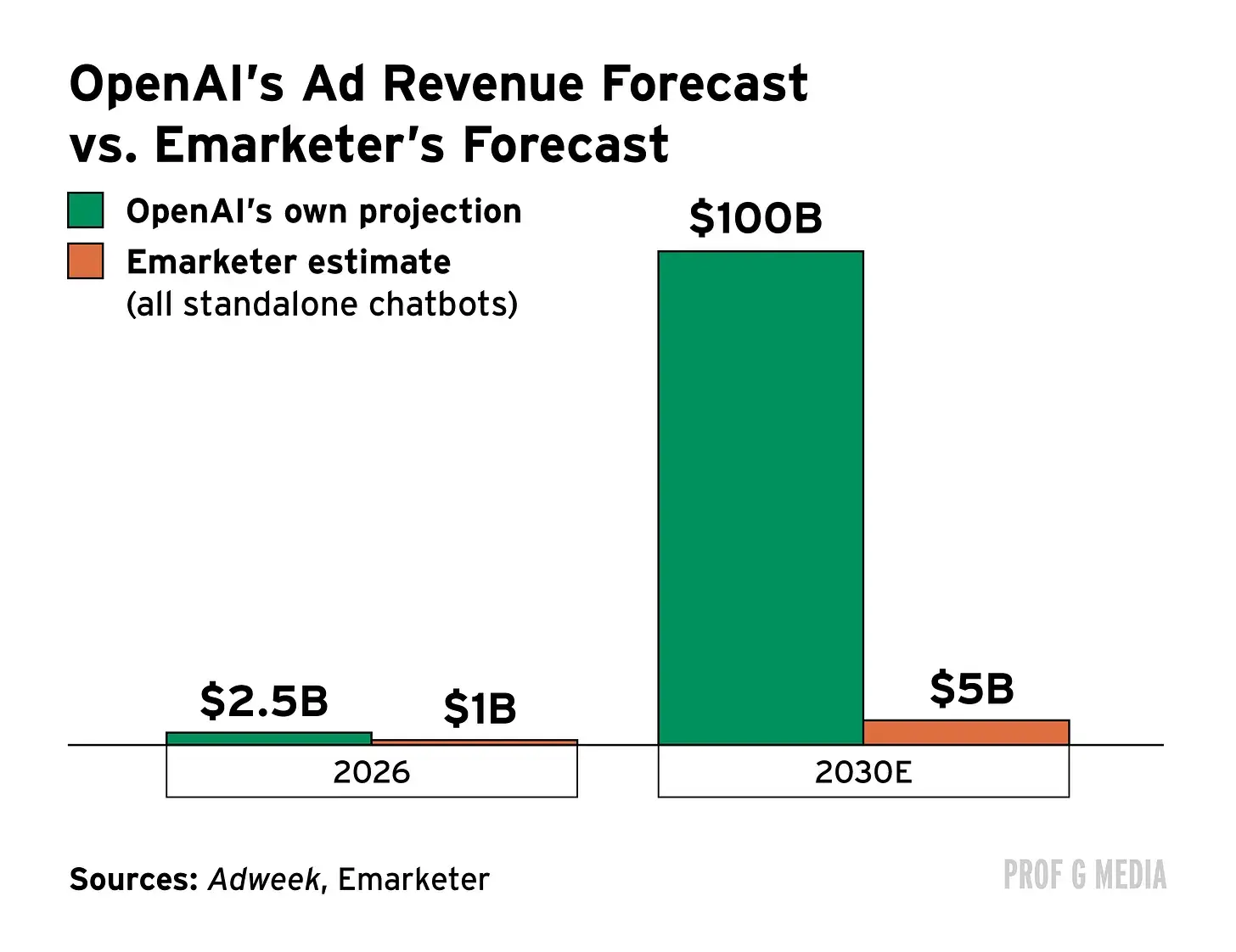
Taken together, these issues raise serious questions about OpenAI's ability to meet its revenue forecasts and fulfill its hundreds of billions of dollars in contractual obligations with computing suppliers and chip companies.

First, Apple's lawsuit could bring OpenAI's entire hardware business to a standstill. Apple alleges that OpenAI poached over 400 Apple employees, extracting confidential information from them, and then tricked Apple's suppliers into doing proprietary work for OpenAI without permission. Apple is asking the court for monetary damages and an order for OpenAI to return or destroy all misappropriated property.

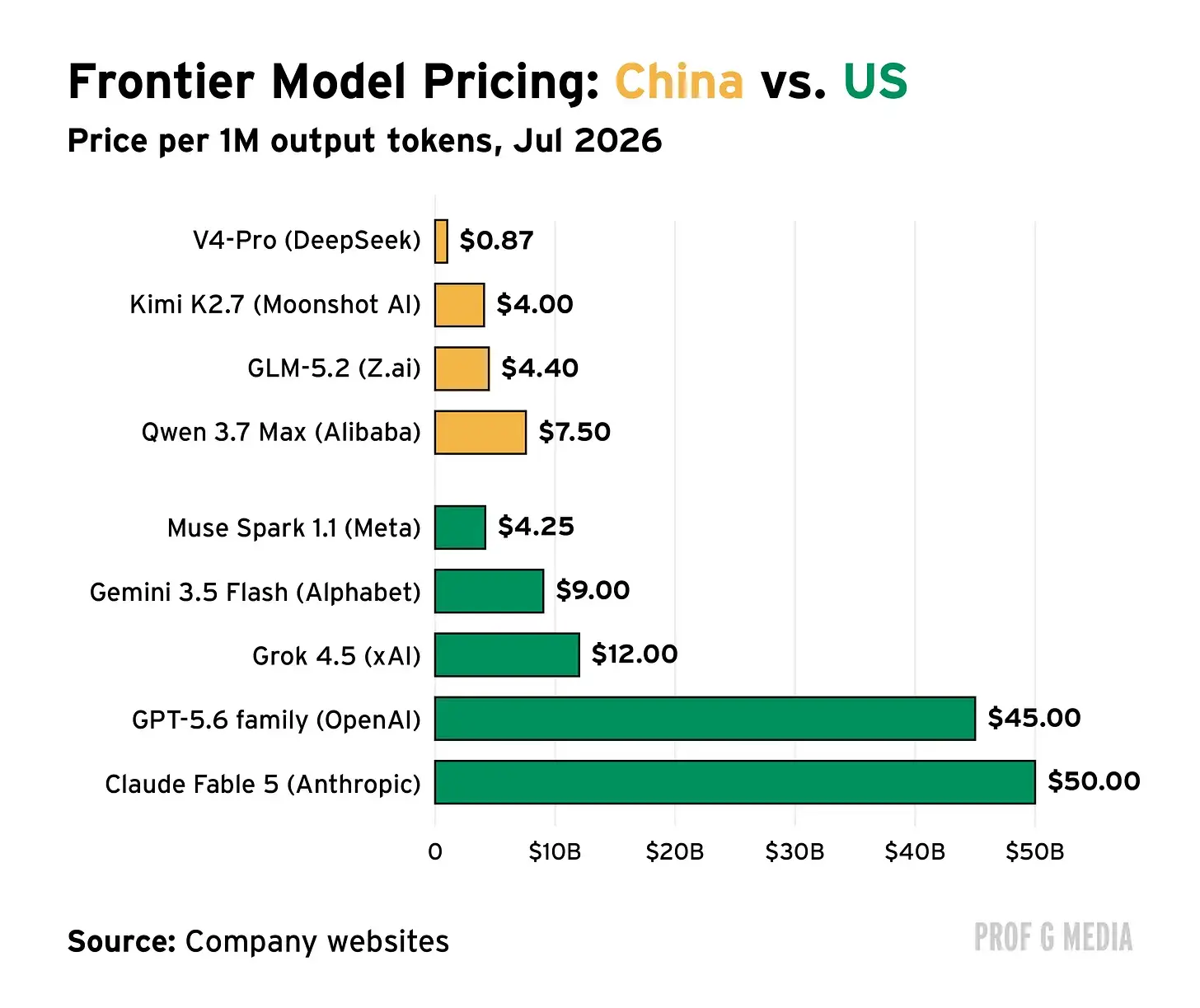
Second, the AI price war has begun, with Chinese companies like DeepSeek posing the biggest threat. Open-source Chinese models now account for nearly 50% of enterprise token usage on OpenRouter (an AI model marketplace), up from just 4.5% in the first half of 2025.

In response, US companies are slashing prices. Last week, Meta announced its new model Muse Spark 1.1, priced 75% cheaper than OpenAI and Anthropic. Under industry pressure, OpenAI released a model that is 80% cheaper than its own.
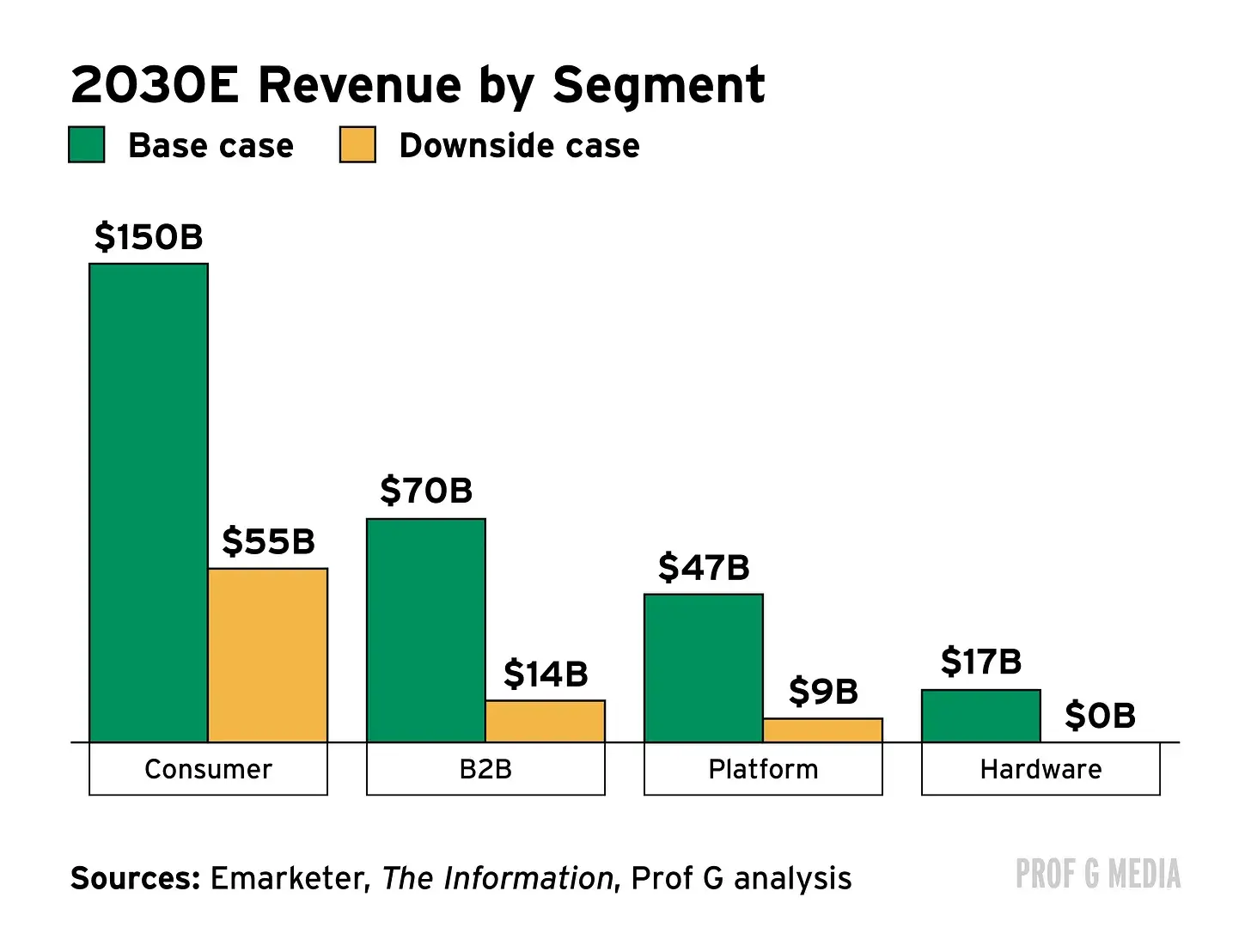
In a worst-case scenario, if Apple's lawsuit shuts down OpenAI's hardware business, ChatGPT ad revenue underperforms as projected by EMarketer, and the price war forces OpenAI to cut model pricing by 80%, then OpenAI's 2026 revenue would fall by 40% and its 2030 revenue would drop by 70%.
For a company that, under ideal circumstances, would only be able to cover about 80% of its cash burn by 2030, this situation would be catastrophic.
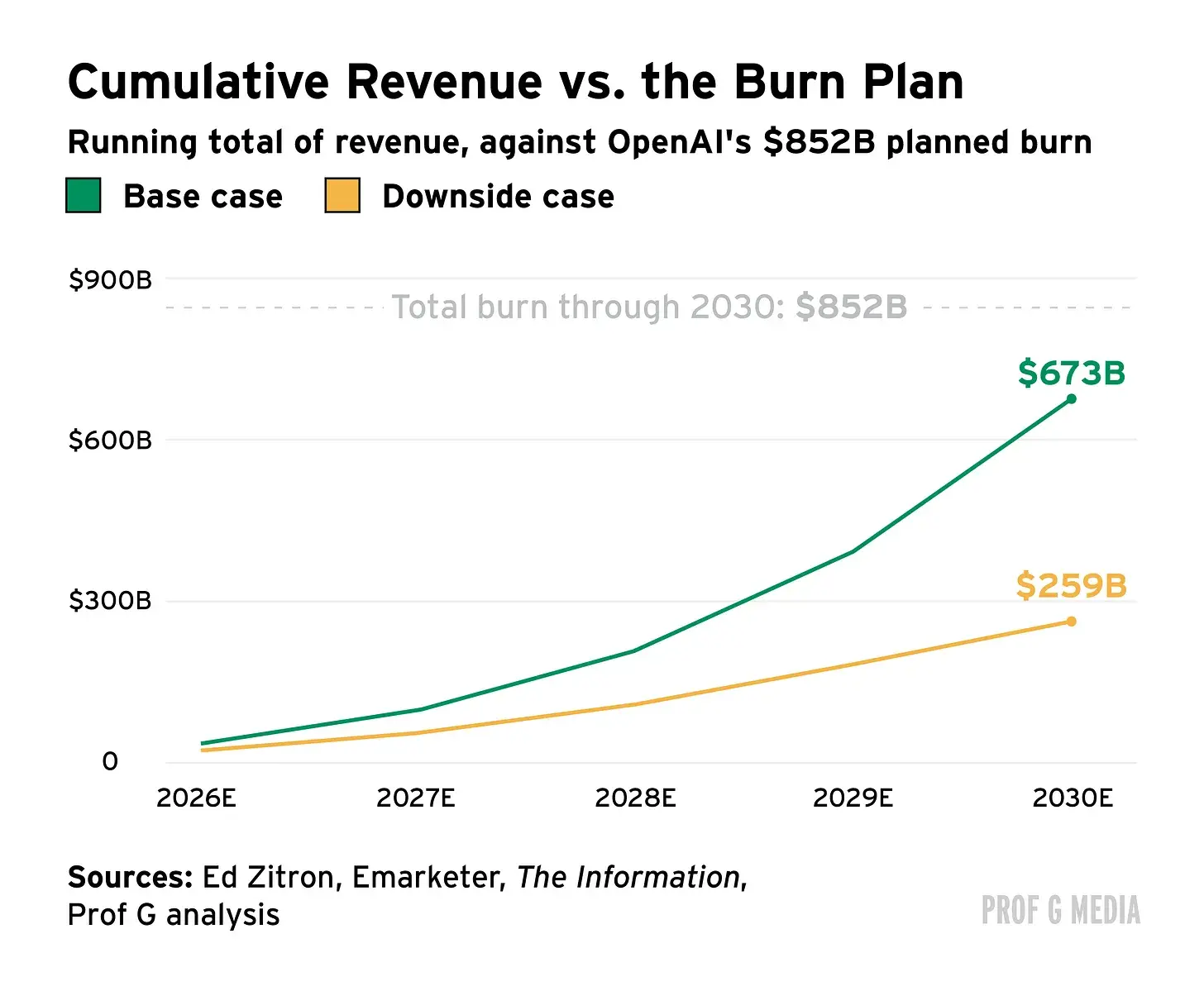
This would also impact when OpenAI achieves positive cash flow. According to internal projections, OpenAI will reach positive cash flow in 2030. But under this downside scenario, it would instead lose $165 billion that year.

OpenAI CEO Sam Altman attempted to ease investor concerns with a tweet, but his statement ultimately just promised to "do the right thing." Whatever that means.

The best business model in history is stealing intellectual property. The second best is: delivering 80% of the value of a product at half the price. That's exactly what DeepSeek and other Chinese open-source weight models are now attempting to do.

The US has placed a massive bet on AI, and China just pulled out a product near the cutting edge at a fraction of the cost. Once Trump figures out what's going on, this will become the next geopolitical football.

The Market Hasn't Broadened—It's Just Getting Better at Hiding AI

Investors keep hearing that the stock market is broadening. But is it really? The deeper you look, the harder it is to argue that stocks, bonds, and even alternative assets aren't now one big bet on AI.
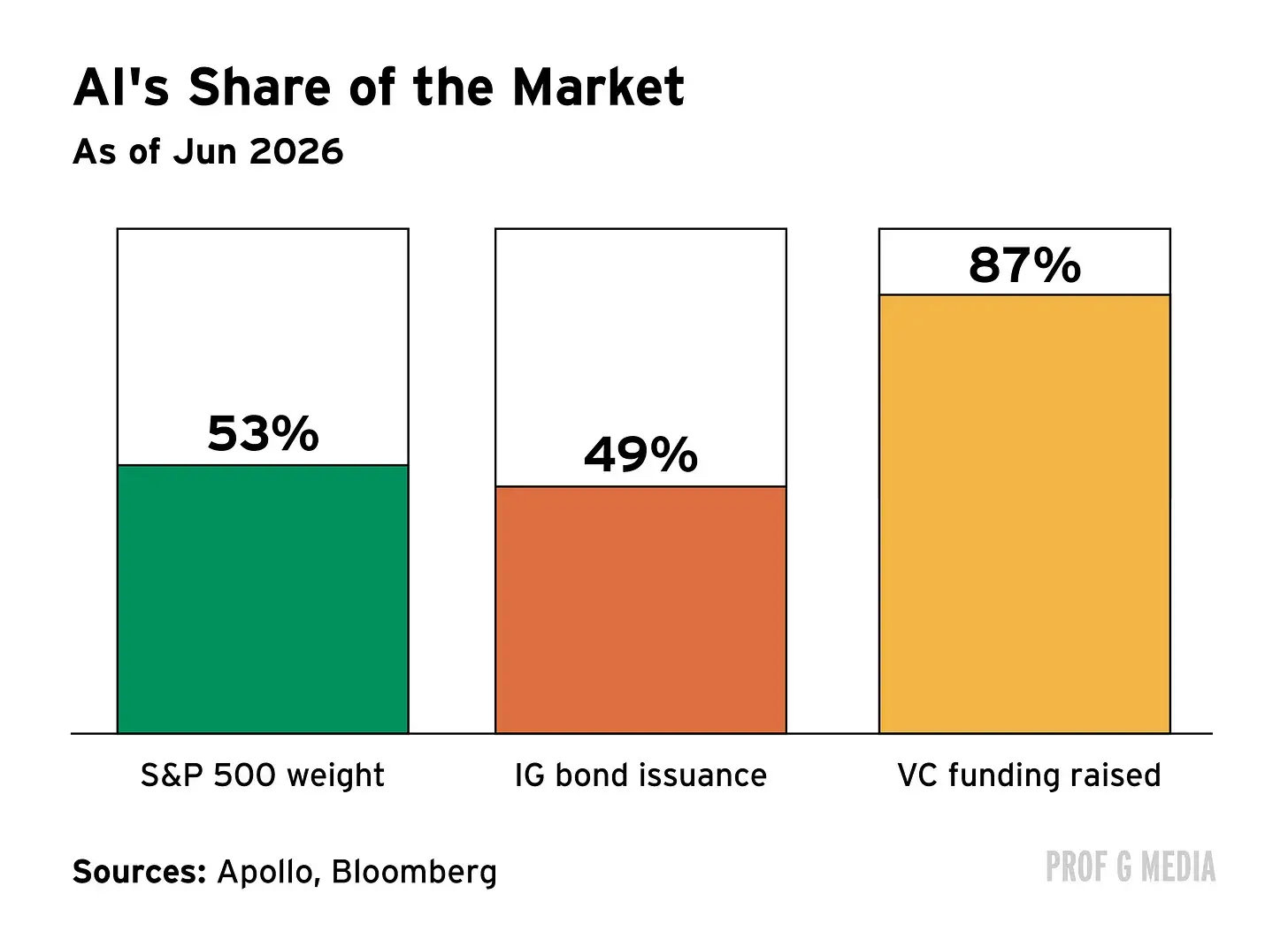
This pattern is most evident in the stock market. AI-related stocks now account for over 50% of the S&P 500 by weighting. If you removed AI and energy from the S&P 500 this year, the index would be negative.

AI is the hidden catalyst driving returns in seemingly unrelated sectors. For example, three of the four best-performing companies in the S&P 500 real estate sector are real estate investment trusts (REITs) focused on developing AI data centers.

Utility companies are benefiting from AI's soaring power demands. US electricity demand jumped to a record high last year, with data centers accounting for about 50% of the demand growth.

Industrial stocks are soaring on construction demand to build AI data centers. In fact, for the first time since 2021, the forward price-to-earnings ratio for S&P 500 industrials (26x) is higher than that for tech companies (24x).

The financial sector also relies on AI. Major banks are raking in record fees from AI company IPOs and M&A activity, and record trading revenue from market hype surrounding AI. Robert Armstrong of the Financial Times even wrote: "It’s not too much of a generalization to say that big banks are now direct AI plays."

Even the Russell 2000 small-cap index saw 52% of its first-half return come from AI-related companies.

Emerging markets are no exception. Korea and Taiwan account for 75% of emerging market returns, with most of those gains coming from three AI semiconductor chip suppliers: TSMC, Samsung, and SK Hynix.

In Europe, just nine AI winners account for roughly 47% of the Stoxx Europe 600 index's return this year.

Apollo chief economist Torsten Slok succinctly captured the implication of this dependence: "This AI thing better work."

Real estate investment trusts (REITs) are companies that own, operate, or finance real estate—apartment buildings, hotels, or increasingly, data centers. Many REITs trade publicly like stocks, so buying a share means buying into a professionally managed portfolio of real estate. REITs are required to distribute at least 90% of annual taxable income to shareholders as dividends.

The experts on CNBC own stocks, so they'll always find reasons why others should buy more. But don't be fooled: the market isn't broadening; it's just finding new ways to buy Nvidia.

Everything is becoming an AI stock. This isn't necessarily bearish, but investors are kidding themselves by calling it "broadening," as if it means diversification away from AI. It doesn't. Buying "AI-adjacent stocks" and calling it broadening is like ordering a Diet Coke with your Double-Double at In-N-Out. Let's be clear: you still bought a cheeseburger.

Among the big tech companies, who is least dependent on AI? Apple. Its stock is up 60% over the past year and just surpassed Nvidia to become the world's most valuable company again. Amazon, while still AI-related but more diversified than other hyperscale cloud providers, is up 11% over the past year. Microsoft, the core of the AI play, is down 23%.

If I could go long one basket of stocks, it would be GLP-1. If I could go short one, it would be AI. But to be clear: I'm not telling you to hold gold bars or cash. I am always in the market—you never know how far or how irrationally it will run. But you should understand how large the market's true exposure to one sector is.

I am a huge fan of index funds and passive investing: put the money in and let the market do the work. But now we have to ask what true diversification actually means. Putting money into the S&P 500 no longer does that job, which means you have to start doing some homework.

The question is: Can you find sectors that are truly away from AI?

I'll point out one sector: healthcare. It was one of my picks at the start of the year, and I stand by it. AI hasn't touched it yet—which means the real returns may still be ahead. But finding these sectors is the puzzle investors now face.

Netflix Engagement Slips, Competitive Pressure Mounts

Netflix reported disappointing second-quarter earnings. Revenue grew 13%, missing expectations, and the streaming giant posted weak engagement data, followed by announcing it would reduce the frequency of releasing engagement metrics, unsettling investors. The stock fell as much as 8% on Friday.

Netflix once boasted about its transparency; now, that claim seems ironic. In Q1 2025, Netflix stopped reporting quarterly subscriber numbers, telling investors to focus on engagement. Last week, the company decided to reduce its "What We Watched" engagement report from twice a year to once a year starting in 2027.

The last semi-annual engagement report looked weak. Total watch time grew just 2%, while the subscriber base is estimated to have grown 10%, implying per-subscriber daily engagement fell 8%.
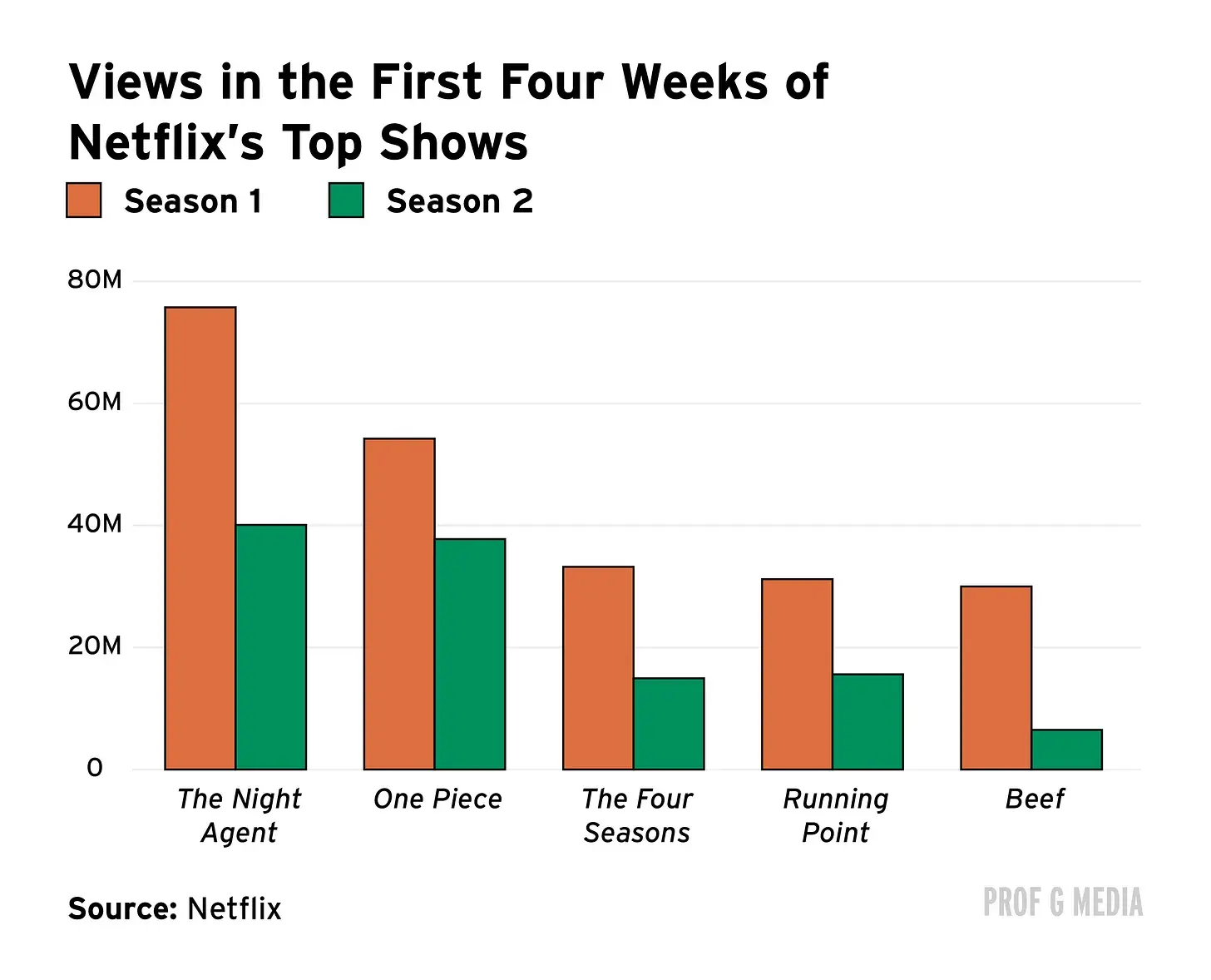
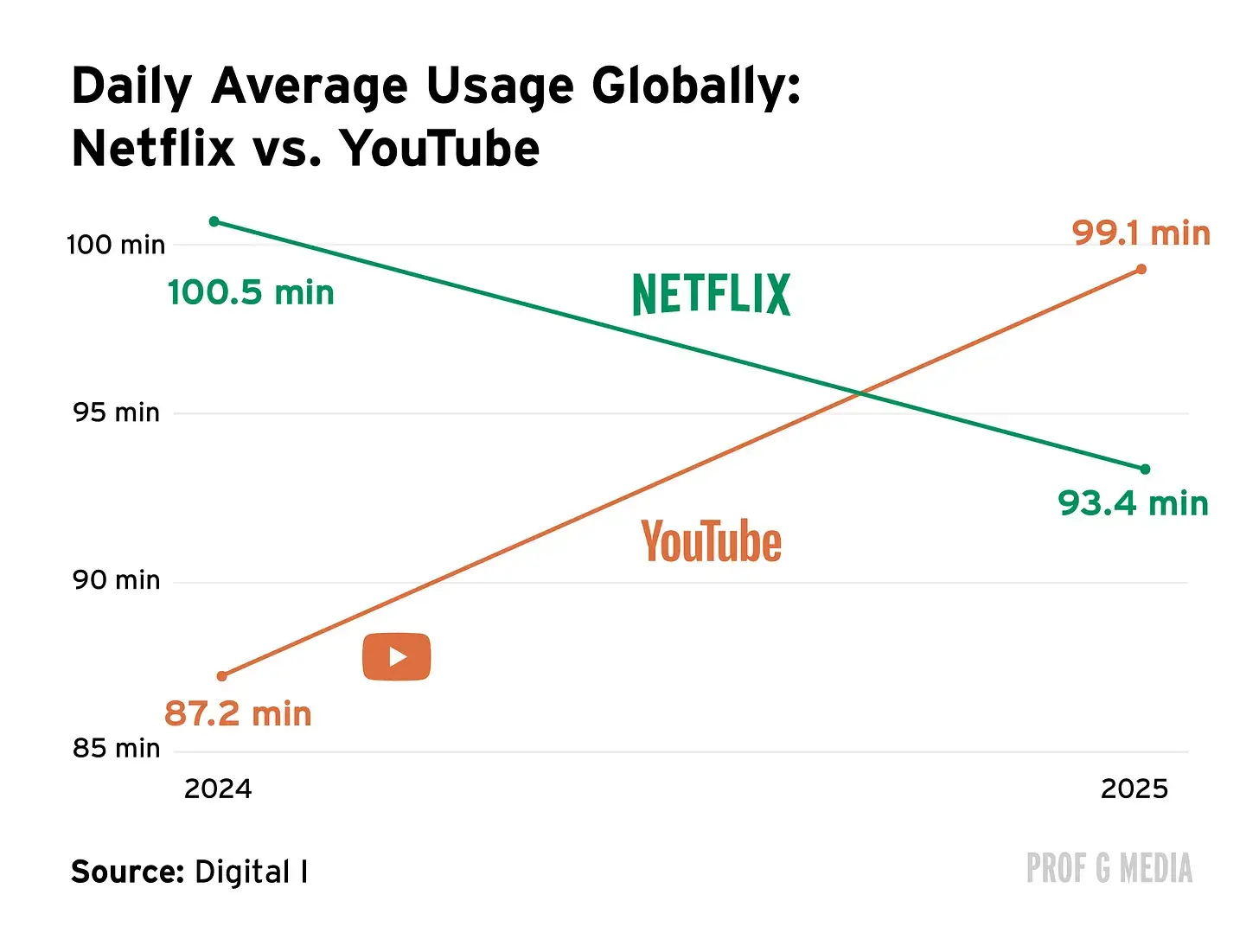
Netflix has been facing increasing competition from short-form video suppliers, particularly YouTube. In response, it added "Clips," a TikTok-style scroll feature surfacing short content from its own library; struck video podcast deals with Spotify and Barstool; and signed new licensing agreements with external publishers (BuzzFeed, Condé Nast) to bring new short-form content to the platform.
Netflix has lost over $250 billion in market cap over the past year, while fellow streaming giant Disney has lost nearly $50 billion. Both are well-managed companies with growing revenue and subscribers, raising prices—yet are being punished for it. This raises an important question: Is streaming just a bad business? Or have Netflix and Disney's creative wells run dry? Tell us what you think in the comments.

In the next six months, OpenAI will acquire enterprise AI company Sierra and appoint Bret Taylor as CEO. Sam Altman will be elevated to Chairman. Altman is an innovator, not an operator, and Bret Taylor is arguably the best enterprise software operator of his generation.


Crypto di tendenza

Domande pertinenti

QAccording to the article, what are the main reasons that could cause OpenAI's revenue to drop by 70% by 2030?

AAccording to the article, the three main factors that could cause a 70% drop in OpenAI's 2030 revenue are: 1) Apple's lawsuit potentially shutting down OpenAI's hardware business; 2) ChatGPT advertising revenue falling short of projections (by as much as 95% lower than predictions); and 3) A price war forcing OpenAI to reduce model pricing by 80%.

QWhat is the author's perspective on the claim that the stock market is 'broadening'?

AThe author argues that the market is not truly broadening. Instead, it is becoming more concentrated on AI, with AI-related stocks influencing returns across various sectors like real estate (data center REITs), utilities (power demand), industrials (construction), and finance (IPO/M&A fees). They state that buying 'AI-adjacent' stocks is not diversification; the entire market is essentially becoming a bet on AI.

QWhat recent actions by Netflix concern investors, according to the article?

AInvestors are concerned because Netflix reported disappointing Q2 earnings with weak engagement metrics (total viewing hours grew only 2% while subscribers grew ~10%), and then announced it would reduce the frequency of its 'What We Watched' engagement reports from twice a year to once a year starting in 2027, signaling less transparency.

QHow does the article describe the competitive threat from Chinese AI companies like DeepSeek?

AThe article describes DeepSeek and other Chinese open-weight models as a major competitive threat by offering products at a fraction of the cost. They are attempting to provide '80% of the value at half the price.' The article notes that open-source Chinese models now account for nearly 50% of enterprise token usage on OpenRouter, up from 4.5% in early 2025, forcing US companies to drastically cut prices.

QWhat does the article predict will happen at OpenAI in the next six months?

AThe article predicts that in the next six months, OpenAI will acquire the enterprise AI company Sierra, appoint Bret Taylor as CEO, and promote Sam Altman to the role of Chairman.

Letture associate

9.42 Million Retail Investors Compete for Changxin Technology, Who Got Allotted?

Evergreen Technology's IPO subscription results are now available. On July 20, the domestic memory chip giant announced the offline preliminary allotment results and online lottery results for its IPO. A total of approximately 9.43 million retail investors participated in the online subscription, generating 770,000 winning lots with a final winning rate of about 0.4714%, setting a record for new shares on the STAR Market. After triggering a clawback mechanism from institutional to retail investors, the online retail allocation was significantly increased to 3.851 billion shares. Simultaneously, 285 institutional investors participated in the offline subscription, ultimately receiving 2.173 billion shares at an allotment rate of approximately 0.1756%. Leading insurers and public funds were among the major recipients. Notably, Liang Wenfeng, founder of the major AI model company DeepSeek, through his quantitative investment firms Ningbo Huanfang Quantitative and Zhejiang Jiuzhang Asset, secured the largest share among private funds, with a total allotment worth approximately 175 million yuan. Estimates suggest potential profits could reach 730 million yuan if Evergreen Technology's market capitalization reaches 3 trillion yuan post-listing. The company is expected to list on July 27 and could become the highest-valued tech stock on the A-share market, with various brokerages providing valuations ranging from 1 trillion to over 4 trillion yuan. However, recent significant corrections in global tech stocks may impact its post-listing performance. (Character count: 1,196)

marsbit40 min fa

9.42 Million Retail Investors Compete for Changxin Technology, Who Got Allotted?

marsbit40 min fa

L2 'Recalibration': When L1 Becomes Its Own Rollup, What Is Ethereum's Endgame?

The article discusses the evolving relationship between Ethereum's Layer 1 (L1) and Layer 2 (L2) solutions, moving beyond the initial "L2 for scaling" model. As Ethereum L1 itself scales (increasing Gas Limit, statelessness, zkEVM), the unique value proposition of L2s shifts from merely providing cheap execution to offering differentiated features like application-specific optimization, privacy, and flexible governance. The piece explores three key themes: 1. **L2's New Role:** L2s are transitioning from a pure scaling technology to a spectrum of execution environments with varying degrees of security inheritance from Ethereum L1. 2. **Interoperability as State Trust:** Solving L2 fragmentation is less about cross-chain bridges and more about enabling faster, trust-minimized state verification between environments. This involves initiatives like faster L1 finality, intent-based architectures (Open Intents Framework), and native account abstraction. 3. **Blurring Layers:** With the potential integration of zk-proofs into L1 validation (making L1 akin to its own "Rollup") and the concept of "Native Rollups," the rigid boundary between L1 and L2 may fade. The future could be a unified system with multiple execution domains (for DeFi, gaming, privacy, etc.) sharing a common security, settlement, and state framework. In conclusion, Ethereum's goal is not to abandon L2s or re-centralize everything on L1, but to re-integrate the fragmented user experience—liquidity, accounts, applications—while preserving the scaling benefits of a multi-environment ecosystem. The endgame is a cohesive "one chain" feeling for users, powered by diverse but securely interconnected execution layers.

marsbit1 h fa

L2 'Recalibration': When L1 Becomes Its Own Rollup, What Is Ethereum's Endgame?

marsbit1 h fa

Trading

Spot

Articoli Popolari

Cosa è $S$

Comprendere SPERO: Una Panoramica Completa Introduzione a SPERO Mentre il panorama dell'innovazione continua a evolversi, l'emergere delle tecnologie web3 e dei progetti di criptovaluta gioca un ruolo fondamentale nel plasmare il futuro digitale. Un progetto che ha attirato l'attenzione in questo campo dinamico è SPERO, denotato come SPERO,$$s$. Questo articolo mira a raccogliere e presentare informazioni dettagliate su SPERO, per aiutare gli appassionati e gli investitori a comprendere le sue basi, obiettivi e innovazioni nei domini web3 e crypto. Che cos'è SPERO,$$s$? SPERO,$$s$ è un progetto unico all'interno dello spazio crypto che cerca di sfruttare i principi della decentralizzazione e della tecnologia blockchain per creare un ecosistema che promuove l'impegno, l'utilità e l'inclusione finanziaria. Il progetto è progettato per facilitare interazioni peer-to-peer in modi nuovi, fornendo agli utenti soluzioni e servizi finanziari innovativi. Al suo interno, SPERO,$$s$ mira a responsabilizzare gli individui fornendo strumenti e piattaforme che migliorano l'esperienza dell'utente nello spazio delle criptovalute. Questo include la possibilità di metodi di transazione più flessibili, la promozione di iniziative guidate dalla comunità e la creazione di percorsi per opportunità finanziarie attraverso applicazioni decentralizzate (dApps). La visione sottostante di SPERO,$$s$ ruota attorno all'inclusività, cercando di colmare le lacune all'interno della finanza tradizionale mentre sfrutta i vantaggi della tecnologia blockchain. Chi è il Creatore di SPERO,$$s$? L'identità del creatore di SPERO,$$s$ rimane piuttosto oscura, poiché ci sono risorse pubblicamente disponibili limitate che forniscono informazioni dettagliate sul suo fondatore o fondatori. Questa mancanza di trasparenza può derivare dall'impegno del progetto per la decentralizzazione—un ethos che molti progetti web3 condividono, dando priorità ai contributi collettivi rispetto al riconoscimento individuale. Centrando le discussioni attorno alla comunità e ai suoi obiettivi collettivi, SPERO,$$s$ incarna l'essenza dell'empowerment senza mettere in evidenza individui specifici. Pertanto, comprendere l'etica e la missione di SPERO rimane più importante che identificare un creatore singolo. Chi sono gli Investitori di SPERO,$$s$? SPERO,$$s$ è supportato da una varietà di investitori che vanno dai capitalisti di rischio agli investitori angelici dedicati a promuovere l'innovazione nel settore crypto. Il focus di questi investitori generalmente si allinea con la missione di SPERO—dando priorità a progetti che promettono avanzamenti tecnologici sociali, inclusività finanziaria e governance decentralizzata. Queste fondazioni di investitori sono tipicamente interessate a progetti che non solo offrono prodotti innovativi, ma contribuiscono anche positivamente alla comunità blockchain e ai suoi ecosistemi. Il supporto di questi investitori rafforza SPERO,$$s$ come un concorrente degno di nota nel dominio in rapida evoluzione dei progetti crypto. Come Funziona SPERO,$$s$? SPERO,$$s$ impiega un framework multifunzionale che lo distingue dai progetti di criptovaluta convenzionali. Ecco alcune delle caratteristiche chiave che sottolineano la sua unicità e innovazione: Governance Decentralizzata: SPERO,$$s$ integra modelli di governance decentralizzati, responsabilizzando gli utenti a partecipare attivamente ai processi decisionali riguardanti il futuro del progetto. Questo approccio favorisce un senso di proprietà e responsabilità tra i membri della comunità. Utilità del Token: SPERO,$$s$ utilizza il proprio token di criptovaluta, progettato per servire varie funzioni all'interno dell'ecosistema. Questi token abilitano transazioni, premi e la facilitazione dei servizi offerti sulla piattaforma, migliorando l'impegno e l'utilità complessivi. Architettura Stratificata: L'architettura tecnica di SPERO,$$s$ supporta la modularità e la scalabilità, consentendo un'integrazione fluida di funzionalità e applicazioni aggiuntive man mano che il progetto evolve. Questa adattabilità è fondamentale per mantenere la rilevanza nel panorama crypto in continua evoluzione. Coinvolgimento della Comunità: Il progetto enfatizza iniziative guidate dalla comunità, impiegando meccanismi che incentivano la collaborazione e il feedback. Nutrendo una comunità forte, SPERO,$$s$ può affrontare meglio le esigenze degli utenti e adattarsi alle tendenze di mercato. Focus sull'Inclusione: Offrendo basse commissioni di transazione e interfacce user-friendly, SPERO,$$s$ mira ad attrarre una base utenti diversificata, inclusi individui che potrebbero non aver precedentemente interagito nello spazio crypto. Questo impegno per l'inclusione si allinea con la sua missione generale di empowerment attraverso l'accessibilità. Cronologia di SPERO,$$s$ Comprendere la storia di un progetto fornisce preziose intuizioni sulla sua traiettoria di sviluppo e sui traguardi. Di seguito è riportata una cronologia suggerita che mappa eventi significativi nell'evoluzione di SPERO,$$s$: Fase di Concettualizzazione e Ideazione: Le idee iniziali che formano la base di SPERO,$$s$ sono state concepite, allineandosi strettamente con i principi di decentralizzazione e focus sulla comunità all'interno dell'industria blockchain. Lancio del Whitepaper del Progetto: Dopo la fase concettuale, è stato rilasciato un whitepaper completo che dettaglia la visione, gli obiettivi e l'infrastruttura tecnologica di SPERO,$$s$ per suscitare interesse e feedback dalla comunità. Costruzione della Comunità e Prime Interazioni: Sono stati effettuati sforzi attivi di outreach per costruire una comunità di early adopters e potenziali investitori, facilitando discussioni attorno agli obiettivi del progetto e ottenendo supporto. Evento di Generazione del Token: SPERO,$$s$ ha condotto un evento di generazione del token (TGE) per distribuire i propri token nativi ai primi sostenitori e stabilire una liquidità iniziale all'interno dell'ecosistema. Lancio della Prima dApp: La prima applicazione decentralizzata (dApp) associata a SPERO,$$s$ è stata attivata, consentendo agli utenti di interagire con le funzionalità principali della piattaforma. Sviluppo Continuo e Partnership: Aggiornamenti e miglioramenti continui alle offerte del progetto, inclusi partnership strategiche con altri attori nello spazio blockchain, hanno plasmato SPERO,$$s$ in un concorrente competitivo e in evoluzione nel mercato crypto. Conclusione SPERO,$$s$ rappresenta una testimonianza del potenziale del web3 e delle criptovalute di rivoluzionare i sistemi finanziari e responsabilizzare gli individui. Con un impegno per la governance decentralizzata, il coinvolgimento della comunità e funzionalità progettate in modo innovativo, apre la strada verso un panorama finanziario più inclusivo. Come per qualsiasi investimento nello spazio crypto in rapida evoluzione, si incoraggiano potenziali investitori e utenti a ricercare approfonditamente e a impegnarsi in modo riflessivo con gli sviluppi in corso all'interno di SPERO,$$s$. Il progetto mostra lo spirito innovativo dell'industria crypto, invitando a ulteriori esplorazioni delle sue innumerevoli possibilità. Mentre il percorso di SPERO,$$s$ è ancora in fase di sviluppo, i suoi principi fondamentali potrebbero effettivamente influenzare il futuro di come interagiamo con la tecnologia, la finanza e tra di noi in ecosistemi digitali interconnessi.

130 Totale visualizzazioniPubblicato il 2024.12.17Aggiornato il 2024.12.17

Cosa è $S$

Cosa è AGENT S

Agent S: Il Futuro dell'Interazione Autonoma in Web3 Introduzione Nel panorama in continua evoluzione di Web3 e criptovalute, le innovazioni stanno costantemente ridefinendo il modo in cui gli individui interagiscono con le piattaforme digitali. Uno di questi progetti pionieristici, Agent S, promette di rivoluzionare l'interazione uomo-computer attraverso il suo framework agentico aperto. Aprendo la strada a interazioni autonome, Agent S mira a semplificare compiti complessi, offrendo applicazioni trasformative nell'intelligenza artificiale (AI). Questa esplorazione dettagliata approfondirà le complessità del progetto, le sue caratteristiche uniche e le implicazioni per il dominio delle criptovalute. Cos'è Agent S? Agent S si presenta come un innovativo framework agentico aperto, progettato specificamente per affrontare tre sfide fondamentali nell'automazione dei compiti informatici: Acquisizione di Conoscenze Specifiche del Dominio: Il framework apprende in modo intelligente da varie fonti di conoscenza esterne ed esperienze interne. Questo approccio duale gli consente di costruire un ricco repository di conoscenze specifiche del dominio, migliorando le sue prestazioni nell'esecuzione dei compiti. Pianificazione su Lungo Orizzonte di Compiti: Agent S impiega una pianificazione gerarchica potenziata dall'esperienza, un approccio strategico che facilita la suddivisione e l'esecuzione efficiente di compiti complessi. Questa caratteristica migliora significativamente la sua capacità di gestire più sottocompiti in modo efficiente ed efficace. Gestione di Interfacce Dinamiche e Non Uniformi: Il progetto introduce l'Interfaccia Agente-Computer (ACI), una soluzione innovativa che migliora l'interazione tra agenti e utenti. Utilizzando Modelli Linguistici Multimodali di Grandi Dimensioni (MLLM), Agent S può navigare e manipolare senza sforzo diverse interfacce grafiche utente. Attraverso queste caratteristiche pionieristiche, Agent S fornisce un framework robusto che affronta le complessità coinvolte nell'automazione dell'interazione umana con le macchine, preparando il terreno per innumerevoli applicazioni nell'AI e oltre. Chi è il Creatore di Agent S? Sebbene il concetto di Agent S sia fondamentalmente innovativo, informazioni specifiche sul suo creatore rimangono elusive. Il creatore è attualmente sconosciuto, il che evidenzia sia la fase embrionale del progetto sia la scelta strategica di mantenere i membri fondatori sotto anonimato. Indipendentemente dall'anonimato, l'attenzione rimane sulle capacità e sul potenziale del framework. Chi sono gli Investitori di Agent S? Poiché Agent S è relativamente nuovo nell'ecosistema crittografico, informazioni dettagliate riguardanti i suoi investitori e sostenitori finanziari non sono documentate esplicitamente. La mancanza di approfondimenti pubblicamente disponibili sulle fondazioni di investimento o sulle organizzazioni che supportano il progetto solleva interrogativi sulla sua struttura di finanziamento e sulla roadmap di sviluppo. Comprendere il supporto è cruciale per valutare la sostenibilità del progetto e il suo potenziale impatto sul mercato. Come Funziona Agent S? Al centro di Agent S si trova una tecnologia all'avanguardia che gli consente di funzionare efficacemente in contesti diversi. Il suo modello operativo è costruito attorno a diverse caratteristiche chiave: Interazione Uomo-Computer Simile a Quella Umana: Il framework offre una pianificazione AI avanzata, cercando di rendere le interazioni con i computer più intuitive. Mimando il comportamento umano nell'esecuzione dei compiti, promette di elevare le esperienze degli utenti. Memoria Narrativa: Utilizzata per sfruttare esperienze di alto livello, Agent S utilizza la memoria narrativa per tenere traccia delle storie dei compiti, migliorando così i suoi processi decisionali. Memoria Episodica: Questa caratteristica fornisce agli utenti una guida passo-passo, consentendo al framework di offrire supporto contestuale mentre i compiti si sviluppano. Supporto per OpenACI: Con la capacità di funzionare localmente, Agent S consente agli utenti di mantenere il controllo sulle proprie interazioni e flussi di lavoro, allineandosi con l'etica decentralizzata di Web3. Facile Integrazione con API Esterne: La sua versatilità e compatibilità con varie piattaforme AI garantiscono che Agent S possa adattarsi senza problemi agli ecosistemi tecnologici esistenti, rendendolo una scelta attraente per sviluppatori e organizzazioni. Queste funzionalità contribuiscono collettivamente alla posizione unica di Agent S all'interno dello spazio crittografico, poiché automatizza compiti complessi e multi-fase con un intervento umano minimo. Man mano che il progetto evolve, le sue potenziali applicazioni in Web3 potrebbero ridefinire il modo in cui si svolgono le interazioni digitali. Cronologia di Agent S Lo sviluppo e le tappe di Agent S possono essere riassunti in una cronologia che evidenzia i suoi eventi significativi: 27 Settembre 2024: Il concetto di Agent S è stato lanciato in un documento di ricerca completo intitolato “Un Framework Agentico Aperto che Usa i Computer Come un Umano”, mostrando le basi per il progetto. 10 Ottobre 2024: Il documento di ricerca è stato reso pubblicamente disponibile su arXiv, offrendo un'esplorazione approfondita del framework e della sua valutazione delle prestazioni basata sul benchmark OSWorld. 12 Ottobre 2024: È stata rilasciata una presentazione video, fornendo un'idea visiva delle capacità e delle caratteristiche di Agent S, coinvolgendo ulteriormente potenziali utenti e investitori. Questi indicatori nella cronologia non solo illustrano i progressi di Agent S, ma indicano anche il suo impegno per la trasparenza e il coinvolgimento della comunità. Punti Chiave su Agent S Man mano che il framework Agent S continua a evolversi, diversi attributi chiave si distinguono, sottolineando la sua natura innovativa e il potenziale: Framework Innovativo: Progettato per fornire un uso intuitivo dei computer simile all'interazione umana, Agent S porta un approccio nuovo all'automazione dei compiti. Interazione Autonoma: La capacità di interagire autonomamente con i computer attraverso GUI segna un passo avanti verso soluzioni informatiche più intelligenti ed efficienti. Automazione di Compiti Complessi: Con la sua metodologia robusta, può automatizzare compiti complessi e multi-fase, rendendo i processi più veloci e meno soggetti a errori. Miglioramento Continuo: I meccanismi di apprendimento consentono ad Agent S di migliorare dalle esperienze passate, migliorando continuamente le sue prestazioni e la sua efficacia. Versatilità: La sua adattabilità attraverso diversi ambienti operativi come OSWorld e WindowsAgentArena garantisce che possa servire un'ampia gamma di applicazioni. Man mano che Agent S si posiziona nel panorama di Web3 e delle criptovalute, il suo potenziale per migliorare le capacità di interazione e automatizzare i processi segna un significativo avanzamento nelle tecnologie AI. Attraverso il suo framework innovativo, Agent S esemplifica il futuro delle interazioni digitali, promettendo un'esperienza più fluida ed efficiente per gli utenti in vari settori. Conclusione Agent S rappresenta un audace passo avanti nell'unione tra AI e Web3, con la capacità di ridefinire il modo in cui interagiamo con la tecnologia. Sebbene sia ancora nelle sue fasi iniziali, le possibilità per la sua applicazione sono vaste e coinvolgenti. Attraverso il suo framework completo che affronta sfide critiche, Agent S mira a portare le interazioni autonome al centro dell'esperienza digitale. Man mano che ci addentriamo nei regni delle criptovalute e della decentralizzazione, progetti come Agent S giocheranno senza dubbio un ruolo cruciale nel plasmare il futuro della tecnologia e della collaborazione uomo-computer.

584 Totale visualizzazioniPubblicato il 2025.01.14Aggiornato il 2025.01.14

Cosa è AGENT S

Come comprare S

Benvenuto in HTX.com! Abbiamo reso l'acquisto di Sonic (S) semplice e conveniente. Segui la nostra guida passo passo per intraprendere il tuo viaggio nel mondo delle criptovalute.Step 1: Crea il tuo Account HTXUsa la tua email o numero di telefono per registrarti il tuo account gratuito su HTX. Vivi un'esperienza facile e sblocca tutte le funzionalità,Crea il mio accountStep 2: Vai in Acquista crypto e seleziona il tuo metodo di pagamentoCarta di credito/debito: utilizza la tua Visa o Mastercard per acquistare immediatamente SonicS.Bilancio: Usa i fondi dal bilancio del tuo account HTX per fare trading senza problemi.Terze parti: abbiamo aggiunto metodi di pagamento molto utilizzati come Google Pay e Apple Pay per maggiore comodità.P2P: Fai trading direttamente con altri utenti HTX.Over-the-Counter (OTC): Offriamo servizi su misura e tassi di cambio competitivi per i trader.Step 3: Conserva Sonic (S)Dopo aver acquistato Sonic (S), conserva nel tuo account HTX. In alternativa, puoi inviare tramite trasferimento blockchain o scambiare per altre criptovalute.Step 4: Scambia Sonic (S)Scambia facilmente Sonic (S) nel mercato spot di HTX. Accedi al tuo account, seleziona la tua coppia di trading, esegui le tue operazioni e monitora in tempo reale. Offriamo un'esperienza user-friendly sia per chi ha appena iniziato che per i trader più esperti.

1.2k Totale visualizzazioniPubblicato il 2025.01.15Aggiornato il 2026.06.02

Come comprare S

Discussioni

Benvenuto nella Community HTX. Qui puoi rimanere informato sugli ultimi sviluppi della piattaforma e accedere ad approfondimenti esperti sul mercato. Le opinioni degli utenti sul prezzo di S S sono presentate come di seguito.

活动图片













