NVIDIA Bets $60 Billion on Open Source, Selling Shovels While Digging for Gold

marsbitPubblicato 2026-08-25Pubblicato ultima volta 2026-08-25

Introduzione

NVIDIA is making a massive $6 billion bet on open-source AI, strategically investing in and acquiring key technologies while publicly advocating for a dual approach of both closed and open models. The company recently invested $1 billion in AI startup Poolside and secured a $6 billion non-exclusive license for its "model factory" technology, aiming to recruit its engineering team to build world-class open-source models. This move targets leading open-source players like DeepSeek and Kimi. NVIDIA's open-source push includes its own Nemotron model series, which openly shares weights, data, and training methodologies. It also leads the "Nemotron Alliance," a consortium of companies co-developing open models, and expands its open-source efforts into robotics, simulation, and biotech. The deal with Poolside, a company founded on idealistic principles favoring a diverse AI ecosystem, follows a pattern of gaining control over strategic open-source assets without formal acquisition to avoid antitrust scrutiny. Analysts note NVIDIA's primary goal is not model supremacy but stimulating continuous demand for its chips by ensuring the entire AI ecosystem keeps expanding and requiring more computing power. As NVIDIA executives state, models are a byproduct; the core business is ensuring the company's enduring relevance in the AI-driven future.

Expected move??

NVIDIA was recently reported to have invested $60 billion betting on open-source models.

On the surface, NVIDIA is clinking glasses with several closed-source large model companies, "OpenAI, Anthropic, let's have a pleasant cooperation!"

Under the table, the other hand quietly pulls out $60 billion and hands it to the startup Poolside, founded by GitHub's former CTO: "Go and make an open-source large model that rivals the world's best!"
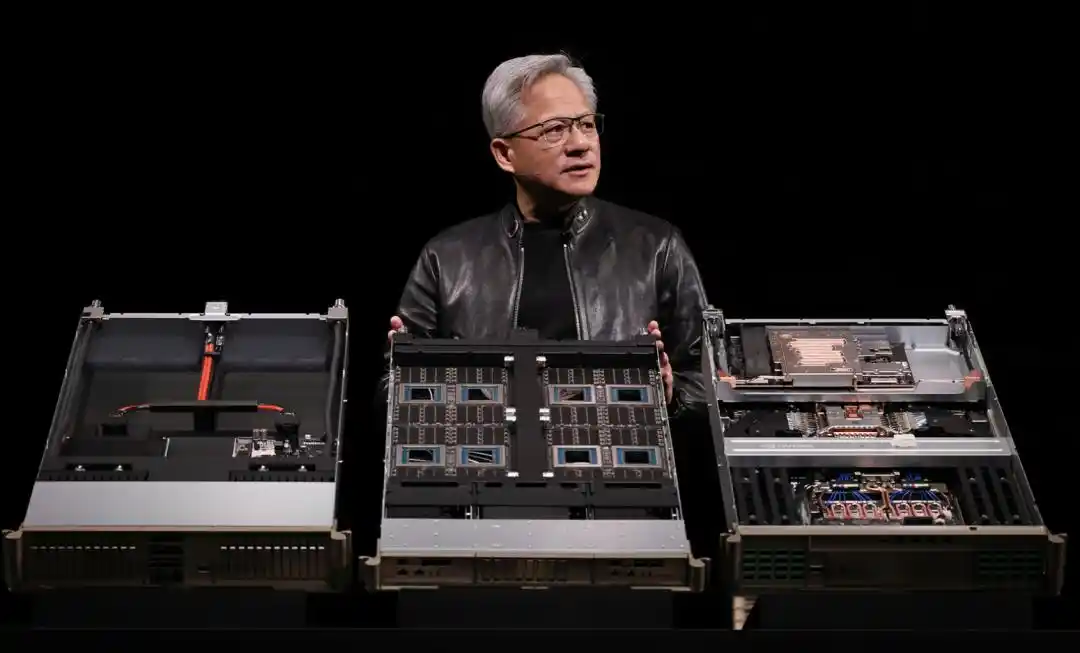
Not only that, the deal finalized this week also targets strong open-source contenders like DeepSeek and Kimi K3.

Now, open-source models already contribute a significant portion of AI-generated tokens, and Jensen Huang hopes this proportion will continue to rise, continuously stimulating demand for their own chips.

Some analysts believe, "NVIDIA doesn't care which AI model ultimately wins, as long as this world keeps churning out more and more models..."

NVIDIA's Grand Ambitions and Open-Source Blueprint

Last month, Jensen Huang, breaking from his usual low profile, posted his first ever message on X:
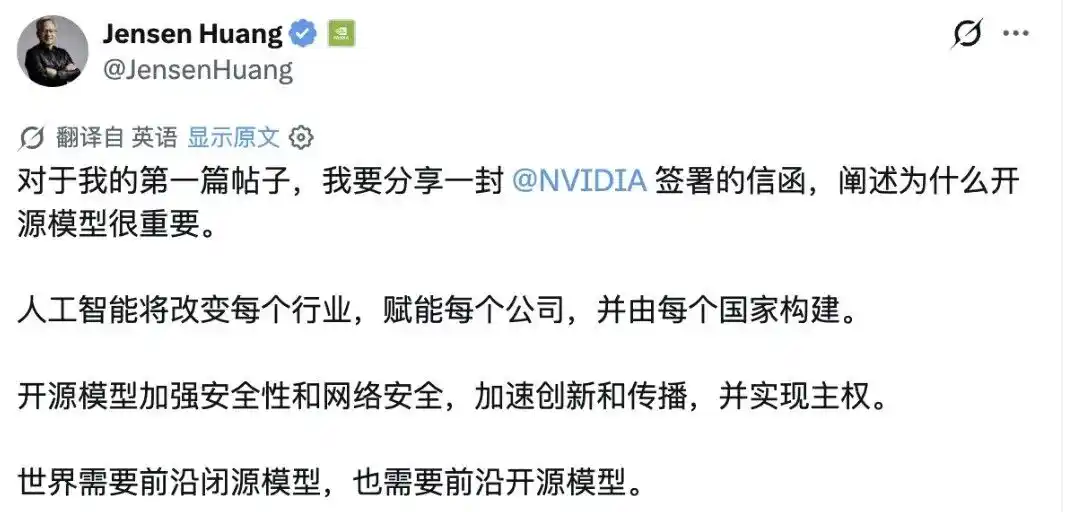
The post, jointly signed by over 20 companies, argued that for the US AI industry to thrive, it must grasp both closed and open source.

Now, NVIDIA is personally stepping in to fulfill this honorable mission.

Recently, NVIDIA invested $10 billion in the AI startup Poolside, while also forking out $60 billion to acquire the non-exclusive licensing rights to its "model factory" technology, hoping to recruit the company's over 100 engineers into its ranks.

The outside world widely sees NVIDIA's move as a gamble; it wants to rely on Poolside's technology and team to challenge the world's strongest open-source models.

This move is not abrupt.

Over the past few years, top AI labs like OpenAI, Anthropic, and DeepMind have focused their main resources on developing closed-source models, with none open-sourcing their most advanced models.

This has also provided development space for models like DeepSeek and Kimi K3.

Facing this landscape, NVIDIA seized the opportunity and went the opposite way.

Since late 2025, NVIDIA has successively released the Nemotron 3 series models. The largest Ultra version even briefly became the strongest open-source weight model in the US in June this year.
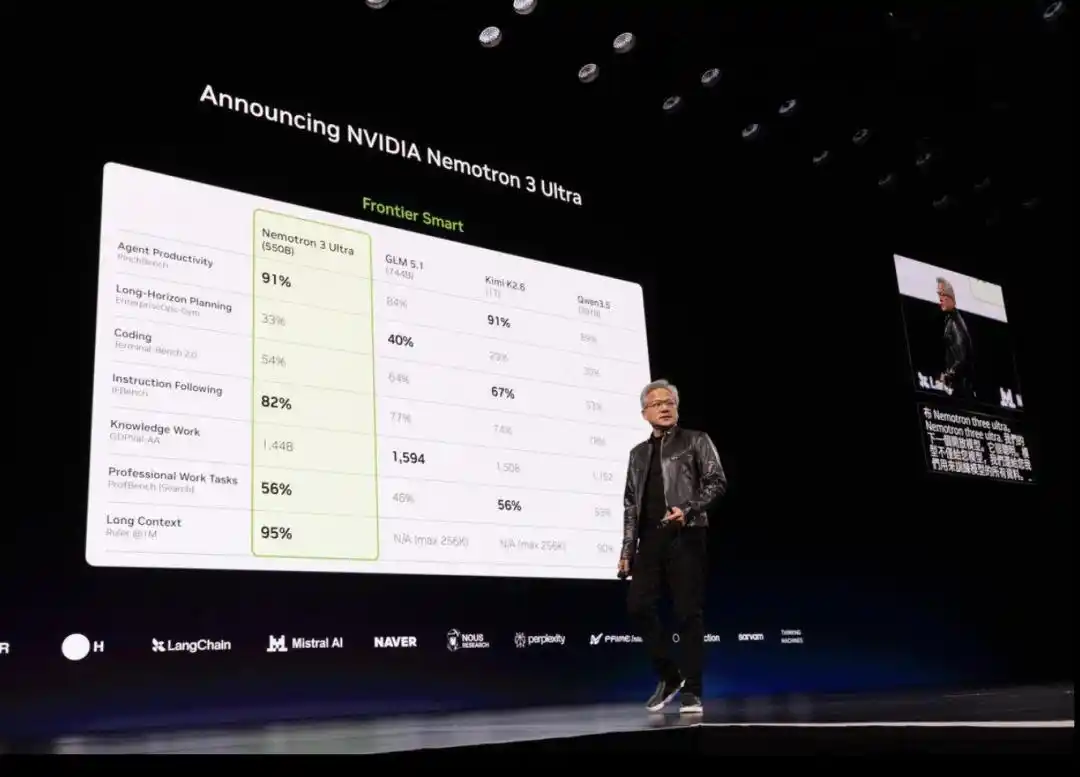
Moreover, Nemotron's open-source attitude is thorough to the point of being a declaration: besides the model weights, nothing else is hidden.

Training data, training recipes, post-training methodologies, and GPU cluster training software are all publicly released.

Besides independent R&D, NVIDIA also formed a small open-source group in March this year—the Nemotron Alliance.

Its eight members are also formidable, each with their own pedigree, including Mistral, Perplexity, Thinking Machines Lab, Cursor, LangChain, Reflection AI, Black Forest Labs, Sarvam......

NVIDIA, as the leader, provides DGX Cloud computing resources, while each member company contributes its own technology and data to jointly train an open-source model, which will serve as the foundation for the next-generation Nemotron 4 series.

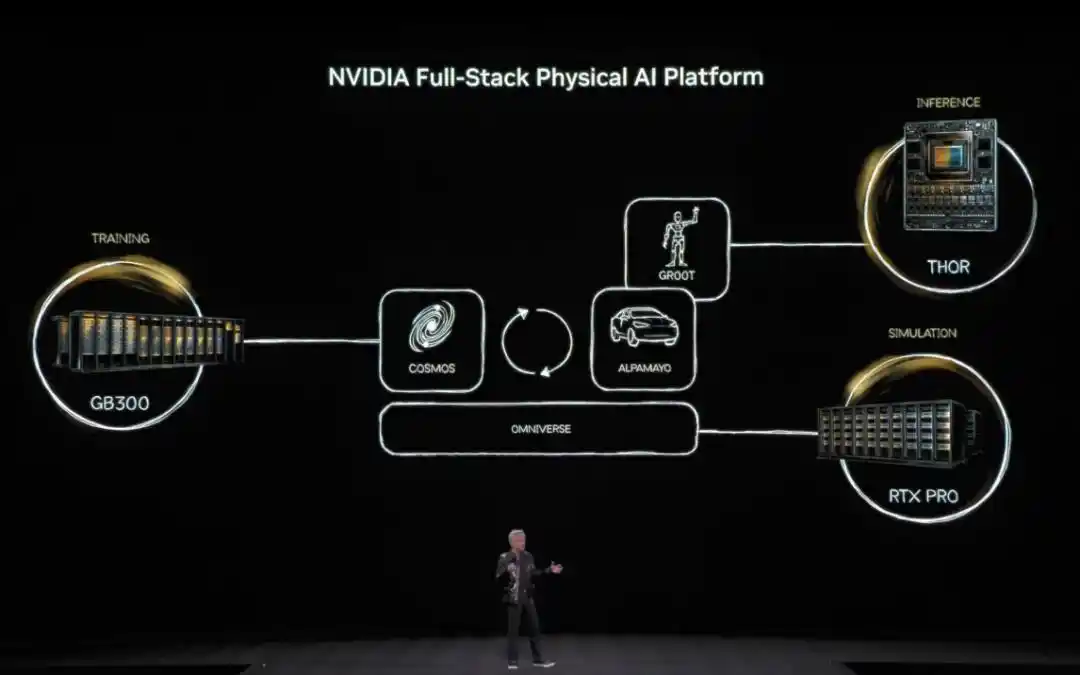
Furthermore, NVIDIA's open-source layout is not limited to language models.

In robotics, NVIDIA released the Isaac GR00T series; in the field of physical world simulation, the Cosmos series; and also the Alpamayo series for autonomous driving and the Clara platform for biomedicine......
How a Company Founded by Idealists Became a Piece of NVIDIA's Puzzle

Poolside.

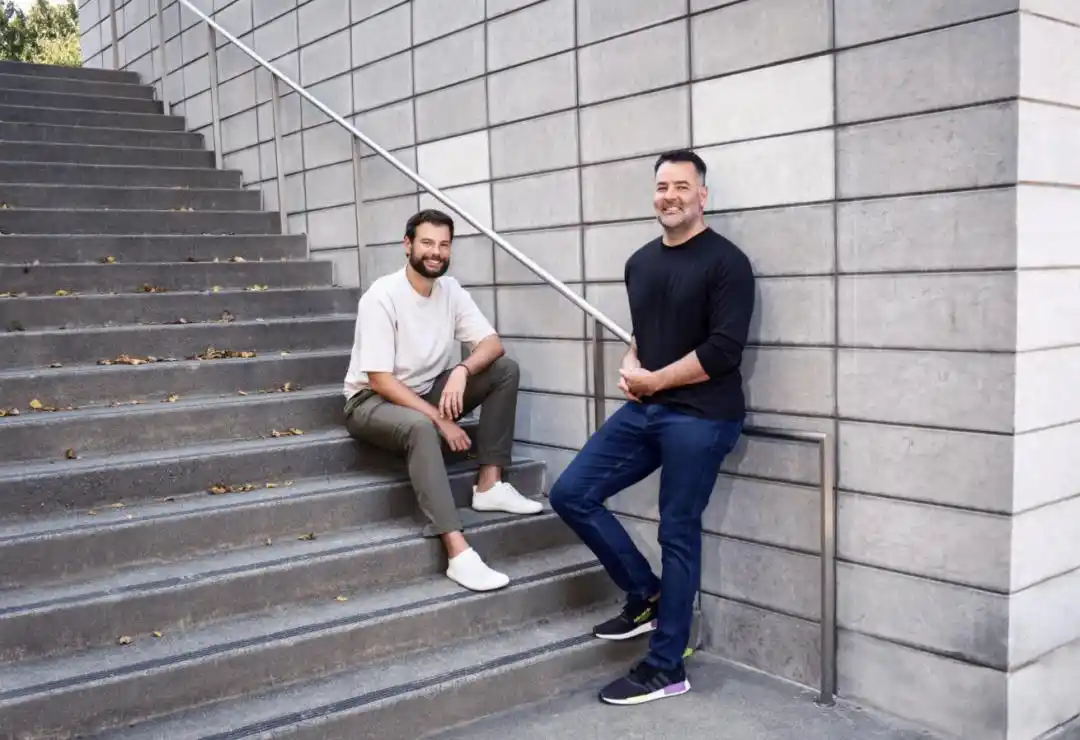
Founded in 2023 by software developer Eiso Kant and former GitHub Chief Technology Officer Jason Warner.

It is said this name came about when the two founders were negotiating funding with major corporations, and an executive suggested a relaxed "poolside informal meeting".

Whether the deal was closed is unknown, but the two founders thought the name was great—memorable and interesting.
Last October, Poolside announced plans to build a 2-gigawatt data center in Texas. Unexpectedly, in April this year, the project partner withdrew, and the ensuing $2 billion in financing fell through.

Dual pressures of funding and computing power once put Poolside in operational difficulties.

What supported their continuous model output under limited resources was their internal "model factory" system.

According to Eiso Kant, his company typically takes 5 to 8 weeks to train and release a model, with a R&D team of less than 70 people, capable of executing 10,000 to 20,000 experiments per month.

This capability is precisely what NVIDIA values.

After completing this collaboration with NVIDIA, the remaining Poolside team will primarily consist of three people: the two founders and an operations executive.

It's worth mentioning that Poolside founder Eiso Kant once stated in a podcast:

I want to see a world with 100 foundational model companies, not a world with only 5, even if we could have been one of those 5.

One More Thing

In fact, this transaction structure with Poolside is not NVIDIA's first time using it.

Non-exclusive licensing, recruitment of core talent, and the original company retaining nominal independent operation—all these do not constitute a direct acquisition, thus avoiding antitrust scrutiny.

Analyst Stacy Rasgon commented, "Doing it this way might allow the narrative of 'competition still exists' to continue."

NVIDIA hopes to firmly grasp the key nodes of the entire open-source ecosystem in its own hands.

NVIDIA's VP of Generative AI Software once said:

Models are just byproducts, not our core business.

The VP of Applied Deep Learning Research also stated that the primary purpose of developing the Nemotron series is to ensure NVIDIA's continued existence.

After all, as Moore's Law effects diminish, only with the continuous expansion of the entire AI ecosystem and the constant increase in model development and application entities can NVIDIA's computing power demand keep growing.

This article is from the WeChat public account "QbitAI," author: Cheng Qian

Crypto di tendenza

Domande pertinenti

QWhat is the main strategic move NVIDIA recently made in the open-source AI model space, according to the article?

ANVIDIA has made a significant investment, committing 60 billion USD, to acquire a non-exclusive license for the 'model factory' technology from the AI startup Poolside, along with investing 1 billion USD in the company. Additionally, they aim to recruit Poolside's engineering team to bolster their own open-source model development efforts.

QHow does the article describe NVIDIA's dual approach to the AI model ecosystem?

AThe article describes NVIDIA's approach as operating on 'two fronts.' On one hand, they collaborate closely with major closed-source AI companies like OpenAI and Anthropic. On the other hand, they are heavily investing in and actively promoting the development of high-performing open-source models through initiatives like the Nemotron series and the Nemotron Alliance.

QWhat is the primary business reason cited for NVIDIA's push into open-source AI models?

AThe primary business reason is to sustain and grow the demand for NVIDIA's own AI chips (GPUs). By fostering a vibrant and expanding open-source AI ecosystem with more developers and companies creating models, NVIDIA ensures a continuous and growing market for its core hardware products.

QWho founded the startup Poolside, and what was a unique challenge they faced before partnering with NVIDIA?

APoolside was founded by software developer Eiso Kant and former GitHub CTO Jason Warner. Before the NVIDIA deal, they faced a significant setback when a partner withdrew from a planned 2-gigawatt data center project in Texas, causing a $2 billion financing round to collapse and putting the company in a difficult operational position.

QWhat is the 'Nemotron Alliance' mentioned in the article, and what is its purpose?

AThe Nemotron Alliance is a consortium of eight companies (including Mistral, Perplexity, etc.) formed by NVIDIA in March. Its purpose is to collaboratively train an open-source model by pooling members' technologies and data, using NVIDIA's DGX Cloud computing resources. This model will serve as the foundation for the next-generation Nemotron 4 series.

Letture associate

Currency & Stock Barometer | Strategy Sells MSTR Stocks for $2.007 Billion; BitMine Increases ETH Holdings by 32,447 Last Week, Asset Scale Reaches $14.9 Billion (August 25)

**Crypto & Stock Market Snapshot: Strategy Sells MSTR Stock for $2.007B; BitMine Adds 32,447 ETH (Aug 25)** Following a bullish crypto market triggered by positive US regulatory signals and political commentary, major crypto-related stocks saw significant rebounds. Data reveals a 1,431.6% weekly increase in net Bitcoin purchases by public companies (excluding miners), reaching $81.48M. Two key developments stood out: **Strategy** sold over 18.2 million shares of MSTR, raising $2.007 billion in cash, though its Bitcoin holdings of 840,447 BTC returned to a profit of ~$2.53B. Concurrently, **BitMine**, an Ethereum-focused firm, added 32,447 ETH last week, bringing its total holdings to ~5.847 million ETH (4.8% of supply) and its total assets under management to ~$14.9B. Chairman Tom Lee expressed strong confidence in Ethereum's future as a leading platform for tokenization and AI. Other notable updates include: **Solmate Infrastructure** increasing its SOL holdings; **AIxCrypto Holdings** planning an exit from crypto assets to pivot to robot leasing; and **Eightco Holdings** maintaining a large WLD treasury while repurchasing shares. Meanwhile, in traditional markets, hedge funds recorded their largest weekly net selling of US stocks since April 2025, particularly in tech and industrial sectors, amid a cooling AI investment narrative and concerns over market concentration risks reminiscent of the dot-com bubble.

marsbit9 min fa

Currency & Stock Barometer | Strategy Sells MSTR Stocks for $2.007 Billion; BitMine Increases ETH Holdings by 32,447 Last Week, Asset Scale Reaches $14.9 Billion (August 25)

marsbit9 min fa

Goldman Sachs Bullish on Crypto Brokerage Trading Platforms: Can Prediction Markets Fuel a New Cycle?

Goldman Sachs remains cautiously optimistic about the prospects for crypto and brokerage platforms, forecasting potential for a new cycle driven by structural growth in traditional brokerage and prediction markets, rather than a broad crypto trading recovery alone. While retail stock trading cooled seasonally in July and August, Goldman notes that absolute volumes remain high, and adjusted for account growth, per-account activity is still below the 2021 peak, suggesting room for further expansion. Seasonal recovery and record equity issuance are expected to boost traditional brokerage commissions and trading volumes starting in September. Prediction markets show significant potential for autumn growth, with trading volume up approximately 1160% annually since 2024. Driven by sports, crypto, and political contracts, this segment could see a more pronounced rebound as major US sports seasons resume and election activity increases. The crypto market presents a more cautious picture. Trading volume has declined for about 10 months, exceeding historical median downturns. Although total market cap recently rose ~21%, a sustained price level is needed to drive a meaningful recovery in trading activity. Regulatory progress continues through agency actions, but comprehensive legislation is still seen as key for large-scale institutional adoption. To navigate the crypto trading slump, platforms are diversifying revenues and controlling costs. Goldman's top picks are FIGR (leveraging HELOC growth), HOOD (driven by account growth and business diversification including prediction markets), and IBKR (benefiting from global expansion). COIN is viewed as a play on direct crypto market recovery, given its exposure but also its growing subscription and service revenues. The report's thesis hinges on validating an autumn trading rebound and the sustainability of new revenue streams like prediction markets, rather than assuming a crypto bull market has already resumed.

marsbit14 min fa

Goldman Sachs Bullish on Crypto Brokerage Trading Platforms: Can Prediction Markets Fuel a New Cycle?

marsbit14 min fa

Trading

Spot

Articoli Popolari

Come comprare MOVE

Benvenuto in HTX.com! Abbiamo reso l'acquisto di Movement (MOVE) semplice e conveniente. Segui la nostra guida passo passo per intraprendere il tuo viaggio nel mondo delle criptovalute.Step 1: Crea il tuo Account HTXUsa la tua email o numero di telefono per registrarti il tuo account gratuito su HTX. Vivi un'esperienza facile e sblocca tutte le funzionalità,Crea il mio accountStep 2: Vai in Acquista crypto e seleziona il tuo metodo di pagamentoCarta di credito/debito: utilizza la tua Visa o Mastercard per acquistare immediatamente MovementMOVE.Bilancio: Usa i fondi dal bilancio del tuo account HTX per fare trading senza problemi.Terze parti: abbiamo aggiunto metodi di pagamento molto utilizzati come Google Pay e Apple Pay per maggiore comodità.P2P: Fai trading direttamente con altri utenti HTX.Over-the-Counter (OTC): Offriamo servizi su misura e tassi di cambio competitivi per i trader.Step 3: Conserva Movement (MOVE)Dopo aver acquistato Movement (MOVE), conserva nel tuo account HTX. In alternativa, puoi inviare tramite trasferimento blockchain o scambiare per altre criptovalute.Step 4: Scambia Movement (MOVE)Scambia facilmente Movement (MOVE) nel mercato spot di HTX. Accedi al tuo account, seleziona la tua coppia di trading, esegui le tue operazioni e monitora in tempo reale. Offriamo un'esperienza user-friendly sia per chi ha appena iniziato che per i trader più esperti.

421 Totale visualizzazioniPubblicato il 2024.12.13Aggiornato il 2026.08.21

Come comprare MOVE

Discussioni

Benvenuto nella Community HTX. Qui puoi rimanere informato sugli ultimi sviluppi della piattaforma e accedere ad approfondimenti esperti sul mercato. Le opinioni degli utenti sul prezzo di MOVE MOVE sono presentate come di seguito.

活动图片