Nvidia, AMD, Qualcomm CEOs Gather in Taipei: Whether Your Chips Can Sell Is Decided by Taiwanese Assembly Plants

marsbitPubblicato 2026-06-02Pubblicato ultima volta 2026-06-02

Introduzione

**Summary:** The buzz around this year’s Computex in Taipei isn't just about flashy keynotes from top CEOs like Jensen Huang (Nvidia), Lisa Su (AMD), and Cristiano Amon (Qualcomm). The real story lies in Taiwan’s hardware ecosystem—the often-overlooked manufacturers of modules, cooling systems, and assembly lines who hold decisive power over which chips succeed or fail. While brands like Dell, HP, and Lenovo set final product specs, it’s Taiwan’s engineers and suppliers who make early, critical decisions during development. If a module maker declines to design around a new chip, or an assembler won’t integrate it, that component can be effectively dead before reaching the market. This bottom-up dynamic defines the industry’s pace: fast, collaborative, and ruthlessly pragmatic. Computex remains the world’s premier computer expo, but its true value is offstage—in private meetings, small forums, and factory visits where relationships are forged and supply-chain hurdles are solved. For global tech leaders, showing up in Taipei isn’t about spectacle; it’s about paying respect to the engineers who turn silicon into sellable systems.

Author: Tim Culpan

Translation: Deep Tide TechFlow

Deep Tide Guide: This year's Computex has attracted a record number of overseas tech CEOs, but they are not here for show. This article reveals a neglected truth: The fate of chip manufacturers is not decided by brand companies like Dell or HP, but by supply chain engineers in Taiwan who handle modules, cooling, and assembly. Understanding this bottom-up power structure is key to understanding the real operational logic of the tech industry.

Good evening Taipei. The Computex Taipei computer exhibition opens tomorrow (Tuesday, June 2nd), and this annual event is more bustling than ever before.

I was recently asked what's different about Computex this year, why it's suddenly so hot. The answer is: nothing is different. I've been attending every year since 2000, and the exhibition itself has barely changed.

What has changed in recent years is the world's rediscovered interest in computers, along with a sudden realization that Taiwan dominates this industry. This year, servers—those giant computers inside big, boring black boxes—have become part of mass conversation and cultural discussion in an unprecedented way.

This is my guide for Computex, teaching you how to attend efficiently and how to understand what's really happening behind the scenes of this globally most important exhibition.

The origin story of Computex is written in its name, Computer Expo. Even as the world's interest in computers has waxed and waned, this annual event has always remained true to its roots.

Over the years, the rise of consumer electronics, gaming consoles, and smartphones made computers seem boring. But this exhibition never strayed from its original purpose. It has always been a stage for computer manufacturers to showcase desktops, laptops, servers, motherboards, cables, peripherals, and all components of the PC industry.

The exhibition officially begins on Tuesday of the first week of June. Monday is not an official exhibition day, but some companies hold events. Saturday is the final day, open to the public. I recommend avoiding Saturday at Computex.

Computex is mainly divided into three parts:

  • Industry Keynote Speeches
  • Forums
  • Exhibition Floor

Keynote Speeches

Keynote speeches are opportunities for executives to pitch their companies, ecosystems, and latest products to people. Remember, the target audience at Computex is engineers, product managers, supply chain purchasers, and global sourcing executives. This is a group proficient in technology, familiar with soldering and motherboards. Bus speeds and thermal thresholds are their daily topics.

For many years, Intel specifically reserved one of its annual chip launches for Computex. AMD often did the same. Taiwan's VIA Technologies once became a hero at Computex, while Intel was the villain for bursting this little rival's balloon (literally, I'm not joking). Graphics chip manufacturers ATi and Nvidia heavily relied on Computex to introduce their niche products to an attentive audience.

Well-known brands occupy prime marketing spots around the exhibition hall

Image: Tim Culpan/Culpium

Computex was, is, and remains the premier computer exhibition.

Therefore, Intel's CEO usually gives a keynote, and one or two other bosses might show up to speak. A few foreign CEOs are about all we could expect, while local leaders like Asus's Jonney Shih or Acer's Gianfranco Lanci would carry Taiwan's flag. Regional or vice-president level bosses of global giants often appear as company ambassadors.

This year, Computex has attracted the most overseas bosses I can remember, including:

Qualcomm, Cristiano Amon

Intel, Lip-Bu Tan

Arm, Rene Haas

AMD, Lisa Su

Nvidia, Jensen Huang

Marvell, Matt Murphy

NXP, Rafael Sotomayor

The importance of Computex is not because all these tech CEOs are coming to Taipei. On the contrary, they are all coming to Taipei because Computex is so important.

The global industry elite come to Taipei to kiss the ring of tech power.

I count AMD's Lisa Su on the list, even though she came to town before Computex, not specifically for the exhibition itself. Nvidia's Jensen Huang is not officially appearing at Computex either. At least not officially. His Monday GTC keynote is not on the official Computex schedule.
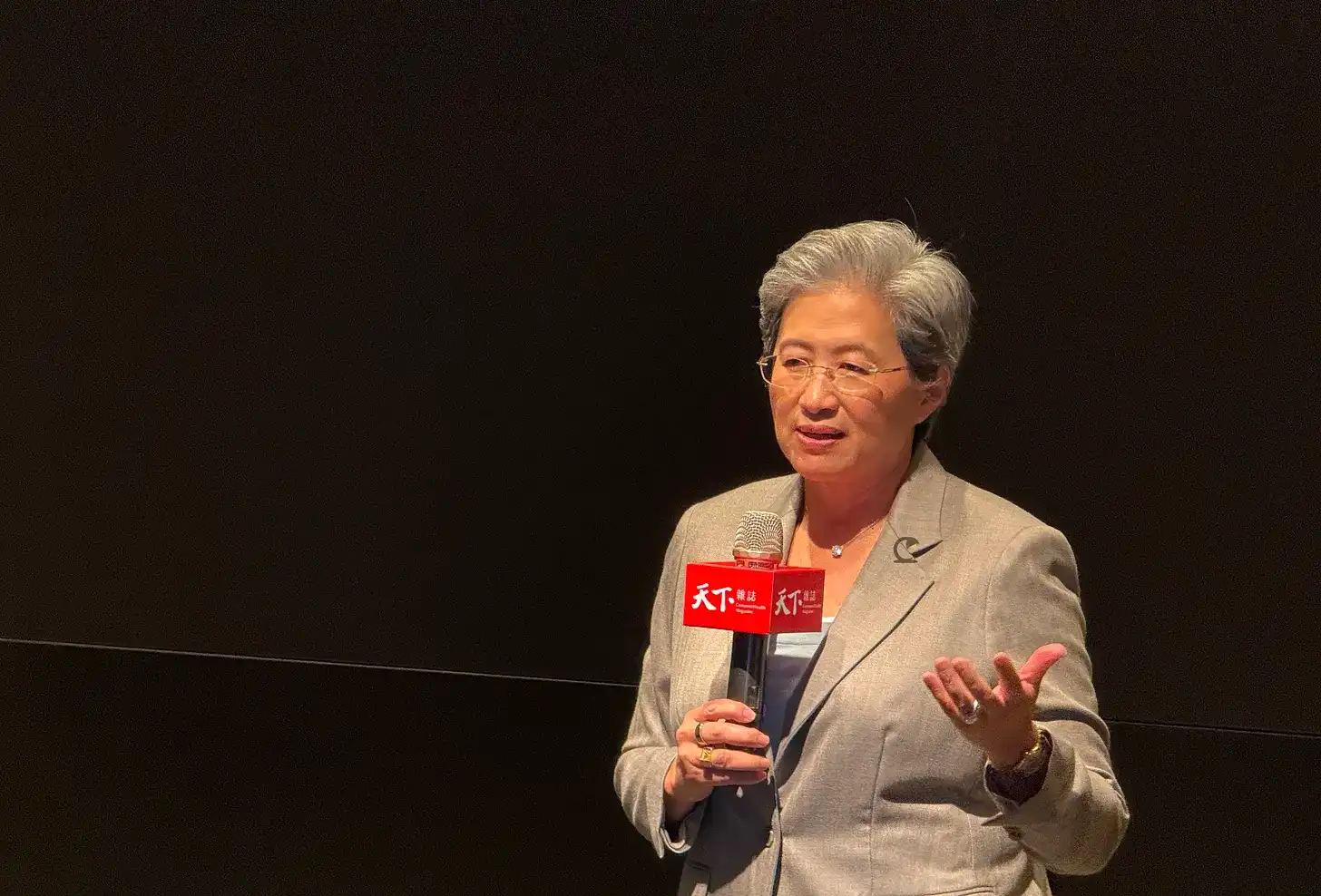
AMD CEO Lisa Su speaks to reporters after attending a pre-Computex 100 event and making announcements in Taipei

Photo: Tim Culpan/Culpium

But this precisely illustrates the point. So many executives realize that Computex, and Taiwan more broadly, are so crucial to their business that they find ways to squeeze into this packed schedule. They want to make major announcements while the world is watching them, and then meet key figures in closed-door sessions to build relationships that will make or break their business over the next 12 months.

The real action doesn't actually happen in the keynotes. All the news naturally flows from interviews under embargo and press releases, timed exactly for when the boss takes the stage.

Forums

Since keynotes are thoroughly covered by media, press releases, and social media, your time might be better spent on small forums focusing on super-niche topics. For example, ABB Robotics' Managing Director Craig McDonnell will host a forum this year on industrial-grade physical AI for robotics. If that's not your thing, consider Google DeepMind's Ed H. Chi and his speech on the future of personalized universal assistants. There are many more. There are also supporting events like Innovex, focusing on startups and emerging companies.

Companies want to present at these forums to promote their vision and ecosystem. Companies also want to sit in the audience to understand what competitors and partners are doing, exchange business cards. I guarantee you'll learn more and build higher-quality connections from a few carefully selected forums than from attending every keynote.

The Exhibition Floor

I'm always surprised to find Computex visitors scheduling their departure for Wednesday or Thursday. But this is understandable if you don't know where the real treasures lie. I think these early departures happen because the final days of most other exhibitions really don't have much good stuff left.

But the most exciting action is neither in the keynotes nor the forums. Everything happens on the exhibition floor, in the VIP areas of those 3x3 booths, in invitation-only hotel suites, in meeting rooms at tech company offices near the Taipei Nangang Exhibition Center and Neihu District.

Many enterprises, including local tech companies and local offices of foreign companies, mark Computex as a closed day on their calendars, prohibiting leave or business trips to ensure full attendance.

Overseas clients are the lifeblood of Taiwan's industry, especially the tech sector, and local partners prepare for this annual pilgrimage. Veterans come because they understand something many visitors don't: winning over the PC ecosystem is crucial for winning market share with end-buyers.

The tech ecosystem is more bottom-up than many imagine. Foreign clients have the money, but local suppliers have the talent and the connections.
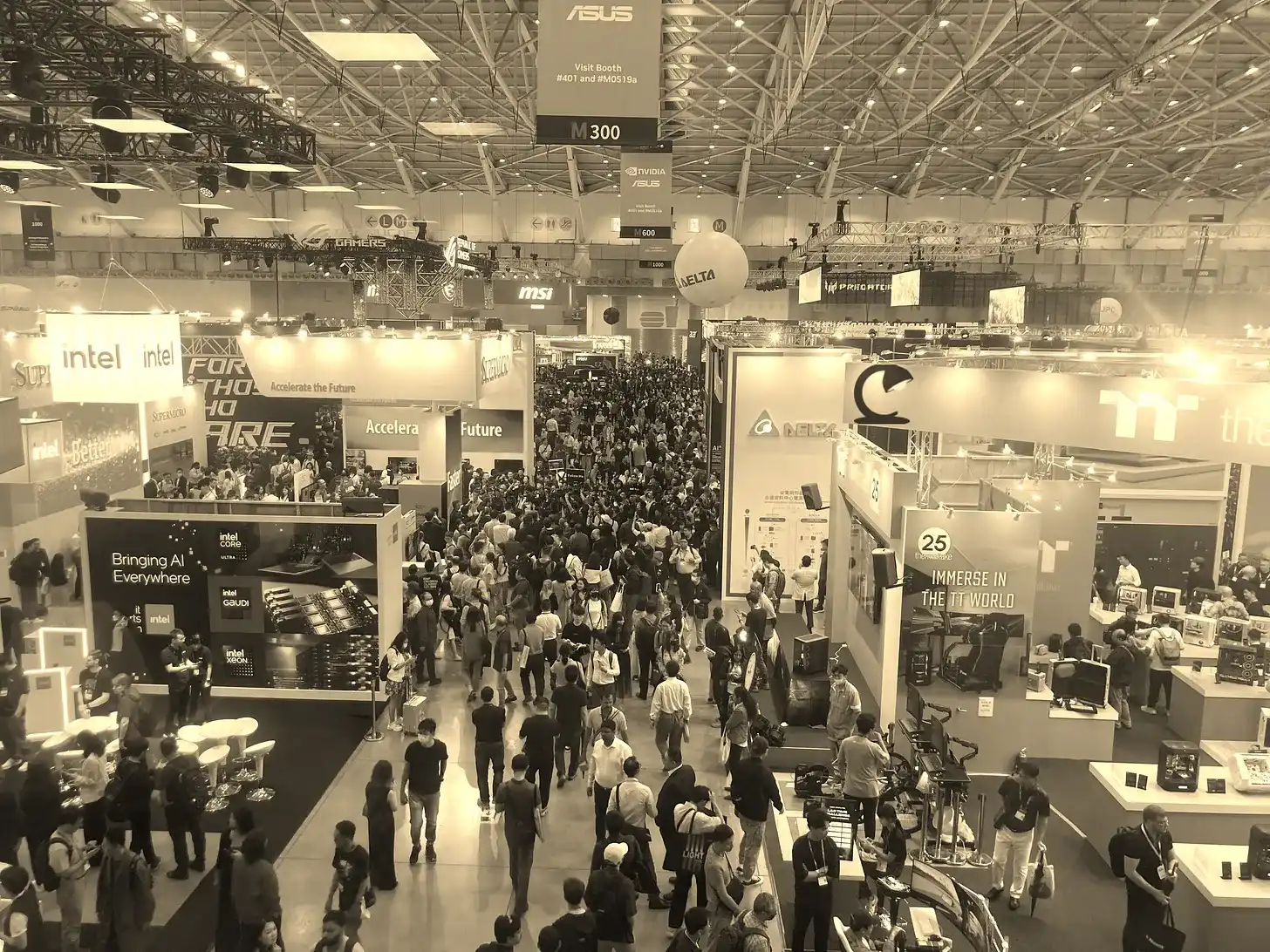
Another trade show? Perhaps not?

Image: Tim Culpan/Culpium

A module manufacturer that doesn't want to design circuit boards around your chip won't become an advocate for your product. A thermal management or mechanical parts maker unwilling to spend time learning and building around your specifications won't have ready solutions when the assembler needs them.

And an assembler that doesn't want to invest time and resources developing a system integrating your product, partly because upstream manufacturers aren't ready with parts, won't even bother showing it to the branded PC manufacturers.

While Dell, HP, Lenovo, Acer, and Asus decide what products to sell, what specifications, and at what price, they are powerless if the rest of the ecosystem isn't interested.

A little-known reality is that system manufacturers and their suppliers make many crucial product and engineering decisions before presenting to brand clients. These choices mark whether your component is taken seriously or becomes yet another oddity that barely ships.

Although many parts are made in South Korea, Japan, China, and even the US, the real ones calling the shots are Taiwan's hardware gang. An uninterested assembler, or a confused and fatigued module manufacturer, can kill your product even before it leaves TSMC's wafer fab. This isn't some conspiracy. It's cold, hard pragmatism.

Tech cycles are short. Margins are thin. Technical barriers are high. The only speed at which this industry functions is fast. Doing so requires cooperation between competitors and partners. As Lisa Su recently said in Taipei about her competitors, "We're all friends because we grew up together." Bringing something new to market is a huge risk for every possible manufacturing participant.

The exhibition floor and the hidden backrooms are where these relationships develop. It's at these booths that niche manufacturers of heat spreaders, high-speed cables, or multi-layer printed circuit boards showcase their products. Then they listen as existing or potential clients share engineering challenges, outline their own sales forecasts, and seek advice on how to build products under oppressive profit margins and impossible deadlines.

Got an idea? Please share.

For big companies like Intel, AMD, Nvidia, Qualcomm, and Marvell, not being mentioned in these discussions means your chip is being rejected by those who make the final product. Similarly, failing to show up and support these manufacturers will lead them to work with suppliers who are willing to do so.

Like any industry, relationships and interoperability matter. What's unique about tech hardware is that the manufacturing of physical products combines with product development cycles operating at tech speed.

Computex offers a unique opportunity to observe this ecosystem. You just need to know where to look.


Domande pertinenti

QWhy did the article claim that the fate of chip companies like NVIDIA, AMD, and Qualcomm is determined by Taiwanese assembly and component manufacturers?

ABecause the Taiwanese supply chain (module makers, heat dissipation engineers, assembly factories) plays a critical bottom-up role. They decide whether to invest resources into designing circuits, making components, and integrating a specific chip into a system. If they are not interested or supportive, the brand companies (like Dell, HP) have nothing to sell, effectively killing the chip's market potential before it even leaves the fab.

QWhat is the primary purpose of the Computex exhibition according to the article?

AComputex is fundamentally a computer expo for the industry's engineers, product managers, and supply chain professionals. Its core purpose is not the flashy keynotes but facilitating the crucial behind-the-scenes meetings where hardware component makers, module suppliers, and system assemblers collaborate, solve engineering challenges, and build the relationships that determine which technologies and chips get integrated into final products.

QWhat is the most important place for real business deals and relationship-building during Computex?

AThe most critical action happens on the exhibition floor itself—specifically in the VIP areas of small booths, in invitation-only hotel suites, and in closed-door meetings at tech company offices near the venue. This is where component manufacturers and system assemblers have practical discussions about engineering problems, sales forecasts, and production challenges, forming the alliances that make or break products.

QHow does the article explain the unprecedented attendance of so many overseas tech CEOs at Computex this year?

ATheir attendance is a result of Computex's (and Taiwan's) enduring importance, not the cause of it. These CEOs come to Taipei to 'kiss the ring' of tech power. They recognize that Taiwan's hardware ecosystem is vital to their business success, so they schedule major announcements and critical private meetings around the event to build the relationships that will define their fortunes for the next year.

QWhat unique challenge does the tech hardware industry face, as highlighted in the article?

AThe tech hardware industry uniquely combines the physical manufacturing of products with product development cycles that operate at 'tech speed.' This requires incredibly fast and close collaboration between competitors and partners across the supply chain to manage high technical barriers, thin profit margins, and short cycles. Failure to cooperate and integrate quickly can cause a product to fail before it even reaches the market.

Letture associate

human.tech Launches Clean SDK for Privacy-First Web3 Apps

human.tech has launched the Clean SDK, a toolkit enabling developers to build privacy-first Web3 applications with transparent accountability. Released alongside Aztec's version 5, the SDK provides components for integrating zero-knowledge identity verification, sanctions screening, and private transactions, without developers handling sensitive user data or building compliance infrastructure from scratch. It uses zero-knowledge proofs and programmable verification to allow apps to confirm user legitimacy and sanctions compliance while keeping identities confidential. The first application built on the SDK, Shield, a privacy bridge to Aztec, also launched. It allows users to transfer assets privately while proving a unique human is behind each transfer and that funds have passed sanctions checks, as verified by a May 2026 audit. The SDK offers three core verification techniques: Proof of Innocence (sanctions screening against 23 sources), Proof of Personhood (simpler verification via Human Passport), and Proof of Clean Hands (higher-assurance zero-knowledge government ID checks). This allows apps to authenticate users and transactions without exposing personal data. Designed for Aztec builders, the SDK lets developers add programmable privacy to decentralized apps, eliminating the need to create their own verification and ZK infrastructure. Shield demonstrates its practical use for private bridges, but the SDK aims to enable a wider ecosystem of private, accountable financial apps and services. The launch addresses growing demand for infrastructure that balances privacy and accountability. The SDK avoids traditional identity databases, storing encrypted data off-chain, screening at both entry and exit points, and including a gated disclosure mechanism for legal requests. human.tech's products, including the Clean SDK, focus on using zero-knowledge technology to enable verifiable personhood and privacy in digital systems.

TheNewsCrypto23 min fa

human.tech Launches Clean SDK for Privacy-First Web3 Apps

TheNewsCrypto23 min fa

Unlocking $100 Million in Liquidity? Pump.fun's New Policy Tests the 5-Minute Pump Technique

Pump.fun, a popular meme coin launchpad, has introduced a new standard mechanism called BOOST. It aims to address a significant capital efficiency issue: when a newly launched token graduates from its initial bonding curve to a liquidity pool (LP), roughly 20% of its liquidity becomes permanently locked as "dead liquidity," estimated to waste over $100 million annually. Instead of locking these funds permanently, BOOST repurposes them. Upon a token's migration, approximately 20% of the settlement funds (e.g., 17.6 SOL or ~$2516 USDC) are used to buy back the token on the open market over a 5-minute period via a Time-Weighted Average Price (TWAP) mechanism. All purchased tokens are immediately burned. This creates a brief, systematic buy pressure immediately after migration, potentially generating a short-term price surge ("pump") while permanently reducing the token's circulating supply. The goal is to enhance the immediate post-launch trading experience, potentially increasing trader retention and sustainable protocol revenue, which funds ongoing token buybacks. However, concerns exist that this artificial 5-minute boost could lower the barrier for launching low-quality tokens and lead to steeper price crashes once the buy pressure stops, if followed by large sell-offs. The feature automatically applies to tokens migrating after July 21, 2024, but not to previously migrated tokens or those launched via the Mayhem AI Agent lab.

marsbit30 min fa

Unlocking $100 Million in Liquidity? Pump.fun's New Policy Tests the 5-Minute Pump Technique

marsbit30 min fa

Podcast Notes | Conversation with GSR Asset Management Head: To Determine if This Crypto Rally is Real, Just Watch the Lending Rates on Aave

Podcast Summary: Dialogue with GSR's Head of Asset Management: To Determine if This Crypto Rally is Real, Just Check Lending Rates on Aave Andy Baehr, Managing Director of Asset Management at GSR, discusses the current crypto market, characterizing it as stuck in a state of "ambivalence" with short-lived, unsustainable rallies. He outlines a simple framework: the market moves between "ambivalence" and "conviction" (sustained upward momentum). Currently, every rally resembles a single-stage rocket booster that quickly fizzles out. Baehr identifies three key signals to watch: 1) DeFi lending rates, 2) the potential passage of the CLARITY Act, and 3) the market forming a consensus on the "Fed hawkish peak." He emphasizes that the most immediate indicator for the sustainability of the recent CPI-triggered rally is the USDC borrowing rate on Aave, currently around 3.75%—close to U.S. Treasury yields. The absence of a credit spread indicates low leverage demand and a lack of market energy. He explains that a healthy, sustained rally requires layered buying pressure. Last year's rally progressed from an ETH short squeeze to crypto-native trader influx and finally to ETF inflows. Currently, this structure is missing. Other potential structural buyers like Digital Asset Treasury (DAT) companies are absent, and ETF flows have proven transient. Baehr notes that while small-cap crypto tokens outperformed large caps in Q2—a potential sign of capitation in major assets—capital is also flowing to more exciting opportunities like AI stocks and tech IPOs, leaving crypto sidelined. Regarding DeFi, he highlights that platforms like Aave provide a clear, real-time signal of leverage demand through their supply/demand-driven interest rates. A significant, sustained rate increase would signal genuine market conviction. He also observes the quiet emergence of fixed-income-like products and vaults in DeFi. On regulation, the probability of the CLARITY Act passing before the August 7th deadline has dropped linearly from 75% to below 40% on Polymarket. Baehr suggests its passage would be treated as a bullish surprise, a potent driver for price movement. However, political hurdles, including ethical clause debates and disclosures about the First Family's crypto profits, remain significant obstacles. Ultimately, the market awaits clarity on the Fed's terminal rate under Chair Warsh. Until the "Fed Solstice"—the point where the market collectively understands the peak of hawkish policy—sustained conviction will be difficult to achieve.

marsbit1 h fa

Podcast Notes | Conversation with GSR Asset Management Head: To Determine if This Crypto Rally is Real, Just Watch the Lending Rates on Aave

marsbit1 h fa

Trading

Spot
活动图片




