New revenue hierarchy? How Hyperliquid is outpacing legacy chains

ambcryptoPubblicato 2026-04-06Pubblicato ultima volta 2026-04-06

Introduzione

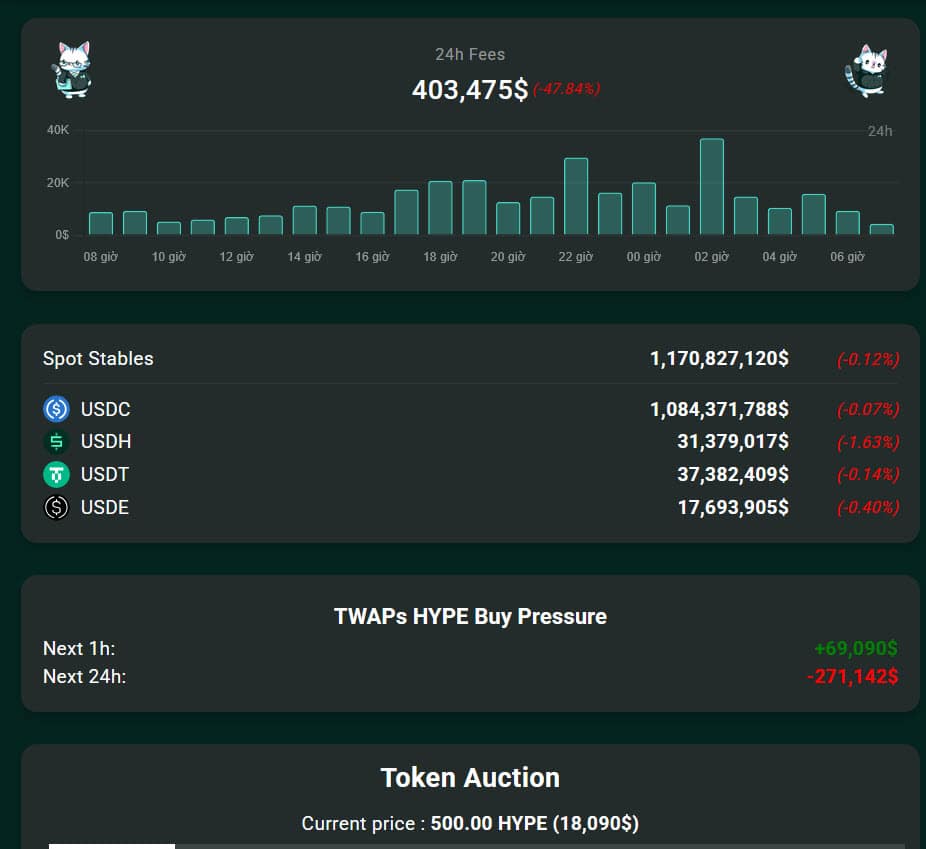
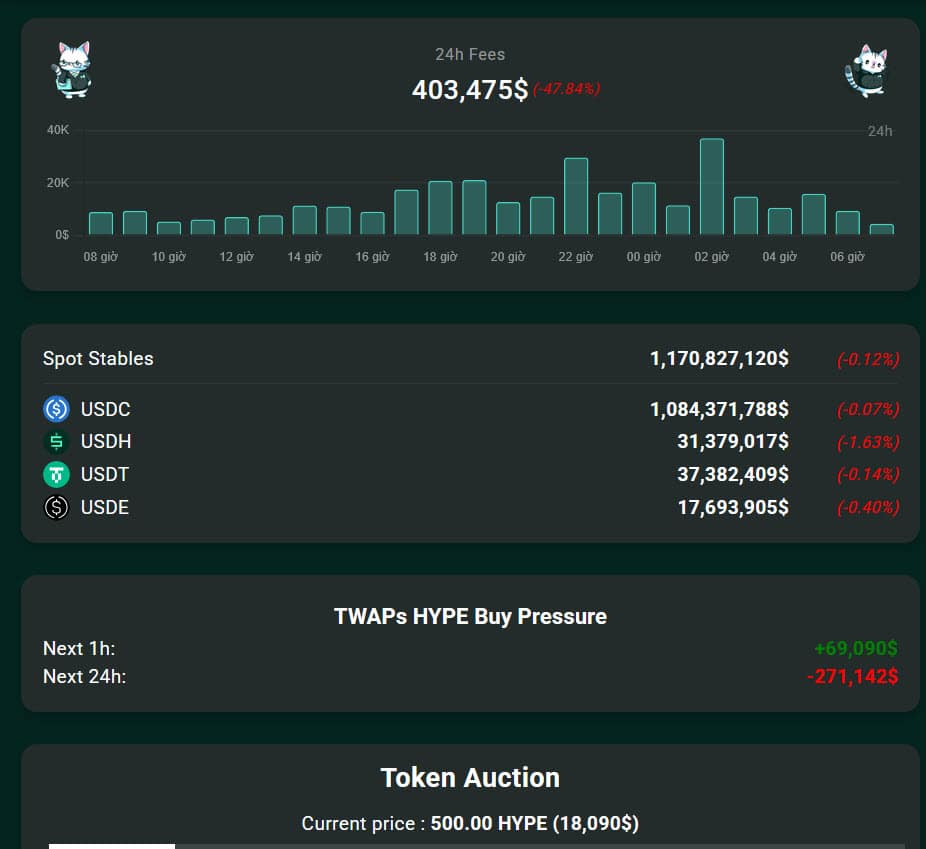
The blockchain value capture model is shifting from passive transfers to active trading, with perpetual trading volume ($8.4B) far exceeding spot DEX activity ($3.7B). Hyperliquid exemplifies this trend, capturing 36.4% of DeFi fees by March 2026, while Ethereum and Solana see declining shares. Its derivatives platform generated $154.95B in total volume from 212,843 traders, driving $12.43M in fees. A key mechanism redirects fees—$403,475 in 24 hours—to buybacks, removing 10,794 HYPE tokens from circulation. This creates a feedback loop where trading activity fuels fees, buy pressure, and token value appreciation, highlighting how specialized trading platforms now dominate value capture over general-purpose chains.

The way blockchains capture value is shifting, as activity moves from passive transfers toward active trading flows. Earlier models relied on broad usage, where simple transactions supported network value.

Now, trading dominates the landscape.

Perpetual volume hovered around about $8.4 billion in 24 hours, far exceeding the $3.7 billion seen across Spot DEX activity. This shows capital now concentrates around continuous trading rather than one-time transfers.

Fee distribution follows this shift, with Hyperliquid contributing about $618,377 out of $41.45million total DeFi fees. This evolution reshapes the market, where value depends more on trading intensity, which favors specialized platforms over general-purpose networks.

Hyperliquid dominance signals a new revenue hierarchy

A clear shift is unfolding in how blockchains earn, and it starts with where user activity is actually happening.

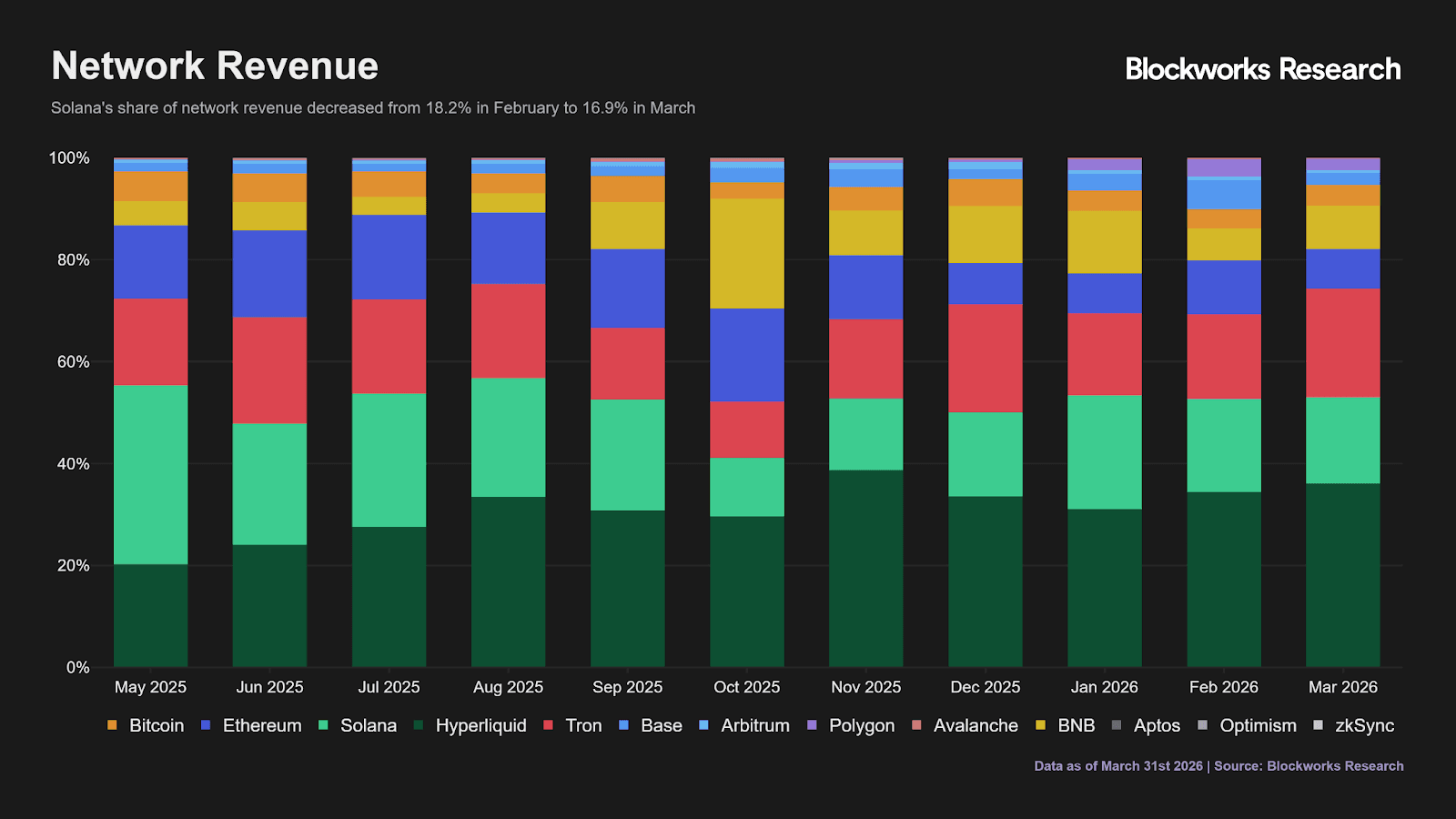
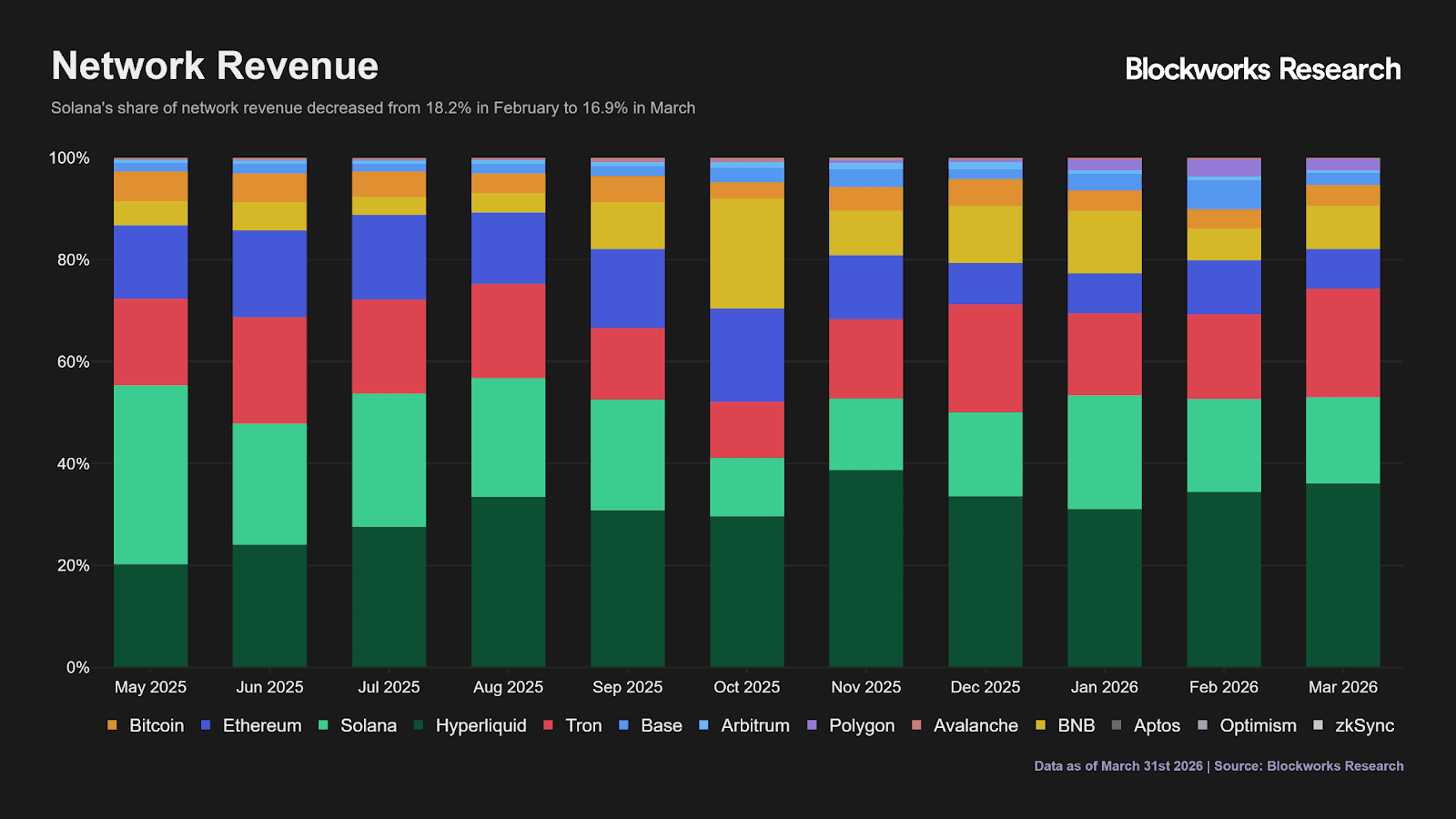
Hyperliquid’s share rose steadily through 2025, reaching about 36.4% by March 2026, which shows traders are concentrating on derivatives platforms.

Source: Blockworks Research

This shift builds as perpetual trading creates continuous fee flow rather than one-off transactions. Capital prefers environments where it can rotate quickly, which naturally pushes revenue toward trading-focused chains.

Solana [SOL] holds near 16%, slipping from 18%, which suggests usage remains strong but loses share as competition intensifies. Meanwhile, Ethereum [ETH] drops toward 7.7%, and Base near 2.4%, showing that broad activity does not translate into fee capture.

This changes market dynamics, where value follows trading intensity, pushing users and liquidity toward platforms that monetize activity more efficiently.

Hyperliquid turns trading activity into direct value capture

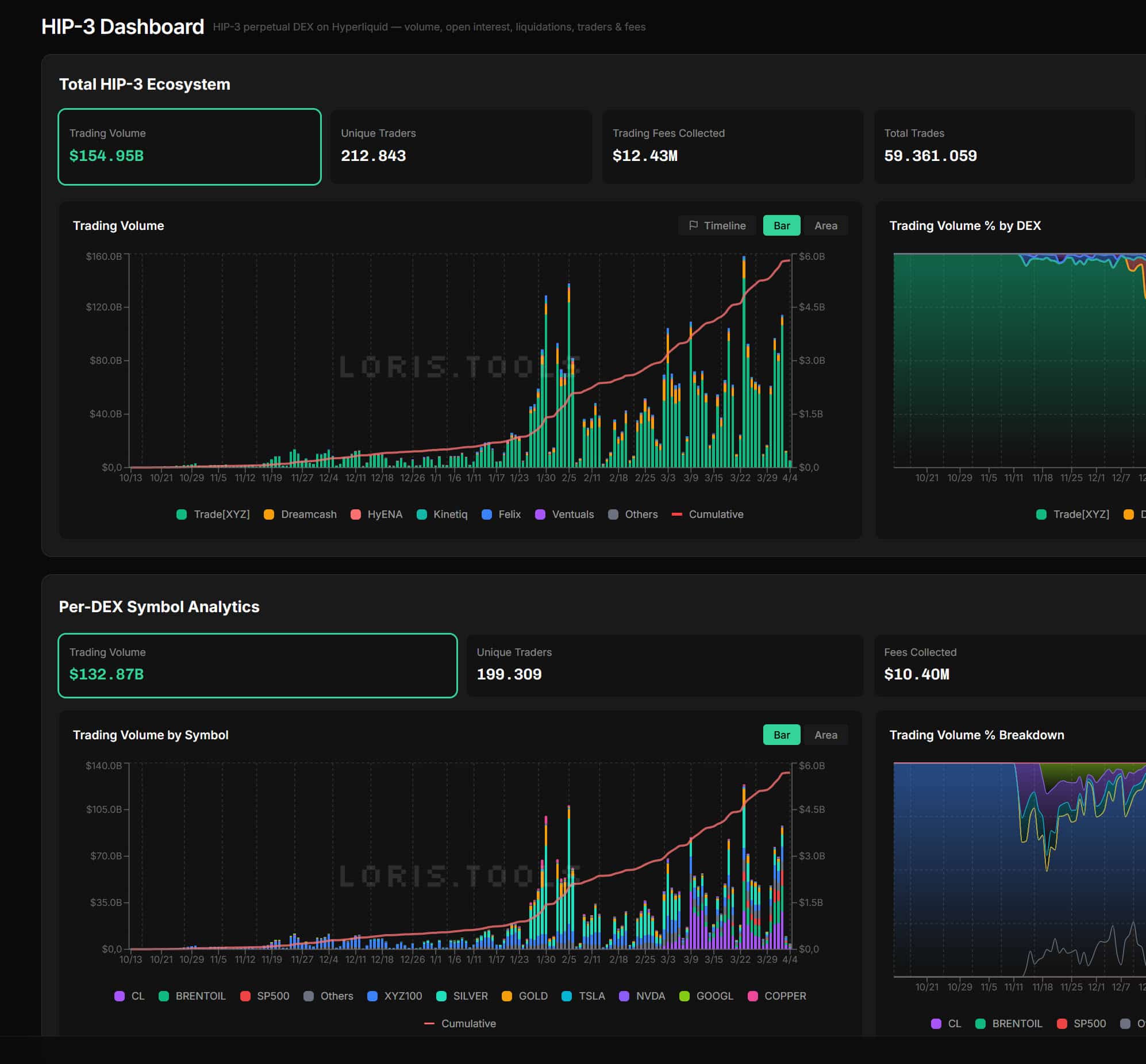
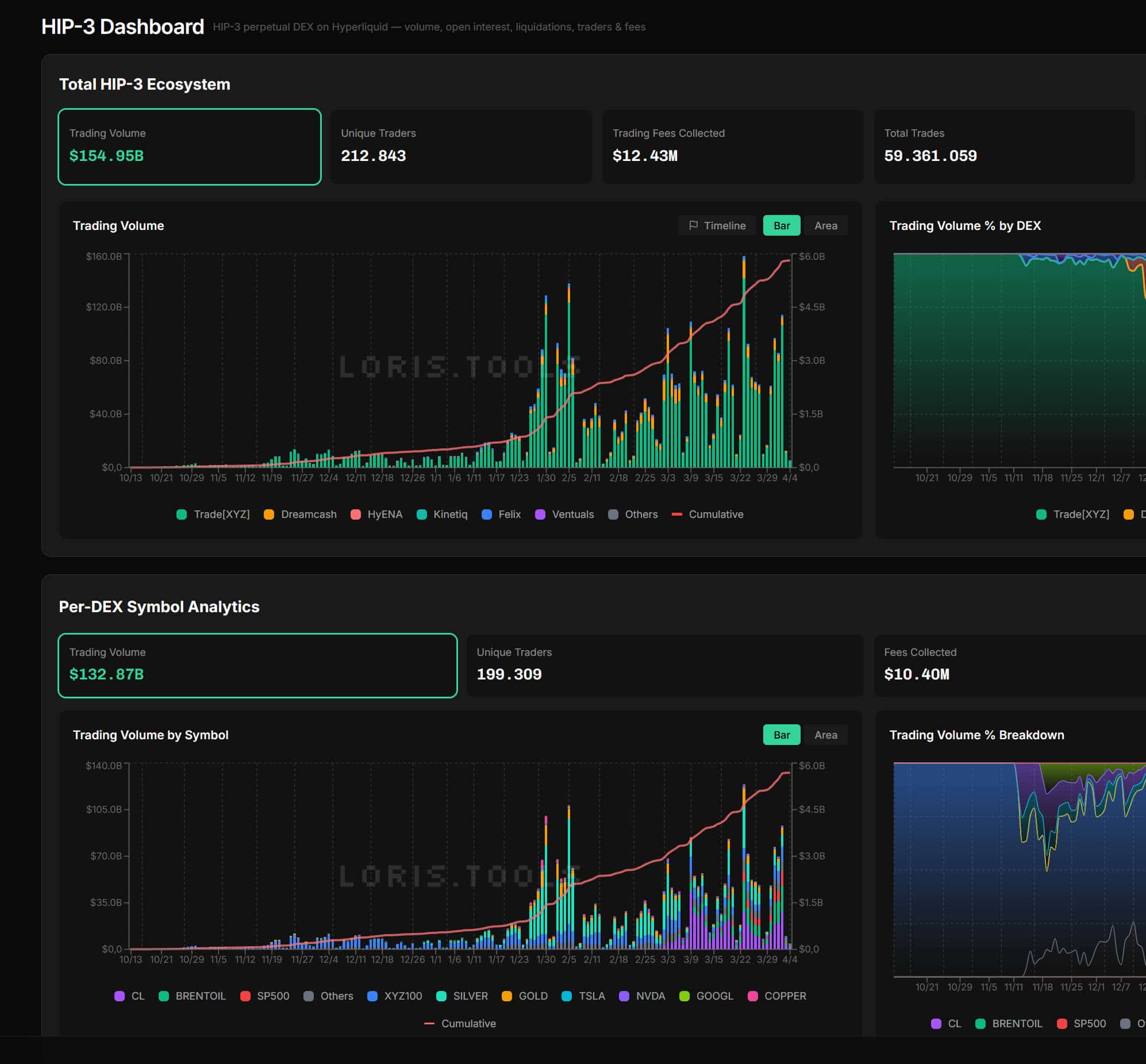
HIP-3’s growth shows how quickly derivatives activity can scale when real trading demand enters the system. Total volume reaches about $154.95 billion, supported by 212,843 traders executing roughly 59.36 million trades.

Source: X

This progression builds gradually, then accelerates into sharp spikes from January, where daily volumes expand and cumulative growth trends higher.

As participation increases, fees rise to about $12.43 million, confirming steady monetization alongside activity.

That activity does not remain abstract, as it feeds directly into token dynamics. Over the last 24 hours, fees reached about $403,475, all redirected into buybacks that remove roughly 10,794 HYPE from circulation.

Source: X

This creates a continuous loop, where trading drives fees, fees drive buy pressure, and reduced supply begins to support value as activity deepens.


Final Summary

  • Hyperliquid [HYPE] shows how trading-driven activity now dominates value capture, as continuous derivatives flow converts volume directly into fees and supply reduction.
  • Hyperliquid strengthens its market position as revenue concentration shifts toward specialized platforms, where sustained trading activity supports both liquidity and token value.

Domande pertinenti

QWhat is the main shift in how blockchains capture value according to the article?

AThe main shift is from passive transfers toward active trading flows, with perpetual trading now dominating and creating continuous fee generation rather than one-off transactions.

QHow much of the total DeFi fees did Hyperliquid contribute, as mentioned in the article?

AHyperliquid contributed about $618,377 out of a total of $41.45 million in DeFi fees.

QWhat percentage of the market share did Hyperliquid reach by March 2026?

AHyperliquid reached about 36.4% of the market share by March 2026.

QHow does Hyperliquid's fee mechanism directly impact its token (HYPE)?

AFees generated from trading activity are used for buybacks, which remove HYPE tokens from circulation, creating buy pressure and supporting token value through supply reduction.

QWhat does the comparison between perpetual volume and Spot DEX activity indicate about capital concentration?

APerpetual volume of $8.4 billion far exceeded Spot DEX activity of $3.7 billion in 24 hours, showing capital now concentrates around continuous trading rather than one-time transfers.

Letture associate

Lowering Expectations for BTC's Next Bull Market

The author, Alex Xu, explains his decision to significantly reduce his Bitcoin holdings (from full to ~30% of his portfolio) during the current bull cycle, citing a lowered long-term outlook for BTC's price appreciation in the next cycle. He outlines six key reasons for this reduced expectation: 1. **Diminished Growth Drivers:** The narrative of exponential user adoption has largely played out with institutional ETF adoption. The next major growth phase—adoption by sovereign national reserves or central banks—seems unlikely in the near future. 2. **Personal Opportunity Cost:** More attractive investment opportunities have emerged in other assets, such as undervalued companies. 3. **Industry-Wide Contraction:** The broader crypto industry is struggling, with most Web3 business models (SocialFi, GameFi, DePIN) failing. This overall萧条 (depression) reduces the fundamental demand and consensus for Bitcoin. 4. **Strain on Major Buyer:** MicroStrategy, a major corporate buyer of BTC, faces rising financing expenses for its debt, which could slow its purchasing rate and create significant marginal pressure on the market. 5. **Increased Competition from Gold:** The emergence of "tokenized gold" has closed the functional gap (portability, divisibility) between physical gold and Bitcoin, offering a strong competitor in the non-sovereign store-of-value space. 6. **Security Budget Concerns:** The block reward halving continues to exacerbate the long-standing issue of funding Bitcoin's network security, with new fee source explorations like Ordinals and L2s largely failing. The author's decision to hold a significant (though reduced) position reflects a cautious, not bearish, outlook. He remains open to increasing his exposure if the fundamental reasons for his skepticism change or if new positive catalysts emerge.

marsbit25 min fa

Lowering Expectations for BTC's Next Bull Market

marsbit25 min fa

Can Iran 'Control' the Strait of Hormuz?

Iran has announced a comprehensive plan to assert control over the strategic Strait of Hormuz, a critical global oil shipping chokepoint. The proposed measures include requiring all vessels to obtain Iranian permission for passage, imposing fees for security, environmental protection, and navigation management—preferably paid in Iranian rials—and absolutely banning Israeli ships. Vessels from countries deemed hostile by Iran’s top security bodies may also be barred. Analysts suggest Iran’s motives are multifaceted: increasing pressure on the U.S. and Israel by leveraging control over oil transit to influence global prices and inflation; creating a new revenue stream, potentially exceeding $7.7 billion annually, to counter Western sanctions and support postwar reconstruction; and using transit permissions as bargaining chips in future negotiations, notably with the U.S. However, the plan faces significant practical and diplomatic challenges. Enforcing comprehensive interception and fee collection in the busy waterway, patrolled by international military forces, would be difficult. The U.S. has already countering with a blockade of Iranian ports and threats to intercept any ship paying fees, potentially strangling Iran’s oil exports and fee revenue. Broad international opposition, led by European and Gulf states, and legal controversies further complicate implementation. The proposal may ultimately serve more as a negotiating tactic than a feasible policy, with its execution remaining highly uncertain.

marsbit1 h fa

Can Iran 'Control' the Strait of Hormuz?

marsbit1 h fa

Trading

Spot
Futures
活动图片