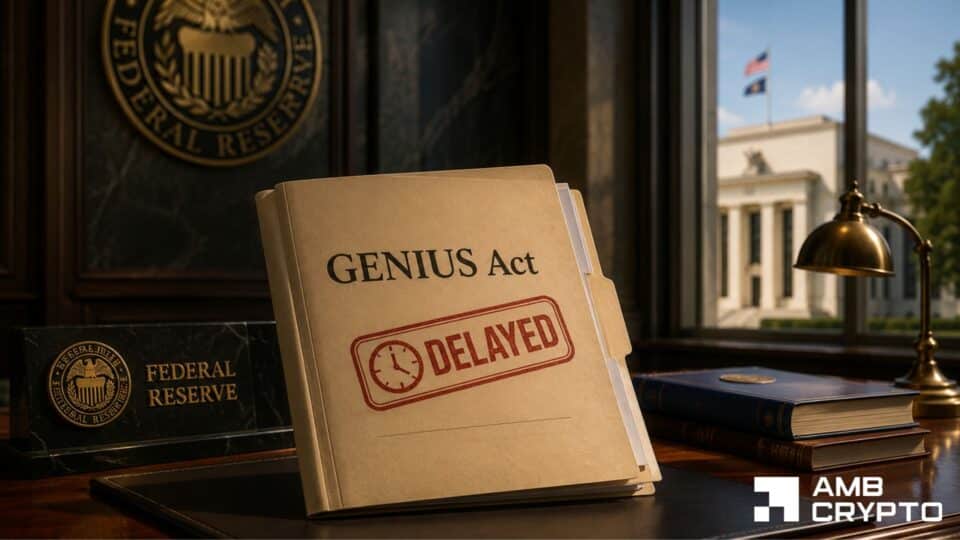
New Hampshire Governor Kelly Ayotte signs ‘Blockchain Basic Laws’ – What is HB 639 about?

ambcryptoPubblicato 2026-07-14Pubblicato ultima volta 2026-07-14

Introduzione

Governor Kelly Ayotte of New Hampshire has signed HB 639, known as the "Blockchain Basic Laws." The legislation establishes key protections for digital asset ownership and use. It guarantees individuals the right to self-custody their cryptocurrencies in personal wallets and to use them for payments without government interference. The law also shields operators of blockchain infrastructure—such as node operators, miners, and stakers—from being unfairly regulated as money transmitters or securities dealers. Furthermore, it establishes a specialized "Blockchain Dispute Docket" for handling related legal cases efficiently. This bill builds upon New Hampshire's prior move to create a state-level Bitcoin reserve, collectively positioning the state as a leader in fostering blockchain innovation and business.

A new law known as the “Blockchain Basic Laws,” or HB 639, was recently passed in New Hampshire. The law was signed by Governor Kelly Ayotte and is now being pushed by the New Hampshire Blockchain Council.

Details of HB 639

This newly signed law aims to ensure that people have the right to “self-custody” their digital assets. Simply put, this allows people to own cryptocurrency in their own wallets instead of having to rely on a bank or exchange.

Furthermore, it safeguards citizens’ freedom to pay for legitimate goods and services with cryptocurrency without intervention from the federal, state, or local governments.

Additionally, HB 639 shields those who manage blockchain infrastructure from being unjustly thrown into rules intended for more established financial institutions. This includes activities such as operating a node, mining, or staking.

In particular, it seeks to stop these activities from being automatically categorized as “money transmission” or “securities” activities.

What does this tell us about New Hampshire’s crypto stance?

Moreover, it protects blockchain “validators” from legal action or liability for merely carrying out that validation task. Furthermore, the law establishes a “Blockchain Dispute Docket,” which is essentially a specialized court track or procedure manned by judges or officials with blockchain expertise.

The purpose of this process is to handle lawsuits pertaining to blockchain and cryptocurrency more quickly and predictably than a general court might.

This expands upon the first state-level “Strategic Bitcoin Reserve” established by New Hampshire in May 2025. For those unaware, HB 302 was signed to permit the state treasurer to invest up to 5% of public funds in Bitcoin.

New Hampshire Blockchain Council’s President weighs in

Remarking on the same, Keith Ammon, President of the New Hampshire Blockchain Council and prime sponsor of the legislation, said,

With Governor Ayotte’s signature on HB 639, New Hampshire has once again demonstrated that it intends to lead the nation in blockchain innovation.

Ammon continued,

Entrepreneurs, investors, developers, and innovators across America should know that New Hampshire is open for blockchain business.

Taken together, both bills present one goal. While HB 302 introduced Bitcoin to the state, HB 639 is establishing legal safeguards for individuals and companies operating in the market.

This came as New Hampshire was also debating plans to permit up to $100 million in taxable revenue bonds to be used to finance the purchase of Bitcoin by a borrower connected to CleanSpark.

Should the funding be authorized, it would be yet another illustration of how Bitcoin treasury tactics are extending beyond conventional debt and equity markets.


Final Summary

  • The HB 639 opens the door for individuals to own cryptocurrency in their own wallets instead of having to rely on a bank or exchange.
  • This new law is very much in line with the state’s Strategic Bitcoin Reserve Bill, which together works towards one goal.

Domande pertinenti

QWhat is the primary purpose of the 'Blockchain Basic Laws' (HB 639) signed by New Hampshire Governor Kelly Ayotte?

AThe primary purpose of HB 639 is to ensure individuals have the right to 'self-custody' their digital assets, safeguard the freedom to use cryptocurrency for payments, protect blockchain infrastructure operators from inappropriate financial regulations, and establish a specialized 'Blockchain Dispute Docket' for handling related cases.

QHow does HB 639 protect individuals involved in blockchain infrastructure, such as operating a node or mining?

AHB 639 shields individuals managing blockchain infrastructure by preventing their activities (like operating a node, mining, or staking) from being automatically classified as 'money transmission' or 'securities' activities, thereby protecting them from rules intended for traditional financial institutions.

QWhat is the 'Blockchain Dispute Docket' established by HB 639, and what is its intended function?

AThe 'Blockchain Dispute Docket' is a specialized court track or procedure manned by judges or officials with blockchain expertise. Its purpose is to handle lawsuits related to blockchain and cryptocurrency more quickly and predictably than a general court.

QAccording to Keith Ammon, President of the New Hampshire Blockchain Council, what message does the signing of HB 639 send to the blockchain community?

AKeith Ammon stated that with the signing of HB 639, New Hampshire has demonstrated its intention to lead the nation in blockchain innovation and sent the message that the state is open for blockchain business, welcoming entrepreneurs, investors, developers, and innovators.

QHow do HB 639 and the earlier HB 302 (Strategic Bitcoin Reserve Bill) work together towards a common goal for New Hampshire?

ATogether, the bills present one goal: while HB 302 introduced Bitcoin to the state by allowing investment of public funds, HB 639 establishes legal safeguards for individuals and companies operating in the cryptocurrency market, creating a more comprehensive supportive environment for blockchain innovation.

Letture associate

Chainlink Tests Support As CCIP Moves From Hype To Usage

Chainlink's LINK token is testing key support levels as market focus shifts from the hype around its Cross-Chain Interoperability Protocol (CCIP) to assessing its real-world usage and adoption. While Chainlink maintains a strong position as core crypto infrastructure—providing oracles, data feeds, and automation—the market is increasingly demanding measurable evidence that its services, particularly CCIP, are gaining sustained traction. CCIP is central to Chainlink's long-term value proposition, aiming to solve critical cross-chain messaging and asset transfer challenges for institutions, DeFi, and multi-chain applications. The protocol's narrative is strong, but traders are now looking beyond announcements and integrations to metrics like transaction volume, value transferred, and developer adoption in production environments. Despite its utility, LINK's price action remains influenced by broader altcoin market cycles. The current support test blends technical factors with fundamental questions about CCIP's growth. If LINK holds support alongside clear evidence of increasing CCIP usage, it could reinforce its status as a leading infrastructure play. However, if support fails without corresponding usage growth, trader caution may persist. The key for Chainlink is transitioning CCIP from a promising concept into a widely used standard, turning its established market role into consistent token demand.

bitcoinist2 h fa

Chainlink Tests Support As CCIP Moves From Hype To Usage

bitcoinist2 h fa

Trading

Spot
活动图片