Nasdaq Partners With Kraken to Launch Tokenized Stocks in the U.S.

TheNewsCryptoPubblicato 2026-03-09Pubblicato ultima volta 2026-03-09

Introduzione

Nasdaq has partnered with Kraken and its parent company Payward to develop infrastructure for tokenized stocks and equity products in the U.S. The collaboration will enable public companies to issue and trade blockchain-based versions of their shares while preserving legal rights and regulatory oversight. Nasdaq will create an equity token design to integrate tokenized stocks and ETPs into its regulated systems, ensuring holders retain voting rights and dividend benefits. Kraken will handle distribution and settlement via its xStocks framework. The initiative, pending regulatory approval, builds on a 2025 SEC proposal and is expected to launch in the first half of 2027.

Nasdaq has announced a partnership with cryptocurrency exchange Kraken and its parent company Payward to develop infrastructure for tokenized stocks and related equity products. The collaboration aims to enable publicly traded companies to issue and trade blockchain‐based versions of their shares while preserving legal rights and regulatory oversight.

Under the plan, Nasdaq will build an “equity token design” that allows tokenized versions of stocks and exchange‐traded products (ETPs) to be integrated with its regulated market systems. Each tokenized share will remain legally equivalent to the underlying security, with holders entitled to the same voting rights and dividend benefits as traditional shareholders. The approach is designed to maintain issuer control, investor protections, and market integrity.

How Nasdaq and Kraken Plan to Trade Tokenized Shares Securely

Kraken’s role will focus on distribution and settlement infrastructure through its xStocks tokenized equities framework. The companies said they plan to build an “equities transformation gateway” to move tokenized shares between Nasdaq systems and blockchain networks. This allows investors to trade digital shares securely within a regulated environment.

xStocks has already processed significant transaction volume and has tens of thousands of holders, reflecting growing adoption of tokenized equity products.

The initiative builds on a Nasdaq proposal filed with the U.S. Securities and Exchange Commission in 2025 to support trading and settlement of tokenized securities alongside traditional shares. Nasdaq expects the equity token design and related services to become operational in the first half of 2027, subject to regulatory approvals.

Nasdaq President Tal Cohen said tokenization could enhance how investors access markets and how issuers engage with shareholders. The collaboration reflects broader industry interest in bridging traditional finance infrastructure with blockchain‐based systems.

Highlighted Crypto News Today:

Coinbase Introduces Regulated Bitcoin and Ethereum Futures Trading Across Europe

TagsBitcoinCrypto MarketETHEREUMKrakenNASDAQStock

Domande pertinenti

QWhat is the main purpose of the partnership between Nasdaq and Kraken?

AThe partnership aims to develop infrastructure for tokenized stocks and related equity products, enabling publicly traded companies to issue and trade blockchain-based versions of their shares while preserving legal rights and regulatory oversight.

QHow will tokenized shares maintain equivalence to traditional securities?

AEach tokenized share will remain legally equivalent to the underlying security, with holders entitled to the same voting rights and dividend benefits as traditional shareholders.

QWhat role will Kraken play in this initiative?

AKraken will focus on distribution and settlement infrastructure through its xStocks tokenized equities framework, including building an equities transformation gateway to move tokenized shares between Nasdaq systems and blockchain networks.

QWhen does Nasdaq expect the equity token services to become operational?

ANasdaq expects the equity token design and related services to become operational in the first half of 2027, subject to regulatory approvals.

QWhat existing framework has Kraken's xStocks already demonstrated success with?

AxStocks has already processed significant transaction volume and has tens of thousands of holders, reflecting growing adoption of tokenized equity products.

Letture associate

Once-Popular Web3 Enters Wave of Layoffs

The once-hot Web3 industry is experiencing a severe wave of layoffs. While many companies attribute job cuts to AI-driven restructuring, the primary reason is often financial pressure. The Web3 sector, at the intersection of tech and finance, has been hit particularly hard. Employees at major cryptocurrency exchanges report sudden, impersonal layoffs—often with system access revoked overnight—and minimal or no severance. Common tactics include setting impossible performance targets or terminating employees for minor policy violations. The working atmosphere has become toxic, marked by intense monitoring, excessive meetings, and management obsessed with control and internal politics rather than product innovation. The industry's core business model is collapsing. Exchange revenue from trading fees and listing charges has plummeted due to a decline in quality projects and retail investor exodus. Events like the massive forced liquidation on October 10th further shattered confidence. Competition from on-chain derivatives platforms and prediction markets is intensifying the downturn. As layoffs continue, displaced workers struggle to find new opportunities. Many transition to the AI sector, but face significant bias from traditional finance and even some AI firms, which view crypto industry experience with suspicion. The current downturn appears more structural than cyclical, driven by unsustainable practices, internal strife, and a failure to innovate, raising questions about the industry's future trajectory.

marsbit47 min fa

Once-Popular Web3 Enters Wave of Layoffs

marsbit47 min fa

Sales Drop 26% But Prices Rise? Xiaomi's Dilemma

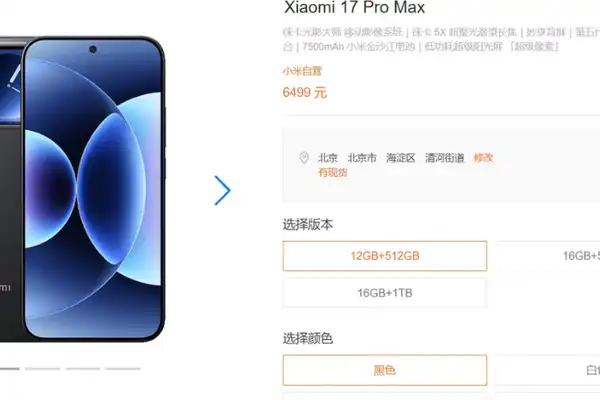
Xiaomi, facing a significant 26.3% year-on-year decline in global smartphone shipments in Q2 2026, has implemented its third price hike of the year. On August 2nd, prices were raised for nine models, including the flagship Mi 17 series (up 400-500 yuan) and Redmi K90/Turbo 5 series (up 300 yuan). This move completes a pattern where cost pressure, originating from surging memory chip prices, has climbed from entry-level to mid-range and now flagship products. The primary driver is a severe supply squeeze on consumer-grade DRAM and NAND flash memory, as major manufacturers like Samsung shift advanced capacity to more profitable HBM for AI applications. According to Xiaomi President Lu Weibing, memory prices for the same configuration have skyrocketed nearly fourfold since Q1 2025, adding roughly 1500 yuan to the cost of a mainstream 12GB+512GB phone. IDC estimates consumer memory costs have risen nearly 300% year-on-year. While the price increases hurt demand and contributed to the sales slump, Xiaomi's strategy of reducing entry-level models and upgrading its product mix also played a role. Domestically, its market share in China fell to 12% (5th place), while leaders Huawei and Apple saw shipments grow over 24%. To mitigate future risks, Xiaomi is accelerating its in-house "Surge" chip development and optimizing memory configurations across its lineup. Xiaomi is not alone; major brands like OPPO, vivo, and Apple have already raised prices in 2026, with industry insiders predicting another round of increases (200-800 yuan) in the second half. A full-scale industry-wide涨价 cycle is underway, forcing both manufacturers and consumers to recalibrate their strategies and purchasing decisions amid sustained cost pressures.

marsbit58 min fa

Sales Drop 26% But Prices Rise? Xiaomi's Dilemma

marsbit58 min fa

Trading

Spot
活动图片