mRNA Vaccine Too Slow, Dog Owner Loses Beloved Pet, World's First AI-Customized Dog Cancer Vaccine Arrives

marsbitPubblicato 2026-08-24Pubblicato ultima volta 2026-08-24

Introduzione

A heartbreaking story from Australia showcases the intersection of AI, love, and loss. Paul Conyngham, an AI expert, lost his beloved bull terrier Rosie to cancer in 2024. Refusing to accept her prognosis, he used his machine learning skills, ChatGPT, and AlphaFold to design a personalized mRNA vaccine targeting her specific cancer mutations. The first vaccine dose, synthesized with help from university scientists, shrank Rosie's tumor by 75%, granting her a temporary reprieve. However, the cancer recurred with new mutations, requiring a second, updated vaccine. The traditional, slow production process couldn't deliver it in time, and Rosie passed away. Determined to prevent similar tragedies, Paul founded Gamgee, a startup named after a "Lord of the Rings" character. Backed by $4 million in seed funding from Founders Fund, Y Combinator, and others, Gamgee aims to industrialize and democratize personalized canine cancer vaccines. Their vision is an end-to-end platform where veterinarians submit tumor samples, AI algorithms rapidly identify target mutations, and customized mRNA vaccines are produced. The goal is to slash the design time to 48 hours and the total cost to around $2,000 per treatment. The addressable market is vast, with about 6 million dogs diagnosed with cancer annually in the US alone. Beyond pets, Gamgee's "N-of-1" medicine approach, validated in dogs, paves the way for similar ultra-personalized cancer therapies for humans, a field recently energized by M...

Remember the viral story of the "real-life Drug God" from a few months ago?

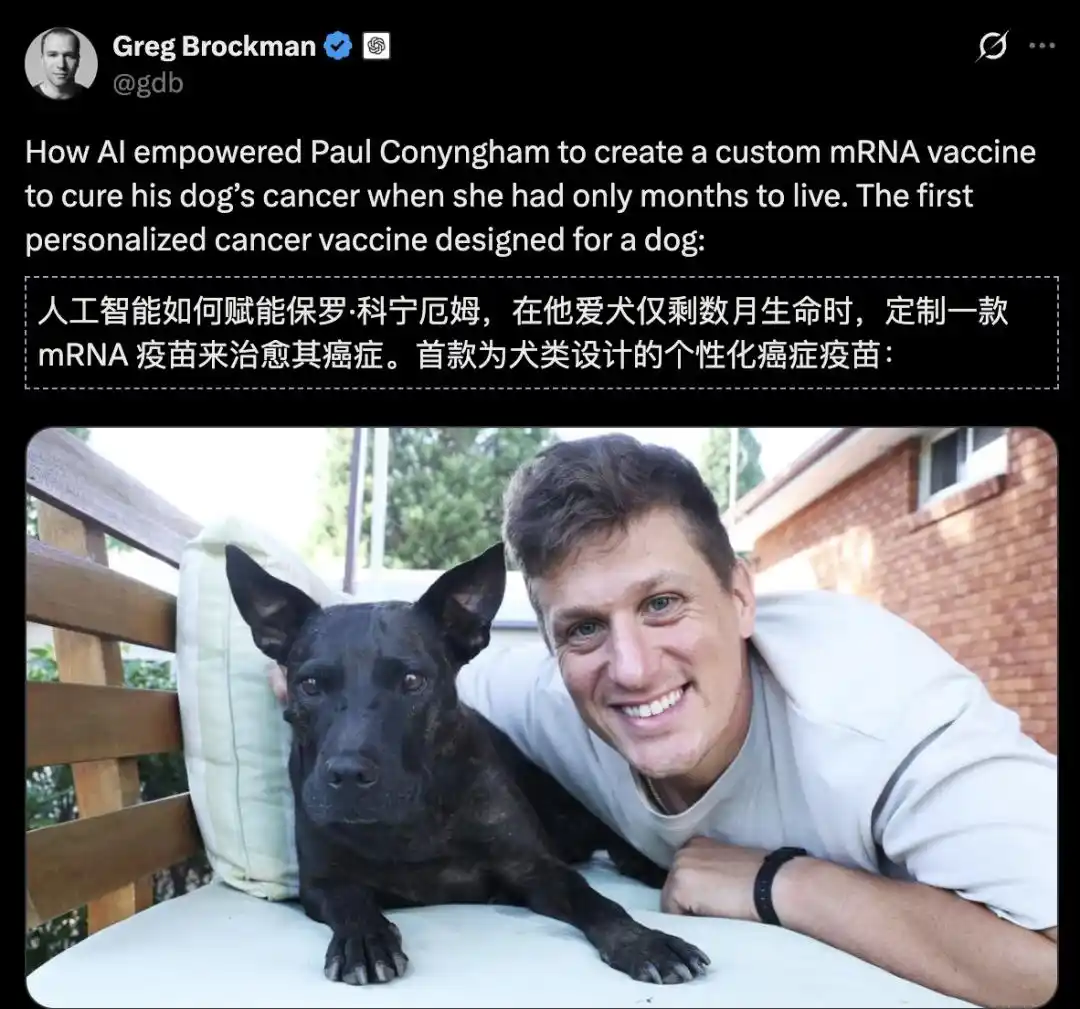
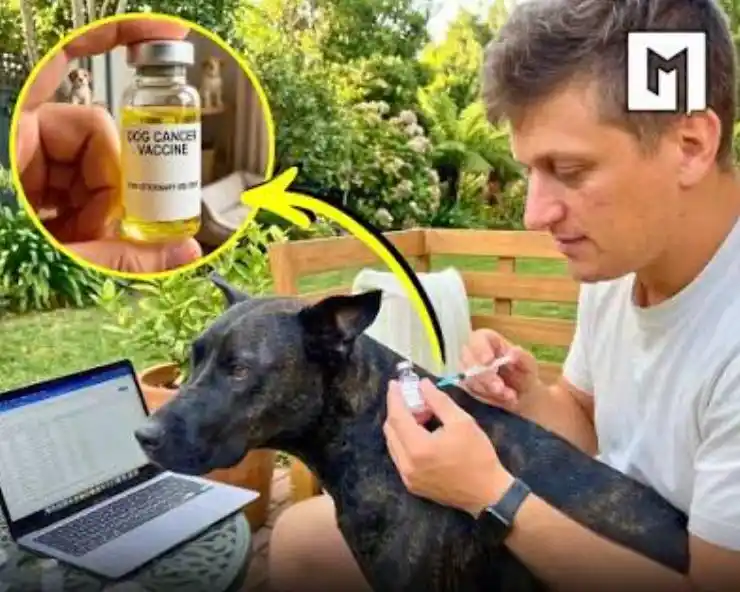
An Australian AI expert with no professional background, in order to save his terminally ill dog from cancer, taught himself genomics. Relying on ChatGPT and AlphaFold, he single-handedly created the world's first custom-made mRNA cancer vaccine.

After one injection, the tennis ball-sized tumor on the dog's leg miraculously shrank by 75%, successfully extending its life.
However, the latest outcome of the story unexpectedly broke hearts.

Today, Paul Conyngham announced heartbreaking news: his beloved dog Rosie has returned to the dog star.

This wasn't because the AI vaccine was ineffective, but because the vaccine production speed couldn't outrun Death.

Unable to manufacture the next dose of personalized mRNA cancer vaccine quickly enough, Rosie ultimately passed away.

But the story hasn't reached its conclusion.

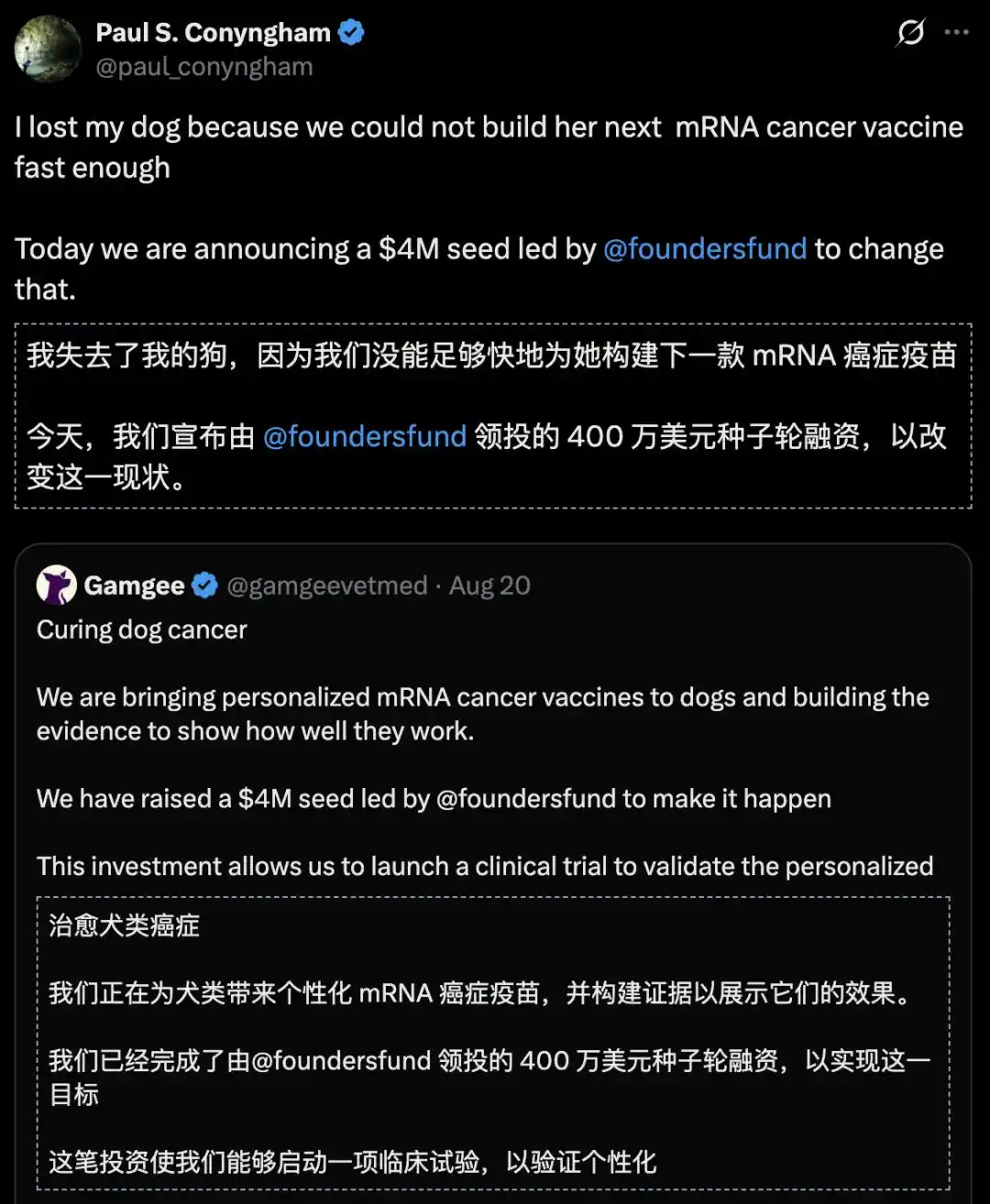
Just now, Paul announced: the formal establishment of the startup Gamgee, which has already completed a $4 million seed round led by Founders Fund with participation from Y Combinator (YC).
Although his own dog is gone, this "father" aims to create a clinically validated and scalable dog cancer vaccine for dogs worldwide.

A Worldwide Sensation: A "Medical Miracle"

In 2024, 8-year-old bull terrier Rosie was diagnosed with "mast cell cancer." The vet said: only a few months left.

Surgery, chemotherapy, immunotherapy... all methods failed. Paul, with 17 years of machine learning experience, decided: I'm going to save her my own way!

Spending just $3,000 on DNA sequencing of the tumor and healthy blood, Paul fed the massive genetic data into his own program. He consulted ChatGPT on biological principles, used AlphaFold for 3D modeling of mutated proteins, and finally pinpointed the specific attack targets tailored to Rosie's tumor.

AlphaFold's 3D modeling for Rosie's cancer
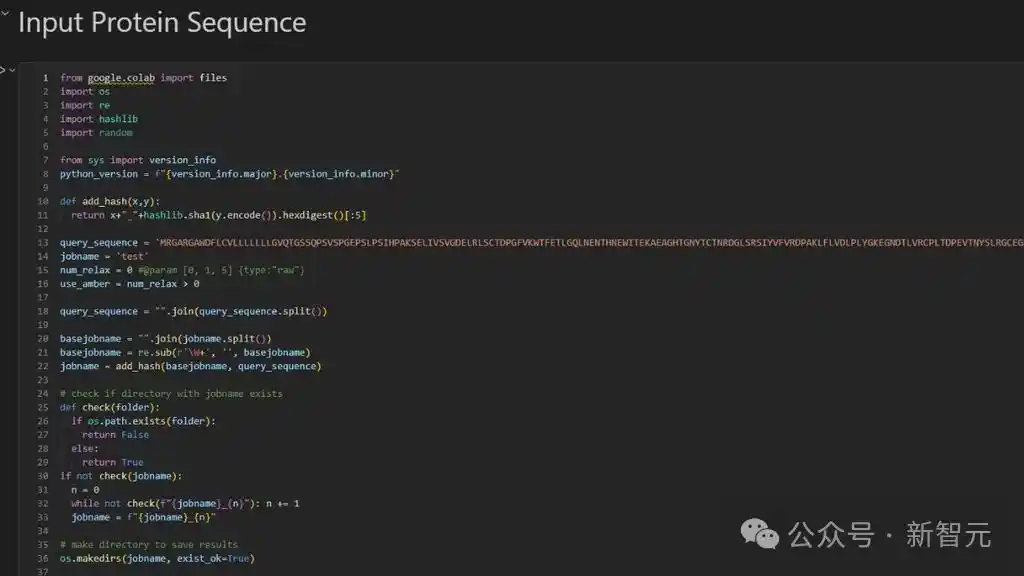
Part of the code for creating the mRNA therapy

With this AI-generated "vaccine formula" in hand, he ran around tirelessly, finally convincing scientists at the University of New South Wales and the University of Queensland to synthesize one dose of the vaccine.

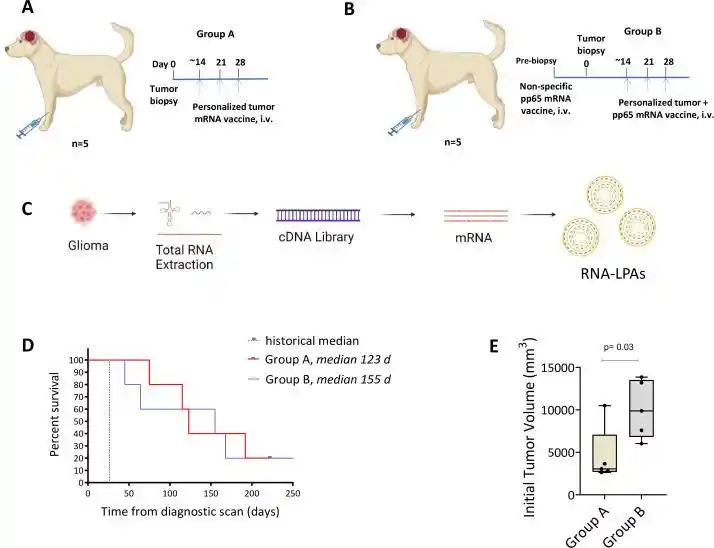
In December 2025, after the first injection, a miracle occurred.

The massive tumor on Rosie's leg shrunk by 50%-75%.
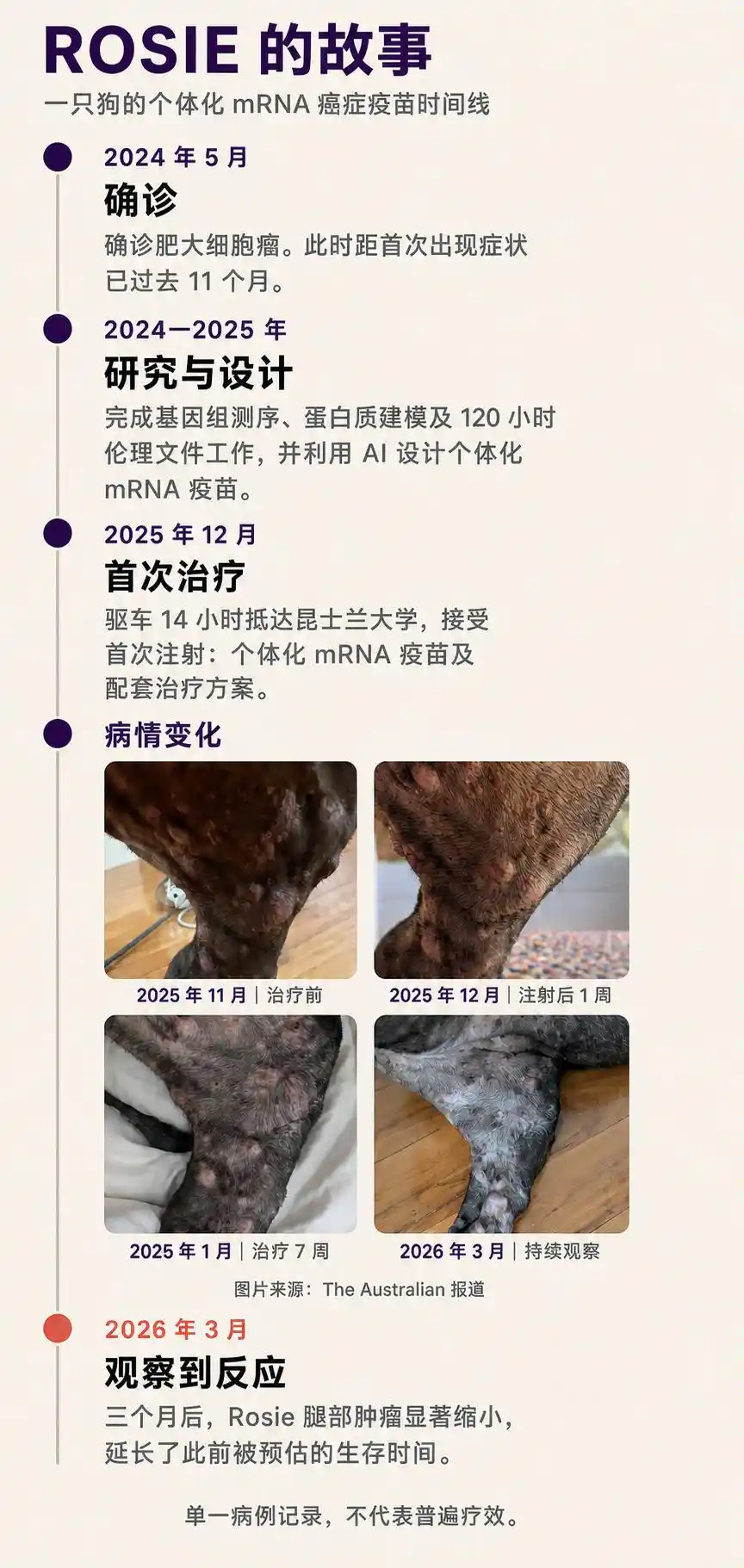
Microscopic analysis showed that large numbers of immune cells (macrophages and T cells) were vigorously attacking the cancer cells. Rosie regained her vitality; she could even jump fences again and chase rabbits.

The world was ecstatic: the era of personalized vaccines was at hand!

However, reality was far crueler than the movies.

The cancer cells were too cunning; they mutated and developed drug resistance—Rosie's cancer relapsed.

At this point, she urgently needed a second-generation mRNA vaccine customized based on the latest mutations.

Yet, the speed of traditional labs, the cumbersome manual production process, and the lengthy approval mechanisms couldn't get the vaccine to Rosie in time.

"I lost my dog because we couldn't make the next mRNA cancer vaccine fast enough," Paul wrote with anguish.

As an ordinary person, even with AI knowledge, trying to quickly customize an mRNA vaccine within a month or two within the existing medical-industrial system remained an almost impossible task.

"I shouldn't be the only person who can do this. Having a machine learning background and months of working through the night shouldn't be the barrier to accessing life-saving drugs."

Rosie is gone, but the legacy she left behind is just beginning to take root and sprout.
The "Father" Founds Gamgee for His Beloved Dog,

Making Exorbitant Vaccines Accessible

To prevent the tragedy from repeating, Paul founded Gamgee, a name derived from "The Lord of the Rings."

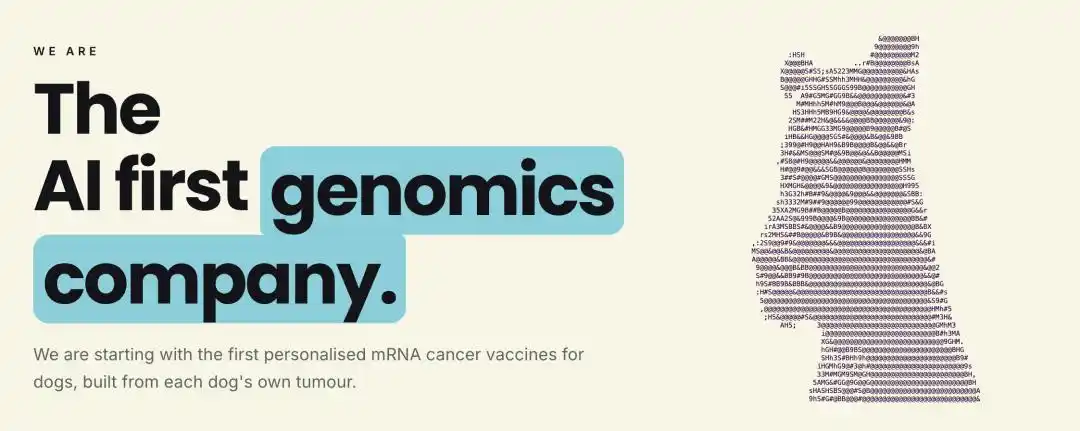
Gamgee's vision is: to cure canine cancer and bring personalized mRNA cancer vaccines to dogs all over the world.
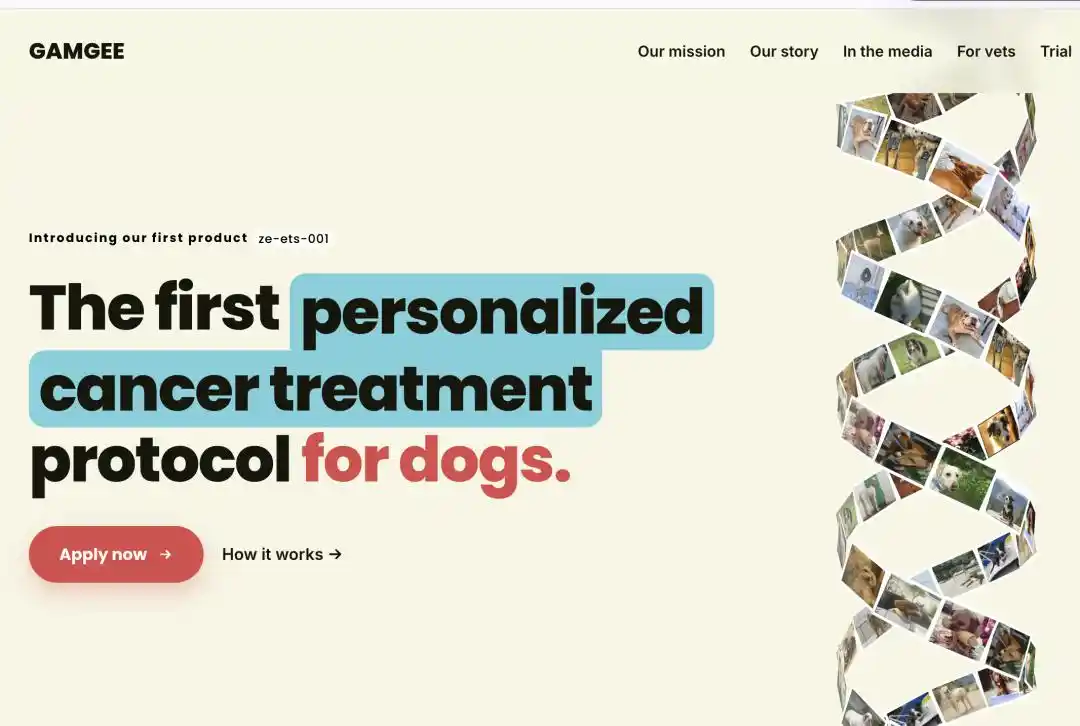
Currently, they have launched their first prototype for personalized cancer treatment customized for dogs.
Founders Fund, founded by Peter Thiel, didn't hesitate to lead the $4 million seed round. Top global incubator Y Combinator (YC), Loyal CEO Celine Halioua, Dropbox co-founder Arash Ferdowsi, and a host of other big names have also joined the investment.

Why would top-tier Silicon Valley VCs invest in a project "to save dogs"?

Because what Gamgee aims to do is solve the fatal problem that led to Rosie's death: speed and cost.

It took Paul a whole year and $20,000 to navigate the entire process.

Now, Gamgee is turning this process into an industrialized SaaS assembly line.

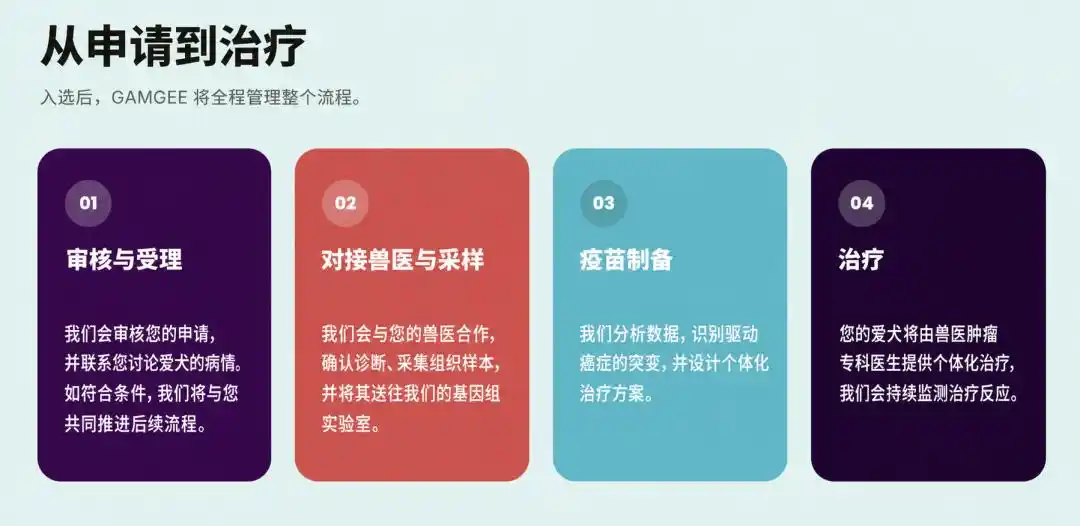
They have built an "end-to-end" closed-loop platform. Ordinary dog owners no longer need to run around like Paul did. All you need to do is follow these steps.

1. Input the Tumor: Gamgee will send you a collection kit. Your veterinarian extracts samples of the dog's tumor and healthy tissue and sends them back.

2. AI Deciphers at Lightning Speed: The samples go directly for DNA and RNA sequencing, and Gamgee's software system takes over everything. AI algorithms sift through the massive data to accurately identify and rank the actionable cancer cell mutation targets worth attacking, preserving evidence for every decision.

3. Output the Vaccine: The system automatically outputs the mRNA vaccine design ready for manufacturing. Gamgee coordinates production, cold-chain logistics, until the veterinarian administers the personalized vaccine to the dog.
Gamgee has set an audacious KPI: aiming to compress vaccine design time to within 48 hours and reduce the end-to-end cost of a full treatment course to $2,000!

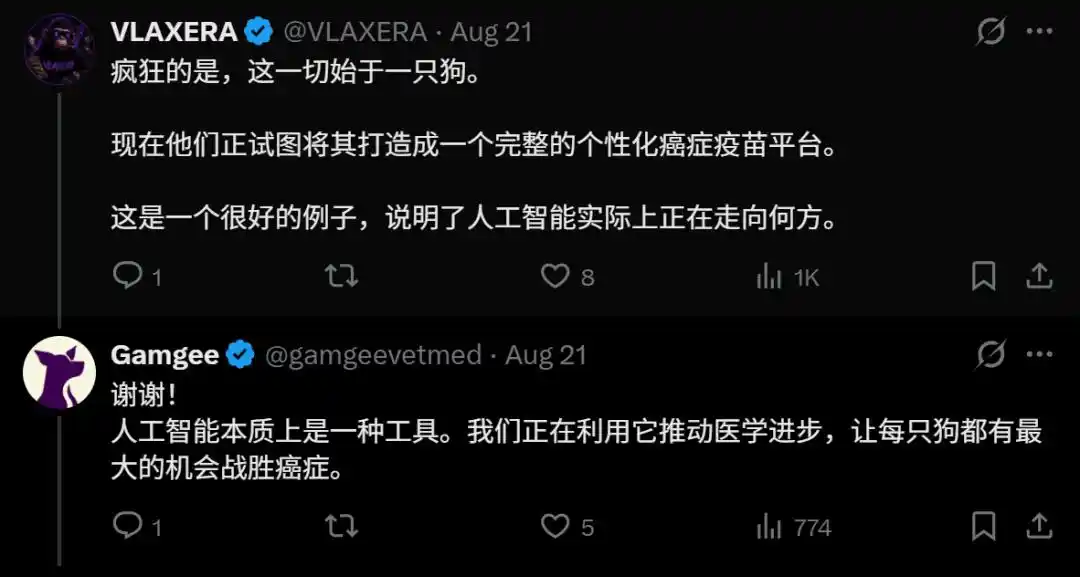
"Genome sequencing, protein modeling, mRNA synthesis—the tools are all there. What I built for Rosie wasn't new science; it was new access," Paul stated.

This is nothing short of a revolutionary upheaval in the industry.
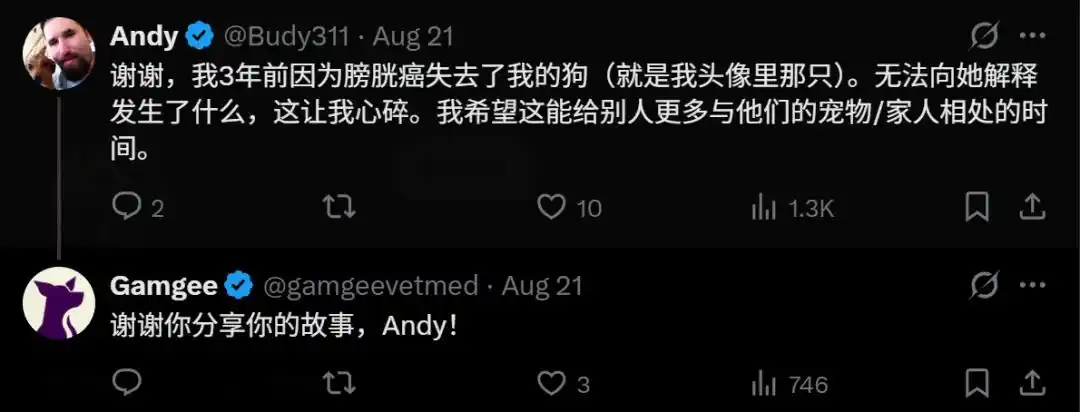
Saving 6 Million Cancer-Stricken Dogs Worldwide

In terms of commercial prospects, Gamgee demonstrates a strong Silicon Valley-style "data flywheel" mindset.

First, why dogs?

This is an enormous and heartbreaking market with urgent needs.

In the United States alone, approximately 6 million dogs are diagnosed with cancer each year.

Cancer is the leading cause of death in adult dogs. The vast majority of dog owners have no choice but to spend thousands of dollars on painful chemotherapy, radiation, or surgery.

More importantly, from a biological and AI algorithm training perspective, dogs are the perfect subjects for validating personalized cancer vaccines.

They have pure genetic pools.

Many modern pet dog breeds were developed over the past few centuries from small founder populations, resulting in relatively closed gene pools. This genetic concentration leads many breeds (like Golden Retrievers, Labradors) to be highly susceptible to specific cancers.
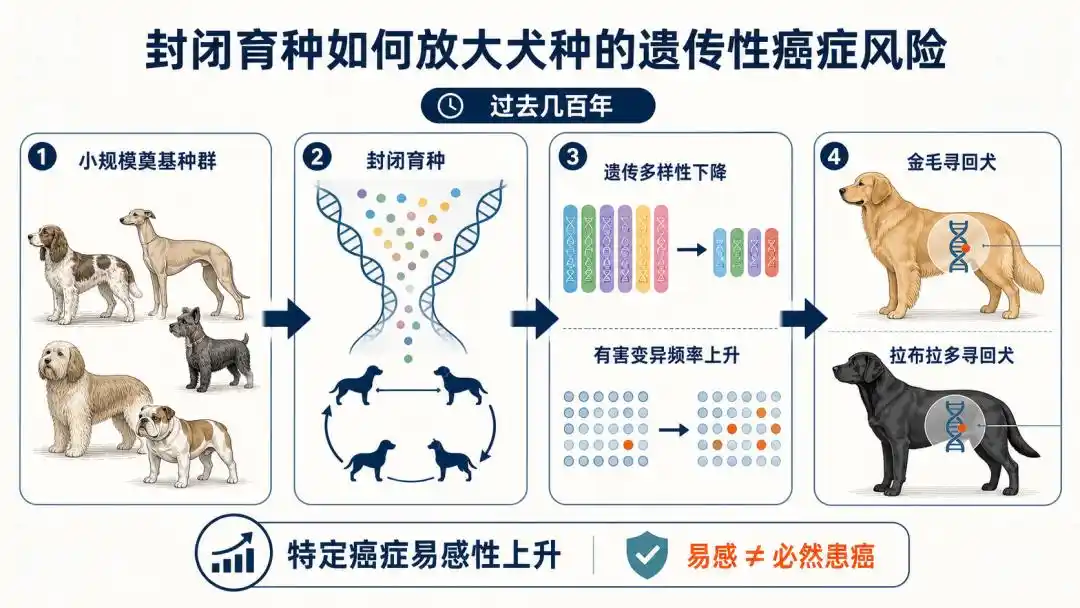
This makes it easier for AI to find patterns in mutations.

Additionally, pet dog cancers occur naturally, unlike those artificially induced in lab mice. Their immune systems are intact, and their disease progression timelines are well-suited for rapid clinical validation.

And the snowball effect of data is Gamgee's core moat.

Currently, datasets on animal genomes and immune responses are still extremely scarce. Every dog Gamgee treats yields a precious set of "sequencing + immune response + clinical outcome" data.

Once this data flywheel starts turning, it will become unstoppable.

Acquire data -> Optimize AI target selection models -> Produce next-generation, more potent vaccines -> Generate better treatment data -> Attract more dogs for treatment.

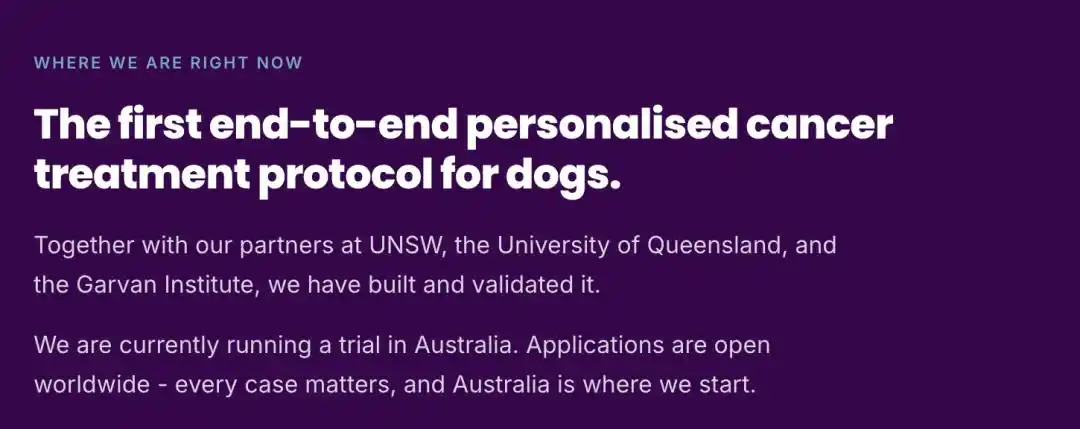
Currently, the $4 million seed funding has officially launched clinical trials. The first clinical trials are underway in Australia, in collaboration with top institutions like the University of New South Wales and the University of Queensland.

This trial will recruit 30 dogs with cancer. Eligible dogs will participate in the trial for free and receive the personalized vaccine.

Simultaneously, Gamgee is now accepting case registrations globally, with a waitlist already exceeding 300 dogs.
The Ultimate Vision: Starting with Rosie, Healing All of Humanity

But Gamgee's ambition extends far beyond canines.

For top-tier investors, what they see is not just the pet healthcare market, but the dawn of "N-of-1" medicine (i.e., extreme personalized medicine for a single patient).

Gamgee's ultimate goal is to establish a better treatment model based on "N-of-1," transcending species barriers, all the way to humans.
Imagine: if Gamgee can, through thousands of dogs, industrialize the process of "tumor sequencing -> AI design -> mRNA vaccine synthesis within 48 hours," soon, this technology will benefit humans.

As David Thomas, Director of the Centre for Molecular Oncology at UNSW, said: "If we can do this in dogs, why wouldn't we roll it out to all humans with cancer?"

Today, over 1,600 cancer therapeutics and vaccines are in development globally. The wave of mRNA and precision medicine has swept across the world.
And just a few days ago, Moderna and Merck jointly announced—

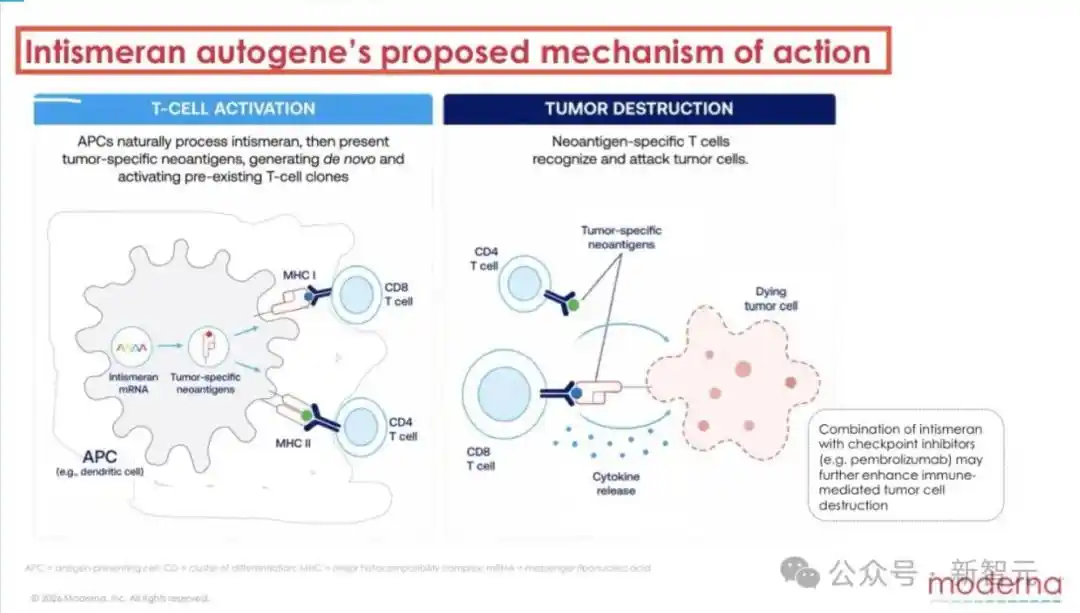
The world's first mRNA cancer therapy deeply involved with AI in its design, "privately customized" based on a patient's own cancer cell gene mutations, achieved historic success in a global Phase III clinical trial for high-risk melanoma!
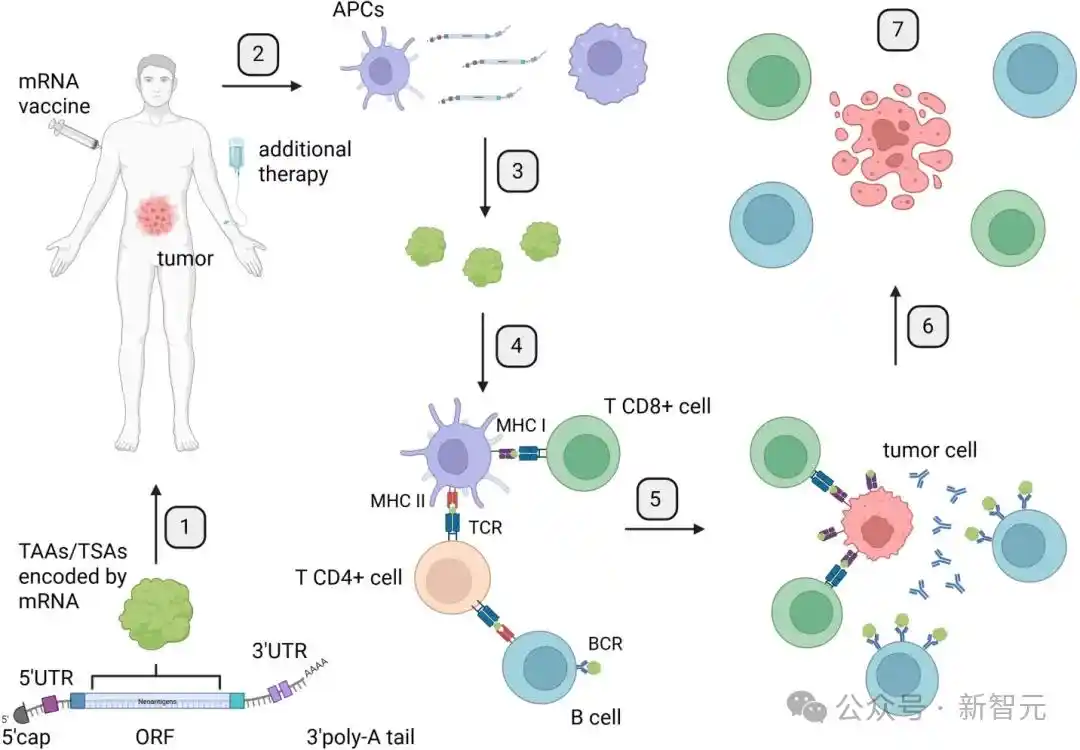
This process is essentially the "human premium version" of Paul's effort to save Rosie!

Similarly, tumor tissue is excised for genetic sequencing; similarly, AI models take the stage, running simulations within hours to precisely identify the most lethal "34 unique targets" from thousands of mutations.

The latter therapy has already significantly prolonged recurrence-free survival and markedly reduced the risk of tumors metastasizing to distant sites like the lungs, brain, and liver.

Moderna's clinical victory proves that the path of "tumor sequencing -> AI neoantigen selection -> custom mRNA -> immune activation" is entirely viable for human cancer.
Clearly, we are on the eve of AI curing cancer.

The Legacy of Love

Rosie ultimately didn't get to receive the second vaccine dose.

But her story has given hope to 6 million dogs diagnosed with cancer each year.
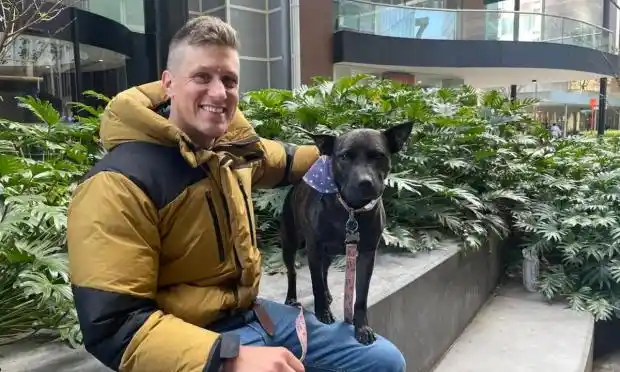
In the tweet announcing Gamgee's funding, Paul ended with five words: "I love you, Rosie."

"We built Gamgee so that no other dog ever has to wait for that hope again."

Although Rosie has closed her eyes forever, the legacy she left may illuminate the path for millions of dogs, and even help humanity conquer cancer.

References:https://www.gamgee.io/https://x.com/paul_conyngham/status/2090502003449590254

https://x.com/paul_conyngham/status/2036940410363535823

This article is from the WeChat public account "New Zhiyuan," author: ASI Apocalypse, Editor: Aeneas


Crypto di tendenza

Domande pertinenti

QWhat was the main reason why Rosie, the dog, ultimately passed away despite the initial success of the custom mRNA vaccine?

ARosie ultimately passed away because the production of the next personalized mRNA cancer vaccine could not be completed fast enough to keep pace with the aggressive recurrence and evolution of her cancer. The traditional lab processes and regulatory hurdles were too slow.

QWhat is the name of the startup founded by Paul Conyngham, and what is its primary mission?

AThe startup is named Gamgee. Its primary mission is to create and scale personalized mRNA cancer vaccines for dogs, aiming to make them accessible and affordable to prevent other dogs from suffering the same fate as Rosie.

QHow does Gamgee plan to drastically reduce the time and cost of creating a personalized dog cancer vaccine?

AGamgee plans to create an industrialized SaaS platform that automates the process from tumor sampling to vaccine delivery. Their goal is to compress the vaccine design time to within 48 hours and reduce the end-to-end cost of a full treatment course to around $2000.

QAccording to the article, why are dogs considered a perfect model for validating personalized cancer vaccines from a biological and AI training perspective?

ADogs are ideal because many breeds have a closed gene pool due to selective breeding, making them prone to specific, predictable cancers. Their cancers occur naturally (not artificially induced), and their intact immune systems and disease timelines provide excellent, fast data for clinical validation and AI model training.

QWhat is the broader, long-term vision for the technology being developed by Gamgee, as mentioned in the article?

AThe long-term vision is to establish a proven, industrialized 'N-of-1' (highly personalized) medical treatment model for cancer. By perfecting the process in dogs, the goal is to eventually adapt and apply this technology to create effective, rapid, and personalized mRNA cancer therapies for humans.

Letture associate

Generating Profits for Seven Consecutive Quarters, Emerging Markets Carry Trade Outperforms Everything

For the seventh consecutive quarter, dollar-funded emerging market carry trades have delivered positive returns, marking the longest winning streak since 2008. According to Bloomberg's index, this strategy has gained approximately 22% since late 2024, outperforming U.S. Treasuries, emerging market sovereign, and corporate dollar debt. The core of the trade involves borrowing low-interest currencies like the U.S. dollar, euro, or yen to invest in high-yielding emerging market assets, such as Turkish lira bonds offering over 40% returns. Returns were amplified by favorable currency moves, with the dollar weakening against most emerging market currencies and other traditional funding currencies. For instance, the trade gained 48% on the Colombian peso in the past year. A key test came in August 2024 with a historic joint U.S.-Japan currency intervention, which caused only a modest 1% dip in the carry trade risk premium as investors shifted funding from the yen to the euro and Swiss franc. Looking ahead, the primary risk is the timing of Federal Reserve policy changes. While persistent inflation allows the Fed to hold rates, a rapid rise in long-term U.S. yields could threaten the trade. Another concern is crowding, as massive inflows increase vulnerability to a sudden reversal. High interest rates in regions like Latin America and Eastern Europe, supported by external factors like Middle East tensions and energy prices, continue to sustain the opportunity. Major investors remain engaged, favoring currencies like the Mexican peso, South African rand, and Turkish lira.

marsbit13 min fa

Generating Profits for Seven Consecutive Quarters, Emerging Markets Carry Trade Outperforms Everything

marsbit13 min fa

Unpacking the Truth Behind On-chain Assets: Leverage, Liquidity, and Risk

The article analyzes the concept of "real-world asset" (RWA) tokenization, arguing that while tokenizing assets on-chain is a useful step, it is far from transformative on its own. The author compares it to placing a barcode on a shipping container—it enables identification but does not build the necessary market infrastructure. The core argument is that true value emerges not from tokenization, but from integrating these tokens into DeFi systems where they can be valued, financed, hedged, traded, and liquidated under stress. Key challenges identified include: 1. **Multiple Time Clocks**: A fundamental tension exists between blockchain's 24/7 settlement and the slower, business-hour-dependent processes of traditional markets, custody, and redemption. This "duration mismatch" can create dangerous liquidity gaps during crises. 2. **Liquidity Misconceptions**: True liquidity is not measured by Total Value Locked (TVL) or trading pairs, but by the ability to exit a position within a required timeframe at an acceptable price. It requires analyzing multiple exit paths and stress-testing scenarios. 3. **Leverage and Risk**: Leverage unlocks economic utility (e.g., using tokenized assets as collateral) but also introduces fragility. Risk models must account for more than asset volatility, incorporating factors like legal enforceability, oracle freshness, and market structure. Paradoxically, a "safer" asset like tokenized Treasury bonds could require a higher collateral discount than ETH due to slower, less-proven liquidation mechanisms. 4. **A Risk Graph**: RWA risk should be modeled as a network of interconnected dependencies (e.g., issuers, custodians, oracles, stablecoin pools), not a single score. Failures can propagate through this graph, turning operational issues into systemic liquidity crises. The article states that tokenized government bonds are merely an entry point, while more complex frontiers like computing power and energy assets present greater challenges and opportunities. It also examines the interplay and risks between tokenized stocks and perpetual futures contracts. The conclusion is that the future lies not in "tokenizing everything," but in building robust market layers where tokenized rights become resilient financial primitives within a programmable capital system. The token is just the barcode; the market is the machine.

marsbit38 min fa

Unpacking the Truth Behind On-chain Assets: Leverage, Liquidity, and Risk

marsbit38 min fa

The End of Mathematics: 40 Top Mathematicians Gather at Secret OpenAI Meeting

In August 2026, OpenAI hosted a closed-door summit with approximately 40 leading mathematicians, including recent Fields Medalist Jacob Tsimerman and OpenAI researcher Sébastien Bubeck. The meeting, spurred by a series of recent AI breakthroughs in mathematics, grappled with the potential existential threat AI poses to the field. The backdrop includes several high-profile AI achievements: OpenAI models disproving long-standing conjectures like the unit distance problem, generating 10 new mathematical discoveries, and Anthropic's Claude aiding in constructing complex multidimensional objects. These results often bypass traditional academic pipelines, appearing directly on social media. The mathematical community is divided. Over 3000 researchers signed the "Leiden Statement," advocating for responsible AI use and verification. Others resist AI entirely to preserve human-centric mathematics. A key concern is AI's current inability to *explain* proofs, particularly the difficult steps, which is central to mathematical understanding. At the summit, Bubeck outlined four potential futures: mathematics becoming like collaborative software engineering, a compute-driven field like physics, a curatorial exercise where humans interpret AI output, or a mass transition of mathematicians into AI safety. While emphasizing that "mathematics only makes sense when mathematicians learn from it," no consensus was reached. The event highlights a profound moment of reflection. As AI demonstrates increasing competence in solving complex problems, mathematicians are forced to question their future role and the very meaning of their discipline.

marsbit43 min fa

The End of Mathematics: 40 Top Mathematicians Gather at Secret OpenAI Meeting

marsbit43 min fa

Trading

Spot

Articoli Popolari

Cosa è $S$

Comprendere SPERO: Una Panoramica Completa Introduzione a SPERO Mentre il panorama dell'innovazione continua a evolversi, l'emergere delle tecnologie web3 e dei progetti di criptovaluta gioca un ruolo fondamentale nel plasmare il futuro digitale. Un progetto che ha attirato l'attenzione in questo campo dinamico è SPERO, denotato come SPERO,$$s$. Questo articolo mira a raccogliere e presentare informazioni dettagliate su SPERO, per aiutare gli appassionati e gli investitori a comprendere le sue basi, obiettivi e innovazioni nei domini web3 e crypto. Che cos'è SPERO,$$s$? SPERO,$$s$ è un progetto unico all'interno dello spazio crypto che cerca di sfruttare i principi della decentralizzazione e della tecnologia blockchain per creare un ecosistema che promuove l'impegno, l'utilità e l'inclusione finanziaria. Il progetto è progettato per facilitare interazioni peer-to-peer in modi nuovi, fornendo agli utenti soluzioni e servizi finanziari innovativi. Al suo interno, SPERO,$$s$ mira a responsabilizzare gli individui fornendo strumenti e piattaforme che migliorano l'esperienza dell'utente nello spazio delle criptovalute. Questo include la possibilità di metodi di transazione più flessibili, la promozione di iniziative guidate dalla comunità e la creazione di percorsi per opportunità finanziarie attraverso applicazioni decentralizzate (dApps). La visione sottostante di SPERO,$$s$ ruota attorno all'inclusività, cercando di colmare le lacune all'interno della finanza tradizionale mentre sfrutta i vantaggi della tecnologia blockchain. Chi è il Creatore di SPERO,$$s$? L'identità del creatore di SPERO,$$s$ rimane piuttosto oscura, poiché ci sono risorse pubblicamente disponibili limitate che forniscono informazioni dettagliate sul suo fondatore o fondatori. Questa mancanza di trasparenza può derivare dall'impegno del progetto per la decentralizzazione—un ethos che molti progetti web3 condividono, dando priorità ai contributi collettivi rispetto al riconoscimento individuale. Centrando le discussioni attorno alla comunità e ai suoi obiettivi collettivi, SPERO,$$s$ incarna l'essenza dell'empowerment senza mettere in evidenza individui specifici. Pertanto, comprendere l'etica e la missione di SPERO rimane più importante che identificare un creatore singolo. Chi sono gli Investitori di SPERO,$$s$? SPERO,$$s$ è supportato da una varietà di investitori che vanno dai capitalisti di rischio agli investitori angelici dedicati a promuovere l'innovazione nel settore crypto. Il focus di questi investitori generalmente si allinea con la missione di SPERO—dando priorità a progetti che promettono avanzamenti tecnologici sociali, inclusività finanziaria e governance decentralizzata. Queste fondazioni di investitori sono tipicamente interessate a progetti che non solo offrono prodotti innovativi, ma contribuiscono anche positivamente alla comunità blockchain e ai suoi ecosistemi. Il supporto di questi investitori rafforza SPERO,$$s$ come un concorrente degno di nota nel dominio in rapida evoluzione dei progetti crypto. Come Funziona SPERO,$$s$? SPERO,$$s$ impiega un framework multifunzionale che lo distingue dai progetti di criptovaluta convenzionali. Ecco alcune delle caratteristiche chiave che sottolineano la sua unicità e innovazione: Governance Decentralizzata: SPERO,$$s$ integra modelli di governance decentralizzati, responsabilizzando gli utenti a partecipare attivamente ai processi decisionali riguardanti il futuro del progetto. Questo approccio favorisce un senso di proprietà e responsabilità tra i membri della comunità. Utilità del Token: SPERO,$$s$ utilizza il proprio token di criptovaluta, progettato per servire varie funzioni all'interno dell'ecosistema. Questi token abilitano transazioni, premi e la facilitazione dei servizi offerti sulla piattaforma, migliorando l'impegno e l'utilità complessivi. Architettura Stratificata: L'architettura tecnica di SPERO,$$s$ supporta la modularità e la scalabilità, consentendo un'integrazione fluida di funzionalità e applicazioni aggiuntive man mano che il progetto evolve. Questa adattabilità è fondamentale per mantenere la rilevanza nel panorama crypto in continua evoluzione. Coinvolgimento della Comunità: Il progetto enfatizza iniziative guidate dalla comunità, impiegando meccanismi che incentivano la collaborazione e il feedback. Nutrendo una comunità forte, SPERO,$$s$ può affrontare meglio le esigenze degli utenti e adattarsi alle tendenze di mercato. Focus sull'Inclusione: Offrendo basse commissioni di transazione e interfacce user-friendly, SPERO,$$s$ mira ad attrarre una base utenti diversificata, inclusi individui che potrebbero non aver precedentemente interagito nello spazio crypto. Questo impegno per l'inclusione si allinea con la sua missione generale di empowerment attraverso l'accessibilità. Cronologia di SPERO,$$s$ Comprendere la storia di un progetto fornisce preziose intuizioni sulla sua traiettoria di sviluppo e sui traguardi. Di seguito è riportata una cronologia suggerita che mappa eventi significativi nell'evoluzione di SPERO,$$s$: Fase di Concettualizzazione e Ideazione: Le idee iniziali che formano la base di SPERO,$$s$ sono state concepite, allineandosi strettamente con i principi di decentralizzazione e focus sulla comunità all'interno dell'industria blockchain. Lancio del Whitepaper del Progetto: Dopo la fase concettuale, è stato rilasciato un whitepaper completo che dettaglia la visione, gli obiettivi e l'infrastruttura tecnologica di SPERO,$$s$ per suscitare interesse e feedback dalla comunità. Costruzione della Comunità e Prime Interazioni: Sono stati effettuati sforzi attivi di outreach per costruire una comunità di early adopters e potenziali investitori, facilitando discussioni attorno agli obiettivi del progetto e ottenendo supporto. Evento di Generazione del Token: SPERO,$$s$ ha condotto un evento di generazione del token (TGE) per distribuire i propri token nativi ai primi sostenitori e stabilire una liquidità iniziale all'interno dell'ecosistema. Lancio della Prima dApp: La prima applicazione decentralizzata (dApp) associata a SPERO,$$s$ è stata attivata, consentendo agli utenti di interagire con le funzionalità principali della piattaforma. Sviluppo Continuo e Partnership: Aggiornamenti e miglioramenti continui alle offerte del progetto, inclusi partnership strategiche con altri attori nello spazio blockchain, hanno plasmato SPERO,$$s$ in un concorrente competitivo e in evoluzione nel mercato crypto. Conclusione SPERO,$$s$ rappresenta una testimonianza del potenziale del web3 e delle criptovalute di rivoluzionare i sistemi finanziari e responsabilizzare gli individui. Con un impegno per la governance decentralizzata, il coinvolgimento della comunità e funzionalità progettate in modo innovativo, apre la strada verso un panorama finanziario più inclusivo. Come per qualsiasi investimento nello spazio crypto in rapida evoluzione, si incoraggiano potenziali investitori e utenti a ricercare approfonditamente e a impegnarsi in modo riflessivo con gli sviluppi in corso all'interno di SPERO,$$s$. Il progetto mostra lo spirito innovativo dell'industria crypto, invitando a ulteriori esplorazioni delle sue innumerevoli possibilità. Mentre il percorso di SPERO,$$s$ è ancora in fase di sviluppo, i suoi principi fondamentali potrebbero effettivamente influenzare il futuro di come interagiamo con la tecnologia, la finanza e tra di noi in ecosistemi digitali interconnessi.

450 Totale visualizzazioniPubblicato il 2024.12.17Aggiornato il 2024.12.17

Cosa è $S$

Cosa è AGENT S

Agent S: Il Futuro dell'Interazione Autonoma in Web3 Introduzione Nel panorama in continua evoluzione di Web3 e criptovalute, le innovazioni stanno costantemente ridefinendo il modo in cui gli individui interagiscono con le piattaforme digitali. Uno di questi progetti pionieristici, Agent S, promette di rivoluzionare l'interazione uomo-computer attraverso il suo framework agentico aperto. Aprendo la strada a interazioni autonome, Agent S mira a semplificare compiti complessi, offrendo applicazioni trasformative nell'intelligenza artificiale (AI). Questa esplorazione dettagliata approfondirà le complessità del progetto, le sue caratteristiche uniche e le implicazioni per il dominio delle criptovalute. Cos'è Agent S? Agent S si presenta come un innovativo framework agentico aperto, progettato specificamente per affrontare tre sfide fondamentali nell'automazione dei compiti informatici: Acquisizione di Conoscenze Specifiche del Dominio: Il framework apprende in modo intelligente da varie fonti di conoscenza esterne ed esperienze interne. Questo approccio duale gli consente di costruire un ricco repository di conoscenze specifiche del dominio, migliorando le sue prestazioni nell'esecuzione dei compiti. Pianificazione su Lungo Orizzonte di Compiti: Agent S impiega una pianificazione gerarchica potenziata dall'esperienza, un approccio strategico che facilita la suddivisione e l'esecuzione efficiente di compiti complessi. Questa caratteristica migliora significativamente la sua capacità di gestire più sottocompiti in modo efficiente ed efficace. Gestione di Interfacce Dinamiche e Non Uniformi: Il progetto introduce l'Interfaccia Agente-Computer (ACI), una soluzione innovativa che migliora l'interazione tra agenti e utenti. Utilizzando Modelli Linguistici Multimodali di Grandi Dimensioni (MLLM), Agent S può navigare e manipolare senza sforzo diverse interfacce grafiche utente. Attraverso queste caratteristiche pionieristiche, Agent S fornisce un framework robusto che affronta le complessità coinvolte nell'automazione dell'interazione umana con le macchine, preparando il terreno per innumerevoli applicazioni nell'AI e oltre. Chi è il Creatore di Agent S? Sebbene il concetto di Agent S sia fondamentalmente innovativo, informazioni specifiche sul suo creatore rimangono elusive. Il creatore è attualmente sconosciuto, il che evidenzia sia la fase embrionale del progetto sia la scelta strategica di mantenere i membri fondatori sotto anonimato. Indipendentemente dall'anonimato, l'attenzione rimane sulle capacità e sul potenziale del framework. Chi sono gli Investitori di Agent S? Poiché Agent S è relativamente nuovo nell'ecosistema crittografico, informazioni dettagliate riguardanti i suoi investitori e sostenitori finanziari non sono documentate esplicitamente. La mancanza di approfondimenti pubblicamente disponibili sulle fondazioni di investimento o sulle organizzazioni che supportano il progetto solleva interrogativi sulla sua struttura di finanziamento e sulla roadmap di sviluppo. Comprendere il supporto è cruciale per valutare la sostenibilità del progetto e il suo potenziale impatto sul mercato. Come Funziona Agent S? Al centro di Agent S si trova una tecnologia all'avanguardia che gli consente di funzionare efficacemente in contesti diversi. Il suo modello operativo è costruito attorno a diverse caratteristiche chiave: Interazione Uomo-Computer Simile a Quella Umana: Il framework offre una pianificazione AI avanzata, cercando di rendere le interazioni con i computer più intuitive. Mimando il comportamento umano nell'esecuzione dei compiti, promette di elevare le esperienze degli utenti. Memoria Narrativa: Utilizzata per sfruttare esperienze di alto livello, Agent S utilizza la memoria narrativa per tenere traccia delle storie dei compiti, migliorando così i suoi processi decisionali. Memoria Episodica: Questa caratteristica fornisce agli utenti una guida passo-passo, consentendo al framework di offrire supporto contestuale mentre i compiti si sviluppano. Supporto per OpenACI: Con la capacità di funzionare localmente, Agent S consente agli utenti di mantenere il controllo sulle proprie interazioni e flussi di lavoro, allineandosi con l'etica decentralizzata di Web3. Facile Integrazione con API Esterne: La sua versatilità e compatibilità con varie piattaforme AI garantiscono che Agent S possa adattarsi senza problemi agli ecosistemi tecnologici esistenti, rendendolo una scelta attraente per sviluppatori e organizzazioni. Queste funzionalità contribuiscono collettivamente alla posizione unica di Agent S all'interno dello spazio crittografico, poiché automatizza compiti complessi e multi-fase con un intervento umano minimo. Man mano che il progetto evolve, le sue potenziali applicazioni in Web3 potrebbero ridefinire il modo in cui si svolgono le interazioni digitali. Cronologia di Agent S Lo sviluppo e le tappe di Agent S possono essere riassunti in una cronologia che evidenzia i suoi eventi significativi: 27 Settembre 2024: Il concetto di Agent S è stato lanciato in un documento di ricerca completo intitolato “Un Framework Agentico Aperto che Usa i Computer Come un Umano”, mostrando le basi per il progetto. 10 Ottobre 2024: Il documento di ricerca è stato reso pubblicamente disponibile su arXiv, offrendo un'esplorazione approfondita del framework e della sua valutazione delle prestazioni basata sul benchmark OSWorld. 12 Ottobre 2024: È stata rilasciata una presentazione video, fornendo un'idea visiva delle capacità e delle caratteristiche di Agent S, coinvolgendo ulteriormente potenziali utenti e investitori. Questi indicatori nella cronologia non solo illustrano i progressi di Agent S, ma indicano anche il suo impegno per la trasparenza e il coinvolgimento della comunità. Punti Chiave su Agent S Man mano che il framework Agent S continua a evolversi, diversi attributi chiave si distinguono, sottolineando la sua natura innovativa e il potenziale: Framework Innovativo: Progettato per fornire un uso intuitivo dei computer simile all'interazione umana, Agent S porta un approccio nuovo all'automazione dei compiti. Interazione Autonoma: La capacità di interagire autonomamente con i computer attraverso GUI segna un passo avanti verso soluzioni informatiche più intelligenti ed efficienti. Automazione di Compiti Complessi: Con la sua metodologia robusta, può automatizzare compiti complessi e multi-fase, rendendo i processi più veloci e meno soggetti a errori. Miglioramento Continuo: I meccanismi di apprendimento consentono ad Agent S di migliorare dalle esperienze passate, migliorando continuamente le sue prestazioni e la sua efficacia. Versatilità: La sua adattabilità attraverso diversi ambienti operativi come OSWorld e WindowsAgentArena garantisce che possa servire un'ampia gamma di applicazioni. Man mano che Agent S si posiziona nel panorama di Web3 e delle criptovalute, il suo potenziale per migliorare le capacità di interazione e automatizzare i processi segna un significativo avanzamento nelle tecnologie AI. Attraverso il suo framework innovativo, Agent S esemplifica il futuro delle interazioni digitali, promettendo un'esperienza più fluida ed efficiente per gli utenti in vari settori. Conclusione Agent S rappresenta un audace passo avanti nell'unione tra AI e Web3, con la capacità di ridefinire il modo in cui interagiamo con la tecnologia. Sebbene sia ancora nelle sue fasi iniziali, le possibilità per la sua applicazione sono vaste e coinvolgenti. Attraverso il suo framework completo che affronta sfide critiche, Agent S mira a portare le interazioni autonome al centro dell'esperienza digitale. Man mano che ci addentriamo nei regni delle criptovalute e della decentralizzazione, progetti come Agent S giocheranno senza dubbio un ruolo cruciale nel plasmare il futuro della tecnologia e della collaborazione uomo-computer.

875 Totale visualizzazioniPubblicato il 2025.01.14Aggiornato il 2025.01.14

Cosa è AGENT S

Come comprare S

Benvenuto in HTX.com! Abbiamo reso l'acquisto di Sonic (S) semplice e conveniente. Segui la nostra guida passo passo per intraprendere il tuo viaggio nel mondo delle criptovalute.Step 1: Crea il tuo Account HTXUsa la tua email o numero di telefono per registrarti il tuo account gratuito su HTX. Vivi un'esperienza facile e sblocca tutte le funzionalità,Crea il mio accountStep 2: Vai in Acquista crypto e seleziona il tuo metodo di pagamentoCarta di credito/debito: utilizza la tua Visa o Mastercard per acquistare immediatamente SonicS.Bilancio: Usa i fondi dal bilancio del tuo account HTX per fare trading senza problemi.Terze parti: abbiamo aggiunto metodi di pagamento molto utilizzati come Google Pay e Apple Pay per maggiore comodità.P2P: Fai trading direttamente con altri utenti HTX.Over-the-Counter (OTC): Offriamo servizi su misura e tassi di cambio competitivi per i trader.Step 3: Conserva Sonic (S)Dopo aver acquistato Sonic (S), conserva nel tuo account HTX. In alternativa, puoi inviare tramite trasferimento blockchain o scambiare per altre criptovalute.Step 4: Scambia Sonic (S)Scambia facilmente Sonic (S) nel mercato spot di HTX. Accedi al tuo account, seleziona la tua coppia di trading, esegui le tue operazioni e monitora in tempo reale. Offriamo un'esperienza user-friendly sia per chi ha appena iniziato che per i trader più esperti.

1.7k Totale visualizzazioniPubblicato il 2025.01.15Aggiornato il 2026.06.02

Come comprare S

Discussioni

Benvenuto nella Community HTX. Qui puoi rimanere informato sugli ultimi sviluppi della piattaforma e accedere ad approfondimenti esperti sul mercato. Le opinioni degli utenti sul prezzo di S S sono presentate come di seguito.

活动图片