Morning Report | xAI Launches Skills; Duan Yongping Takes First Position in Circle in Q1 2026; Polymarket Partners with Nasdaq to Launch Prediction Market

链捕手Pubblicato 2026-05-20Pubblicato ultima volta 2026-05-20

Introduzione

**Title:** Daily Brief: Musk's xAI Launches "Skills"; Duan Yongping's First Circle Investment; Polymarket Partners with Nasdaq **Key Highlights:** * **AI Developments:** Elon Musk's xAI released "Skills," enabling its Grok AI to retain memory across conversations. OpenAI co-founder Andrej Karpathy joined rival Anthropic. * **Crypto & DeFi:** May saw 14 crypto hack incidents, including 3 major DeFi attacks in 5 days (Echo Protocol, THORChain, Verus). The Ethereum Foundation faces another exodus with two core members departing. * **Corporate Moves:** Investor Duan Yongping disclosed a new $19M position in Circle. Analog Devices is in talks to acquire AI chip firm Empower Semiconductor for ~$1.5B. * **Financials & Partnerships:** Canaan reported Q1 2026 revenue of $62.7M and record-high crypto reserves. Prediction market Polymarket partnered with Nasdaq to launch markets for private companies. * **Market Data:** VanEck predicts digital credit markets could reach $2.5T in a decade, with Bitcoin potentially hitting $1M. Top trending meme tokens on ETH, Solana, and Base networks are listed. **Featured Articles:** Three analysis pieces explore: 1) potential regulatory pressures on DEXs like Hyperliquid, 2) challenges to Solana's "internet capital market" narrative, and 3) the future emergence of a dedicated capital market for autonomous AI agents (Agents).

Compiled by: ChainCatcher


Key News:

  • Three Major DeFi Attacks in Five Days, Total Crypto Hacks in May Reach 14
  • Elon Musk's xAI Launches Skills
  • Analog Devices to Acquire AI Chip Company Empower Semiconductor for $1.5 Billion
  • Duan Yongping Takes First Position in Circle in Q1 2026, Holding Value $19.08 Million
  • Polymarket Partners with Nasdaq to Launch Prediction Market for Private Companies
  • Canaan Releases Q1 2026 Financials: Total Revenue $62.7 Million, Cryptocurrency Holdings Hit New High
  • Ethereum Foundation Hit by Another Wave of Departures, Core Members Carl Beek and Julian Ma Announce Exit

What Major Events Happened in the Past 24 Hours?

OpenAI Co-founder Andrej Karpathy Joins Anthropic

ChainCatcher news: OpenAI co-founder and former Tesla AI director Andrej Karpathy officially announced joining Anthropic, stating: "I believe the next few years will be a particularly critical period for frontier development of large language models (LLMs). I am very excited to join the team here and get back to R&D work. I remain passionate about education and plan to continue advancing related work at an appropriate time in the future."

Polymarket Partners with Nasdaq to Launch Prediction Market for Private Companies

Canaan Releases Q1 2026 Financials: Total Revenue $62.7 Million, Cryptocurrency Holdings Hit New High

ChainCatcher news, Canaan Inc. announced its first quarter 2026 financial results. The report shows total revenue of $62.7 million, in line with prior guidance; net loss of $88.7 million. As of March 31, 2026, the company's cryptocurrency holdings reached 1,807.60 Bitcoin and 3,951.53 Ethereum, hitting a new all-time high.

In terms of operations, the total installed hash rate capacity of the company's ten joint mining projects reached approximately 11 EH/s, up 10.7% quarter-over-quarter; 257 Bitcoin were produced in Q1. Strategically, the company acquired a 49% stake in the ABC project in West Texas from Cipher Mining, with project-level operating hash rate reaching approximately 4.4 EH/s; meanwhile, a "hash rate to heat" project was deployed in Northern Europe, with a planned total capacity of approximately 8 megawatts.

Canaan expects total revenue for the second quarter of 2026 to be in the range of $35 million to $45 million.

VanEck: Digital Credit Market Could Reach $2.5 Trillion in the Next Decade, BTC Could Hit $1 Million

Duan Yongping Takes First Position in Circle in Q1 2026, Holding Value $19.08 Million

ChainCatcher news: The SEC 13F filing for the first quarter of 2026 submitted by H&H International Investment, the US-managed investment account of prominent investor Duan Yongping, shows that as of March 31, 2026, the portfolio held 19 securities with a total value of approximately $20.004 billion, with all holdings under sole discretion.

Among them: Apple (AAPL) held 28,945,607 shares, valued at $7.346 billion; Berkshire Hathaway (BRK.B) held 9,147,796 shares, valued at $4.384 billion; Nvidia (NVDA) held 13,843,775 shares, valued at $2.414 billion; Pinduoduo (PDD) held 19,748,294 shares, valued at $2.018 billion; Tesla (TSLA) held 3,408,900 shares, valued at $1.267 billion. Microsoft (MSFT) held 1,016,000 shares, valued at $376 million. Circle was a newly disclosed position for the quarter, holding 200,000 shares valued at $19.082 million, accounting for approximately 0.1% of the portfolio.

Analog Devices to Acquire AI Chip Company Empower Semiconductor for $1.5 Billion

ChainCatcher news: According to informed sources, Analog Devices is in advanced negotiations to acquire AI chip startup Empower Semiconductor for approximately $1.5 billion.

If the deal goes through, it will further expand Analog Devices' footprint in high-performance computing infrastructure. The transaction reflects strong market demand for AI chip power supply and energy efficiency management technologies, as growing AI workloads impose higher requirements on power management and energy efficiency for AI chips.Agents Capital Markets: How Will Autonomous Agents Get Funded?

Elon Musk's xAI Launches Skills

ChainCatcher news, Elon Musk's AI company xAI announced the launch of the "Skills" feature simultaneously on web, iOS, and Android platforms. This feature endows the AI assistant Grok with persistent memory across conversations, marking Grok's evolution from a traditional single-session Q&A chatbot to a configurable, programmable automated workspace.

According to the introduction, with the "Skills" feature, users only need to teach Grok the operating method for a specific task once, and Grok will permanently remember the relevant personal preferences, formatting rules, or specific workflow steps in all subsequent independent conversations. This means users no longer need to tediously repeat entering cumbersome preamble prompts or background settings when starting new conversations.

Coinbase CEO Assists Law Enforcement with Blockchain Forensics Leading to 5 Convictions

Three Major DeFi Attacks in Five Days, Total Crypto Hacks in May Reach 14

ChainCatcher news, Echo Protocol suffered a vulnerability attack on the Monad network, with the attacker minting 1,000 eBTC (worth approximately $76.64 million). According to PeckShield tracking, the attacker deposited 45 eBTC (~$3.45 million) into Curvance, borrowed 11.29 WBTC, bridged to Ethereum and exchanged for ETH, with 384 ETH transferred into Tornado Cash. Curvance has suspended the affected market, stating that smart contracts were not compromised and other markets remain unaffected.

Echo Protocol has suspended all cross-chain transactions. Monad CEO Keone Hon clarified that the vulnerability did not affect the Monad network, and security researchers assessed the actual theft at approximately $816,000.

This incident pushes the total number of crypto hacks in May to 14, with three major DeFi attacks occurring in just the past five days: THORChain lost over $10 million to a vault exploit on May 15, and the Verus Ethereum cross-chain bridge was attacked three days later, losing approximately $11.58 million. The frequency of security incidents highlights the persistent systemic risks facing the DeFi space.

Top Meme Tokens

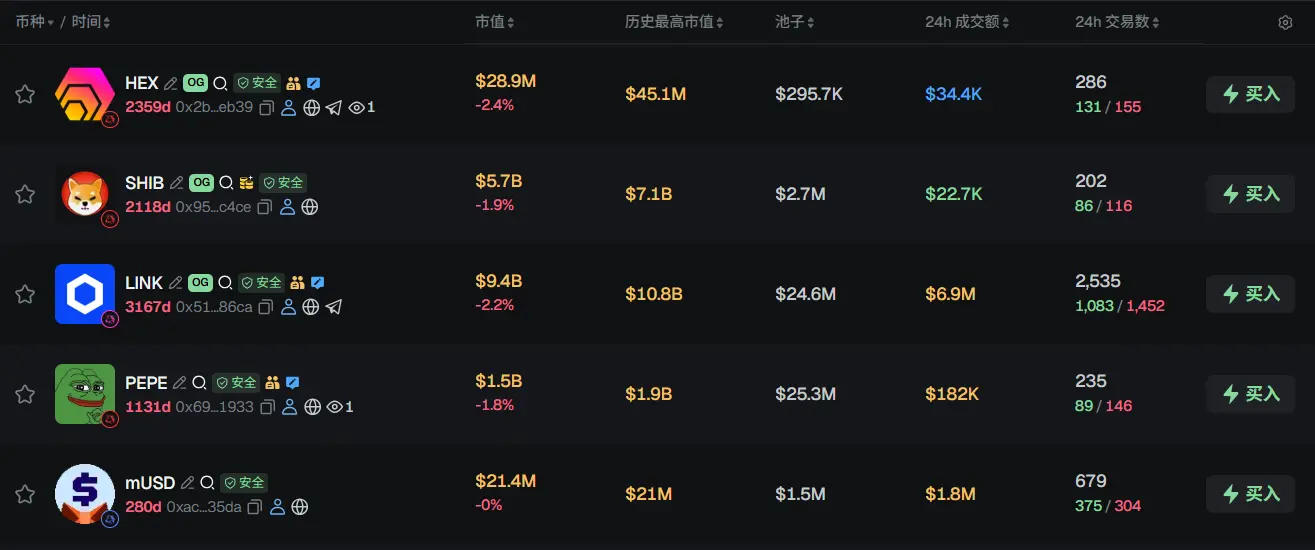
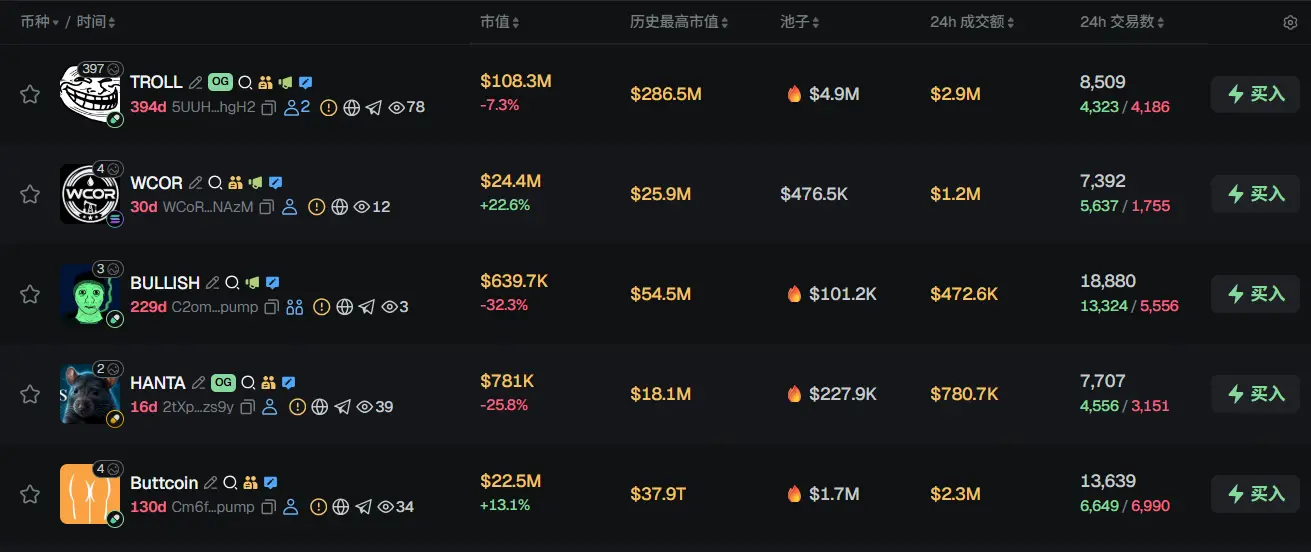
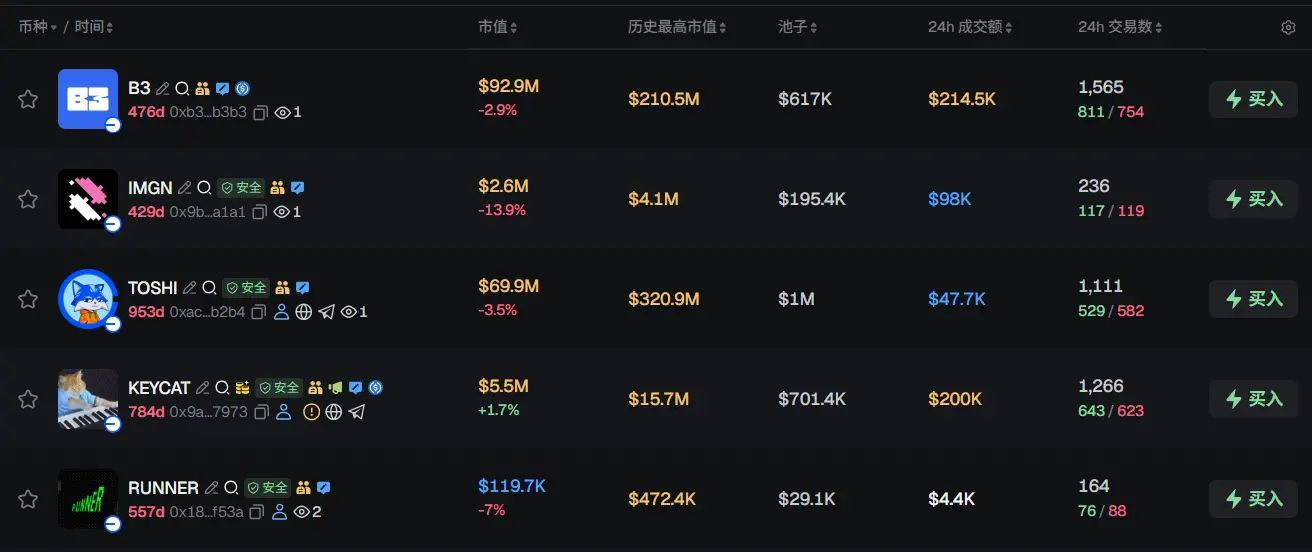
According to data from the meme token tracking and analysis platform GMGN, as of 09:00 on May 20,

The top five trending ETH tokens in the past 24h are: HEX, SHIB, LINK, PEPE, mUSD
The top five trending Solana tokens in the past 24h are: TROLL, WCOR, BULLISH, HANTA, Buttcoin
The top five trending Base tokens in the past 24h are: B3, IMGN, TOSHI, TOSHI, KEYCAT, BRETT
What Are the Must-Read Articles From the Past 24 Hours?

Is Hyperliquid Disrupting Wall Street's Game? Regulation Pending, Market Makers Flee First?

Yesterday, two addresses marked by the market as mainstream market makers on Hyperliquid withdrew nearly 90% of BTC and ETH liquidity during the same time period, with an estimated total withdrawal scale of nearly $100 million.

And it just so happens that 3 days prior, the world's two largest traditional exchanges, CME and ICE, jointly pressured the US CFTC and Congress to strictly regulate Hyperliquid.

Is this merely a single event of professional players 'pricing in regulatory risk,' or a sign that the regulatory arbitrage benefits DEXs have enjoyed over the past three years are coming to an end?

When Hyperliquid Steals Solana's "Internet Capital Market" Playbook

In the cyclical turns of the cryptocurrency market, Solana once regained its peak with the narrative of an 'Ethereum killer' and extreme performance. However, entering 2026, this 'high-performance computer' that once ran at full throttle is facing unprecedented deceleration pressure, first reflected in price.

Over the past year, SOL's price has fallen a maximum of 73.5% from its high, the largest drop among all major cryptocurrencies. In the recent market correction over the past month, SOL's upward momentum has also been very weak, significantly lagging behind other major cryptocurrencies like BTC and ETH.

Furthermore, Solana's core "internet capital market" vision has been severely hit by internal and external challenges, forcing the Solana Foundation's senior team to frequently speak out recently, building momentum for their ecosystem in the public opinion sphere.

Agents Capital Markets: How Will Autonomous Agents Get Funded?

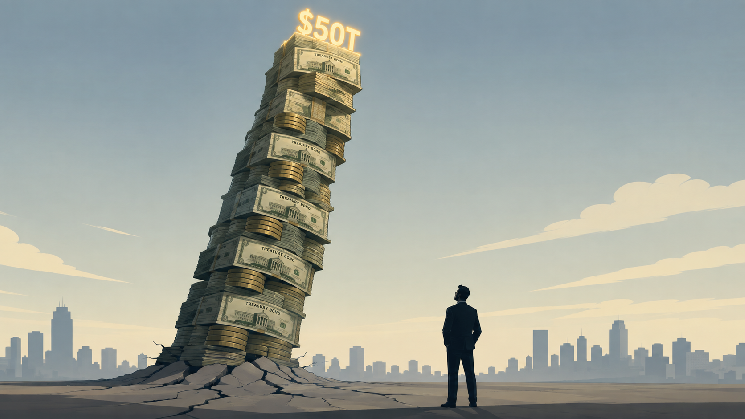
Within a decade, Agent companies will have their own capital markets. Not a crypto sub-economy, not a thought experiment, but a real market: with rating agencies, underwriters, indices, brokers, and the institutional machinery that makes any market a market.

A capital market as real as the public stock market: a system where capital flows to a certain class of economic actors, without relying on the subjective judgment of any single capital allocator. These actors will be Agents — software entities wrapped in a legal shell. They can sign contracts, hold bank accounts, sue and be sued, and earn income through actual work.

The work itself is highly routine: marketing, logistics, legal research, procurement, property management, customer support — precisely the categories of routine business that fill the office parks of every medium-sized city today.

Agents will sell services to humans, other Agents, and any party with the ability to pay. Their need for capital will be no different from the reason every service company needs capital.

Domande pertinenti

QWhat are the key new AI developments mentioned in the article?

AThe article highlights several key AI developments: 1) Elon Musk's xAI launched a new 'Skills' feature for its Grok AI, enabling persistent memory across conversations. 2) OpenAI co-founder Andrej Karpathy joined the AI company Anthropic. 3) Analog Devices is in advanced talks to acquire AI chip startup Empower Semiconductor for approximately $1.5 billion.

QWhat was the financial performance and strategy of Canaan Inc. (Canaan Technology) in Q1 2026?

ACanaan Inc. reported Q1 2026 total revenue of $62.7 million, with a net loss of $88.7 million. The company's cryptocurrency reserves, consisting of 1,807.60 BTC and 3,951.53 ETH, reached a record high. Strategically, it expanded its joint mining capacity to approximately 11 EH/s, acquired a 49% stake in a Texas mining project, and deployed a 'computing power to heat' project in Northern Europe. Q2 revenue is forecasted to be between $35 million and $45 million.

QWhat significant security incidents occurred in the DeFi space according to the article?

AIn May 2026, there were 14 crypto hacking incidents, including three major DeFi attacks in just five days: 1) An exploit on Echo Protocol on the Monad network, resulting in a potential $76.64 million loss (though actual losses were assessed around $816,000). 2) A THORChain vault exploit on May 15th causing over $10 million in losses. 3) An attack on the Verus Ethereum cross-chain bridge three days later, leading to losses of approximately $11.58 million.

QWhat investment moves did investor Duan Yongping (through H&H International Investment) make in Q1 2026?

AFor Q1 2026, Duan Yongping's portfolio, managed by H&H International Investment, had a total value of approximately $20.004 billion. The top holdings were Apple ($7.346B), Berkshire Hathaway ($4.384B), Nvidia ($2.414B), Pinduoduo ($2.018B), and Tesla ($1.267B). A notable new position was a first-time investment in Circle, comprising 200,000 shares valued at $19.082 million, representing about 0.1% of the portfolio.

QWhat partnership was announced between Polymarket and a traditional financial institution?

APolymarket, a prediction market platform, announced a partnership with Nasdaq to launch a prediction market specifically focused on private (non-public) companies. This collaboration represents a significant bridge between decentralized finance (DeFi) concepts and traditional capital markets infrastructure.

Letture associate

Just Now, The World's First Ultra-High-Frame World Model Was Born, Nvidia Content 0, Racing to 50 FPS

Just Now, Global First Ultra-High-Frame World Model Born, 0% NVIDIA, Speeds to 50 FPS A Chinese team has developed MoWorld, the world's first Flash World Model, achieving real-time interactive inference exceeding 50 FPS. Crucially, it is entirely built on domestic NPUs (National Processing Units), bypassing NVIDIA GPUs. Developed by Moxin Technology in collaboration with Zhejiang University's Pan Yunhe academician team, MoWorld represents a complete, closed-loop system from training and distillation to deployment on domestic computing power. The model tackles the critical industry bottleneck of real-time performance, essential for applications like robotics, gaming, and digital worlds. MoWorld achieves this through a full-stack redesign for NPUs, including a proprietary 3D-annotated data pipeline, system-level optimizations for long-sequence training (up to 2000 frames), and inference optimizations like dynamic mixed-precision quantization. On a Huawei Ascend 910C platform, a 14B MoE parameter model achieves over 50 FPS, reducing typical inference costs by 70% compared to equivalent GPU solutions. This breakthrough lowers the deployment barrier, potentially accelerating the industrialization of world models. Key application areas include gaming/entertainment (offering 6-DoF camera control for immersive exploration), embodied AI/autonomous driving (providing a high-fidelity digital training ground), film pre-visualization, and 3D reconstruction/digital twins due to its strong geometric consistency. MoWorld demonstrates that a full-stack domestic compute ecosystem can support cutting-edge, real-time world models, positioning China at a competitive starting line in defining next-generation spatial intelligence standards. The project underscores a shift in competition from model scale to real-world usability and cost-effective deployment.

marsbit1 min fa

Just Now, The World's First Ultra-High-Frame World Model Was Born, Nvidia Content 0, Racing to 50 FPS

marsbit1 min fa

Pacific 'Fever': How Extreme Weather Becomes Wall Street's Cash Machine?

"Pacific Fever": How Extreme Weather Becomes Wall Street's ATM? The summer of 2026 sees unusually fierce weather across China and globally. The common driver behind this global pattern is a powerful El Niño event, potentially the strongest since 1950, as declared by NOAA. This phenomenon, characterized by warming central/eastern Pacific waters, disrupts global atmospheric circulation, raising risks of floods, droughts, and heatwaves, further intensified by climate change. For financial markets, especially commodities, El Niño is not just weather but a major trading theme. History shows its price impact is profound. In the 1970s, El Niño-driven anchovy collapse in Peru fueled a soybean boom, giving Richard Dennis his first million. Anthony Ward's cocoa empire was built on superior weather intelligence. Most recently in 2024, West African droughts caused cocoa prices to soar over 400%, delivering huge gains for trend-following hedge funds. In 2026, markets are again pricing in future El Niño-induced supply shocks. Despite high current inventories, prices for palm oil, rubber, and sugar have rallied on anticipation of upcoming Southeast Asian droughts and weak Indian monsoons. Analysts identify key indicators to watch: the Niño3.4 index, Indian monsoon rainfall, Malaysian palm oil stocks, and the fundraising scale of specialized weather funds like Moreton Capital. Beyond trading opportunities, a concerning narrative is gaining traction online, linking El Niño with fertilizer shortages and energy supply disruptions to warn of potential global food crises within months. While alarmist, it highlights a deeper truth: the cascading effects of climate-driven weather extremes ultimately translate into higher costs of living for everyone, far beyond the trading floor.

marsbit5 min fa

Pacific 'Fever': How Extreme Weather Becomes Wall Street's Cash Machine?

marsbit5 min fa

Pacific 'Fever': How Extreme Weather Becomes Wall Street's ATM?

"Pacific 'Fever': How Extreme Weather Becomes Wall Street's Piggy Bank" The article examines how the 2026-2027 El Niño, potentially the strongest since 1950, is not only disrupting global weather but also creating major financial opportunities. It links recent extreme events in China and worldwide to this climate phenomenon, which alters atmospheric patterns, increasing risks of floods, droughts, and heatwaves. The core narrative explores how financial markets capitalize on these disruptions. A hedge fund is raising $500 million specifically to bet on El Niño-affected crops like South African corn and Malaysian palm oil. Historically, such strategies have yielded massive profits. Examples include Richard Dennis ("Turtle Trader") making his first fortune in the 1970s soy boom triggered by El Niño's impact on Peruvian anchovies (a key fishmeal source), and Anthony Ward's cocoa empire built on superior weather intelligence. The 2024 cocoa price surge, driven by West African drought, enriched quantitative trend-following funds. Currently, markets are preemptively bidding up palm oil, rubber, and sugar futures based on anticipated future supply shocks, despite high current inventories. The article details El Niño's asymmetric global impacts: causing drought in Southeast Asia (hurting palm oil/rubber) and India (affecting sugar/cotton), but bringing beneficial rains to South American soy and sugarcane. Key metrics to watch include the Niño3.4 index, Indian monsoon data, and Malaysian palm oil stocks. The true price effects often materialize *after* the El Niño peaks, suggesting 2027 may see the real volatility. The conclusion warns that beyond trading gains, the convergence of El Niño, energy shortages, and fertilizer scarcity poses a systemic risk, potentially raising the cost of living for everyone, turning a climate event into a global economic story.

链捕手14 min fa

Pacific 'Fever': How Extreme Weather Becomes Wall Street's ATM?

链捕手14 min fa

Just Now, OpenAI's Chief Futurist Departed, Once Called a Jackass by Musk

Just now, OpenAI's Chief Futurist, Joshua Achiam, announced his departure from the company via X. Having joined as a 25-year-old intern in 2017, he spent nine years at OpenAI, evolving from an AI safety research scientist to leading the Mission Alignment team. Earlier this year, that team was dissolved, and Achiam transitioned to the newly created role of Chief Futurist, positioned at the intersection of AI safety and policy to study AGI's long-term risks and opportunities. In his departure statement, Achiam called his time a "graduation," reflecting on the immense progress from AI that couldn't converse to systems solving scientific problems. He expressed optimism about a future of peace, prosperity, and possibility, closing with "To safe AGI." His tenure was notably marked by a 2018 incident where he publicly challenged Elon Musk—then still with OpenAI—on safety compromises if Musk pursued AGI at Tesla, leading Musk to call him a "jackass." This became an internal legend, with colleagues later giving him a trophy inscribed, "To safety, never stop being that jackass." Achiam's exit follows a pattern of prominent safety and alignment experts leaving OpenAI, including Jan Leike and others who joined rivals like Anthropic or started non-profits. His departure coincides with OpenAI's internal efforts to more tightly integrate its research and policy teams, and the recent hiring of former White House AI advisor Dean Ball. Achiam did not cite a specific reason for leaving but indicated it was a long-considered decision, stating the mission to ensure AGI benefits humanity can now be advanced beyond the "frontier lab's" walls.

marsbit16 min fa

Just Now, OpenAI's Chief Futurist Departed, Once Called a Jackass by Musk

marsbit16 min fa

Anthropic Drops $19 Billion to 'Sponsor' a Bitcoin Miner

On July 6, 2026, Bitcoin mining company TeraWulf (NASDAQ: WULF) saw its stock surge 15% pre-market following the announcement of a landmark 20-year agreement with AI giant Anthropic. The deal grants Anthropic 401 MW of IT load capacity at TeraWulf's "Justified Data" campus in Kentucky and is projected to generate approximately $19 billion in contracted revenue for the miner over its duration. On the same day, TeraWulf also sold its 50.1% stake in a Texas joint venture for about $530 million. This dual move signals a strategic pivot: divesting non-core assets to fund its fully-owned Kentucky project and shifting focus from cryptocurrency mining to becoming a specialized infrastructure provider for AI. The agreement highlights a key advantage for Bitcoin miners transitioning to AI: their pre-existing access to land and critical power grid capacity, which is becoming a major bottleneck for data center expansion. Unlike peers who operate AI clouds, TeraWulf is adopting a "landlord" model, leasing only the physical space and power for clients' own servers. However, a significant gap exists between the deal's announcement and revenue generation, with the first phase of the Kentucky site not operational until late 2027. The $19 billion figure represents a long-term bet on both TeraWulf's execution and Anthropic's financial durability in the capital-intensive AI race. The market's positive reaction reflects the growing value of fundamental infrastructure—secured land and reliable electricity—in the era of AI compute scarcity.

marsbit20 min fa

Anthropic Drops $19 Billion to 'Sponsor' a Bitcoin Miner

marsbit20 min fa

Trading

Spot
活动图片