Morning Post | Trump Media Group Releases Q1 Financial Report; Top Three DeFi Applications Return Nearly $100 Million in Revenue to Token Holders in 30 Days; Michael Saylor Shares Bitcoin Tracker Info Again

链捕手Pubblicato 2026-05-11Pubblicato ultima volta 2026-05-11

Introduzione

**Title: Daily Briefing | Trump Media Group Releases Q1 Report; Top 3 DeFi Apps Return Nearly $100M to Token Holders; Michael Saylor Signals Potential Bitcoin Buy** **Summary:** Key developments in the past 24 hours include: * **Economic Outlook:** Goldman Sachs has pushed back its forecast for the next two Federal Reserve interest rate cuts to December 2026 and March 2027, citing persistent inflationary pressures from energy costs. This delayed timeline is expected to tighten liquidity flow into risk assets, including cryptocurrencies. * **DeFi & Revenue:** Data from DefiLlama shows that three leading DeFi applications—Hyperliquid, Pump.fun, and EdgeX—collectively distributed $96.3 million in revenue to their token holders over the last 30 days. This trend highlights a shift in the crypto community's focus towards real protocol earnings and sustainable economic models. * **Corporate Bitcoin Moves:** Michael Saylor, founder of MicroStrategy (note: referred to as 'Strategy' in the text, likely a typographical error), has signaled potential upcoming Bitcoin purchases by posting a "Bitcoin Tracker" update, following a pattern that typically precedes the company's official disclosure of new acquisitions. * **Market Integrity:** Prediction market platform Polymarket announced updates to address platform issues, including identifying and banning clusters of accounts involved in "ghost-fill" activities and implementing measures to prevent bulk account creation. * **Regu...

Compiled by: ChainCatcher


Key Updates:

  • Trump Media Group Q1 Report: Approximately $400 Million Unrealized Loss on BTC and Other Crypto Asset Investments
  • Michael Saylor Shares Bitcoin Tracker Info Again, May Disclose Acquisition Data Next Week
  • Bank of England Governor: Stablecoin Regulation Could Trigger Tussle Between US and International Regulators
  • Data: Top Three DeFi Applications Return Nearly $100 Million in Revenue to Token Holders in 30 Days
  • Strategy CEO Clarifies Bitcoin Sale Conditions: Will Only Sell When Beneficial to Shareholders
  • Bank of England Governor: Stablecoin Regulation Could Trigger Tussle Between US and International Regulators

What significant events occurred in the past 24 hours?

Goldman Sachs Delays Fed Rate Cut Forecasts to December 2026, Citing Inflation Pressure

ChainCatcher News, Goldman Sachs has postponed its forecast for the next two Fed rate cuts to December 2026 and March 2027. The report points out that energy cost pass-through could keep core Personal Consumption Expenditures (PCE) inflation around 3% for all of 2026, above the Fed's 2% target. Previously, the International Monetary Fund (IMF) also predicted core PCE wouldn't return to 2% until early 2027 at the earliest.

Goldman Sachs US economists believe that cooling monthly data and a weakening labor market must precede rate cuts. On April 29, the Fed maintained the federal funds rate at 3.50% to 3.75%, a meeting that saw four dissenting votes, the most since 1992. According to CME FedWatch data, the market probability of rates remaining unchanged at the June 17 meeting is 93.4%. Lindsay Rosner of Goldman Sachs Asset Management previously stated that hawks might prevail at the June FOMC meeting. For the crypto market, delayed rate cuts tighten liquidity flowing into risk assets, and a stronger dollar tends to suppress crypto asset valuations.

Data: Top Three DeFi Applications Return Nearly $100 Million in Revenue to Token Holders in 30 Days

ChainCatcher News, According to DefiLlama data, three relatively active DeFi applications—Hyperliquid, EdgeX, and Pump.fun—collectively distributed $96.3 million in revenue to token holders over the past 30 days. Hyperliquid led with $50.95 million, returning all revenue directly to holders with zero incentive spending; Pump.fun returned $22.09 million to holders from its $38.81 million total revenue; EdgeX distributed $23.26 million from its $8.26 million protocol revenue, indicating it may have utilized reserves or other income sources.

Annualized data shows Hyperliquid generated $946 million in revenue over the past year, Pump.fun $481 million, and EdgeX $236 million. This trend reflects the crypto community's shift from focusing on trading volume to actual revenue. Yearn.Finance founder Andre Cronje noted that DeFi in 2026 is no longer just a speculative venue but is becoming the backend infrastructure for the on-chain economy, with a stablecoin market of $320 billion, decentralized exchange monthly spot trading volume exceeding $160 billion, and perpetual contract DEX monthly trading volume reaching $540 billion.

Michael Saylor Shares Bitcoin Tracker Info Again, May Disclose Acquisition Data Next Week

ChainCatcher News, Strategy founder Michael Saylor has again shared information related to the Bitcoin Tracker.

Based on previous patterns, Strategy has always disclosed Bitcoin acquisition information the day after such related messages are posted.

Polymarket: Identified and Banned Multiple 'Ghost-Fill' Account Clusters, Will Strengthen Ban Mechanism

ChainCatcher News, Polymarket announced the latest progress on feature updates, including the rollout of latency spam mitigation measures to ensure order placement and cancellation operations, fixing the "insufficient balance/authorization" error, with another core issue affecting limit buy orders expected to be resolved in the coming days.

Additionally, Polymarket stated it has identified and banned multiple "ghost-fill" account clusters. The relevant accounts were all created before the deposit wallet system went live. Any account exhibiting "ghost-fill" behavior will be identified and banned, and the deposit wallet system will also prevent violators from mass-creating new accounts. More updates to resolve previous legacy issues will be released in the coming week.

South Korean National Tax Service Pilots Delegating Seized Virtual Assets to Private Custodian Management for First Time

ChainCatcher News, According to News1, the South Korean National Tax Service is piloting the delegation of seized virtual assets to private crypto custody institutions for safekeeping and management for the first time, with the trial planned to run until the end of this year.

Major South Korean custody institutions such as KODA, KDAC, Hecto WalletOne, BDACS, and InfiniteBlock are preparing to participate. Although the pilot project's budget is only about $5,800, the industry believes gaining a reference case as a "South Korean National Tax Service project" holds symbolic significance.

Meme Hot List

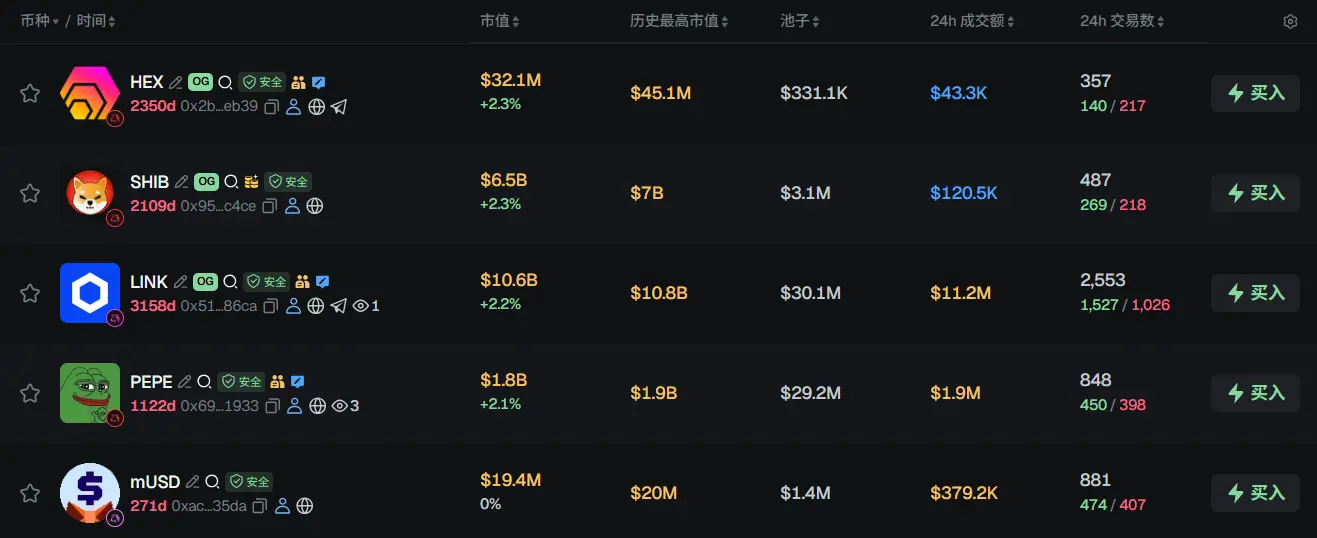
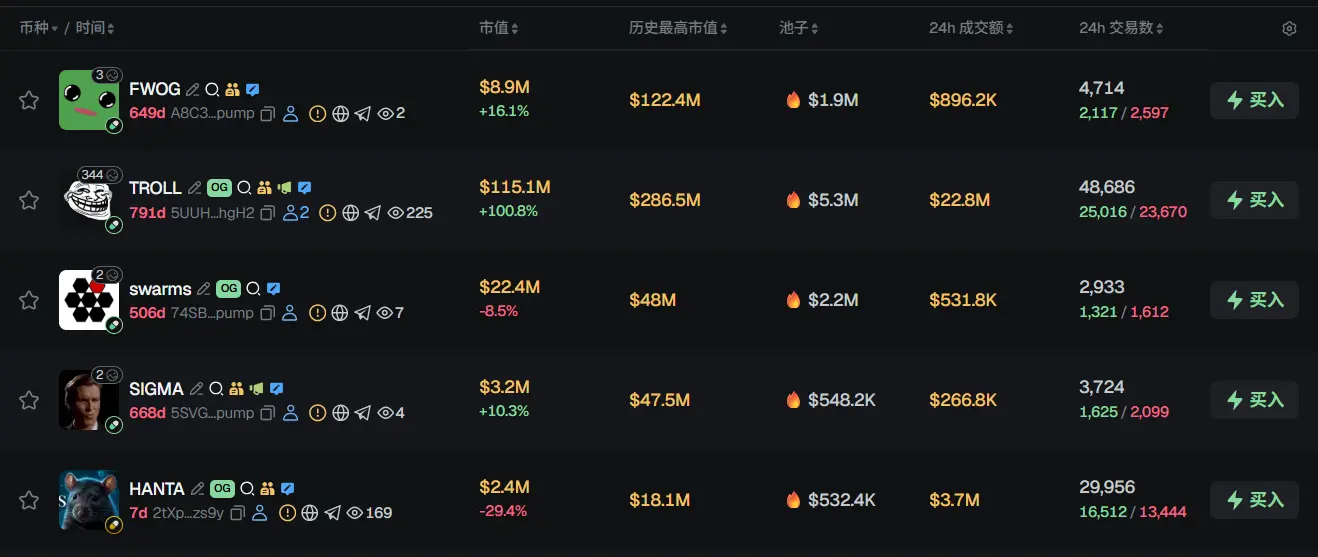
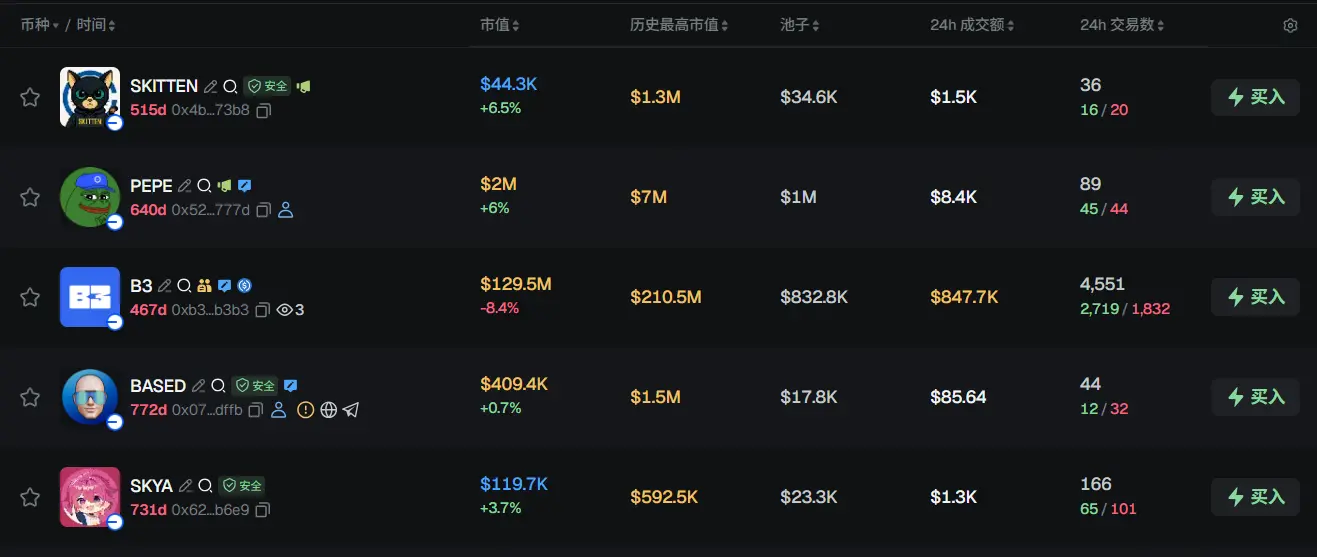
According to data from meme token tracking and analysis platform GMGN, as of 09:00 on May 11, 2026,

The top five trending ETH tokens over the past 24h are: HEX, SHIB, LINK, PEPE, mUSD
The top five trending Solana tokens over the past 24h are: FWOG, TROLL, swarms, SIGMA, HANTA
The top five trending Base tokens over the past 24h are: SKITTEN, PEPE, B3, BASED, SKYA
Which great articles are worth reading from the past 24 hours?

Domande pertinenti

QWhat was the reported net loss on BTC and other crypto asset investments for Trump Media Group in its Q1 financial report?

ATrump Media Group reported an unrealized loss of approximately $4 billion on its BTC and other crypto asset investments in its Q1 financial report.

QAccording to the article, which three DeFi applications returned nearly $1 billion in revenue to token holders in the past 30 days?

AAccording to DefiLlama data, Hyperliquid, EdgeX, and Pump.fun returned a combined $963 million in revenue to token holders over the past 30 days.

QWhat specific event does the article suggest typically follows Michael Saylor's release of Bitcoin Tracker information, based on previous patterns?

ABased on previous patterns, following Michael Saylor's release of Bitcoin Tracker information, MicroStrategy typically discloses its bitcoin acquisition data the next day. The article suggests next week may see such a disclosure.

QWhat major reason did Goldman Sachs give for pushing back its forecast of the Federal Reserve's next two interest rate cuts to December 2026 and March 2027?

AGoldman Sachs cited persistent inflation pressure as the main reason, noting that energy cost pass-throughs could keep core PCE inflation around 3% throughout 2026, which is above the Fed's 2% target.

QWhat is a key trend highlighted by Yearn.Finance founder Andre Cronje regarding the current state of DeFi (Decentralized Finance) in 2026?

AAndre Cronje highlighted that DeFi in 2026 is no longer just a venue for speculation but is evolving into the backend infrastructure for the on-chain economy, with significant market sizes such as a $3.2 trillion stablecoin market.

Letture associate

The Verdict in Choi Tae-won's Divorce Case: Revealing the Inheritance Undercurrent Behind SK Hynix's Trillion-Won Empire

SK Group Chairman Chey Tae-won's high-profile divorce case, involving a record 1.38 trillion won settlement, has drawn attention to the succession plans for Korea's second-largest conglomerate, especially its crown jewel, SK hynix. Unlike traditional chaebol scripts centered on the eldest son, Chey's three children from his marriage to former President Roh Tae-woo's daughter, Roh Soh-yeong, are carving distinct, non-traditional paths. Eldest daughter Chey Yun-jung (b. 1989) is seen as the most evident successor. With a scientific and consulting background, she holds executive roles at SK bioscience and SK Inc.'s growth support department, focusing on future strategy and biopharma. Her marriage is to an AI infrastructure entrepreneur, not a traditional business alliance. Second daughter Chey Min-jung (b. 1991) took a unique route, voluntarily serving as a South Korean naval officer, including an anti-piracy deployment. She later worked on policy and strategy for SK hynix in Washington D.C. before co-founding an AI-driven healthcare startup. She married a former U.S. Marine Corps officer, connecting her to U.S. defense and policy circles—networks crucial for a global semiconductor giant. The only son, Chey In-geun (b. 1995), who studied physics like his father, worked briefly at SK E&S before joining McKinsey. Despite fitting the traditional "heir" profile as the eldest son, he remains silent and holds no public position or shares in SK, suggesting the old succession playbook is obsolete. As SK hynix's valuation soars, becoming a geopolitical asset in the AI era, the heirs' legitimacy is no longer automatic. They must prove themselves in fields like AI biotech, global policy, and strategic consulting. Their marriages also reflect new elite networks in tech and defense, not old political alliances. Their inheritance is the complex challenge of navigating a globalized, tech-driven world, not just a corporate throne.

marsbit2 h fa

The Verdict in Choi Tae-won's Divorce Case: Revealing the Inheritance Undercurrent Behind SK Hynix's Trillion-Won Empire

marsbit2 h fa

From OpenSea to OpenRouter: Is Alex Atallah Repeating His 'Exit at the Peak' Playbook?

From OpenSea to OpenRouter: Is Alex Atallah Repeating His "Exit at the Peak" Playbook? According to the Wall Street Journal, payments giant Stripe is in talks to acquire the AI model aggregation platform OpenRouter in a potential deal valuing the company near $100 billion. This would mark founder Alex Atallah's second creation of a company reaching a $100 billion valuation, following his co-founding of NFT marketplace OpenSea. OpenRouter, founded just over three years ago, has grown rapidly by acting as a unified gateway for developers to access over 400 AI models. It currently has about 10 million users and processes over 200 trillion tokens monthly. While the platform's annualized revenue is around $50 million, its valuation has skyrocketed from $1.3 billion in March 2026. The potential acquisition by Stripe, a company OpenRouter's founder once likened it to, represents a major expansion into AI infrastructure for the payments leader. This move echoes Atallah's previous timing with OpenSea, where he departed before the NFT market's significant downturn. For OpenRouter, selling now may be strategic. Despite its scale, its business model—charging a 5-5.5% fee on AI inference calls—faces pressure from competition, open-source models, and potential price wars among model providers, limiting its profitability narrative for an IPO. A key asset for potential acquirers like Stripe is OpenRouter's vast repository of real-world AI usage data, which offers unique insights into model performance and developer preferences that are difficult to replicate. Whether this potential deal signifies a new valuation benchmark for AI infrastructure or another market peak signal remains to be seen.

链捕手3 h fa

From OpenSea to OpenRouter: Is Alex Atallah Repeating His 'Exit at the Peak' Playbook?

链捕手3 h fa

Trading

Spot
活动图片





