Morning News | VanEck and Grayscale Submit BNB ETF Amendments on the Same Day; BlackRock in Talks to Invest Billions in SpaceX's IPO; Michael Saylor Posts Bitcoin Tracker Info Again

链捕手Pubblicato 2026-05-18Pubblicato ultima volta 2026-05-18

Introduzione

Crypto & Tech Roundup: VanEck and Grayscale both submitted revised applications for a BNB ETF. BlackRock is reportedly in talks to invest tens of billions of dollars in SpaceX's upcoming IPO. Michael Saylor hinted at another Bitcoin purchase announcement by MicroStrategy, expected next week. The Abu Dhabi sovereign wealth fund Mubadala increased its holdings of BlackRock's IBIT spot Bitcoin ETF to nearly $660 million. In other news, Grafana disclosed a GitHub security breach where code was stolen and a ransom demanded, while Circle's CEO expressed interest in funding teams building AI agents capable of signing legal contracts using its technology stack. Separately, Chinese customs in Zhejiang province cracked down on crypto mining rig smuggling, seizing over 400 machines. Popular memecoins on ETH, Solana, and Base networks were also listed. The roundup concludes with highlights from a Vitalik Buterin podcast on blockchain as a "sanctuary" from AI and an interview on US banks re-engaging with crypto.

Compiled by: ChainCatcher


Key News:

  • VanEck and Grayscale Submit BNB ETF Amendments on the Same Day
  • Michael Saylor Posts Bitcoin Tracker Info Again, May Disclose Accumulation Data Next Week
  • BlackRock in Talks to Invest Billions in SpaceX's IPO
  • Abu Dhabi Sovereign Wealth Fund Mubadala Increases IBIT Holdings to Nearly $660 Million
  • Grafana Discloses GitHub Environment Security Incident, Hackers Steal Code Repositories and Extort Ransom
  • Circle CEO Willing to Invest in Teams Exploring 'AI Agents Signing Legal Contracts' on Arc

What Happened in the Last 24 Hours?

Circle CEO Willing to Invest in Teams Exploring 'AI Agents Signing Legal Contracts' on Arc

ChainCatcher news, Circle co-founder and CEO Jeremy Allaire reposted an article on X about "How to Build AI Agents That Can Sign Legal Contracts."

Allaire stated he is willing to invest in teams building this business on Arc using the Circle Agent Stack.

Grafana Discloses GitHub Environment Security Incident, Hackers Steal Code Repositories and Extort Ransom

ChainCatcher news, open-source data visualization tool Grafana posted on X, stating that an unauthorized actor recently gained access to a token that provided access to the Grafana Labs GitHub environment and used it to download code repositories.

The investigation confirmed that no customer data or personal information was leaked, and no impact on customer systems or business operations was found. After the incident, forensic analysis was immediately initiated, and the source of the credential leak is believed to have been identified. Additional security measures have been deployed to strengthen environment protection.

Furthermore, Grafana disclosed that the attacker attempted to extort a ransom to prevent the code repositories from being published, but the company ultimately decided not to pay. More post-mortem information will be released after the investigation concludes.

BlackRock in Talks to Invest Billions in SpaceX's IPO

ChainCatcher news, according to a report by The Information, people familiar with the matter revealed that BlackRock has discussed investing $5 to $10 billion in SpaceX's IPO next month. This massive investment targets an IPO project that could raise up to $75 billion, representing a major vote of confidence from the world's largest asset manager in Elon Musk's company.

This investment also reflects the market's willingness to participate in what could be the largest IPO in history, despite SpaceX pursuing a sky-high valuation and plans that would give investors almost no power to challenge management decisions.

Abu Dhabi Sovereign Wealth Fund Mubadala Increases IBIT Holdings to Nearly $660 Million

Michael Saylor Posts Bitcoin Tracker Info Again, May Disclose Accumulation Data Next Week

ChainCatcher news, Michael Saylor, founder and executive chairman of bitcoin treasury company Strategy, posted Bitcoin Tracker related information again, writing: "₿ig Dot Energy".

Based on previous patterns, Strategy always discloses Bitcoin accumulation data the day after related messages are posted.

Zhejiang, China Customs Cracks Cryptocurrency Mining Machine Smuggling Case, Seizes Over 400 Machines

ChainCatcher news, according to Zhejiang Daily, Ningbo Customs Anti-Smuggling Bureau in China's Zhejiang Province recently cracked multiple cases of smuggling virtual currency mining machines, dismantling several criminal gangs and seizing over 400 machines including Antminer L9 and IceRiver KS3 models.

The report stated that the involved gangs disassembled the mining machines and falsely declared them as items like "industrial blockers" to smuggle them into the country via international express channels through ports like Ningbo and Guangzhou. The machines were then reassembled and sold domestically or shipped to mining farms in Xinjiang, Hunan, and other regions for hosting and mining.

Investigators also said the gangs used USDT for cross-border payment settlements to evade capital controls.

Meme Tokens Trending Chart

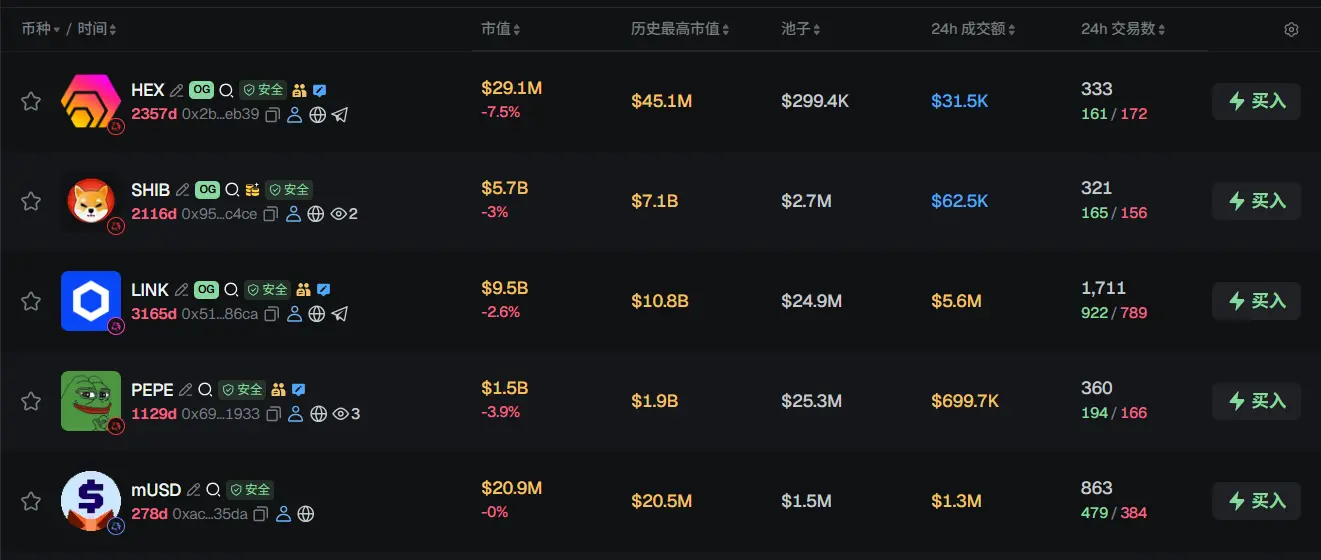
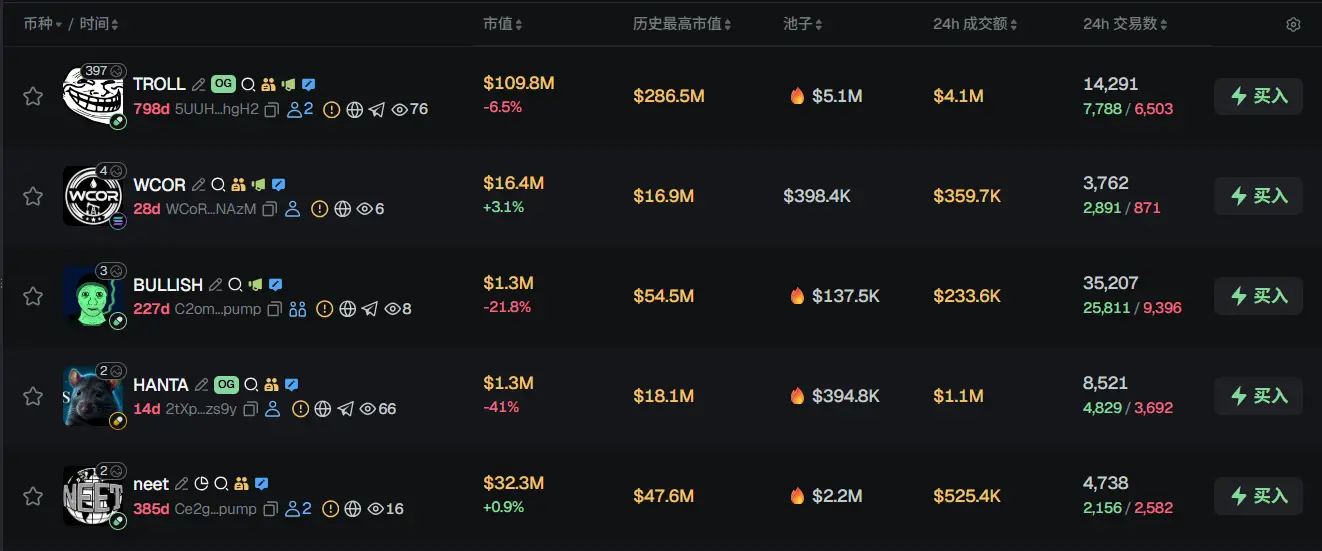
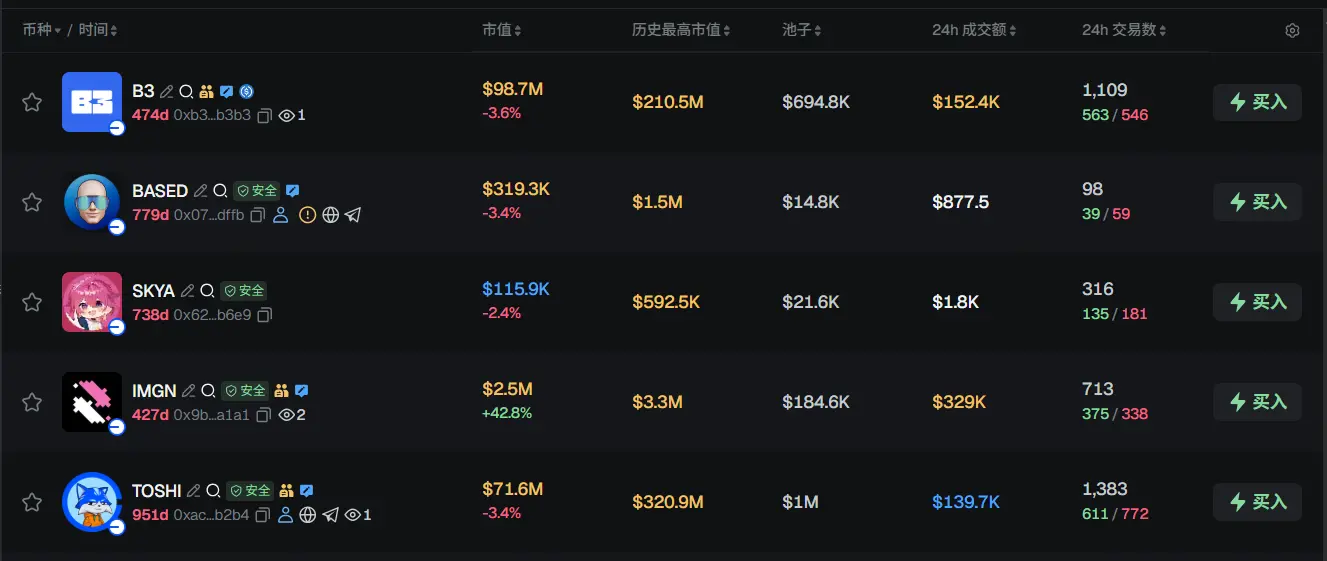
According to data from meme token tracking and analysis platform GMGN as of 09:00 on May 18,

The top 5 trending ETH tokens in the past 24h are: HEX, SHIB, LINK, PEPE, mUSD
The top 5 trending Solana tokens in the past 24h are: TROLL, WCOR, BULLISH, HANTA, neet
The top 5 trending Base tokens in the past 24h are: B3, BASED, SKYA, IMGA, TOSHI
Noteworthy Articles in the Past 24 Hours?

Vitalik: Our Goal Isn't to Fight AI, But to Create Sanctuaries

Just finished listening to this episode of Vitalik on a16z, and the information density is mind-blowing.

He founded Ethereum at 19, and now in his early 30s, he has evolved from living on "autopilot" to being the "active pilot."

The core topic of this episode is our most pressing anxiety today: AI is getting stronger, what should humanity do?

Vitalik's answer is not "fight AI," but to create sanctuary technologies. These technologies protect us without stripping away our privacy and agency.

Today, we'll break down the hardest counter-intuitive views, practical advice, and Ethereum's new positioning from this episode.

Conversation with Lead Bank Founder Jackie: U.S. Banks Embracing Crypto Again

• Why Lead Bank chose to provide banking services to crypto companies while other banks were exiting.
• How the "GENIUS Act" and recent regulatory changes are reshaping banking strategies.
• What new opportunities stablecoins will bring to traditional banks in a post-GENIUS Act world.
• How to build trust between traditional banking regulators and crypto innovators.

Whether you want to understand the role of the crypto industry in the future banking system, or are a Crypto Native exploring paths within the banking system, this conversation will offer valuable insights—from someone who has successfully bridged traditional finance and the crypto world.


Crypto di tendenza

Domande pertinenti

QAccording to the article, what significant actions did major asset managers take regarding ETFs on the same day, and what specific cryptocurrency was involved?

AAccording to the article, on the same day, asset management firms VanEck and Grayscale both submitted revised applications for a BNB Exchange-Traded Fund (ETF).

QWhat investment is BlackRock reportedly discussing regarding SpaceX, and what is the potential scale of this investment according to the article?

AThe article states that BlackRock is reportedly discussing investing $5 billion to $10 billion into SpaceX's upcoming IPO (Initial Public Offering).

QWhat is the implied next step for Michael Saylor's company after he posts his 'Bitcoin Tracker' messages, and what did his recent message say?

AThe article states that following Michael Saylor's 'Bitcoin Tracker' posts, his company Strategy (presumably a misspelling of MicroStrategy) typically discloses Bitcoin purchase data the next day. His recent message was: "₿ig Dot Energy."

QDescribe the security incident disclosed by Grafana. What was accessed, and how did the company respond to the ransom demand?

AGrafana disclosed a security incident where an unauthorized attacker accessed a token that provided access to its GitHub environment and used it to download code repositories. The company stated that no customer data or personal information was compromised. When the attacker attempted to extort a ransom to prevent the code from being leaked, Grafana refused to pay.

QWhat core concept did Vitalik Buterin discuss regarding humanity's relationship with advancing AI, as summarized in the article's 'Past 24 hours' section?

AIn the podcast discussed in the article, Vitalik Buterin argued that humanity's goal should not be to 'fight against AI,' but rather to create 'sanctuary technologies.' These are technologies designed to protect human privacy and agency (sovereignty) without isolating us.

Letture associate

Collateral Dollars: How Does a 'Second-Layer Dollar' Above Stablecoins Form?

Collateral Dollars: How Does a "Second Layer of Dollars" Form on Top of Stablecoins? Most assume stablecoins replicate Eurodollar functions, expanding the offshore dollar system. However, stablecoins primarily replace specific functions like operational dollar balances for settlement. They do not inherently create new dollar credit; they substitute existing claims. The key question is: what happens when financial intermediaries use stablecoins as collateral to create a new layer of dollar-denominated claims? This "collateral dollar" channel operates through secured lending, not direct money creation. A money-like event only occurs when a liability issued against the controlled stablecoin is funded, rolled over, or accepted at near-par value by another balance sheet. The discount (haircut) prices the gap between "effective control over the token" and "reliable convertibility to bank dollars." Elasticity stems not from the stablecoin itself but from the liability issued against it and the willingness of third-party balance sheets to treat that liability as a near-par asset. Compared to the traditional Eurodollar system—where elasticity originates from bank deposit creation—the stablecoin collateral chain is structurally different. Eurodollar deposits are credit-expansive from inception. Stablecoins are initially substitutive; elasticity emerges later if an intermediary's liability against them gains monetary acceptance. Stablecoins disrupt specific tiers of the offshore dollar system, mainly replacing operational settlement balances. They do not replace the need for full dollar balance-sheet capacity (credit lines, hedging, maturity transformation). For systemic impact, the second-layer liability must pass three tests: transferability, funding capacity, and monetary acceptance (being fundable or held at par by others). Pressure transmission also differs. In the Eurodollar system, stress moves up a hierarchy of claims. In a stablecoin collateral chain, the second-layer liability can lose its money-like status well before the underlying stablecoin faces a run, often triggered by haircut increases and margin calls that create a dynamic spiral of falling token prices and rising discounts. In conclusion, the "collateral dollar" is not the stablecoin itself. It is the second-layer liability issued against a controlled token balance that is willing to be funded and maintained at near-par value. Its existence depends on that liability surviving the leap from "token liquidity" to "bank dollar liquidity."

marsbit7 min fa

Collateral Dollars: How Does a 'Second-Layer Dollar' Above Stablecoins Form?

marsbit7 min fa

Collateral Dollars: How the 'Second-Layer Dollar' Above Stablecoins Takes Shape?

"Collateralized Dollars: How a 'Second Layer of Dollars' Forms on Top of Stablecoins" Most assume stablecoins replicate Eurodollars and expand the offshore dollar system, but this is not accurate. Stablecoins primarily replace certain functions within the existing system, especially operational dollar balances for daily settlement. The critical question is what happens when financial intermediaries create a new layer of dollar claims *on top of* stablecoins. This article explains how this new collateralized funding channel works. Stablecoins introduce tokenized private dollar claims. Even if issuers and reserves are within the US legal perimeter, their circulation and use as collateral can become economically "offshore." Enforceable control over collateral opens a secured credit channel but does not itself create a monetary claim. A true monetary event occurs only when another balance sheet funds, rolls over, or accepts a liability issued against the controlled token at near-par value. The discount prices the gap between "effective control over the token" and "reliable convertibility into bank dollars." Elasticity comes from the balance sheet issuing the liability against the token and from third-party willingness to treat that liability as a near-par asset. Collateralized Dollars are not the stablecoins themselves; they are the second-layer liability that another balance sheet is willing to issue, fund, and maintain at near-par against a controlled token balance. The Eurodollar system is a hierarchy of claims, with elasticity originating in expandable bank liabilities. In contrast, the stablecoin collateral chain starts with a tokenized asset. It gains systemic significance only when an intermediary's liability against that token is treated as money-like by other balance sheets. Key determining factors include: who has effective control, the legal/operational path to bank dollars, and whether the resulting claim can still be financed near-par under stress. Pressure in this new channel manifests differently. The upper-layer (intermediary) claim fails first, losing its money-like status, potentially while the underlying stablecoin remains solvent. Increased haircuts and forced sales can create a destructive feedback loop, widening the very gap the discount measures. In conclusion, the Eurodollar analogy has limits. Reserve quality supports the underlying token's solvency, but the leverage, credit, and liabilities built atop it face a separate test. Collateral eligibility is not monetary acceptance. Only when a claim built on stablecoins survives the leap from "token liquidity" to "bank dollar liquidity" do Collateralized Dollars truly exist.

链捕手13 min fa

Collateral Dollars: How the 'Second-Layer Dollar' Above Stablecoins Takes Shape?

链捕手13 min fa

Don't Be Misled by the $1.25 Billion Cap: MicroStrategy's Three-Pronged Bitcoin Sale Pools Hide Massive Selling Pressure

Don't Be Misled by the $1.25B Cap: Strategy's Three-Tier Bitcoin Sales Plan Hides Massive Potential Selling Pressure Strategy recently sold 3,588 BTC (~$216M) to fund a dividend and replenish its dollar reserve, while claiming its $1.25B "reserve build" capacity remains fully available. This highlights a key nuance: the widely cited $1.25B limit applies only to sales for "Building" the reserve. Strategy's broader capital framework, however, allows Bitcoin sales for three primary purposes, each with different scales: 1. **Building the Reserve:** Selling BTC to raise up to $1.25B for the reserve. 2. **Covering Priority Share Expenses:** Selling BTC to pay dividends/interest or to replenish the reserve after such payments are made from it (no specified limit). 3. **Share Repurchase Funding:** Selling BTC to fund up to $1B each in convertible note and common stock repurchases (totaling $2B potential). Combined, just the capped "Build" and "Repurchase" channels could facilitate over $3B in Bitcoin sales, excluding the uncapped "Cover Expenses" channel. The accounting distinction between "Building" (adding cash before a payout) and "Replenishing" (adding cash after a payout) is operationally blurry but allows sales like the recent $216M transaction without touching the $1.25B "Build" quota. This gives Strategy significant flexibility. The move signifies a strategic shift: Strategy is transforming from a simple Bitcoin accumulator into an active capital manager, akin to a hedge fund. Bitcoin is now a financial lever to balance pressures between common stock, convertible notes, dollar reserves, and Bitcoin holdings. This creates inherent tensions—actions benefiting one part of the capital structure may harm another. Investors must understand that the potential Bitcoin sales are far greater than the surface-level $1.25B figure. Strategy has become a complex financial entity where every term in its disclosures matters. Betting on it now is a wager on its active capital management skill to navigate these internal contradictions without a systemic failure.

Foresight News20 min fa

Don't Be Misled by the $1.25 Billion Cap: MicroStrategy's Three-Pronged Bitcoin Sale Pools Hide Massive Selling Pressure

Foresight News20 min fa

When the Largest BTC Buyer Becomes a Seller, Who's Buying After MicroStrategy Sells 3,588 Bitcoin?

MicroStrategy, once the largest corporate buyer of Bitcoin, sold 3,588 BTC for approximately $216 million to fund its preferred stock dividends, marking a significant shift from buyer to seller. This move occurred after its market-to-NAV premium vanished, breaking its "print stock to buy Bitcoin" financial model. A roundtable discussion featuring Austin Campbell, Ram Ahluwalia, and Chris Perkins analyzed the implications. They noted that MicroStrategy's dominance has become a narrative bottleneck for the broader crypto market, with some speculating that Bitcoin's price might only surge significantly after the company's influence wanes. The conversation expanded to examine the capital structure conflict between traditional equity and crypto tokens, arguing that most current tokens will fail as they don't fit neatly into existing debt/equity frameworks. A "stablecoin war" was identified as a major trend, with entities like Tether, Robinhood, and the OUSD alliance competing. Tether's decision to abandon the European MiCA market highlights strategic divergences. The panelists argued that bank-issued stablecoins could revolutionize global finance by allowing US banks to capture net interest margins from international transactions, potentially making JPMorgan the first trillion-dollar bank. They concluded that while capital is currently being siphoned by AI/semiconductors, markets will eventually refocus on fundamentals and cash flow, which could benefit cryptocurrencies with real utility.

marsbit27 min fa

When the Largest BTC Buyer Becomes a Seller, Who's Buying After MicroStrategy Sells 3,588 Bitcoin?

marsbit27 min fa

Bitcoin’s path to $80K may hinge on THIS hidden trend

Bitcoin's potential path toward $80,000 is influenced by conflicting market signals. Data shows the Coinbase Bitcoin Premium Index has recorded its longest-ever streak of consecutive negative premiums, indicating muted institutional demand or net selling from U.S. institutions. While such a trend often signals short-term weakness, it doesn't necessarily forecast a long-term bear market. Additionally, a bearish crossover occurred in Bitcoin's Net Unrealized Profit/Loss (NUPL), with its short-term average falling below the longer-term average, suggesting declining investor profitability and waning market momentum. Historically, major bear market bottoms saw the 100-day NUPL drop below zero, but this cycle it remains positive, implying either an unprecedented bottom or a further decline is needed. Currently trading around $63,148, Bitcoin has seen weekly gains but remains below its May peak. Technical indicators present a mixed picture: the MACD shows bullish momentum, while the RSI signals bearish pressure. A positive development is the return of inflows to Bitcoin ETFs after eight weeks of outflows. Analysts hold divergent views; some highlight a key liquidity zone between $48,000-$50,000 where a market bottom could form, while others maintain a more optimistic long-term outlook. Ultimately, while some bullish signs exist, a strong push from institutional investors appears crucial for Bitcoin to challenge the $80,000 level.

ambcrypto1 h fa

Bitcoin’s path to $80K may hinge on THIS hidden trend

ambcrypto1 h fa

Trading

Spot

Articoli Popolari

Cosa è BNB WHALES

Comprendere le Balene BNB: Un Approfondimento nel Paesaggio delle Cryptovalute Introduzione alle Balene BNB Nel vibrante mondo delle criptovalute, emergono regolarmente nuovi progetti, spesso promettendo soluzioni innovative ed esperienze uniche. Uno di questi progetti è Balene BNB, lanciato nel 2023 e costruito sulla BNB Smart Chain (BEP20). Balene BNB si propone di stabilire una presenza distintiva all'interno dell'ecosistema delle criptovalute, concentrandosi sulla creazione di una piattaforma coinvolgente che unisce i benefici della tecnologia blockchain con interazioni sociali e di gioco. Questo articolo mira a esplorare più a fondo Balene BNB, analizzando i suoi componenti principali, meccaniche e traiettoria di sviluppo. Cosa sono le Balene BNB? Le Balene BNB sono un'iniziativa criptovalutaria che cerca di fornire una gamma diversificata di funzionalità e opportunità per i propri utenti nel crescente ambiente del Web3. Utilizzando lo standard BEP20, il progetto opera con un'offerta totale di token di 100 trilioni (100.000.000.000.000.000). Nonostante questa cifra significativa, è interessante notare che attualmente non ci sono token in circolazione, indicando che il progetto potrebbe essere ancora nelle sue fasi iniziali di sviluppo. Il principale obiettivo delle Balene BNB è creare una piattaforma in cui gli utenti possano partecipare a varie attività interattive beneficiando della sicurezza e della trasparenza offerte dalla tecnologia blockchain. Promuovendo un ambiente unico e coinvolgente, Balene BNB punta a costruire una comunità forte di utenti che sono coinvolti nel progetto e nel suo sviluppo. Chi è il Creatore delle Balene BNB? L'identità del creatore delle Balene BNB rimane non divulgata al momento, presentando una sfida per coloro che cercano di capire i principi fondanti e le intuizioni visionarie del progetto. Questa assenza di informazioni disponibili pubblicamente riguardo alla leadership del progetto può sollevare domande tra i potenziali investitori e utenti sulla sua governance e struttura di responsabilità. Chi sono gli Investitori delle Balene BNB? Con l'evoluzione delle Balene BNB, le informazioni riguardanti investitori specifici o supporto da fondazioni di investimento non sono attualmente disponibili. La documentazione ufficiale del progetto, incluso il suo whitepaper, non divulga né sostenitori finanziari individuali né istituzionali. La mancanza di trasparenza in questo senso può talvolta sollevare interrogativi sulla legittimità e sostenibilità dei nuovi progetti all'interno dell'ecosistema delle criptovalute. Come Funzionano le Balene BNB? Le Balene BNB operano sulla BNB Smart Chain utilizzando lo standard BEP20, noto per la sua efficienza e basse commissioni di transazione, attirando una varietà di sviluppatori e progetti. L'aspetto unico delle Balene BNB risiede nella sua attenzione alla creazione di una piattaforma guidata dalla comunità. Sebbene i dettagli operativi precisi siano scarsi, il progetto enfatizza l'interazione e il coinvolgimento, potenzialmente incorporando elementi gamificati nelle sue offerte. L'enfasi sulla comunità è fondamentale, poiché si allinea con le tendenze prevalenti nel campo delle criptovalute, dove il contributo e la partecipazione degli utenti spesso determinano il successo di un progetto. Ulteriori innovazioni potrebbero essere previste, ma attualmente, i meccanismi specifici e le funzionalità che differenziano Balene BNB da altre iniziative crittografiche devono ancora essere completamente chiariti. Senza informazioni dettagliate riguardo alla sua funzionalità, è difficile valutare in modo completo i differenziali del progetto. Timeline delle Balene BNB Lo sviluppo delle Balene BNB si è svolto attraverso tappe chiave, segnando il suo percorso nel panorama delle criptovalute. Di seguito è riportata una cronologia di eventi significativi riguardanti il progetto: 2023: Lancio delle Balene BNB, segnando l'ingresso del progetto nel mercato. 2023: Pubblicazione del whitepaper del progetto, che delinea gli obiettivi generali e il framework operativo. In Corso: Le Balene BNB continuano a sviluppare le proprie funzionalità, puntando a costruire una base utenti solida e ad espandere le proprie offerte. Punti Chiave sulle Balene BNB Piattaforma: BNB Smart Chain (BEP20) Offerta Totale: 100 trilioni di token (100.000.000.000.000.000) Offerta Circolante: 0 token (indicando una fase nascente) Obiettivo del Progetto: Favorire una piattaforma di criptovalute coinvolgente per l'interazione e la costruzione di comunità. Creatore: Sconosciuto Investitori: Non divulgati Stato Operativo: Attivo con sviluppo e espansione in corso Conclusione Nel mentre le Balene BNB navigano nel competitivo panorama delle criptovalute, offrono uno sguardo sul potenziale dei progetti guidati dalla comunità costruiti sulle fondamenta della tecnologia blockchain. Concentrandosi sul coinvolgimento e sull'interazione, l'iniziativa si pone all'avanguardia dell'innovazione nel campo del Web3. Tuttavia, il successo del progetto dipenderà alla fine dalla chiarezza delle sue meccaniche operative, dalla divulgazione della sua governance e dalla creazione di una solida comunità di utenti. Per potenziali utenti e investitori, le Balene BNB rappresentano un caso studio nella natura in evoluzione dei progetti di criptovalute—una che illustra sia le emozionanti possibilità che le complessità associate a nuove iniziative. Con il paesaggio che continua a evolversi, sarà essenziale monitorare i progressi delle Balene BNB e il loro impatto sull'ecosistema più ampio delle criptovalute.

383 Totale visualizzazioniPubblicato il 2024.04.05Aggiornato il 2024.12.03

Cosa è BNB WHALES

Come comprare BNB

Benvenuto in HTX.com! Abbiamo reso l'acquisto di Binance Coin (BNB) semplice e conveniente. Segui la nostra guida passo passo per intraprendere il tuo viaggio nel mondo delle criptovalute.Step 1: Crea il tuo Account HTXUsa la tua email o numero di telefono per registrarti il tuo account gratuito su HTX. Vivi un'esperienza facile e sblocca tutte le funzionalità,Crea il mio accountStep 2: Vai in Acquista crypto e seleziona il tuo metodo di pagamentoCarta di credito/debito: utilizza la tua Visa o Mastercard per acquistare immediatamente Binance CoinBNB.Bilancio: Usa i fondi dal bilancio del tuo account HTX per fare trading senza problemi.Terze parti: abbiamo aggiunto metodi di pagamento molto utilizzati come Google Pay e Apple Pay per maggiore comodità.P2P: Fai trading direttamente con altri utenti HTX.Over-the-Counter (OTC): Offriamo servizi su misura e tassi di cambio competitivi per i trader.Step 3: Conserva Binance Coin (BNB)Dopo aver acquistato Binance Coin (BNB), conserva nel tuo account HTX. In alternativa, puoi inviare tramite trasferimento blockchain o scambiare per altre criptovalute.Step 4: Scambia Binance Coin (BNB)Scambia facilmente Binance Coin (BNB) nel mercato spot di HTX. Accedi al tuo account, seleziona la tua coppia di trading, esegui le tue operazioni e monitora in tempo reale. Offriamo un'esperienza user-friendly sia per chi ha appena iniziato che per i trader più esperti.

981 Totale visualizzazioniPubblicato il 2024.12.12Aggiornato il 2026.06.02

Come comprare BNB

Cosa è BNB CARD

Comprendere BNB Card: Rivoluzionare l'Identità Digitale in Web3 Nel panorama in rapida evoluzione della tecnologia blockchain e delle criptovalute, la BNB Card o $BNBCARD si distingue come un progetto notevole. Questo token meme utilitario guidato dalla comunità sfrutta la BNB Smart Chain (BSC), mirando a integrare la cultura meme con soluzioni innovative per l'identità digitale. Man mano che sempre più utenti si immergono nei regni della decentralizzazione, è fondamentale analizzare cosa offre BNB Card, le sue sfumature operative e il suo potenziale impatto sul mercato. Cos'è BNB Card ($BNBCARD)? Alla sua essenza, BNB Card rappresenta un token meme con una sostanziale utilità. È progettato per dare potere agli utenti consentendo la creazione di carte d'identità digitali personalizzate che sono sia espressive che funzionali. Il progetto racchiude diverse caratteristiche chiave: Carte d'Identità Personalizzabili: Gli utenti hanno la possibilità di progettare carte d'identità digitali a tema Binance, fornendo loro una piattaforma per l'auto-espressione e un'interazione comunitaria migliorata. Struttura Decentralizzata: Sviluppata sulla BSC, BNB Card enfatizza attributi chiave come sicurezza, trasparenza e sovranità degli utenti. La natura decentralizzata della struttura consente transazioni che sono sia efficienti che sicure. Modello Centrato sulla Comunità: L'enfasi sulla partecipazione di base piuttosto che su modelli finanziari guidati da laboratori crea un ambiente coinvolgente per i suoi utenti. Sfruttando la viralità intrinseca della cultura meme, BNB Card promuove un robusto movimento comunitario. L'obiettivo primario di BNB Card è democratizzare gli strumenti di identità digitale in Web3, offrendo soluzioni accessibili che avvantaggiano gli utenti senza i vincoli tipicamente associati ai sistemi di gestione dell'identità tradizionali. Creatore e Investitori Quando si esplora l'identità dietro BNB Card, è importante notare che nessun singolo creatore è esplicitamente accreditato. Invece, il progetto sembra essere guidato dalla comunità, suggerendo uno sforzo collettivo ispirato al concetto della “Early Builder Card” di Binance. Questo approccio allo sviluppo organico è comune tra i progetti all'interno dello spettro dei token meme, dove lo sviluppo è spesso influenzato dalla passione della comunità piuttosto che da un'autorità centrale. In termini di investimento, l'assenza di sostenitori istituzionali pubblicamente dichiarati evidenzia ulteriormente la base comunitaria del progetto. Esso prospera grazie al supporto organico della comunità, riflettendo una caratteristica abituale dei progetti guidati dai meme che spesso coinvolgono il loro pubblico attraverso canali social piuttosto che percorsi di investimento formali. Come Funziona BNB Card impiega diversi meccanismi che delineano il suo funzionamento e spirito innovativo: Utilità del Token: Il token BNBCARD consente agli utenti di accedere a un insieme di strumenti per la creazione di ID, fornendo anche una piattaforma per la governance comunitaria. Il token funge da elemento centrale che abilita queste funzionalità. Integrazione Blockchain: Utilizzando la BSC, BNB Card garantisce compatibilità con applicazioni basate su Ethereum Virtual Machine (EVM). Questa integrazione offre agli utenti i vantaggi di basse commissioni di transazione migliorando l'accessibilità. Ecosistema Fai-da-te (DIY): Centrale nell'appeal di BNB Card è il suo approccio fai-da-te (DIY) alla generazione di carte d'identità digitali. Questo elemento partecipativo incoraggia gli utenti a impegnarsi nell'espressione creativa, promuovendo una cultura inclusiva che prospera sulla contribuzione e collaborazione. Cronologia La cronologia è fondamentale per comprendere la traiettoria di BNB Card. I traguardi importanti nella storia del progetto includono: 18 marzo 2025: BNB Card è stata quotata su LBank, segnando un passo significativo nel suo percorso di scambio e aprendo porte per liquidità e accessibilità per gli utenti. 19 marzo 2025: Un momento cruciale si è verificato quando il token ha registrato un aumento astronomico del 26.000% in 24 ore, attirando l'attenzione per il suo potenziale e l'entusiasmo della comunità. Sviluppi in Corso: Il progetto sta continuamente espandendo le sue partnership con scambi decentralizzati (DEX) come PancakeSwap, migliorando ulteriormente la liquidità e il coinvolgimento degli utenti. Innovazione e Differenziazione Comprendere cosa distingue BNB Card richiede un'esplorazione più profonda del suo framework innovativo: Ibrido Meme-Utilità: BNB Card fonde con successo il fascino giocoso della cultura meme con applicazioni pratiche nella gestione dell'identità digitale. Questo approccio di nicchia si rivolge efficacemente a un ampio pubblico, attirando sia utenti esperti di tecnologia che quelli nuovi nel mondo delle criptovalute. Governance Decentralizzata: Operare senza controllo centralizzato consente al progetto di sfruttare direttamente il contributo della comunità. Il processo decisionale collettivo sostenuto dal coinvolgimento della comunità dà potere agli utenti, assicurando che le loro voci contribuiscano allo sviluppo e alla direzione del progetto. Scalabilità: BNB Card può beneficiare enormemente dagli aggiornamenti della roadmap 2025 per la BNB Chain, che includono miglioramenti come l'aumento della velocità delle transazioni e l'integrazione di strumenti di intelligenza artificiale. Questi miglioramenti posizionano il progetto in modo vantaggioso all'interno di un ambiente altamente competitivo. Conclusione BNB Card è emblematica di una nuova ondata di soluzioni per l'identità digitale all'interno dell'ecosistema Web3. Fondendo divertimento, coinvolgimento della comunità e utilità pratica, invita gli utenti a partecipare attivamente nella definizione delle loro persone digitali. Mentre il progetto naviga nel dinamico panorama delle criptovalute, il suo successo dipenderà probabilmente dal mantenimento di un forte supporto della comunità mentre si adatta ai progressi tecnologici e alle esigenze degli utenti. L'integrazione della decentralizzazione con la cultura meme non serve solo come mezzo per il coinvolgimento guidato dagli utenti, ma anche come base per la narrazione in evoluzione riguardante l'identità digitale nell'era della blockchain. In sintesi, BNB Card non solo esemplifica la convergenza di creatività e utilità all'interno dello spazio crypto, ma sottolinea anche l'importanza della comunità nel guidare il futuro delle tecnologie decentralizzate.

354 Totale visualizzazioniPubblicato il 2025.03.26Aggiornato il 2025.03.26

Cosa è BNB CARD

Discussioni

Benvenuto nella Community HTX. Qui puoi rimanere informato sugli ultimi sviluppi della piattaforma e accedere ad approfondimenti esperti sul mercato. Le opinioni degli utenti sul prezzo di BNB BNB sono presentate come di seguito.

活动图片