Meme Coin with $60 Million Market Cap Plunges 65% in One Minute, FOMO Faces Renewed Scrutiny

marsbitPubblicato 2026-08-05Pubblicato ultima volta 2026-08-05

Introduzione

A Solana-based meme token, $CATE, which had surged from a $20M+ to over $80M market cap in about a week, experienced a dramatic 65% crash within one minute. This flash crash has intensified scrutiny on the trading app 'fomo' and highlighted the speculative nature of the current meme coin market. The crash coincided with two events: the token's X account being suspended and the fomo app experiencing downtime, preventing users from trading. While the X suspension was straightforward, the fomo outage raised significant questions. $CATE's primary narrative driver was the open endorsement by Poorgoat, a top-ranked trader on fomo with over 200,000 followers, who had turned a ~$45,000 investment into over $2M at the peak. The token itself had no novel fundamentals, being a "cat sister" to Doge, a concept already existing on Ethereum without success. The crash, triggered by less than $1.5M in selling volume despite over 60,000 holder addresses, exposed a harsh reality: purely "organic" community-driven meme tokens (excluding past successes like $SPX) may now have a market cap ceiling around $17M, as exemplified by the long-term chart of $neet. This incident has fueled existing controversies surrounding fomo. Critics have grown skeptical of the app, alleging that rankings dominated by KOLs who receive lucrative token airdrops could be manipulated to create "pump-and-dump" schemes, luring in retail users before a rug pull. The timing of the crash during fomo's outage—preventing many...

$CATE, one of the most talked-about meme coins on Solana lately, skyrocketed from a market cap of just over $2,000 to over $80 million in a little over a week, only to crash 65% in one minute early yesterday morning:
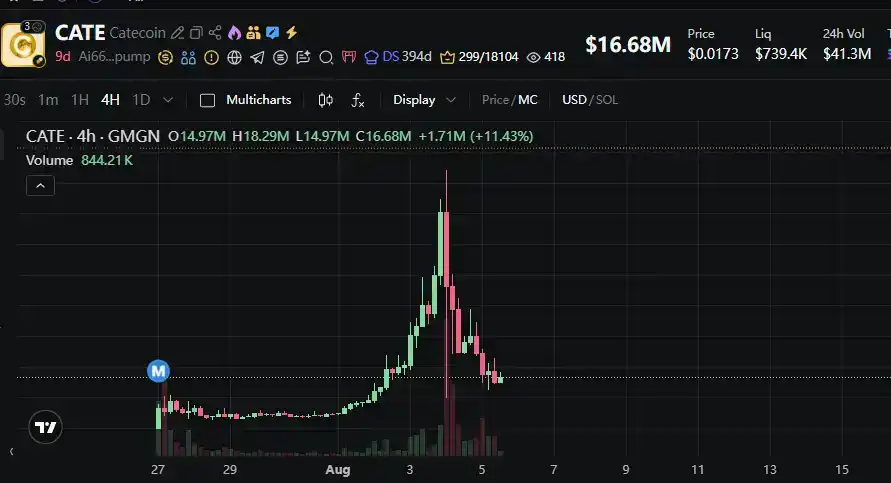
For seasoned on-chain veterans, such a price movement in a meme coin isn't surprising. However, witnessing it happen to a high-profile token like this is quite dramatic and serves as another stark reminder of some harsh realities in the current market.

Harsh Realities

Let's start by examining why this coin crashed. The community has identified several potential reasons:

- $CATE's X (Twitter) account was suddenly suspended.

- FOMO experienced downtime, preventing users from trading during the outage.

The account suspension is self-explanatory, but why would FOMO's downtime cause such a crash?

Because, much like $ANSEM rode on Ansem's clout and explicit support, $CATE's rise was largely fueled by the influence and open backing of "mini-Ansem" Poorgoat.

Poorgoat, a member of the FOMO Hall of Fame (recognized by FOMO for achieving significant profits on the platform) and currently topping FOMO's 7-day profit leaderboard while ranking 2nd on the 30-day board, entered $CATE at an average market cap of around $1.4 million, with a total investment of approximately $44,700. At the coin's peak, this single trade alone netted him over $2 million in profit.
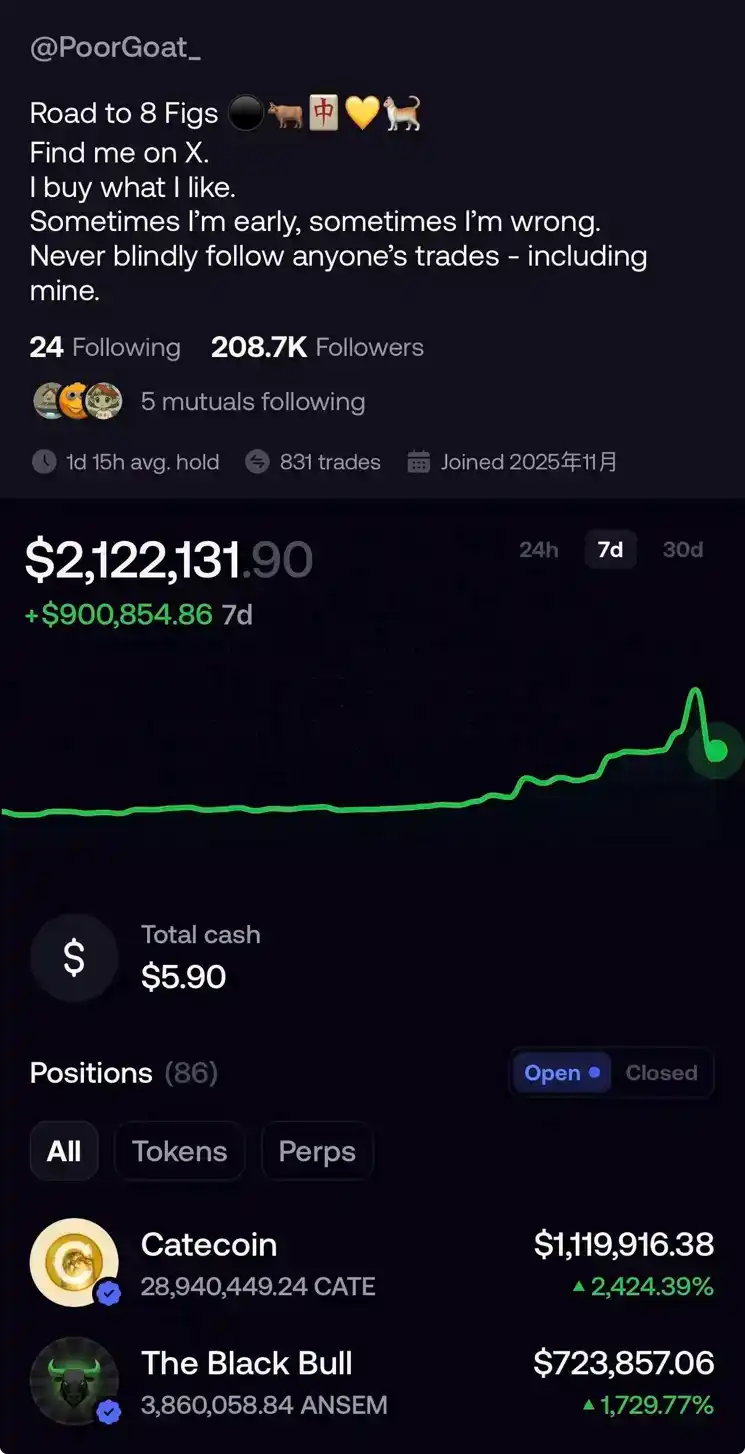
He gained fame by holding onto a $30,000 $ANSEM airdrop, which ballooned to nearly $1.75 million at its peak. Now, he has amassed over 208,000 followers on FOMO.

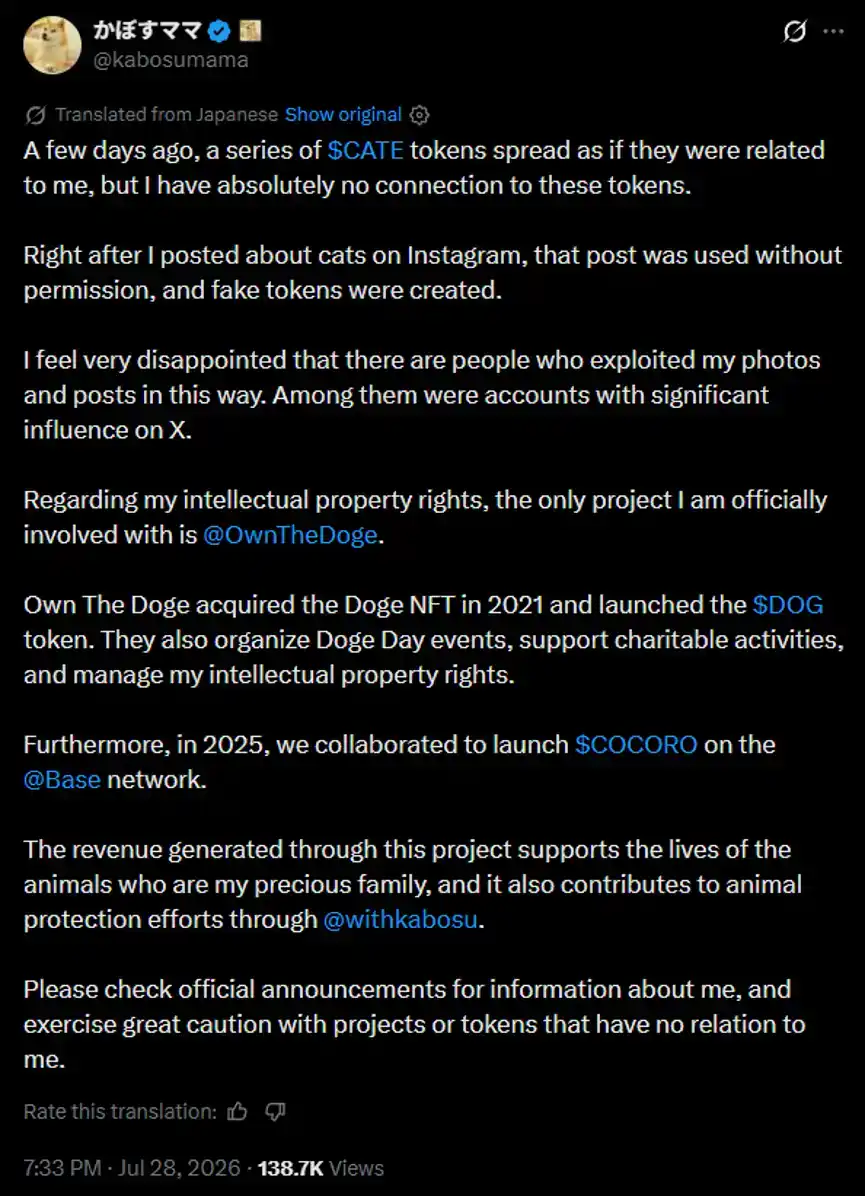
Given this context, it becomes clear why FOMO's downtime is seen as a major catalyst for the crash—fundamentally, the coin's narrative was nothing new, positioning itself as the "cat sister" to Doge. In fact, Doge's creator even publicly denied any association with the token:
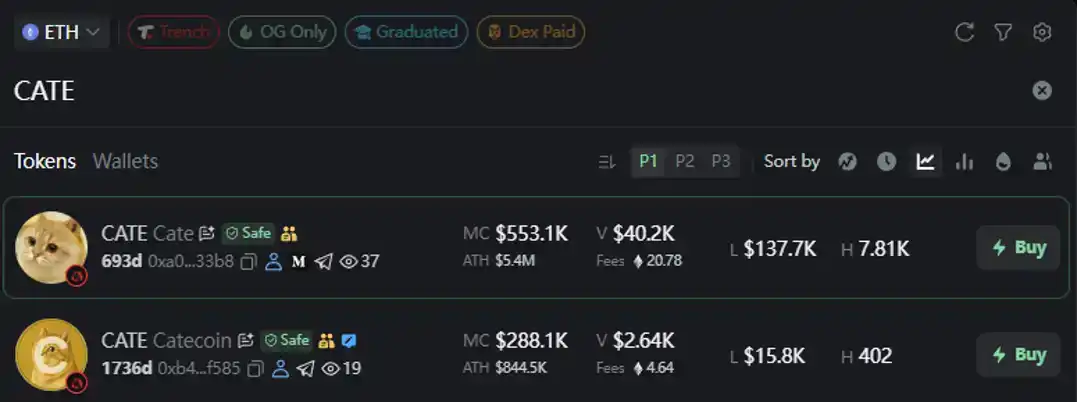
Moreover, a token with the same narrative has existed on the Ethereum mainnet for quite some time, showing no signs of revival:
Adding to the controversy surrounding this crash is the fact that Poorgoat, FOMO's current top influencer, effectively became the Chief Token Officer (CTO) for this coin, publishing a lengthy post on X arguing that the token's growth was "organic":
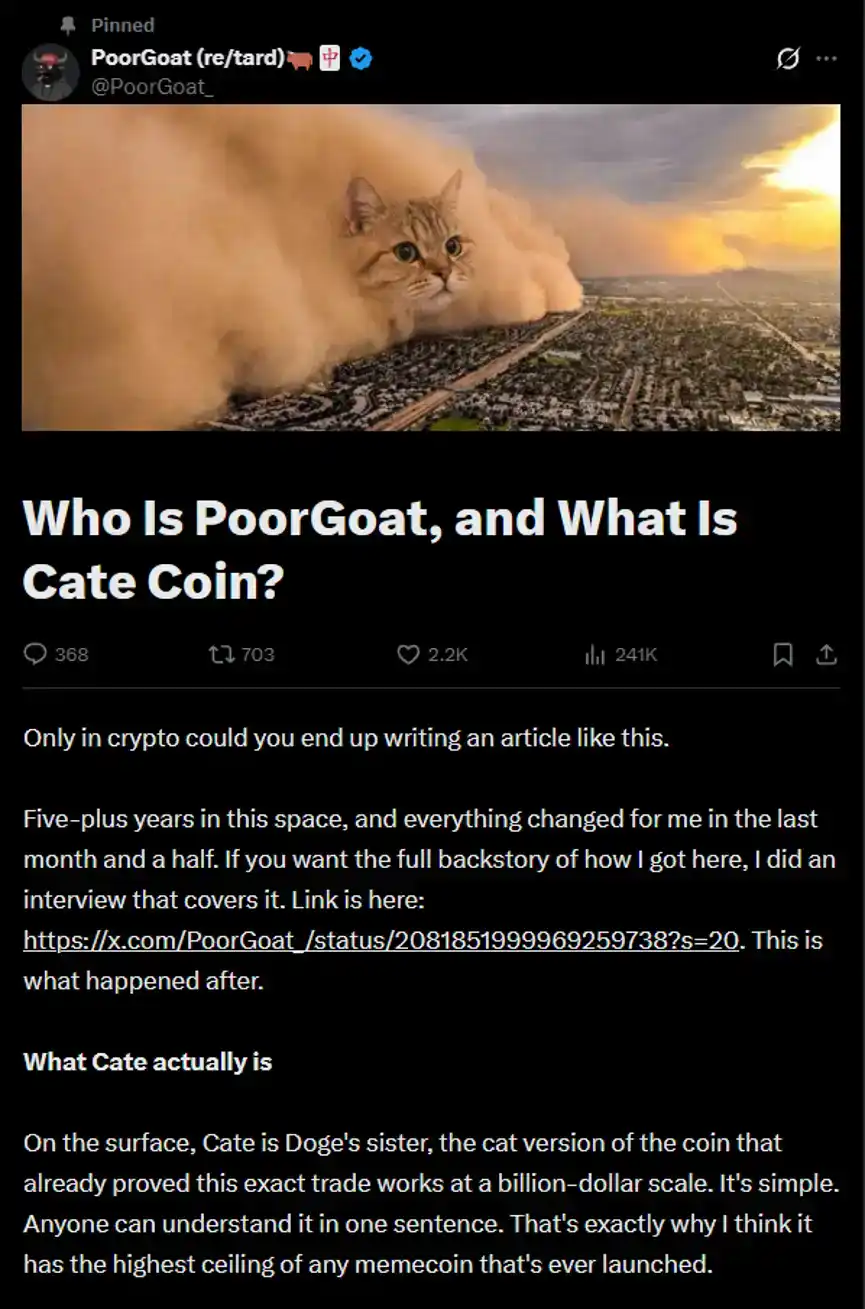
Yet, this supposedly "organic" coin, still boasting over 60,000 holder addresses, plunged more than 60% in one minute due to selling pressure of less than $1.5 million:

This brings us to the harsh reality we mentioned. In the current market, the ceiling for any token that follows the traditional "organic" community-building path (excluding past successes like $SPX, $MOG that left a strong impression) might be limited to around $17 million, similar to $neet's current market cap. We won't delve too deep into why $neet is considered organic; its price action over the past 460+ days speaks for itself:

Next, let's discuss why FOMO is facing such significant backlash this time.

Fame Brings Scrutiny

Earlier this year, when the 6000x-in-a-week "Nietzsche Penguin" $PENGUIN propelled trader logjam (now with ~138k followers on FOMO) to fame, the community largely admired and celebrated his success. At that time, logjam profited around $564,000 from $PENGUIN, and no one doubted his achievement; it was met with recognition and well-wishes.

However, controversies began to swirl around FOMO following the rise of $UNC, the pioneer of the "airdrop wealth creation" playbook later used by $ANSEM, where airdrops were distributed within a small circle to pump the price. Many recipients of these airdrops were active KOLs on FOMO. Their resulting profits, prominently displayed on FOMO's leaderboards (dominating weekly and monthly charts), essentially turned them into walking billboards for these airdropped tokens. Consequently, some users started suspecting that FOMO's data might be manipulated, suggesting collusion among KOLs to create "pump-and-dump" schemes aimed at attracting more users to the app, only to let the KOLs exit and leave others holding the bag.

Regardless of whether such insider dealings actually exist, the mere possibility fuels user resentment, a sentiment also vividly reflected in the BSC ecosystem. Moreover, the most fitting explanation found for $CATE's crash is "FOMO was down." It's not just that users felt a FOMO-related token being untradable was a major negative. The timing was simply too coincidental, leading many to believe it was a pretext to trap and liquidate users who primarily trade via FOMO.

Currently, $CATE still has over 60,000 holder addresses. FOMO's data shows over 38,400 of these holder addresses, meaning more than 60% of holders are from FOMO. If a significant portion of these addresses were mass-created by FOMO itself, it becomes hard to dismiss allegations of manipulation. If not, then the hardest hit are still the retail investors on FOMO.

Another highly contentious point is that trader MarcellxMarcell (with nearly 40k followers on FOMO) "exited at the top" when $CATE's market cap was around $45 million. Although it was still possible to trade on-chain by exporting the wallet address during FOMO's downtime, the community questions: if you publicly bought in around a $30 million market cap, showing considerable confidence, why would you consider FOMO's downtime such a massive negative catalyst?

Recently, FOMO's updated terms of service explicitly state they do not guarantee the security of user assets. However, the process of exporting an address from FOMO—requiring logging into the FOMO page to obtain the private key—has also raised security concerns. Critics question whether FOMO transmits the private key to the webpage with sufficient encryption.
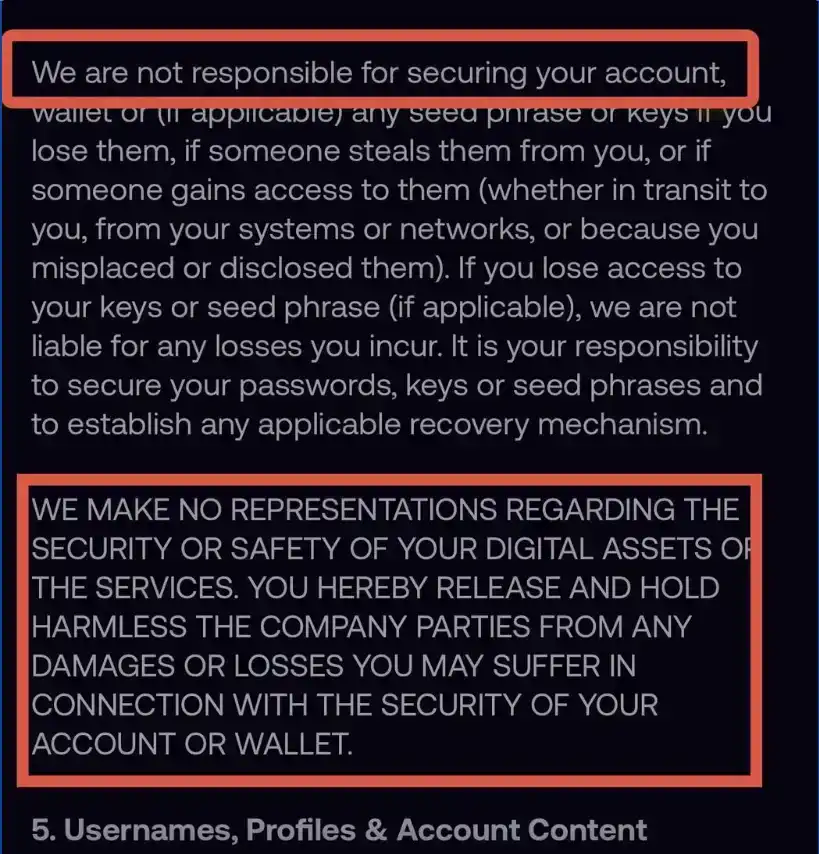
FOMO's official explanation points to overload due to a sudden surge in user volume, a reason many players find hard to accept. After all, the trading volume during that one-minute crash wasn't exceptionally high. "Come on, you raised $75 million in funding, and you get paralyzed by less than $5 million in volume over 5 minutes?"

Had users consistently used on-chain trading terminals like gmgn, they might have avoided this sudden, trapped liquidation.

Fame brings scrutiny, and the criticisms leveled at FOMO during its rapid growth are not entirely without merit.


Crypto di tendenza

Domande pertinenti

QWhat is the primary reason suggested in the article for the flash crash of the $CATE meme coin?

AThe article suggests the primary reasons for the $CATE flash crash were the temporary suspension of its X account and, more critically, the fomo trading platform experiencing downtime, which prevented users from trading.

QWho is Poorgoat and what role did he play in the $CATE token?

APoorgoat is a prominent trader on the fomo platform, known as the 'little Ansem' and a member of its 'Hall of Fame.' He publicly supported and endorsed the $CATE token, acting as a key figure in its promotion and perceived legitimacy.

QAccording to the article, what is a major point of controversy surrounding the fomo platform after this incident?

AA major point of controversy is the suspicion that fomo's downtime during the crash was not coincidental. Some users believe it was a pretext to trap retail investors on the platform, allowing insiders or KOLs to sell their holdings, which fuels allegations of market manipulation.

QWhat does the article imply about the 'organic' growth narrative of certain meme coins in the current market?

AThe article implies that the current market severely limits the potential of meme coins claiming 'organic' community-driven growth. It suggests their market cap ceiling is relatively low, using $neet's ~$17 million cap as an example, compared to tokens heavily promoted by influencers on platforms like fomo.

QWhat alternative trading method does the article mention to avoid issues like those experienced with fomo's downtime?

AThe article mentions that using on-chain trading terminals like gmgn would allow users to avoid being trapped by platform-specific outages, as they enable direct blockchain transactions independent of any single app's functionality.

Letture associate

On L1 Value Capture from Two Solana Proposals

The article, "Discussing L1 Value Capture Through Two Solana Proposals," by Max Resnick, explores how Layer 1 (L1) blockchain tokens derive their fundamental value, drawing parallels to traditional asset pricing theory. Resnick argues that L1 token value, like stock value, stems from claims on future income streams for holders, not merely from network activity or technological promise. This value is captured when fees are either burned (economically akin to a buyback) or distributed to stakers (akin to dividends). Inflationary staking rewards, by contrast, redistribute value among holders rather than creating it. The core challenge is the quality and defensibility of fee-based revenue. High-quality fees come from sustainable, recurring demand for the network's economic utility (e.g., long-term financial activity), not from transient speculation (e.g., meme coins, airdrops). The strength of a blockchain's network effects—liquidity, applications, users—can make its revenue more defensible and grant it greater pricing power than often assumed. The article proposes a foundational valuation framework for L1s, separating revenue (fees captured for token holders), costs, and total token supply. A key accounting principle is that inflationary rewards should not be counted as a cost unless the newly minted tokens are symmetrically counted as a value input; otherwise, it misrepresents profitability. Finally, Resnick discusses the economics of increasing protocol fees to boost revenue. Since revenue equals price times quantity, the net effect depends on demand elasticity. Research on Ethereum suggests transaction demand is somewhat elastic; a fee increase reduces volume. A uniform fee is a blunt instrument, as different transactions (e.g., small transfers vs. large settlements) have vastly different abilities to pay. The article suggests that transaction-value-based fees, potentially implemented via token programs, could be a more efficient way to capture value from high-willingness-to-pay activities. The discussion is framed around ongoing Solana proposals (SIMD-550, SIMD-553) but focuses on the universal principles of L1 value accrual.

marsbit1 h fa

On L1 Value Capture from Two Solana Proposals

marsbit1 h fa

Trading

Spot

Articoli Popolari

Cosa è MEME 2.0

Memecoin 2.0: L'Ascesa di $MEME 2.0 nel Mondo delle Criptovalute Introduzione Nel panorama in continua evoluzione delle criptovalute, è emerso un nuovo contendente. Memecoin 2.0, simboleggiato come $MEME 2.0, porta il concetto di meme coin a un livello emozionante. Come prodotto derivato dal Memecoin originale, questo progetto ha catturato l'attenzione della comunità crypto spostando il focus da incentivi finanziari tipici a un'esperienza coinvolgente e divertente. Operando sulla blockchain di Ethereum, Memecoin 2.0 ridefinisce audacemente l'impegno della comunità nella sfera crypto. Che cos'è Memecoin 2.0, $MEME 2.0? Alla base, Memecoin 2.0 è un progetto di criptovaluta che dà priorità allo spirito di comunità e al divertimento associato alla cultura meme. A differenza delle criptovalute convenzionali, che si concentrano su casi d'uso pratici e benefici tangibili, Memecoin 2.0 si distingue abbracciando il lato più leggero della moneta digitale. Il progetto esiste senza promesse di utilità, una roadmap strutturata o ritorni finanziari, concentrandosi invece sulla creazione di una comunità vibrante incentrata sui meme e sul divertimento condiviso. Facendo così, attinge alla crescente tendenza della cultura meme nello spazio online, rendendola un giocatore unico nel mondo degli asset digitali. Creatore di Memecoin 2.0, $MEME 2.0 Nonostante ricerche approfondite sulle origini di Memecoin 2.0, l'identità esplicita del suo creatore rimane sconosciuta. Questa anonimità non è rara nella comunità crypto, dove molti progetti sono guidati da individui o gruppi che preferiscono rimanere dietro le quinte. La mancanza di informazioni pubblicamente disponibili sul creatore potrebbe essere vista come una mossa strategica, mettendo in evidenza l'impegno della comunità piuttosto che la notorietà individuale all'interno dello spazio. Investitori di Memecoin 2.0, $MEME 2.0 Le informazioni riguardanti gli investitori o il supporto finanziario per Memecoin 2.0 sono scarse. Questa assenza di dettagli potrebbe suggerire che il progetto sia autofinanziato o che il suo focus sulla comunità piuttosto che sulle strutture d'investimento tradizionali abbia attratto un tipo diverso di sostenitore. Poiché il mondo delle meme coin coinvolge tipicamente un maggior coinvolgimento di base piuttosto che investimenti istituzionali, questo approccio si allinea con l'etica dei progetti guidati dalla comunità. Come funziona Memecoin 2.0, $MEME 2.0? Memecoin 2.0 opera interamente sulla blockchain di Ethereum, capitalizzando le sue robuste caratteristiche di sicurezza e scalabilità. Sfruttando i punti di forza di Ethereum, Memecoin 2.0 può offrire un ambiente sicuro per le interazioni degli utenti garantendo che le transazioni siano sia efficienti che convenienti. Uno degli attributi unici di Memecoin 2.0 risiede nella sua struttura guidata dalla comunità. Il valore e la popolarità del token $MEME 2.0 derivano dalla partecipazione attiva dei suoi utenti, piuttosto che dalla utilità intrinseca. Questo design rinforza il focus del progetto sull'aspetto dell'intrattenimento delle criptovalute, implicando che la risata e l'impegno della comunità siano le vere monete che guidano il suo successo. Inoltre, il progetto si inserisce all'interno dell'ecosistema più ampio delle meme coin, dove il valore di ciascuna meme coin oscilla in base alla cultura, alle tendenze e all'impegno della comunità piuttosto che ai principi economici tradizionali. Cronologia di Memecoin 2.0, $MEME 2.0 Per comprendere meglio l'evoluzione e le pietre miliari di Memecoin 2.0, ecco una cronologia che evidenzia eventi significativi nella sua storia: 2024: L'inizio di Memecoin 2.0 è riconosciuto come un ramo del Memecoin originale, affermandosi all'interno del contesto fiorente delle meme coin mentre opera sulla blockchain di Ethereum. 13 luglio 2024: Memecoin 2.0 si posiziona ufficialmente come una meme coin incentrata sulla comunità sulla rete Ethereum, enfatizzando il suo approccio centrato sull'intrattenimento che invita gli utenti a impegnarsi e partecipare alla sua crescita. Punti Chiave su Memecoin 2.0, $MEME 2.0 Diverse caratteristiche critiche definiscono Memecoin 2.0: Approccio Centrico alla Comunità: La missione principale di Memecoin 2.0 è creare un'esperienza comunitaria divertente e coinvolgente, capitalizzando il piacere collettivo derivante dalla cultura memetica. Costruita su Ethereum: Operare sulla blockchain di Ethereum fornisce al progetto un'infrastruttura essenziale che garantisce sicurezza e scalabilità. Mancanza di Utilità o Roadmap: In una marcata deviazione dalle criptovalute tradizionali, Memecoin 2.0 non promette alcuna caratteristica utilitaria o ritorni finanziari, riaffermando il suo impegno per il coinvolgimento della comunità e l'impegno sociale. Focus sulla Cultura Memetica: Abbracciando gli aspetti umoristici e culturali del fenomeno meme, Memecoin 2.0 offre una piattaforma per gli utenti per interagire con la crypto offline e online. Ulteriore Contesto: L'Importanza delle Meme Coin Le meme coin sono emerse come una classe distinta di criptovaluta, spesso guidata dall'umorismo e da un approccio spensierato al trading. Queste monete generalmente mancano di significative utilità o roadmap di sviluppo, attirando gli utenti con la promessa di divertimento, interazione comunitaria e rilevanza culturale. Nel panorama del più ampio ecosistema crypto, le meme coin rianimano l'importanza dell'impegno della comunità, opponendosi ad approcci esclusivamente orientati al profitto. Progetti come Memecoin 2.0 danno il via a un'era in cui l'intrattenimento può armonizzarsi con le aspirazioni finanziarie, trasformando la blockchain in un parco giochi per la creatività e l'interazione sociale. Conclusione Memecoin 2.0, o $MEME 2.0, incarna una nuova ondata di criptovaluta che dà priorità all'impegno della comunità rispetto a rigidi strutture finanziarie. Con un focus sull'umorismo e l'interazione sociale, capitalizza sulla fascinazione circondante la cultura meme. Operando sulla blockchain di Ethereum, Memecoin 2.0 sfrutta le capacità della tecnologia mantenendo fermo il suo impegno per il valore ricreativo della valuta digitale. Mentre lo spazio delle criptovalute continua a evolversi, Memecoin 2.0 serve come testimonianza della nozione che il futuro degli asset digitali potrebbe ben dipendere da esperienze condivise, risate e solidi legami comunitari. Nel mondo imprevedibile delle crypto, forse la gioia può essere altrettanto preziosa quanto il guadagno finanziario tradizionale.

153 Totale visualizzazioniPubblicato il 2024.04.04Aggiornato il 2024.12.03

Cosa è MEME 2.0

Come comprare MEME

Benvenuto in HTX.com! Abbiamo reso l'acquisto di Memeland (MEME) semplice e conveniente. Segui la nostra guida passo passo per intraprendere il tuo viaggio nel mondo delle criptovalute.Step 1: Crea il tuo Account HTXUsa la tua email o numero di telefono per registrarti il tuo account gratuito su HTX. Vivi un'esperienza facile e sblocca tutte le funzionalità,Crea il mio accountStep 2: Vai in Acquista crypto e seleziona il tuo metodo di pagamentoCarta di credito/debito: utilizza la tua Visa o Mastercard per acquistare immediatamente MemelandMEME.Bilancio: Usa i fondi dal bilancio del tuo account HTX per fare trading senza problemi.Terze parti: abbiamo aggiunto metodi di pagamento molto utilizzati come Google Pay e Apple Pay per maggiore comodità.P2P: Fai trading direttamente con altri utenti HTX.Over-the-Counter (OTC): Offriamo servizi su misura e tassi di cambio competitivi per i trader.Step 3: Conserva Memeland (MEME)Dopo aver acquistato Memeland (MEME), conserva nel tuo account HTX. In alternativa, puoi inviare tramite trasferimento blockchain o scambiare per altre criptovalute.Step 4: Scambia Memeland (MEME)Scambia facilmente Memeland (MEME) nel mercato spot di HTX. Accedi al tuo account, seleziona la tua coppia di trading, esegui le tue operazioni e monitora in tempo reale. Offriamo un'esperienza user-friendly sia per chi ha appena iniziato che per i trader più esperti.

344 Totale visualizzazioniPubblicato il 2024.12.12Aggiornato il 2026.06.02

Come comprare MEME

Discussioni

Benvenuto nella Community HTX. Qui puoi rimanere informato sugli ultimi sviluppi della piattaforma e accedere ad approfondimenti esperti sul mercato. Le opinioni degli utenti sul prezzo di MEME MEME sono presentate come di seguito.

活动图片