Mastercard and Ripple Complete Historic Transaction, New Use Case for XRP?

bitcoinistPubblicato 2026-05-08Pubblicato ultima volta 2026-05-08

Introduzione

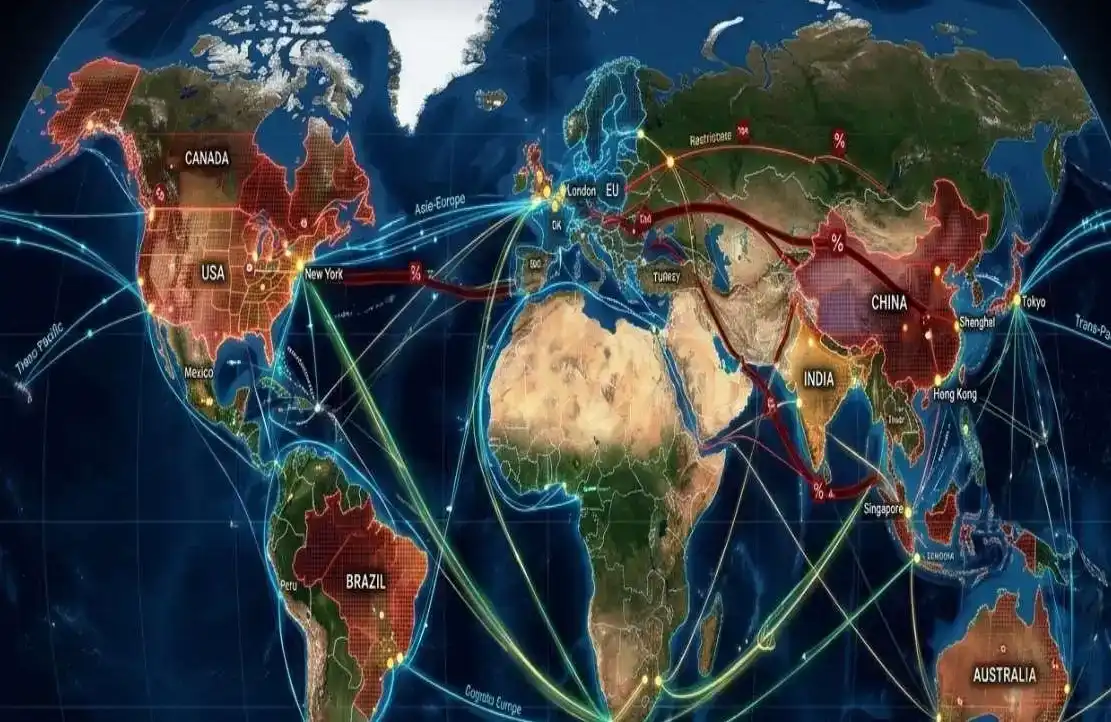
Mastercard, Ripple, Ondo Finance, and J.P. Morgan's Kinexys have successfully completed the first near real-time, cross-border, cross-bank redemption of tokenized US Treasuries. The pilot transaction, executed in under five seconds, used the XRP Ledger as the settlement blockchain to connect public blockchain infrastructure directly to traditional global banking rails for the first time. Ripple redeemed a tokenized treasury fund (OUSG) on the XRPL, triggering a fiat payout via Mastercard's Multi-Token Network. J.P. Morgan's Kinexys then processed the payment to Ripple's bank account in Singapore. This integration demonstrates a single, uninterrupted flow between on-chain and off-chain systems, addressing a key gap in the rapidly growing tokenized real-world assets (RWA) market. The development highlights a significant step towards a 24/7 financial system and positions the XRP Ledger as a potential settlement infrastructure for institutional cross-border transactions.

Ondo Finance, Kinexys by J.P. Morgan, Mastercard, and Ripple have jointly completed the first near real-time cross-border, cross-bank redemption of tokenized US Treasuries — with the XRP Ledger serving as the settlement blockchain at the center of a transaction that connected public blockchain infrastructure directly to global banking rails for the first time.

The pilot, announced on May 6, executed in under five seconds — a stark contrast to the one-to-three business day timeframe that cross-border correspondent banking typically requires. It also occurred outside traditional banking hours, underscoring what the participating firms described as a step toward a financial system capable of operating 24 hours a day, seven days a week.
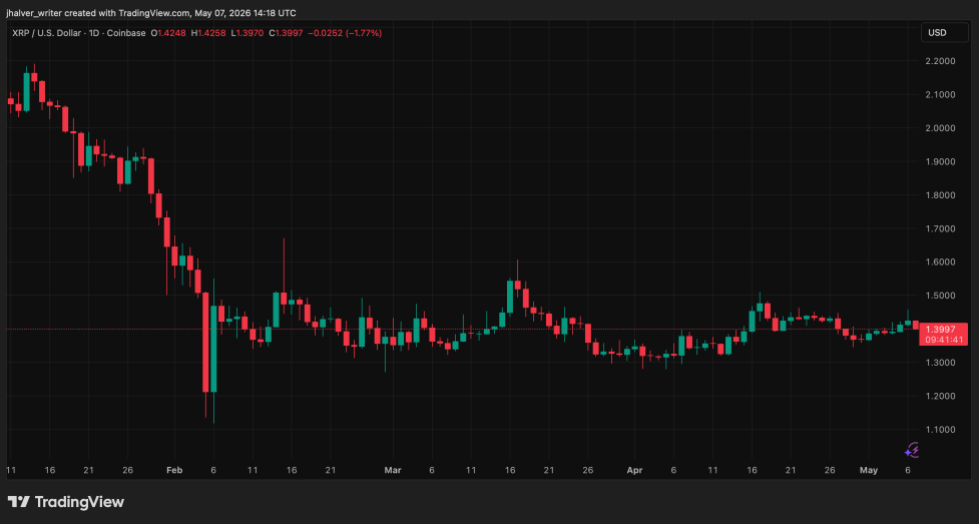
XRP's price trends sideways on the daily chart. Source: XRPUSD on Tradingview

Ripple Gains Relevance with Mastercard Partnership

The mechanics of the pilot reveal how each institution contributed a distinct piece of the settlement architecture. Ripple redeemed a portion of its holdings in OUSG — Ondo Finance’s Short-Term US Government Treasuries fund, a tokenized product available to accredited investors and qualified purchasers — directly on the XRP Ledger. Ondo processed the redemption and triggered a fiat payout instruction through Mastercard’s Multi-Token Network (MTN), a platform designed to enable interoperability between on-chain assets and traditional money movement systems.

From there, Mastercard’s MTN routed the instruction to Kinexys by J.P. Morgan — JPMorgan’s blockchain infrastructure platform, which has now processed more than $3 trillion in cumulative transactions, per figures cited in the announcement.

Kinexys debited Ondo’s Blockchain Deposit Account and delivered US dollar proceeds to Ripple’s bank account in Singapore through its correspondent banking network. One leg of the transaction settled on a public blockchain. The other settled on institutional banking rails. Both happened within the same uninterrupted flow.

What It Signals For The Broader Market

The transaction arrives against a backdrop of rapid growth in tokenized real-world assets. Tokenized US Treasuries crossed the $10 billion mark for the first time on February 11, 2026, according to TheStreet Crypto, and stood at approximately $12.88 billion by early April — a 225% increase over 15 months. The broader tokenized RWA market surged 256.7% from $5.42 billion at the start of 2025 to $19.3 billion by the end of Q1 2026. Despite that growth, redemption infrastructure has lagged, still dependent on wire transfers, manual processes, and fixed banking windows. This pilot addresses that gap directly.

Markus Infanger, SVP of RippleX, noted in the official release that the XRP Ledger enables real-time asset movement and that, when paired with global banking infrastructure, the pilot demonstrates how institutions can execute cross-border transactions as a single integrated flow — rather than a sequence of siloed instructions across separate systems.

The DTCC separately announced earlier this week that it plans to launch its own tokenization service later in 2026 — a signal that the institutional race to build out this infrastructure is accelerating across the industry simultaneously.

This development marks a pivotal moment for the nascent sector and, specifically, for the XRP Ledger’s positioning within institutional finance. Whether the XRPL’s role as settlement infrastructure in this pilot translates into a sustained and expanded use case will depend on how many further cross-border tokenized asset transactions adopt the same architecture — and how quickly the broader regulatory and banking framework catches up to what the technology can already do.

Cover image from Grok, XRPUSD chart on Tradingview

Domande pertinenti

QWhat was the significance of the pilot transaction involving Mastercard and Ripple announced on May 6?

AIt was the first near real-time cross-border, cross-bank redemption of tokenized US Treasuries. The transaction connected public blockchain infrastructure (the XRP Ledger) directly to global banking rails for the first time, settling in under five seconds and outside traditional banking hours.

QWhich institutions were involved in the pilot, and what was the specific role of the XRP Ledger?

AOndo Finance, Kinexys by J.P. Morgan, Mastercard, and Ripple were involved. The XRP Ledger served as the settlement blockchain where Ripple redeemed its tokenized US Treasury holdings (OUSG), enabling the on-chain leg of the integrated transaction.

QWhat problem does this pilot transaction aim to address in the tokenized real-world asset (RWA) market?

AIt addresses the gap in redemption infrastructure, which has lagged behind market growth. Traditional redemptions rely on slow wire transfers, manual processes, and fixed banking windows. This pilot demonstrates a near-instant, 24/7 integrated flow for cross-border redemptions.

QAccording to the article, what key statistic highlights the growth of the tokenized RWA market?

AThe broader tokenized RWA market surged 256.7% from $5.42 billion at the start of 2025 to $19.3 billion by the end of Q1 2026. Specifically, tokenized US Treasuries grew to approximately $12.88 billion by early April 2026, a 225% increase over 15 months.

QWhat broader industry trend does the DTCC's separate announcement about launching a tokenization service signal?

AIt signals that the institutional race to build out tokenization and related settlement infrastructure is accelerating across the financial industry simultaneously, highlighting the growing importance and adoption of this technology.

Letture associate

Apple Also Has to Pay Rent Now

Apple Pays Rent Too: The Two-Way Flow of "Traffic Tax" and "AI Capability Rent" Between Tech Giants For over two decades, Google has paid Apple an estimated $20 billion annually to remain the default search engine on Safari, a "traffic tax" for a critical user entry point. However, in 2026, the direction of this cash flow partially reversed. Apple agreed to pay Google roughly $1 billion per year to license its Gemini AI models, as Apple's own models reportedly struggled with complex tasks. This creates a unique dynamic: Apple acts as the "landlord" in the established search ecosystem, collecting rent from Google for access. Simultaneously, in the emerging AI arena, Apple becomes the "tenant," paying Google for access to cutting-edge AI capabilities it cannot currently match internally. While Apple claims its new models are "distilled" from Gemini outputs and contain "not a drop" of Google's original code, core dependencies remain. Its knowledge base is refined using Gemini's outputs, and its most powerful cloud model runs on Google's infrastructure. Apple has structured the deal as non-exclusive, allowing it to theoretically switch AI suppliers—a hedge against over-reliance. The future hinges on whether advanced AI models become a commodity (cheap and abundant) or remain a concentrated, scarce resource (expensive and controlled by few). Apple is betting on the former, leveraging its massive device ecosystem to be a powerful, choosy customer. If the latter proves true, its bargaining power could erode. This power dynamic is extending to developers. Apple, Google, and WeChat are all pushing for apps to expose their core functions as standardized "actions" or "intents" that their respective AI assistants (Siri, Gemini, WeChat AI) can directly call. The new scarce resource is no longer just app store visibility, but "being selected by the AI." The currency of "rent" has changed from a 30% revenue share to ceding control over how users interact with an app's functions.

marsbit42 min fa

Apple Also Has to Pay Rent Now

marsbit42 min fa

Missed the SpaceX IPO? WEEX's "First Trade Protection" Lets You Experience US Stock Trading Risk-Free.

With the excitement around SpaceX's recent public listing reigniting interest in the US stock market, Chinese investors face significant challenges accessing compliant and convenient trading channels following regulatory actions against major online brokers. This article explores the available options, highlighting their risks and limitations. Traditional paths for US stock investments remain problematic. Qualified Domestic Institutional Investor (QDII) and Listed Open-Ended Fund (LOF) products, while compliant, suffer from high fees, significant purchase premiums, and a very limited selection of assets. Small, unregulated offshore brokers pose substantial risks, including potential insolvency. While secure, VIP accounts at banks in Hong Kong or Singapore require high minimum deposits (often 1-2 million RMB) and in-person visits, placing them out of reach for most retail investors. The article positions cryptocurrency exchanges, specifically their TradFi (traditional finance on-chain) offerings, as a compelling alternative. Platforms like WEEX are noted for providing access to a wide range of US stocks and ETFs, including SpaceX (SPCXON), through tokenized assets. This method offers advantages such as a single account for both crypto and traditional assets, USDT-based settlement avoiding fiat complexities, flexible leverage, and robust risk management. To attract users, WEEX is promoting a "First Trade Guarantee" campaign. Running from June 15 to July 8 (UTC+8), it features a $30,000 prize pool. Users who trade $500 worth of US stock contracts can qualify for a guarantee on their first eligible trade: 100% loss coverage up to $30 or a 20% bonus on profits up to $30. The campaign is presented as a low-risk opportunity for both crypto natives and traditional investors to experience US stock trading.

marsbit43 min fa

Missed the SpaceX IPO? WEEX's "First Trade Protection" Lets You Experience US Stock Trading Risk-Free.

marsbit43 min fa

How Difficult is Chip Making? A Division Error Costs 475 Million Dollars

How Hard Is It to Make a Chip? A Division Error Cost $475 Million Chip expert Shi Kan, a researcher at the Chinese Academy of Sciences and a popular tech creator, explains the immense challenges of chip development. Chips are foundational to modern technology, but their creation is extraordinarily difficult. The journey from sand to a functional chip involves complex design and manufacturing, but a critical bottleneck is verification—ensuring the design works flawlessly before costly production. A single, undetected bug can have catastrophic consequences, as illustrated by the infamous 1994 Intel Pentium FDIV bug. A flaw in the floating-point division unit forced a recall costing $475 million. Unlike software, chips cannot be easily patched after manufacture, making "first-time success" paramount. However, industry surveys show only 24% of chip projects achieve this; over three-quarters require at least one costly re-spin due to design flaws. Verification has thus become the dominant phase, consuming up to 70% of the design cycle. The core challenge is a "verification impossible triangle" between high performance, good debuggability, and low cost. Exhaustively verifying a modern CPU core could take 15,000 years with software simulation, or 30 years with advanced hardware emulation—timeframes utterly impractical for development. Despite being essential, verification is often seen as unglamorous "dirty work," receiving less academic attention than fields like AI. Shi and his team are tackling this by developing an agile verification research framework called ENCORE, based on FPGA technology, to improve verification efficiency and debug capability. Beyond research, Shi engages in public science communication through long-form video content, aiming to demystify chip technology, AI, and computer science. He argues for the value of pursuing "hard and long-term" endeavors, whether in the meticulous world of chip verification or in creating substantive educational content, believing such sustained effort is likely the right path forward.

marsbit53 min fa

How Difficult is Chip Making? A Division Error Costs 475 Million Dollars

marsbit53 min fa

Trading

Spot
Futures

Articoli Popolari

Cosa è XRP 2.0

XRP 2.0: Una Nuova Frontiera nel Paesaggio delle Criptovalute Introduzione a XRP 2.0 Nel mondo in continua evoluzione delle criptovalute, nuovi progetti emergono continuamente, cercando attenzione e adozione. Una tale iniziativa promettente è XRP 2.0, un nuovo progetto di criptovaluta progettato per sfruttare avanzate tecnologie blockchain e metodologie di crittografia robuste. Anche se il nome richiama alla mente l'XRP di Ripple, è fondamentale notare che XRP 2.0 opera in modo indipendente, concentrandosi sul miglioramento della sicurezza delle transazioni, della privacy e della scalabilità. Mentre il panorama finanziario digitale abbraccia sempre di più soluzioni decentralizzate, XRP 2.0 mira a contribuire in modo significativo al web3 e all'espansione generale dei progetti crypto. Cos'è XRP 2.0? Alla sua base, XRP 2.0 è un progetto di criptovaluta che mira a creare un ecosistema di valuta digitale sicuro e decentralizzato. La sua tecnologia fondamentale integra principi di blockchain sofisticati con tecniche di crittografia all'avanguardia. L'obiettivo principale di XRP 2.0 è quello di affermarsi come una piattaforma affidabile ed efficiente in grado di consentire un'esecuzione rapida delle transazioni, dando priorità a migliori protezioni della privacy per i suoi utenti. Il progetto è promosso come una soluzione a molte limitazioni affrontate dalle criptovalute esistenti, proponendo un sistema in grado di gestire un volume maggiore di transazioni con migliorata velocità e privacy. Questa versatilità pone XRP 2.0 come un significativo competitor in un mercato affollato di varie valute digitali. Chi è il Creatore di XRP 2.0? L'identità del creatore dietro XRP 2.0 è stata segnalata come 'Wilbur'. Tuttavia, i dettagli completi riguardanti Wilbur o l'entità associata rimangono sfuggenti. L'anonimato di molti creatori di criptovalute non è un fenomeno raro nel settore, spesso progettato per mantenere un certo grado di privacy e sicurezza. Chi sono gli Investitori di XRP 2.0? Al momento, informazioni specifiche relative alle fondazioni o organizzazioni di investimento a supporto di XRP 2.0 non sono disponibili pubblicamente. Nel settore delle criptovalute, il supporto di investitori rinomati può influenzare significativamente la credibilità e il successo di un progetto, tuttavia la trasparenza riguardo ai sostenitori finanziari di XRP 2.0 non è stata stabilita. Come Funziona XRP 2.0? XRP 2.0 si distingue per l'impiego di una combinazione di tecnologia blockchain e algoritmi di crittografia avanzati che garantiscono transazioni sicure e decentralizzate. La sua struttura innovativa include caratteristiche uniche progettate per promuovere il coinvolgimento degli utenti e ampliare le funzionalità oltre le transazioni convenzionali delle criptovalute. Tra queste caratteristiche, XRP 2.0 incorpora capacità alimentate da intelligenza artificiale, come funzionalità di testo in immagini e testo in voce. Queste aggiunte sono progettate per migliorare l'esperienza interattiva per gli utenti, promuovendo una maggiore applicabilità in vari settori. Unendo progressi tecnologici con design incentrati sugli utenti, XRP 2.0 mira a catturare l'attenzione di una vasta gamma di individui e aziende che cercano di integrare soluzioni di criptovaluta nei loro framework operativi. Cronologia di XRP 2.0 Comprendere XRP 2.0 richiede di esaminare i traguardi che hanno definito il suo percorso fino ad ora: 23 luglio 2023: XRP 2.0 viene introdotto come un nuovo progetto di criptovaluta, mirante a rivoluzionare le capacità di transazione sicura e decentralizzata nel dominio blockchain. 8 settembre 2023: Si verifica il lancio di un altro progetto, XRP20, marcando l'emergere di un token ERC-20 sulla blockchain di Ethereum che resta non correlato a XRP 2.0. 13 novembre 2023: Il ledger XRP subisce un significativo aggiornamento con il rilascio della versione 2.0.0 del software server rippled. È essenziale notare che questo sviluppo è scollegato dal progetto di criptovaluta XRP 2.0. Punti Chiave su XRP 2.0 Per distillare l'essenza di XRP 2.0, emergono diversi fattori critici: Caratteristiche Uniche: L'inclusione di funzionalità come il testo in immagini e testo in voce alimentato da intelligenza artificiale diversifica ulteriormente le potenziali applicazioni di XRP 2.0. Tecnologia Blockchain: Il framework utilizza meccanismi blockchain avanzati e protocolli di crittografia, garantendo un ambiente sicuro e decentralizzato per le transazioni. Scalabilità e Privacy: XRP 2.0 dà priorità a migliori protezioni della privacy nei processi di transazione e alla scalabilità necessaria per accogliere una base di utenti in crescita. Nessuna Affiliazione con Ripple: È importante notare che, nonostante il suo nome, XRP 2.0 non ha alcuna fedeltà o collaborazione con l'XRP di Ripple, distinguendo il proprio framework operativo e obiettivi all'interno dell'ecosistema delle criptovalute. Conclusione XRP 2.0 rappresenta un'ambiziosa venture nell'ambito delle criptovalute, mirante a offrire una combinazione di sicurezza, privacy ed efficienza nelle transazioni digitali. Integrando tecnologie sofisticate e caratteristiche user-friendly, il progetto si propone di ampliare gli orizzonti di ciò che le criptovalute possono realizzare nell'economia digitale odierna. Sebbene l'anonimato del suo creatore e la mancanza di investitori dichiarati possano sollevare domande per alcuni, il focus di XRP 2.0 su funzionalità avanzate e decentralizzazione ne amplifica l'appeal in un mercato crypto sempre più affollato. Man mano che il panorama delle criptovalute continua a evolversi, XRP 2.0 potrebbe emergere come un attore decisivo nell'espansione di soluzioni blockchain sicure e scalabili.

166 Totale visualizzazioniPubblicato il 2024.04.05Aggiornato il 2024.12.03

Cosa è XRP 2.0

Come comprare XRP

Benvenuto in HTX.com! Abbiamo reso l'acquisto di XRP (XRP) semplice e conveniente. Segui la nostra guida passo passo per intraprendere il tuo viaggio nel mondo delle criptovalute.Step 1: Crea il tuo Account HTXUsa la tua email o numero di telefono per registrarti il tuo account gratuito su HTX. Vivi un'esperienza facile e sblocca tutte le funzionalità,Crea il mio accountStep 2: Vai in Acquista crypto e seleziona il tuo metodo di pagamentoCarta di credito/debito: utilizza la tua Visa o Mastercard per acquistare immediatamente XRPXRP.Bilancio: Usa i fondi dal bilancio del tuo account HTX per fare trading senza problemi.Terze parti: abbiamo aggiunto metodi di pagamento molto utilizzati come Google Pay e Apple Pay per maggiore comodità.P2P: Fai trading direttamente con altri utenti HTX.Over-the-Counter (OTC): Offriamo servizi su misura e tassi di cambio competitivi per i trader.Step 3: Conserva XRP (XRP)Dopo aver acquistato XRP (XRP), conserva nel tuo account HTX. In alternativa, puoi inviare tramite trasferimento blockchain o scambiare per altre criptovalute.Step 4: Scambia XRP (XRP)Scambia facilmente XRP (XRP) nel mercato spot di HTX. Accedi al tuo account, seleziona la tua coppia di trading, esegui le tue operazioni e monitora in tempo reale. Offriamo un'esperienza user-friendly sia per chi ha appena iniziato che per i trader più esperti.

1.5k Totale visualizzazioniPubblicato il 2024.12.10Aggiornato il 2026.06.02

Come comprare XRP

Discussioni

Benvenuto nella Community HTX. Qui puoi rimanere informato sugli ultimi sviluppi della piattaforma e accedere ad approfondimenti esperti sul mercato. Le opinioni degli utenti sul prezzo di XRP XRP sono presentate come di seguito.

活动图片